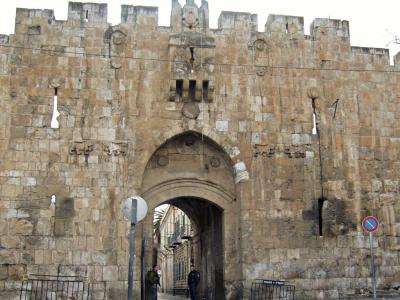


Lions' Gate, Jerusalem
This entrance in Jerusalem’s eastern wall answers to several names, which already tells you it has lived a busy life. Most visitors know it as the Lions’ Gate, thanks to the pair of stone beasts guarding the doorway. Christians, meanwhile, often call it Saint Stephen’s Gate, after the first Christian martyr, who was stoned outside the city. His burial place originally lay near Damascus Gate, but was later shifted here, making life a little easier for generations of pilgrims.
Arabic names add more layers to the story. One is Bab al-Ghor, or “Jordan Valley Gate,” pointing east toward the land below. Another links the gate to the Virgin Mary, believed by tradition to have been born nearby. Then there’s Meshikuli, a term best translated as “wicket”-a reminder that gates were once part of a defensive system, not a photo opportunity. Through openings like this, watchful eyes scanned the horizon, ready to respond to anything approaching, sometimes with less-than-hospitable methods, involving boiling oil.
The animals themselves come with their own debate. Officially, they’re lions, though some insist they’re panthers. One tradition connects them to the Mamluk sultan Baybars I, whose emblem they resemble. According to legend, Sultan Suleiman the Magnificent ordered them placed here to celebrate driving the Crusaders from the region. Another story claims the decision followed a dream in which Suleiman was threatened by lions if he failed to rebuild Jerusalem’s walls-a reminder that urban planning has always had its anxieties...
What’s remarkable is how little the gate has changed. Unlike much of the Old City, it has never been restored. It still does its job quietly, funneling crowds in and out-especially on Fridays, when worshipers stream toward the nearby Al-Aqsa Mosque. Stand here for a moment, and you’ll see exactly what this gate has always done best: connect names, beliefs, and centuries of history in one narrow opening.
Arabic names add more layers to the story. One is Bab al-Ghor, or “Jordan Valley Gate,” pointing east toward the land below. Another links the gate to the Virgin Mary, believed by tradition to have been born nearby. Then there’s Meshikuli, a term best translated as “wicket”-a reminder that gates were once part of a defensive system, not a photo opportunity. Through openings like this, watchful eyes scanned the horizon, ready to respond to anything approaching, sometimes with less-than-hospitable methods, involving boiling oil.
The animals themselves come with their own debate. Officially, they’re lions, though some insist they’re panthers. One tradition connects them to the Mamluk sultan Baybars I, whose emblem they resemble. According to legend, Sultan Suleiman the Magnificent ordered them placed here to celebrate driving the Crusaders from the region. Another story claims the decision followed a dream in which Suleiman was threatened by lions if he failed to rebuild Jerusalem’s walls-a reminder that urban planning has always had its anxieties...
What’s remarkable is how little the gate has changed. Unlike much of the Old City, it has never been restored. It still does its job quietly, funneling crowds in and out-especially on Fridays, when worshipers stream toward the nearby Al-Aqsa Mosque. Stand here for a moment, and you’ll see exactly what this gate has always done best: connect names, beliefs, and centuries of history in one narrow opening.
Want to visit this sight? Check out these Self-Guided Walking Tours in Jerusalem. Alternatively, you can download the mobile app "GPSmyCity: Walks in 1K+ Cities" from Apple App Store or Google Play Store. The app turns your mobile device to a personal tour guide and it works offline, so no data plan is needed when traveling abroad.
Download The GPSmyCity App



Lions' Gate on Map
Sight Name: Lions' Gate
Sight Location: Jerusalem, Israel (See walking tours in Jerusalem)
Sight Type: Attraction/Landmark
Guide(s) Containing This Sight:
Sight Location: Jerusalem, Israel (See walking tours in Jerusalem)
Sight Type: Attraction/Landmark
Guide(s) Containing This Sight:
Nearby Sights
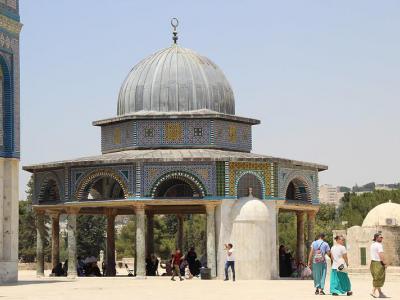
Walking Tours in Jerusalem, Israel

Create Your Own Walk in Jerusalem
Creating your own self-guided walk in Jerusalem is easy and fun. Choose the city attractions that you want to see and a walk route map will be created just for you. You can even set your hotel as the start point of the walk.
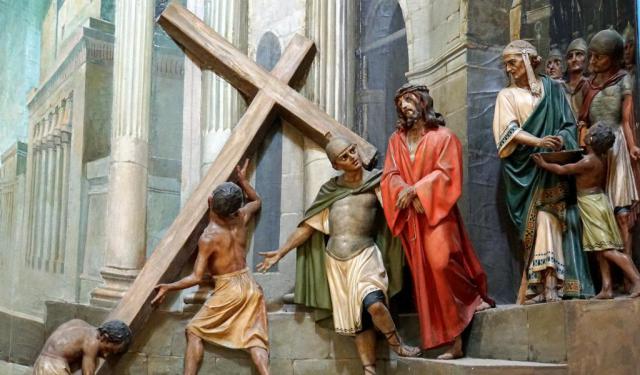
Following Steps of Jesus Walking Tour
The story of Jerusalem is inseparable from the final chapter of Jesus’s earthly life. Here, places linked to his teaching, arrest, trial, crucifixion, burial, and resurrection are woven into a dense urban landscape shaped by centuries of faith, conquest, and rebuilding. Many of these landmarks are only minutes apart from one another, yet they point to the scenes that span the Gospels-from public... view more
Tour Duration: 2 Hour(s)
Travel Distance: 3.7 Km or 2.3 Miles
Tour Duration: 2 Hour(s)
Travel Distance: 3.7 Km or 2.3 Miles
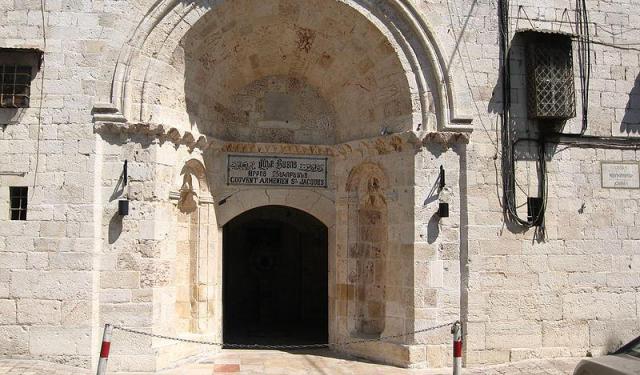
Armenian Quarter Walking Tour
Smaller and quieter than the Old City's other three quarters, the Armenian quarter contains a series of winding cobblestoned streets and alleyways teeming with people, shops, coffee stands, ceramic workshops and hookah bars. A city in miniature with distinct language, alphabet and culture, it has been in place since the 4th century, when Armenia adopted Christianity as a national religion.
... view more
Tour Duration: 1 Hour(s)
Travel Distance: 1.2 Km or 0.7 Miles
... view more
Tour Duration: 1 Hour(s)
Travel Distance: 1.2 Km or 0.7 Miles
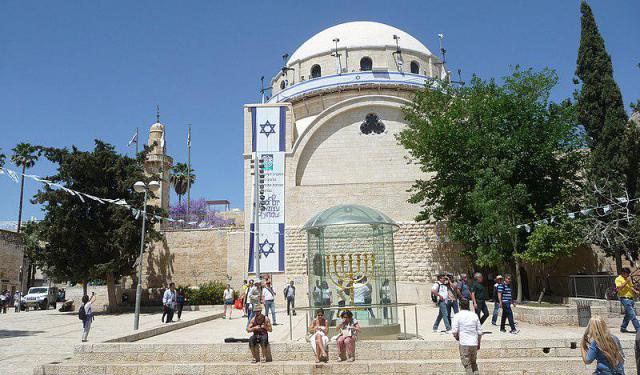
Jewish Quarter Walking Tour
Entirely rebuilt in the 1980s after having been largely destroyed during the 1948 War, the Jewish Quarter is quite distinct from the rest of the Old City. Good signposting, spacious passageways, art galleries and a somewhat less buzzing atmosphere make the area a relaxing place to spend some time.
With its rebuilt residential buildings, some almost consider this area the "New... view more
Tour Duration: 1 Hour(s)
Travel Distance: 1.3 Km or 0.8 Miles
With its rebuilt residential buildings, some almost consider this area the "New... view more
Tour Duration: 1 Hour(s)
Travel Distance: 1.3 Km or 0.8 Miles
Jerusalem Old City Walking Tour
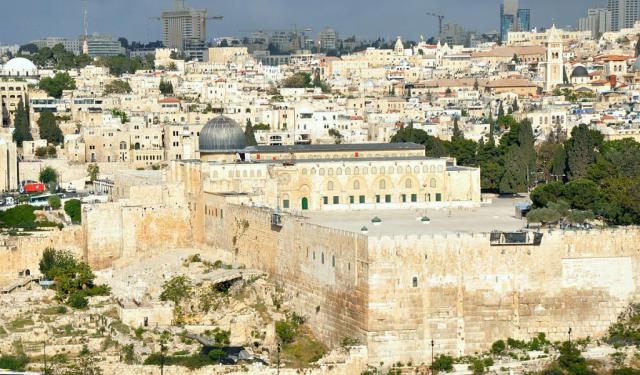
Jerusalem has been around long enough to see empires rise, fall, and try again. This is one of the world’s oldest continuously inhabited cities, shaped by faith, power, and a long rhythm of destruction followed by rebuilding. Archaeology traces settlement on the site of today's Jerusalem back to the Bronze Age, when it was just a modest Canaanite stronghold.
The city’s name tells a... view more
Tour Duration: 3 Hour(s)
Travel Distance: 5.0 Km or 3.1 Miles
The city’s name tells a... view more
Tour Duration: 3 Hour(s)
Travel Distance: 5.0 Km or 3.1 Miles
Bethlehem Walking Tour
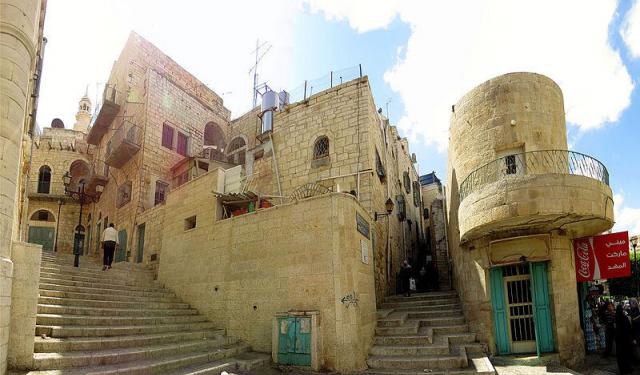
Just a few kilometers south of Jerusalem, Bethlehem carries a name that echoes across continents. For more than two millennia, it has been known as the birthplace of Jesus Christ - complete with a guiding star, candlelit carols, and a December soundtrack that practically plays on its own. Yet when you arrive, you quickly realize this is not a frozen nativity scene. It’s a living, breathing... view more
Tour Duration: 1 Hour(s)
Travel Distance: 1.5 Km or 0.9 Miles
Tour Duration: 1 Hour(s)
Travel Distance: 1.5 Km or 0.9 Miles
Muslim Quarter & Temple Mount Tour
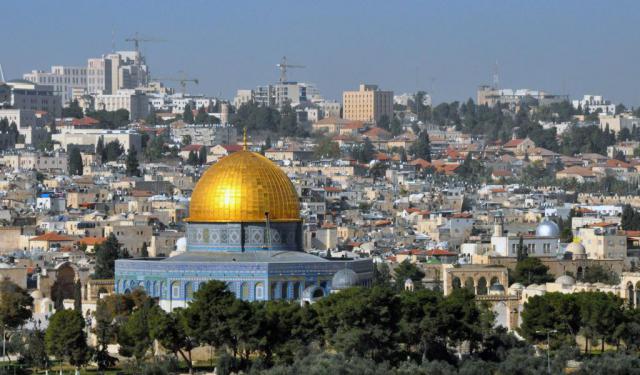
The largest, most populous and perhaps most chaotic of all Jerusalem’s quarters, the Muslim Quarter is worth exploring for its unique atmosphere. Spending a day here may take you back to a simpler time, but be prepared for many sights and sounds as you pass many vendors, stores and restaurants on your way from site to site.
Some of the city’s most interesting city gates (Damascus and... view more
Tour Duration: 2 Hour(s)
Travel Distance: 2.1 Km or 1.3 Miles
Some of the city’s most interesting city gates (Damascus and... view more
Tour Duration: 2 Hour(s)
Travel Distance: 2.1 Km or 1.3 Miles
Useful Travel Guides for Planning Your Trip
16 Uniquely Israel Things to Buy in Jerusalem
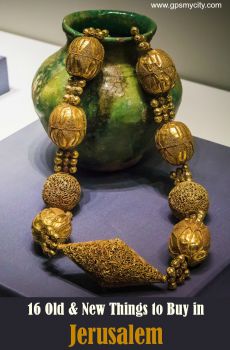
Modern day Jerusalem is a mosaic of neighborhoods, reflecting different historical periods, cultures, and religions. The influx of repatriates in recent years has made the cultural and artisanal scene of the city even more colourful and diverse. To find your way through Jerusalem's intricate...