


Paroquia Nuestra Senora del Carmen (Basilica of Our Lady of Carmen), Montevideo
The Basilica of Our Lady of Carmen, located in the La Aguada neighborhood of Montevideo, is a notable sanctuary of the Catholic Church. The origins of this sacred site trace back to 1793 when the first chapel was established on Cerro Largo Street by priest Manuel Antonio Collantes. This original structure was later abandoned and demolished in 1811 during the turbulent period of the English invasions and subsequent struggles for Uruguay's independence.
By 1827, a new chapel had emerged on land donated by Emetrio Menéndez. This site gained historical significance in 1829 as the meeting place of the General Constituent and Legislative Assembly of the Eastern State of Uruguay, during which the law establishing the National Shield was enacted. The chapel also served military functions as a barracks and cemetery during the Great War until religious services were reinstated on August 30, 1852.
The present structure of the basilica commenced construction on the site of the old chapel. In 1866, it was designated as a parish by Monsignor Jacinto Verá and was later elevated to the status of a Minor Basilica by Pope Leo XIII on June 8, 1899. The basilica was designed in a Neoclassical style, featuring a three-nave basilica-type plan, a transept with a dome atop a cylindrical drum, and dual-level side aisles. Its grand main altar is adorned with marble, lapis lazuli, onyx, and bronze sourced from the Lavagna workshops.
Significant architectural changes occurred over time, including the demolition of its original façade in 1935 to accommodate the new Diagonal Agraciada. Architects Elzeario Boix and Terra Arocena designed the new façade, which included the relocation of the bell tower to the south side and the placement of four statues atop the structure. This basilica stands as a testament to the rich religious and historical tapestry of Montevideo, reflecting both its spiritual significance and its resilient past.
By 1827, a new chapel had emerged on land donated by Emetrio Menéndez. This site gained historical significance in 1829 as the meeting place of the General Constituent and Legislative Assembly of the Eastern State of Uruguay, during which the law establishing the National Shield was enacted. The chapel also served military functions as a barracks and cemetery during the Great War until religious services were reinstated on August 30, 1852.
The present structure of the basilica commenced construction on the site of the old chapel. In 1866, it was designated as a parish by Monsignor Jacinto Verá and was later elevated to the status of a Minor Basilica by Pope Leo XIII on June 8, 1899. The basilica was designed in a Neoclassical style, featuring a three-nave basilica-type plan, a transept with a dome atop a cylindrical drum, and dual-level side aisles. Its grand main altar is adorned with marble, lapis lazuli, onyx, and bronze sourced from the Lavagna workshops.
Significant architectural changes occurred over time, including the demolition of its original façade in 1935 to accommodate the new Diagonal Agraciada. Architects Elzeario Boix and Terra Arocena designed the new façade, which included the relocation of the bell tower to the south side and the placement of four statues atop the structure. This basilica stands as a testament to the rich religious and historical tapestry of Montevideo, reflecting both its spiritual significance and its resilient past.
Want to visit this sight? Check out these Self-Guided Walking Tours in Montevideo. Alternatively, you can download the mobile app "GPSmyCity: Walks in 1K+ Cities" from Apple App Store or Google Play Store. The app turns your mobile device to a personal tour guide and it works offline, so no data plan is needed when traveling abroad.
Download The GPSmyCity App



Paroquia Nuestra Senora del Carmen (Basilica of Our Lady of Carmen) on Map
Sight Name: Paroquia Nuestra Senora del Carmen (Basilica of Our Lady of Carmen)
Sight Location: Montevideo, Uruguay (See walking tours in Montevideo)
Sight Type: Religious
Sight Location: Montevideo, Uruguay (See walking tours in Montevideo)
Sight Type: Religious
Nearby Sights


Walking Tours in Montevideo, Uruguay

Create Your Own Walk in Montevideo
Creating your own self-guided walk in Montevideo is easy and fun. Choose the city attractions that you want to see and a walk route map will be created just for you. You can even set your hotel as the start point of the walk.
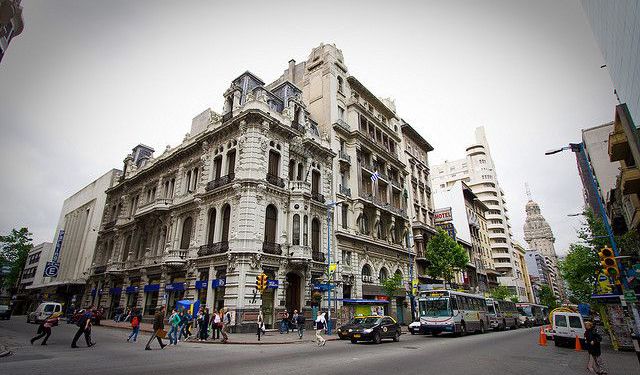
Montevideo Old Town Walking Tour
In Charles Darwin's journals, who visited Montevideo in the 1830s during the voyage of the Beagle, he observed that the city felt like “a town living in a state of perpetual expectation”, shaped by sieges, trade, and uncertainty.
Montevideo is the capital and largest city of Uruguay, shaped by its position on the northern bank of the River Plate and by centuries of rivalry between... view more
Tour Duration: 2 Hour(s)
Travel Distance: 2.5 Km or 1.6 Miles
Montevideo is the capital and largest city of Uruguay, shaped by its position on the northern bank of the River Plate and by centuries of rivalry between... view more
Tour Duration: 2 Hour(s)
Travel Distance: 2.5 Km or 1.6 Miles
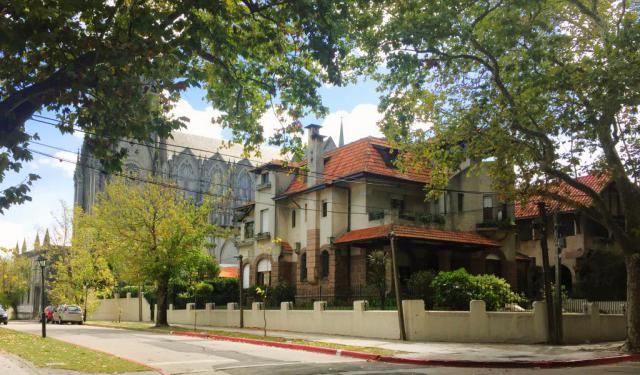
Prado District Walking Tour
The Prado is one of Montevideo’s oldest and most historically layered districts, shaped by a long transition from rural outskirts to a residential and cultural area closely linked to the city’s elite and intellectual life. The name Prado comes from the Spanish word for “meadow” or “pasture”, reflecting the area’s original landscape: open grasslands along the Miguelete Stream.
... view more
Tour Duration: 2 Hour(s)
Travel Distance: 3.6 Km or 2.2 Miles
... view more
Tour Duration: 2 Hour(s)
Travel Distance: 3.6 Km or 2.2 Miles