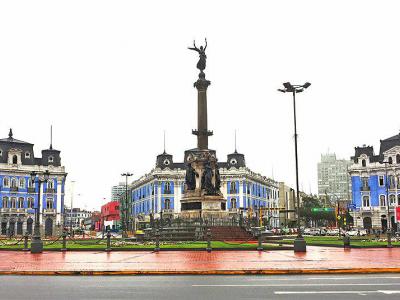


Plaza Dos de Mayo, Lima
Lima, a major city in South America, owes its existence to Spanish conquerors. It's known for its rich culture, historical significance, political influence, and strategic location, making it a popular tourist destination on the American continent. Must-visit places in the Peruvian capital include Plaza Dos de Mayo, Plaza Mayor, the Stone Cathedral, Poncho Art Gallery, and numerous stunning churches.
Plaza Dos De Mayo, inaugurated in 1874, is situated at the city's core. It commemorates the Battle of Callao on May 2, 1866, hence its name "Dos de Mayo," translating to "Second of May." This historic square replaced a previous one called the Queen's Oval and is characterized by its blue-colored surrounding buildings.
At the center of the square stands a monument, crafted in France and assembled in Peru from 1873 to 1874. Edmond Guillaume was the architect, while Louis-Léon Cugnot sculpted the Nike figure and the historical and allegorical bronzes.
Several significant avenues, such as Alfonso Ugarte, Colmena, and Colonial, radiate from the plaza. To alleviate traffic congestion, a vehicular tunnel was constructed beneath the square in the late 20th century.
If you're a history enthusiast or simply want to pay homage to the brave individuals who gave their lives in defense of their country, and to whom the city owes much of its existence, consider visiting this beautiful square in the heart of Lima.
Tip:
The roundabout is ideal to sit for a while and to observe the Neoclassical architecture of the surrounding buildings.
Plaza Dos De Mayo, inaugurated in 1874, is situated at the city's core. It commemorates the Battle of Callao on May 2, 1866, hence its name "Dos de Mayo," translating to "Second of May." This historic square replaced a previous one called the Queen's Oval and is characterized by its blue-colored surrounding buildings.
At the center of the square stands a monument, crafted in France and assembled in Peru from 1873 to 1874. Edmond Guillaume was the architect, while Louis-Léon Cugnot sculpted the Nike figure and the historical and allegorical bronzes.
Several significant avenues, such as Alfonso Ugarte, Colmena, and Colonial, radiate from the plaza. To alleviate traffic congestion, a vehicular tunnel was constructed beneath the square in the late 20th century.
If you're a history enthusiast or simply want to pay homage to the brave individuals who gave their lives in defense of their country, and to whom the city owes much of its existence, consider visiting this beautiful square in the heart of Lima.
Tip:
The roundabout is ideal to sit for a while and to observe the Neoclassical architecture of the surrounding buildings.
Want to visit this sight? Check out these Self-Guided Walking Tours in Lima. Alternatively, you can download the mobile app "GPSmyCity: Walks in 1K+ Cities" from Apple App Store or Google Play Store. The app turns your mobile device to a personal tour guide and it works offline, so no data plan is needed when traveling abroad.
Download The GPSmyCity App



Plaza Dos de Mayo on Map
Sight Name: Plaza Dos de Mayo
Sight Location: Lima, Peru (See walking tours in Lima)
Sight Type: Attraction/Landmark
Sight Location: Lima, Peru (See walking tours in Lima)
Sight Type: Attraction/Landmark
Nearby Sights
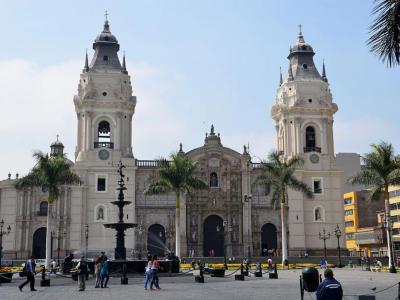
Walking Tours in Lima, Peru

Create Your Own Walk in Lima
Creating your own self-guided walk in Lima is easy and fun. Choose the city attractions that you want to see and a walk route map will be created just for you. You can even set your hotel as the start point of the walk.
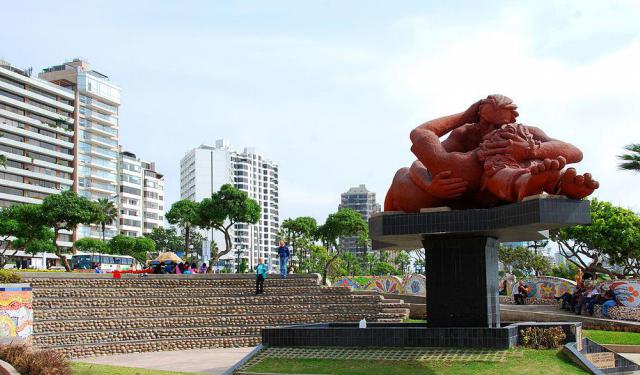
Miraflores Walking Tour
The district of Miraflores is one of Lima's key tourist destinations, renowned for its affluent setting, upscale shopping, phenomenal oceanic views, seashore restaurants, parks, and interesting archaeological sites. The attractions here are numerous and include, among others, the following:
La Huaca Pucllana – an archaeological complex, featuring a clay pyramid made of seven staggered... view more
Tour Duration: 2 Hour(s)
Travel Distance: 3.1 Km or 1.9 Miles
La Huaca Pucllana – an archaeological complex, featuring a clay pyramid made of seven staggered... view more
Tour Duration: 2 Hour(s)
Travel Distance: 3.1 Km or 1.9 Miles
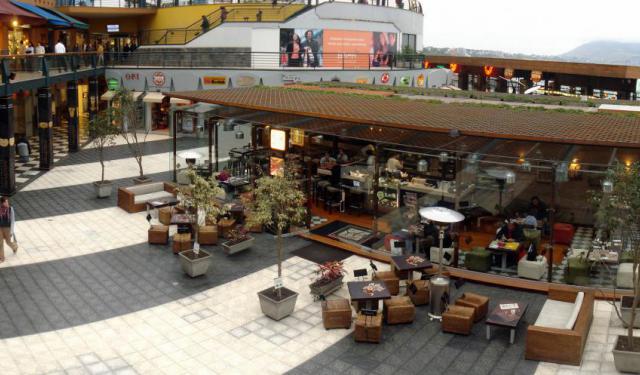
Food and Shopping Walk
Today's Lima is a large, commerce-booming and tourist-friendly capital, equally rich in terms of ancient culture as well as intricate cuisine and wealth of shopping opportunities suitable for various budgets.
Although in recent years many international brands have found their way to Lima’s stores, the majority of tourists keep looking to street fairs and artisan “Indian” markets... view more
Tour Duration: 2 Hour(s)
Travel Distance: 3.3 Km or 2.1 Miles
Although in recent years many international brands have found their way to Lima’s stores, the majority of tourists keep looking to street fairs and artisan “Indian” markets... view more
Tour Duration: 2 Hour(s)
Travel Distance: 3.3 Km or 2.1 Miles
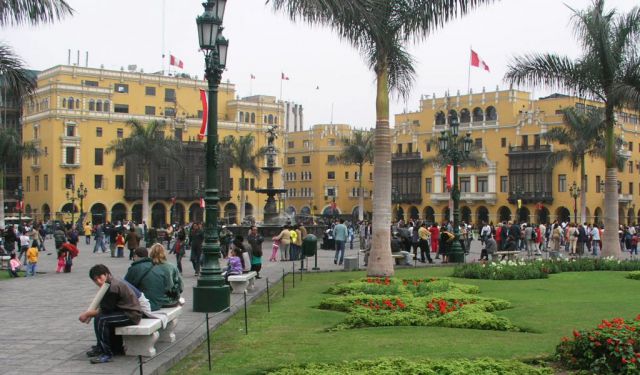
Lima Historic City Center Walking Tour
Alexander Humboldt, a German explorer and proponent of Romantic philosophy, once said Lima felt like two worlds colliding in the same street-and two centuries later, that still holds true.
Lima, the capital of Peru, was founded on January 18, 1535, by Spanish conquistador Francisco Pizarro, who named it the “City of Kings” in honor of the Epiphany and the Spanish crown. Yet the name... view more
Tour Duration: 2 Hour(s)
Travel Distance: 2.7 Km or 1.7 Miles
Lima, the capital of Peru, was founded on January 18, 1535, by Spanish conquistador Francisco Pizarro, who named it the “City of Kings” in honor of the Epiphany and the Spanish crown. Yet the name... view more
Tour Duration: 2 Hour(s)
Travel Distance: 2.7 Km or 1.7 Miles
Useful Travel Guides for Planning Your Trip
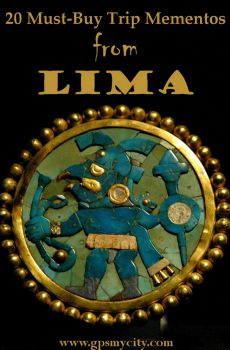
20 Must-Buy Trip Mementos from Lima
Today's Peru is a basket of natural, cultural and historical riches manifested in the multitude of handicrafts that have flourished in the country for thousands of years and embraced Inca, Spanish and other influences. Local jewelry, wool, pottery, leather, music, food and drinks - all have a...
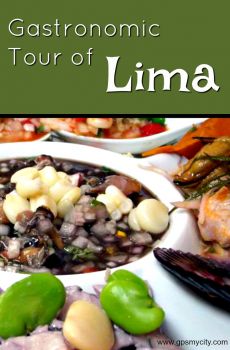
Gastronomic Tour of Lima
Peruvian cuisine reflects a rich cultural and geographical diversity. During half a millennium of fusion, flavors from Europe, Africa, and Asia have mingled with Incan fare. Perú’s approximately 90 microclimates produce a startling repertoire of ingredients, many unique to Peruvian soil. A...