

Saint John's Episcopal Church, Savannah
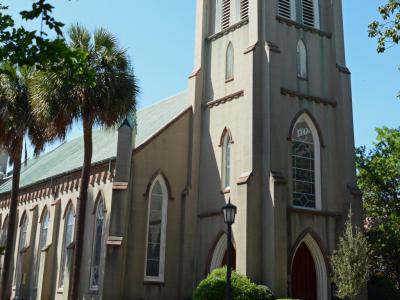
To find Saint John’s Episcopal Church on Madison Square, turn west and look for the Gothic-style church with tall pointed windows and a single slender spire. The historic Green-Meldrim House is immediately to the church’s left, on the southern half of the block.
The parish was established in 1841 as Savannah’s second Episcopal congregation. Many of its first members came from the nearby Christ Church, and its first rector, Stephen Elliott, later became the first Episcopal bishop of Georgia.
The present church was designed by Calvin Otis and completed in 1853. Although relatively restrained compared with some Gothic Revival churches, it is easily recognized by its pointed arches, narrow windows, and prominent spire. A ship’s mast reportedly forms the central support of the spire, while the church’s chimes can often be heard around Madison Square.
Inside, first look upward at the exposed hammer-beam ceiling, which gives the nave a greater sense of height. Then turn toward the rear, or western end, to see the pipe organ positioned in the gallery above the entrance. At the opposite end, beyond the rows of pews, the altar is backed by an elaborate reredos featuring a large figure of the crucified and risen Christ.
Along the north and south walls, look for fourteen stained-glass windows dating mainly from the late 19th century. Together, they present episodes from the life of Christ in sequence, including the Annunciation, the Nativity, the Flight into Egypt, Jesus in the Temple, the Crucifixion and the Resurrection. Move slowly along either aisle to examine the individual scenes and the rich colors of the glass.
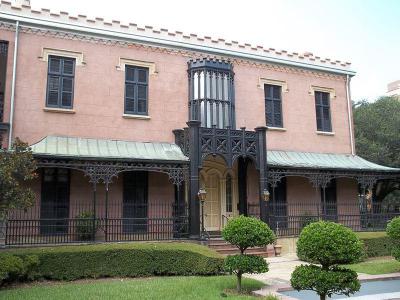
After leaving the church, turn left toward the adjoining Green-Meldrim House. Identify it by its ornate cast-iron entrance porch, pointed Gothic details, projecting windows and crenelated roofline. Built for cotton merchant Charles Green, the mansion served as General William Tecumseh Sherman’s Savannah headquarters from December 1864 until February 1865. Judge Peter Meldrim later purchased the building, and Saint John’s acquired it in 1943. Today, it remains the church’s parish house and hosts meetings, receptions, concerts, and other events.
The parish was established in 1841 as Savannah’s second Episcopal congregation. Many of its first members came from the nearby Christ Church, and its first rector, Stephen Elliott, later became the first Episcopal bishop of Georgia.
The present church was designed by Calvin Otis and completed in 1853. Although relatively restrained compared with some Gothic Revival churches, it is easily recognized by its pointed arches, narrow windows, and prominent spire. A ship’s mast reportedly forms the central support of the spire, while the church’s chimes can often be heard around Madison Square.
Inside, first look upward at the exposed hammer-beam ceiling, which gives the nave a greater sense of height. Then turn toward the rear, or western end, to see the pipe organ positioned in the gallery above the entrance. At the opposite end, beyond the rows of pews, the altar is backed by an elaborate reredos featuring a large figure of the crucified and risen Christ.
Along the north and south walls, look for fourteen stained-glass windows dating mainly from the late 19th century. Together, they present episodes from the life of Christ in sequence, including the Annunciation, the Nativity, the Flight into Egypt, Jesus in the Temple, the Crucifixion and the Resurrection. Move slowly along either aisle to examine the individual scenes and the rich colors of the glass.
After leaving the church, turn left toward the adjoining Green-Meldrim House. Identify it by its ornate cast-iron entrance porch, pointed Gothic details, projecting windows and crenelated roofline. Built for cotton merchant Charles Green, the mansion served as General William Tecumseh Sherman’s Savannah headquarters from December 1864 until February 1865. Judge Peter Meldrim later purchased the building, and Saint John’s acquired it in 1943. Today, it remains the church’s parish house and hosts meetings, receptions, concerts, and other events.
Want to visit this sight? Check out these Self-Guided Walking Tours in Savannah. Alternatively, you can download the mobile app "GPSmyCity: Walks in 1K+ Cities" from Apple App Store or Google Play Store. The app turns your mobile device to a personal tour guide and it works offline, so no data plan is needed when traveling abroad.
Download The GPSmyCity App



Saint John's Episcopal Church on Map
Sight Name: Saint John's Episcopal Church
Sight Location: Savannah, USA (See walking tours in Savannah)
Sight Type: Religious
Guide(s) Containing This Sight:
Sight Location: Savannah, USA (See walking tours in Savannah)
Sight Type: Religious
Guide(s) Containing This Sight:
Nearby Sights




Walking Tours in Savannah, Georgia

Create Your Own Walk in Savannah
Creating your own self-guided walk in Savannah is easy and fun. Choose the city attractions that you want to see and a walk route map will be created just for you. You can even set your hotel as the start point of the walk.
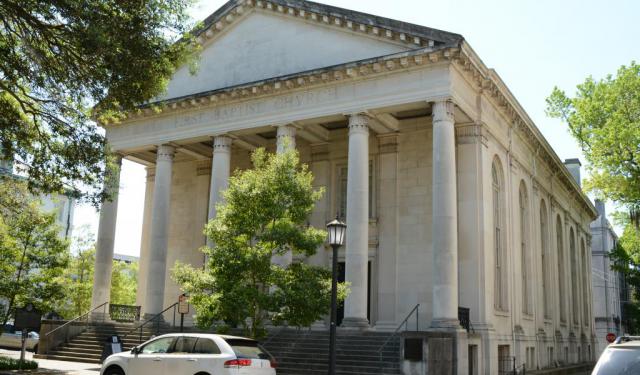
Savannah's Historical Churches
The conspicuous churches of various styles and denominations – Catholic, Baptist, Lutheran, Presbyterian, Unitarian, and Methodist – dot the cityscape of Savannah, Georgia, in abundance. With their spires reaching high, as if striving to touch heaven, these churches stand like sacred sentinels, guarding the city's spiritual heritage and illuminating its architectural grandeur.
The... view more
Tour Duration: 2 Hour(s)
Travel Distance: 2.6 Km or 1.6 Miles
The... view more
Tour Duration: 2 Hour(s)
Travel Distance: 2.6 Km or 1.6 Miles

African-American Heritage Tour
African American history in the United States is shaped by many themes, but few are as powerful as resilience. Through generations of hardship and injustice, African Americans have preserved their communities, strengthened their cultural traditions, and profoundly influenced the nation’s politics, art, literature, and music.
Savannah, Georgia, is an important place for understanding this... view more
Tour Duration: 2 Hour(s)
Travel Distance: 4.4 Km or 2.7 Miles
Savannah, Georgia, is an important place for understanding this... view more
Tour Duration: 2 Hour(s)
Travel Distance: 4.4 Km or 2.7 Miles
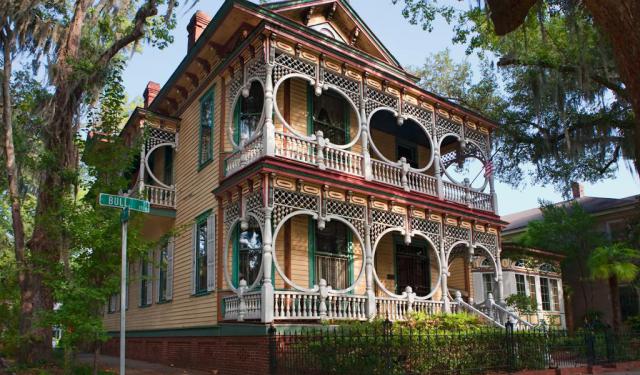
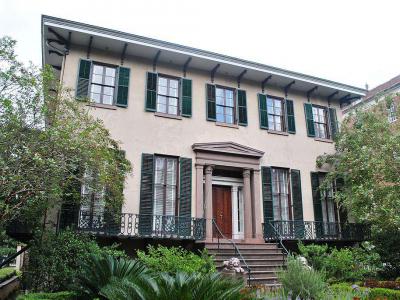
Historical Houses Walking Tour
Savannah, Georgia breathes history. You can feel it in the cobblestone alleyways and quaint squares dotting the city. An enchanting walk through the heart of Savannah's Historic District (one of the most carefully preserved in the United States) highlights an array of beautiful homes.
Saved by the forward-thinking residents from being bulldozed in the 1960s, these gorgeous structures (with... view more
Tour Duration: 2 Hour(s)
Travel Distance: 3.7 Km or 2.3 Miles
Saved by the forward-thinking residents from being bulldozed in the 1960s, these gorgeous structures (with... view more
Tour Duration: 2 Hour(s)
Travel Distance: 3.7 Km or 2.3 Miles
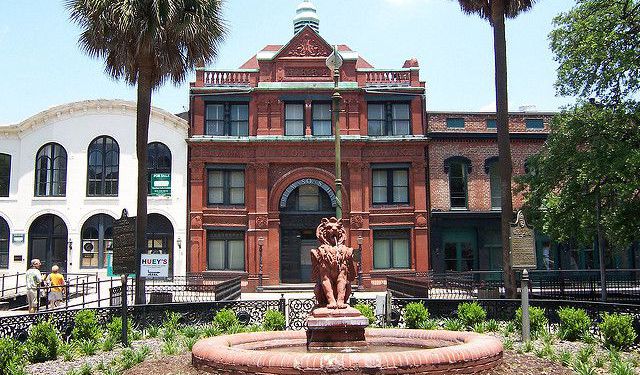
Savannah Historic Downtown Walking Tour
Savannah may not be the whole of Sweet Georgia, but no Georgia is complete without Savannah, that's for sure.
This coastal city is named after the river upon which it stands, whose name is likely to be the variant pronunciation of “Shawnee”, the Native American tribe which inhabited the area in the 1680s. Alternatively, it could have derived from the Spanish “sabana”, referring to... view more
Tour Duration: 2 Hour(s)
Travel Distance: 3.7 Km or 2.3 Miles
This coastal city is named after the river upon which it stands, whose name is likely to be the variant pronunciation of “Shawnee”, the Native American tribe which inhabited the area in the 1680s. Alternatively, it could have derived from the Spanish “sabana”, referring to... view more
Tour Duration: 2 Hour(s)
Travel Distance: 3.7 Km or 2.3 Miles
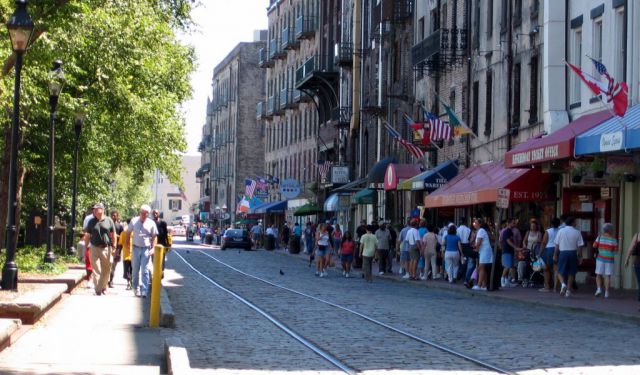
River Street Sightseeing and Shopping
The story of Savannah's River Street begins in 1733 with General James Edward Oglethorpe's landing on the bank of the Savannah River and founding the British colony of Georgia. Today, the cobblestone River Street caters to a variety of interests, combining the rustic beauty of the past with the energy of the present.
The half-mile-long promenade is one of the city's major tourist... view more
Tour Duration: 1 Hour(s)
Travel Distance: 0.7 Km or 0.4 Miles
The half-mile-long promenade is one of the city's major tourist... view more
Tour Duration: 1 Hour(s)
Travel Distance: 0.7 Km or 0.4 Miles