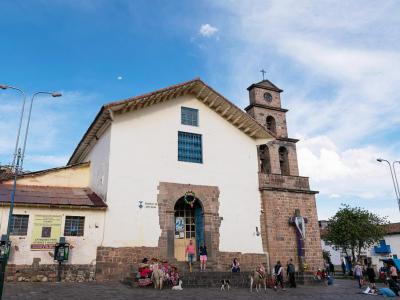


San Blas Church, Cusco
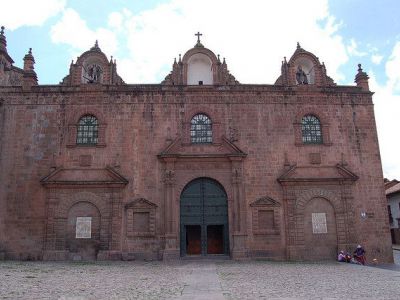
San Blas Church was built on the site of an Inca temple dedicated to the god of thunder and lightning. The church was originally constructed in the mid-1500s and rebuilt after the devastating earthquake of 1650. San Blas Church has a simple adobe façade, but its interior is richly decorated and contains several notable works of art. Many of its artworks, along with its famous pulpit, were added after the 1650 earthquake.
The church's most celebrated feature is its ornate Baroque pulpit, carved from cedar and richly decorated. Once you enter the church and face the main altar, look to the left-hand side of the nave, where the pulpit is mounted high against the wall. It is considered one of the finest examples of woodcarving in the Americas. According to a popular legend, the pulpit was carved by an indigenous craftsman who recovered from a serious illness and dedicated his life to serving the church. The story also claims that the carver's skull was incorporated into the pulpit after his death.
The church also houses several important paintings. Among them is a work by Peruvian artist Diego Quispe Tito depicting the Resurrection of Lazarus. To see the church's paintings, look along the large framed canvases lining the walls of the single nave, particularly above the side altarpieces. The collection includes scenes from the life of Saint Blaise as well as the Resurrection of Lazarus. Quispe Tito is regarded as one of the leading figures of the Cuzco School of painting.
In addition, the church contains various religious sculptures. Look for these within the gilded altarpieces along the sides of the nave and around the main altar at the far end of the church, where figures of saints occupy carved niches. The church preserves numerous polychrome sculptures as part of its collection.
The church's most celebrated feature is its ornate Baroque pulpit, carved from cedar and richly decorated. Once you enter the church and face the main altar, look to the left-hand side of the nave, where the pulpit is mounted high against the wall. It is considered one of the finest examples of woodcarving in the Americas. According to a popular legend, the pulpit was carved by an indigenous craftsman who recovered from a serious illness and dedicated his life to serving the church. The story also claims that the carver's skull was incorporated into the pulpit after his death.
The church also houses several important paintings. Among them is a work by Peruvian artist Diego Quispe Tito depicting the Resurrection of Lazarus. To see the church's paintings, look along the large framed canvases lining the walls of the single nave, particularly above the side altarpieces. The collection includes scenes from the life of Saint Blaise as well as the Resurrection of Lazarus. Quispe Tito is regarded as one of the leading figures of the Cuzco School of painting.
In addition, the church contains various religious sculptures. Look for these within the gilded altarpieces along the sides of the nave and around the main altar at the far end of the church, where figures of saints occupy carved niches. The church preserves numerous polychrome sculptures as part of its collection.
Want to visit this sight? Check out these Self-Guided Walking Tours in Cusco. Alternatively, you can download the mobile app "GPSmyCity: Walks in 1K+ Cities" from Apple App Store or Google Play Store. The app turns your mobile device to a personal tour guide and it works offline, so no data plan is needed when traveling abroad.
Download The GPSmyCity App



San Blas Church on Map
Sight Name: San Blas Church
Sight Location: Cusco, Peru (See walking tours in Cusco)
Sight Type: Religious
Guide(s) Containing This Sight:
Sight Location: Cusco, Peru (See walking tours in Cusco)
Sight Type: Religious
Guide(s) Containing This Sight:
Nearby Sights
Walking Tours in Cusco, Peru

Create Your Own Walk in Cusco
Creating your own self-guided walk in Cusco is easy and fun. Choose the city attractions that you want to see and a walk route map will be created just for you. You can even set your hotel as the start point of the walk.
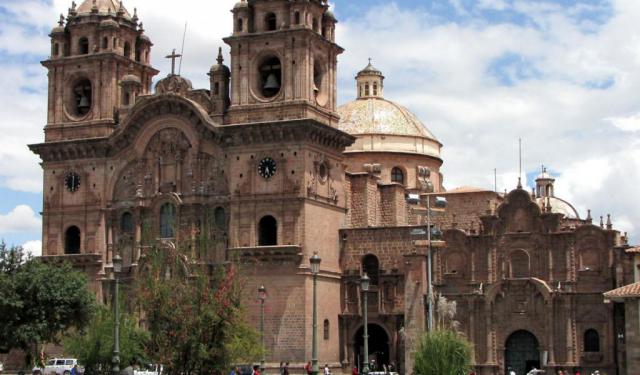
Cusco's Historical Churches
Cusco, the former capital of the Inca Empire, is one of the oldest cities in the world. In the 16th century, Spanish missionaries introduced the area to Catholicism. The result of that has been a plethora of historical churches built in the city since.
Among the marvels of local ecclesiastical architecture, the Cusco Cathedral reigns supreme. Constructed on the foundations of an Inca temple,... view more
Tour Duration: 1 Hour(s)
Travel Distance: 2.1 Km or 1.3 Miles
Among the marvels of local ecclesiastical architecture, the Cusco Cathedral reigns supreme. Constructed on the foundations of an Inca temple,... view more
Tour Duration: 1 Hour(s)
Travel Distance: 2.1 Km or 1.3 Miles
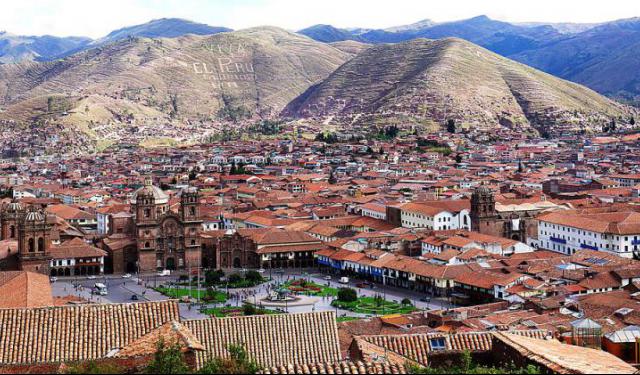
Walking Through Cusco's Historical City Center
Nestled high in the Andes Mountains, Cusco is a city shaped by layers of history. Long before it became the capital of the Inca Empire, the area was inhabited by the Killke people, who lived here from around 900 to 1200. They are believed to have built the first structures at Sacsayhuaman, the great walled complex overlooking the city. When the Incas rose to power in the 13th century, they... view more
Tour Duration: 2 Hour(s)
Travel Distance: 3.3 Km or 2.1 Miles
Tour Duration: 2 Hour(s)
Travel Distance: 3.3 Km or 2.1 Miles