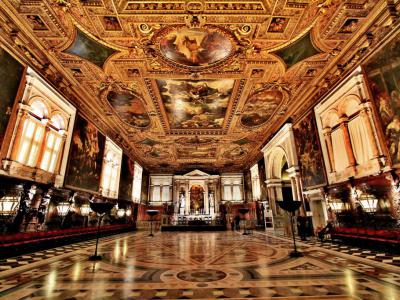


Scuola Grande di San Rocco (Great School of St. Roch), Venice (must see)
The religious fraternity of Saint Roch was founded in Venice in 1478, at a time when faith and fear often went hand in hand. Seven years later, the saint’s relics arrived from Germany, and donations began pouring in with impressive enthusiasm. By 1489, the group had grown wealthy enough to be promoted to a “Great School” status, the top tier of Venetian confraternities. Then came the plague of 1527. As panic spread throughout the city, so did contributions, with Venetians hoping Saint Roch might offer some protection against the disease. The result was a financial windfall that eventually paid for the impressive building you see today-along with its extraordinary painted interiors...
What sets the Great School of San Roch apart is its decoration. No other Venetian confraternity went quite this far. The entire interior was entrusted to one artist: Tintoretto. Born Jacopo Robusti, he earned his nickname-Tintoretto (which means “Little Dyer”)-from his father’s trade, and then another nickname, Il Furioso (or “The Furious”), from the sheer intensity of his work style. Indeed, his brushwork shocked some contemporaries, thrilled others, and moved at a speed that seemed almost reckless. Even so, this was no quick job. Tintoretto began the project at age 46 and was still painting here three decades later, working almost until his death in 1594.
Over those thirty years, he produced more than fifty monumental canvases, covering walls and ceilings with scenes that feel dramatic, restless, and alive. Critics later called the building one of the most precious in Italy, largely because of this overwhelming cycle. Although the story begins downstairs with the Annunciation, the best place to start is upstairs, in the smaller Sala dell’Albergo. Here, the vast Crucifixion unfolds like a visual storm, offering a clear sense of Tintoretto at full power.
The main upper hall continues with New Testament scenes that ignore polite rules of perspective and lighting. Figures lean, twist, and surge through space, painted by the artist already in his late sixties and still pushing boundaries. Many consider these works among the finest of his career.
One last thing before you go in: this place is often quieter than Venice’s headline attractions, which only adds to its impact. Bring an audio guide-there are no wall texts to help you-and dress warmly, as the rooms can be chilly. Mirrors in the chapter room let you study the ceiling without turning your neck into a work of modern sculpture. And yes, bring your camera, too. Just don’t expect photos to capture the real experience...
What sets the Great School of San Roch apart is its decoration. No other Venetian confraternity went quite this far. The entire interior was entrusted to one artist: Tintoretto. Born Jacopo Robusti, he earned his nickname-Tintoretto (which means “Little Dyer”)-from his father’s trade, and then another nickname, Il Furioso (or “The Furious”), from the sheer intensity of his work style. Indeed, his brushwork shocked some contemporaries, thrilled others, and moved at a speed that seemed almost reckless. Even so, this was no quick job. Tintoretto began the project at age 46 and was still painting here three decades later, working almost until his death in 1594.
Over those thirty years, he produced more than fifty monumental canvases, covering walls and ceilings with scenes that feel dramatic, restless, and alive. Critics later called the building one of the most precious in Italy, largely because of this overwhelming cycle. Although the story begins downstairs with the Annunciation, the best place to start is upstairs, in the smaller Sala dell’Albergo. Here, the vast Crucifixion unfolds like a visual storm, offering a clear sense of Tintoretto at full power.
The main upper hall continues with New Testament scenes that ignore polite rules of perspective and lighting. Figures lean, twist, and surge through space, painted by the artist already in his late sixties and still pushing boundaries. Many consider these works among the finest of his career.
One last thing before you go in: this place is often quieter than Venice’s headline attractions, which only adds to its impact. Bring an audio guide-there are no wall texts to help you-and dress warmly, as the rooms can be chilly. Mirrors in the chapter room let you study the ceiling without turning your neck into a work of modern sculpture. And yes, bring your camera, too. Just don’t expect photos to capture the real experience...
Want to visit this sight? Check out these Self-Guided Walking Tours in Venice. Alternatively, you can download the mobile app "GPSmyCity: Walks in 1K+ Cities" from Apple App Store or Google Play Store. The app turns your mobile device to a personal tour guide and it works offline, so no data plan is needed when traveling abroad.
Download The GPSmyCity App



Scuola Grande di San Rocco (Great School of St. Roch) on Map
Sight Name: Scuola Grande di San Rocco (Great School of St. Roch)
Sight Location: Venice, Italy (See walking tours in Venice)
Sight Type: Attraction/Landmark
Guide(s) Containing This Sight:
Sight Location: Venice, Italy (See walking tours in Venice)
Sight Type: Attraction/Landmark
Guide(s) Containing This Sight:
Nearby Sights

Walking Tours in Venice, Italy

Create Your Own Walk in Venice
Creating your own self-guided walk in Venice is easy and fun. Choose the city attractions that you want to see and a walk route map will be created just for you. You can even set your hotel as the start point of the walk.
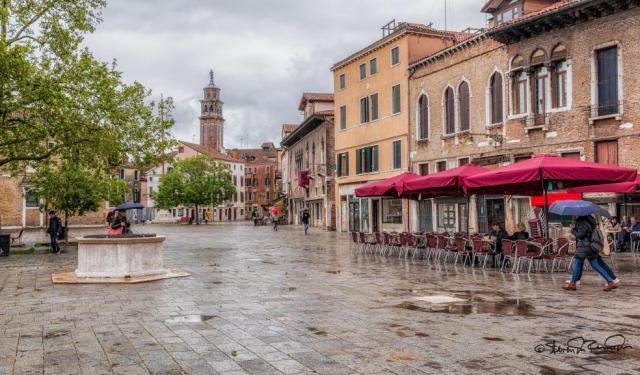
Dorsoduro Walking Tour
One of the six districts of Venice, Dorsoduro’s name translates as “hard bridge” due to the area's relatively high terrain. Home to some of the city’s highest spots, it also comprises some of Venice’s most picturesque canals, historic locations and cultural venues, including the Basilica di Santa Maria della Salute; the Gallerie dell’ Academia & the Ca’ Rezzonico – both... view more
Tour Duration: 1 Hour(s)
Travel Distance: 2.1 Km or 1.3 Miles
Tour Duration: 1 Hour(s)
Travel Distance: 2.1 Km or 1.3 Miles
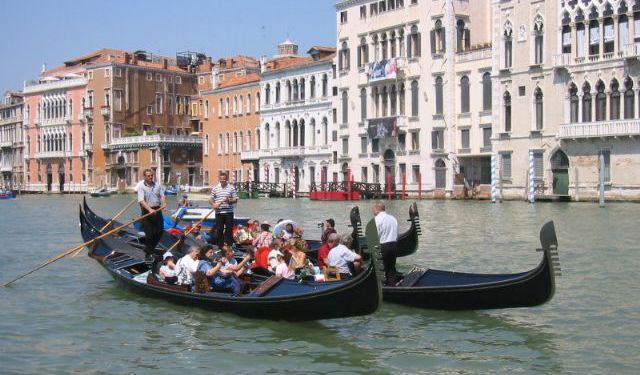
Grand Canal Walking Tour
The main waterway in Venice, Grand Canal snakes in an "S" shape through the center of the city, dividing its main districts. On both sides of this thoroughfare are the most beautiful buildings dating from the 12th to the 18th centuries that tell the story of a thousand years of Venetian splendor. While one can view the architectural parade from water buses, our self-guided walking tour... view more
Tour Duration: 3 Hour(s)
Travel Distance: 5.2 Km or 3.2 Miles
Tour Duration: 3 Hour(s)
Travel Distance: 5.2 Km or 3.2 Miles
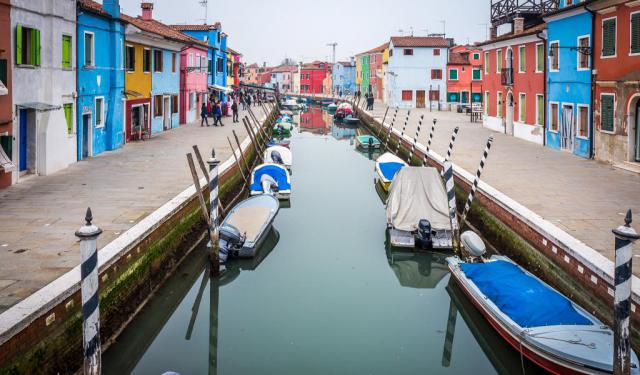
Murano Island Walking Tour
Murano Island is known around the world as the “Glass Island,” and it didn’t earn that nickname overnight. This reputation rests on more than seven centuries of uninterrupted glassmaking. Located just north of Venice, separated by a slim ribbon of lagoon water, Murano grew into a place where identity and industry became inseparable. Although inhabited since Roman times, the island truly... view more
Tour Duration: 1 Hour(s)
Travel Distance: 2.3 Km or 1.4 Miles
Tour Duration: 1 Hour(s)
Travel Distance: 2.3 Km or 1.4 Miles
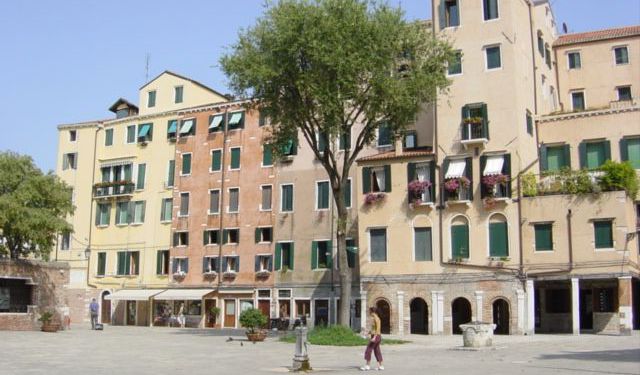
Jewish Ghetto Tour
Founded in 1516, the Jewish Ghetto of Venice earns its grim little footnote in European history as the first place officially designated as a “ghetto.” It began as a Venetian compromise with sharp edges: the Papacy urged to expel the Jews, while Venice-never one to waste a useful population-chose to confine them to a small island.
The word “ghetto” comes with competing origin stories.... view more
Tour Duration: 1 Hour(s)
Travel Distance: 0.4 Km or 0.2 Miles
The word “ghetto” comes with competing origin stories.... view more
Tour Duration: 1 Hour(s)
Travel Distance: 0.4 Km or 0.2 Miles
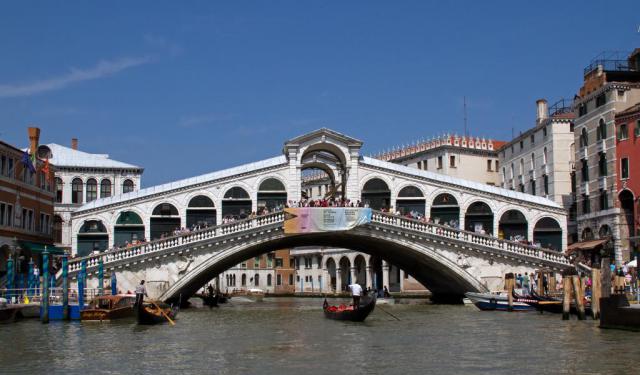
Around Rialto Bridge
The Rialto district represents the earliest urban and commercial core of Venice that has shaped the city’s identity for centuries. Long before grand palaces lined the canals or empires were managed from marble halls, this was the practical heart of the lagoon. Its name comes from Rivo Alto, meaning “high bank,” a rare patch of ground that stayed relatively dry and therefore attracted... view more
Tour Duration: 1 Hour(s)
Travel Distance: 0.4 Km or 0.2 Miles
Tour Duration: 1 Hour(s)
Travel Distance: 0.4 Km or 0.2 Miles
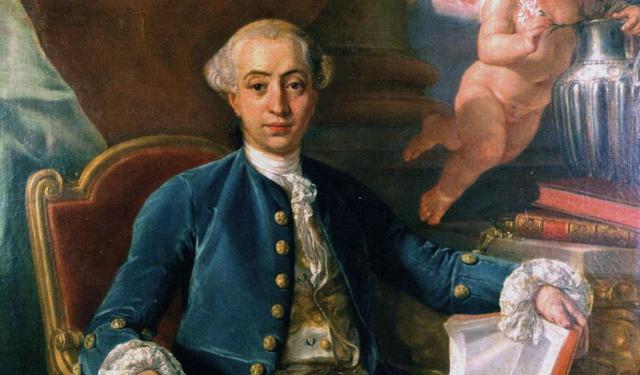
Casanova's Venice
Giacomo Casanova is usually introduced as history’s most famous seducer-but that shorthand misses the point. Casanova didn’t simply charm his way through life, but was shaped by a very particular moment in Venetian history. He came of age in the eighteenth century, when the Republic of Venice was living on its reputation. The great maritime empire was fading, its political and commercial power... view more
Tour Duration: 2 Hour(s)
Travel Distance: 4.5 Km or 2.8 Miles
Tour Duration: 2 Hour(s)
Travel Distance: 4.5 Km or 2.8 Miles
Useful Travel Guides for Planning Your Trip

15 Distinctively Italian Things to Buy in Venice
Venice has been a tourist mecca for over a century now, with millions of visitors flocking in every year to see this unique place on the face of the Earth. Many, if not all, of these people seek to obtain something memorable as a token of their stay in this city. By far, not all of them know which...