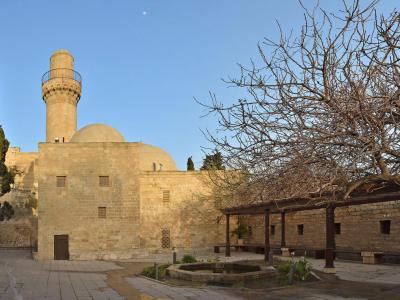


Shirvanshahs Palace Mosque, Baku
The Palace of the Shirvanshahs in Baku stands as a significant emblem of Azerbaijani heritage and architecture, meriting its UNESCO World Heritage status. Constructed in the 15th century during the reign of the Shirvanshah dynasty, the palace epitomizes the architectural ingenuity of the Shirvan-Absheron school.
Located in the Inner City of Baku, this historic complex not only includes the main palace building but also features an array of auxiliary structures such as the Divanhane (a ceremonial court), burial vaults, and the shah’s mosque complete with a minaret. Notably, the mosque hosts inscriptions dating its and the adjacent tomb's construction to the year 845 in the Islamic calendar, corresponding to the early 15th century CE. These inscriptions also commemorate Shirvan Khalil I, the ruler who commissioned these edifices.
Adjacent to the palace is the so-called "mausoleum of the dervish," dedicated to Seyid Yahya Bakuvi, along with remnants of an ancient mosque and a bathhouse, emphasizing the comprehensive religious and daily life aspects covered within the palace grounds. Historically, the palace was fortified with a wall and towers, forming a critical part of Baku’s defensive structure, though no traces of these walls remain visible today.
Throughout its history, the palace complex has seen various additions and renovations, indicative of the evolving architectural styles and functionalities of the period. Despite the differences in construction periods, the palace buildings share a cohesive aesthetic, marked by uniform stone masonry and proportional cubic volumes topped with domes.
In recognition of its cultural and historical value, the complex was declared a museum-preserve in 1964 and was included in the UNESCO World Heritage List in 2000 alongside the Maiden Tower and the fortified walls of Baku’s old city. The palace's cultural significance is also highlighted in Azerbaijani currency, where it is depicted on the obverse of the 10,000 manat banknote from 1994–2006 and the 10 new manat banknote issued since 2006.
Today, the Palace of the Shirvanshahs remains a treasured landmark, attracting visitors globally and serving as a proud symbol of Azerbaijan's rich history and architectural tradition.
Located in the Inner City of Baku, this historic complex not only includes the main palace building but also features an array of auxiliary structures such as the Divanhane (a ceremonial court), burial vaults, and the shah’s mosque complete with a minaret. Notably, the mosque hosts inscriptions dating its and the adjacent tomb's construction to the year 845 in the Islamic calendar, corresponding to the early 15th century CE. These inscriptions also commemorate Shirvan Khalil I, the ruler who commissioned these edifices.
Adjacent to the palace is the so-called "mausoleum of the dervish," dedicated to Seyid Yahya Bakuvi, along with remnants of an ancient mosque and a bathhouse, emphasizing the comprehensive religious and daily life aspects covered within the palace grounds. Historically, the palace was fortified with a wall and towers, forming a critical part of Baku’s defensive structure, though no traces of these walls remain visible today.
Throughout its history, the palace complex has seen various additions and renovations, indicative of the evolving architectural styles and functionalities of the period. Despite the differences in construction periods, the palace buildings share a cohesive aesthetic, marked by uniform stone masonry and proportional cubic volumes topped with domes.
In recognition of its cultural and historical value, the complex was declared a museum-preserve in 1964 and was included in the UNESCO World Heritage List in 2000 alongside the Maiden Tower and the fortified walls of Baku’s old city. The palace's cultural significance is also highlighted in Azerbaijani currency, where it is depicted on the obverse of the 10,000 manat banknote from 1994–2006 and the 10 new manat banknote issued since 2006.
Today, the Palace of the Shirvanshahs remains a treasured landmark, attracting visitors globally and serving as a proud symbol of Azerbaijan's rich history and architectural tradition.
Want to visit this sight? Check out these Self-Guided Walking Tours in Baku. Alternatively, you can download the mobile app "GPSmyCity: Walks in 1K+ Cities" from Apple App Store or Google Play Store. The app turns your mobile device to a personal tour guide and it works offline, so no data plan is needed when traveling abroad.
Download The GPSmyCity App



Shirvanshahs Palace Mosque on Map
Sight Name: Shirvanshahs Palace Mosque
Sight Location: Baku, Azerbaijan (See walking tours in Baku)
Sight Type: Religious
Sight Location: Baku, Azerbaijan (See walking tours in Baku)
Sight Type: Religious
Nearby Sights
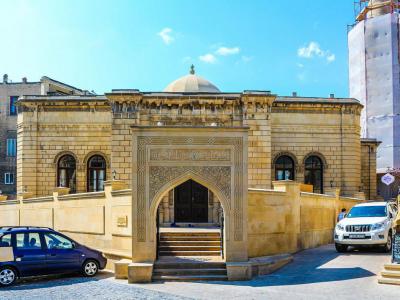
Walking Tours in Baku, Azerbaijan

Create Your Own Walk in Baku
Creating your own self-guided walk in Baku is easy and fun. Choose the city attractions that you want to see and a walk route map will be created just for you. You can even set your hotel as the start point of the walk.
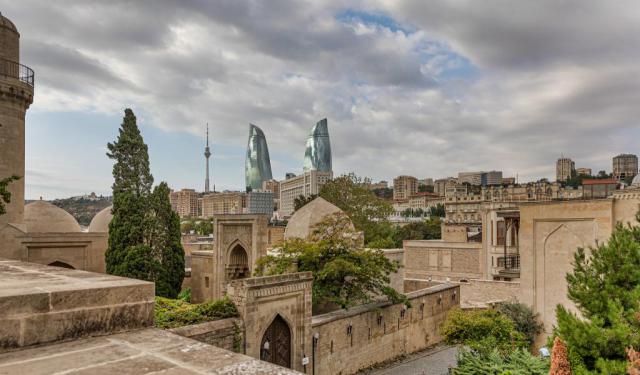
A Walk Through Baku Old City
Baku's "Ichari Shahar", which literally means "Inner City," is also often referred to by foreigners as the Old City. Its unique architecture differs considerably from other ancient places in Azerbaijan and is replete with fascinating historical monuments. The most prominent of them are the 12th-century, 97-foot Maiden Tower-the most distinctive symbol of the country,... view more
Tour Duration: 1 Hour(s)
Travel Distance: 1.0 Km or 0.6 Miles
Tour Duration: 1 Hour(s)
Travel Distance: 1.0 Km or 0.6 Miles
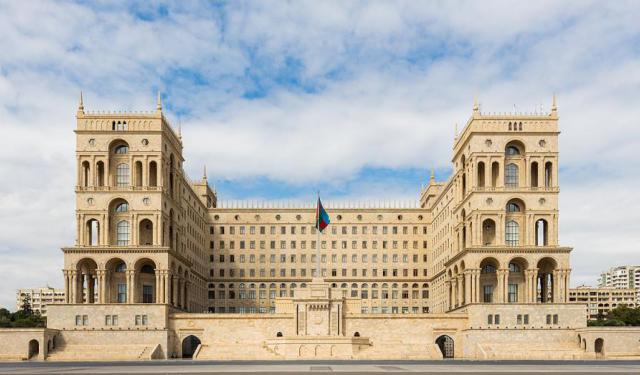
A Walking Guide to Baku's Architectural Jewels
The city of Baku is an architectural marvel that delights with its historic buildings, grand mansions and cultural diversity. The Old City, for example, is full of fantastic old mosques and palaces that are listed as heritage monuments by UNESCO. The city is especially beautiful at night when it is wonderfully illuminated. Follow this self-guided walking tour to see the most impressive... view more
Tour Duration: 2 Hour(s)
Travel Distance: 3.8 Km or 2.4 Miles
Tour Duration: 2 Hour(s)
Travel Distance: 3.8 Km or 2.4 Miles
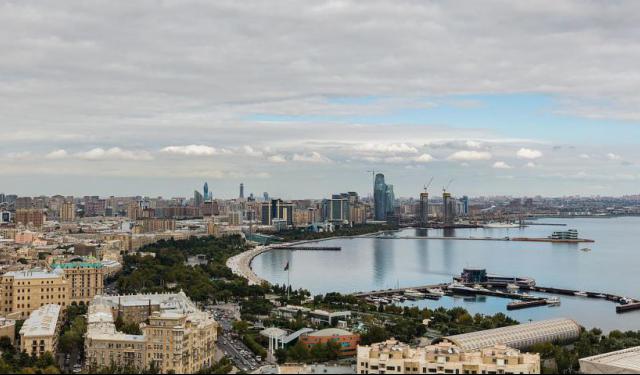
Explore Baku's Top Attractions on Foot
When French novelist Alexandre Dumas arrived here in 1858, he came looking for something Baku had been famous for long before oil derricks and skyscrapers-the mysterious fires that seemed to rise straight out of the earth.
The origin of the name Baku is uncertain. A popular explanation derives the name from the Persian Badkube, meaning roughly “wind-beaten” or “pounded by the wind,” an... view more
Tour Duration: 2 Hour(s)
Travel Distance: 4.1 Km or 2.5 Miles
The origin of the name Baku is uncertain. A popular explanation derives the name from the Persian Badkube, meaning roughly “wind-beaten” or “pounded by the wind,” an... view more
Tour Duration: 2 Hour(s)
Travel Distance: 4.1 Km or 2.5 Miles