

Explore Baku's Top Attractions on Foot (Self Guided), Baku
When French novelist Alexandre Dumas arrived here in 1858, he came looking for something Baku had been famous for long before oil derricks and skyscrapers-the mysterious fires that seemed to rise straight out of the earth.
The origin of the name Baku is uncertain. A popular explanation derives the name from the Persian Badkube, meaning roughly “wind-beaten” or “pounded by the wind,” an appropriate description of a city famous for its strong Caspian winds. However, historians generally consider this a later folk etymology, since the form appears relatively late. Another theory connects Baku with Bagavan, interpreted as “place of God,” possibly referring to the region’s ancient fire-worship traditions and naturally burning petroleum deposits.
Human settlement in the area reaches back to prehistoric times. Baku appears clearly in written sources by the 10th century AD, when Arab and Persian geographers described it as an important Caspian port known especially for petroleum. Its harbor connected maritime trade across the Caspian with caravan routes leading inland.
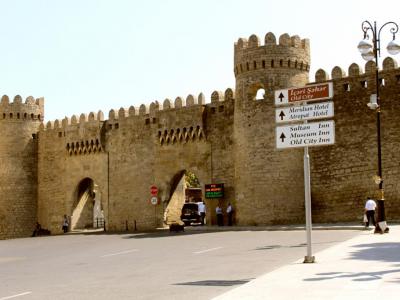
During the Middle Ages, Baku belonged to the state of Shirvan and became one of the residences, and eventually the capital, of the Shirvanshahs. The medieval city developed behind strong defensive walls, much of which survive around the Old City. Baku later passed between Persian, Ottoman, and Russian control.
The discovery and industrial exploitation of enormous oil reserves transformed Baku during the late 19th century. After restrictions on private oil development were relaxed in 1872, investors and workers poured into the city. By 1901, the Baku region was producing more than half of the world’s petroleum, creating extraordinary wealth and a rapidly expanding cosmopolitan city filled with European-influenced architecture.
Following the collapse of the Russian Empire, Baku became the capital of the independent Azerbaijan Democratic Republic in 1918. Soviet forces took the city in 1920, and it remained the capital of Soviet Azerbaijan until the Soviet Union collapsed. Today, its skyline combines its medieval Old City, grand oil-boom mansions, Soviet architecture, and modern development.
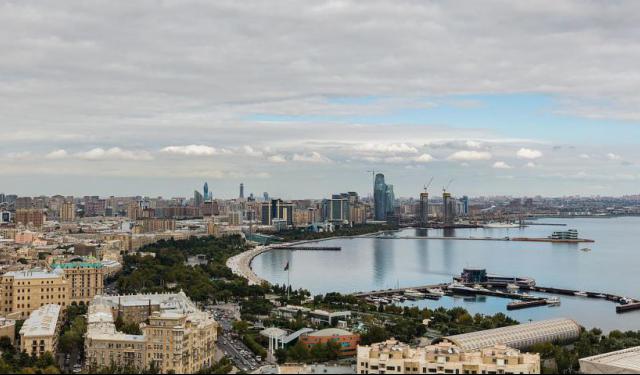
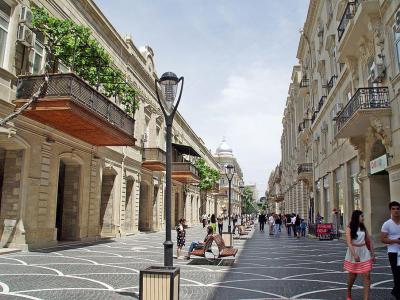
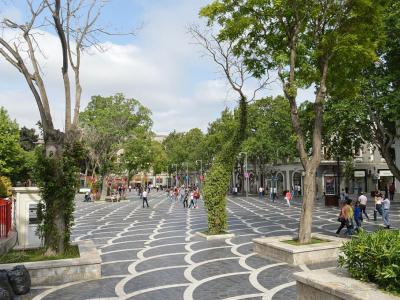
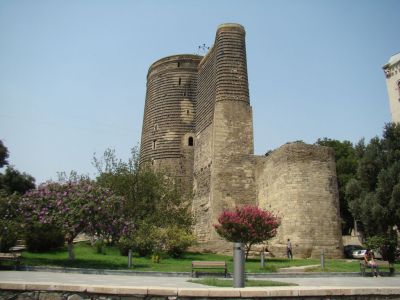
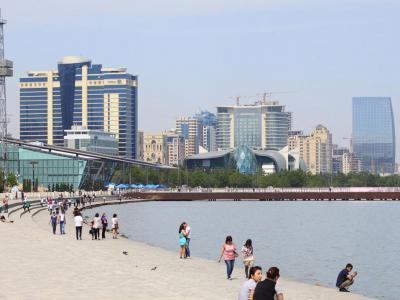
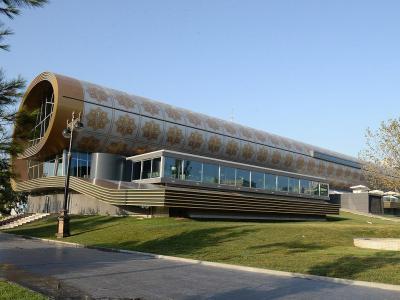
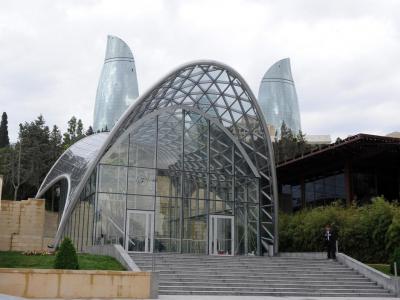
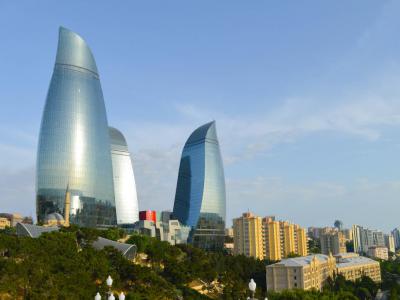
Baku’s city center brings together elegant boulevards, lively public spaces, historic landmarks, and bold modern architecture. Nizami Street is lined with shops, cafés, and ornate buildings, while nearby Fountains Square forms one of the city’s main social gathering places. The medieval Maiden Tower rises within the Old City, contrasting with the contemporary Flame Towers on the skyline. Along the waterfront, the Azerbaijan Carpet Museum stands out for its distinctive rolled-carpet-shaped design.
Dumas came to Baku in search of fire. Today, that same symbol still burns brightly in the city’s identity and skyline.
The origin of the name Baku is uncertain. A popular explanation derives the name from the Persian Badkube, meaning roughly “wind-beaten” or “pounded by the wind,” an appropriate description of a city famous for its strong Caspian winds. However, historians generally consider this a later folk etymology, since the form appears relatively late. Another theory connects Baku with Bagavan, interpreted as “place of God,” possibly referring to the region’s ancient fire-worship traditions and naturally burning petroleum deposits.
Human settlement in the area reaches back to prehistoric times. Baku appears clearly in written sources by the 10th century AD, when Arab and Persian geographers described it as an important Caspian port known especially for petroleum. Its harbor connected maritime trade across the Caspian with caravan routes leading inland.
During the Middle Ages, Baku belonged to the state of Shirvan and became one of the residences, and eventually the capital, of the Shirvanshahs. The medieval city developed behind strong defensive walls, much of which survive around the Old City. Baku later passed between Persian, Ottoman, and Russian control.
The discovery and industrial exploitation of enormous oil reserves transformed Baku during the late 19th century. After restrictions on private oil development were relaxed in 1872, investors and workers poured into the city. By 1901, the Baku region was producing more than half of the world’s petroleum, creating extraordinary wealth and a rapidly expanding cosmopolitan city filled with European-influenced architecture.
Following the collapse of the Russian Empire, Baku became the capital of the independent Azerbaijan Democratic Republic in 1918. Soviet forces took the city in 1920, and it remained the capital of Soviet Azerbaijan until the Soviet Union collapsed. Today, its skyline combines its medieval Old City, grand oil-boom mansions, Soviet architecture, and modern development.
Baku’s city center brings together elegant boulevards, lively public spaces, historic landmarks, and bold modern architecture. Nizami Street is lined with shops, cafés, and ornate buildings, while nearby Fountains Square forms one of the city’s main social gathering places. The medieval Maiden Tower rises within the Old City, contrasting with the contemporary Flame Towers on the skyline. Along the waterfront, the Azerbaijan Carpet Museum stands out for its distinctive rolled-carpet-shaped design.
Dumas came to Baku in search of fire. Today, that same symbol still burns brightly in the city’s identity and skyline.
How it works: Download the app "GPSmyCity: Walks in 1K+ Cities" from Apple App Store or Google Play Store to your mobile phone or tablet. The app turns your mobile device into a personal tour guide and its built-in GPS navigation functions guide you from one tour stop to next. The app works offline, so no data plan is needed when traveling abroad.
Download The GPSmyCity App



Explore Baku's Top Attractions on Foot Map
Guide Name: Explore Baku's Top Attractions on Foot
Guide Location: Azerbaijan » Baku (See other walking tours in Baku)
Guide Type: Self-guided Walking Tour (Sightseeing)
Tour Duration: 2 Hours
Travel Distance: 4.1 Km or 2.5 Miles
Tour Best Suited For: First-time visit
Guide Location: Azerbaijan » Baku (See other walking tours in Baku)
Guide Type: Self-guided Walking Tour (Sightseeing)
Tour Duration: 2 Hours
Travel Distance: 4.1 Km or 2.5 Miles
Tour Best Suited For: First-time visit
Sights Featured in This Walk
Walking Tours in Baku, Azerbaijan

Create Your Own Walk in Baku
Creating your own self-guided walk in Baku is easy and fun. Choose the city attractions that you want to see and a walk route map will be created just for you. You can even set your hotel as the start point of the walk.
A Walking Guide to Baku's Architectural Jewels
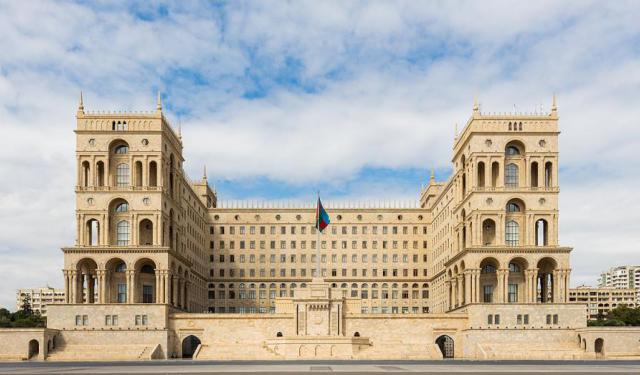
The city of Baku is an architectural marvel that delights with its historic buildings, grand mansions and cultural diversity. The Old City, for example, is full of fantastic old mosques and palaces that are listed as heritage monuments by UNESCO. The city is especially beautiful at night when it is wonderfully illuminated. Follow this self-guided walking tour to see the most impressive... view more
Tour Duration: 2 Hours
Travel Distance: 3.8 Km or 2.4 Miles
Tour Duration: 2 Hours
Travel Distance: 3.8 Km or 2.4 Miles
A Walk Through Baku Old City
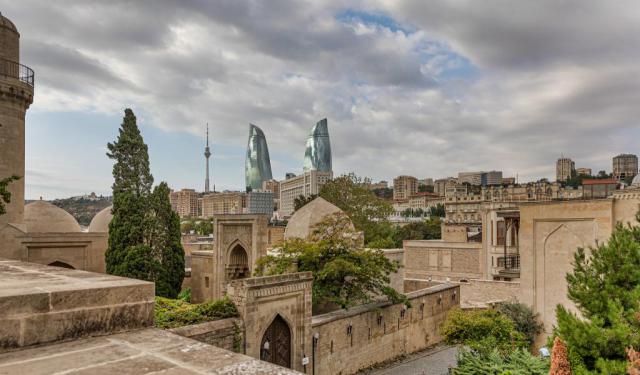
Baku's "Ichari Shahar", which literally means "Inner City," is also often referred to by foreigners as the Old City. Its unique architecture differs considerably from other ancient places in Azerbaijan and is replete with fascinating historical monuments. The most prominent of them are the 12th-century, 97-foot Maiden Tower-the most distinctive symbol of the country,... view more
Tour Duration: 1 Hour
Travel Distance: 1 Km or 0.6 Miles
Tour Duration: 1 Hour
Travel Distance: 1 Km or 0.6 Miles
The Most Popular Cities
/ view all