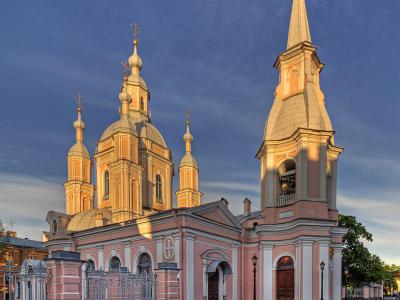


St. Andrew's Cathedral, St. Petersburg
St. Andrew’s Cathedral is an eighteenth-century Russian Orthodox church dedicated to Saint Andrew the Apostle, traditionally known as the First-Called and associated with Russian state and naval symbolism.
An earlier wooden church built in 1729–1732 burned after a lightning strike in 1761. Construction of the present stone cathedral began in 1764 to a design by Alexander Whist. After its dome collapsed in 1766, work continued with architect Alexander Ivanov, and the cathedral was substantially completed by 1768. The building represents the transition from Baroque to Neoclassical architecture. Its large central dome is surrounded by four smaller domes, while a refectory connects the main structure with a separate two-tiered bell tower built in 1784–1786. Inside, the principal feature is a monumental gilded carved iconostasis approximately 17 meters high, dating largely from the eighteenth century and incorporating elements transferred from an earlier church. Under Emperor Paul I, the cathedral gained an important ceremonial function. In 1797, it became the chapter church of the Order of Saint Andrew the Apostle the First-Called, the highest imperial order founded by Peter the Great. Its insignia appears in a relief above the entrance.
The cathedral was closed during the Soviet period and adapted for secular use. Returned to the Orthodox community in 1992, it subsequently underwent restoration. Today, it remains an active Russian Orthodox cathedral, preserving its historic iconostasis, eighteenth-century architecture, and association with the Order of Saint Andrew.
An earlier wooden church built in 1729–1732 burned after a lightning strike in 1761. Construction of the present stone cathedral began in 1764 to a design by Alexander Whist. After its dome collapsed in 1766, work continued with architect Alexander Ivanov, and the cathedral was substantially completed by 1768. The building represents the transition from Baroque to Neoclassical architecture. Its large central dome is surrounded by four smaller domes, while a refectory connects the main structure with a separate two-tiered bell tower built in 1784–1786. Inside, the principal feature is a monumental gilded carved iconostasis approximately 17 meters high, dating largely from the eighteenth century and incorporating elements transferred from an earlier church. Under Emperor Paul I, the cathedral gained an important ceremonial function. In 1797, it became the chapter church of the Order of Saint Andrew the Apostle the First-Called, the highest imperial order founded by Peter the Great. Its insignia appears in a relief above the entrance.
The cathedral was closed during the Soviet period and adapted for secular use. Returned to the Orthodox community in 1992, it subsequently underwent restoration. Today, it remains an active Russian Orthodox cathedral, preserving its historic iconostasis, eighteenth-century architecture, and association with the Order of Saint Andrew.
Want to visit this sight? Check out these Self-Guided Walking Tours in St. Petersburg. Alternatively, you can download the mobile app "GPSmyCity: Walks in 1K+ Cities" from Apple App Store or Google Play Store. The app turns your mobile device to a personal tour guide and it works offline, so no data plan is needed when traveling abroad.
Download The GPSmyCity App



St. Andrew's Cathedral on Map
Sight Name: St. Andrew's Cathedral
Sight Location: St. Petersburg, Russia (See walking tours in St. Petersburg)
Sight Type: Religious
Guide(s) Containing This Sight:
Sight Location: St. Petersburg, Russia (See walking tours in St. Petersburg)
Sight Type: Religious
Guide(s) Containing This Sight:
Nearby Sights
Walking Tours in St. Petersburg, Russia

Create Your Own Walk in St. Petersburg
Creating your own self-guided walk in St. Petersburg is easy and fun. Choose the city attractions that you want to see and a walk route map will be created just for you. You can even set your hotel as the start point of the walk.

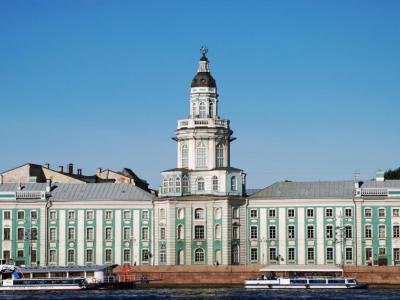
Russian Literary Heritage Walking Tour
If you're an ardent fan of Russian literature, St. Petersburg is undoubtedly your dream destination. Pushkin, Dostoevsky, Tolstoy, Gogol, Nabokov and many other Russia's literary greats have blessed this city with their presence – born, lived, worked, or set their characters here. To a great extent, St. Petersburg is a huge stone book, whose pages have been created by prominent Russian... view more
Tour Duration: 3 Hour(s)
Travel Distance: 5.9 Km or 3.7 Miles
Tour Duration: 3 Hour(s)
Travel Distance: 5.9 Km or 3.7 Miles
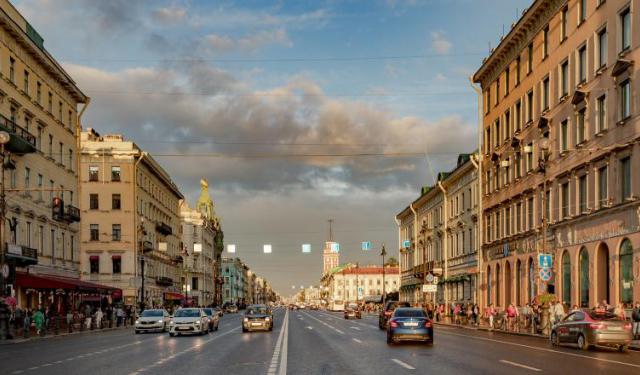
Nevsky Prospekt Walking Tour
Nevsky Prospekt (Avenue) is the main artery of Saint Petersburg, named after the Alexander Nevsky Lavra (monastery) found at the eastern end of it. The monastery commemorates a prominent warlord and legendary figure in the Russian history, Prince Saint Alexander Nevsky (1221–1263).
Upon his founding of the city in 1703, Tsar Peter the Great planned the course of the street as the outset of... view more
Tour Duration: 3 Hour(s)
Travel Distance: 3.1 Km or 1.9 Miles
Upon his founding of the city in 1703, Tsar Peter the Great planned the course of the street as the outset of... view more
Tour Duration: 3 Hour(s)
Travel Distance: 3.1 Km or 1.9 Miles
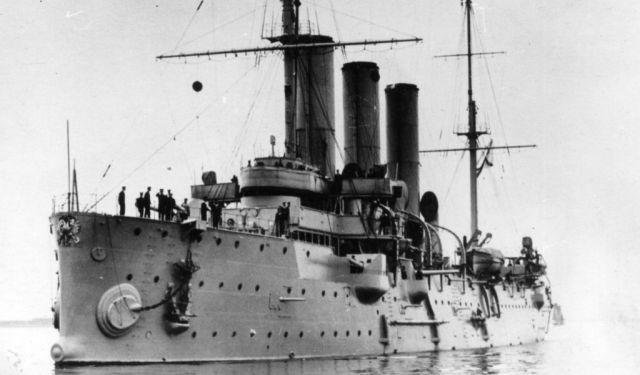
Bolshevik Revolution Walking Tour
When thinking of the events that changed the course of history in the 20th century, one of the first places that comes to mind is St. Petersburg. The “cradle of three revolutions” waged against the Tsarist autocracy saw the country's most important revolutionary events unravel, sending shock waves across the entire globe. What started in February 1917, reached its climax in October when... view more
Tour Duration: 4 Hour(s)
Travel Distance: 9.8 Km or 6.1 Miles
Tour Duration: 4 Hour(s)
Travel Distance: 9.8 Km or 6.1 Miles
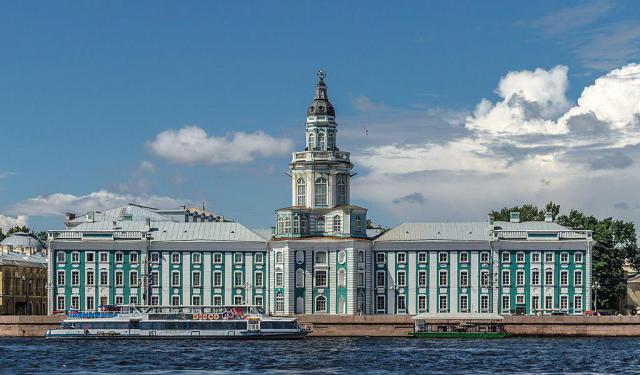
Vasilyevsky Island Walking Tour
Situated just across the river from the Winter Palace, Vasilyevsky Island constitutes a large part of Saint Petersburg's historic center.
There are various versions of the origin of the island's name suggesting either Vasily-related etymology or perhaps just a corruption of the previous Swedish or Finnish name, e.g. Vasikkasaari (“Calf Island”). Legend has it, however, that some... view more
Tour Duration: 2 Hour(s)
Travel Distance: 2.7 Km or 1.7 Miles
There are various versions of the origin of the island's name suggesting either Vasily-related etymology or perhaps just a corruption of the previous Swedish or Finnish name, e.g. Vasikkasaari (“Calf Island”). Legend has it, however, that some... view more
Tour Duration: 2 Hour(s)
Travel Distance: 2.7 Km or 1.7 Miles
St. Petersburg City Center Walking Tour
Russia's northern capital, Saint Petersburg is the country's second largest city where nearly every stone breathes history. It is named after apostle Saint Peter and traditionally dubbed by the Russians as “the Window to Europe” “opened” by Peter the Great on 27 May 1703 on the site of a captured Swedish fortress amid the swamp and the Neva River.
The city is integral with... view more
Tour Duration: 2 Hour(s)
Travel Distance: 4.3 Km or 2.7 Miles
The city is integral with... view more
Tour Duration: 2 Hour(s)
Travel Distance: 4.3 Km or 2.7 Miles
Useful Travel Guides for Planning Your Trip

16 Unique Russian Things to Seek in St. Petersburg
The "cradle of two revolutions", St. Petersburg bears cultural and historic significance for Russia that is hard to overestimate. Perhaps, nearly every stone in the downtown part of the city breathes history and can qualify as a memorable souvenir, although picking up them for such purpose...