

The Train Street, Hanoi
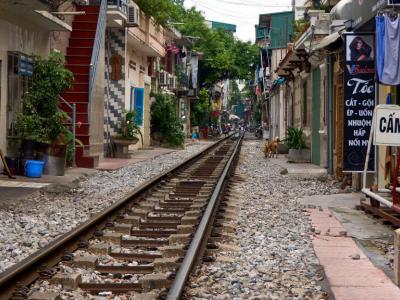
Train Street is one of Hanoi’s most unusual attractions, famous for the railway tracks that squeeze through narrow residential neighbourhoods, passing remarkably close to houses, cafés and shops. One of its best-known sections runs along 224 Le Duan Alley. The railway dates back to the French colonial period, with the line constructed in the early 20th century and remaining operational today.
For generations, the railway has been part of everyday life for local residents. Between trains, people have traditionally walked along the tracks, sat outside their homes and used the narrow space for daily activities. Shortly before a train arrives, however, bicycles, stools and other belongings must be moved aside as the locomotive passes just metres from the surrounding buildings.
This extraordinary spectacle transformed Train Street into one of Hanoi’s most photographed locations, and numerous small cafés opened beside the tracks to cater to visitors. Café owners typically move tables and stools closer to the walls before trains pass and instruct customers to remain safely out of the way.
The street’s growing popularity has also created serious safety concerns. In October 2019, authorities restricted tourist access after crowds repeatedly gathered on the tracks and a train reportedly had to be rerouted because the line was obstructed. Access has since been controlled or restricted at various times.
Visitors should therefore follow current local instructions and never enter restricted sections or stand on the tracks. Train schedules can also change, so avoid relying on older published times.
For generations, the railway has been part of everyday life for local residents. Between trains, people have traditionally walked along the tracks, sat outside their homes and used the narrow space for daily activities. Shortly before a train arrives, however, bicycles, stools and other belongings must be moved aside as the locomotive passes just metres from the surrounding buildings.
This extraordinary spectacle transformed Train Street into one of Hanoi’s most photographed locations, and numerous small cafés opened beside the tracks to cater to visitors. Café owners typically move tables and stools closer to the walls before trains pass and instruct customers to remain safely out of the way.
The street’s growing popularity has also created serious safety concerns. In October 2019, authorities restricted tourist access after crowds repeatedly gathered on the tracks and a train reportedly had to be rerouted because the line was obstructed. Access has since been controlled or restricted at various times.
Visitors should therefore follow current local instructions and never enter restricted sections or stand on the tracks. Train schedules can also change, so avoid relying on older published times.
Want to visit this sight? Check out these Self-Guided Walking Tours in Hanoi. Alternatively, you can download the mobile app "GPSmyCity: Walks in 1K+ Cities" from Apple App Store or Google Play Store. The app turns your mobile device to a personal tour guide and it works offline, so no data plan is needed when traveling abroad.
Download The GPSmyCity App



The Train Street on Map
Sight Name: The Train Street
Sight Location: Hanoi, Vietnam (See walking tours in Hanoi)
Sight Type: Attraction/Landmark
Guide(s) Containing This Sight:
Sight Location: Hanoi, Vietnam (See walking tours in Hanoi)
Sight Type: Attraction/Landmark
Guide(s) Containing This Sight:
Nearby Sights





Walking Tours in Hanoi, Vietnam

Create Your Own Walk in Hanoi
Creating your own self-guided walk in Hanoi is easy and fun. Choose the city attractions that you want to see and a walk route map will be created just for you. You can even set your hotel as the start point of the walk.
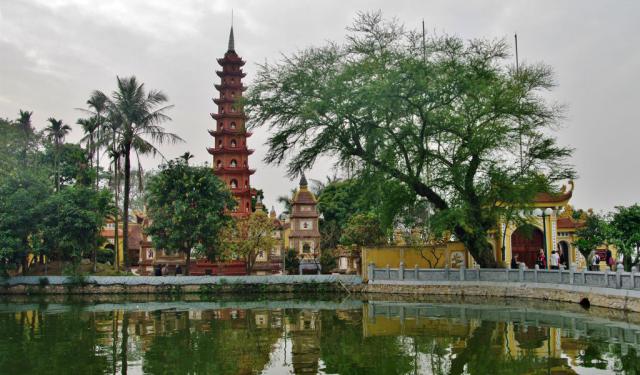
Explore Hanoi's Modern City Center on Foot
Known for its centuries-old architecture and rich culture with Southeast Asian, Chinese and French influences, the capital of Vietnam, Hanoi, traces its origin back to the third century BC. Originally, a portion of modern-day Hanoi served as the capital of the historic Vietnamese nation Âu Lạc. Following the collapse of Âu Lạc, the city was made part of Han China (111 BC-40 AD).
... view more
Tour Duration: 2 Hours
Travel Distance: 4 Km or 2.5 Miles
... view more
Tour Duration: 2 Hours
Travel Distance: 4 Km or 2.5 Miles
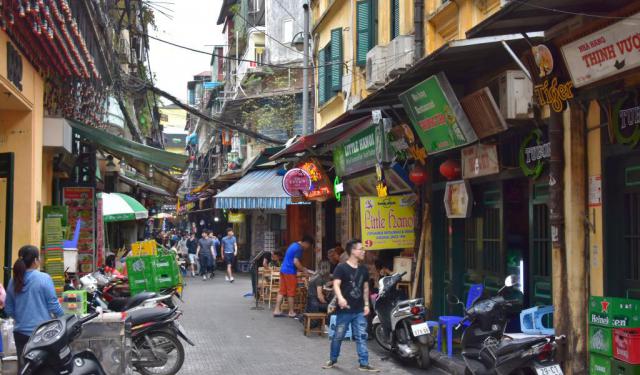
Hanoi's Old Quarter Walking Tour
Vietnamese writer Thach Lam’s book Hanoi’s Thirty-Six Streets celebrates the streets, food and everyday character of the old city. In one memorable passage, he wrote: “We too have Hanoi, a city of many beauties.”
Hanoi, the capital of Vietnam, has a history stretching back more than a thousand years, although settlements existed in the area long before the city became an imperial... view more
Tour Duration: 2 Hours
Travel Distance: 4 Km or 2.5 Miles
Hanoi, the capital of Vietnam, has a history stretching back more than a thousand years, although settlements existed in the area long before the city became an imperial... view more
Tour Duration: 2 Hours
Travel Distance: 4 Km or 2.5 Miles