

Hang Bong Street, Hanoi (must see)
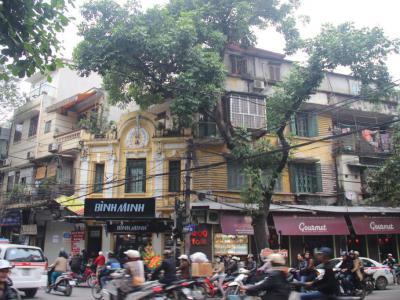
Hang Bong Street, stretching for about 932 metres through Hanoi’s historic centre towards the former South Gate, is one of the longest and busiest streets in the Old Quarter. Its name translates roughly as “Cotton Street,” recalling the cotton dealers and craftsmen who once produced clothing and warm blankets here. As soon as you step onto the paved western end of Hang Bong Street from the surrounding junction, get ready to take in the bustling flow of pedestrians and commerce.
Historically, present-day Hang Bong consisted of several smaller sections, each with its own name and commercial speciality. Hang Manh was known for shops selling traditional shoes, hats and ceremonial paper goods, while Hang Bong Dem was populated by merchants dealing in cotton and blankets. Other sections were associated with silk dyers, fish sellers and various craftsmen. One area even took its name from a banyan tree and a small temple dedicated to Co Quyen. These specialised trades reflected the guild-based organisation for which Hanoi’s Old Quarter became famous.
During the French colonial period, parts of the street acquired French names, while Hang Bong also became home to numerous printing houses, bookshops and journalists. This helped transform it from a traditional craft street into an increasingly diverse commercial thoroughfare.
Today, the old specialisations have largely disappeared, but Hang Bong remains one of central Hanoi’s liveliest shopping streets. Clothing and silk shops, tailors, art galleries, hotels, cafés and restaurants now occupy its narrow buildings. It is particularly busy in the evening, when locals, students and visitors gather at the street’s numerous eateries.
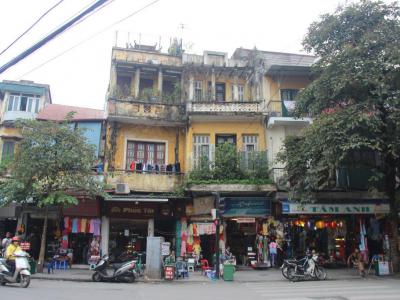
As you walk along Hang Bong, look beyond the modern shopfronts for traces of its past, including narrow traditional buildings and small religious sites tucked between newer businesses. A more unusual example is Silk Path Hotel at 195-199 Hang Bong Street, which incorporates several historic tube houses into a single property. Step into the lobby to appreciate the characteristic long, narrow layout, extending deep into the block from its relatively narrow street frontage.
Historically, present-day Hang Bong consisted of several smaller sections, each with its own name and commercial speciality. Hang Manh was known for shops selling traditional shoes, hats and ceremonial paper goods, while Hang Bong Dem was populated by merchants dealing in cotton and blankets. Other sections were associated with silk dyers, fish sellers and various craftsmen. One area even took its name from a banyan tree and a small temple dedicated to Co Quyen. These specialised trades reflected the guild-based organisation for which Hanoi’s Old Quarter became famous.
During the French colonial period, parts of the street acquired French names, while Hang Bong also became home to numerous printing houses, bookshops and journalists. This helped transform it from a traditional craft street into an increasingly diverse commercial thoroughfare.
Today, the old specialisations have largely disappeared, but Hang Bong remains one of central Hanoi’s liveliest shopping streets. Clothing and silk shops, tailors, art galleries, hotels, cafés and restaurants now occupy its narrow buildings. It is particularly busy in the evening, when locals, students and visitors gather at the street’s numerous eateries.
As you walk along Hang Bong, look beyond the modern shopfronts for traces of its past, including narrow traditional buildings and small religious sites tucked between newer businesses. A more unusual example is Silk Path Hotel at 195-199 Hang Bong Street, which incorporates several historic tube houses into a single property. Step into the lobby to appreciate the characteristic long, narrow layout, extending deep into the block from its relatively narrow street frontage.
Want to visit this sight? Check out these Self-Guided Walking Tours in Hanoi. Alternatively, you can download the mobile app "GPSmyCity: Walks in 1K+ Cities" from Apple App Store or Google Play Store. The app turns your mobile device to a personal tour guide and it works offline, so no data plan is needed when traveling abroad.
Download The GPSmyCity App



Hang Bong Street on Map
Sight Name: Hang Bong Street
Sight Location: Hanoi, Vietnam (See walking tours in Hanoi)
Sight Type: Attraction/Landmark
Guide(s) Containing This Sight:
Sight Location: Hanoi, Vietnam (See walking tours in Hanoi)
Sight Type: Attraction/Landmark
Guide(s) Containing This Sight:
Nearby Sights
Walking Tours in Hanoi, Vietnam

Create Your Own Walk in Hanoi
Creating your own self-guided walk in Hanoi is easy and fun. Choose the city attractions that you want to see and a walk route map will be created just for you. You can even set your hotel as the start point of the walk.
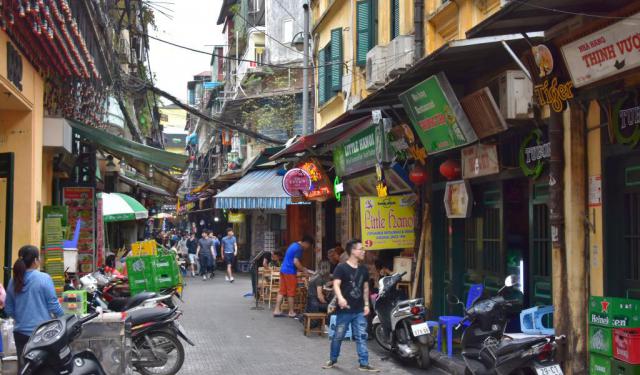
Hanoi's Old Quarter Walking Tour
Vietnamese writer Thach Lam’s book Hanoi’s Thirty-Six Streets celebrates the streets, food and everyday character of the old city. In one memorable passage, he wrote: “We too have Hanoi, a city of many beauties.”
Hanoi, the capital of Vietnam, has a history stretching back more than a thousand years, although settlements existed in the area long before the city became an imperial... view more
Tour Duration: 2 Hours
Travel Distance: 4 Km or 2.5 Miles
Hanoi, the capital of Vietnam, has a history stretching back more than a thousand years, although settlements existed in the area long before the city became an imperial... view more
Tour Duration: 2 Hours
Travel Distance: 4 Km or 2.5 Miles
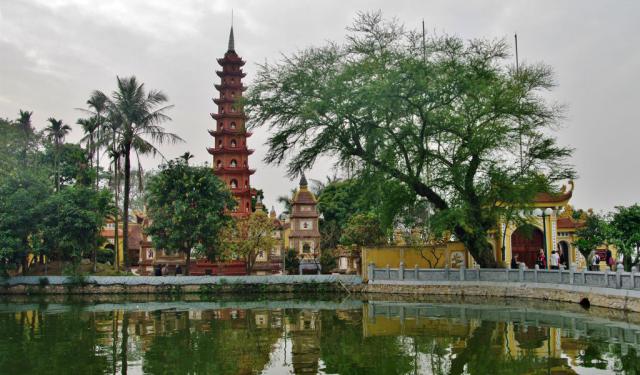
Explore Hanoi's Modern City Center on Foot
Known for its centuries-old architecture and rich culture with Southeast Asian, Chinese and French influences, the capital of Vietnam, Hanoi, traces its origin back to the third century BC. Originally, a portion of modern-day Hanoi served as the capital of the historic Vietnamese nation Âu Lạc. Following the collapse of Âu Lạc, the city was made part of Han China (111 BC-40 AD).
... view more
Tour Duration: 2 Hours
Travel Distance: 4 Km or 2.5 Miles
... view more
Tour Duration: 2 Hours
Travel Distance: 4 Km or 2.5 Miles