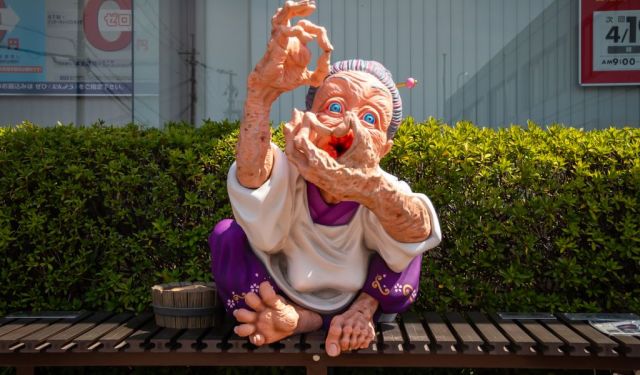


The Yokai Benches of Fukusaki, Himeji, Japan
Just 25 minutes north of Himeji City by train lies the town of Fukusaki. Surrounded by mountains with the Ichikawa flowing through it, it’s just far enough off the beaten path to feel like you’re in the countryside. And, well, you kind of are. Fukusaki is best known for producing mochimugi, or Japanese pearl barley, which has been cultivated here for many generations. But Fukusaki is also the hometown of the folklorist, Yanagita Kunio (1875-1962), and so it has come to be known as a yokai town.
In Japanese, yokai refers to a wide range of supernatural beings, including monsters, demons, spirits, goblins, and ghosts, but also transformed humans, animals, or objects. This is linked to animism, a common belief in Japan that is rooted in Shinto. It holds that all things, from mountains and rivers to pencils and potted plants, possess spirits or life forces, called kami. But yokai can also refer to urban legends or any strange, unexplained phenomena, so the term is quite broad.
So broad, in fact, that it’s possible to dedicate your entire life to studying yokai, which is exactly what Yanagita Kunio did. He started his career as a bureaucrat, but after developing an interest in the folk traditions of rural Japan, he decided to pursue that instead. This led to the establishment of Japanese folklore, or minzokugaku, as a new academic field, and so Yanagita is often called the father of Japanese folklore. ...... (follow the instructions below for accessing the rest of this article).
How it works: The full article is featured in the app "GPSmyCity: Walks in 1K+ Cities" on Apple App Store and Google Play Store.
Download the app to your mobile device to read the article offline and create a self-guided walking tour to visit the sights featured in this article. The app's navigation functions guide you from one sight to the next. The app works offline, so no data plan is needed when traveling abroad.
Download The GPSmyCity App



Sights Featured in This Article
Guide Name: The Yokai Benches of Fukusaki
Guide Location: Japan » Himeji
Guide Type: Self-guided Walking Tour (Insider Tips)
Author: Simone Armer
Read it on Author's Website: https://www.simonearmer.com/the-yokai-benches-of-fukusaki/
Sight(s) Featured in This Guide:
Guide Location: Japan » Himeji
Guide Type: Self-guided Walking Tour (Insider Tips)
Author: Simone Armer
Read it on Author's Website: https://www.simonearmer.com/the-yokai-benches-of-fukusaki/
Sight(s) Featured in This Guide:
- Kanzaki Bridge
- Tsujikawa Tourism Exchange Center
- Tsujikawayama Park
- Zashikiwarashi
- Upside-Down Tengu
- Nekomata
- kappa
- Amabie
Insider Tips for Himeji, Japan
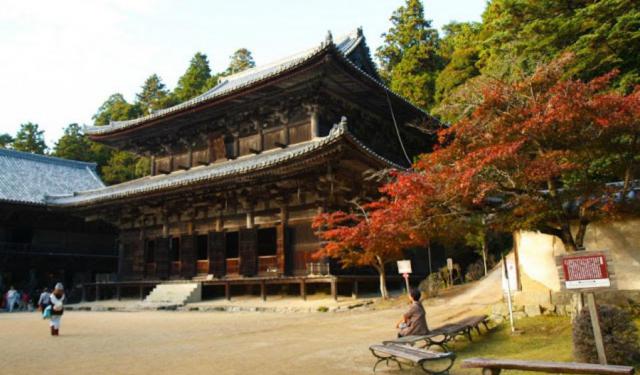
Himeji Castle and Shoshazan Engyoji Temple
Our stop was announced and I said my goodbye to my seatmate, Mr Yamamoto. My friends and I shuffled along the aisle to the door, ready to jump out of the shinkansen and storm Himeji Castle and Engyoji Temple.
Insider Tips Overview
