Custom Walk in Hanoi, Vietnam by edlr4ma524 created on 2020-01-12
Guide Location: Vietnam » Hanoi
Guide Type: Custom Walk
# of Sights: 10
Tour Duration: 3 Hour(s)
Travel Distance: 7.6 Km or 4.7 Miles
Share Key: BRPTT
Guide Type: Custom Walk
# of Sights: 10
Tour Duration: 3 Hour(s)
Travel Distance: 7.6 Km or 4.7 Miles
Share Key: BRPTT
How It Works
Please retrieve this walk in the GPSmyCity app. Once done, the app will guide you from one tour stop to the next as if you had a personal tour guide. If you created the walk on this website or come to the page via a link, please follow the instructions below to retrieve the walk in the app.
Retrieve This Walk in App
Step 1. Download the app "GPSmyCity: Walks in 1K+ Cities" on Apple App Store or Google Play Store.



Step 2. In the GPSmyCity app, download(or launch) the guide "Hanoi Map and Walking Tours".
Step 3. Tap the menu button located at upper right corner of the "Walks" screen and select "Retrieve custom walk". Enter the share key: BRPTT
1) National Museum of Vietnamese History
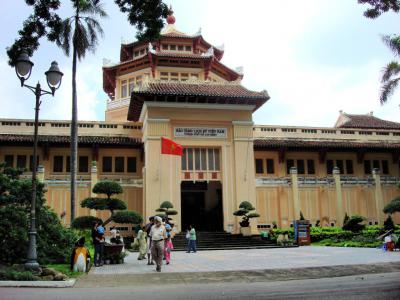
The National Museum of Vietnamese History, located in the Hoan Kiem district of Hanoi is an exhaustive repository of objects from the different civilizations that flourished in Vietnam.
The National Museum of Vietnamese History was established by the French colonial rulers as the Far East Research Institute. The museum formed part of the institute at the time. The building was designed by French architect, Ernest Hebrard, and is considered one of the finest examples of Indochinese architecture. It combines French colonial and traditional Vietnamese styles. The structure, completed in 1932, is so designed that the interiors are protected from the sun yet plenty of fresh air is let in conforming to modern day eco friendly architectural norms.
Historical treasures among exhibits featured at the museum include drums from the Bronze Age Dong Son civilization. The Dong Son civilization flourished near present day Hanoi and was known for its advanced metal casting expertise. The Champa civilization extended from Central to South Vietnam and their religious stone carvings are preserved in the building and as outdoor sculptures. Exhibits, including costumes and objects from the many subsequent royal dynasties that ruled Vietnam, are showcased at the museum.
By hiring a guide, visitors can get a better insight into the glorious history of Vietnam reflected in the exhibits displayed at the museum.
The National Museum of Vietnamese History was established by the French colonial rulers as the Far East Research Institute. The museum formed part of the institute at the time. The building was designed by French architect, Ernest Hebrard, and is considered one of the finest examples of Indochinese architecture. It combines French colonial and traditional Vietnamese styles. The structure, completed in 1932, is so designed that the interiors are protected from the sun yet plenty of fresh air is let in conforming to modern day eco friendly architectural norms.
Historical treasures among exhibits featured at the museum include drums from the Bronze Age Dong Son civilization. The Dong Son civilization flourished near present day Hanoi and was known for its advanced metal casting expertise. The Champa civilization extended from Central to South Vietnam and their religious stone carvings are preserved in the building and as outdoor sculptures. Exhibits, including costumes and objects from the many subsequent royal dynasties that ruled Vietnam, are showcased at the museum.
By hiring a guide, visitors can get a better insight into the glorious history of Vietnam reflected in the exhibits displayed at the museum.
2) Museum of Revolution
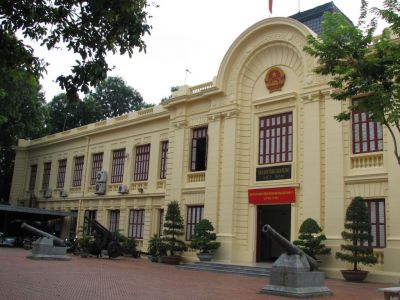
One of the best museums in Vietnam, this repository of photographs and other exhibits showcases the long struggle by the Vietnamese people for independence and unity. It was established in 1959 in a French colonial building that previously belonged to the Trade Department of Vietnam.
The museum is dedicated to the struggle against the French colonial rulers and other foreign powers by the Vietnamese people under the leadership of the Communist party. The national liberation movements against the French before the establishment of the Communist party are also showcased at the museum. The struggle against the Americans in the Vietnam War is the topic of the exhibits presented on the first floor; the 2nd floor is devoted to struggle against the French colonial rulers. Photographs and memorabilia tell the story of Ho Chi Minh and there are oil paintings that show the struggles and torture suffered by the Vietnamese people in colonial prisons of Phu Coq Island in South Vietnam. Visitors can view the evolution of modern Vietnam, from the August revolution of 1945, that resulted in victory against the French in Dien Bien Phu, to the present.
The Museum of Revolution in Hanoi has 30 galleries and over 40.000 historical exhibits including a 1920s jar that stored revolutionary documents, a Japanese Buddhist drum that was played at communist rallies, and the first sewing machine in Vietnam.
The museum is dedicated to the struggle against the French colonial rulers and other foreign powers by the Vietnamese people under the leadership of the Communist party. The national liberation movements against the French before the establishment of the Communist party are also showcased at the museum. The struggle against the Americans in the Vietnam War is the topic of the exhibits presented on the first floor; the 2nd floor is devoted to struggle against the French colonial rulers. Photographs and memorabilia tell the story of Ho Chi Minh and there are oil paintings that show the struggles and torture suffered by the Vietnamese people in colonial prisons of Phu Coq Island in South Vietnam. Visitors can view the evolution of modern Vietnam, from the August revolution of 1945, that resulted in victory against the French in Dien Bien Phu, to the present.
The Museum of Revolution in Hanoi has 30 galleries and over 40.000 historical exhibits including a 1920s jar that stored revolutionary documents, a Japanese Buddhist drum that was played at communist rallies, and the first sewing machine in Vietnam.
3) Hang Bong Street (must see)
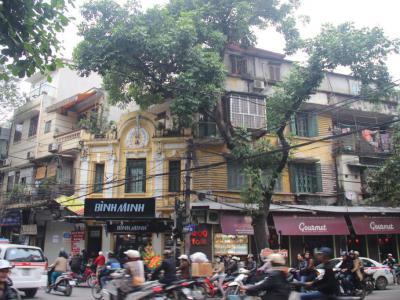
Hàng Bông (French: Rue du Coton) is an ancient street running for about 932 meters from the crossroad Hàng Bông - Hàng Gai - Hàng Trong - Hàng Hom to the former city gate Cửa Nam (South Gate). Once populated by cotton dealers and makers of clothes and winter blankets (hence the name), today's Hàng Bông is one of the busiest shopping streets in Hanoi, lined with art galleries, silk and clothing shops.
Formerly this street consisted of various sections, each with its own name, such as Hang Hai (aka Hang Bong Hai), Hang Manh (packed with shops selling comedy shoes, hats, and paper worship items), Hang Bong Dem (inhabited by sellers of cotton balls, cotton- and other blankets), Hang Bong Banyan Tree Cua Quyen (home to a small temple worshiping Co Quyen, with a banyan tree nearby), Hang Bong Lo (where all kinds of fish were sold), Hang Bong Tho Nhuom (back in the early 20th century this was home to the dyers of silk fabrics), and Hang Bong Alley (known during the French colonial era as Rue Lhonde).
Also, during the French period, Old Hang Bong Street was a home to many print houses, bookstores, and journalists. Notorious for many traffic accidents involving trams (prior to 1991), Hang Bong Street, since the turn of the 21st century, has been gradually associated with luxurious fashion, largely surpassing the rival destinations of Hang Dao, Luong Van Can and Tran Nhan Tong streets. Today, this street also accommodates the fancy Silk Path hotel where once used to be the music tea rooms, popular haunt for artists and other creative folk.
At night, Hang Bong Street is a popular gathering spot for youngsters and students, in large part due to the cheap fried and grilled spring rolls sold on the corner of Hang Bong junction and Tam Thuong alley. At the end of the street, on the right-hand (even-numbered) side is a pastry shop very famous with backpackers. On festive occasions, this street is also teeming with sellers of flags and T-shirts.
Formerly this street consisted of various sections, each with its own name, such as Hang Hai (aka Hang Bong Hai), Hang Manh (packed with shops selling comedy shoes, hats, and paper worship items), Hang Bong Dem (inhabited by sellers of cotton balls, cotton- and other blankets), Hang Bong Banyan Tree Cua Quyen (home to a small temple worshiping Co Quyen, with a banyan tree nearby), Hang Bong Lo (where all kinds of fish were sold), Hang Bong Tho Nhuom (back in the early 20th century this was home to the dyers of silk fabrics), and Hang Bong Alley (known during the French colonial era as Rue Lhonde).
Also, during the French period, Old Hang Bong Street was a home to many print houses, bookstores, and journalists. Notorious for many traffic accidents involving trams (prior to 1991), Hang Bong Street, since the turn of the 21st century, has been gradually associated with luxurious fashion, largely surpassing the rival destinations of Hang Dao, Luong Van Can and Tran Nhan Tong streets. Today, this street also accommodates the fancy Silk Path hotel where once used to be the music tea rooms, popular haunt for artists and other creative folk.
At night, Hang Bong Street is a popular gathering spot for youngsters and students, in large part due to the cheap fried and grilled spring rolls sold on the corner of Hang Bong junction and Tam Thuong alley. At the end of the street, on the right-hand (even-numbered) side is a pastry shop very famous with backpackers. On festive occasions, this street is also teeming with sellers of flags and T-shirts.
4) St. Joseph Cathedral
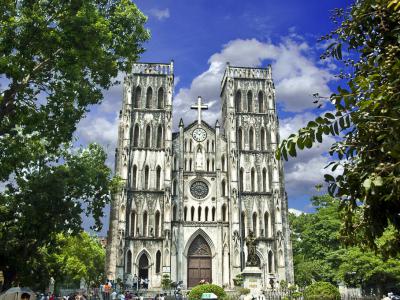
Saint Joseph's Cathedral in Hanoi serves as the seat of the Roman Catholic Archdiocese of Hanoi. Constructed in 1886 during French colonial rule, it is the oldest church in the city. Locally known as the "Big Church," it is situated on Nha Chung Street, close to the Ho Hoan Kiem, also known as the Lake of the Returned Sword.
The cathedral's location has a significant historical backdrop, as it was built on the site of the demolished Bao Thien Pagoda, a 12th-century temple constructed by the Ly Dynasty and formerly a vital place of worship for the local populace. This decision by the French to replace the pagoda highlighted their influence and architectural ambitions in Hanoi during their colonial tenure.
Saint Joseph's Cathedral was consecrated on Christmas Day, 1886, and features a neo-Gothic architectural style, mirroring the iconic Notre Dame Cathedral in Paris. This style is evident in its facade, characterized by twin towers flanked by impressive stained glass windows. These windows allow light to filter through in a myriad of colors, creating a visually captivating effect.
In front of the cathedral stands the Regina Pacis (Queen of Peace) statue of the Virgin Mary, adding to its spiritual and architectural significance. Inside, the cathedral is renowned for its beautiful interiors, which visitors can admire through a side door entry.
Mass is conducted twice daily at Saint Joseph's Cathedral, with increased attendance on Sundays and holidays, reflecting its central role in the religious life of the community. The cathedral remains a popular destination for both worshippers and tourists, offering a glimpse into the spiritual and colonial history of Hanoi.
The cathedral's location has a significant historical backdrop, as it was built on the site of the demolished Bao Thien Pagoda, a 12th-century temple constructed by the Ly Dynasty and formerly a vital place of worship for the local populace. This decision by the French to replace the pagoda highlighted their influence and architectural ambitions in Hanoi during their colonial tenure.
Saint Joseph's Cathedral was consecrated on Christmas Day, 1886, and features a neo-Gothic architectural style, mirroring the iconic Notre Dame Cathedral in Paris. This style is evident in its facade, characterized by twin towers flanked by impressive stained glass windows. These windows allow light to filter through in a myriad of colors, creating a visually captivating effect.
In front of the cathedral stands the Regina Pacis (Queen of Peace) statue of the Virgin Mary, adding to its spiritual and architectural significance. Inside, the cathedral is renowned for its beautiful interiors, which visitors can admire through a side door entry.
Mass is conducted twice daily at Saint Joseph's Cathedral, with increased attendance on Sundays and holidays, reflecting its central role in the religious life of the community. The cathedral remains a popular destination for both worshippers and tourists, offering a glimpse into the spiritual and colonial history of Hanoi.
5) Hoa Lo Prison (must see)
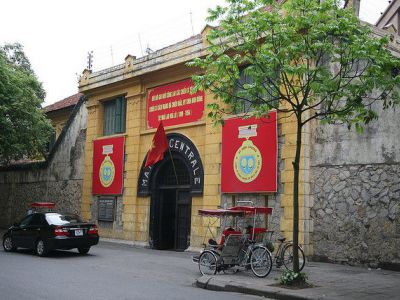
The Hoa Lo prison in Hanoi, sarcastically referred to as the Hanoi Hilton by American POWs in the 2nd Indochina War, is a vast prison complex built by the French in the style of the Maison Centrales a euphemism used for prisons in France. At first it was used as a prison, detention and torture center for revolutionaries struggling for independence from France. During the Vietnam War, the prison was used to house several American pilots whose planes were shot down by Vietnamese forces.
The Hoa Lo prison was built by the French between 1886 and 1901. Hoa Lo means fiery furnace or stove in Vietnamese. The facility was built to house 450 inmates. During the freedom struggle, the prison had more than 2000 Vietnamese inmates living in sub human conditions. Several tools of torture used by the French are preserved including a Guillotine used to behead early Vietnamese freedom fighters. From 1964 to 1973, the prison was a major POW detention facility and earned its name, the Hanoi Hilton. Well known inmates included Senator John McCain, the 2008 Presidential nominee of the Republican Party and Pete Peterson, who later became ambassador to Vietnam.
A small part of the original facility is preserved. The other part has now become a modern office and residential complex called the Hanoi Towers. Hanoi Hilton is located near the French quarter.
The Hoa Lo prison was built by the French between 1886 and 1901. Hoa Lo means fiery furnace or stove in Vietnamese. The facility was built to house 450 inmates. During the freedom struggle, the prison had more than 2000 Vietnamese inmates living in sub human conditions. Several tools of torture used by the French are preserved including a Guillotine used to behead early Vietnamese freedom fighters. From 1964 to 1973, the prison was a major POW detention facility and earned its name, the Hanoi Hilton. Well known inmates included Senator John McCain, the 2008 Presidential nominee of the Republican Party and Pete Peterson, who later became ambassador to Vietnam.
A small part of the original facility is preserved. The other part has now become a modern office and residential complex called the Hanoi Towers. Hanoi Hilton is located near the French quarter.
6) Temple of Literature (must see)
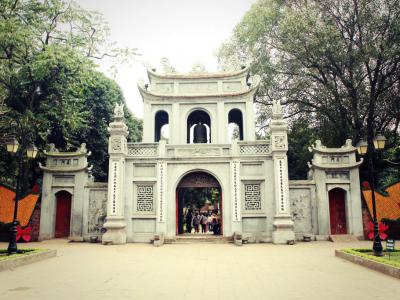
The Temple of Literature, dedicated to the Chinese Philosopher is one of Hanoi’s oldest structures. There are many temples of literature across Vietnam but the Hanoi temple is the oldest and the most important among them. It is also the venue of the country’s earliest university.
The Temple of Literature was founded by Emperor Ly Thanh Tong in 1070 a few years after the establishment of the city of Hanoi. The University established six years later admitted children from the royal family and students from the families of Mandarins. In 1484, Emperor Le Thanh Tong erected steles to record the achievements of students who were awarded doctorates by the university. It ceased to function in 1802 when it was shifted to a new venue.
The temple has five courtyards with boundary walls. Two courtyards have trees, some of which are over a hundred years old. One courtyard has a pond surrounded by sheltered pavilions and steles with details of students who earned doctorates at the university. The Courtyard of the Sage Sanctuary has a building called the Great House of Ceremonies. The house has a large red lacquer figure of Confucius. The last courtyard called the Thai Hoc has a two storey building honoring the founders of the university. There are two square structures on either side of the building to house a drum and a bell.
The Temple of Literature is open from Tuesdays to Sundays and visitors can find mementoes to take home at the souvenir and craft shops near the Great House of Ceremonies.
The Temple of Literature was founded by Emperor Ly Thanh Tong in 1070 a few years after the establishment of the city of Hanoi. The University established six years later admitted children from the royal family and students from the families of Mandarins. In 1484, Emperor Le Thanh Tong erected steles to record the achievements of students who were awarded doctorates by the university. It ceased to function in 1802 when it was shifted to a new venue.
The temple has five courtyards with boundary walls. Two courtyards have trees, some of which are over a hundred years old. One courtyard has a pond surrounded by sheltered pavilions and steles with details of students who earned doctorates at the university. The Courtyard of the Sage Sanctuary has a building called the Great House of Ceremonies. The house has a large red lacquer figure of Confucius. The last courtyard called the Thai Hoc has a two storey building honoring the founders of the university. There are two square structures on either side of the building to house a drum and a bell.
The Temple of Literature is open from Tuesdays to Sundays and visitors can find mementoes to take home at the souvenir and craft shops near the Great House of Ceremonies.
7) One Pillar Pagoda
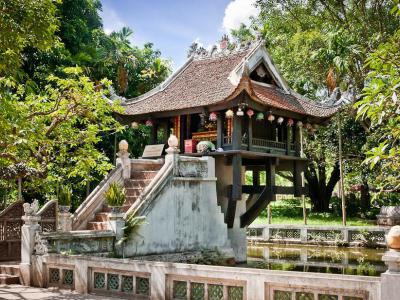
Located in the Ho Chi Minh Mausoleum complex in Hanoi, this temple is dedicated to the Goddess of mercy and protector of children, Quan Am. The structure gets its name because the wooden temple is supported by a single pillar.
The temple was built in 1049 by King Ly Thai Tong who ruled from 1028 to 1054. According to legend, Quan Am came in a dream seated on a lotus and handed a male child to the childless emperor. Soon after, he married a peasant girl and a male child was born. The pagoda dedicated to Quan Am was built like a lotus rising from the water by the emperor after the birth of the child. The French forces destroyed the temple in 1954 during the First Indochina War. The temple was rebuilt in 1955 with a concrete pillar replacing the old stone pillar on which the original pagoda stood.
A flight of narrow steps lead to the small shrine where a gilded figure of Quan Am sits upon lotus blossoms. Locals worship at the temple for fertility and good health and the smell of incense permeates the building. Visitors are required to cover their legs before entering the temple. There is a small snack stand that sells refreshments for the convenience of visitors as they take in the beauty of the pagoda and its exquisite natural surroundings.
The temple was built in 1049 by King Ly Thai Tong who ruled from 1028 to 1054. According to legend, Quan Am came in a dream seated on a lotus and handed a male child to the childless emperor. Soon after, he married a peasant girl and a male child was born. The pagoda dedicated to Quan Am was built like a lotus rising from the water by the emperor after the birth of the child. The French forces destroyed the temple in 1954 during the First Indochina War. The temple was rebuilt in 1955 with a concrete pillar replacing the old stone pillar on which the original pagoda stood.
A flight of narrow steps lead to the small shrine where a gilded figure of Quan Am sits upon lotus blossoms. Locals worship at the temple for fertility and good health and the smell of incense permeates the building. Visitors are required to cover their legs before entering the temple. There is a small snack stand that sells refreshments for the convenience of visitors as they take in the beauty of the pagoda and its exquisite natural surroundings.
8) Ho Chi Minh Mausoleum
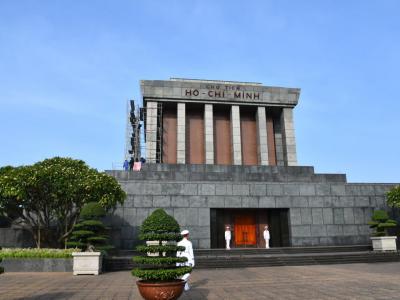
Ho Chi Minh wrote in his will that he wanted his body to be cremated and the ashes strewn all over Vietnam because it was hygienic and valuable land would not be wasted. The people of Vietnam willed otherwise. They wanted their leader to remain a living symbol of their many struggles against foreign powers. The result was this imposing mausoleum where his body lies embalmed.
The Ho Chi Minh mausoleum built with the help of the USSR is modeled on the mausoleum of Lenin in Moscow. It is a large granite square structure, 21.6 meters high and 41.2 meters wide. Ho Chi Minh’s embalmed body lies in the cooled central hall of the mausoleum. An armed guard protects the body enclosed in a glass case with dim lights. There is an impressive change of guard every day. In autumn, every year, the body is flown to Moscow for maintenance.
The gardens surrounding the mausoleum are in the form of 240 squares with specific boundaries. There are 250 species of plants and flowers from the different regions of Vietnam and bonsais of indigenous trees. The words, ‘nothing is more precious that independence and freedom are engraved on the stone façade of the mausoleum.’
The mausoleum is a place of reverence for the Vietnamese people and strict disciplinary codes are enforced. Visitors are required to cover their legs, maintain silence and their hands cannot be crossed or in their pockets. Photography and smoking are not allowed.
The Ho Chi Minh mausoleum built with the help of the USSR is modeled on the mausoleum of Lenin in Moscow. It is a large granite square structure, 21.6 meters high and 41.2 meters wide. Ho Chi Minh’s embalmed body lies in the cooled central hall of the mausoleum. An armed guard protects the body enclosed in a glass case with dim lights. There is an impressive change of guard every day. In autumn, every year, the body is flown to Moscow for maintenance.
The gardens surrounding the mausoleum are in the form of 240 squares with specific boundaries. There are 250 species of plants and flowers from the different regions of Vietnam and bonsais of indigenous trees. The words, ‘nothing is more precious that independence and freedom are engraved on the stone façade of the mausoleum.’
The mausoleum is a place of reverence for the Vietnamese people and strict disciplinary codes are enforced. Visitors are required to cover their legs, maintain silence and their hands cannot be crossed or in their pockets. Photography and smoking are not allowed.
9) Presidential Palace
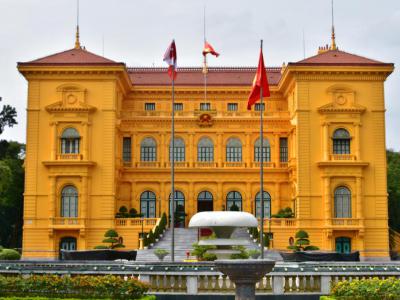
The Presidential Palace in Hanoi was built as the residence of the Governor General under French colonial rule. Today it is used as a guest house and reception facility for foreign dignitaries.
The Presidential Palace is a yellow three storey building constructed in Renaissance and Beaux Art style. The French colonial rulers had a civilizing mission and believed that European architectural styles were superior to traditional Asian housing design. The building has no Asian architectural feature. It was built in 1900 by Auguste Henri Vildieu, who was the official architect of Vietnam. The building stands behind strong wrought iron gates with sentry boxes on either side.
The palace is surrounded by expansive grounds including an alley with mango trees that leads to a humble structure on stilts occupied by Ho Chi Minh. After independence, Ho Chi Minh refused to live in the presidential palace and chose to stay in the servant’s quarters till his small cottage was constructed in the grounds. The cottage called uncle Ho’s cottage or the Nha San Bac Ho, is designed like the traditional houses in North West Vietnam that offered shelter to revolutionaries during their struggle for independence from the French rulers.
The presidential palace is off limits to visitors but the grounds and the cottage of Ho Chi Minh can be viewed for a small fee.
The Presidential Palace is a yellow three storey building constructed in Renaissance and Beaux Art style. The French colonial rulers had a civilizing mission and believed that European architectural styles were superior to traditional Asian housing design. The building has no Asian architectural feature. It was built in 1900 by Auguste Henri Vildieu, who was the official architect of Vietnam. The building stands behind strong wrought iron gates with sentry boxes on either side.
The palace is surrounded by expansive grounds including an alley with mango trees that leads to a humble structure on stilts occupied by Ho Chi Minh. After independence, Ho Chi Minh refused to live in the presidential palace and chose to stay in the servant’s quarters till his small cottage was constructed in the grounds. The cottage called uncle Ho’s cottage or the Nha San Bac Ho, is designed like the traditional houses in North West Vietnam that offered shelter to revolutionaries during their struggle for independence from the French rulers.
The presidential palace is off limits to visitors but the grounds and the cottage of Ho Chi Minh can be viewed for a small fee.
10) Tran Quoc Pagoda
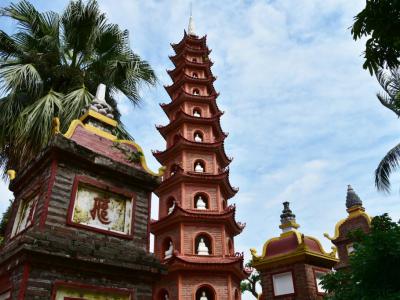
The Tran Quoc Pagoda, located on a small peninsula between the West Lake and Truc Bach Lake in Hanoi, is the oldest pagoda in Vietnam. It was constructed in the 6th Century, during the reign of Emperor Ly Nam De, who was also called the Khai Quoc ( National Founder).
The Tran Quoc pagoda is built in the tradition of the Indian Stupa. It is a tall, tower like structure where religious relics were placed for veneration. The architecture used for the pagoda itself and surrounding structures is in harmony with nature and adds to the natural setting without disturbing the scenery. The ancient pagoda underwent extensive restoration in 1815. It now has a triple gate, sitting room, an ancestor worship chamber and a garden tower. The ancient corridors, ten shrines and a belfry are carefully preserved. The pagoda has many statues including a lacquer and gold statue of the Buddha and many steles including a stele depicting the history of the Pagoda by Nguyen Xuan Chinh crafted in 1639. The Bodhi tree in the gardens, grafted from the original Bodhi tree under which the Buddha attained enlightenment, was a gift from the Government of India during the visit of their first president in 1959.
The Tra Quoc Pagoda is a cultural symbol of Vietnamese Buddhism and remains a place of pilgrimage. International visitors are required to follow a strict dignified dress code and men and women are expected to cover their legs when visiting the temple.
The Tran Quoc pagoda is built in the tradition of the Indian Stupa. It is a tall, tower like structure where religious relics were placed for veneration. The architecture used for the pagoda itself and surrounding structures is in harmony with nature and adds to the natural setting without disturbing the scenery. The ancient pagoda underwent extensive restoration in 1815. It now has a triple gate, sitting room, an ancestor worship chamber and a garden tower. The ancient corridors, ten shrines and a belfry are carefully preserved. The pagoda has many statues including a lacquer and gold statue of the Buddha and many steles including a stele depicting the history of the Pagoda by Nguyen Xuan Chinh crafted in 1639. The Bodhi tree in the gardens, grafted from the original Bodhi tree under which the Buddha attained enlightenment, was a gift from the Government of India during the visit of their first president in 1959.
The Tra Quoc Pagoda is a cultural symbol of Vietnamese Buddhism and remains a place of pilgrimage. International visitors are required to follow a strict dignified dress code and men and women are expected to cover their legs when visiting the temple.
