Custom Walk in Calgary, Alberta by sjmalaga5378 created on 2022-08-09
Guide Location: Canada » Calgary
Guide Type: Custom Walk
# of Sights: 9
Tour Duration: 1 Hour(s)
Travel Distance: 1.7 Km or 1.1 Miles
Share Key: SCZSM
Guide Type: Custom Walk
# of Sights: 9
Tour Duration: 1 Hour(s)
Travel Distance: 1.7 Km or 1.1 Miles
Share Key: SCZSM
How It Works
Please retrieve this walk in the GPSmyCity app. Once done, the app will guide you from one tour stop to the next as if you had a personal tour guide. If you created the walk on this website or come to the page via a link, please follow the instructions below to retrieve the walk in the app.
Retrieve This Walk in App
Step 1. Download the app "GPSmyCity: Walks in 1K+ Cities" on Apple App Store or Google Play Store.



Step 2. In the GPSmyCity app, download(or launch) the guide "Calgary Map and Walking Tours".
Step 3. Tap the menu button located at upper right corner of the "Walks" screen and select "Retrieve custom walk". Enter the share key: SCZSM
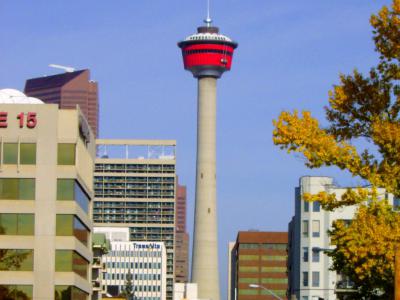
1) Calgary Tower (must see)
Located in downtown Calgary, Calgary Tower stands 191 meter tall. Originally known as the Husky Tower, this observation tower came into existence in 1967 as a part of the urban renewal plan. It was constructed in joint cooperation between Husky oil and Realty Company Limited. The tower was also built to celebrate the 1967 centennial of Canada. It was in 1971 that this World Federation of Great Towers founder member was renamed Calgary Tower.
Calgary Tower was designed and constructed by W. G. Milne & A. Dale and Associates. It took fifteen months to complete building this tower. It can withstand winds up to 161 kilometers per hour and earthquakes.
On your visit to this tower, check out the column that was built in a unique manner by pouring concrete continually for 24 days. Enjoy a delicious meal at the revolving restaurant here. Called Sky 360, the restaurant offers an amazing view. +15 Skyway network connects the base of the tower to Fairmont Palliser Hotel, One Palliser Square and EnCana Place.
Calgary Tower was designed and constructed by W. G. Milne & A. Dale and Associates. It took fifteen months to complete building this tower. It can withstand winds up to 161 kilometers per hour and earthquakes.
On your visit to this tower, check out the column that was built in a unique manner by pouring concrete continually for 24 days. Enjoy a delicious meal at the revolving restaurant here. Called Sky 360, the restaurant offers an amazing view. +15 Skyway network connects the base of the tower to Fairmont Palliser Hotel, One Palliser Square and EnCana Place.
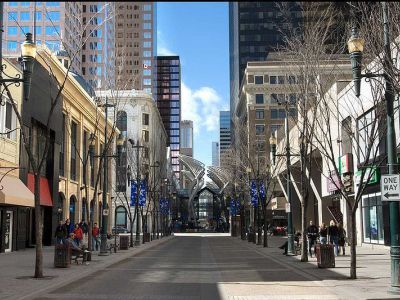
2) Stephen Avenue (must see)
Downtown Calgary is where all the action is and this is the hub of Calgary shopping and sightseeing. On your trip to this city, you must not miss a visit to the major pedestrian mall Stephen Avenue.
This street features some of the best cafes, bars, pubs and finest restaurants. If you love shopping this is where you must be. Stephen Avenue is a shopper’s delight with its high end retail stores and exclusive boutiques.
Some of the major shopping centers here include The Bay Department Store, Scotia Center, Fashion Central, Bankers Hall and The Core Shopping Center. Other attractions located on this street include hotels such as Calgary Marriott and Hyatt Regency Calgary and the famous Telus Convention Center.
Stephen Avenue is also where you can find many ancient, historic buildings. In 1992, the Canadian government declared this street as a Canadian historic site. Stephen Avenue got its name from the first Canadian Pacific Railway president and the first Baron Mount Stephen, George Stephen.
As you walk around the street, you will be impressed by the majestic, sandstone buildings that were built specifically to withstand fire following the 1886 fire that damaged most of the city. Remember to enjoy a visit to this popular street on your trip to Calgary.
This street features some of the best cafes, bars, pubs and finest restaurants. If you love shopping this is where you must be. Stephen Avenue is a shopper’s delight with its high end retail stores and exclusive boutiques.
Some of the major shopping centers here include The Bay Department Store, Scotia Center, Fashion Central, Bankers Hall and The Core Shopping Center. Other attractions located on this street include hotels such as Calgary Marriott and Hyatt Regency Calgary and the famous Telus Convention Center.
Stephen Avenue is also where you can find many ancient, historic buildings. In 1992, the Canadian government declared this street as a Canadian historic site. Stephen Avenue got its name from the first Canadian Pacific Railway president and the first Baron Mount Stephen, George Stephen.
As you walk around the street, you will be impressed by the majestic, sandstone buildings that were built specifically to withstand fire following the 1886 fire that damaged most of the city. Remember to enjoy a visit to this popular street on your trip to Calgary.
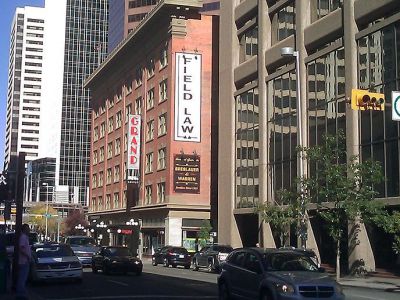
3) Theatre Junction GRAND
The GRAND as it is corporately styled is an ancient theatre building used today as a hub for contemporary performing arts. This building is Calgary’s culturehouse and is a part of Lougheed Block.
Also known as The Sherman Grand Opera House, The Grand, owned by Lougheed and Taylor, was constructed in 1912 by architect L.R. Wardrop. Originally, this building served many purposes and housed a variety of offices, retail stores and living quarters on the ground level and the Sherman Grand Theatre.
This theatre attracted many celebrity stars such as Sarah Bernhardt, Marx Brothers, Ethel Barrymore, Fred Astaire, Paul Robeson, Arthur Rubinstein and George Burns predominantly due to its reputation of being one of the best theatres in the Pacific Northwest.
This complex saw a lot of political and social activities. Many important political debates, rallies and speeches were held here by both Conservative and Liberal Parties. The original theatre has a main floor and a gallery that combined to seat 1,350 people.
In the days when it first came into existence, this theatre was well known for its modern setting and convenient features such as electric lighting and hot and cold water in all fifteen changing rooms. The automatic sprinkler here was indeed a luxury. Be sure to visit this interesting structure on your trip to Calgary.
Also known as The Sherman Grand Opera House, The Grand, owned by Lougheed and Taylor, was constructed in 1912 by architect L.R. Wardrop. Originally, this building served many purposes and housed a variety of offices, retail stores and living quarters on the ground level and the Sherman Grand Theatre.
This theatre attracted many celebrity stars such as Sarah Bernhardt, Marx Brothers, Ethel Barrymore, Fred Astaire, Paul Robeson, Arthur Rubinstein and George Burns predominantly due to its reputation of being one of the best theatres in the Pacific Northwest.
This complex saw a lot of political and social activities. Many important political debates, rallies and speeches were held here by both Conservative and Liberal Parties. The original theatre has a main floor and a gallery that combined to seat 1,350 people.
In the days when it first came into existence, this theatre was well known for its modern setting and convenient features such as electric lighting and hot and cold water in all fifteen changing rooms. The automatic sprinkler here was indeed a luxury. Be sure to visit this interesting structure on your trip to Calgary.
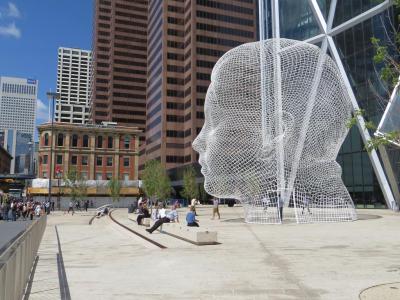
4) Wonderland Sculpture (must see)
The Bow is a crescent shaped skyscraper in Calgary. It is a groundbreaking structure that has been ranked as one of the top 10 architectural projects in the world by "Azure Magazine." A walking tour of Calgary assuredly includes a stop by the Bow, but the reason is more for a sculpture in the plaza than for the skyscraper itself.
Wonderland is a 39-foot tall (roughly 12 meters) statue in the shape of a young girl's head. The bent wire sculpture was created by artist Jaume Plensa. It is meant to represent the dreams of the young people of the province.
Unlike most sculptures, Wonderland has an entrance that allows visitors to view the artwork from the inside. They can view the city from the perspective of all of those who are represented by this sculpture.
Wonderland is prominently displayed on 6th Avenue. It is a short walk from Olympic Plaza, making it a quick yet meaningful part of a walking tour of the city.
Wonderland is a 39-foot tall (roughly 12 meters) statue in the shape of a young girl's head. The bent wire sculpture was created by artist Jaume Plensa. It is meant to represent the dreams of the young people of the province.
Unlike most sculptures, Wonderland has an entrance that allows visitors to view the artwork from the inside. They can view the city from the perspective of all of those who are represented by this sculpture.
Wonderland is prominently displayed on 6th Avenue. It is a short walk from Olympic Plaza, making it a quick yet meaningful part of a walking tour of the city.
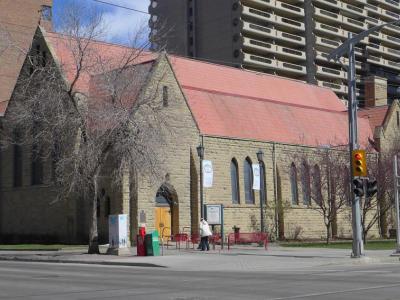
5) Cathedral Church of the Redeemer
Constructed in early twentieth century, Cathedral Church of the Redeemer is one of the major tourist attractions in Calgary. This building is built with rusticated sandstone and is located in downtown Calgary close to the Olympic Plaza.
The church has one and a half stories and has attractive features such as stained glass windows, red metal roof and stone walls. Many interesting landscape elements surround this charming church.
Cathedral Church of the Redeemer holds the distinction of being a standing example of Gothic Revival architecture skillfully integrated with other styles and influences. In Alberta, this church is also associated with early Anglican Church presence.
Some of the most significant elements that define the character of this church include its massing, form and size, buttresses that are non-load-bearing, usage of rusticated Paskapoo sandstone from the famed Oliver quarry, separate articulating gable roofs, gallery on the West end, lower side aisles, first metal roofing in the city, fish-scale roof cladding, heavy timber cross bracing and roof rafters and much more.
At the cathedral, you will also find the 1906 original Casavant Freres organ with refurbishments. You will certainly be impressed with the elaborate and intricate woodwork. Do not miss out the stunning oak reredos in the sanctuary.
The church has one and a half stories and has attractive features such as stained glass windows, red metal roof and stone walls. Many interesting landscape elements surround this charming church.
Cathedral Church of the Redeemer holds the distinction of being a standing example of Gothic Revival architecture skillfully integrated with other styles and influences. In Alberta, this church is also associated with early Anglican Church presence.
Some of the most significant elements that define the character of this church include its massing, form and size, buttresses that are non-load-bearing, usage of rusticated Paskapoo sandstone from the famed Oliver quarry, separate articulating gable roofs, gallery on the West end, lower side aisles, first metal roofing in the city, fish-scale roof cladding, heavy timber cross bracing and roof rafters and much more.
At the cathedral, you will also find the 1906 original Casavant Freres organ with refurbishments. You will certainly be impressed with the elaborate and intricate woodwork. Do not miss out the stunning oak reredos in the sanctuary.
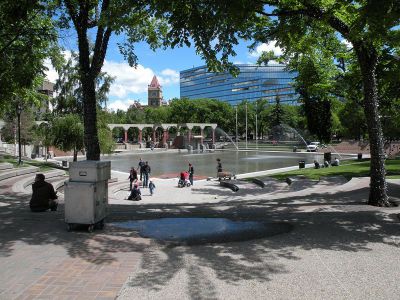
6) Olympic Plaza
Olympic Plaza is one of the popular tourist attractions in Calgary. This plaza was constructed during the 1988 Winter Olympics exclusively as a venue for medal presentation. Here you will find a legacy hall that commemorates the winners through display of plaques. Today, Olympic Plaza is used for hosting festivals and concerts.
Olympic Plaza is abuzz with activities during the cheery summer months. There are festivities and music in the air and sparkling water fountains. During lunch hour, downtown patrons frequent the park. The Stampede breakfast and the exciting Latino-fest are held at this plaza. If you think this park is deserted during the chilly winter months, think again. The wading pool is converted to a skating rink and people come in large numbers to enjoy skating.
Many popular events continue to be held at the Olympic Plaza on a regular basis; among them are Canada Day fireworks, New Years Eve celebrations, Pride celebrations and a public thank you rally that took place in June 2004 after the Calgary Flames reached the NHL finals.
Olympic Plaza is the epicenter of Calgary’s culture. Epcor Center of Performing Arts hosts many shows here throughout the year. On your trip to Calgary, do not miss a chance to visit this wonderful tourist attraction.
Olympic Plaza is abuzz with activities during the cheery summer months. There are festivities and music in the air and sparkling water fountains. During lunch hour, downtown patrons frequent the park. The Stampede breakfast and the exciting Latino-fest are held at this plaza. If you think this park is deserted during the chilly winter months, think again. The wading pool is converted to a skating rink and people come in large numbers to enjoy skating.
Many popular events continue to be held at the Olympic Plaza on a regular basis; among them are Canada Day fireworks, New Years Eve celebrations, Pride celebrations and a public thank you rally that took place in June 2004 after the Calgary Flames reached the NHL finals.
Olympic Plaza is the epicenter of Calgary’s culture. Epcor Center of Performing Arts hosts many shows here throughout the year. On your trip to Calgary, do not miss a chance to visit this wonderful tourist attraction.
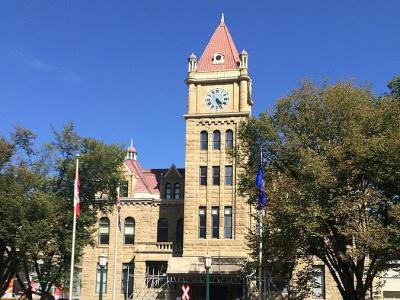
7) Old City Hall
The Calgary City Hall has been used as a municipal building since it was constructed in 1911. It was designed in a Richardsonian Romanesque architectural style by William M. Dodd. The revivalist style of architecture draws inspiration from 11th and 12th century Romanesque buildings with recessed windows, stone arches and a symmetrical structure.
The building has undergone a number of restoration projects. The most recent took place in 2014 when bits of the stone walls began to crumble from the Old City Hall's exterior. The building was designated as a Provincial Historical Resource in 1978. It was given National Historical Site status in 1984.
The Old City Hall remains in use. It is home to the Calgary mayor's office as well as members of the city council. The Old City Hall is the site of Calgary City Council meetings as well. Visitors to the city can see for themselves how the city has grown around this site. Nearby areas of interest include the Central Library and Olympic Plaza.
The building has undergone a number of restoration projects. The most recent took place in 2014 when bits of the stone walls began to crumble from the Old City Hall's exterior. The building was designated as a Provincial Historical Resource in 1978. It was given National Historical Site status in 1984.
The Old City Hall remains in use. It is home to the Calgary mayor's office as well as members of the city council. The Old City Hall is the site of Calgary City Council meetings as well. Visitors to the city can see for themselves how the city has grown around this site. Nearby areas of interest include the Central Library and Olympic Plaza.
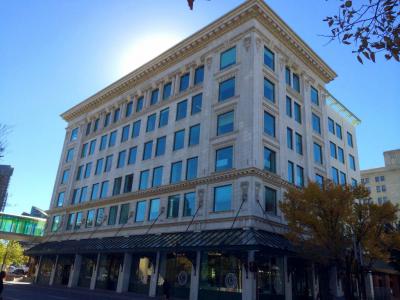
8) Burns Building
Ask any tourist back from Calgary and he will tell you that no matter what, one should not miss a visit to Burns Building. Located at 237-8th Avenue right across the City Hall and Olympic Plaza, this six storied edifice was constructed by Pat Burns, the meat baron, and was meant to serve as a flagship market and corporate headquarters for Burns Foods. Burns building was constructed during the historically significant year of 1913 when many prominent buildings, such as Lancaster Block, Palliser Hotel, Hudson’s Bay Store and Canada Life Building, came into existence.
Immediately after construction, the Burns Building housed a retail meat market on the ground floor. Enter this level and you will find a dozen towering Doric marble columns that are 25 foot high each. A variety of different tenants occupied the other 35,000 square feet of office space in the Burns.
Burns Building was constructed in Edwardian Classical architectural style. You will find ornamental sculpted moldings including lion heads on the terracotta exterior. The main corridors and stairways of the building are finished with green and white Italian marble. Even back then, this structure featured conveniences such as ventilation and steam heating. Every single office had natural gas lighting apart from electricity. Pay a visit to this historically significant building on your trip to Calgary.
Immediately after construction, the Burns Building housed a retail meat market on the ground floor. Enter this level and you will find a dozen towering Doric marble columns that are 25 foot high each. A variety of different tenants occupied the other 35,000 square feet of office space in the Burns.
Burns Building was constructed in Edwardian Classical architectural style. You will find ornamental sculpted moldings including lion heads on the terracotta exterior. The main corridors and stairways of the building are finished with green and white Italian marble. Even back then, this structure featured conveniences such as ventilation and steam heating. Every single office had natural gas lighting apart from electricity. Pay a visit to this historically significant building on your trip to Calgary.
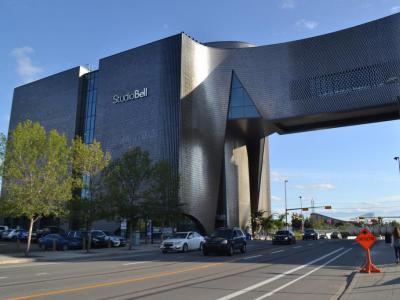
9) Studio Bell - National Music Centre (must see)
Any walking tour in Calgary should include Downtown East Village. This area was the first settled region of Calgary, as evidenced by the presence of Fort Calgary. A highlight of Downtown East Village is the National Music Center.
Visitors might find some confusion over the museum's name. It is officially called the National Music Center, but the building that houses the museum is Studio Bell. No matter what name is used, it is a must-see attraction in Calgary.
Tourists can see permanent exhibitions at the National Music Center. The Music Mosaic covers the history of music in Canada. Along with musicians, visitors learn about inventors and broadcasters. The Power of Music is a permanent exhibit that lets visitors join in by singing in one of the vocal booths, watching live performances and learning how music affects the body and the brain. Making Music allows visitors to play different musical instruments. These range from drums to a baby grand piano.
Another permanent exhibit at the National Music Center is the Canadian Music Halls of Fame. The Halls of Fame honor those artists that have shown the world the prolific nature of music in Canada. Among the many artists who are celebrated are the Cowboy Junkies, Andy Kim, Barenaked Ladies, Sarah McLachlan, Alanis Morissette, Backman-Turner Overdrive, k.d. lang, Shania Twain, Bryan Adams, David Foster, Rush, Leonard Cohen, Guy Lombardo, Oscar Peterson and many others.
The National Music Center offers regular concerts and events. Those lucky Calgary tourists who visit during one of these special events may see a musical performance, a film screening or art on tour. The Studio Bell website has a full calendar of upcoming events that tourists can check when making their plans.
Why You Should Visit:
- To learn about music with hands-on exhibits
- To pay homage to some of Canada's greatest musical influencers
Tips:
Visitors should plan their trip to the National Music Center carefully. They must purchase timed tickets in advance and arrive at the time indicated on their tickets. Studio Bell is open on Saturdays and Sundays from 10 AM through 5 PM.
Visitors might find some confusion over the museum's name. It is officially called the National Music Center, but the building that houses the museum is Studio Bell. No matter what name is used, it is a must-see attraction in Calgary.
Tourists can see permanent exhibitions at the National Music Center. The Music Mosaic covers the history of music in Canada. Along with musicians, visitors learn about inventors and broadcasters. The Power of Music is a permanent exhibit that lets visitors join in by singing in one of the vocal booths, watching live performances and learning how music affects the body and the brain. Making Music allows visitors to play different musical instruments. These range from drums to a baby grand piano.
Another permanent exhibit at the National Music Center is the Canadian Music Halls of Fame. The Halls of Fame honor those artists that have shown the world the prolific nature of music in Canada. Among the many artists who are celebrated are the Cowboy Junkies, Andy Kim, Barenaked Ladies, Sarah McLachlan, Alanis Morissette, Backman-Turner Overdrive, k.d. lang, Shania Twain, Bryan Adams, David Foster, Rush, Leonard Cohen, Guy Lombardo, Oscar Peterson and many others.
The National Music Center offers regular concerts and events. Those lucky Calgary tourists who visit during one of these special events may see a musical performance, a film screening or art on tour. The Studio Bell website has a full calendar of upcoming events that tourists can check when making their plans.
Why You Should Visit:
- To learn about music with hands-on exhibits
- To pay homage to some of Canada's greatest musical influencers
Tips:
Visitors should plan their trip to the National Music Center carefully. They must purchase timed tickets in advance and arrive at the time indicated on their tickets. Studio Bell is open on Saturdays and Sundays from 10 AM through 5 PM.
