Custom Walk in Edinburgh, Scotland by mckesler885992 created on 2023-03-22
Guide Location: Scotland » Edinburgh
Guide Type: Custom Walk
# of Sights: 8
Tour Duration: 2 Hour(s)
Travel Distance: 4.5 Km or 2.8 Miles
Share Key: MMZUX
Guide Type: Custom Walk
# of Sights: 8
Tour Duration: 2 Hour(s)
Travel Distance: 4.5 Km or 2.8 Miles
Share Key: MMZUX
How It Works
Please retrieve this walk in the GPSmyCity app. Once done, the app will guide you from one tour stop to the next as if you had a personal tour guide. If you created the walk on this website or come to the page via a link, please follow the instructions below to retrieve the walk in the app.
Retrieve This Walk in App
Step 1. Download the app "GPSmyCity: Walks in 1K+ Cities" on Apple App Store or Google Play Store.



Step 2. In the GPSmyCity app, download(or launch) the guide "Edinburgh Map and Walking Tours".
Step 3. Tap the menu button located at upper right corner of the "Walks" screen and select "Retrieve custom walk". Enter the share key: MMZUX
1) Arthur's Seat (must see)
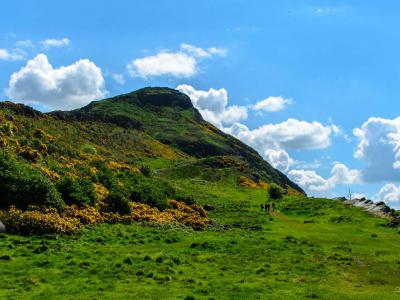
Edinburgh is a busy city, but even here, Scotland doesn’t let you forget its wild origins. To the east of Edinburgh Castle, you will find Arthur’s Seat, a testimony of the ancient land.
About 350 million years ago this main peak of a cluster of hills was an active volcano. During the last Ice Age two million years ago, a huge glacier that moved slowly across the land from west to east eroded the volcano, which was by that time, extinct. Located in Holyrood Park, Arthur’s Seat today is a favourite place for hill walkers as it is relatively easy to climb and you have great views of the city from the top.
The peak’s name comes from a corruption of “Ard-na-Said” which translates roughly as “height of arrows”, although legend likes to claim that this was once the site of Camelot and Arthur’s Round Table. There are remains of old forts on the top of the peak, probably built in the Iron Age by the Votadini, who settled here until after Roman times.
An ancient tradition suggests that if a young girl washes her face in the dew here on May Day, she will become beautiful. The peak today is jealously guarded by the population and no building is allowed here. It is a natural habitat for several wild animals, including foxes, squirrels, weasels and badgers, and for some rather rare species of butterflies.
In 1836, seventeen tiny coffins containing wooden figures were found in a cave on the peak. This led to speculation about the site being used for witch’s rites, but this has never been proved. The coffins and their contents remain a mystery.
Why You Should Visit:
Ruins of an old church, hiking trails, fresh air all around, all on a lovely dormant volcano!
Tip:
Go early in the morning to catch the light over the city and to avoid crowds.
Bring water, snacks, comfortable (closed-toe) shoes, and a light windbreaker too, because it's gusty at the top.
Plan your route carefully, as there are multiple routes up, some more direct and steeper, some more leisurely and meandering.
About 350 million years ago this main peak of a cluster of hills was an active volcano. During the last Ice Age two million years ago, a huge glacier that moved slowly across the land from west to east eroded the volcano, which was by that time, extinct. Located in Holyrood Park, Arthur’s Seat today is a favourite place for hill walkers as it is relatively easy to climb and you have great views of the city from the top.
The peak’s name comes from a corruption of “Ard-na-Said” which translates roughly as “height of arrows”, although legend likes to claim that this was once the site of Camelot and Arthur’s Round Table. There are remains of old forts on the top of the peak, probably built in the Iron Age by the Votadini, who settled here until after Roman times.
An ancient tradition suggests that if a young girl washes her face in the dew here on May Day, she will become beautiful. The peak today is jealously guarded by the population and no building is allowed here. It is a natural habitat for several wild animals, including foxes, squirrels, weasels and badgers, and for some rather rare species of butterflies.
In 1836, seventeen tiny coffins containing wooden figures were found in a cave on the peak. This led to speculation about the site being used for witch’s rites, but this has never been proved. The coffins and their contents remain a mystery.
Why You Should Visit:
Ruins of an old church, hiking trails, fresh air all around, all on a lovely dormant volcano!
Tip:
Go early in the morning to catch the light over the city and to avoid crowds.
Bring water, snacks, comfortable (closed-toe) shoes, and a light windbreaker too, because it's gusty at the top.
Plan your route carefully, as there are multiple routes up, some more direct and steeper, some more leisurely and meandering.
2) Holyroodhouse (must see)
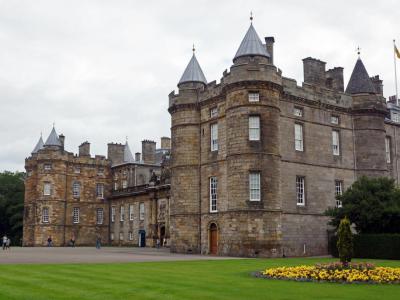
If you're ticking off Edinburgh landmarks, Holyroodhouse is one you can't skip-not unless you're on the run from the crown... Sitting at the royal end of the Royal Mile, this stately pad is the official Scottish residence of the British monarch and once housed none other than Mary, Queen of Scots. That’s right, drama lives here rent-free...
The whole saga begins with King David I, who founded the nearby Holyrood Abbey in 1128 (after a divine deer encounter, according to legend). A few centuries later, precisely by 1501, a palace was built beside the abbey. Now, calling it a “palace”, back then, was maybe a touch ambitious-a grand country house, more like it, rather than Versailles-but it did get bigger in 1532 and 1536. The property was thoroughly renovated in 1633, only to be trashed when Cromwell’s soldiers used it as barracks and then a fire added insult to injury...
Then came the 1670s, when Sir William Bruce, the architectural fixer of the day, rebuilt the place. The abbey chapel became the Chapel Royal, hosting pious activity until 1768, when the roof rather unceremoniously fell in. More restorations followed after that-first in 1822 for a royal visit, and then again in the 20th century when King George V and Queen Mary decided the palace could really use indoor plumbing. Royal flush, anyone?
When the royals are away, the house is open to the public. Inside, you can marvel at ceiling stucco so delicate it practically whispers, and gawk at an entire lineup of Scottish monarchs-some real, some as fictional as their hairlines-painted by the Dutch Golden Age artist Jacob de Wet. Then, dive into the Royal Collection, a five-century mix of armor, jewels, manuscripts, and silverware. Basically, it’s the attic of your dreams-if your attic had Rembrandts and 17th-century clocks.
Oh, and don’t wander off alone unless you're cool with ghosts. Legend has it that Agnes Sampson, accused of witchcraft and executed in 1592, still makes the occasional appearance here. So, if you feel a chill or hear something whispering about herbal remedies... maybe don’t investigate.
Palace, ghosts, ceilings, swords, and sovereign bling-are all here. Holyroodhouse doesn’t just bring the royal drama-it curates it.
The whole saga begins with King David I, who founded the nearby Holyrood Abbey in 1128 (after a divine deer encounter, according to legend). A few centuries later, precisely by 1501, a palace was built beside the abbey. Now, calling it a “palace”, back then, was maybe a touch ambitious-a grand country house, more like it, rather than Versailles-but it did get bigger in 1532 and 1536. The property was thoroughly renovated in 1633, only to be trashed when Cromwell’s soldiers used it as barracks and then a fire added insult to injury...
Then came the 1670s, when Sir William Bruce, the architectural fixer of the day, rebuilt the place. The abbey chapel became the Chapel Royal, hosting pious activity until 1768, when the roof rather unceremoniously fell in. More restorations followed after that-first in 1822 for a royal visit, and then again in the 20th century when King George V and Queen Mary decided the palace could really use indoor plumbing. Royal flush, anyone?
When the royals are away, the house is open to the public. Inside, you can marvel at ceiling stucco so delicate it practically whispers, and gawk at an entire lineup of Scottish monarchs-some real, some as fictional as their hairlines-painted by the Dutch Golden Age artist Jacob de Wet. Then, dive into the Royal Collection, a five-century mix of armor, jewels, manuscripts, and silverware. Basically, it’s the attic of your dreams-if your attic had Rembrandts and 17th-century clocks.
Oh, and don’t wander off alone unless you're cool with ghosts. Legend has it that Agnes Sampson, accused of witchcraft and executed in 1592, still makes the occasional appearance here. So, if you feel a chill or hear something whispering about herbal remedies... maybe don’t investigate.
Palace, ghosts, ceilings, swords, and sovereign bling-are all here. Holyroodhouse doesn’t just bring the royal drama-it curates it.
3) The Royal Oak Pub
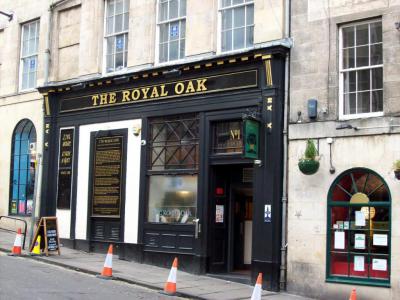
The Royal Oak in Edinburgh is a pub and folk music venue that has been around for 200 years. It's famous for its live music performances, and it has hosted some well-known Scottish musicians like Kris Drever, Bobby Eaglesham, Danny Kyle, and Karine Polwart in the past.
Back in the 1960s, the pub was owned by Alan Anderson, a former Heart of Midlothian footballer, but it went by a different name at that time, "The Pivot." It became known as a place for folk music when Dorothy Taylor took over the pub in 1978. She ran it alongside her sister Sandra, who was a former star of The White Heather Club TV Show, until 2003. After that, Heather Mckenzie became the current licensee.
In 2008, an album called "The Royal Oak: Best of Folk" was recorded and released by Magic Park Records, featuring musicians from The Royal Oak. The pub's resident folk club, known as The Wee Folk Club, received the "Club of the Year" award at the annual Scots Trad Music Awards.
The Royal Oak is even mentioned in Ian Rankin's novel "Set in Darkness," which is part of the Inspector Rebus series. According to Rankin, it's his favorite among all the pub scenes in the Rebus series.
Back in the 1960s, the pub was owned by Alan Anderson, a former Heart of Midlothian footballer, but it went by a different name at that time, "The Pivot." It became known as a place for folk music when Dorothy Taylor took over the pub in 1978. She ran it alongside her sister Sandra, who was a former star of The White Heather Club TV Show, until 2003. After that, Heather Mckenzie became the current licensee.
In 2008, an album called "The Royal Oak: Best of Folk" was recorded and released by Magic Park Records, featuring musicians from The Royal Oak. The pub's resident folk club, known as The Wee Folk Club, received the "Club of the Year" award at the annual Scots Trad Music Awards.
The Royal Oak is even mentioned in Ian Rankin's novel "Set in Darkness," which is part of the Inspector Rebus series. According to Rankin, it's his favorite among all the pub scenes in the Rebus series.
4) The Elephant House
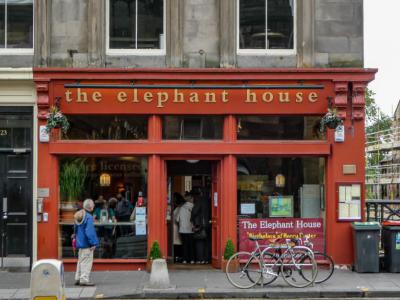
If you’ve ever wanted to sip a cappuccino where magic once brewed-quite literally-then The Elephant House might just be your pilgrimage stop. Open since 1995, this unassuming café earned worldwide fame not just for its tea and coffee (which are excellent, by the way), but for serving as a launchpad for a certain bespectacled boy wizard. Yes, J.K. Rowling once holed up in the back room here, penning early chapters of Harry Potter while eyeing up the brooding silhouette of Edinburgh Castle. Talk about dramatic inspiration...
But Rowling wasn’t the only literary mind to haunt these elephant-adorned halls. Other patrons like Ian Rankin, the mastermind behind the gritty Rebus detective novels, and Alexander McCall Smith, author of The No.1 Ladies' Detective Agency and 44 Scotland Street fame, have also warmed the seats here. Apparently, there’s something about the mix of caffeine, castle views, and atmospheric chatter that gets the creative juices flowing.
So, whether you’re nursing dreams of becoming the next literary sensation or just need a sturdy espresso before wandering into Edinburgh’s medieval maze-drop by The Elephant House. Who knows? That scribble on your napkin might just be the next bestseller...
But Rowling wasn’t the only literary mind to haunt these elephant-adorned halls. Other patrons like Ian Rankin, the mastermind behind the gritty Rebus detective novels, and Alexander McCall Smith, author of The No.1 Ladies' Detective Agency and 44 Scotland Street fame, have also warmed the seats here. Apparently, there’s something about the mix of caffeine, castle views, and atmospheric chatter that gets the creative juices flowing.
So, whether you’re nursing dreams of becoming the next literary sensation or just need a sturdy espresso before wandering into Edinburgh’s medieval maze-drop by The Elephant House. Who knows? That scribble on your napkin might just be the next bestseller...
5) Diagon House / Museum Context
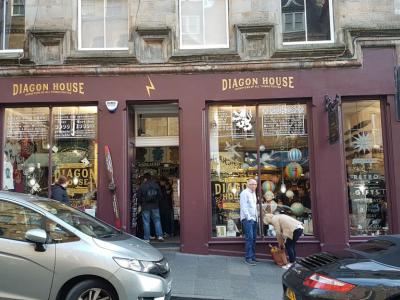
Amid the cobbles and curves of Edinburgh's Victoria Street, one shop practically hums with wizard energy. Welcome to Museum Context!-or as the locals still like to whisper, Diagon House. Twinned with its sister spot at No.44 Cockburn Street, it is a true flagship store of magical mayhem. Together, these two stores proudly embrace Edinburgh’s reputation as the cradle of Harry Potter’s creation. Surely, J.K. Rowling may have written in cafés, but it is here that her legacy gets bottled, shelved, and sold-no Time-Turner required.
The idea of this venue sprang from Alice and Andrew McRae-the latter being a conservation architect, who apparently thought Edinburgh’s historic stone walls deserved a bit of wand-waving retail flair. Inside, it may appear a bit “scary” to the claustrophobic lot who may get twitchy in tight spaces. Think of it as the closest thing you’ll find to Diagon Alley itself: packed shelves, narrow aisles, and a steady stream of would-be wizards elbowing their way past, just as Harry once did, dodging sniggering Slytherins to buy his school supplies...
From wands to house scarves, every inch here is loaded with officially licensed Harry Potter merchandise, and the faithful treat it like a pilgrimage site. Don’t be surprised to see queues wrapping around the street from the crack of dawn-yes, people actually line up to shop. Inside, the atmosphere is equal parts Hogwarts common room and retail wonderland, and no, you won’t find any Muggle discount racks here.
After two decades of spellbinding crowds, the shop marked its 20th birthday with a little reinvention of its own. Now flying the banner of “Museum Context,” it celebrates not just Harry’s world but also an eclectic mix of Scottish curiosities. But make no mistake: for Potter fans, this is still the beating heart of Edinburgh’s magical shopping scene-part museum, part marketplace, and part sheer fandom frenzy.
The idea of this venue sprang from Alice and Andrew McRae-the latter being a conservation architect, who apparently thought Edinburgh’s historic stone walls deserved a bit of wand-waving retail flair. Inside, it may appear a bit “scary” to the claustrophobic lot who may get twitchy in tight spaces. Think of it as the closest thing you’ll find to Diagon Alley itself: packed shelves, narrow aisles, and a steady stream of would-be wizards elbowing their way past, just as Harry once did, dodging sniggering Slytherins to buy his school supplies...
From wands to house scarves, every inch here is loaded with officially licensed Harry Potter merchandise, and the faithful treat it like a pilgrimage site. Don’t be surprised to see queues wrapping around the street from the crack of dawn-yes, people actually line up to shop. Inside, the atmosphere is equal parts Hogwarts common room and retail wonderland, and no, you won’t find any Muggle discount racks here.
After two decades of spellbinding crowds, the shop marked its 20th birthday with a little reinvention of its own. Now flying the banner of “Museum Context,” it celebrates not just Harry’s world but also an eclectic mix of Scottish curiosities. But make no mistake: for Potter fans, this is still the beating heart of Edinburgh’s magical shopping scene-part museum, part marketplace, and part sheer fandom frenzy.
6) Edinburgh Castle (must see)
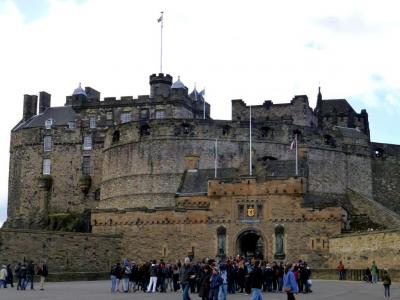
Edinburgh Castle, looming large over the Scottish capital, is the second most visited attraction in the UK (after the Tower of London, which is still number one). The history of Scotland is deeply etched into its ancient stones, making it a timeline in fortress form.
Perched atop Castle Rock (a hardened basaltic plug from an extinct volcano eroded by glaciers), this area has been drawing humans since the 9th millennium BC. The first castle on the site was built in the 12th century by King David I. It remained a royal residence until 1603, when the monarchy packed up and moved to London-presumably for better weather and indoor plumbing...
Indeed, as a fortress, it was virtually impregnable, except for one major-geological-drawback: the basalt rock on which it stands doesn’t hold water (literally). The 28-meter-deep well inside the fortress was about as useful as a chocolate teapot during a siege. So, when the well ran dry, surrender-or dehydration-was the only choice for those inside.
The original castle was mostly destroyed during the Lang Siege of 1573. The only remainder from its early days is St. Margaret’s Chapel. By the 17th century, it had shifted from royal digs to military barracks, housing troops up to the 1920s.
Presently, the castle hosts the Scottish National War Memorial, the National War Museum, and enough regimental museums to keep military buffs busy till closing time. Don't miss the One O’Clock Gun, which is fired daily (except Sundays) at 1 PM with Swiss-watch precision-yes, Edinburgh literally sets its clocks by it...
Also, in the Crown Room, you will see Scotland’s royal bling-crown, scepter, and sword-resting under heavy guard. Period-costumed actors occasionally swoop in to re-enact history with full flair. And if you’re visiting in August, the Military Tattoo takes over the esplanade with kilts, cannons, and bagpipes galore.
Oh, and in the north-east corner of the esplanade, don't miss that rather unassuming little iron fountain. Called Witches' Well, it marks the spot where, back in the day, many women accused of witchcraft were burned at the stake. Spooky, grim, and sadly true...
The panoramic views are postcard-worthy, the historical nooks are endlessly fascinating, and honestly, it just feels epic to stand where centuries of royals, rebels, and rock-solid drama unfolded.
Pro Tips:
The entry is cheaper, and more importantly, faster, if you book online.
Take a free guided tour – running every hour. Otherwise, consider grabbing the £3 audio guide if you like facts with flair.
Being at the mountain's top, it may get breezy, so definitely bring a windproof jacket if visiting in cold weather.
Perched atop Castle Rock (a hardened basaltic plug from an extinct volcano eroded by glaciers), this area has been drawing humans since the 9th millennium BC. The first castle on the site was built in the 12th century by King David I. It remained a royal residence until 1603, when the monarchy packed up and moved to London-presumably for better weather and indoor plumbing...
Indeed, as a fortress, it was virtually impregnable, except for one major-geological-drawback: the basalt rock on which it stands doesn’t hold water (literally). The 28-meter-deep well inside the fortress was about as useful as a chocolate teapot during a siege. So, when the well ran dry, surrender-or dehydration-was the only choice for those inside.
The original castle was mostly destroyed during the Lang Siege of 1573. The only remainder from its early days is St. Margaret’s Chapel. By the 17th century, it had shifted from royal digs to military barracks, housing troops up to the 1920s.
Presently, the castle hosts the Scottish National War Memorial, the National War Museum, and enough regimental museums to keep military buffs busy till closing time. Don't miss the One O’Clock Gun, which is fired daily (except Sundays) at 1 PM with Swiss-watch precision-yes, Edinburgh literally sets its clocks by it...
Also, in the Crown Room, you will see Scotland’s royal bling-crown, scepter, and sword-resting under heavy guard. Period-costumed actors occasionally swoop in to re-enact history with full flair. And if you’re visiting in August, the Military Tattoo takes over the esplanade with kilts, cannons, and bagpipes galore.
Oh, and in the north-east corner of the esplanade, don't miss that rather unassuming little iron fountain. Called Witches' Well, it marks the spot where, back in the day, many women accused of witchcraft were burned at the stake. Spooky, grim, and sadly true...
The panoramic views are postcard-worthy, the historical nooks are endlessly fascinating, and honestly, it just feels epic to stand where centuries of royals, rebels, and rock-solid drama unfolded.
Pro Tips:
The entry is cheaper, and more importantly, faster, if you book online.
Take a free guided tour – running every hour. Otherwise, consider grabbing the £3 audio guide if you like facts with flair.
Being at the mountain's top, it may get breezy, so definitely bring a windproof jacket if visiting in cold weather.
7) Princes Street
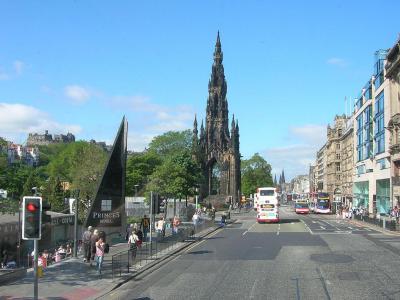
Stretching from Leith Street to Lothian Road like Edinburgh’s own stylish catwalk, Princes Street is an over-a-mile-long stretch of shopping temptation-the city’s main artery, buzzing with cafés, pubs, department stores, and selfie opportunities galore.
The street was named after two of King George III’s sons-Prince George (who later became King George IV) and Prince Frederick. While the early 18th-century buildings once stood prim and proper, the 19th century and later the 1960s had other plans. Cue the “Princes Street Plan,” a bold makeover that saw some old façades pulled down in favor of boxy modern storefronts, all in the name of progress and window-shopping efficiency.
The resulting new layout appears as follows: shops and commercial buzz line the north side, while the south side takes the scenic route, offering unbeatable views of the Old Town and the ever-dramatic Edinburgh Castle. Between them lies what was once a murky loch-or Nor Loch to be exact-drained in 1820 and transformed into the much more appealing Princes Street Gardens.
The gardens span 38 acres of greenery, split neatly by the Mound and sprinkled with statues like an outdoor sculpture gallery. One especially moving highlight is the War Memorial to Scottish-American soldiers, a spot for reflection amid the buskers and picnic blankets.
In the summer, the Ross Bandstand kicks into gear with concerts and open-air theatre. And don’t miss the city’s prettiest timekeeper-a floral clock that blooms right on cue.
The street was named after two of King George III’s sons-Prince George (who later became King George IV) and Prince Frederick. While the early 18th-century buildings once stood prim and proper, the 19th century and later the 1960s had other plans. Cue the “Princes Street Plan,” a bold makeover that saw some old façades pulled down in favor of boxy modern storefronts, all in the name of progress and window-shopping efficiency.
The resulting new layout appears as follows: shops and commercial buzz line the north side, while the south side takes the scenic route, offering unbeatable views of the Old Town and the ever-dramatic Edinburgh Castle. Between them lies what was once a murky loch-or Nor Loch to be exact-drained in 1820 and transformed into the much more appealing Princes Street Gardens.
The gardens span 38 acres of greenery, split neatly by the Mound and sprinkled with statues like an outdoor sculpture gallery. One especially moving highlight is the War Memorial to Scottish-American soldiers, a spot for reflection amid the buskers and picnic blankets.
In the summer, the Ross Bandstand kicks into gear with concerts and open-air theatre. And don’t miss the city’s prettiest timekeeper-a floral clock that blooms right on cue.
8) Dean Village
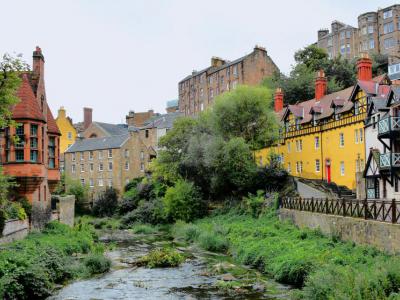
Dean Village, once a deep valley near Edinburgh's city center, thrived for over 800 years as a grain milling hub. It boasted up to eleven mills powered by the Water of Leith. This area was initially mentioned in a 1145 charter by King David I of Scotland, who granted a mill here to Holyrood Abbey.
Remaining distinct until the 1800s, Dean Village changed hands in 1826 when John Learmonth, future Edinburgh Lord Provost, bought it. The Dean Bridge, crucial for crossing the valley, was built in 1831-33 without a toll, as insisted by the Cramond Road Trustees and designed by Thomas Telford. This four-arch bridge, over 400 feet wide and 106 feet above the water, significantly improved access from the city.
In 1847, Dean House was demolished to create Dean Cemetery. This mansion, central to the Dean Estate since 1609, left its mark through sculptured stones in the cemetery's southern wall and ceiling panels in Scotland's National Museum. The cemetery is notable for housing prominent figures like Sir Thomas Bouch.
With the emergence of larger mills in Leith, Dean Village's prosperity declined, leading to decay and poverty until the 1960s. However, since the mid-1970s, it has been revitalized into a peaceful area near the city center, with renovated residential spaces and the Water of Leith Walkway established in 1983.
Dean Bridge also appears in Ian Rankin's "Strip Jack" and Peter May's "The Lewis Man," highlighting its cultural significance.
Remaining distinct until the 1800s, Dean Village changed hands in 1826 when John Learmonth, future Edinburgh Lord Provost, bought it. The Dean Bridge, crucial for crossing the valley, was built in 1831-33 without a toll, as insisted by the Cramond Road Trustees and designed by Thomas Telford. This four-arch bridge, over 400 feet wide and 106 feet above the water, significantly improved access from the city.
In 1847, Dean House was demolished to create Dean Cemetery. This mansion, central to the Dean Estate since 1609, left its mark through sculptured stones in the cemetery's southern wall and ceiling panels in Scotland's National Museum. The cemetery is notable for housing prominent figures like Sir Thomas Bouch.
With the emergence of larger mills in Leith, Dean Village's prosperity declined, leading to decay and poverty until the 1960s. However, since the mid-1970s, it has been revitalized into a peaceful area near the city center, with renovated residential spaces and the Water of Leith Walkway established in 1983.
Dean Bridge also appears in Ian Rankin's "Strip Jack" and Peter May's "The Lewis Man," highlighting its cultural significance.
