Custom Walk in Palma de Mallorca, Spain by gpinqld6688 created on 2023-12-02
Guide Location: Spain » Palma de Mallorca
Guide Type: Custom Walk
# of Sights: 10
Tour Duration: 2 Hour(s)
Travel Distance: 3.3 Km or 2.1 Miles
Share Key: 9M2ZQ
Guide Type: Custom Walk
# of Sights: 10
Tour Duration: 2 Hour(s)
Travel Distance: 3.3 Km or 2.1 Miles
Share Key: 9M2ZQ
How It Works
Please retrieve this walk in the GPSmyCity app. Once done, the app will guide you from one tour stop to the next as if you had a personal tour guide. If you created the walk on this website or come to the page via a link, please follow the instructions below to retrieve the walk in the app.
Retrieve This Walk in App
Step 1. Download the app "GPSmyCity: Walks in 1K+ Cities" on Apple App Store or Google Play Store.



Step 2. In the GPSmyCity app, download(or launch) the guide "Palma de Mallorca Map and Walking Tours".
Step 3. Tap the menu button located at upper right corner of the "Walks" screen and select "Retrieve custom walk". Enter the share key: 9M2ZQ
1) Plaza Mayor (Main Square)
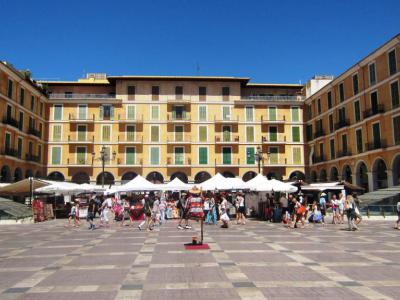
The old convent of San Felipe Neri in Palma de Mallorca was torn down in 1823. That was a good thing. Few people, if any, were nostalgic for the Inquisition and the old convent in the city had been essentially Inquisition Central. Ten years after the convent and associated buildings were pulled down, work on the Main Square began.
Work continued, off and on, until the 20th century. When completed, the square featured an underground car park, businesses and commercial galleries.
The square is a big rectangle. Porticoed three and four-storied houses line the edges. The square is close to the Churches of San Miguel and Santa Eulalia. Other important buildings nearby include the Town Hall and the Main Theater. The streets of San Miguel, Jaime II, Colon and Sindicato stretch from the Main Square to the city limits.
Restaurants, cafes, art galleries and street performers abound in the square. An artisan market is held every week. Streets leading out of the square are also jammed with cafes and shops. The square tiled and closed to motor traffic. Main Square is a social and cultural watering hole for visitors and locals alike.
Work continued, off and on, until the 20th century. When completed, the square featured an underground car park, businesses and commercial galleries.
The square is a big rectangle. Porticoed three and four-storied houses line the edges. The square is close to the Churches of San Miguel and Santa Eulalia. Other important buildings nearby include the Town Hall and the Main Theater. The streets of San Miguel, Jaime II, Colon and Sindicato stretch from the Main Square to the city limits.
Restaurants, cafes, art galleries and street performers abound in the square. An artisan market is held every week. Streets leading out of the square are also jammed with cafes and shops. The square tiled and closed to motor traffic. Main Square is a social and cultural watering hole for visitors and locals alike.
2) Olivar Market (must see)
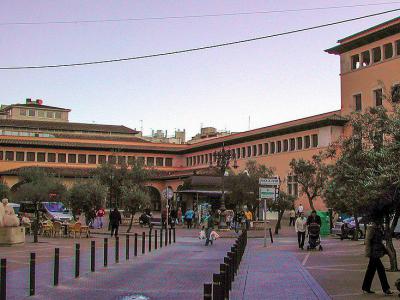
In the center of Palma de Mallorca sits the Olivar Market. If you like food, all kinds of food, this is definitely the place to be. How does one who has never been here know this? Watch the locals. See where they go for snacks, take-away, shopping, and meals-in-place. Follow them. Do as they do and enjoy.
Olivar Market has been in place since 1951. It has a full range of stalls, bars, restaurants and cafes and cafeterias. There are few supermarkets in Palma, so this is the go to place for residents and tourists. Sea food, sushi, meats, fresh fruit, vegetables and dairy products are all here.
On the ground floor (first floor in USA) find stalls for vegetables, meats and gourmet foods. There are escalators and elevators to the upper floor and the parking area. On the upper floor is a shopping arcade, a cooking school, hairdressing salon, restaurants and bars and boutiques, plus a supermarket, a children's area and a library.
Olivar Market has been in place since 1951. It has a full range of stalls, bars, restaurants and cafes and cafeterias. There are few supermarkets in Palma, so this is the go to place for residents and tourists. Sea food, sushi, meats, fresh fruit, vegetables and dairy products are all here.
On the ground floor (first floor in USA) find stalls for vegetables, meats and gourmet foods. There are escalators and elevators to the upper floor and the parking area. On the upper floor is a shopping arcade, a cooking school, hairdressing salon, restaurants and bars and boutiques, plus a supermarket, a children's area and a library.
3) Sóller Train
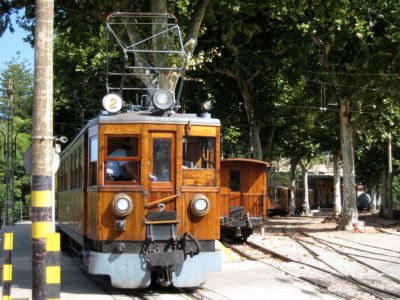
Discover the Tren de Sóller, Mallorca’s beloved vintage railway linking Palma de Mallorca with the picturesque town of Sóller. Launched in 1912, this 27-kilometer narrow‑gauge line (also known as the Ferrocarril de Sóller) travels north from Palma’s evocative modernist station at the Spain Square (Plaza de España), winding through orange and olive groves before crossing the Serra de Tramuntana mountain range. The one-hour ride traverses 13 tunnels-some nearly 3 kilometers long-and climbs nearly 200 meters, offering sweeping views of farmland, mountain ridges, and lush Mediterranean scenery.
Step aboard the nostalgic wooden carriages and you’ll feel transported back to the early 20th century, surrounded by polished wood, brass fittings, and openable windows that let in the breeze and camera‑friendly vistas. This historic atmosphere-alongside the gentle chug of the train-is what has made the journey an attraction in its own right, drawing over a million passengers annually.
On arrival in Sóller, you're greeted by a quaint town square dominated by the modernist Sant Bartomeu church, leafy cafes, and lively local markets. For a perfect day‑trip, catch the heritage tram (opened in 1913) down to Port de Sóller, a coastal marina lined with seafood restaurants, beaches, and boat tours. The tram covers about 4.9 kilometers and is one of Spain’s rare surviving first-generation tramways.
Whether you're interested in history, scenic panoramas, or simply soaking up Mallorca’s timeless charm, the Sóller Train offers a memorable escape from the beaten path. Guests often combine it with other experiences-hiking in the UNESCO-listed Serra de Tramuntana, visiting nearby vineyards, or cruising to Cala Sa Calobra-all while relishing Mallorca’s natural beauty and heritage.
Step aboard the nostalgic wooden carriages and you’ll feel transported back to the early 20th century, surrounded by polished wood, brass fittings, and openable windows that let in the breeze and camera‑friendly vistas. This historic atmosphere-alongside the gentle chug of the train-is what has made the journey an attraction in its own right, drawing over a million passengers annually.
On arrival in Sóller, you're greeted by a quaint town square dominated by the modernist Sant Bartomeu church, leafy cafes, and lively local markets. For a perfect day‑trip, catch the heritage tram (opened in 1913) down to Port de Sóller, a coastal marina lined with seafood restaurants, beaches, and boat tours. The tram covers about 4.9 kilometers and is one of Spain’s rare surviving first-generation tramways.
Whether you're interested in history, scenic panoramas, or simply soaking up Mallorca’s timeless charm, the Sóller Train offers a memorable escape from the beaten path. Guests often combine it with other experiences-hiking in the UNESCO-listed Serra de Tramuntana, visiting nearby vineyards, or cruising to Cala Sa Calobra-all while relishing Mallorca’s natural beauty and heritage.
4) Esglesia de Santa Catalina de Siena (Church of Santa Catalina de Siena)
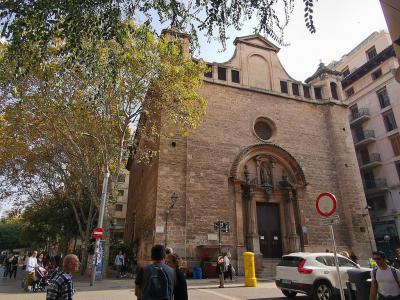
The Church of Santa Catalina de Siena at Carrer de Sant Miquel is a medieval temple, formerly Catholic, and is one of the oldest in Palma. It was founded by Joan Baptista Despuig, member of the Order of Santiago, who is buried inside the church, by the altar. Originally, the church was part of the Santa Catalina de Siena convent, and was built on the site of an old Muslim mosque. The latter (with minor modifications) was initially used, back in the 13th century, as a Christian temple until the construction of a new Gothic-style church began a century later.
The temple was dedicated to Santa Catalina, a nun who lived in the 14th century and was actively involved in the affairs of the Catholic Church. In fact, she was the one who convinced Pope Gregory XI to transfer the Holy See back to Rome.
In 1680, Francisco Herrera finalized the building in an Italian style. The renovations included expanded space and reorientation of the main portal towards Sant Miquel street. The typically Gothic single nave with side chapels, apse with a trapezoidal plan, and a half-barrel roof were complemented with the purely Baroque interior. The reconstruction was carried out in connection with the establishment of the Dominican Monastery of Santa Catalina in Ciutat de Mallorca in 1661.
Although in 1964 the church was declared a Historic Monument, two years later the demolition of the residential part of the monastery came underway. In 2002, the church was handed over to the Russian Orthodox parish of Natividad Cristo (the Nativity of Christ) affiliated to the Moscow Patriarchate.
The temple was dedicated to Santa Catalina, a nun who lived in the 14th century and was actively involved in the affairs of the Catholic Church. In fact, she was the one who convinced Pope Gregory XI to transfer the Holy See back to Rome.
In 1680, Francisco Herrera finalized the building in an Italian style. The renovations included expanded space and reorientation of the main portal towards Sant Miquel street. The typically Gothic single nave with side chapels, apse with a trapezoidal plan, and a half-barrel roof were complemented with the purely Baroque interior. The reconstruction was carried out in connection with the establishment of the Dominican Monastery of Santa Catalina in Ciutat de Mallorca in 1661.
Although in 1964 the church was declared a Historic Monument, two years later the demolition of the residential part of the monastery came underway. In 2002, the church was handed over to the Russian Orthodox parish of Natividad Cristo (the Nativity of Christ) affiliated to the Moscow Patriarchate.
5) Iglesia de Sant Jaume (Parish Church of Saint James)
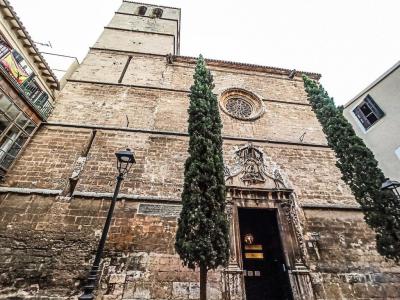
Parish Church of Saint James (Iglesia de Sant Jaume) stands as one of Palma’s four oldest parish churches, alongside Santa Eulàlia, Sant Miquel, and Santa Creu. Founded by the Mallorcan royal family and first documented in 1248 by Pope Innocent IV, its construction under master-builder Jordi Pujol began in 1327 and firmly established its place in medieval Gothic tradition.
The church is compact yet striking, featuring a single cross‑vaulted nave and a large, ornamental rose window on its façade-a classic example of Mallorcan Gothic design. The main portal, crafted in Baroque style by sculptor Miquel Tomàs in 1776, offers rocaille decoration and a bust of Saint James the Apostle, witnessing the blend of Gothic structure and later artistic flair.
Inside, visitors will find subtle treasures: the Chapel of the Blessed Sacrament, added in the 17th century, houses a gilded altarpiece of San Cayetano and canvases of the Holy Christ by Miquel Pons Cantallops. The vault’s keystones preserve an impressive heraldic display-the coats of arms of benefactors who funded the original construction work.
Though not as ornate as Palma’s grand cathedral, this charming church stands out for its architectural purity, intimate scale, and centuries‑old artistry. Located just steps from Passeig des Born and boutique cafés, it offers a serene and enriching stop for those on foot through the old town-an excellent complement to the more imposing landmarks nearby.
The church is compact yet striking, featuring a single cross‑vaulted nave and a large, ornamental rose window on its façade-a classic example of Mallorcan Gothic design. The main portal, crafted in Baroque style by sculptor Miquel Tomàs in 1776, offers rocaille decoration and a bust of Saint James the Apostle, witnessing the blend of Gothic structure and later artistic flair.
Inside, visitors will find subtle treasures: the Chapel of the Blessed Sacrament, added in the 17th century, houses a gilded altarpiece of San Cayetano and canvases of the Holy Christ by Miquel Pons Cantallops. The vault’s keystones preserve an impressive heraldic display-the coats of arms of benefactors who funded the original construction work.
Though not as ornate as Palma’s grand cathedral, this charming church stands out for its architectural purity, intimate scale, and centuries‑old artistry. Located just steps from Passeig des Born and boutique cafés, it offers a serene and enriching stop for those on foot through the old town-an excellent complement to the more imposing landmarks nearby.
6) Gran Hotel
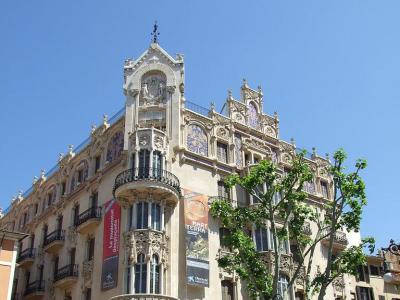
The Gran Hotel of La Palma, Mallorca is a modernist former hotel built in 1903 and designed by Master architect Lluis Domenech i Montaner. Lluis was a pioneering proponent of Catalan Modernisme style architecture. A style made famous by Antoni Gaudi's Cathedral of the Holy Family in Barcelona.
The Gran Hotel is a perfect example of modernisme, showing a facade lushly adorned in a Arte Nouveau way with sculptures and ornate ceramic elements. The hotel was the forerunner of luxury hotels in Mallorca and was judged to be the most sumptuous hotel in Spain.
The hotel closed in 1941 and was reborn as the home of the National Institute of Social Security. Since 1993 It has been turned into a cultural center of the Caixa Foundation. The foundation, a creation of Caixa Bank of Spain, underwrites art and cultural activities throughout the country and abroad.
The hotel is today a venue for exhibitions, concerts and conferences. It also houses a permanent pictorial collection of the works of Anglada Camarasa and an oceanic exhibit. Not to be ignored is a comfortable, quiet cafe and book store.
The Gran Hotel is a perfect example of modernisme, showing a facade lushly adorned in a Arte Nouveau way with sculptures and ornate ceramic elements. The hotel was the forerunner of luxury hotels in Mallorca and was judged to be the most sumptuous hotel in Spain.
The hotel closed in 1941 and was reborn as the home of the National Institute of Social Security. Since 1993 It has been turned into a cultural center of the Caixa Foundation. The foundation, a creation of Caixa Bank of Spain, underwrites art and cultural activities throughout the country and abroad.
The hotel is today a venue for exhibitions, concerts and conferences. It also houses a permanent pictorial collection of the works of Anglada Camarasa and an oceanic exhibit. Not to be ignored is a comfortable, quiet cafe and book store.
7) Església de Santa Eulàlia (Church of Santa Eulalia)
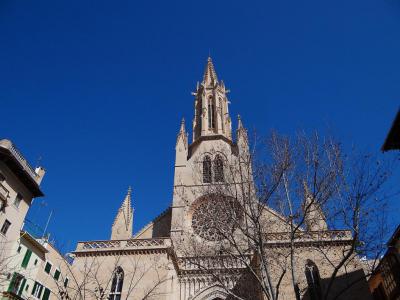
Nestled in the heart of Palma’s charming historic centre, the Church of Santa Eulalia (Església de Santa Eulàlia) stands as the city’s oldest parish church. Built in 1236 on the ruins of a former Moorish mosque shortly after the 1229 Catalan conquest, it predates even the iconic Cathedral of La Seu. In the bull of Pope Innocent IV (1248), Santa Eulàlia was recognized as the foremost church in Palma, reflecting its medieval importance during the formative years of the island’s Christian identity.
Historically, the church was the site of major events in Mallorcan governance and royalty: in 1256, the island’s General Council swore loyalty to the heir Jaume, and in 1276 Jaume II was crowned King of Mallorca within its walls. Over the centuries, the church evolved architecturally-from its original Catalan Gothic structure with a central nave flanked by side aisles and chapels between buttresses, to a Neo‑Gothic façade added at the turn of the 20th century, replete with an original 15th‑century rose window.
Inside, visitors will discover a peaceful sanctuary marked by rib-vaulted ceilings supported by elegant octagonal columns, serene stained glass windows, and subtle details in both Gothic austerity and Baroque flourish. Noteworthy features include the Baroque altarpiece by Dominican friar Albert de Burgunyó and the historic pulpit from which Saint Vincent Ferrer preached in 1413. The exterior is adorned with medieval gargoyles-including dragons and harpies-believed to ward off evil, while terraced balconies and façades depict biblical scenes like the Annunciation and the Epiphany.
Despite its proximity to Palma’s larger cathedral, Santa Eulàlia offers a tranquil oasis for reflection. Free from large tourist crowds, it invites visitors to pause, explore the artistry and architecture at leisure, and soak in centuries of history within one of the island’s most evocative spiritual landmarks.
Historically, the church was the site of major events in Mallorcan governance and royalty: in 1256, the island’s General Council swore loyalty to the heir Jaume, and in 1276 Jaume II was crowned King of Mallorca within its walls. Over the centuries, the church evolved architecturally-from its original Catalan Gothic structure with a central nave flanked by side aisles and chapels between buttresses, to a Neo‑Gothic façade added at the turn of the 20th century, replete with an original 15th‑century rose window.
Inside, visitors will discover a peaceful sanctuary marked by rib-vaulted ceilings supported by elegant octagonal columns, serene stained glass windows, and subtle details in both Gothic austerity and Baroque flourish. Noteworthy features include the Baroque altarpiece by Dominican friar Albert de Burgunyó and the historic pulpit from which Saint Vincent Ferrer preached in 1413. The exterior is adorned with medieval gargoyles-including dragons and harpies-believed to ward off evil, while terraced balconies and façades depict biblical scenes like the Annunciation and the Epiphany.
Despite its proximity to Palma’s larger cathedral, Santa Eulàlia offers a tranquil oasis for reflection. Free from large tourist crowds, it invites visitors to pause, explore the artistry and architecture at leisure, and soak in centuries of history within one of the island’s most evocative spiritual landmarks.
8) Palma Cathedral (must see)
James I of Aragon was in grave danger. On his way to conquer the Balearic Islands in December, 1229, his fleet of ships was overtaken by a violent storm. In peril of foundering, young James swore to God that if he survived and conquered Mallorca, he would build there a great cathedral.
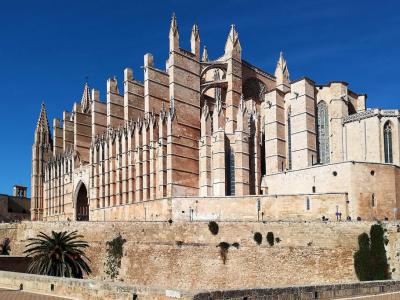
God held him to it. Construction began in 1230 on the Palma Cathedral or La Seu, as it is popularly known. Building went on for 350 years. Finally the nave and the main portal, the last elements, were finished. James had really kept his promise. The dimensions of the church are vast: width, 108 feet; height, 145 feet; length, 361 feet.
The nave, last to be finished, is among the largest in Europe. A Gothic rose window dominates the eastern wall. It has a diameter of 41 feet and it is composed of around 1200 pieces of stained glass. Every sunrise the cathedral interior is flooded with sparkling reflections of colors in the morning light. But there is more to this light.
There is a game, called "Light Game of the Eight." The game occurs just twice a year, on February 2nd and November 11th. At 8am the rays of the sun shine through the rosette window on the eastern wall and project the image of the window exactly on the opposite wall below the rosette of the main facade.
But there is yet more to this light. Twenty days on each side of the winter solstice the sunrise is viewable through both enormous rosettes.
The cathedral shows a range of architectural styles. There are clearly Gothic influences in the seaward facing portal that date from the 13th century. The portal on the opposite side is late Gothic from the 16th century. The Gothic is replaced by the Renaissance. The chapels are Baroque. There is Classicism in the Baptistry.
Two kings, James II and James III, are laid to rest in the Trinity Chapel. The chapel is not open to the public. Visitors are charged a small entrance fee. The cathedral is open after 10 am.
Why You Should Visit:
Here is all uplifting spirit of Mallorca spelled out in stone and light. The great cathedral reaches for the sky as the soul might reach for heaven.
God held him to it. Construction began in 1230 on the Palma Cathedral or La Seu, as it is popularly known. Building went on for 350 years. Finally the nave and the main portal, the last elements, were finished. James had really kept his promise. The dimensions of the church are vast: width, 108 feet; height, 145 feet; length, 361 feet.
The nave, last to be finished, is among the largest in Europe. A Gothic rose window dominates the eastern wall. It has a diameter of 41 feet and it is composed of around 1200 pieces of stained glass. Every sunrise the cathedral interior is flooded with sparkling reflections of colors in the morning light. But there is more to this light.
There is a game, called "Light Game of the Eight." The game occurs just twice a year, on February 2nd and November 11th. At 8am the rays of the sun shine through the rosette window on the eastern wall and project the image of the window exactly on the opposite wall below the rosette of the main facade.
But there is yet more to this light. Twenty days on each side of the winter solstice the sunrise is viewable through both enormous rosettes.
The cathedral shows a range of architectural styles. There are clearly Gothic influences in the seaward facing portal that date from the 13th century. The portal on the opposite side is late Gothic from the 16th century. The Gothic is replaced by the Renaissance. The chapels are Baroque. There is Classicism in the Baptistry.
Two kings, James II and James III, are laid to rest in the Trinity Chapel. The chapel is not open to the public. Visitors are charged a small entrance fee. The cathedral is open after 10 am.
Why You Should Visit:
Here is all uplifting spirit of Mallorca spelled out in stone and light. The great cathedral reaches for the sky as the soul might reach for heaven.
9) Royal Palace of La Almudaina (must see)
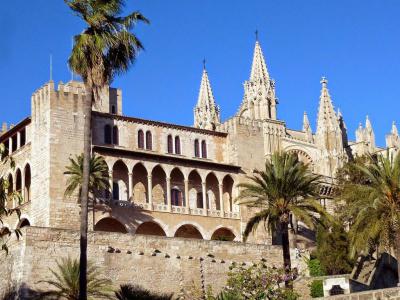
The Royal Palace of La Almudaina is an "alcazar", a fortified palace. In 1309 it was rebuilt by King James II of Majorca. The rebuilt was based on the Royal Palace of Perpignan. La Almudaina today follows a layout established in the 14th century. There are spaces for the ruling family, a chapel dedicated to Saint Anne, and the baths.
The spaces are differentiated into ways. On the ground floor a medieval ambience is maintained with art and furnishings dating from the 15th century. The upper floor is reserved for official Royal acts and it is decorated with objects and art from the 17th, 18th and 20th centuries.
The palace is the official summer residence of the Spanish Royal Family. The family also resides at the Palace of Marivent and the Zarzuela Palace in Madrid when not in Mallorca. The Palace and Palma Cathedral are next door neighbors. Both rise over palma de Mallorca harbor, providing great views of the sea.
The Palace is open Thursdays to Sundays from 10am to 6pm. Hours may be longer in the summer. There is a small admission fee.
The spaces are differentiated into ways. On the ground floor a medieval ambience is maintained with art and furnishings dating from the 15th century. The upper floor is reserved for official Royal acts and it is decorated with objects and art from the 17th, 18th and 20th centuries.
The palace is the official summer residence of the Spanish Royal Family. The family also resides at the Palace of Marivent and the Zarzuela Palace in Madrid when not in Mallorca. The Palace and Palma Cathedral are next door neighbors. Both rise over palma de Mallorca harbor, providing great views of the sea.
The Palace is open Thursdays to Sundays from 10am to 6pm. Hours may be longer in the summer. There is a small admission fee.
10) La Llotja (The Market) (must see)
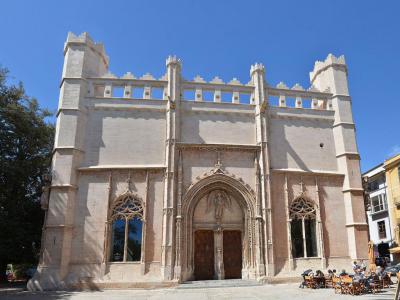
La Llotja, the old Maritime Trade Exchange, is a masterpiece of bourgeois Gothic architecture. It may be found next to La Seu, or Palma Cathedral, on the Avenue Gabriel Roca. The Trade Exchange was founded in Barcelona by a privilege granted by King Marti I in 1403. The exchange moved to Mallorca in 1452 to be housed in La Llotja.
The Exchange regulated trade and maintained the port of Palma. Business transactions could be conducted in the la Llotja building. As maritime trade fell off, la Llotja became merely a goods depot. It was an arms factory and arsenal in the Napoleonic wars and after the factory, it was a courthouse. From 1886 to 1962 it was a museum.
Architect Guillem Sanear began construction in 1426. It was completed in 1447 by Guillermo Vilasolar. In 1452 the Maritime Trade Exchange moved in. During this time the building formed a part of the city's defense walls. Four towers were set up on the four corners of the cube-shaped building. The building was almost touched by the sea.
Inside is a single space. Two rows of twisted columns support a vaulted ceiling. Above the main entrance is a sculpture of The Angel of Merchants in the tympanum.
In the last thirty years the Llotja has been a center for art shows, events and political meetings. It has been recently restored and the roof is now a terraced flat roof. Groups may ascend to the roof with permission. It is open daily except Monday.
The Exchange regulated trade and maintained the port of Palma. Business transactions could be conducted in the la Llotja building. As maritime trade fell off, la Llotja became merely a goods depot. It was an arms factory and arsenal in the Napoleonic wars and after the factory, it was a courthouse. From 1886 to 1962 it was a museum.
Architect Guillem Sanear began construction in 1426. It was completed in 1447 by Guillermo Vilasolar. In 1452 the Maritime Trade Exchange moved in. During this time the building formed a part of the city's defense walls. Four towers were set up on the four corners of the cube-shaped building. The building was almost touched by the sea.
Inside is a single space. Two rows of twisted columns support a vaulted ceiling. Above the main entrance is a sculpture of The Angel of Merchants in the tympanum.
In the last thirty years the Llotja has been a center for art shows, events and political meetings. It has been recently restored and the roof is now a terraced flat roof. Groups may ascend to the roof with permission. It is open daily except Monday.
