Custom Walk in Split, Croatia by erjenkins_2c667 created on 2025-04-15
Guide Location: Croatia » Split
Guide Type: Custom Walk
# of Sights: 7
Tour Duration: 2 Hour(s)
Travel Distance: 4 Km or 2.5 Miles
Share Key: 6CXDQ
Guide Type: Custom Walk
# of Sights: 7
Tour Duration: 2 Hour(s)
Travel Distance: 4 Km or 2.5 Miles
Share Key: 6CXDQ
How It Works
Please retrieve this walk in the GPSmyCity app. Once done, the app will guide you from one tour stop to the next as if you had a personal tour guide. If you created the walk on this website or come to the page via a link, please follow the instructions below to retrieve the walk in the app.
Retrieve This Walk in App
Step 1. Download the app "GPSmyCity: Walks in 1K+ Cities" on Apple App Store or Google Play Store.



Step 2. In the GPSmyCity app, download(or launch) the guide "Split Map and Walking Tours".
Step 3. Tap the menu button located at upper right corner of the "Walks" screen and select "Retrieve custom walk". Enter the share key: 6CXDQ
1) Diocletian's Palace (must see)
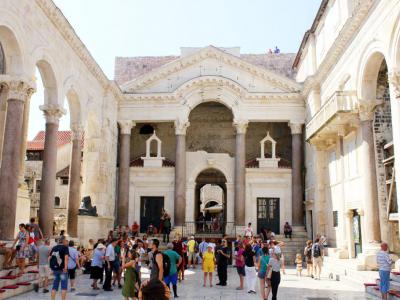
The "Palace" of Diocletian is more than a palace. It is really a fortress. It provided not only a private retirement home for the ex-emperor, but quarters for an armed garrison. It was a "key" community like no other. The palace, built at the turn of the fourth century, today forms most of the old town of Split, Croatia.
The palace complex was built on a peninsula about 18 miles from Salona, then the capital of Dalmatia and the birthplace of the retired Roman emperor. When Diocletian died in 312, the palace complex remained a property of the Roman imperium. It was used as a residence and refuge for members of imperial family who were out of favor.
In the seventh century the country was invaded by Avars and Slavs and the city of Salona was destroyed. The people found security within the formidable walls of the palace. Safe behind the walls they formed a new city community. From that time the palace has been continually occupied and today it is the heart of the city of Split.
The mausoleum of Diocletian became the cathedral of Saint Domnius. In time the remains of the fortress home of the emperor dropped out of the consciousness of Europe. Then the Scottish architect Robert Adam surveyed the ruins and published his findings. The palace formed the inspiration for Adam's style of Neoclassical architecture.
The plan of the palace has been found to be an irregular rectangle with 16 towers from the facades and corners. Only the southern facade was unfortified. It provided easy access to the sea and vessels could unload cargo directly through the Sea Gate.
There are three other gates that grant entrance and egress. The North Gate guarded the road towards Salona. The Church of Saint Martin is above the gate. The East Gate faced the town of Epetia, now Stobrec.
The West Gate, was used as the military gate. It remains in use today. The South Gate faces the sea.
Why You Should Visit:
The long history and diverse cultures of Split are distilled and contained in this remarkable Palace.
Tips: Be prepared to do a lot of walking.
The palace complex was built on a peninsula about 18 miles from Salona, then the capital of Dalmatia and the birthplace of the retired Roman emperor. When Diocletian died in 312, the palace complex remained a property of the Roman imperium. It was used as a residence and refuge for members of imperial family who were out of favor.
In the seventh century the country was invaded by Avars and Slavs and the city of Salona was destroyed. The people found security within the formidable walls of the palace. Safe behind the walls they formed a new city community. From that time the palace has been continually occupied and today it is the heart of the city of Split.
The mausoleum of Diocletian became the cathedral of Saint Domnius. In time the remains of the fortress home of the emperor dropped out of the consciousness of Europe. Then the Scottish architect Robert Adam surveyed the ruins and published his findings. The palace formed the inspiration for Adam's style of Neoclassical architecture.
The plan of the palace has been found to be an irregular rectangle with 16 towers from the facades and corners. Only the southern facade was unfortified. It provided easy access to the sea and vessels could unload cargo directly through the Sea Gate.
There are three other gates that grant entrance and egress. The North Gate guarded the road towards Salona. The Church of Saint Martin is above the gate. The East Gate faced the town of Epetia, now Stobrec.
The West Gate, was used as the military gate. It remains in use today. The South Gate faces the sea.
Why You Should Visit:
The long history and diverse cultures of Split are distilled and contained in this remarkable Palace.
Tips: Be prepared to do a lot of walking.
2) Treasury of St. Domnius Cathedral
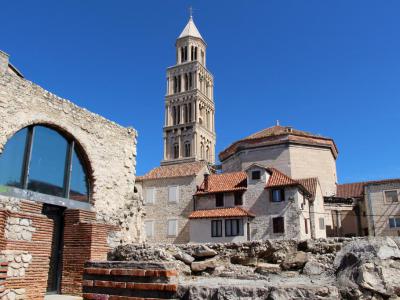
The Treasury of Saint Domnius Cathedral, located in Split, Croatia, is a veritable treasure trove of historical and religious artifacts dating back centuries. Housed on the first floor of the sacristy, this sacred space is a testament to the rich cultural and religious heritage of the region.
One of the most revered relics in the Treasury is that of Saint Duje, after whom the cathedral is named. These precious relics were brought to the cathedral after the saint's death, and they hold immense spiritual significance for the faithful who visit the cathedral seeking blessings and solace.
The Treasury houses remarkable sacral artworks, including a Romanesque Madonna and Child panel from the 13th century-a stunning portrayal of the Virgin Mary and baby Jesus, showcasing the era's artistic brilliance and religious devotion.
Skilled goldsmiths from the 13th to 19th centuries created brilliant chalices, reliquaries, and ornate mass vestments for religious ceremonies. Adorned with intricate designs and precious gemstones, these items showcased the importance of worship and religious rites in the lives of the faithful. The Treasury holds these masterfully crafted vessels and garments, highlighting their historical significance.
The Treasury of Saint Domnius Cathedral also features remarkable artifacts and famous surviving books. Notable items include the 6th-century Book of Gospels, valued for its early Christian writing, and the 11th-century Supetar Cartulary, offering insights into the region's legal and administrative history. Additionally, the Treasury contains the 13th-century Historia Salonitana, a historical account of the people and events of Salona, providing a deeper understanding of the region's past.
Tip:
Worth bringing a guidebook with you as there isn't much information on the cabinets.
Note that photos are not allowed!
One of the most revered relics in the Treasury is that of Saint Duje, after whom the cathedral is named. These precious relics were brought to the cathedral after the saint's death, and they hold immense spiritual significance for the faithful who visit the cathedral seeking blessings and solace.
The Treasury houses remarkable sacral artworks, including a Romanesque Madonna and Child panel from the 13th century-a stunning portrayal of the Virgin Mary and baby Jesus, showcasing the era's artistic brilliance and religious devotion.
Skilled goldsmiths from the 13th to 19th centuries created brilliant chalices, reliquaries, and ornate mass vestments for religious ceremonies. Adorned with intricate designs and precious gemstones, these items showcased the importance of worship and religious rites in the lives of the faithful. The Treasury holds these masterfully crafted vessels and garments, highlighting their historical significance.
The Treasury of Saint Domnius Cathedral also features remarkable artifacts and famous surviving books. Notable items include the 6th-century Book of Gospels, valued for its early Christian writing, and the 11th-century Supetar Cartulary, offering insights into the region's legal and administrative history. Additionally, the Treasury contains the 13th-century Historia Salonitana, a historical account of the people and events of Salona, providing a deeper understanding of the region's past.
Tip:
Worth bringing a guidebook with you as there isn't much information on the cabinets.
Note that photos are not allowed!
3) Podrum (Cellars of Diocletian's Palace)
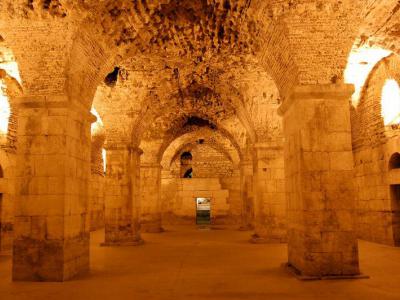
Under Diocletian's apartments were the cellars. Strong substructures which were used to support the apartments above and to store wine, foods and other items for the use of the Palace. The supports were a faithful copy of the structures above. The cellars also had a nymphaeum, a shrine dedicated to the nymphs guarding a source of fresh water.
In the middle ages the palace gradually became a safe haven for refugees. Part of the vast underground area was residential. In later times wealthier citizens who had houses above the cellars would break through the vaults and turn them into storage spaces for themselves.
Today Diocletian's cellars can be reached through the Bronze Gate, or through a stair connected to the peristyle. The western part of the cellars is preserved. It is available to sightseers and is used as a fair and exhibition space. The collapsed eastern part is being restored and will one day be accessible as well.
In the middle ages the palace gradually became a safe haven for refugees. Part of the vast underground area was residential. In later times wealthier citizens who had houses above the cellars would break through the vaults and turn them into storage spaces for themselves.
Today Diocletian's cellars can be reached through the Bronze Gate, or through a stair connected to the peristyle. The western part of the cellars is preserved. It is available to sightseers and is used as a fair and exhibition space. The collapsed eastern part is being restored and will one day be accessible as well.
4) Marjan Hill Viewpoint
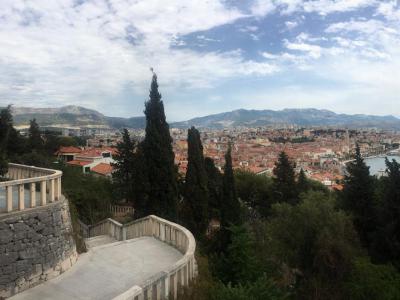
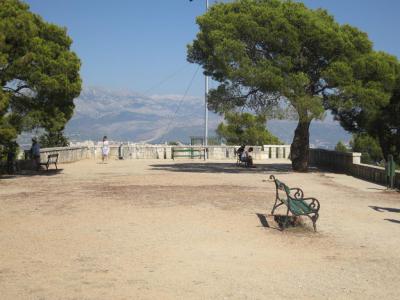
Marjan Hill fits the definition, "And now, for something completely different..." it holds a special place in the life of the City. For years city dwellers would see the old Yugoslav flag flying from the top of the hill. Now, Croatia, proudly independent, flies its own flag on top of Marjan Hill. In 1964 Marjan became a park and part of the city.
The park extends from Marmont Street west for nearly two miles. During summer months, amid the chaotic pace of the town it is a popular escape. The hills and woods of the park are the very lungs of the city. It is the preferred place for walking, jogging, climbing, or bike riding.
The highest peak in the park is Telegrin, so named for the telegraph which stood there in Napoleonic times. The park is also the location of the Ivan Mestrovic Gallery, an art gallery open to the public. Meje Split neighborhood, the city's elite seaside beach district is here, surrounded by the sea on three sides.
There are many possible entrances to Marjan Park. The favored one begins at Terrace Vidilica, a bar and restaurant with a great view. This is but a five minute walk from the promenade. If walking be prepared for an early climb.
The park extends from Marmont Street west for nearly two miles. During summer months, amid the chaotic pace of the town it is a popular escape. The hills and woods of the park are the very lungs of the city. It is the preferred place for walking, jogging, climbing, or bike riding.
The highest peak in the park is Telegrin, so named for the telegraph which stood there in Napoleonic times. The park is also the location of the Ivan Mestrovic Gallery, an art gallery open to the public. Meje Split neighborhood, the city's elite seaside beach district is here, surrounded by the sea on three sides.
There are many possible entrances to Marjan Park. The favored one begins at Terrace Vidilica, a bar and restaurant with a great view. This is but a five minute walk from the promenade. If walking be prepared for an early climb.
5) Marjan Hill Telegrin Peak
One sees signs for "Marjan Hill" and a few steps later there is a totally different world. Marjan Hill Park extends out from Split on a rugged peninsula jutting into the Adriatic. The park is densely forested, mostly with pines. The forest is a sign of recovery. Over the years the hills of what is now Marjan were stripped bare.
The peninsula reforested but it was too rugged to build on except for the ancient Jewish cemetery, and many very small churches or chapels hidden under the trees or carved into the hillsides. The highest point is a hill called Telegrin. When Napoleon's armies controlled Dalmatia. There was a telegraph signal tower atop the hill.
The hill was the perfect place for a visual telegraph. The hill can be seen for miles around, especially from the sea. The telegraph is long gone but the Croatian flag remains. Napoleon didn't stay long. He was a busy man.
Marjan Hill is 178 meters (578.8 feet) high. The peak can be reached by a staircase of 314 steps. Getting around the park can involve some serious climbing, but not to worry. There are dozens of benches conveniently placed. Be sure to bring good shoes for hiking, snacks and plenty of water.
The peninsula reforested but it was too rugged to build on except for the ancient Jewish cemetery, and many very small churches or chapels hidden under the trees or carved into the hillsides. The highest point is a hill called Telegrin. When Napoleon's armies controlled Dalmatia. There was a telegraph signal tower atop the hill.
The hill was the perfect place for a visual telegraph. The hill can be seen for miles around, especially from the sea. The telegraph is long gone but the Croatian flag remains. Napoleon didn't stay long. He was a busy man.
Marjan Hill is 178 meters (578.8 feet) high. The peak can be reached by a staircase of 314 steps. Getting around the park can involve some serious climbing, but not to worry. There are dozens of benches conveniently placed. Be sure to bring good shoes for hiking, snacks and plenty of water.

6) People's Square (Pjaca) (must see)
Like so many other squares in Split, People's Square is not the official name of the square. It was first called Saint Lawrence's Square in the 13th century. It has the distinction of being the first inhabited part of the City outside of Diocletian's Palace. For centuries the square has been the very center of City life.
The city clock has 24 numerals, not twelve. Life never pauses in the Square. One may rest, eat, drink, meet, see and be seen. The square is joined to the peristyle of old Diocletian's palace. As the city grew, the citizens started living outside the protection of the Roman walls and the square has been the People's Square ever since.
Renaissance, Venetian, and Gothic styles appear in the buildings around the square. The north side is occupied by the Old Town Hall, a 15th century building that sometimes hosts exhibitions of Art and history. It is said every building in Split has a story.
The attractions that might be seen in the square beside the Old Town Hall include: The ornate palaces of the nobility, the Church of Our Lady of the Bell Tower, The Old Town Clock. the Old Town Cafe, and the Morpurgo Bookstore (since 1860).
In the base of the flagpole of the Square one finds the words of the poet Tonci Petrasov:
"One doesn't need to travel anywhere,
nor does one have to search elsewhere,
what you are looking for is precisely here."
Here, in People's Square.
The city clock has 24 numerals, not twelve. Life never pauses in the Square. One may rest, eat, drink, meet, see and be seen. The square is joined to the peristyle of old Diocletian's palace. As the city grew, the citizens started living outside the protection of the Roman walls and the square has been the People's Square ever since.
Renaissance, Venetian, and Gothic styles appear in the buildings around the square. The north side is occupied by the Old Town Hall, a 15th century building that sometimes hosts exhibitions of Art and history. It is said every building in Split has a story.
The attractions that might be seen in the square beside the Old Town Hall include: The ornate palaces of the nobility, the Church of Our Lady of the Bell Tower, The Old Town Clock. the Old Town Cafe, and the Morpurgo Bookstore (since 1860).
In the base of the flagpole of the Square one finds the words of the poet Tonci Petrasov:
"One doesn't need to travel anywhere,
nor does one have to search elsewhere,
what you are looking for is precisely here."
Here, in People's Square.
7) Golden Gate
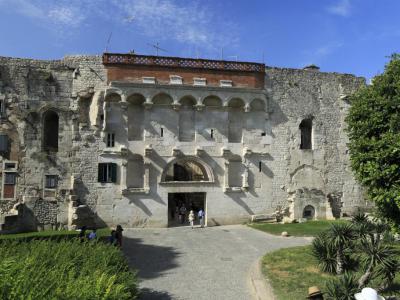
When Diocletian retired he left the empire behind him. He sailed to his sea front villa/fortress. He debarked and entered his palace through the Porta septemrionalis. Or, as some prefer to say The Golden Gate. The gate was designed with double doors for defensive tactics. Or, as some would say then, "propugnaculum."
The Golden Gate ("Zlatna vrata") is one of four gates giving access and egress to the old town ("stari grad"). The old town of course was Diocletian's Palace itself. In the Emperor's time the gate was referred to as "the northern gate". In the middle ages it was known as "Roman Gate." The name Golden Gate was first used in 1553.
On each side of the gate are niches for the statues of the four Tetrarchs, Diocletian himself, and the rulers of the divided Empire, Maximian, Galerius, and Constantius Chlorus. The sixth century church of Saint Martin's is perched above the outer part of the gate.
Most visitors arriving from the harbor side of the Palace will enter through the the South or East Gates although the North Gate, the Golden Gate, was meant to be the main entrance. Today the 28 foot statue by Ivan Mestrovic of Grgur Ninski, Saint Gregory of Nin, looms just outside the Golden Gate.
The Golden Gate ("Zlatna vrata") is one of four gates giving access and egress to the old town ("stari grad"). The old town of course was Diocletian's Palace itself. In the Emperor's time the gate was referred to as "the northern gate". In the middle ages it was known as "Roman Gate." The name Golden Gate was first used in 1553.
On each side of the gate are niches for the statues of the four Tetrarchs, Diocletian himself, and the rulers of the divided Empire, Maximian, Galerius, and Constantius Chlorus. The sixth century church of Saint Martin's is perched above the outer part of the gate.
Most visitors arriving from the harbor side of the Palace will enter through the the South or East Gates although the North Gate, the Golden Gate, was meant to be the main entrance. Today the 28 foot statue by Ivan Mestrovic of Grgur Ninski, Saint Gregory of Nin, looms just outside the Golden Gate.
