Custom Walk in San Francisco, California by tudanca13_cc337 created on 2025-04-15
Guide Location: USA » San Francisco
Guide Type: Custom Walk
# of Sights: 10
Tour Duration: 2 Hour(s)
Travel Distance: 2.3 Km or 1.4 Miles
Share Key: JXYPC
Guide Type: Custom Walk
# of Sights: 10
Tour Duration: 2 Hour(s)
Travel Distance: 2.3 Km or 1.4 Miles
Share Key: JXYPC
How It Works
Please retrieve this walk in the GPSmyCity app. Once done, the app will guide you from one tour stop to the next as if you had a personal tour guide. If you created the walk on this website or come to the page via a link, please follow the instructions below to retrieve the walk in the app.
Retrieve This Walk in App
Step 1. Download the app "GPSmyCity: Walks in 1K+ Cities" on Apple App Store or Google Play Store.



Step 2. In the GPSmyCity app, download(or launch) the guide "San Francisco Map and Walking Tours".
Step 3. Tap the menu button located at upper right corner of the "Walks" screen and select "Retrieve custom walk". Enter the share key: JXYPC
1) Coit Tower (must see)
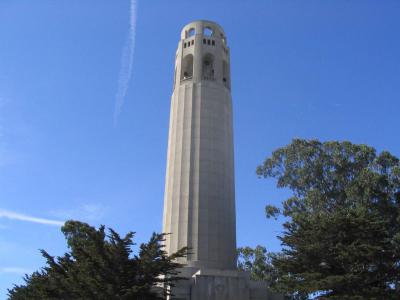
Rising above the treetops of Telegraph Hill like a sleek concrete lighthouse, the Coit Memorial Tower keeps an elegant watch over San Francisco. At 64 meters tall, it’s impossible to miss—an Art Deco exclamation point on the city’s skyline, gleaming in that familiar Bay light. Built to honor the city’s firefighters, it’s both a monument to bravery and a reliable spot for killer panoramic selfies.
The story behind it is as colorful as the city it crowns. The tower was built in 1933 upon request from a devoted patron of the firefighters of San Francisco—Lillie Hitchcock Coit, local socialite, fire-chaser, and all-around legend. Back in the 1800s, Lillie was so devoted to the city’s fire crews that on many occasions she famously helped haul hoses to burning buildings in her fancy skirts. In fact, her eccentric and brave nature made her the mascot of the Engine Co. and the Matron Saint of the San Francisco fire squad.
When Lillie passed away in 1929, she left one-third of her fortune “to beautify San Francisco.” The result was a tower dedicated to the heroes who ran toward the flames while everyone else ran away—a kind of stylish thank-you note from the city in concrete form...
Inside, Depression-era murals burst with scenes of working life, a time capsule of 1930s idealism painted right onto the curved walls. Outside, the view is pure San Francisco—rolling hills, the Golden Gate, and Alcatraz all posing for your admiration.
Indeed, the views from the base are almost as jaw-dropping as the ones from the top, so if the elevator line feels longer than a cable car climb, stay put and take the scenic stroll around the hill instead. And remember—Coit Tower closes at 5 p.m. and only takes cash. So, consider it part of the city’s vintage charm...
The story behind it is as colorful as the city it crowns. The tower was built in 1933 upon request from a devoted patron of the firefighters of San Francisco—Lillie Hitchcock Coit, local socialite, fire-chaser, and all-around legend. Back in the 1800s, Lillie was so devoted to the city’s fire crews that on many occasions she famously helped haul hoses to burning buildings in her fancy skirts. In fact, her eccentric and brave nature made her the mascot of the Engine Co. and the Matron Saint of the San Francisco fire squad.
When Lillie passed away in 1929, she left one-third of her fortune “to beautify San Francisco.” The result was a tower dedicated to the heroes who ran toward the flames while everyone else ran away—a kind of stylish thank-you note from the city in concrete form...
Inside, Depression-era murals burst with scenes of working life, a time capsule of 1930s idealism painted right onto the curved walls. Outside, the view is pure San Francisco—rolling hills, the Golden Gate, and Alcatraz all posing for your admiration.
Indeed, the views from the base are almost as jaw-dropping as the ones from the top, so if the elevator line feels longer than a cable car climb, stay put and take the scenic stroll around the hill instead. And remember—Coit Tower closes at 5 p.m. and only takes cash. So, consider it part of the city’s vintage charm...
2) Filbert Street Steps (must see)
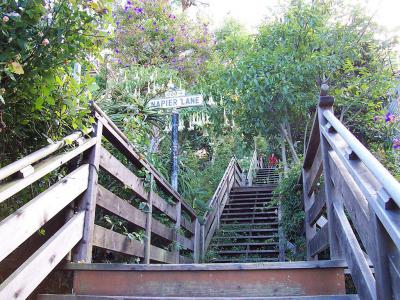
If you think San Francisco’s streets are steep, wait till you meet Filbert. With a 17.5º slope, Filbert Street is one of the steepest streets in the western hemisphere—a cardio session disguised as sightseeing—stretching from Lyon Street all the way to Telegraph Hill. The acclivity of Telegraph Hill would have rendered the street non-motorable, which is why the Filbert stairway extension was built.
The Steps unfold in three sections, each one tricking you into thinking you’re almost done. But with every landing, the city rewards your effort: ivy-draped gardens, flower-filled terraces, and cottages that look like they’ve fallen out of a storybook. Keep your eyes open for the Bay Bridge peeking through the foliage and for the wild parrots of Telegraph Hill—yes, the same feathery celebrities once featured in the 2005 documentary—squawking their commentary as you make your way towards Coit Tower.
Around you, Art Deco buildings cling to the hillside, and you might spot cars somehow parked on inclines that seem physically impossible. Many of the houses here can only be reached by these steps, giving the whole neighborhood a secret, almost cinematic quality—like San Francisco decided to hide a small village right in plain sight.
A steep but brief climb, you must take the Filbert Steps at least once whenever you're in San Francisco and leave the concrete jungle for a while. Even if you hate walking up the stairs, you can surely walk them down (if you’d rather look heroic without breaking a sweat)!
In addition to an exhilarating hike off the beaten path, the pretty gardens blooming year-round, and the killer views of San Francisco make it all worthwhile. Indeed, where else can you see practically lying at your feet North Beach, Russian Hill with its charming bistros, and Polk Street Gulch and Aquatic Park all at once?!
Oh, and here’s a pro tip: make sure to bring water—and maybe a sense of humor. You’ll need both...
The Steps unfold in three sections, each one tricking you into thinking you’re almost done. But with every landing, the city rewards your effort: ivy-draped gardens, flower-filled terraces, and cottages that look like they’ve fallen out of a storybook. Keep your eyes open for the Bay Bridge peeking through the foliage and for the wild parrots of Telegraph Hill—yes, the same feathery celebrities once featured in the 2005 documentary—squawking their commentary as you make your way towards Coit Tower.
Around you, Art Deco buildings cling to the hillside, and you might spot cars somehow parked on inclines that seem physically impossible. Many of the houses here can only be reached by these steps, giving the whole neighborhood a secret, almost cinematic quality—like San Francisco decided to hide a small village right in plain sight.
A steep but brief climb, you must take the Filbert Steps at least once whenever you're in San Francisco and leave the concrete jungle for a while. Even if you hate walking up the stairs, you can surely walk them down (if you’d rather look heroic without breaking a sweat)!
In addition to an exhilarating hike off the beaten path, the pretty gardens blooming year-round, and the killer views of San Francisco make it all worthwhile. Indeed, where else can you see practically lying at your feet North Beach, Russian Hill with its charming bistros, and Polk Street Gulch and Aquatic Park all at once?!
Oh, and here’s a pro tip: make sure to bring water—and maybe a sense of humor. You’ll need both...
3) Washington Square
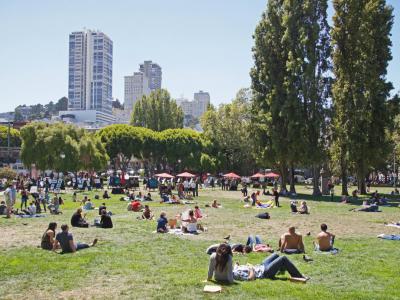
Washington Square—the green heart of San Francisco’s North Beach—is one of the city’s oldest and most cherished public parks. It was laid out in 1847 when surveyor Jasper O’Farrell penciled it into the city’s early street grid. Three years later, Mayor John W. Geary made it official, though back then it was less “picturesque picnic spot” and more “everything the city didn’t know what to do with.” Prior to becoming a public gathering space, it served as a dump, a pasture, a cemetery, and even a construction site—all on land once owned by Juana Briones, a Mexican rancher who raised her cattle and potatoes there long before brunch crowds claimed the turf.
During the 1860s, Washington Square became a setting for civic events such as Independence Day celebrations and later (as the surrounding neighborhood grew into a predominantly Italian enclave) for Italian-American festivities. When Columbus Avenue sliced diagonally through the square in the 1870s, it gave the park its current asymmetrical charm — a quirk that San Franciscans have been proud of ever since. After the 1906 earthquake, Washington Square doubled as a tent village for hundreds of displaced residents, proving once again that it’s the kind of place people naturally gravitate to when everything else falls apart.
Throughout the 20th century, the park remained a focal point of community life, though not without controversy—recurring schemes to dig an underground parking lot were met by the locals saying “no thanks” every single time. Visionary designers Lawrence Halprin and Douglas Baylis gave the square its modern, circular layout in 1958. Officially designated a San Francisco landmark in 2000, the square now thrives as a rare slice of continuity amid the city’s constant reinvention.
Today, the park is pure energy, with morning Tai Chi sessions, families picnicking under the sun, kids chasing pigeons, bells from the historic Saints Peter and Paul Church (the one often referred to as the “Italian Cathedral of the West”), and the hum of conversations in Italian, English, and caffeine. The bronze statue of Benjamin Franklin, installed in 1879 by philanthropist Henry Cogswell, conceals a time capsule beneath its feet, set to be opened every hundred years—proof that even history here comes with a wink and a deadline...
During the 1860s, Washington Square became a setting for civic events such as Independence Day celebrations and later (as the surrounding neighborhood grew into a predominantly Italian enclave) for Italian-American festivities. When Columbus Avenue sliced diagonally through the square in the 1870s, it gave the park its current asymmetrical charm — a quirk that San Franciscans have been proud of ever since. After the 1906 earthquake, Washington Square doubled as a tent village for hundreds of displaced residents, proving once again that it’s the kind of place people naturally gravitate to when everything else falls apart.
Throughout the 20th century, the park remained a focal point of community life, though not without controversy—recurring schemes to dig an underground parking lot were met by the locals saying “no thanks” every single time. Visionary designers Lawrence Halprin and Douglas Baylis gave the square its modern, circular layout in 1958. Officially designated a San Francisco landmark in 2000, the square now thrives as a rare slice of continuity amid the city’s constant reinvention.
Today, the park is pure energy, with morning Tai Chi sessions, families picnicking under the sun, kids chasing pigeons, bells from the historic Saints Peter and Paul Church (the one often referred to as the “Italian Cathedral of the West”), and the hum of conversations in Italian, English, and caffeine. The bronze statue of Benjamin Franklin, installed in 1879 by philanthropist Henry Cogswell, conceals a time capsule beneath its feet, set to be opened every hundred years—proof that even history here comes with a wink and a deadline...
4) Golden Gate Fortune Cookie Factory
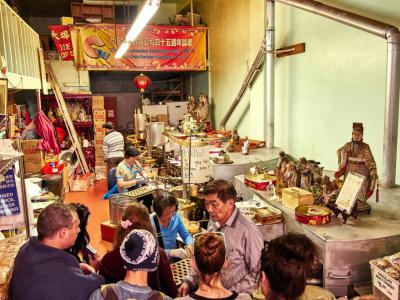
So, here you are-weaving your way past silk dresses, paper lanterns, and shelves stacked with trinkets in San Francisco’s Chinatown. Suddenly, the sweet smell of vanilla and toasted sugar hits you. That’s not your imagination-that’s the Golden Gate Fortune Cookie Factory, one of the last places in California, maybe even in the whole country, still making fortune cookies the old-school way: by hand.
Inside, there's true magic in motion to observe. You'll never have seen so many fortune cookies in your life! Workers stand over hot irons, folding delicate golden wafers at lightning speed-up to twenty thousand a day. That’s not a typo. Twenty! Thousand! Daily!-Just as they did back in 1909, when these cookies were invented for San Francisco's Japanese Tea Garden. And unlike other places that churn out hundreds of thousands of cookies a day mechanically, the ones made here have personality: some are dipped in chocolate, some are sprinkled, and some come oversized. A few can even skip the fold altogether, letting you read your fortune without the suspense...
Warm and crisp at the edges, yet soft enough not to shatter on first bite, they beat every other fortune cookie you've had before. A true revelation compared to the thick, clunky versions you may have crunched through at takeout joints or restaurants elsewhere. And if you’ve ever wanted to control your destiny, here’s your chance: you can slip your own custom message inside and send someone home with a fortune they’ll never forget.
All this comes in bags or jars that won’t break your bank-insanely cheap for its worth, cheerful, and dangerously snackable. So, if you’re the kind of traveler who wants more than photos of pagoda rooftops, step into this tiny bakery and taste a piece of San Francisco history-one warm, crispy prophecy at a time...
Inside, there's true magic in motion to observe. You'll never have seen so many fortune cookies in your life! Workers stand over hot irons, folding delicate golden wafers at lightning speed-up to twenty thousand a day. That’s not a typo. Twenty! Thousand! Daily!-Just as they did back in 1909, when these cookies were invented for San Francisco's Japanese Tea Garden. And unlike other places that churn out hundreds of thousands of cookies a day mechanically, the ones made here have personality: some are dipped in chocolate, some are sprinkled, and some come oversized. A few can even skip the fold altogether, letting you read your fortune without the suspense...
Warm and crisp at the edges, yet soft enough not to shatter on first bite, they beat every other fortune cookie you've had before. A true revelation compared to the thick, clunky versions you may have crunched through at takeout joints or restaurants elsewhere. And if you’ve ever wanted to control your destiny, here’s your chance: you can slip your own custom message inside and send someone home with a fortune they’ll never forget.
All this comes in bags or jars that won’t break your bank-insanely cheap for its worth, cheerful, and dangerously snackable. So, if you’re the kind of traveler who wants more than photos of pagoda rooftops, step into this tiny bakery and taste a piece of San Francisco history-one warm, crispy prophecy at a time...
5) Old Chinese Telephone Exchange
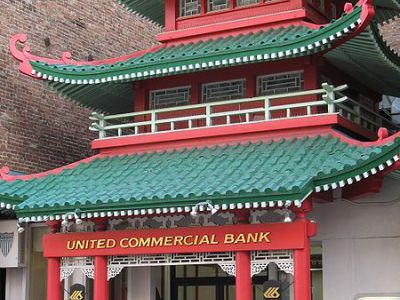
Being in San Francisco’s Chinatown, you can't help spotting a building that simply refuses to blend in. Rising at Washington Street, the East West Bank greets you with sweeping green eaves and bold red trim, a structure that looks more like a pagoda from a storybook than a financial institution. But this isn’t just a place for deposits and withdrawals-it’s a chapter of local history written in wood, stone, and telephone wires.
Back in 1887, long before smartphones and social media, this corner was already buzzing with voices. Chinatown’s first telephone service was installed here, and by 1901, it had grown into the Chinese Telephone Exchange. At first, the switchboard was staffed by men, but after the great earthquake of 1906, an all-female workforce took over the headsets. Their nimble memory and quick thinking became legendary.
Life in the exchange was no simple matter of plugging in wires. In Chinatown, callers preferred using names instead of phone numbers. This custom was rooted in the belief that using impersonal numbers was impolite. That meant the operators memorized the names, addresses, and workplaces of more than 1,500 subscribers. Even when three or four people shared the same surname, these women could still connect you to the right household or shop without hesitation.
Many of the operators were fluent in multiple Chinese dialects as well as English, making them indispensable in a community that thrived on trade, conversation, and connection. In a sense, they were as much cultural interpreters and practical employment agents as they were telephone operators, guiding newcomers and linking businesses with suitable job candidates who spoke the right language and had an appropriate background.
The building itself predates the telephone exchange, though. Previously, it had housed the California Star, San Francisco’s very first newspaper, founded by Gold Rush entrepreneur Sam Brannan. In fact, it was through this paper that residents learned their town had officially been renamed from Yerba Buena to San Francisco, back in January 1847.
Today, when you glance up at the green-tiled tiers of the East West Bank, you’re seeing more than a striking façade-you’re glimpsing the layers of Chinatown’s bygone era, from the earliest days of California journalism to the women who kept a community connected, all folded into one enduring landmark...
Back in 1887, long before smartphones and social media, this corner was already buzzing with voices. Chinatown’s first telephone service was installed here, and by 1901, it had grown into the Chinese Telephone Exchange. At first, the switchboard was staffed by men, but after the great earthquake of 1906, an all-female workforce took over the headsets. Their nimble memory and quick thinking became legendary.
Life in the exchange was no simple matter of plugging in wires. In Chinatown, callers preferred using names instead of phone numbers. This custom was rooted in the belief that using impersonal numbers was impolite. That meant the operators memorized the names, addresses, and workplaces of more than 1,500 subscribers. Even when three or four people shared the same surname, these women could still connect you to the right household or shop without hesitation.
Many of the operators were fluent in multiple Chinese dialects as well as English, making them indispensable in a community that thrived on trade, conversation, and connection. In a sense, they were as much cultural interpreters and practical employment agents as they were telephone operators, guiding newcomers and linking businesses with suitable job candidates who spoke the right language and had an appropriate background.
The building itself predates the telephone exchange, though. Previously, it had housed the California Star, San Francisco’s very first newspaper, founded by Gold Rush entrepreneur Sam Brannan. In fact, it was through this paper that residents learned their town had officially been renamed from Yerba Buena to San Francisco, back in January 1847.
Today, when you glance up at the green-tiled tiers of the East West Bank, you’re seeing more than a striking façade-you’re glimpsing the layers of Chinatown’s bygone era, from the earliest days of California journalism to the women who kept a community connected, all folded into one enduring landmark...
6) Tin How Temple
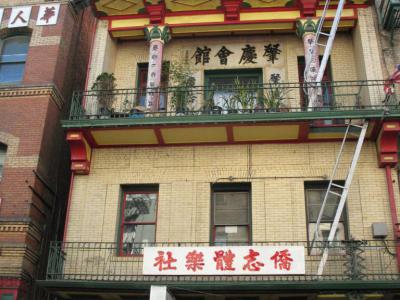
Wandering along Chinatown’s winding streets, you’ll inevitably come across one of San Francisco’s most enduring spiritual landmarks, the Tin How Temple. Founded in the mid-19th century by Cantonese immigrants-who were among the city’s earliest settlers-this sanctuary holds the distinction of being the oldest continuously operating Chinese temple in the United States.
The temple fittingly honors Mazu, known in Cantonese as Tin How, the revered “Queen of Heaven” and “Goddess of the Seven Seas,” who's long believed to protect sailors and travelers from peril on distant voyages.
Set atop three steep wooden flights of stairs (not much has changed here with the passage of time), climbing them seems almost like a ritual-each step taking you farther from the bustling streets below and closer to a realm of prayer and quiet reflection. One can still see old women preparing offerings for the deities, smell the sweet burning of incense, and tune into the quiet chants meant to appease the Buddhist deities.
Once inside, the atmosphere shifts. The interior is generously daubed in gold and deep reds, with hundreds of hanging lanterns and tassels suspended from the ceiling, seemingly floating in the hushed air. Devotees light coils of incense that spiral upward, filling the temple with a soft haze. In the center of it all, sitting gracefully is Tin How herself, flanked by attendant deities, surrounded by offerings-especially pyramids of oranges, a symbol of prosperity in Cantonese tradition (as the Cantonese pronunciation of "orange" sounds similar to the word for wealth).
The temple may be small, but what it lacks in size it makes up for in presence. Every corner tells a story, from century-old ritual objects to stained glass windows installed by artisans decades ago. Visitors are welcome, though photography is discouraged inside, and a modest donation is appreciated. What you’ll take away is less a snapshot and more a lingering sense of the devotion and cultural endurance that have kept this sacred space alive for generations.
The temple fittingly honors Mazu, known in Cantonese as Tin How, the revered “Queen of Heaven” and “Goddess of the Seven Seas,” who's long believed to protect sailors and travelers from peril on distant voyages.
Set atop three steep wooden flights of stairs (not much has changed here with the passage of time), climbing them seems almost like a ritual-each step taking you farther from the bustling streets below and closer to a realm of prayer and quiet reflection. One can still see old women preparing offerings for the deities, smell the sweet burning of incense, and tune into the quiet chants meant to appease the Buddhist deities.
Once inside, the atmosphere shifts. The interior is generously daubed in gold and deep reds, with hundreds of hanging lanterns and tassels suspended from the ceiling, seemingly floating in the hushed air. Devotees light coils of incense that spiral upward, filling the temple with a soft haze. In the center of it all, sitting gracefully is Tin How herself, flanked by attendant deities, surrounded by offerings-especially pyramids of oranges, a symbol of prosperity in Cantonese tradition (as the Cantonese pronunciation of "orange" sounds similar to the word for wealth).
The temple may be small, but what it lacks in size it makes up for in presence. Every corner tells a story, from century-old ritual objects to stained glass windows installed by artisans decades ago. Visitors are welcome, though photography is discouraged inside, and a modest donation is appreciated. What you’ll take away is less a snapshot and more a lingering sense of the devotion and cultural endurance that have kept this sacred space alive for generations.
7) Kong Chow Temple
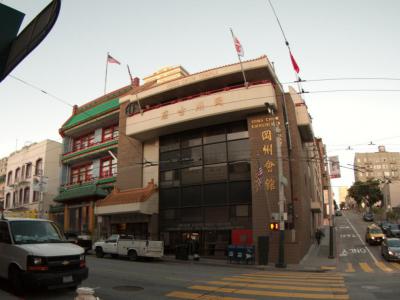
Founded in 1851 by Chinatown's Cantonese community, the Kong Chow Temple is dedicated to Guan Yu, who is worshipped by many different strands of Chinese society (in mainland China, Taiwan, Tibet, Hong Kong and beyond) as an defender of the code of brotherhood and a symbol of fraternal loyalty. The sculpture of the mighty Guan Yu, which serves as the main altar, is very rare to find; in fact, this is one of the very few places in the U.S. where you can see the robust image of this Chinese God.
Due to the original building having been destroyed in the 1906 quake, the temple was relocated to its present site in 1977. Legend has it that the wife of Harry Truman once visited here to pray for positive results to her husband's presidential run and also asked for a prediction about the results. While there, she held a container of Kau cim sticks, and shook them until one of the sticks fell to the ground. This stick was then exchanged for a piece of paper, which told a story, offering insight to her question. The prediction was favorable, and Truman would go on to win the presidential election. The prediction slip that was given to her is still displayed in the temple.
For your visit, be prepared to climb the stairs and make a small donation; a lady will then take you around to place incense at each station. It's a nice 10- or 15-minute excursion that you can mention to your friends when you get home.
Due to the original building having been destroyed in the 1906 quake, the temple was relocated to its present site in 1977. Legend has it that the wife of Harry Truman once visited here to pray for positive results to her husband's presidential run and also asked for a prediction about the results. While there, she held a container of Kau cim sticks, and shook them until one of the sticks fell to the ground. This stick was then exchanged for a piece of paper, which told a story, offering insight to her question. The prediction was favorable, and Truman would go on to win the presidential election. The prediction slip that was given to her is still displayed in the temple.
For your visit, be prepared to climb the stairs and make a small donation; a lady will then take you around to place incense at each station. It's a nice 10- or 15-minute excursion that you can mention to your friends when you get home.
8) First Chinese Baptist Church
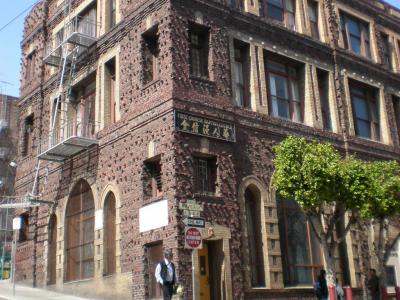
Situated in the heart of SF's Chinatown, the First Chinese Baptist Church was established in 1880 as a bilingual and bicultural congregation. When Chinese students were not permitted to attend the city's public schools, it offered day school for children and night school for adults; nowadays, it offers two distinct worship experiences to meet the specific interests of people. The 10am Cantonese Worship proclaims the Good News of the Living Christ to a multi-generational congregation. Similarly populated by a wide variety of generations, the 11:20 English Worship proclaims the Gospel in an experience that uses praise band, organ, piano and voice choirs.
Like many others in town, the church's first building was destroyed in the devastating earthquake and fire of 1906. After clearing up the ruins, the new building, completed in 1908, was designed with a peaceful sanctuary and a reading room on the ground floor. The 1st and 2nd floors consist of classrooms, while the 3rd houses a fellowship hall and a few office rooms for the pastors. Major renovations were taken up in 1980 for the centennial celebrations, in which the sanctuary was greatly modified. In the year 2000, the building was further modernized by the addition of elevators and modular classrooms on the 2nd and 4th floors.
Like many others in town, the church's first building was destroyed in the devastating earthquake and fire of 1906. After clearing up the ruins, the new building, completed in 1908, was designed with a peaceful sanctuary and a reading room on the ground floor. The 1st and 2nd floors consist of classrooms, while the 3rd houses a fellowship hall and a few office rooms for the pastors. Major renovations were taken up in 1980 for the centennial celebrations, in which the sanctuary was greatly modified. In the year 2000, the building was further modernized by the addition of elevators and modular classrooms on the 2nd and 4th floors.
9) Sing Chong Building
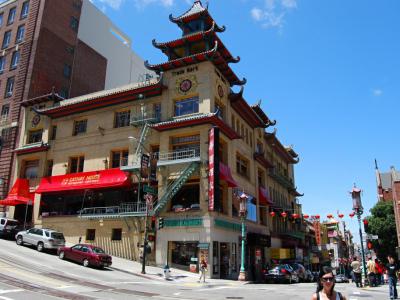
After the devastating earthquake of 1906 left much of San Francisco in ruins, city officials toyed with the idea of relocating the Chinese community to a far-off district (now known as Bayview). But the residents of Chinatown, backed by the Chinese Consulate and a network of family associations, stood their ground. Their refusal to budge would set the stage for a remarkable rebirth.
A group of like-minded merchants led by Look Tin Eli, an influential businessman born in Mendocino to Chinese immigrants, came up with a bold and rather clever marketing idea: to rebuild the entire community as a tourist destination rather than a hidden quarter.
To achieve that, they hired American (non-Chinese) architects and contractors, asking them to design storefronts and halls in a theatrical version of traditional Chinese style-complete with sweeping roofs, pagoda towers, and brightly painted façades that would catch the eye while celebrating cultural pride. Indeed, this was more than decoration but a way to claim space in the heart of a city that once tried to push them out.
Soon, the fruits of their vision appeared in the form of two landmarks, the ornate bazaars of Sing Chong and Sing Fat. These structures were among the first to rise after the disaster, instantly signaling that Chinatown was here to stay. Their distinctive design, featuring the now-famous pagoda rooftops and carved balconies, caught the city’s imagination and inspired other buildings to follow suit, giving the district its vibrant, instantly recognizable look it retains today.
One of the buildings embracing the trend was the Bank of America at 701 Grant Avenue. Previously occupied by the Nanking Fook Wo Inc., it had adopted Chinese dragon motifs along the façade, echoing the new visual identity of the area. What began as a response to the disaster transformed into an architectural statement, one that still defines the character of San Francisco’s most storied neighborhood now.
A group of like-minded merchants led by Look Tin Eli, an influential businessman born in Mendocino to Chinese immigrants, came up with a bold and rather clever marketing idea: to rebuild the entire community as a tourist destination rather than a hidden quarter.
To achieve that, they hired American (non-Chinese) architects and contractors, asking them to design storefronts and halls in a theatrical version of traditional Chinese style-complete with sweeping roofs, pagoda towers, and brightly painted façades that would catch the eye while celebrating cultural pride. Indeed, this was more than decoration but a way to claim space in the heart of a city that once tried to push them out.
Soon, the fruits of their vision appeared in the form of two landmarks, the ornate bazaars of Sing Chong and Sing Fat. These structures were among the first to rise after the disaster, instantly signaling that Chinatown was here to stay. Their distinctive design, featuring the now-famous pagoda rooftops and carved balconies, caught the city’s imagination and inspired other buildings to follow suit, giving the district its vibrant, instantly recognizable look it retains today.
One of the buildings embracing the trend was the Bank of America at 701 Grant Avenue. Previously occupied by the Nanking Fook Wo Inc., it had adopted Chinese dragon motifs along the façade, echoing the new visual identity of the area. What began as a response to the disaster transformed into an architectural statement, one that still defines the character of San Francisco’s most storied neighborhood now.
10) Chinatown Gate (Dragon's Gate)
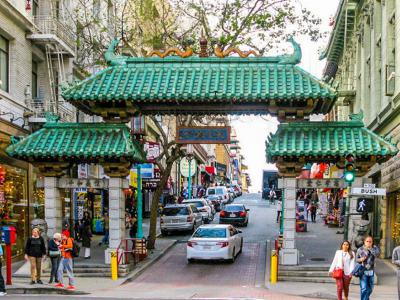
In keeping with Feng Shui principles, the southern edge of San Francisco’s Chinatown is marked by a towering gateway that straddles the bustle of Grant Avenue. This is the Dragon Gate, a flamboyant arch dressed in curling green dragons and traditional tiles. It might look timeless, but it’s actually a relative newcomer-unveiled only in 1970. Its materials were a gift from Taiwan, while the elegant design came from Chinese-American architect Clayton Lee, who modeled it after the ceremonial village gates of old China. Across the top, four carved Chinese characters proclaim a message of welcome: “All under heaven is for the good of the people.”
Guarding the arch are a pair of stone lions, known as fu dogs. On the west side, the male lion steadies a ball beneath his paw, symbolizing protection of the outside world. On the east, the lioness rests her paw on a playful cub, representing the nurturing of family. Together, they embody the balance of strength and care, ensuring that any evil spirits think twice before crossing the threshold.
Pass beneath the gate, and the character of the neighborhood unfolds in full color. In the 1920s, local merchants reinvented Chinatown’s appearance by adding pagoda-roofed façades and bright ornamental details-a pioneering initiative which created an identity that has drawn visitors ever since. The once-notorious red-light district gave way to lantern-strung streets. As evening sets in, the dragon-shaped streetlights flicker on, casting a warm glow across the lively thoroughfare, bustling with herbal shops, bakeries, tea houses, and jewelry stores.
Guarding the arch are a pair of stone lions, known as fu dogs. On the west side, the male lion steadies a ball beneath his paw, symbolizing protection of the outside world. On the east, the lioness rests her paw on a playful cub, representing the nurturing of family. Together, they embody the balance of strength and care, ensuring that any evil spirits think twice before crossing the threshold.
Pass beneath the gate, and the character of the neighborhood unfolds in full color. In the 1920s, local merchants reinvented Chinatown’s appearance by adding pagoda-roofed façades and bright ornamental details-a pioneering initiative which created an identity that has drawn visitors ever since. The once-notorious red-light district gave way to lantern-strung streets. As evening sets in, the dragon-shaped streetlights flicker on, casting a warm glow across the lively thoroughfare, bustling with herbal shops, bakeries, tea houses, and jewelry stores.
