Custom Walk in Vancouver, Canada by the_gibbs_family_f7c38 created on 2025-04-18
Guide Location: Canada » Vancouver
Guide Type: Custom Walk
# of Sights: 8
Tour Duration: 3 Hour(s)
Travel Distance: 7.9 Km or 4.9 Miles
Share Key: WN94J
Guide Type: Custom Walk
# of Sights: 8
Tour Duration: 3 Hour(s)
Travel Distance: 7.9 Km or 4.9 Miles
Share Key: WN94J
How It Works
Please retrieve this walk in the GPSmyCity app. Once done, the app will guide you from one tour stop to the next as if you had a personal tour guide. If you created the walk on this website or come to the page via a link, please follow the instructions below to retrieve the walk in the app.
Retrieve This Walk in App
Step 1. Download the app "GPSmyCity: Walks in 1K+ Cities" on Apple App Store or Google Play Store.



Step 2. In the GPSmyCity app, download(or launch) the guide "Vancouver Map and Walking Tours".
Step 3. Tap the menu button located at upper right corner of the "Walks" screen and select "Retrieve custom walk". Enter the share key: WN94J
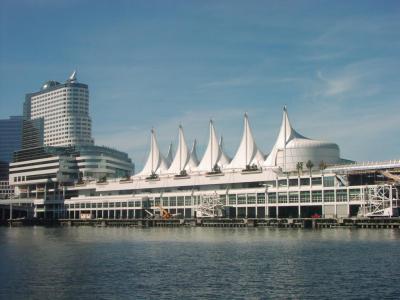
1) Canada Place (must see)
Situated along the Burrard Inlet waterfront, the Canada Place edifice boasts a collection of notable establishments, including the Vancouver Convention & Exhibition Centre, the Pan Pacific Hotel, the Vancouver World Trade Centre, and in the past, the world's pioneer permanent IMAX 3D theater (ceased operations in 2009). Furthermore, it serves as the primary cruise ship terminal, catering to the majority of sea voyages to Alaska. Undoubtedly, this locale stands as the central hub for cruises to and from Vancouver, offering a delightful promenade for enjoying the shoreline.
Conceived by architect Eberhard Zeidler, the structure reached completion in 1985, designed as the Canada pavilion in anticipation of Expo 86. Notably distinct, it stood as the sole venue beyond the fair's principal site on the northern shore of False Creek.
Another significant draw tied to Canada Place is the FlyOver Canada theater, inaugurated in 2013. Here, visitors embark on a virtual flight traversing the nation; a single journey accommodates up to 61 individuals, transporting them to a 19-meter (62-foot) diameter spherical screen that employs simulated wind, mist, and various scents to heighten the experience.
Within the Convention Centre, exhibits from the 2010 Vancouver Olympics are on display, while the Olympic Cauldron against the backdrop of Stanley Park and the mountains offers a picturesque setting for capturing Christmas card-worthy photos.
Navigational signage is well-placed, and a plethora of staff members are typically accessible to facilitate your journey to the appropriate destination.
Tip:
For the 'Fly Over Canada' movie, it's a good idea to pay for your timed tickets in advance over the Internet to avoid lines.
Conceived by architect Eberhard Zeidler, the structure reached completion in 1985, designed as the Canada pavilion in anticipation of Expo 86. Notably distinct, it stood as the sole venue beyond the fair's principal site on the northern shore of False Creek.
Another significant draw tied to Canada Place is the FlyOver Canada theater, inaugurated in 2013. Here, visitors embark on a virtual flight traversing the nation; a single journey accommodates up to 61 individuals, transporting them to a 19-meter (62-foot) diameter spherical screen that employs simulated wind, mist, and various scents to heighten the experience.
Within the Convention Centre, exhibits from the 2010 Vancouver Olympics are on display, while the Olympic Cauldron against the backdrop of Stanley Park and the mountains offers a picturesque setting for capturing Christmas card-worthy photos.
Navigational signage is well-placed, and a plethora of staff members are typically accessible to facilitate your journey to the appropriate destination.
Tip:
For the 'Fly Over Canada' movie, it's a good idea to pay for your timed tickets in advance over the Internet to avoid lines.
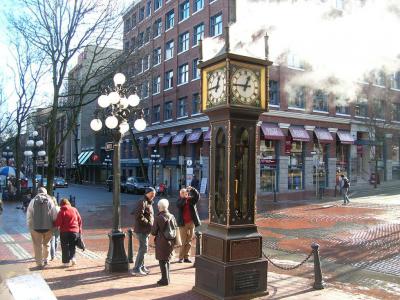
2) Gastown Steam Clock
Among Gastown's many attractions, none holds as much renown as the Gastown Steam Clock. Although this clock isn't the oldest fixture in the neighborhood (and similar steam clocks can be found elsewhere), it stands as one of the rare functioning steam-powered clocks remaining worldwide.
Originally constructed above a steam grate, this endeavor served several purposes. It concealed the unappealing grate from view, harnessed the otherwise wasted steam power from the local heating system, and deterred transient individuals from using it for warmth during chilly spells.
As steam ascends from the grate, it propels a petite engine that initiates the motion of a lifting chain. This chain, in turn, guides steel balls upwards until they transition onto a descending chain, their weight propelling the clock's pendulum and enabling timekeeping without the need for manual winding. The steam, crucial for the clock's time-marking whistles, also fuels the chiming mechanism.
Following a period of operation, the original clockwork mechanism faltered, necessitating the introduction of electricity to maintain functionality. At a certain juncture, local businesses' contributions facilitated the restoration of the steam mechanism, which endures and operates to this day.
When the clock chimes – at quarter intervals, each full hour, and notably at midday – it delivers a captivating spectacle. To capture this event, consider setting your camera to video mode. Exercise patience, as the experience promises rewarding results!
Originally constructed above a steam grate, this endeavor served several purposes. It concealed the unappealing grate from view, harnessed the otherwise wasted steam power from the local heating system, and deterred transient individuals from using it for warmth during chilly spells.
As steam ascends from the grate, it propels a petite engine that initiates the motion of a lifting chain. This chain, in turn, guides steel balls upwards until they transition onto a descending chain, their weight propelling the clock's pendulum and enabling timekeeping without the need for manual winding. The steam, crucial for the clock's time-marking whistles, also fuels the chiming mechanism.
Following a period of operation, the original clockwork mechanism faltered, necessitating the introduction of electricity to maintain functionality. At a certain juncture, local businesses' contributions facilitated the restoration of the steam mechanism, which endures and operates to this day.
When the clock chimes – at quarter intervals, each full hour, and notably at midday – it delivers a captivating spectacle. To capture this event, consider setting your camera to video mode. Exercise patience, as the experience promises rewarding results!
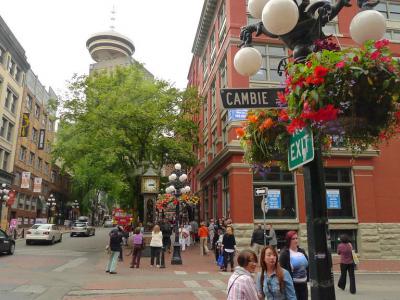
3) Gastown (must see)
Gastown stands as the historical enclave of Vancouver, tracing its roots to the namesake of a steamboat captain, "Gassy" Jack Deighton. In the year 1867, this captain inaugurated Vancouver's inaugural saloon. As time flowed, this vicinity burgeoned into a thriving hub of commerce. In the 1960s, an imminent threat emerged as plans to construct a freeway through Gastown materialized. Yet, Vancouver's populace united fervently to safeguard its architectural legacy and distinctive essence. Consequently, the enduring charm of Gastown persists in its cobbled pathways and meticulously preserved Victorian structures.
A centerpiece of Gastown's allure is the Steam Clock. While not the oldest spectacle in the area, the Steam Clock remains a defining emblem of Gastown. Its creation atop a steam vent was a masterstroke, ingeniously harnessing steam's energy and deterring cold weather vagrancy. Nestled within the clock, a diminutive steam engine propels the pendulum mechanics, bestowing the clock with perpetual motion and obviating the need for winding.
Beyond its historical landmarks, Gastown pulsates with contemporary vivacity. It houses a medley of sophisticated boutiques, vibrant clubs, inviting bars, evocative art galleries, harmonious music studios, and attractions for visitors. A case in point is Fabric, previously known as The Town Pump, a pivot in Vancouver's music scene since the 1960s. Notwithstanding Gastown's venerable age in the annals of Vancouver, it remains an influential force in shaping the visage of the city's culture.
Why You Should Visit:
Lovely characterful traditional Canadian / North American area which is indeed a delight to stroll through – just follow the crowd, as there's real life & history all around.
Tip:
Most of the shops are closed by 9pm, and that's considered being open "late".
A centerpiece of Gastown's allure is the Steam Clock. While not the oldest spectacle in the area, the Steam Clock remains a defining emblem of Gastown. Its creation atop a steam vent was a masterstroke, ingeniously harnessing steam's energy and deterring cold weather vagrancy. Nestled within the clock, a diminutive steam engine propels the pendulum mechanics, bestowing the clock with perpetual motion and obviating the need for winding.
Beyond its historical landmarks, Gastown pulsates with contemporary vivacity. It houses a medley of sophisticated boutiques, vibrant clubs, inviting bars, evocative art galleries, harmonious music studios, and attractions for visitors. A case in point is Fabric, previously known as The Town Pump, a pivot in Vancouver's music scene since the 1960s. Notwithstanding Gastown's venerable age in the annals of Vancouver, it remains an influential force in shaping the visage of the city's culture.
Why You Should Visit:
Lovely characterful traditional Canadian / North American area which is indeed a delight to stroll through – just follow the crowd, as there's real life & history all around.
Tip:
Most of the shops are closed by 9pm, and that's considered being open "late".
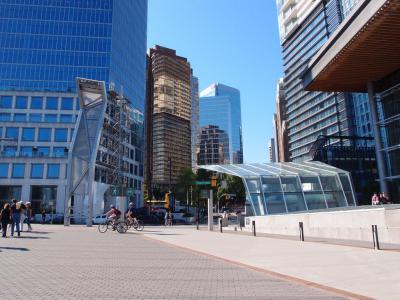
4) Downtown (must see)
Downtown Vancouver stands as both the central business district and the heart of the city. Nestled along the northern shore of the False Creek inlet, it carves into the Burrard Peninsula, giving rise to the Downtown Peninsula where the West End neighborhood and Stanley Park also reside.
Together with West End, Stanley Park, and the adjacent Downtown Eastside, Downtown forms the core of Central Vancouver, one of the three primary sectors of the city, alongside East Side and West Side. In a remarkable display of vertical living within a confined geographical expanse, Downtown Vancouver boasts an unusually high concentration of residential skyscrapers, rendering it one of the most densely populated regions in the nation.
Beyond the recognizable corporate spires dotting the financial and central business districts, the scope of Downtown Vancouver encompasses residential communities manifested as towering apartments and condominiums in areas like Yaletown and Coal Harbour. Other facets of the Downtown mosaic include the Granville Mall and Entertainment District, Downtown South, Gastown, Chinatown, and Japantown.
Merely a century ago, Vancouver took shape as a small cluster of structures known as Granville (now Gastown). Positioned by Burrard Inlet, it vied for the honor of serving as the western terminus for the Canadian Pacific Railway. The year 1887, a mere twelve months after the City of Vancouver was officially established, marked the arrival of the inaugural passenger train at Howe Street's edge, solidifying prospects for future expansion. Over the ensuing seven years, a surge in construction sparked the migration of the city center from Water and Cordova Streets to the intersection of Georgia and Granville Streets. In 1890, streetcar services commenced, linking the waterfront to Granville, Pender, and Cordova Streets.
Today, Downtown Vancouver presents breathtaking vistas of the encircling mountainous expanse. It stands as one of the planet's most exquisite metropolitan hubs. Tourists can leisurely wander down the renowned Robson Street, venture into the captivating Chinatown, or delve into the storied depths of Gastown. Boasting an extensive array of shopping and culinary choices, this district is destined to remain a cherished destination for years to follow.
Why You Should Visit:
One of the nicest things about Vancouver's Downtown is that there's seldom a rush hour of significance; this is a place made for city living.
Almost all areas are awash with a range of shops, bars & restaurants to cater to all world tastes in terms of quality, quantity, and price as well.
Safe to walk day or night and fairly clean. During the summer parts of streets are closed to vehicles to make it even safer for pedestrians.
Together with West End, Stanley Park, and the adjacent Downtown Eastside, Downtown forms the core of Central Vancouver, one of the three primary sectors of the city, alongside East Side and West Side. In a remarkable display of vertical living within a confined geographical expanse, Downtown Vancouver boasts an unusually high concentration of residential skyscrapers, rendering it one of the most densely populated regions in the nation.
Beyond the recognizable corporate spires dotting the financial and central business districts, the scope of Downtown Vancouver encompasses residential communities manifested as towering apartments and condominiums in areas like Yaletown and Coal Harbour. Other facets of the Downtown mosaic include the Granville Mall and Entertainment District, Downtown South, Gastown, Chinatown, and Japantown.
Merely a century ago, Vancouver took shape as a small cluster of structures known as Granville (now Gastown). Positioned by Burrard Inlet, it vied for the honor of serving as the western terminus for the Canadian Pacific Railway. The year 1887, a mere twelve months after the City of Vancouver was officially established, marked the arrival of the inaugural passenger train at Howe Street's edge, solidifying prospects for future expansion. Over the ensuing seven years, a surge in construction sparked the migration of the city center from Water and Cordova Streets to the intersection of Georgia and Granville Streets. In 1890, streetcar services commenced, linking the waterfront to Granville, Pender, and Cordova Streets.
Today, Downtown Vancouver presents breathtaking vistas of the encircling mountainous expanse. It stands as one of the planet's most exquisite metropolitan hubs. Tourists can leisurely wander down the renowned Robson Street, venture into the captivating Chinatown, or delve into the storied depths of Gastown. Boasting an extensive array of shopping and culinary choices, this district is destined to remain a cherished destination for years to follow.
Why You Should Visit:
One of the nicest things about Vancouver's Downtown is that there's seldom a rush hour of significance; this is a place made for city living.
Almost all areas are awash with a range of shops, bars & restaurants to cater to all world tastes in terms of quality, quantity, and price as well.
Safe to walk day or night and fairly clean. During the summer parts of streets are closed to vehicles to make it even safer for pedestrians.
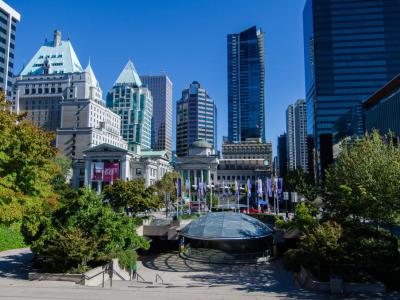
5) Robson Square
Robson Square stands as a distinguished civic hub and communal plaza located in the heart of Downtown Vancouver. Encompassing an expansive area of three city blocks, it spans over 1.3 million square feet. The visionary local architect Arthur Erickson is the creative mind behind its design, with its construction reaching completion in 1983. At its core lies an underground expanse that is sheltered and distinctive.
The focal point of the square is the Law Courts, a structure crowned with a glass canopy that shelters 35 courtrooms, situated within the southern block. Meanwhile, the central block houses offices of the provincial government and more recently, sections of the downtown satellite campus of the University of British Columbia on its lower level.
Robson Square's design, inspired by Erickson's style, uses concrete and eco-conscious elements. It has seating steps, open areas, and a small tree-adorned enclave. The layout brings in natural light and air, with three cascading waterfalls above the central block. These waterfalls mask city noise and cool the complex with 3,000+ cubic meters of water.
An underground outdoor skating rink beneath Robson Square connects to the northern block with the Vancouver Art Gallery. It's the city's only free public outdoor skating rink, doubling as a space for various gatherings like Ballroom and Salsa dancing in warmer months. This spot is at the heart of Vancouver's street dance scene.
Especially in summer, Robson Square thrives with diverse sights and activities. From street performers to dancers practicing, protesters supporting various causes, and artists selling their creations, the avenue offers a carefree atmosphere for leisurely exploration.
The focal point of the square is the Law Courts, a structure crowned with a glass canopy that shelters 35 courtrooms, situated within the southern block. Meanwhile, the central block houses offices of the provincial government and more recently, sections of the downtown satellite campus of the University of British Columbia on its lower level.
Robson Square's design, inspired by Erickson's style, uses concrete and eco-conscious elements. It has seating steps, open areas, and a small tree-adorned enclave. The layout brings in natural light and air, with three cascading waterfalls above the central block. These waterfalls mask city noise and cool the complex with 3,000+ cubic meters of water.
An underground outdoor skating rink beneath Robson Square connects to the northern block with the Vancouver Art Gallery. It's the city's only free public outdoor skating rink, doubling as a space for various gatherings like Ballroom and Salsa dancing in warmer months. This spot is at the heart of Vancouver's street dance scene.
Especially in summer, Robson Square thrives with diverse sights and activities. From street performers to dancers practicing, protesters supporting various causes, and artists selling their creations, the avenue offers a carefree atmosphere for leisurely exploration.
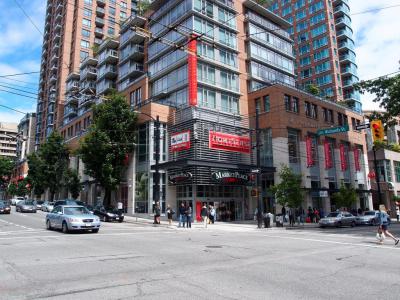
6) Robson Street (must see)
Robson Street, a major downtown Vancouver thoroughfare, holds historical significance. The commercial stretch runs between Burrard and Jervis Streets and is named after John Robson, a crucial figure in British Columbia joining the Canadian Confederation and the province's Premier from 1889 to 1892.
Originating near BC Place Stadium by the northern banks of False Creek, Robson Street meanders northwest, passing notable landmarks like Vancouver Library Square, Robson Square, and the Vancouver Art Gallery, eventually culminating at Lost Lagoon within Stanley Park.
In 1895, the introduction of streetcar tracks fostered a bustling hub of shops and eateries. During the mid to late 20th century, this area, particularly the northwestern portion of Robson Street, gained prominence as a hub of German culture and commerce, a phenomenon bolstered by postwar German immigration. Even beyond the German community, the moniker "Robsonstrasse" persisted, exemplified by establishments like the Robsonstrasse Hotel.
Robson Street retains its identity as a shopping district, although its character has evolved. What was once a landscape of small local markets has given way to extensive redevelopment marked by prominent chain stores and upscale dining options. Notably celebrated for its fashion boutiques and culinary scene, Robson Street's allure extends from its southeastern junction with Granville Street to the northwestern intersection with Denman Street. The heart of this activity lies between Burrard and Bute Streets, a region historically referred to as Robsonstrasse.
Tip:
For your first-time visit to Vancouver, consider staying at the hotel on or near Robson Street as the most convenient location.
Originating near BC Place Stadium by the northern banks of False Creek, Robson Street meanders northwest, passing notable landmarks like Vancouver Library Square, Robson Square, and the Vancouver Art Gallery, eventually culminating at Lost Lagoon within Stanley Park.
In 1895, the introduction of streetcar tracks fostered a bustling hub of shops and eateries. During the mid to late 20th century, this area, particularly the northwestern portion of Robson Street, gained prominence as a hub of German culture and commerce, a phenomenon bolstered by postwar German immigration. Even beyond the German community, the moniker "Robsonstrasse" persisted, exemplified by establishments like the Robsonstrasse Hotel.
Robson Street retains its identity as a shopping district, although its character has evolved. What was once a landscape of small local markets has given way to extensive redevelopment marked by prominent chain stores and upscale dining options. Notably celebrated for its fashion boutiques and culinary scene, Robson Street's allure extends from its southeastern junction with Granville Street to the northwestern intersection with Denman Street. The heart of this activity lies between Burrard and Bute Streets, a region historically referred to as Robsonstrasse.
Tip:
For your first-time visit to Vancouver, consider staying at the hotel on or near Robson Street as the most convenient location.
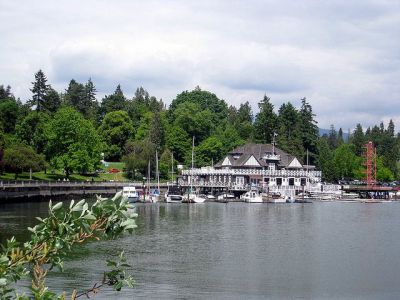
7) Stanley Park (must see)
Stanley Park, positioned in downtown Vancouver, is a sprawling urban park that spans 1,001 acres, surpassing the size of New York City's Central Park by approximately ten percent. Drawing a crowd of around two and a half million visitors annually, the park offers opportunities for cycling, skating, and leisurely strolls along its 5.5-mile seawall path.
One of the park's standout characteristics is its abundant collection of ancient trees, with nearly half a million trees gracing the landscape, some of which boast ages in the hundreds of years. The park is bordered by the Pacific Ocean on nearly all sides and encompasses Beaver Creek and Beaver Lake, vital habitats for indigenous waterfowl and various wildlife species like beavers, geese, ducks, herons, and swans. In harmonious coexistence, modern recreational facilities intermingle with untouched natural spaces, including the iconic seawall path and an extensive network of approximately 120 miles of trails.
In addition to its remarkable old growth trees and natural ecosystems, Stanley Park is adorned with an array of monuments and sculptures. Among these are a statue honoring the poet Robert Burns, the captivating "Girl in a Wetsuit" by Elek Imredy, towering totem poles, the historical Lumberman's Arch, a reproduction of the RMS Empress of Japan's figurehead, and more.
While Vancouver's attractions entice many tourists, a sojourn to the city would remain incomplete without a tranquil stroll through the enchanting wooded expanse of Stanley Park.
Why You Should Visit:
Great place for play and picnics and family outings which affords beautiful views of downtown, the mountains, the sea, and Lion's Gate Bridge – and it's all free.
With old growth forests, lakes, trails, and beaches, this park is quirkily enough as pleasant to stroll around as it is to pass through.
Tip:
Be aware of the arrows and symbols. There are some paths that are strictly for pedestrians, and some paths that are one-way.
It's important to plan where you start and end your journey as the Stanley Park Seawall walk is one-way.
Make sure you get a map so you can see all of your options!
One of the park's standout characteristics is its abundant collection of ancient trees, with nearly half a million trees gracing the landscape, some of which boast ages in the hundreds of years. The park is bordered by the Pacific Ocean on nearly all sides and encompasses Beaver Creek and Beaver Lake, vital habitats for indigenous waterfowl and various wildlife species like beavers, geese, ducks, herons, and swans. In harmonious coexistence, modern recreational facilities intermingle with untouched natural spaces, including the iconic seawall path and an extensive network of approximately 120 miles of trails.
In addition to its remarkable old growth trees and natural ecosystems, Stanley Park is adorned with an array of monuments and sculptures. Among these are a statue honoring the poet Robert Burns, the captivating "Girl in a Wetsuit" by Elek Imredy, towering totem poles, the historical Lumberman's Arch, a reproduction of the RMS Empress of Japan's figurehead, and more.
While Vancouver's attractions entice many tourists, a sojourn to the city would remain incomplete without a tranquil stroll through the enchanting wooded expanse of Stanley Park.
Why You Should Visit:
Great place for play and picnics and family outings which affords beautiful views of downtown, the mountains, the sea, and Lion's Gate Bridge – and it's all free.
With old growth forests, lakes, trails, and beaches, this park is quirkily enough as pleasant to stroll around as it is to pass through.
Tip:
Be aware of the arrows and symbols. There are some paths that are strictly for pedestrians, and some paths that are one-way.
It's important to plan where you start and end your journey as the Stanley Park Seawall walk is one-way.
Make sure you get a map so you can see all of your options!
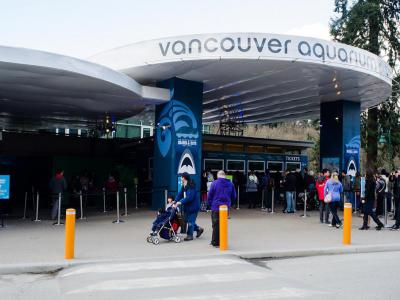
8) Vancouver Aquarium (must see)
The Vancouver Aquarium stands as a prominent highlight within Stanley Park. Beyond its role as a popular tourist destination, this expansive public aquatic center also serves as a pivotal hub for the study and preservation of marine life. Encompassing an impressive area of nearly 100,000 square feet, the aquarium showcases a captivating array of exhibits that collectively hold around 10,000,000 liters of water, spread across 166 distinct displays.
The exhibition spaces at the Vancouver Aquarium encompass a diverse range of aquatic ecosystems and species from various geographical regions. Notable areas include the Pacific Canada Pavilion, which accommodates an array of fish originating from the Strait of Georgia. The Arctic Canada exhibit is home to enchanting Beluga whales, arctic fish, and invertebrates. Meanwhile, The Wild Coast section features captivating displays of Pacific White-sided dolphins, sea otters, harbor porpoises, and a selection of interactive exhibits showcasing invertebrates.
The Tropic Zone introduces visitors to tropical species, highlighted by the presence of a vibrant green sea turtle. Lastly, the Amazon Rainforest exhibit presents an immersive experience, housing Amazonian fish, invertebrates, snakes, caimans, sloths, birds, and an array of other captivating species. Notably, the Vancouver Aquarium proudly houses the sole captive harbor porpoise in the world, known by the name Daisy.
The captivating creatures and captivating scenes of the Vancouver Aquarium have earned their place in television shows, movies, and viral online content. Its interactive displays and engaging exhibits have transformed it into one of Vancouver's premier tourist draws.
Why You Should Visit:
There are significant interior spaces that concentrate on certain ecosystems, with an intense focus on the local environment and the types of life in British Columbia's waters.
There are outdoor areas as well, where different instructional shows occur, providing additional context for the life on display and their behaviors in the wild.
If you are hungry there are a cafeteria (featuring sustainably caught fish), café, and ice cream stand, and for shopping, there's a souvenir & gift shop.
The added bonus is that just outside is one of the best parks in the world, so there's no shortage of experiences after you've ended your visit.
Tip:
Check the aquarium website for additional information on activities for the family such as behind the scene interactive 'touch' exhibits.
You can buy your tickets either online or at the automated booths to the left outside the aquarium for a discount and to skip the queue.
The exhibition spaces at the Vancouver Aquarium encompass a diverse range of aquatic ecosystems and species from various geographical regions. Notable areas include the Pacific Canada Pavilion, which accommodates an array of fish originating from the Strait of Georgia. The Arctic Canada exhibit is home to enchanting Beluga whales, arctic fish, and invertebrates. Meanwhile, The Wild Coast section features captivating displays of Pacific White-sided dolphins, sea otters, harbor porpoises, and a selection of interactive exhibits showcasing invertebrates.
The Tropic Zone introduces visitors to tropical species, highlighted by the presence of a vibrant green sea turtle. Lastly, the Amazon Rainforest exhibit presents an immersive experience, housing Amazonian fish, invertebrates, snakes, caimans, sloths, birds, and an array of other captivating species. Notably, the Vancouver Aquarium proudly houses the sole captive harbor porpoise in the world, known by the name Daisy.
The captivating creatures and captivating scenes of the Vancouver Aquarium have earned their place in television shows, movies, and viral online content. Its interactive displays and engaging exhibits have transformed it into one of Vancouver's premier tourist draws.
Why You Should Visit:
There are significant interior spaces that concentrate on certain ecosystems, with an intense focus on the local environment and the types of life in British Columbia's waters.
There are outdoor areas as well, where different instructional shows occur, providing additional context for the life on display and their behaviors in the wild.
If you are hungry there are a cafeteria (featuring sustainably caught fish), café, and ice cream stand, and for shopping, there's a souvenir & gift shop.
The added bonus is that just outside is one of the best parks in the world, so there's no shortage of experiences after you've ended your visit.
Tip:
Check the aquarium website for additional information on activities for the family such as behind the scene interactive 'touch' exhibits.
You can buy your tickets either online or at the automated booths to the left outside the aquarium for a discount and to skip the queue.
