Custom Walk in Arles, France by hjvc88_8a848 created on 2025-04-18
Guide Location: France » Arles
Guide Type: Custom Walk
# of Sights: 10
Tour Duration: 2 Hour(s)
Travel Distance: 3.4 Km or 2.1 Miles
Share Key: 452KD
Guide Type: Custom Walk
# of Sights: 10
Tour Duration: 2 Hour(s)
Travel Distance: 3.4 Km or 2.1 Miles
Share Key: 452KD
How It Works
Please retrieve this walk in the GPSmyCity app. Once done, the app will guide you from one tour stop to the next as if you had a personal tour guide. If you created the walk on this website or come to the page via a link, please follow the instructions below to retrieve the walk in the app.
Retrieve This Walk in App
Step 1. Download the app "GPSmyCity: Walks in 1K+ Cities" on Apple App Store or Google Play Store.



Step 2. In the GPSmyCity app, download(or launch) the guide "Arles Map and Walking Tours".
Step 3. Tap the menu button located at upper right corner of the "Walks" screen and select "Retrieve custom walk". Enter the share key: 452KD
1) Starry Night over the Rhone
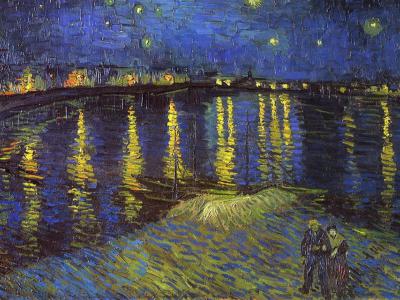
One of Vincent van Gogh's notable works, "Starry Night over the Rhône," holds a special place in art history. Before creating his renowned painting "Starry Night" in Saint-Rémy, van Gogh painted "Starry Night Over the Rhône" during his time in Arles. Van Gogh had a fondness for painting at night, and the clear skies of Provence provided him with the opportunity to indulge in this passion. However, the challenge for him was capturing the vivid colors he loved amidst the darkness. To overcome this, he reportedly devised clever solutions.
There are different accounts of how van Gogh managed to paint at night. Some suggest that he modified his straw hat, lining its brim with candles to provide additional light while he worked. However, attempting this technique ourselves would not be recommended. Another account mentions van Gogh writing to his brother about using a "gas jet," although the specifics of this method are unclear. Regardless of the exact means he employed, van Gogh was able to create his masterpieces under the enchanting starlight.
Today, visitors have the opportunity to stand in the very spot where Vincent van Gogh painted "Starry Night over the Rhône." The location is marked by one of the many metal easels set up by the city to offer guidance and context to visitors. These explanatory easels provide insight into the artist's process and help art enthusiasts appreciate the connection between the painting and its real-life setting.
By visiting the spot where van Gogh stood and taking in the view of the Rhône River under the starry sky, viewers can experience a unique connection to the artist and his work. Standing in that place, one can imagine the artist's passion for capturing the beauty of the night, the play of light on the water, and the ethereal glow of the stars above.
There are different accounts of how van Gogh managed to paint at night. Some suggest that he modified his straw hat, lining its brim with candles to provide additional light while he worked. However, attempting this technique ourselves would not be recommended. Another account mentions van Gogh writing to his brother about using a "gas jet," although the specifics of this method are unclear. Regardless of the exact means he employed, van Gogh was able to create his masterpieces under the enchanting starlight.
Today, visitors have the opportunity to stand in the very spot where Vincent van Gogh painted "Starry Night over the Rhône." The location is marked by one of the many metal easels set up by the city to offer guidance and context to visitors. These explanatory easels provide insight into the artist's process and help art enthusiasts appreciate the connection between the painting and its real-life setting.
By visiting the spot where van Gogh stood and taking in the view of the Rhône River under the starry sky, viewers can experience a unique connection to the artist and his work. Standing in that place, one can imagine the artist's passion for capturing the beauty of the night, the play of light on the water, and the ethereal glow of the stars above.

2) The Yellow House
The Yellow House is an iconic painting created by Vincent van Gogh. Painted in 1888, it depicts the right wing of 2 Place Lamartine in Arles, which served as van Gogh's residence for a period of time.
Van Gogh rented four rooms in the house on May 1, 1888, with the intention of using two large rooms on the ground floor as his workshop and kitchen. On the first floor, he occupied two smaller rooms that faced Place Lamartine. The window on the first floor, closest to the corner, and with both shutters open, belonged to van Gogh's guest room where his fellow artist Paul Gauguin lived for nine weeks starting from late October 1888. The following window, with partially closed shutters, belonged to van Gogh's own bedroom. The two smaller rooms at the back of the house were rented by van Gogh at a later time.
In the painting, van Gogh also indicated a nearby pink building, located on 28 Place Lamartine, which served as the restaurant where he frequently had his meals. This building was owned by Widow Venissac, who was not only van Gogh's landlady but also owned several of the other depicted buildings. To the right of the Yellow House, the Avenue Montmajour can be seen, leading to two railway bridges. Additionally, a ditch running along Avenue Montmajour is depicted, which served as the gas pipe that allowed van Gogh to install gas lighting in his workshop later on.
Although the actual Yellow House suffered heavy damage during World War II and was eventually destroyed, the location depicted in van Gogh's painting remains recognizable. The Yellow House holds immense historical and artistic significance, as it represents a pivotal period in van Gogh's life when he lived and worked alongside Gauguin, and it showcases his unique artistic style and use of vibrant colors.
Van Gogh rented four rooms in the house on May 1, 1888, with the intention of using two large rooms on the ground floor as his workshop and kitchen. On the first floor, he occupied two smaller rooms that faced Place Lamartine. The window on the first floor, closest to the corner, and with both shutters open, belonged to van Gogh's guest room where his fellow artist Paul Gauguin lived for nine weeks starting from late October 1888. The following window, with partially closed shutters, belonged to van Gogh's own bedroom. The two smaller rooms at the back of the house were rented by van Gogh at a later time.
In the painting, van Gogh also indicated a nearby pink building, located on 28 Place Lamartine, which served as the restaurant where he frequently had his meals. This building was owned by Widow Venissac, who was not only van Gogh's landlady but also owned several of the other depicted buildings. To the right of the Yellow House, the Avenue Montmajour can be seen, leading to two railway bridges. Additionally, a ditch running along Avenue Montmajour is depicted, which served as the gas pipe that allowed van Gogh to install gas lighting in his workshop later on.
Although the actual Yellow House suffered heavy damage during World War II and was eventually destroyed, the location depicted in van Gogh's painting remains recognizable. The Yellow House holds immense historical and artistic significance, as it represents a pivotal period in van Gogh's life when he lived and worked alongside Gauguin, and it showcases his unique artistic style and use of vibrant colors.

3) Arenes d'Arles (Arles Amphitheatre) (must see)
The Arles Amphitheatre is one of the most impressive Roman monuments in southern France and a powerful symbol of the city’s ancient past. Built around 90 AD during the reign of Emperor Domitian, it was designed as a grand arena for gladiatorial games and public spectacles that entertained the population of Roman Arles, then known as Arelate. With an elliptical shape stretching over 130 meters in length and seating for more than 20,000 spectators, the amphitheatre reflected the city’s status and prosperity within the Roman Empire.
Over the centuries, its role changed significantly. Following the fall of Rome, the amphitheatre was fortified and transformed into a small defensive town complete with homes, shops, and even two chapels built within its walls. By the Middle Ages, more than 200 houses filled the interior, creating a bustling community protected by the original Roman towers. It was only in the 19th century, thanks to the efforts of preservationists including the writer Prosper Mérimée, that the houses were removed and restoration began to reclaim the monument’s ancient form.
Those restauration efforts were not in vain, as the arena still enthralls audiences with bullfighting events, plays and concerts to this day. Moreover, its stairways and upper tiers double as panoramic platforms which allow for prefect views of the city’s rooftops, the Rhône River, and the distant Alpilles hills. Fair enough - its inscription on the UNESCO World Heritage List in 1981 is more than deserved.
Over the centuries, its role changed significantly. Following the fall of Rome, the amphitheatre was fortified and transformed into a small defensive town complete with homes, shops, and even two chapels built within its walls. By the Middle Ages, more than 200 houses filled the interior, creating a bustling community protected by the original Roman towers. It was only in the 19th century, thanks to the efforts of preservationists including the writer Prosper Mérimée, that the houses were removed and restoration began to reclaim the monument’s ancient form.
Those restauration efforts were not in vain, as the arena still enthralls audiences with bullfighting events, plays and concerts to this day. Moreover, its stairways and upper tiers double as panoramic platforms which allow for prefect views of the city’s rooftops, the Rhône River, and the distant Alpilles hills. Fair enough - its inscription on the UNESCO World Heritage List in 1981 is more than deserved.
4) Theatre Antique d'Arles (Ancient Theater of Arles) (must see)
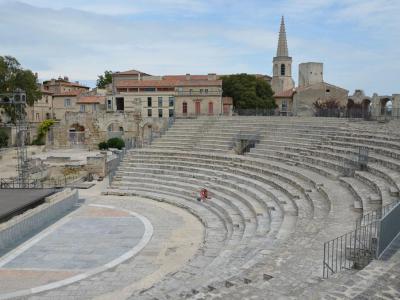
The Ancient Theater of Arles stands as one of the earliest monumental structures built in the city following its Roman colonization, around the late 1st century BC under Emperor Augustus. Designed to showcase drama, poetry, and public entertainment, the theatre could once welcome more than 8,000 spectators who gathered to enjoy performances celebrating Roman culture and civic unity. Although much of its original grandeur has faded over the centuries, the structure remains an essential reminder of Arles’s role as a thriving provincial center in the Roman Empire.
Like many ancient sites, the theatre suffered significant dismantling during the Middle Ages, when its stones were reused to construct churches and fortifications. Even so, several remarkable features endure, including the remnants of the seating area and the circular orchestra in front of the stage. The latter still bears traces of an altar dedicated to Apollo - adorned with swans, the emblem of Emperor Augustus - which once occupied its center.
However, the most alluring of elements is a pair of elegant marble columns still standing behind the stage - a stunning fragment of what was once a richly decorated stage backdrop. These columns became known as the “Two Widows,” much like two wives awaiting their lost husbands.
Today, the Ancient Theater blends heritage with living culture. From the end of June to the end of August, it hosts the Arles and Costume Festivals, the International Photography Meetings and the Peplum Film Festival. You are more than welcome to enjoy them just like the Romans once did - under the open Provençal sky.
Like many ancient sites, the theatre suffered significant dismantling during the Middle Ages, when its stones were reused to construct churches and fortifications. Even so, several remarkable features endure, including the remnants of the seating area and the circular orchestra in front of the stage. The latter still bears traces of an altar dedicated to Apollo - adorned with swans, the emblem of Emperor Augustus - which once occupied its center.
However, the most alluring of elements is a pair of elegant marble columns still standing behind the stage - a stunning fragment of what was once a richly decorated stage backdrop. These columns became known as the “Two Widows,” much like two wives awaiting their lost husbands.
Today, the Ancient Theater blends heritage with living culture. From the end of June to the end of August, it hosts the Arles and Costume Festivals, the International Photography Meetings and the Peplum Film Festival. You are more than welcome to enjoy them just like the Romans once did - under the open Provençal sky.

5) Marche d’Arles (Arles Market)
The Arles Market, or Marche d'Arles, is not only renowned as one of the most beautiful markets in Provence but also stands out as one of the largest in the region. Spanning an impressive length of over 2.5 kilometers, this vibrant market offers a wide variety of goods and delights to visitors.
The market takes place on both Wednesdays and Saturdays, each with its own designated location. On Wednesdays, the market stretches along Boulevard Émile-Combes, extending from Place Lamartine to the crossroads of La Croisière. On Saturdays, the bustling market can be found along Boulevards des Lices, Georges-Clemenceau, and Émile-Combes.
With approximately 450 stallholders on Saturdays and 300 on Wednesdays, the Arles Market presents an extensive selection of products to explore. From fresh fruits and vegetables to an assortment of cheeses, flowers, spices, meat, and fish, visitors can find an abundance of fresh produce and regional specialties. Olive oil, Arles sausage, Camargue rice, and tellines are just a few examples of the local delicacies available. Additionally, the market caters to a variety of needs beyond food, offering clothing, shoes, fabrics, crafts, and more.
The significance of the Arles Market can be traced back in history. In a letter dating back to 1584, Henri III confirmed the existence of the two weekly markets in Arles, specifically those held on Wednesdays and Saturdays. Even earlier, a 5th-century author described the market in Arles as a treasure trove of exotic goods. The market has since continued to thrive and evolve, showcasing a rich tradition and providing a vibrant atmosphere for locals and visitors alike.
The market takes place on both Wednesdays and Saturdays, each with its own designated location. On Wednesdays, the market stretches along Boulevard Émile-Combes, extending from Place Lamartine to the crossroads of La Croisière. On Saturdays, the bustling market can be found along Boulevards des Lices, Georges-Clemenceau, and Émile-Combes.
With approximately 450 stallholders on Saturdays and 300 on Wednesdays, the Arles Market presents an extensive selection of products to explore. From fresh fruits and vegetables to an assortment of cheeses, flowers, spices, meat, and fish, visitors can find an abundance of fresh produce and regional specialties. Olive oil, Arles sausage, Camargue rice, and tellines are just a few examples of the local delicacies available. Additionally, the market caters to a variety of needs beyond food, offering clothing, shoes, fabrics, crafts, and more.
The significance of the Arles Market can be traced back in history. In a letter dating back to 1584, Henri III confirmed the existence of the two weekly markets in Arles, specifically those held on Wednesdays and Saturdays. Even earlier, a 5th-century author described the market in Arles as a treasure trove of exotic goods. The market has since continued to thrive and evolve, showcasing a rich tradition and providing a vibrant atmosphere for locals and visitors alike.

6) Alyscamps
The Alyscamps, located just outside the old town of Arles, is a Roman necropolis and one of the most renowned burial grounds of the ancient world. Its name, Aliscamps, derived from the Provençal Occitan word, and the Latin Elisii Campi, translates to "Elysian Fields" or, in French, Champs-Élysées. This necropolis held great fame during the Middle Ages and found mention in literary works such as Ariosto's Orlando Furioso and Dante's Inferno.
During Roman times, cities typically prohibited burials within their walls. As a result, roads leading outside the city often featured tombs and mausoleums. The Alyscamps served as Arles' primary burial ground for approximately 1,500 years. Situated along the final stretch of the Aurelian Way, leading to the city gates, it became the resting place for affluent citizens. The memorials within the Alyscamps ranged from simple sarcophagi to elaborate monuments, reflecting the social status of the deceased. This historical significance led to the classification of the Alyscamps as a UNESCO World Heritage Site in 1981, as part of the Arles, Roman, and Romanesque Monuments group.
Vincent van Gogh, the famous Dutch painter, depicted the Alyscamps in four of his paintings during October 1888. This period coincided with Paul Gauguin's stay at the Yellow House in Arles. One of the paintings, titled "Les Alyscamps" or "Leaf Fall," adorned Gauguin's room. In a letter to his brother Theo, Vincent described one of the paintings:
"I think that you'd like the leaf-fall that I've done. It's lilac poplar trunks cut by the frame where the leaves begin. These tree-trunks, like pillars, line an avenue where old Roman tombs colored lilac-blue are lined up to right and left. Now the ground is covered as if by a carpet with a thick layer of orange and yellow leaves - fallen. Some are still falling, like snowflakes. And in the avenue dark figurines of lovers. The top of the painting is a very green meadow and no sky, or almost none."
Van Gogh's paintings capture the essence of the Alyscamps, depicting the rows of poplar trees with their trunks reaching skyward, framed by falling leaves. The lilac-blue Roman tombs line the avenue, while the ground is blanketed in a vibrant carpet of orange and yellow leaves. The presence of dark figurines of lovers evokes a sense of romance and mystery. The top of the painting portrays a lush green meadow, creating a vivid contrast with the absence of the sky.
During Roman times, cities typically prohibited burials within their walls. As a result, roads leading outside the city often featured tombs and mausoleums. The Alyscamps served as Arles' primary burial ground for approximately 1,500 years. Situated along the final stretch of the Aurelian Way, leading to the city gates, it became the resting place for affluent citizens. The memorials within the Alyscamps ranged from simple sarcophagi to elaborate monuments, reflecting the social status of the deceased. This historical significance led to the classification of the Alyscamps as a UNESCO World Heritage Site in 1981, as part of the Arles, Roman, and Romanesque Monuments group.
Vincent van Gogh, the famous Dutch painter, depicted the Alyscamps in four of his paintings during October 1888. This period coincided with Paul Gauguin's stay at the Yellow House in Arles. One of the paintings, titled "Les Alyscamps" or "Leaf Fall," adorned Gauguin's room. In a letter to his brother Theo, Vincent described one of the paintings:
"I think that you'd like the leaf-fall that I've done. It's lilac poplar trunks cut by the frame where the leaves begin. These tree-trunks, like pillars, line an avenue where old Roman tombs colored lilac-blue are lined up to right and left. Now the ground is covered as if by a carpet with a thick layer of orange and yellow leaves - fallen. Some are still falling, like snowflakes. And in the avenue dark figurines of lovers. The top of the painting is a very green meadow and no sky, or almost none."
Van Gogh's paintings capture the essence of the Alyscamps, depicting the rows of poplar trees with their trunks reaching skyward, framed by falling leaves. The lilac-blue Roman tombs line the avenue, while the ground is blanketed in a vibrant carpet of orange and yellow leaves. The presence of dark figurines of lovers evokes a sense of romance and mystery. The top of the painting portrays a lush green meadow, creating a vivid contrast with the absence of the sky.

7) Espace Van Gogh
Espace Van Gogh holds historical significance as the former main hospital of the city. Dating back to the sixteenth century, the building served as Arles' primary medical institution until the twentieth century. However, its fame is largely associated with the time Vincent van Gogh spent here after the infamous incident of cutting off his left earlobe in December 1888.
The courtyard of Espace Van Gogh has been meticulously landscaped to resemble van Gogh's renowned painting, "The Courtyard of the Hospital." This artistic recreation adds to the allure of the site, providing visitors with a visual connection to van Gogh's artistic interpretation.
On 23 December 1888, Vincent van Gogh was admitted to the hospital in Arles following the episode of self-mutilation. Recognizing the need for specialized psychiatric care, Dr. Rey advocated for Vincent's transfer to an asylum in Marseille or Aix-en-Provence. The hospital in Arles primarily treated his physical injuries and was ill-equipped to address his mental health issues. However, in a surprising turn of events, Vincent's condition improved significantly in early January 1889, and he was allowed to return home for short periods of time. Feeling better, he resumed his passion for painting, creating artworks such as a portrait of Dr. Rey, which he presented as a memento to the doctor.
Unfortunately, Vincent suffered another bout of mental instability within a month, firmly believing he had been poisoned. He was readmitted to the hospital on 7 February and placed in isolation once again. Vincent remained in the hospital until early May, experiencing periods of lucidity that allowed him to paint outdoors. These artistic endeavors resulted in numerous landscapes and notable works such as "Ward in the Hospital" and "The Courtyard of the Hospital." On occasion, Vincent was granted permission to venture into town, particularly when his friend Paul Signac came to visit.
Today, the complex has been repurposed and houses the town library, exhibition spaces, souvenir shops, and a café. It offers a multifaceted experience where visitors can explore the rich history of the building while immersing themselves in various cultural activities.
The courtyard of Espace Van Gogh has been meticulously landscaped to resemble van Gogh's renowned painting, "The Courtyard of the Hospital." This artistic recreation adds to the allure of the site, providing visitors with a visual connection to van Gogh's artistic interpretation.
On 23 December 1888, Vincent van Gogh was admitted to the hospital in Arles following the episode of self-mutilation. Recognizing the need for specialized psychiatric care, Dr. Rey advocated for Vincent's transfer to an asylum in Marseille or Aix-en-Provence. The hospital in Arles primarily treated his physical injuries and was ill-equipped to address his mental health issues. However, in a surprising turn of events, Vincent's condition improved significantly in early January 1889, and he was allowed to return home for short periods of time. Feeling better, he resumed his passion for painting, creating artworks such as a portrait of Dr. Rey, which he presented as a memento to the doctor.
Unfortunately, Vincent suffered another bout of mental instability within a month, firmly believing he had been poisoned. He was readmitted to the hospital on 7 February and placed in isolation once again. Vincent remained in the hospital until early May, experiencing periods of lucidity that allowed him to paint outdoors. These artistic endeavors resulted in numerous landscapes and notable works such as "Ward in the Hospital" and "The Courtyard of the Hospital." On occasion, Vincent was granted permission to venture into town, particularly when his friend Paul Signac came to visit.
Today, the complex has been repurposed and houses the town library, exhibition spaces, souvenir shops, and a café. It offers a multifaceted experience where visitors can explore the rich history of the building while immersing themselves in various cultural activities.

8) Cloitre Saint-Trophime (St. Trophime Cloister) (must see)
The Cloister of Saint Trophime in Arles is one of the finest examples of Romanesque and early Gothic architecture in southern France, offering visitors a peaceful retreat steeped in art and spirituality. Built between the 12th and 14th centuries, it adjoins the Church of Saint Trophime, which was once the cathedral of Arles. The cloister served as the residence and contemplative space for the cathedral’s canons, providing a serene environment for prayer, study, and reflection.
What makes the Saint Trophime Cloister particularly exceptional is its remarkable sculptural decoration. Each gallery is adorned with intricately carved capitals and reliefs depicting biblical narratives, saints, and symbolic motifs that illustrate the transition from Romanesque to Gothic art. Visitors can observe this evolution firsthand: the older northern and eastern galleries feature rounded Romanesque arches, while the later southern and western galleries display the pointed arches characteristic of the Gothic style.
Unusually, the cloister connects to the church’s choir by a staircase of twenty-five steps - a rare arrangement, as cloisters are typically accessed from the nave or transept. Despite this distinctive layout, the cloister’s significance has long been recognized: it was designated a historic monument in 1846 and, like the Arles Obelisk, was inscribed on the UNESCO World Heritage list in 1981.
Beyond its artistic beauty, the cloister holds deep historical resonance. It was here that ecclesiastical councils were held and important decisions shaping the city’s spiritual life were made. Today, the site exudes an atmosphere of timeless calm, perfect for its meditative purposes. Go ahead and feel the silence yourself, but everyone has to work for it. Those steps will not climb themselves.
What makes the Saint Trophime Cloister particularly exceptional is its remarkable sculptural decoration. Each gallery is adorned with intricately carved capitals and reliefs depicting biblical narratives, saints, and symbolic motifs that illustrate the transition from Romanesque to Gothic art. Visitors can observe this evolution firsthand: the older northern and eastern galleries feature rounded Romanesque arches, while the later southern and western galleries display the pointed arches characteristic of the Gothic style.
Unusually, the cloister connects to the church’s choir by a staircase of twenty-five steps - a rare arrangement, as cloisters are typically accessed from the nave or transept. Despite this distinctive layout, the cloister’s significance has long been recognized: it was designated a historic monument in 1846 and, like the Arles Obelisk, was inscribed on the UNESCO World Heritage list in 1981.
Beyond its artistic beauty, the cloister holds deep historical resonance. It was here that ecclesiastical councils were held and important decisions shaping the city’s spiritual life were made. Today, the site exudes an atmosphere of timeless calm, perfect for its meditative purposes. Go ahead and feel the silence yourself, but everyone has to work for it. Those steps will not climb themselves.
9) Cathedrale Saint-Trophime d'Arles (St. Trophime Cathedral) (must see)
The Cathedral of Saint Trophime in Arles is one of the greatest masterpieces of Romanesque architecture in Provence and a highlight for any visitor to the city. Dedicated to Saint Trophimus, the first bishop of Arles and a key figure in the Christianization of the Gauls, the cathedral was built between the 12th and 15th centuries on the site of an earlier church. For centuries, it served as the seat of the archbishops of Arles and as an important stop along the pilgrimage route to Santiago de Compostela, contributing significantly to its artistic and religious prominence.
The main historical event connected to the Cathedral is the coronation of Holy Roman Emperor Frederick Barbarossa as king of Burgundy in 1178. Back then, it was a strategical move, as the newly crowned king was looking to consolidate his position following a series of defeats to the Lombard League.
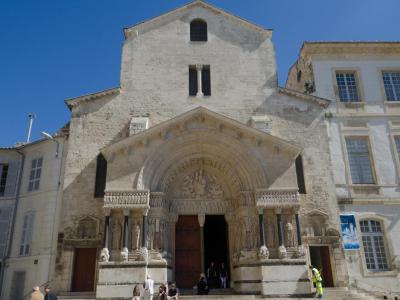
The most celebrated feature of Saint Trophime is its magnificent Romanesque portal, sculpted around 1180. The façade depicts the Last Judgment, with Christ in Majesty surrounded by apostles, angels, and symbolic creatures - a stunning display of medieval craftsmanship. The detailed carvings make the portal one of the finest in France.
Inside, the cathedral’s austere Romanesque nave gives way to Gothic additions made in later centuries, creating a harmonious blend of styles. The church also holds a rich history of ecclesiastical councils, royal visits, and religious ceremonies that reflect Arles’s influence as a spiritual center during the Middle Ages.
For visitors today, Saint Trophime offers more than architectural beauty - it provides a window into the medieval soul of Arles. Customary to Arles's monuments, the Cathedral was listed as a UNESCO World Heritage Site in 1981.
The main historical event connected to the Cathedral is the coronation of Holy Roman Emperor Frederick Barbarossa as king of Burgundy in 1178. Back then, it was a strategical move, as the newly crowned king was looking to consolidate his position following a series of defeats to the Lombard League.
The most celebrated feature of Saint Trophime is its magnificent Romanesque portal, sculpted around 1180. The façade depicts the Last Judgment, with Christ in Majesty surrounded by apostles, angels, and symbolic creatures - a stunning display of medieval craftsmanship. The detailed carvings make the portal one of the finest in France.
Inside, the cathedral’s austere Romanesque nave gives way to Gothic additions made in later centuries, creating a harmonious blend of styles. The church also holds a rich history of ecclesiastical councils, royal visits, and religious ceremonies that reflect Arles’s influence as a spiritual center during the Middle Ages.
For visitors today, Saint Trophime offers more than architectural beauty - it provides a window into the medieval soul of Arles. Customary to Arles's monuments, the Cathedral was listed as a UNESCO World Heritage Site in 1981.
10) Cafe Van Gogh
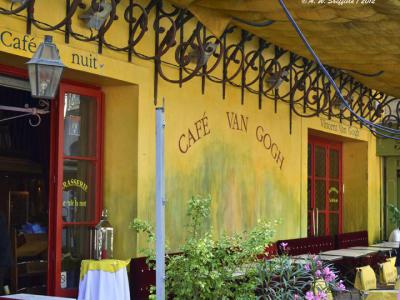
Café Le Soir, holds a special place in art history, particularly due to its association with Vincent van Gogh. The café, currently named "Van Gogh," is situated in the Place du Forum, which has a rich historical significance dating back to the Middle Ages.
The Place du Forum has a dark past, having been the site of capital executions during medieval times. However, it gained artistic renown through van Gogh's iconic 1888 painting, "Café Terrace at Night." The painting depicts the nocturnal terrace of the café, which closely resembles Café Le Soir as it appears today. Interestingly, the café underwent renovations in the 1990s, during which it was repainted yellow to accentuate its resemblance to van Gogh's artwork. This choice aimed to recreate the same ambiance depicted in the painting, as it is likely that the café had a yellow appearance at night due to the lighting conditions of the time.
For those who appreciate art and history, Café Le Soir in Arles offers a unique opportunity to step into van Gogh's world by immersing oneself in the same setting that inspired the artist.
The Place du Forum has a dark past, having been the site of capital executions during medieval times. However, it gained artistic renown through van Gogh's iconic 1888 painting, "Café Terrace at Night." The painting depicts the nocturnal terrace of the café, which closely resembles Café Le Soir as it appears today. Interestingly, the café underwent renovations in the 1990s, during which it was repainted yellow to accentuate its resemblance to van Gogh's artwork. This choice aimed to recreate the same ambiance depicted in the painting, as it is likely that the café had a yellow appearance at night due to the lighting conditions of the time.
For those who appreciate art and history, Café Le Soir in Arles offers a unique opportunity to step into van Gogh's world by immersing oneself in the same setting that inspired the artist.
