Custom Walk in Minneapolis, Minnesota by ian0923_46772 created on 2025-04-21
Guide Location: USA » Minneapolis
Guide Type: Custom Walk
# of Sights: 14
Tour Duration: 3 Hour(s)
Travel Distance: 5.6 Km or 3.5 Miles
Share Key: GX37M
Guide Type: Custom Walk
# of Sights: 14
Tour Duration: 3 Hour(s)
Travel Distance: 5.6 Km or 3.5 Miles
Share Key: GX37M
How It Works
Please retrieve this walk in the GPSmyCity app. Once done, the app will guide you from one tour stop to the next as if you had a personal tour guide. If you created the walk on this website or come to the page via a link, please follow the instructions below to retrieve the walk in the app.
Retrieve This Walk in App
Step 1. Download the app "GPSmyCity: Walks in 1K+ Cities" on Apple App Store or Google Play Store.



Step 2. In the GPSmyCity app, download(or launch) the guide "Minneapolis Map and Walking Tours".
Step 3. Tap the menu button located at upper right corner of the "Walks" screen and select "Retrieve custom walk". Enter the share key: GX37M
1) Minneapolis Sculpture Garden (must see)
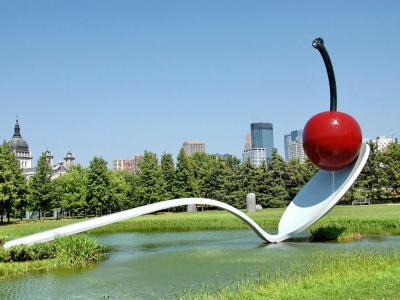
Directly across the street from the Walker Art Center, the Minneapolis Sculpture Garden claims the title of the world’s largest urban sculpture park. Spanning 11 acres (45,000 square meters), this green oasis once served as a military drill ground, but it now showcases an impressive collection of around 40 modern and contemporary artworks. The most photographed-and perhaps most beloved-piece is undoubtedly Claes Oldenburg and Coosje van Bruggen’s “Spoonbridge and Cherry”, a whimsical, oversized spoon delicately balancing a bright red cherry. There’s also “Hahn/Cock”, a strikingly blue rooster that stands proud, nearly daring visitors to snap its photo against the backdrop of the downtown Minneapolis skyline and the magnificent Basilica of Saint Mary.
Even better, admission to the Sculpture Garden is absolutely free. Come rain, shine, or snow, you can wander the grounds every single day of the year. Beyond the outdoor sculptures, the Garden also offers the delights of the Cowles Conservatory-an indoor sanctuary that features tropical flora, a lush escape from the chilly Minnesota winters, and, of course, art. Inside, you’ll find Frank Gehry’s dazzling “Standing Glass Fish”-proof that art and nature aren’t just neighbors here; they’re inextricably entwined.
Pro tip: When you’re ready to keep the art-inspired stroll going, make your way across the brightly-hued Irene Hixon Whitney Bridge over Hennepin Avenue to Loring Park. Once there, meander through the park’s tree-lined paths while taking in more art and nature. Feeling peckish? Head to Café and Bar Lurcat for a dining experience that’s as refined as it is relaxed.
Even better, admission to the Sculpture Garden is absolutely free. Come rain, shine, or snow, you can wander the grounds every single day of the year. Beyond the outdoor sculptures, the Garden also offers the delights of the Cowles Conservatory-an indoor sanctuary that features tropical flora, a lush escape from the chilly Minnesota winters, and, of course, art. Inside, you’ll find Frank Gehry’s dazzling “Standing Glass Fish”-proof that art and nature aren’t just neighbors here; they’re inextricably entwined.
Pro tip: When you’re ready to keep the art-inspired stroll going, make your way across the brightly-hued Irene Hixon Whitney Bridge over Hennepin Avenue to Loring Park. Once there, meander through the park’s tree-lined paths while taking in more art and nature. Feeling peckish? Head to Café and Bar Lurcat for a dining experience that’s as refined as it is relaxed.
2) Walker Art Center
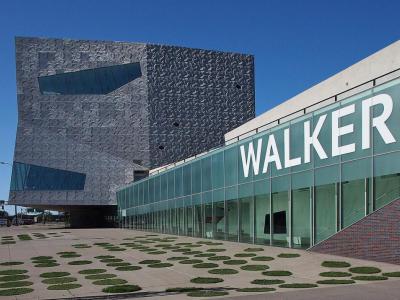
The Walker Art Center has been a Minneapolis cultural cornerstone since 1940, offering 11 galleries of modern and contemporary art, the Walker Cinema, and the McGuire Theater. Its mix of permanent collections, rotating exhibits, and interdisciplinary programming makes it a must-see for anyone craving a hit of creative inspiration. Between the rooftop terrace, plazas, and sculpture-dotted gardens, you can take in the art or simply kick back and enjoy the ambiance. Plus, the Walker regularly hosts classes, workshops, performances, and screenings, so you’ll never run out of things to do. Bonus? Free gallery admission every Thursday evening and the first Saturday of every month-because who says the best things in life aren’t free?
Pro tip: Treat yourself to a culinary side quest at Cardamom, the Walker’s on-site eatery that’s so much more than “just a museum restaurant”. Helmed by Minneapolis chefs Daniel del Prado and Shawn McKenzie, this Aegean-Mediterranean-inspired spot boasts a menu that’s as artful as the exhibits. Add in sleek modern décor and a wall of glass offering stunning views, and you’ve got a dining experience that’s a masterpiece in its own right.
Pro tip: Treat yourself to a culinary side quest at Cardamom, the Walker’s on-site eatery that’s so much more than “just a museum restaurant”. Helmed by Minneapolis chefs Daniel del Prado and Shawn McKenzie, this Aegean-Mediterranean-inspired spot boasts a menu that’s as artful as the exhibits. Add in sleek modern décor and a wall of glass offering stunning views, and you’ve got a dining experience that’s a masterpiece in its own right.
3) St. Mark's Episcopal Cathedral
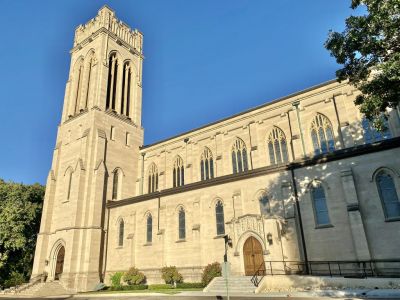
Saint Mark’s Episcopal Cathedral, one of Minnesota’s two Episcopal cathedrals, began humbly in 1858 as a tiny wooden church in North Minneapolis, originally a mission of downtown’s Gethsemane parish. The congregation quickly realized their modest 18-by-45-foot building was too snug, and so the church embarked on a series of relocations. In 1863, it famously hitched a ride on a sled pulled by thirty-three oxen to a new plot donated in the city center. As the city’s land prices climbed, the church shifted several more times before settling into its home on Hennepin Avenue in 1910, overlooking Loring Park. Architect Edwin Hawley Hewitt-a parishioner himself-designed this new structure. The cornerstone was laid in November 1908, and the Parish House went up first, temporarily doubling as the worship space until the main cathedral was ready. By the 1930s, Bishop Samuel Cook Edsall had moved to Minneapolis and was already referring to Saint Mark’s as a “Pro-Cathedral.”
Official cathedral status arrived in 1941, and Saint Mark’s wasted no time making history. In 1954, it hosted the first-ever World Congress of the Anglican Communion outside the UK. The 1976 General Convention, which gave the nod to ordaining women priests and introduced the current Book of Common Prayer, also took place here. Saint Mark’s later found itself in the spotlight again in 2003, when the General Convention confirmed the Episcopal Church’s first openly gay, noncelibate bishop.
Music, meanwhile, has remained at the heart of Saint Mark’s identity. The cathedral is home to a vibrant music program that includes the Cathedral Choir, the Cathedral Choristers, and the Small Singers, as well as the Cathedral Choral Society, which welcomes singers from both the congregation and the broader community. In 2012, the pipe organ underwent a major overhaul, ensuring the music ministry stayed in top form. The Saint Mark’s Music Series offers an eclectic range of concerts, recitals, and performances featuring the Cathedral Choir, Choral Society, Canon Musician Raymond Johnston, and a host of talented guest artists.
Official cathedral status arrived in 1941, and Saint Mark’s wasted no time making history. In 1954, it hosted the first-ever World Congress of the Anglican Communion outside the UK. The 1976 General Convention, which gave the nod to ordaining women priests and introduced the current Book of Common Prayer, also took place here. Saint Mark’s later found itself in the spotlight again in 2003, when the General Convention confirmed the Episcopal Church’s first openly gay, noncelibate bishop.
Music, meanwhile, has remained at the heart of Saint Mark’s identity. The cathedral is home to a vibrant music program that includes the Cathedral Choir, the Cathedral Choristers, and the Small Singers, as well as the Cathedral Choral Society, which welcomes singers from both the congregation and the broader community. In 2012, the pipe organ underwent a major overhaul, ensuring the music ministry stayed in top form. The Saint Mark’s Music Series offers an eclectic range of concerts, recitals, and performances featuring the Cathedral Choir, Choral Society, Canon Musician Raymond Johnston, and a host of talented guest artists.
4) Basilica of St. Mary (must see)
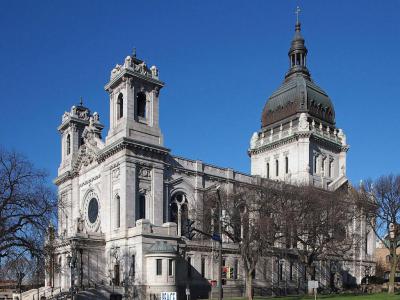
The Basilica of Saint Mary, one of the finest Neoclassical Beaux-Arts creations in the U.S., was quite the million-dollar project. Archbishop John Ireland tapped Emmanuel Louis Masqueray, a French-trained architectural wizard fresh off designing the 1904 Saint Louis World’s Fair, to give the building its flair. Masqueray, a Renaissance and Baroque enthusiast, got to work in 1907. But between World War I stretching resources thin and Masqueray’s untimely passing in 1917, it wasn’t until 1926 that the Basilica reached its full glory. Pope Pius XI later crowned it the first Basilica in North America, and it joined the National Register of Historic Places in 1975.
This architectural wonder is admired for three main reasons: its stellar design and Baroque influence, its role in Minnesota’s religious history, and, of course, its groundbreaking status as the first U.S. basilica. Inside, visitors can marvel at the dazzling stained-glass windows (completed in 1924) and a permanent art collection filled with sculptures and paintings.
But to most Minneapolitans, the Basilica is also home to something a bit less traditional: the Basilica Block Party, the city’s beloved late-summer celebration of alt-rock and community spirit.
This architectural wonder is admired for three main reasons: its stellar design and Baroque influence, its role in Minnesota’s religious history, and, of course, its groundbreaking status as the first U.S. basilica. Inside, visitors can marvel at the dazzling stained-glass windows (completed in 1924) and a permanent art collection filled with sculptures and paintings.
But to most Minneapolitans, the Basilica is also home to something a bit less traditional: the Basilica Block Party, the city’s beloved late-summer celebration of alt-rock and community spirit.
5) Orpheum Theatre
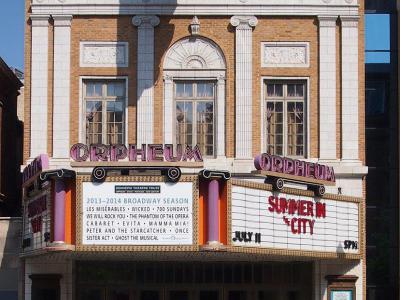
The Orpheum is a star in Hennepin Avenue’s lineup of restored historic venues, standing proudly alongside the Pantages, State, and Shubert (now Goodale) theaters. Opened in 1921, this theater was built to dazzle, welcoming 2,600 eager patrons for vaudeville acts and live performances. In true showbiz fashion, it even came outfitted with a dedicated elevator-not for performers or sets, mind you, but for the animal stars of the era’s grand touring productions.
Over the decades, the Orpheum has staged everything from Big Band concerts to Broadway tours. Its design is as grand as its legacy. The lobby, with its long, slender layout, connects a narrow Hennepin Avenue entrance to the set-back auditorium, which sits parallel to Hawthorne Avenue. Inside, you’ll find terra cotta bas relief sculptures in the lobby, a ceiling dome adorned with 30,000 aluminum leaf squares, and plasterwork so ornate it might make a wedding cake jealous. The theater seats 1,500 on the main floor and another 1,100 in the three-level balcony.
Pro tip: Make your Orpheum visit even more legendary by stopping by the nearby Jack Link’s Legend Lounge. It’s a swanky spot for theatergoers, offering specialty cocktails, wine, beer, non-alcoholic options, and protein snacks. The lounge opens 90 minutes before each show, giving you plenty of time to sip and snack before the curtain rises.
Over the decades, the Orpheum has staged everything from Big Band concerts to Broadway tours. Its design is as grand as its legacy. The lobby, with its long, slender layout, connects a narrow Hennepin Avenue entrance to the set-back auditorium, which sits parallel to Hawthorne Avenue. Inside, you’ll find terra cotta bas relief sculptures in the lobby, a ceiling dome adorned with 30,000 aluminum leaf squares, and plasterwork so ornate it might make a wedding cake jealous. The theater seats 1,500 on the main floor and another 1,100 in the three-level balcony.
Pro tip: Make your Orpheum visit even more legendary by stopping by the nearby Jack Link’s Legend Lounge. It’s a swanky spot for theatergoers, offering specialty cocktails, wine, beer, non-alcoholic options, and protein snacks. The lounge opens 90 minutes before each show, giving you plenty of time to sip and snack before the curtain rises.
6) Nicollet
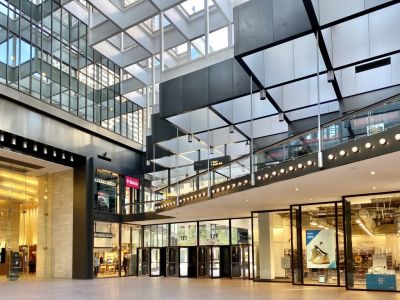
The Nicollet (formerly Nicollet Mall) has long been downtown Minneapolis’s go-to hub for shopping and entertainment. With its recent glow-up, it’s become even more inviting for visitors, local workers, and city dwellers. Motor vehicles are limited to buses and taxis, leaving this mile-long pedestrian-friendly stretch to flaunt its sidewalk cafés, art installations, greenery, and a medley of shops.
Look up, and you’ll spot the famed Minneapolis Skyway System-9.5 miles of weatherproof passageways connecting 80 city blocks. This elevated urban maze isn’t just practical; it’s a destination in itself. You can grab a bite, shop, or take a stroll to major venues like Orchestra Hall, Target Center, U.S. Bank Stadium, and more-all without stepping outdoors. Nicollet’s skyway access points include the iconic Crystal Court in the IDS Center (downtown’s tallest building) and the flagship Target store at Nicollet and 9th Street.
On the ground, a string of sidewalk patios beckons you to relax, sip a drink, and watch the world go by-minus the clamor of traffic.
Pro tip: If you’re seeking a warm, cozy skyway spot, head to Come Pho Soup-a French-Vietnamese fusion restaurant that serves steaming pho bowls (including a DIY option) and hearty Banh Mi sandwiches. Craving a sweet treat? Cardigan Donuts, found in both the IDS Tower and City Center, whips up a unique donut flavor each week and offers coffee, tea, yogurt bowls, and even ice cream.
Look up, and you’ll spot the famed Minneapolis Skyway System-9.5 miles of weatherproof passageways connecting 80 city blocks. This elevated urban maze isn’t just practical; it’s a destination in itself. You can grab a bite, shop, or take a stroll to major venues like Orchestra Hall, Target Center, U.S. Bank Stadium, and more-all without stepping outdoors. Nicollet’s skyway access points include the iconic Crystal Court in the IDS Center (downtown’s tallest building) and the flagship Target store at Nicollet and 9th Street.
On the ground, a string of sidewalk patios beckons you to relax, sip a drink, and watch the world go by-minus the clamor of traffic.
Pro tip: If you’re seeking a warm, cozy skyway spot, head to Come Pho Soup-a French-Vietnamese fusion restaurant that serves steaming pho bowls (including a DIY option) and hearty Banh Mi sandwiches. Craving a sweet treat? Cardigan Donuts, found in both the IDS Tower and City Center, whips up a unique donut flavor each week and offers coffee, tea, yogurt bowls, and even ice cream.
7) Foshay Tower
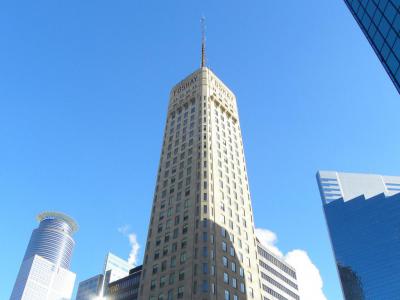
Rising 447 feet over downtown Minneapolis, the Foshay Tower is a one-of-a-kind Art Deco marvel turned luxury hotel. Once the crown jewel of Wilbur Foshay’s short-lived utilities empire, this Washington Monument-inspired skyscraper offers a museum, a rooftop deck with panoramic views, and a rich history of gangsters, tycoons, and rock stars.
Saved from demolition in the 1970s and reborn as a luxury hotel in 2008, the Foshay mixes timeless elegance with modern flair. In the lobby, Italian neon casts a rosy glow over the 1930s grandeur, while high-back leather chairs and towering palms set the scene for the ultimate mingle spot. Guests sip artisan cocktails at a sleek marble bar beneath a cascade of shimmering blue glass beads, proving that history and modern flair go hand in hand.
Manny’s Steakhouse, a Twin Cities dining legend, tempts visitors with James Beard Award-winning steaks, while the Prohibition Bar on the 27th and 28th floors serves up cocktails in a cozy, wood-paneled library with stunning skyline views.
For a laid-back meal, Keys at the Foshay, conveniently located on the ground floor, serves up hearty, family-friendly dishes. This adds to the Foshay Tower’s charm as a unique combination of historic landmark, food lover’s destination, and refined urban retreat.
Saved from demolition in the 1970s and reborn as a luxury hotel in 2008, the Foshay mixes timeless elegance with modern flair. In the lobby, Italian neon casts a rosy glow over the 1930s grandeur, while high-back leather chairs and towering palms set the scene for the ultimate mingle spot. Guests sip artisan cocktails at a sleek marble bar beneath a cascade of shimmering blue glass beads, proving that history and modern flair go hand in hand.
Manny’s Steakhouse, a Twin Cities dining legend, tempts visitors with James Beard Award-winning steaks, while the Prohibition Bar on the 27th and 28th floors serves up cocktails in a cozy, wood-paneled library with stunning skyline views.
For a laid-back meal, Keys at the Foshay, conveniently located on the ground floor, serves up hearty, family-friendly dishes. This adds to the Foshay Tower’s charm as a unique combination of historic landmark, food lover’s destination, and refined urban retreat.
8) Westminster Presbyterian Church
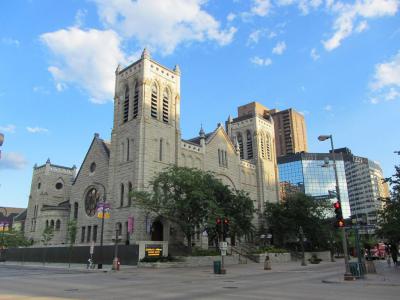
Westminster Presbyterian Church has played a real-life game of musical chairs in downtown Minneapolis, shifting locations three times in its 140-plus-year history. The congregation started small in 1857, just eight folks of Scottish, Irish, and Welsh descent. By 1860, they built their first church, but growth came fast, leaving them with a holy problem: not enough pews. In 1883, a bigger church was underway. Sadly, that second building had an all-too-fiery demise, leading the congregation to rebuild once more-this time at Twelfth Street and Nicollet Mall. The current church opened its doors in 1897, with a design cooked up by two Minneapolis architecture big shots, Warren H. Hayes and Charles S. Sedgwick. A century later, in 1998, the congregation gave the sanctuary a $3.5 million glow-up, restoring original design elements, boosting lighting and sound, and generally sprucing the place up.
But Westminster isn’t just about history-it’s also pretty slick when it comes to modern eco-friendly upgrades. In 2018, the church installed a stormwater reuse system so innovative it might make a hydrologist shed a single tear of joy. Rainwater from over 13,000 square feet of rooftop is gathered into six massive tanks tucked beneath the parking garage. Instead of letting it go to waste, the church puts that water to work-flushing toilets, irrigating plants, and even feeding a fancy fountain on Nicollet Mall. The system is estimated to save 122,400 gallons of potable water annually, and a snazzy permeable-paver plaza with a snowmelt system keeps everything looking sharp year-round. It’s a shining example of treating stormwater as a resource, and the thousands of people who pass by daily can check out visual displays to learn more. Who says an old church can’t teach a few new tricks?
But Westminster isn’t just about history-it’s also pretty slick when it comes to modern eco-friendly upgrades. In 2018, the church installed a stormwater reuse system so innovative it might make a hydrologist shed a single tear of joy. Rainwater from over 13,000 square feet of rooftop is gathered into six massive tanks tucked beneath the parking garage. Instead of letting it go to waste, the church puts that water to work-flushing toilets, irrigating plants, and even feeding a fancy fountain on Nicollet Mall. The system is estimated to save 122,400 gallons of potable water annually, and a snazzy permeable-paver plaza with a snowmelt system keeps everything looking sharp year-round. It’s a shining example of treating stormwater as a resource, and the thousands of people who pass by daily can check out visual displays to learn more. Who says an old church can’t teach a few new tricks?
9) Wesley United Methodist Church
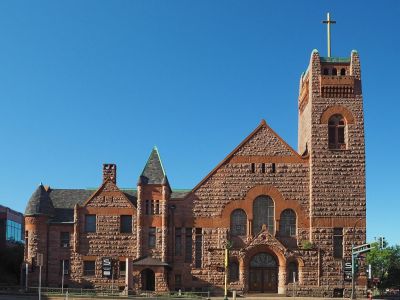
A Richardsonian Romanesque classic made of granite, brick, and sandstone, topped off with round-arched windows and a healthy serving of towers, Wesley United rose during Minneapolis’ late-19th-century building boom, gracing the leafy residential streets of Loring Park at 101 Grant Street East. Warren H. Hayes, the city’s go-to church architect of the era, lent his expertise to the project. Hayes was already renowned for designs like the Calvary Baptist Church, Fowler Methodist Episcopal Church, and the First Congregational Church in Minneapolis, as well as the Central Presbyterian Church over in Saint Paul. These days, the church has been dwarfed by the hulking Minneapolis Convention Center, casting a modern shadow over its historic charm.
In 1968, the church acquired its current moniker, Wesley United Methodist Church, following the union of the Methodist Episcopal Church and the Evangelical United Brethren Church. By 2010, the Preservation Alliance of Minnesota deemed it one of the state’s 10 Most Endangered Historic Places. Despite that designation, the building is still buzzing with life. It’s now home to Substance Church, a nondenominational, Evangelical megachurch known for mixing ultra-modern worship styles with small-group “cell” ministry and a relaxed “café church” vibe-all under the megachurch umbrella. Outreach Magazine even ranked Substance as the 21st fastest-growing congregation in the United States in 2010 (and 8th for growth percentage). Thanks to its trendsetting blend of contemporary methods, Substance Church continues to bring fresh energy to this historic space.
In 1968, the church acquired its current moniker, Wesley United Methodist Church, following the union of the Methodist Episcopal Church and the Evangelical United Brethren Church. By 2010, the Preservation Alliance of Minnesota deemed it one of the state’s 10 Most Endangered Historic Places. Despite that designation, the building is still buzzing with life. It’s now home to Substance Church, a nondenominational, Evangelical megachurch known for mixing ultra-modern worship styles with small-group “cell” ministry and a relaxed “café church” vibe-all under the megachurch umbrella. Outreach Magazine even ranked Substance as the 21st fastest-growing congregation in the United States in 2010 (and 8th for growth percentage). Thanks to its trendsetting blend of contemporary methods, Substance Church continues to bring fresh energy to this historic space.
10) Central Lutheran Church
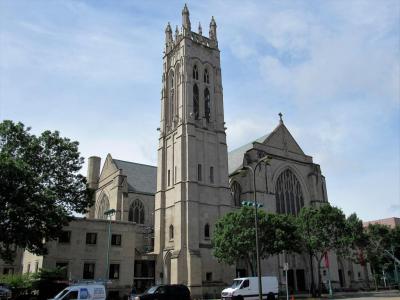
Towering proudly above the freeway commotion, Central Lutheran Church stands as a stone sentinel welcoming all who enter downtown Minneapolis. Its roots trace back to a group of Norwegian-American laymen who, fresh off the turmoil of World War I, envisioned a new kind of church. This wasn’t just any congregation-it was a bold leap into “American Lutheranism,” where services were conducted entirely in English. Back in 1919, when Norwegian was still the norm, this shift was nothing short of revolutionary.
Under the leadership of their first pastor, J.A.O. Stub, the church’s original twelve families blossomed into more than 200 in just one year. Outgrowing their rented digs at the old Central Baptist Church, they broke ground on their current home in 1926, dedicating it two years later. Membership kept climbing, hitting 5,000 by the 1950s and soaring past 6,000 in the late ’60s.
But Central wasn’t just about big numbers or eye-catching architecture. They quickly turned their focus outward, becoming pioneers in religious radio broadcasts as early as 1922 and eventually earning national recognition for their creative advertising campaigns aimed at kids. Partnering with the Urban Communities Association, they lent a hand to refugees and low-income residents, helping them become proud, self-reliant members of the community. Through it all, Central Lutheran made sure they weren’t just a landmark you could see from the highway-they were a meaningful presence in the heart of the city.
Under the leadership of their first pastor, J.A.O. Stub, the church’s original twelve families blossomed into more than 200 in just one year. Outgrowing their rented digs at the old Central Baptist Church, they broke ground on their current home in 1926, dedicating it two years later. Membership kept climbing, hitting 5,000 by the 1950s and soaring past 6,000 in the late ’60s.
But Central wasn’t just about big numbers or eye-catching architecture. They quickly turned their focus outward, becoming pioneers in religious radio broadcasts as early as 1922 and eventually earning national recognition for their creative advertising campaigns aimed at kids. Partnering with the Urban Communities Association, they lent a hand to refugees and low-income residents, helping them become proud, self-reliant members of the community. Through it all, Central Lutheran made sure they weren’t just a landmark you could see from the highway-they were a meaningful presence in the heart of the city.
11) Gethsemane Episcopal Church
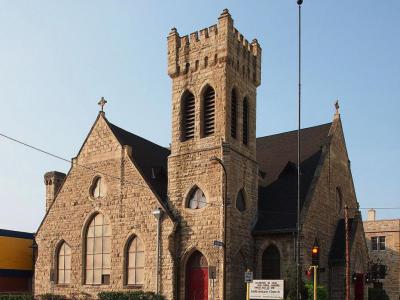
After three years of planning, the Gethsemane Episcopal Church threw open its Gothic doors in 1884. Founded in 1856, it began life as a simple, humble gathering in the first building in town created solely for worship. But as the years turned, so did the times. By the fall of 2019, this historic house of faith held its last service-closing a chapter that started in a fledgling town and ended amid the steel and glass of one of America’s major urban hubs.
Gethsemane’s story mirrored the explosive growth of Minneapolis itself, riding the wave of the city’s flour-fueled expansion. Flour power was the name of the game: starting in the 1850s and reaching its peak between 1880 and 1930, Minneapolis led the nation in production, earning the moniker “Mill City.” With that flour boom came a population boom-Minneapolis swelled from 13,000 souls in 1870 to a bustling 165,000 by 1890. All those newcomers needed spiritual sustenance, and Gethsemane thrived. By 1881, plans were drawn up for a grander, more permanent sanctuary, which still stands today as a historic landmark.
Edward S. Stebbins, a local architectural hotshot, envisioned Gethsemane as a Gothic homage to rural English churches, with a cozy, castle-like design that emphasized width over height. The square tower was a bold departure from typical church styles of the time, though it proved to be ahead of its time, as this approach gained popularity in the early 20th century. Inside, the open-truss roof and graceful stained-glass windows-one of which features a Louis Tiffany depiction of the Garden of Gethsemane-added a touch of elegance to this charming ecclesiastical castle.
Gethsemane’s story mirrored the explosive growth of Minneapolis itself, riding the wave of the city’s flour-fueled expansion. Flour power was the name of the game: starting in the 1850s and reaching its peak between 1880 and 1930, Minneapolis led the nation in production, earning the moniker “Mill City.” With that flour boom came a population boom-Minneapolis swelled from 13,000 souls in 1870 to a bustling 165,000 by 1890. All those newcomers needed spiritual sustenance, and Gethsemane thrived. By 1881, plans were drawn up for a grander, more permanent sanctuary, which still stands today as a historic landmark.
Edward S. Stebbins, a local architectural hotshot, envisioned Gethsemane as a Gothic homage to rural English churches, with a cozy, castle-like design that emphasized width over height. The square tower was a bold departure from typical church styles of the time, though it proved to be ahead of its time, as this approach gained popularity in the early 20th century. Inside, the open-truss roof and graceful stained-glass windows-one of which features a Louis Tiffany depiction of the Garden of Gethsemane-added a touch of elegance to this charming ecclesiastical castle.
12) Minneapolis City Hall
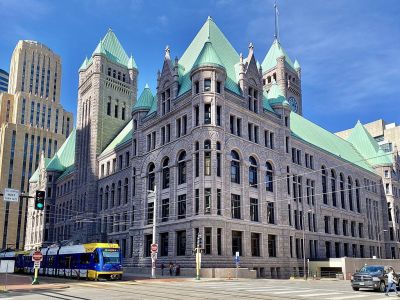
The City Hall and Courthouse, completed over the years 1887 to 1906, occupy a historic site where the first public schoolhouse west of the Mississippi once stood. This isn’t just your average municipal building-thanks to its Richardsonian Romanesque style and a medley of interior design influences, it boasts a charm and majesty that’s hard to come by in today’s glass-and-steel world.
If you’re curious to peek inside, tours are held every third Wednesday at noon. Just meet in the rotunda at the base of the colossal “Father of Waters” statue. This seven-ton marble marvel comes from the famed Carrara quarries, the same stony birthplace of masterpieces by Michelangelo and Leonardo da Vinci.
The building itself is clad in Ortonville granite, with some stones tipping the scales at more than twenty tons. Originally capped by a red terra cotta roof (which didn’t last long before springing leaks), it now flaunts a copper crown-the heaviest of its kind when installed, weighing in at 180,000 pounds. Add a towering clock to the mix-a timepiece that rivals London’s Big Ben-and you’ve got a structure that commands attention from every angle.
Surrounded by stained glass windows and carved Italian marble, the venue includes a stunning vestibule, a majestic five-story rotunda, and even some million-year-old fossils. The City Council Chambers exude stately gravitas, and the first-floor balcony provides a prime perch for taking it all in.
Today, the building’s stately halls and offices are split between city and county tenants. Roughly 60 percent houses City departments, while the County and District Courts call the remaining 40 percent their home.
If you’re curious to peek inside, tours are held every third Wednesday at noon. Just meet in the rotunda at the base of the colossal “Father of Waters” statue. This seven-ton marble marvel comes from the famed Carrara quarries, the same stony birthplace of masterpieces by Michelangelo and Leonardo da Vinci.
The building itself is clad in Ortonville granite, with some stones tipping the scales at more than twenty tons. Originally capped by a red terra cotta roof (which didn’t last long before springing leaks), it now flaunts a copper crown-the heaviest of its kind when installed, weighing in at 180,000 pounds. Add a towering clock to the mix-a timepiece that rivals London’s Big Ben-and you’ve got a structure that commands attention from every angle.
Surrounded by stained glass windows and carved Italian marble, the venue includes a stunning vestibule, a majestic five-story rotunda, and even some million-year-old fossils. The City Council Chambers exude stately gravitas, and the first-floor balcony provides a prime perch for taking it all in.
Today, the building’s stately halls and offices are split between city and county tenants. Roughly 60 percent houses City departments, while the County and District Courts call the remaining 40 percent their home.
13) Stone Arch Bridge (must see)
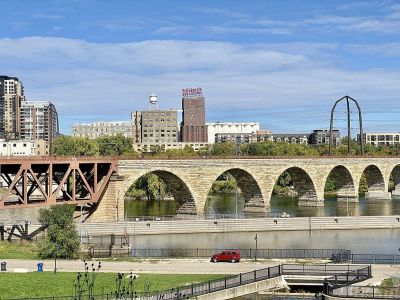
The Stone Arch Bridge in Minneapolis is a striking symbol of the city’s industrial glory days. Stretching across the Mississippi River at Saint Anthony Falls, it serves as a gateway to some of the city’s most picturesque views. Not only is it the only stone-arched bridge along the entire Mississippi River, but it also claims the title of the second-oldest bridge on the waterway-only losing to Saint Louis’s Eads Bridge in a historical game of “who’s older”.
Built in 1883 by railroad tycoon James J. Hill to shuttle passenger trains to a station a mile west, the bridge was initially nicknamed “Hill’s Folly”. Yet once its value in connecting passengers became clear, those skeptics had to eat their words (and maybe some humble pie). Engineer Charles C. Smith designed its graceful arches to flow with the nearby falls and surrounding terrain, using local granite from Sauk Rapids and magnesium limestone from Mankato and Iowa for the upper sections.
In its long lifetime, the Stone Arch Bridge has worn many hats. It got a wider girth in 1925 to support larger railcars, only to trade the rail life for a pedestrian and cyclist paradise in 1994. By 1971, it made the National Register of Historic Places, and in 1974, it nabbed a National Historic Civil Engineering Landmark title. Fast forward to 2005, and the bridge received a glow-up with indirect lighting.
Today, the bridge moonlights as a festival hotspot, hosting Independence Day fireworks and Minneapolis Aquatennial displays that draw oohs and ahhs from the crowds. It’s also a year-round runway for skyline selfies, views of the historic Pillsbury “A” Mill, the Mill City Museum, and more. And with the lively Main Street restaurants and the Guthrie Theater just steps away, the Stone Arch Bridge is less a relic of the past and more a vibrant link between history and modern city life.
Built in 1883 by railroad tycoon James J. Hill to shuttle passenger trains to a station a mile west, the bridge was initially nicknamed “Hill’s Folly”. Yet once its value in connecting passengers became clear, those skeptics had to eat their words (and maybe some humble pie). Engineer Charles C. Smith designed its graceful arches to flow with the nearby falls and surrounding terrain, using local granite from Sauk Rapids and magnesium limestone from Mankato and Iowa for the upper sections.
In its long lifetime, the Stone Arch Bridge has worn many hats. It got a wider girth in 1925 to support larger railcars, only to trade the rail life for a pedestrian and cyclist paradise in 1994. By 1971, it made the National Register of Historic Places, and in 1974, it nabbed a National Historic Civil Engineering Landmark title. Fast forward to 2005, and the bridge received a glow-up with indirect lighting.
Today, the bridge moonlights as a festival hotspot, hosting Independence Day fireworks and Minneapolis Aquatennial displays that draw oohs and ahhs from the crowds. It’s also a year-round runway for skyline selfies, views of the historic Pillsbury “A” Mill, the Mill City Museum, and more. And with the lively Main Street restaurants and the Guthrie Theater just steps away, the Stone Arch Bridge is less a relic of the past and more a vibrant link between history and modern city life.
14) Mill City Museum (must see)
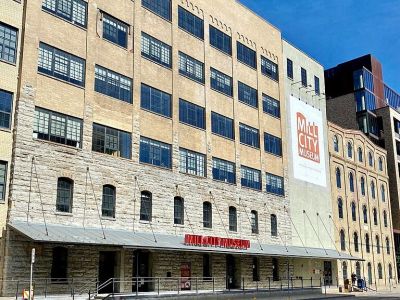
Opened in 2003, Mill City Museum rose from the ashes of the Washburn “A” Mill-literally. Once the largest and most cutting-edge flour mill on the planet back in 1880, this grand mill sparked a milling revolution that gave Minneapolis bragging rights as the flour milling capital of the world from 1880 to 1930. Talk about rolling in the dough.
By 1965, the mill had run its course and shut down, and a fire in 1991 left it looking like something out of a post-apocalyptic movie. But rather than letting it crumble, Minneapolis decided to turn lemons into lemonade-or, rather, wheat into, well, an award-winning museum.
The Minnesota Historical Society stepped in and called on architect Thomas Meyer to design a building that respected the past while welcoming the future. The result? A blend of preserved flour bins, milling machinery, and a rail corridor-all complemented with sleek modern touches, including a glass curtain wall etched with historic mill diagrams and multiple entry points that effortlessly link downtown with the Mississippi riverfront.
It’s not just a pretty face, either. The museum has racked up major design awards and continues to draw visitors into the city’s milling heritage. Inside, you can witness baking demonstrations, nibble on fresh bread, gawk at a model mill explosion, and enjoy amazing views of Saint Anthony Falls and the Stone Arch Bridge from the observation deck. Among other highlights are the Flour Tower exhibit and the much-recommended short film “Minneapolis in 19 Minutes Flat!”
By 1965, the mill had run its course and shut down, and a fire in 1991 left it looking like something out of a post-apocalyptic movie. But rather than letting it crumble, Minneapolis decided to turn lemons into lemonade-or, rather, wheat into, well, an award-winning museum.
The Minnesota Historical Society stepped in and called on architect Thomas Meyer to design a building that respected the past while welcoming the future. The result? A blend of preserved flour bins, milling machinery, and a rail corridor-all complemented with sleek modern touches, including a glass curtain wall etched with historic mill diagrams and multiple entry points that effortlessly link downtown with the Mississippi riverfront.
It’s not just a pretty face, either. The museum has racked up major design awards and continues to draw visitors into the city’s milling heritage. Inside, you can witness baking demonstrations, nibble on fresh bread, gawk at a model mill explosion, and enjoy amazing views of Saint Anthony Falls and the Stone Arch Bridge from the observation deck. Among other highlights are the Flour Tower exhibit and the much-recommended short film “Minneapolis in 19 Minutes Flat!”
