Custom Walk in Amsterdam, Netherlands by speedyedi_8aa55 created on 2025-04-25
Guide Location: Netherlands » Amsterdam
Guide Type: Custom Walk
# of Sights: 8
Tour Duration: 2 Hour(s)
Travel Distance: 3.9 Km or 2.4 Miles
Share Key: 6BSSC
Guide Type: Custom Walk
# of Sights: 8
Tour Duration: 2 Hour(s)
Travel Distance: 3.9 Km or 2.4 Miles
Share Key: 6BSSC
How It Works
Please retrieve this walk in the GPSmyCity app. Once done, the app will guide you from one tour stop to the next as if you had a personal tour guide. If you created the walk on this website or come to the page via a link, please follow the instructions below to retrieve the walk in the app.
Retrieve This Walk in App
Step 1. Download the app "GPSmyCity: Walks in 1K+ Cities" on Apple App Store or Google Play Store.



Step 2. In the GPSmyCity app, download(or launch) the guide "Amsterdam Map and Walking Tours".
Step 3. Tap the menu button located at upper right corner of the "Walks" screen and select "Retrieve custom walk". Enter the share key: 6BSSC
1) Centraal Station (must see)
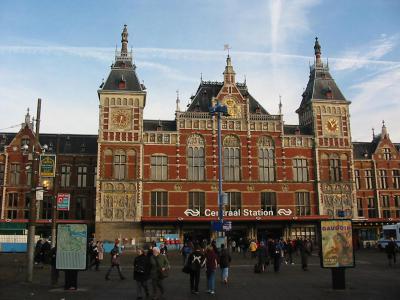
When in Amsterdam, a visit to the Central Station is practically inevitable. Nearly every traveler to the city encounters it at least once.
Amsterdam Centraal is the largest railway station in the city and has the second longest railway platform in the country, with a length of 695 meters, and a cast-iron platform roof spanning approximately 40 meters. A major international railway hub, it is used daily by almost 200,000 passengers, making it the Netherlands' most visited national heritage object.
Amsterdam Centraal was designed by Dutch architect Pierre Cuypers, featuring a blend of Gothic and Renaissance Revival elements.
The station was constructed on three artificial islands, between 1882 and 1889. Controversially located at the city's waterfront, it took a precise total of 8,687 wooden piles to anchor such a monumental structure on the marshy ground. The station spurred significant urban redevelopment and shifted Amsterdam’s focus from a waterfront to an inland city, influencing both transportation and city planning.
Its design celebrates Dutch economic and colonial prowess through various decorative elements. Initially, the entire project seemed like a huge blunder and was swiftly criticized by numerous experts. However, the architects persevered and ultimately vindicated themselves, defying skeptics.
Through the decades, Amsterdam Centraal has undergone multiple renovations and expansions to meet modern demands. Significant developments included the creation of a pedestrian tunnel in the 1950s, expansion of metro facilities in the late 1970s, and a major overhaul in the 1980s and 1990s that introduced new signaling systems, expanded tracks, and additional roofing. Recent upgrades focus on enhancing capacity and accessibility, including extended platforms for international trains, a new bus station, and upgraded retail spaces, marking it as a central hub in Amsterdam’s urban landscape.
Tip:
Take advantage of the several free ferry trips navigating the canals, departing every 5 to 15 minutes from this location; they offer a rewarding experience. You can even cruise back to the station via boat if you wish, rounding out your visit with a picturesque waterborne journey.
Amsterdam Centraal is the largest railway station in the city and has the second longest railway platform in the country, with a length of 695 meters, and a cast-iron platform roof spanning approximately 40 meters. A major international railway hub, it is used daily by almost 200,000 passengers, making it the Netherlands' most visited national heritage object.
Amsterdam Centraal was designed by Dutch architect Pierre Cuypers, featuring a blend of Gothic and Renaissance Revival elements.
The station was constructed on three artificial islands, between 1882 and 1889. Controversially located at the city's waterfront, it took a precise total of 8,687 wooden piles to anchor such a monumental structure on the marshy ground. The station spurred significant urban redevelopment and shifted Amsterdam’s focus from a waterfront to an inland city, influencing both transportation and city planning.
Its design celebrates Dutch economic and colonial prowess through various decorative elements. Initially, the entire project seemed like a huge blunder and was swiftly criticized by numerous experts. However, the architects persevered and ultimately vindicated themselves, defying skeptics.
Through the decades, Amsterdam Centraal has undergone multiple renovations and expansions to meet modern demands. Significant developments included the creation of a pedestrian tunnel in the 1950s, expansion of metro facilities in the late 1970s, and a major overhaul in the 1980s and 1990s that introduced new signaling systems, expanded tracks, and additional roofing. Recent upgrades focus on enhancing capacity and accessibility, including extended platforms for international trains, a new bus station, and upgraded retail spaces, marking it as a central hub in Amsterdam’s urban landscape.
Tip:
Take advantage of the several free ferry trips navigating the canals, departing every 5 to 15 minutes from this location; they offer a rewarding experience. You can even cruise back to the station via boat if you wish, rounding out your visit with a picturesque waterborne journey.
2) Oude Kerk (Old Church)
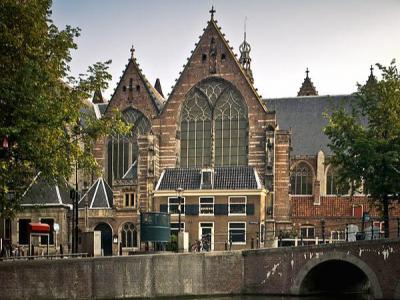
Amsterdam’s oldest building, the Old Church, boasts the largest medieval wooden vault in Europe. The initial wooden chapel on this site was built around 1213. Eventually replaced by a stone structure, in 1306, the church was dedicated to Saint Nicolas. To ensure its stability in a marshy area, the foundations were set on an artificial mound.
Throughout the centuries, the church has undergone numerous transformations. The most significant, in the 15th century, included the addition of north and south transepts, forming a cross shape, and the expansion of the aisles prompted by the necessity to recover from the destruction caused by fires in the early 1400s. Originally Roman Catholic, the church transitioned to its present Calvinist denomination in 1578, after the Dutch Revolt against Spanish rule. This transition led to the Iconoclastic Fury, with rioters destroying much of the church's art.
The Old Church boasts significant artistic and personal histories. It has ties to Rembrandt, who was a frequent visitor here for his children’s christenings. Today, this connection is honored by the annual celebration of Rembrandt’s wife, Saskia, who is buried inside. Each spring, on March 9, her tomb is illuminated by a unique play of sunlight in the morning.
The entire floor of the church is covered in gravestones. This is because it's built over a cemetery. Locals continued to be buried here until 1865. There are in total 2,500 graves, holding the remains of some 10,000 parishioners. Among them are the famed organist and composer Jan Pieterszoon Sweelinck; the revered naval hero Jacob van Heemskerck; and Frans Banning Cocq, the central character in Rembrandt's painting "The Night Watch".
Also, the interior – surprisingly spacious – contains a collection of exquisite stained glass, rare ceiling frescoes, and four pipe organs, including the renowned Vater-Müller organ built in 1724 and recognized as one of the finest Baroque organs in Europe.
As of 2012, the Old Church has been home to an art institute, the newest in town, featuring specific installations and a permanent exhibit on the history of Amsterdam.
Each year in mid-March, Catholics arrive at the Old Church to celebrate the so-called "Miracle of Amsterdam" which occurred in 1345. Legend has it that after taking communion, a dying man vomited the Sacramental bread – known as the Host – which is used in the Christian ritual of the Eucharist. When the bread was thrown into a fire, as prescribed by the tradition, it did not burn and was proclaimed a miracle. The Host was then put in a chest and displayed at the church. However, it disappeared during the Reformation period.
Tip:
Wonderful views from the tower (note the fee payable with credit/debit cards only); coffee and snacks are available in a charming garden.
Throughout the centuries, the church has undergone numerous transformations. The most significant, in the 15th century, included the addition of north and south transepts, forming a cross shape, and the expansion of the aisles prompted by the necessity to recover from the destruction caused by fires in the early 1400s. Originally Roman Catholic, the church transitioned to its present Calvinist denomination in 1578, after the Dutch Revolt against Spanish rule. This transition led to the Iconoclastic Fury, with rioters destroying much of the church's art.
The Old Church boasts significant artistic and personal histories. It has ties to Rembrandt, who was a frequent visitor here for his children’s christenings. Today, this connection is honored by the annual celebration of Rembrandt’s wife, Saskia, who is buried inside. Each spring, on March 9, her tomb is illuminated by a unique play of sunlight in the morning.
The entire floor of the church is covered in gravestones. This is because it's built over a cemetery. Locals continued to be buried here until 1865. There are in total 2,500 graves, holding the remains of some 10,000 parishioners. Among them are the famed organist and composer Jan Pieterszoon Sweelinck; the revered naval hero Jacob van Heemskerck; and Frans Banning Cocq, the central character in Rembrandt's painting "The Night Watch".
Also, the interior – surprisingly spacious – contains a collection of exquisite stained glass, rare ceiling frescoes, and four pipe organs, including the renowned Vater-Müller organ built in 1724 and recognized as one of the finest Baroque organs in Europe.
As of 2012, the Old Church has been home to an art institute, the newest in town, featuring specific installations and a permanent exhibit on the history of Amsterdam.
Each year in mid-March, Catholics arrive at the Old Church to celebrate the so-called "Miracle of Amsterdam" which occurred in 1345. Legend has it that after taking communion, a dying man vomited the Sacramental bread – known as the Host – which is used in the Christian ritual of the Eucharist. When the bread was thrown into a fire, as prescribed by the tradition, it did not burn and was proclaimed a miracle. The Host was then put in a chest and displayed at the church. However, it disappeared during the Reformation period.
Tip:
Wonderful views from the tower (note the fee payable with credit/debit cards only); coffee and snacks are available in a charming garden.
3) National Monument on Dam Square
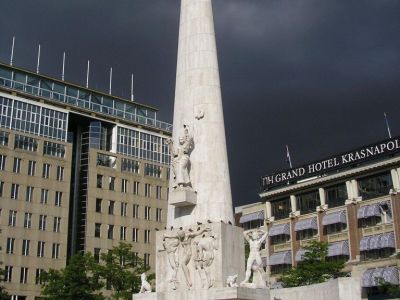
Crafted by the renowned Dutch architect Jacobus Oud, Dam Square proudly hosts a 22-meter (70-foot) tall obelisk, serving as a poignant memorial to the Second World War. Behind this solemn monument, urns hold soil collected from cemeteries and execution sites. The structure has become a national symbol, where each year, on May 4th, the Remembrance of the Dead ceremony takes place.
While this obelisk garners attention from numerous visitors, only a select few truly grasp its intricate symbolism. Adorned with exquisite details arranged in concentric circles, the obelisk features sculptures depicting men, howling dogs, and birds. On the front side, two male figures symbolize the Dutch Resistance Movement, while the left and right sides represent intellectuals and the working class, respectively. Dogs are emblematic of loyalty and suffering, while a woman with a child represents victory, peace, and new beginnings. Meanwhile, doves ascending to the skies symbolize freedom and liberation.
Why You Should Explore:
One of the most important European symbols that recall the immense tragedy of the Second World War. A tranquil spot for a brief pause while you explore other attractions in the vicinity.
While this obelisk garners attention from numerous visitors, only a select few truly grasp its intricate symbolism. Adorned with exquisite details arranged in concentric circles, the obelisk features sculptures depicting men, howling dogs, and birds. On the front side, two male figures symbolize the Dutch Resistance Movement, while the left and right sides represent intellectuals and the working class, respectively. Dogs are emblematic of loyalty and suffering, while a woman with a child represents victory, peace, and new beginnings. Meanwhile, doves ascending to the skies symbolize freedom and liberation.
Why You Should Explore:
One of the most important European symbols that recall the immense tragedy of the Second World War. A tranquil spot for a brief pause while you explore other attractions in the vicinity.
4) Dam Square (must see)
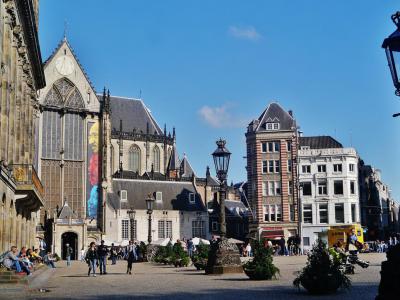
Dam Square, or the Dam, is a central town square in Amsterdam, known for its significant buildings and frequent events. Positioned in the historical heart of Amsterdam, it sits on the site of the original dam on the Amstel River. The square extends some 200 meters from west to east and 100 meters from north to south, connecting Damrak and Rokin streets that trace the Amstel's original course.
The square is also the termination point for other notable streets like New Dike, Calf Street, and Dam Street, with the main red-light district, De Wallen, just beyond its northeast corner. Prominent features on Dam Square include the neoclassical Royal Palace, the 15th-century Gothic New Church, the Madame Tussauds Wax Museum, and the National Monument which honors World War II victims, all of which collectively turn the Dam into a major tourist hub.
The name "Amsterdam" originates from a dam built on the Amstel River around 1270. This dam, integral to the city's development, included a discharge sluice and later locks to facilitate navigation and control water levels. By 1275, the settlement was significant enough to be recorded in connection with a road toll granted by the count of Holland, Floris V. Over time, the dam expanded to accommodate a town square, now known as Dam Square. Eventually, the area became a hub for commercial and governmental activities, featuring a large fish market and a town hall.
Significant changes occurred over the centuries, including the demolition of a weigh house in 1808 to clear the view for Louis Bonaparte’s Royal Palace and the infilling of Damrak Avenue in the 19th century. The square also hosted the Beurs van Zocher stock exchange until 1903. Today, the De Bijenkorf department store has been in its place since 1914. Dam Square has also been a site for national events – such as the National Memorial Day commemorations at the National Monument unveiled in 1956, and public demonstrations, – maintaining its status as a national and cultural gathering spot for the Dutch.
Tip:
For those in need of a restroom, free and well-maintained toilets are available at the De Bijenkorf shop on the 5th floor.
The square is also the termination point for other notable streets like New Dike, Calf Street, and Dam Street, with the main red-light district, De Wallen, just beyond its northeast corner. Prominent features on Dam Square include the neoclassical Royal Palace, the 15th-century Gothic New Church, the Madame Tussauds Wax Museum, and the National Monument which honors World War II victims, all of which collectively turn the Dam into a major tourist hub.
The name "Amsterdam" originates from a dam built on the Amstel River around 1270. This dam, integral to the city's development, included a discharge sluice and later locks to facilitate navigation and control water levels. By 1275, the settlement was significant enough to be recorded in connection with a road toll granted by the count of Holland, Floris V. Over time, the dam expanded to accommodate a town square, now known as Dam Square. Eventually, the area became a hub for commercial and governmental activities, featuring a large fish market and a town hall.
Significant changes occurred over the centuries, including the demolition of a weigh house in 1808 to clear the view for Louis Bonaparte’s Royal Palace and the infilling of Damrak Avenue in the 19th century. The square also hosted the Beurs van Zocher stock exchange until 1903. Today, the De Bijenkorf department store has been in its place since 1914. Dam Square has also been a site for national events – such as the National Memorial Day commemorations at the National Monument unveiled in 1956, and public demonstrations, – maintaining its status as a national and cultural gathering spot for the Dutch.
Tip:
For those in need of a restroom, free and well-maintained toilets are available at the De Bijenkorf shop on the 5th floor.
5) Westerkerk (Western Church)
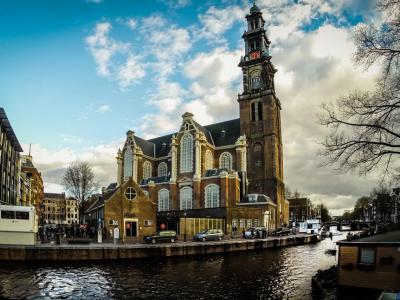
Anne Frank once found comfort in the gentle chimes of the Western Church’s bells-a reassuring hint of life outside her secret refuge-until those very bells were melted down for the German war effort. The church’s 85-meter-tall tower still stands as Amsterdam’s most dazzling spire. Rising gracefully above the city, it offers balconies with stunning panoramic views of the center and a carillon that strikes every quarter-hour, plus occasional full musical interludes. At its tip, you’ll find Emperor Maximilian’s crown, a proud emblem of Amsterdam and a glittering highlight of this Protestant landmark. Built by Hendrick de Keyser and completed in 1631, a decade after his passing, the church was a vital piece of the city’s early expansion.
Outwardly, the Western Church projects an air of restrained elegance; inside, however, it embraces Calvinist simplicity. Apart from the ample plain-glass windows that flood the space with natural light, the main attractions are the grand Baroque organ and the ornate wooden pulpit, topped by an oversized sounding board that once lent authority to lengthy sermons. While the Protestant elite shunned opulent decorations, they did indulge in a little exclusivity: boxed-in benches at the base of the nave’s stone columns, rented out by the well-to-do to signal their status.
Feeling adventurous? From April to October, you can climb the tower for a firsthand look at the bells and unbeatable views from a platform near the top. The stairs are steep enough to be interesting, but not so tough as to keep you from reaching one of the best vantage points in Amsterdam.
Outwardly, the Western Church projects an air of restrained elegance; inside, however, it embraces Calvinist simplicity. Apart from the ample plain-glass windows that flood the space with natural light, the main attractions are the grand Baroque organ and the ornate wooden pulpit, topped by an oversized sounding board that once lent authority to lengthy sermons. While the Protestant elite shunned opulent decorations, they did indulge in a little exclusivity: boxed-in benches at the base of the nave’s stone columns, rented out by the well-to-do to signal their status.
Feeling adventurous? From April to October, you can climb the tower for a firsthand look at the bells and unbeatable views from a platform near the top. The stairs are steep enough to be interesting, but not so tough as to keep you from reaching one of the best vantage points in Amsterdam.
6) Anne Frank House (must see)
Anne Frank once found comfort in the gentle chimes of the Western Church’s bells-a reassuring hint of life outside her secret refuge-until those very bells were melted down for the German war effort. The church’s 85-meter-tall tower still stands as Amsterdam’s most dazzling spire. Rising gracefully above the city, it offers balconies with stunning panoramic views of the center and a carillon that strikes every quarter-hour, plus occasional full musical interludes. At its tip, you’ll find Emperor Maximilian’s crown, a proud emblem of Amsterdam and a glittering highlight of this Protestant landmark. Built by Hendrick de Keyser and completed in 1631, a decade after his passing, the church was a vital piece of the city’s early expansion.
Outwardly, the Western Church projects an air of restrained elegance; inside, however, it embraces Calvinist simplicity. Apart from the ample plain-glass windows that flood the space with natural light, the main attractions are the grand Baroque organ and the ornate wooden pulpit, topped by an oversized sounding board that once lent authority to lengthy sermons. While the Protestant elite shunned opulent decorations, they did indulge in a little exclusivity: boxed-in benches at the base of the nave’s stone columns, rented out by the well-to-do to signal their status.
Feeling adventurous? From April to October, you can climb the tower for a firsthand look at the bells and unbeatable views from a platform near the top. The stairs are steep enough to be interesting, but not so tough as to keep you from reaching one of the best vantage points in Amsterdam.
Outwardly, the Western Church projects an air of restrained elegance; inside, however, it embraces Calvinist simplicity. Apart from the ample plain-glass windows that flood the space with natural light, the main attractions are the grand Baroque organ and the ornate wooden pulpit, topped by an oversized sounding board that once lent authority to lengthy sermons. While the Protestant elite shunned opulent decorations, they did indulge in a little exclusivity: boxed-in benches at the base of the nave’s stone columns, rented out by the well-to-do to signal their status.
Feeling adventurous? From April to October, you can climb the tower for a firsthand look at the bells and unbeatable views from a platform near the top. The stairs are steep enough to be interesting, but not so tough as to keep you from reaching one of the best vantage points in Amsterdam.
7) Amsterdam Cheese Museum
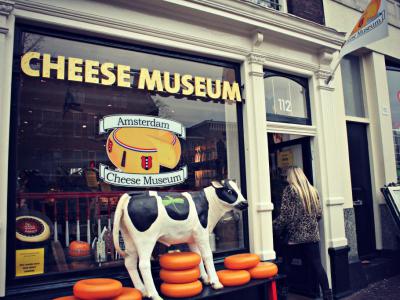
Situated a short distance from the renowned Anne Frank House, this petite yet delightful museum exclusively focuses on Dutch cheese, a product with a venerable heritage extending over six centuries.
Many Dutch cheese varieties derive their names from various cities across the Netherlands, including Gouda, Edam, Leerdammer, Leyden, Maaslander, Maasdam, and Old Amsterdam. The European Community laws protect some of these cheese names, which are produced only in certain regions of the Netherlands, under a designation called Protected Geographical Status. However, most Dutch cheese names are used worldwide to specify types of cheese that are also produced elsewhere.
Upon entering the Amsterdam Cheese Museum, visitors are greeted with a shop that offers a wide variety of Dutch cheeses. On the ground floor, you can sample and taste different types of traditional Dutch Gouda cheese. Downstairs, you can also access the little Gouda cheese museum, which offers an exhibit of various educational materials such as videos, pictures, and written texts about the history and production of Dutch cheese. Additionally, the staff provides guided tours, and there is also a "photo corner" where visitors can dress up as Dutch farmers and take a picture.
As you step inside the Amsterdam Cheese Museum, you'll find yourself welcomed by a shop featuring an extensive selection of cheeses. On the main floor, visitors have the opportunity to savor and experience a range of traditional Dutch Gouda. Descending to the lower level, you'll discover a compact Gouda cheese museum, which showcases an array of educational resources, including videos, images, and written materials detailing the rich history and production of Dutch cheese. Moreover, the museum's knowledgeable staff offers guided tours, and there's even a "photo corner" where guests can don Dutch farmer attire for a memorable snapshot.
Many Dutch cheese varieties derive their names from various cities across the Netherlands, including Gouda, Edam, Leerdammer, Leyden, Maaslander, Maasdam, and Old Amsterdam. The European Community laws protect some of these cheese names, which are produced only in certain regions of the Netherlands, under a designation called Protected Geographical Status. However, most Dutch cheese names are used worldwide to specify types of cheese that are also produced elsewhere.
Upon entering the Amsterdam Cheese Museum, visitors are greeted with a shop that offers a wide variety of Dutch cheeses. On the ground floor, you can sample and taste different types of traditional Dutch Gouda cheese. Downstairs, you can also access the little Gouda cheese museum, which offers an exhibit of various educational materials such as videos, pictures, and written texts about the history and production of Dutch cheese. Additionally, the staff provides guided tours, and there is also a "photo corner" where visitors can dress up as Dutch farmers and take a picture.
As you step inside the Amsterdam Cheese Museum, you'll find yourself welcomed by a shop featuring an extensive selection of cheeses. On the main floor, visitors have the opportunity to savor and experience a range of traditional Dutch Gouda. Descending to the lower level, you'll discover a compact Gouda cheese museum, which showcases an array of educational resources, including videos, images, and written materials detailing the rich history and production of Dutch cheese. Moreover, the museum's knowledgeable staff offers guided tours, and there's even a "photo corner" where guests can don Dutch farmer attire for a memorable snapshot.
8) Winkel 43
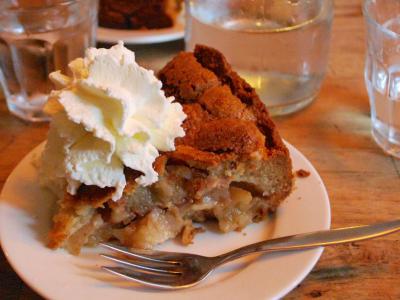
Winkel 43 is a favorite hangout in the heart of the Jordaan for a drink or a bite to eat. The "appeltaart" (apple pie) is particularly tasty here; many consider it to be the best in Amsterdam, but you be the judge! This delectable Dutch specialty, whose secret is in the moist, cakey dough that also manages to be crispy on the edges, is served in large portions and topped with a generous dollop of (not too sweet) house-made fresh cream if you'd like. And the perfect pairing? A steaming mug of fresh mint tea. You can savor all of this on their spacious patio overlooking the Prinsengracht canal – especially inviting on sunny days!
But hey, if you're not just in the mood for sweets, they've got you covered with tasty sandwiches, salads, soups, and something called "bitterballen" – all priced very reasonably for the quality. The bitterballen, in particular, is another long-time favorite with the Dutch, who just can't get enough of it. Similar to "appeltaarts", these (deep-fried) meatballs have a crispy coating but soft center, and some amazing creamy flavors inside. You've got to give them a try!
Tip:
The place is rather small, so you might have to line up (especially on Saturdays), or try to choose an off-peak time if you want to linger for longer. And if you're in a rush, you can totally enjoy your appeltaart right from the tray while standing up – it's a fun twist!
But hey, if you're not just in the mood for sweets, they've got you covered with tasty sandwiches, salads, soups, and something called "bitterballen" – all priced very reasonably for the quality. The bitterballen, in particular, is another long-time favorite with the Dutch, who just can't get enough of it. Similar to "appeltaarts", these (deep-fried) meatballs have a crispy coating but soft center, and some amazing creamy flavors inside. You've got to give them a try!
Tip:
The place is rather small, so you might have to line up (especially on Saturdays), or try to choose an off-peak time if you want to linger for longer. And if you're in a rush, you can totally enjoy your appeltaart right from the tray while standing up – it's a fun twist!
