Custom Walk in Dresden, Germany by deirdrelavinia898 created on 2025-04-26
Guide Location: Germany » Dresden
Guide Type: Custom Walk
# of Sights: 11
Tour Duration: 3 Hour(s)
Travel Distance: 5.7 Km or 3.5 Miles
Share Key: G4W27
Guide Type: Custom Walk
# of Sights: 11
Tour Duration: 3 Hour(s)
Travel Distance: 5.7 Km or 3.5 Miles
Share Key: G4W27
How It Works
Please retrieve this walk in the GPSmyCity app. Once done, the app will guide you from one tour stop to the next as if you had a personal tour guide. If you created the walk on this website or come to the page via a link, please follow the instructions below to retrieve the walk in the app.
Retrieve This Walk in App
Step 1. Download the app "GPSmyCity: Walks in 1K+ Cities" on Apple App Store or Google Play Store.



Step 2. In the GPSmyCity app, download(or launch) the guide "Dresden Map and Walking Tours".
Step 3. Tap the menu button located at upper right corner of the "Walks" screen and select "Retrieve custom walk". Enter the share key: G4W27
1) Semperoper (Opera House)
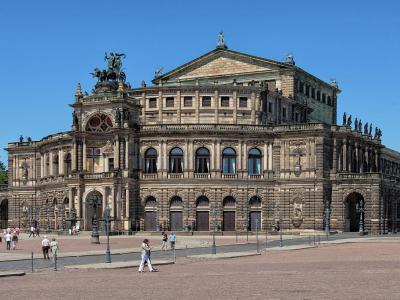
The Opera House (Semperoper) in Dresden is a monumental structure with deep historical and cultural significance. Serving as the home to the Saxon State Opera (Sächsische Staatsoper Dresden), the Saxon State Orchestra (Staatskapelle Dresden), and the Semperoper Ballett, this iconic opera house is not only a venue for world-class performances but also an architectural treasure.
Designed by the renowned architect Gottfried Semper, the Opera House was first constructed in 1841. However, it faced destruction by fire in 1869 and underwent a significant rebuilding process, led once more by Semper. Although Semper was in exile due to political involvement, his son, Manfred Semper, used his father's plans to complete the reconstruction in 1878. This second opera house emerged in the Neo-Renaissance style and exemplified what is known as "Dresden Baroque," marking it as one of the most beautiful opera houses in Europe.
The building displays an eclectic architectural style, combining early Renaissance, Baroque, and Greek classical revival elements, including Corinthian pillars. Located on Theatre Square beside the Elbe River, the Semperoper features a facade decorated with a Panther quadriga and a Dionysos statue. Internally, it showcases works from architects like Johannes Schilling and sculptors such as Ernst Rietschel. Monuments of figures like Goethe, Schiller, and Shakespeare enhance its cultural significance.
The Opera House's history is marked by numerous premieres of significant works by composers like Richard Wagner and Richard Strauss, playing a pivotal role in shaping the musical landscape. Tragically, the opera house was largely destroyed during the bombing of Dresden in World War II in 1945, which left only its external shell.
Reconstruction efforts mirrored the original designs, and the opera house was ceremoniously reopened on February 13, 1985, exactly 40 years after its destruction. The reopening performance featured Carl Maria von Weber's "Der Freischütz," the same opera staged before the building was destroyed in 1945. Today, the Opera House continues to enchant audiences with its historical legacy, architectural beauty, and rich program of operatic and ballet performances.
Designed by the renowned architect Gottfried Semper, the Opera House was first constructed in 1841. However, it faced destruction by fire in 1869 and underwent a significant rebuilding process, led once more by Semper. Although Semper was in exile due to political involvement, his son, Manfred Semper, used his father's plans to complete the reconstruction in 1878. This second opera house emerged in the Neo-Renaissance style and exemplified what is known as "Dresden Baroque," marking it as one of the most beautiful opera houses in Europe.
The building displays an eclectic architectural style, combining early Renaissance, Baroque, and Greek classical revival elements, including Corinthian pillars. Located on Theatre Square beside the Elbe River, the Semperoper features a facade decorated with a Panther quadriga and a Dionysos statue. Internally, it showcases works from architects like Johannes Schilling and sculptors such as Ernst Rietschel. Monuments of figures like Goethe, Schiller, and Shakespeare enhance its cultural significance.
The Opera House's history is marked by numerous premieres of significant works by composers like Richard Wagner and Richard Strauss, playing a pivotal role in shaping the musical landscape. Tragically, the opera house was largely destroyed during the bombing of Dresden in World War II in 1945, which left only its external shell.
Reconstruction efforts mirrored the original designs, and the opera house was ceremoniously reopened on February 13, 1985, exactly 40 years after its destruction. The reopening performance featured Carl Maria von Weber's "Der Freischütz," the same opera staged before the building was destroyed in 1945. Today, the Opera House continues to enchant audiences with its historical legacy, architectural beauty, and rich program of operatic and ballet performances.
2) Katholische Hofkirche (Catholic Church) (must see)
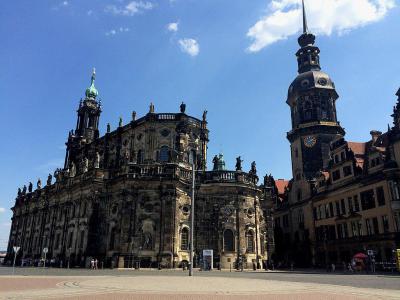
Dresden Cathedral is Dresden's most important Catholic church. Architect Gaetano Chiavari designed the Baroque church, which was completed in 1751. It was commissioned by Augustus II, Elector of Saxony and King of Poland. Dresden Cathedral was built at the same time as the Lutheran Church of Our Lady.
Dresden's population was Protestant, but its rulers were Catholic. Augustus II built the church for his own use and connected it to Dresden Castle with a decorative walkway. It was originally known as the Court Church of the Most Holy Trinity. It became a cathedral in 1964.
The cathedral's balustrades feature 78 statues of saints. A procession ambulatory was integrated into the interior because outdoor Catholic worship was forbidden.
The baptismal font features a gilded metal lid and was designed in 1721. In addition, the cathedral has an organ built by famed organist Gottfried Silbermann.
Many of Saxon's rulers are buried in the cathedral's crypts. The Founder's Crypt holds the remains of Polish King Augustus III. King Augustus the Strong is buried here, as is the last King of Saxony.
Dresden Cathedral was damaged during World War II bombing raids and was restored in 1962.
Dresden's population was Protestant, but its rulers were Catholic. Augustus II built the church for his own use and connected it to Dresden Castle with a decorative walkway. It was originally known as the Court Church of the Most Holy Trinity. It became a cathedral in 1964.
The cathedral's balustrades feature 78 statues of saints. A procession ambulatory was integrated into the interior because outdoor Catholic worship was forbidden.
The baptismal font features a gilded metal lid and was designed in 1721. In addition, the cathedral has an organ built by famed organist Gottfried Silbermann.
Many of Saxon's rulers are buried in the cathedral's crypts. The Founder's Crypt holds the remains of Polish King Augustus III. King Augustus the Strong is buried here, as is the last King of Saxony.
Dresden Cathedral was damaged during World War II bombing raids and was restored in 1962.
3) Kunsthofpassage
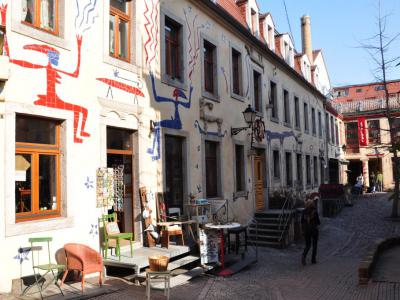
Kunsthofpassage in Dresden is a unique architectural and artistic complex consisting of five courtyards, each with its distinct theme and design. This intriguing space blends art with architecture in a series of creatively themed environments.
One notable courtyard is the Courtyard of the Elements, where the theme revolves around water and light. Here, the facades are adorned in a vibrant blue with intricately designed downpipes inspired by the oversized and ornately routed pipes of Saint Petersburg. This courtyard becomes a 'rain theater' during wet weather, as water cascades theatrically through the gutters into a basin, creating a visual and auditory spectacle. Opposite, a sunny yellow wall features golden aluminum sheets that reflect and amplify the light, each piece arranged as if whimsically blown by the wind.
The Hof des Lichts originated from a national competition held in 1998, focusing on multi-media performances and dynamic lighting. This courtyard features metal mirrors and two landing stages along with several projection surfaces, allowing for a variety of multimedia events and theatrical displays. The play of light, enhanced by the position of the sun, creates ever-changing reflections throughout the day.
Another courtyard, the Courtyard of the Animals, showcases a green facade with reliefs of giraffes, monkeys, and cranes. The imaginative scene includes monkeys leaping across windows and a large giraffe that spans the height of the wall. The decor is complemented by wickerwork balconies and a charmingly detailed fountain.
In the Courtyard of the Mythical Creatures, artist Viola Schöpe has employed a mix of sgraffito and mosaic to depict mythical beings and cosmic elements. The southern facade represents the 'river of life,' symbolizing unity and positive energy, while the northern facade transports viewers into a realm of higher cosmic energies and celestial bodies, all crafted with ornamental tiles from Portugal, Italy, and Meissen.
Lastly, a courtyard features artistic work by Arend Zwicker and the metal workshop Karlheinz Löffler, who created two 15-meter-high steles made of Corten steel. These styles, designed to minimally touch the facade, include fiber optic bundles that light up at night, transforming them into glowing structures. Additionally, this courtyard employs a system for climbing plants and displays an array of papers treated with linseed oil and showcased in metal frames, highlighting the natural aging process of the materials.
Each courtyard in Kunsthofpassage offers a distinctive artistic vision, making it a fascinating destination that merges the artistic with the architectural, inviting visitors to experience and interact with art in dynamic and innovative ways.
One notable courtyard is the Courtyard of the Elements, where the theme revolves around water and light. Here, the facades are adorned in a vibrant blue with intricately designed downpipes inspired by the oversized and ornately routed pipes of Saint Petersburg. This courtyard becomes a 'rain theater' during wet weather, as water cascades theatrically through the gutters into a basin, creating a visual and auditory spectacle. Opposite, a sunny yellow wall features golden aluminum sheets that reflect and amplify the light, each piece arranged as if whimsically blown by the wind.
The Hof des Lichts originated from a national competition held in 1998, focusing on multi-media performances and dynamic lighting. This courtyard features metal mirrors and two landing stages along with several projection surfaces, allowing for a variety of multimedia events and theatrical displays. The play of light, enhanced by the position of the sun, creates ever-changing reflections throughout the day.
Another courtyard, the Courtyard of the Animals, showcases a green facade with reliefs of giraffes, monkeys, and cranes. The imaginative scene includes monkeys leaping across windows and a large giraffe that spans the height of the wall. The decor is complemented by wickerwork balconies and a charmingly detailed fountain.
In the Courtyard of the Mythical Creatures, artist Viola Schöpe has employed a mix of sgraffito and mosaic to depict mythical beings and cosmic elements. The southern facade represents the 'river of life,' symbolizing unity and positive energy, while the northern facade transports viewers into a realm of higher cosmic energies and celestial bodies, all crafted with ornamental tiles from Portugal, Italy, and Meissen.
Lastly, a courtyard features artistic work by Arend Zwicker and the metal workshop Karlheinz Löffler, who created two 15-meter-high steles made of Corten steel. These styles, designed to minimally touch the facade, include fiber optic bundles that light up at night, transforming them into glowing structures. Additionally, this courtyard employs a system for climbing plants and displays an array of papers treated with linseed oil and showcased in metal frames, highlighting the natural aging process of the materials.
Each courtyard in Kunsthofpassage offers a distinctive artistic vision, making it a fascinating destination that merges the artistic with the architectural, inviting visitors to experience and interact with art in dynamic and innovative ways.
4) Erich Kästner Museum
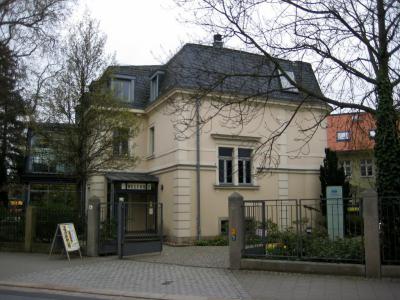
The Erich Kastner Museum is dedicated to the works of the children’s author, Nazi critic and pacifist, Erich Kastner who was born and raised in Dresden. The building that was his home from 1899 to 1917 houses this repository of his works and exhibits showcasing his life.
“Yes believe me, Dresden was a beautiful city. You have to believe me, for not one of you, even if your father were ever so rich, can go there by train to see if I am right. The city of Dresden is no more,” wrote Erich Kastner after the fire bombings in 1945 ravaged the city in his autobiographical book, “when I was a little boy.” In 2004, the people of Dresden paid a tribute to Kastner through this museum.
The Erich Kastner museum is regarded as the only mobile interactive micro-museum in the world. The interiors designed by Ruairi O’ Brien, are an example of a layout that makes optimal use of space. Exhibits are placed in drawers that form part of columns. The columns can be pushed together to make additional space for more exhibits in the unique interior design of the museum.
The Erich Kastner museum stays open from Sunday to Wednesday and on Fridays. On Thursdays, only schools and groups are allowed. Proceeds from purchases made from the online shop go to support the maintenance of the museum.
“Yes believe me, Dresden was a beautiful city. You have to believe me, for not one of you, even if your father were ever so rich, can go there by train to see if I am right. The city of Dresden is no more,” wrote Erich Kastner after the fire bombings in 1945 ravaged the city in his autobiographical book, “when I was a little boy.” In 2004, the people of Dresden paid a tribute to Kastner through this museum.
The Erich Kastner museum is regarded as the only mobile interactive micro-museum in the world. The interiors designed by Ruairi O’ Brien, are an example of a layout that makes optimal use of space. Exhibits are placed in drawers that form part of columns. The columns can be pushed together to make additional space for more exhibits in the unique interior design of the museum.
The Erich Kastner museum stays open from Sunday to Wednesday and on Fridays. On Thursdays, only schools and groups are allowed. Proceeds from purchases made from the online shop go to support the maintenance of the museum.
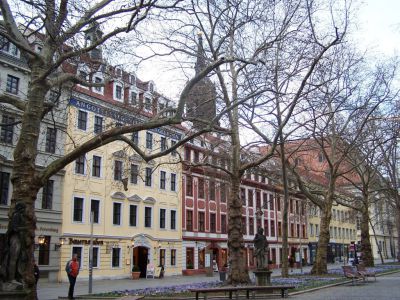
5) Hauptstrasse (Head Street)
Hauptstrasse, also known as Head Street, is a main shopping street in Dresden's New Town. Various shops that sell wares like crafts, linen, jewelry and toys line this pedestrian street.
Though Head Street is an excellent spot for souvenir shopping, it is also known for monuments, architecture, statues and public art displays. Visitors should look for the Golden Reiter, a golden statue of August the Strong, at the southwest end of the street. Near the Golden Reiter is the lovely Nymphenbrunnen fountain. The Friedrich Schiller Monument, Gedenkstein Jorge Gomondai Memorial Park and Springbrunnenanlage rest at the northeast end of the street.
Other notable places along Head Street include the Dresden Soccer Museum and the Museum of Dresden Romanticism, otherwise known as the Kugelgenhaus. In addition, Head Street is a popular spot for festivals. The City Festival is held throughout New Town, but is primarily located on Head Street.
Though Head Street is an excellent spot for souvenir shopping, it is also known for monuments, architecture, statues and public art displays. Visitors should look for the Golden Reiter, a golden statue of August the Strong, at the southwest end of the street. Near the Golden Reiter is the lovely Nymphenbrunnen fountain. The Friedrich Schiller Monument, Gedenkstein Jorge Gomondai Memorial Park and Springbrunnenanlage rest at the northeast end of the street.
Other notable places along Head Street include the Dresden Soccer Museum and the Museum of Dresden Romanticism, otherwise known as the Kugelgenhaus. In addition, Head Street is a popular spot for festivals. The City Festival is held throughout New Town, but is primarily located on Head Street.
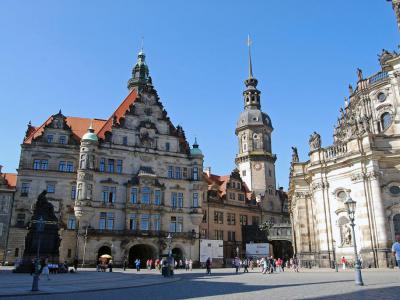
6) Schlossplatz (Castle Square)
Castle Square (Schlossplatz) is a city square in the heart of Dresden. Named after the Dresden Castle-once the royal residence of the Electors and Kings of Saxony-the square is a historical and architectural focal point of the city. It is flanked by several significant buildings including the Catholic Court Church (Katholische Hofkirche), the Saxon House of Estates (Sächsische Ständehaus), the Georgentor, and the Augustus Bridge, which spans the River Elbe.
The square's history extends back to the 15th century, but it suffered extensive damage during the bombing of Dresden in World War II. In recent years, extensive restoration efforts have revived its historic ambiance, reinstating its original grandeur.
A notable feature of the square was a bronze statue of Albert of Saxony by Max Baumbach, inaugurated in 1906 but destroyed in 1945. In its place now stands a sculpture by Ernst Rietschel of Frederick Augustus I "The Righteous", initially unveiled in 1843 and moved to Castle Square in 2008. This relocation was celebrated with a special performance of Richard Wagner's Weih-Hymne, composed for the sculpture's original unveiling.
Additionally, the square holds a historical significance marked by a paving stone with the letter 'N' outside the main entrance of the Catholic Court Church (Katholische Hofkirche), denoting where Napoleon Bonaparte rallied his troops for the Battle of Dresden in 1813.
While Castle Square is a site for political events, its compact stone architecture creates significant reverberation, making nearby Theaterplatz, with better acoustics, a preferred venue for concerts. This integration of history, art, and cultural activities makes Schlossplatz a vital and vibrant part of Dresden's urban landscape.
The square's history extends back to the 15th century, but it suffered extensive damage during the bombing of Dresden in World War II. In recent years, extensive restoration efforts have revived its historic ambiance, reinstating its original grandeur.
A notable feature of the square was a bronze statue of Albert of Saxony by Max Baumbach, inaugurated in 1906 but destroyed in 1945. In its place now stands a sculpture by Ernst Rietschel of Frederick Augustus I "The Righteous", initially unveiled in 1843 and moved to Castle Square in 2008. This relocation was celebrated with a special performance of Richard Wagner's Weih-Hymne, composed for the sculpture's original unveiling.
Additionally, the square holds a historical significance marked by a paving stone with the letter 'N' outside the main entrance of the Catholic Court Church (Katholische Hofkirche), denoting where Napoleon Bonaparte rallied his troops for the Battle of Dresden in 1813.
While Castle Square is a site for political events, its compact stone architecture creates significant reverberation, making nearby Theaterplatz, with better acoustics, a preferred venue for concerts. This integration of history, art, and cultural activities makes Schlossplatz a vital and vibrant part of Dresden's urban landscape.
7) Fürstenzug (Procession of Princes) (must see)
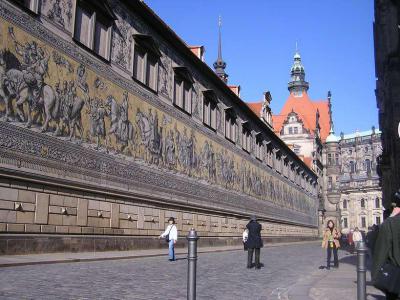
The Procession of Princes is an impressive mural that shows Saxony's rulers. The painting was commissioned to celebrate the Wettin Dynasty's 800th anniversary in 1889.
Wilhelm Walther painted the original painting. It took Walther five years to complete the painting, which was finished in 1876. When the artwork began to fade, a preservation plan was implemented. Between 1904 and 1907, the painting was replaced by 23,000 porcelain tiles to make the artwork weatherproof.
The artwork is 102 meters (335 feet) long and is the world's largest porcelain artwork. The mural shows the portraits of the House of Wettin's 35 margraves, electors, dukes, and kings from 1127 to 1904. The rulers are shown on horses with their names written underneath them.
The first ruler in the procession mural is 12th-century ruler Conrad, Margrave of Meissen. The last king of Saxony, Frederick Augustus III, who ruled from 1904 to 1918, is not shown.
The mural also shows 59 farmers, craftsmen, scientists, artists, and children. A girl in the children's group is the only female shown in the procession. The last person shown in the procession is the mural's original creator, Wilhelm Walther.
The Procession of Princes was designed to look like a giant tapestry. The top edge features depictions of 38 individual hanging knobs to make the mural look like a tapestry hung on a wall. The mural also features ornamental frames with plants, butterflies, and birds.
Wilhelm Walther painted the original painting. It took Walther five years to complete the painting, which was finished in 1876. When the artwork began to fade, a preservation plan was implemented. Between 1904 and 1907, the painting was replaced by 23,000 porcelain tiles to make the artwork weatherproof.
The artwork is 102 meters (335 feet) long and is the world's largest porcelain artwork. The mural shows the portraits of the House of Wettin's 35 margraves, electors, dukes, and kings from 1127 to 1904. The rulers are shown on horses with their names written underneath them.
The first ruler in the procession mural is 12th-century ruler Conrad, Margrave of Meissen. The last king of Saxony, Frederick Augustus III, who ruled from 1904 to 1918, is not shown.
The mural also shows 59 farmers, craftsmen, scientists, artists, and children. A girl in the children's group is the only female shown in the procession. The last person shown in the procession is the mural's original creator, Wilhelm Walther.
The Procession of Princes was designed to look like a giant tapestry. The top edge features depictions of 38 individual hanging knobs to make the mural look like a tapestry hung on a wall. The mural also features ornamental frames with plants, butterflies, and birds.
8) Frauenkirche (Church of Our Lady) (must see)
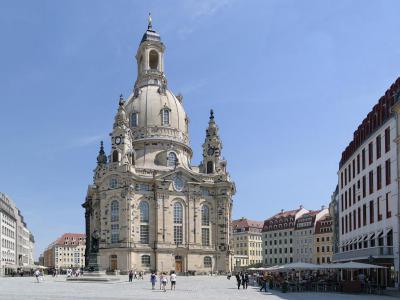
The current Church of Our Lady is a Lutheran church built between 1726 and 1743. It features Baroque architecture and has one of Europe's largest domes.
The first Church of Our Lady was a Catholic church built in the 11th century. It became a Protestant church during the Reformation. The original church was torn down and replaced by the new Luthern church.
In 1736, Gottfried Silbermann built an exceptional 43-stop organ for the church. Johann Sebastian Bach played a recital on the organ on December 1, 1736.
The church's iconic dome is 96 meters (315 feet) tall. The dome is known as Stone Bell ("die Steinerne Glocke" in German). The dome is often compared to Michelangelo's Saint Peter's Basilica dome. Stone Bell weighed 12,000 tons and was originally held up by eight supports.
In 1945, Allied forces bombed Dresden. The church survived two days of attacks before collapsing. While most of the church was destroyed, the original altar and chancel were salvaged.
Residents salvaged and numbered stone fragments, hoping to use them in a future reconstruction. In 1994, Gunter Blobel won the Nobel Prize for medicine and donated his prize money to restore the Church of Our Lady. In addition, England's Prince Edward supported the Dresden Trust which contributed funds for the reconstruction project.
Rebuilding the Church of Our Lady cost 180 million Euros. The rebuilding effort began in 1992 and was completed in 2005. The church was rebuilt using the original plans from the 1720s and salvaged materials. About 3,800 original stones were used in the reconstruction. One can see the original stones in the building as they appear darker due to age and fire damage.
Rebuilding the church was a community-wide effort. Builders relied on photographs and memories to reconstruct the details. For example, old wedding albums helped builders reconstruct the church's carved oak doors.
A new orb and cross were forged and placed on top of the dome. The original damaged cross stands inside by the church's altar. The original organ was replaced with a 68-stop organ.
The rebuilt Church of Our Lady is a popular attraction. US President Barack Obama visited the church in 2009.
The first Church of Our Lady was a Catholic church built in the 11th century. It became a Protestant church during the Reformation. The original church was torn down and replaced by the new Luthern church.
In 1736, Gottfried Silbermann built an exceptional 43-stop organ for the church. Johann Sebastian Bach played a recital on the organ on December 1, 1736.
The church's iconic dome is 96 meters (315 feet) tall. The dome is known as Stone Bell ("die Steinerne Glocke" in German). The dome is often compared to Michelangelo's Saint Peter's Basilica dome. Stone Bell weighed 12,000 tons and was originally held up by eight supports.
In 1945, Allied forces bombed Dresden. The church survived two days of attacks before collapsing. While most of the church was destroyed, the original altar and chancel were salvaged.
Residents salvaged and numbered stone fragments, hoping to use them in a future reconstruction. In 1994, Gunter Blobel won the Nobel Prize for medicine and donated his prize money to restore the Church of Our Lady. In addition, England's Prince Edward supported the Dresden Trust which contributed funds for the reconstruction project.
Rebuilding the Church of Our Lady cost 180 million Euros. The rebuilding effort began in 1992 and was completed in 2005. The church was rebuilt using the original plans from the 1720s and salvaged materials. About 3,800 original stones were used in the reconstruction. One can see the original stones in the building as they appear darker due to age and fire damage.
Rebuilding the church was a community-wide effort. Builders relied on photographs and memories to reconstruct the details. For example, old wedding albums helped builders reconstruct the church's carved oak doors.
A new orb and cross were forged and placed on top of the dome. The original damaged cross stands inside by the church's altar. The original organ was replaced with a 68-stop organ.
The rebuilt Church of Our Lady is a popular attraction. US President Barack Obama visited the church in 2009.
9) Dresden Castle (must see)
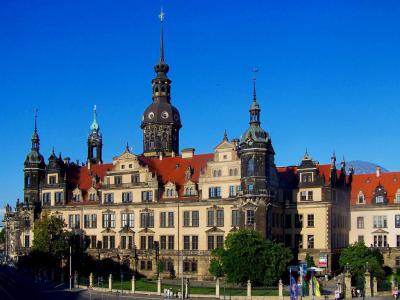
Dresden Castle is one of Dresden's oldest buildings. It served as a royal residence for almost 400 years and housed Saxony electors and Saxony and Polish kings. The castle features different architectural styles, such as Baroque and Neo-renaissance.
The castle was originally built in the 13th century as a Romanesque keep. The keep was extended in the 15th century and again in the 16th century. A fire damaged the castle in 1701, and Augustus the Strong rebuilt the castle and added the western wing collection rooms. The castle was rebuilt in the ornate Baroque style.
The House of Wettin celebrated its 800th anniversary with further renovations and additions between 1889 and 1901. The Stall Courtyard was painted with the famous "Procession of Princes ." In 1914, additional renovations modernized the castle with heating and electric lights.
World War II bombs heavily damaged Dresden Castle. Restoration work started in the 1960s and continues today.
The castle is now home to a collection of museums that are housed in Augustus the Strong's collection rooms. The museums include the Historic Green Vault, the New Green Vault, the Numismatic Cabinet, the Collection of Prints, Drawings, and Photographs, and the Dresden Armory. Guests can also visit an art library with 260,000 titles related to art history.
The Hausmann Tower offers a beautiful view of Dresden's Old Town. In addition, the English Stairway was reconstructed using the original Baroque design.
The castle was originally built in the 13th century as a Romanesque keep. The keep was extended in the 15th century and again in the 16th century. A fire damaged the castle in 1701, and Augustus the Strong rebuilt the castle and added the western wing collection rooms. The castle was rebuilt in the ornate Baroque style.
The House of Wettin celebrated its 800th anniversary with further renovations and additions between 1889 and 1901. The Stall Courtyard was painted with the famous "Procession of Princes ." In 1914, additional renovations modernized the castle with heating and electric lights.
World War II bombs heavily damaged Dresden Castle. Restoration work started in the 1960s and continues today.
The castle is now home to a collection of museums that are housed in Augustus the Strong's collection rooms. The museums include the Historic Green Vault, the New Green Vault, the Numismatic Cabinet, the Collection of Prints, Drawings, and Photographs, and the Dresden Armory. Guests can also visit an art library with 260,000 titles related to art history.
The Hausmann Tower offers a beautiful view of Dresden's Old Town. In addition, the English Stairway was reconstructed using the original Baroque design.
10) Zwinger (Palatial Complex) (must see)
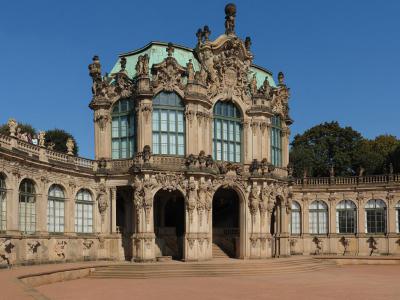
The Zwinger is one of Germany's most impressive Baroque buildings. August the Strong commissioned the complex after visiting Louis XIV's Versailles Palace. The palace was designed as an orangery, garden, and festival area. Architect Matthäus Daniel Pöppelmann designed the palace, which was built between 1710 and 1728.
The Zwinger name refers to an area between defensive walls. In the 15th century, Dresden had a Zwinger garden in between the city walls that supplied the royal court with fresh produce. The present-day Zwinger is in a different location, but the new palace kept the old garden's name.
The Zwinger was primarily a royal entertainment venue and features ornate portals and extravagant fountains. Sculptor Balthasar Permoser’s Nymph's Bath is one fine example of the Zwinger's fabulous Baroque fountains.
Other attractions include an Atlas sculpture on top of the western pavilion. In addition, a carillon with 40 porcelain bells plays every 15 minutes. The chimes change every season and feature melodies by Vivaldi, Mozart, Bach, Wagner, and Weber.
The Zwinger hosted a royal wedding in 1719 when Augustus the Strong’s son Frederick August married Maria Josepha, the daughter of Habsburg emperor Joseph I.
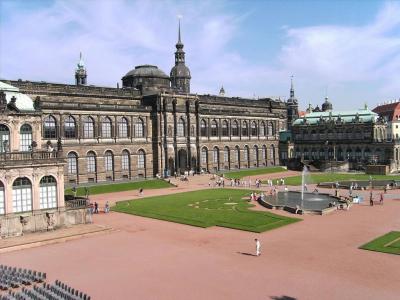
The courtyard garden and pond were added in the 1820s. The gallery wing that now houses the Old Masters Gallery was built in 1855.
The Zwinger was heavily damaged during World War II bombs. It was reconstructed during the 1950s. The Zwinger houses three museums, including the Old Masters Gallery, the Porcelain Collection, and the Mathematical and Physical Instruments collection. The Zwinger and its gardens are open to the public.
The Zwinger name refers to an area between defensive walls. In the 15th century, Dresden had a Zwinger garden in between the city walls that supplied the royal court with fresh produce. The present-day Zwinger is in a different location, but the new palace kept the old garden's name.
The Zwinger was primarily a royal entertainment venue and features ornate portals and extravagant fountains. Sculptor Balthasar Permoser’s Nymph's Bath is one fine example of the Zwinger's fabulous Baroque fountains.
Other attractions include an Atlas sculpture on top of the western pavilion. In addition, a carillon with 40 porcelain bells plays every 15 minutes. The chimes change every season and feature melodies by Vivaldi, Mozart, Bach, Wagner, and Weber.
The Zwinger hosted a royal wedding in 1719 when Augustus the Strong’s son Frederick August married Maria Josepha, the daughter of Habsburg emperor Joseph I.
The courtyard garden and pond were added in the 1820s. The gallery wing that now houses the Old Masters Gallery was built in 1855.
The Zwinger was heavily damaged during World War II bombs. It was reconstructed during the 1950s. The Zwinger houses three museums, including the Old Masters Gallery, the Porcelain Collection, and the Mathematical and Physical Instruments collection. The Zwinger and its gardens are open to the public.
11) Old Masters Picture Gallery (must see)
Augustus, Elector of Saxony, first founded an Art Chamber in 1560. During the 18th century, Augustus the Strong and his heir Frederick Augustus II made significant additions. In 1754, Electors added Raphael’s Sistine Madonna to the collection. The growing collection moved to the Semper Gallery in 1855.
The paintings were stored during World War II and then confiscated by the Red Army. The surviving paintings were returned to Dresden in 1955, and the Old Masters Gallery re-opened in 1960.
The Old Masters Picture Gallery underwent a 50 million dollar renovation completed in 2020. Classic paintings are now displayed amongst the museum's impressive sculpture collection.
Seven hundred paintings were rehung among 420 sculptures. Visitors can see priceless paintings by Rembrandt, Titian, and Raphael. Popular artworks include Vermeer’s Girl Reading a Letter at an Open Window, Rembrandt’s Ganymede, and Titian’s Zinsgroschen.
Artworks are now hung on vibrant walls and grouped by region and time period. For example, Italian works are hung on crimson walls, while French and Spanish works are featured on blue walls.
The paintings were stored during World War II and then confiscated by the Red Army. The surviving paintings were returned to Dresden in 1955, and the Old Masters Gallery re-opened in 1960.
The Old Masters Picture Gallery underwent a 50 million dollar renovation completed in 2020. Classic paintings are now displayed amongst the museum's impressive sculpture collection.
Seven hundred paintings were rehung among 420 sculptures. Visitors can see priceless paintings by Rembrandt, Titian, and Raphael. Popular artworks include Vermeer’s Girl Reading a Letter at an Open Window, Rembrandt’s Ganymede, and Titian’s Zinsgroschen.
Artworks are now hung on vibrant walls and grouped by region and time period. For example, Italian works are hung on crimson walls, while French and Spanish works are featured on blue walls.
