Custom Walk in New York, New York by lindseyjustice_fdd76 created on 2025-05-03
Guide Location: USA » New York
Guide Type: Custom Walk
# of Sights: 5
Tour Duration: 6 Hour(s)
Travel Distance: 17.7 Km or 11 Miles
Share Key: 6PQB3
Guide Type: Custom Walk
# of Sights: 5
Tour Duration: 6 Hour(s)
Travel Distance: 17.7 Km or 11 Miles
Share Key: 6PQB3
How It Works
Please retrieve this walk in the GPSmyCity app. Once done, the app will guide you from one tour stop to the next as if you had a personal tour guide. If you created the walk on this website or come to the page via a link, please follow the instructions below to retrieve the walk in the app.
Retrieve This Walk in App
Step 1. Download the app "GPSmyCity: Walks in 1K+ Cities" on Apple App Store or Google Play Store.



Step 2. In the GPSmyCity app, download(or launch) the guide "New York Map and Walking Tours".
Step 3. Tap the menu button located at upper right corner of the "Walks" screen and select "Retrieve custom walk". Enter the share key: 6PQB3
1) Broadway (must see)
Trying to follow Broadway back to its beginnings, you’d find yourself tracing a much older path: the Wickquasgeck Trail, a route carved into Manhattan in the times of New Amsterdam, long before New York dreamed of skyscrapers or neon marquees... That trail stretched up the island like a wandering spine, and when the Dutch arrived, they simply widened it and gave it a new name: Heeren (or “Gentlemen’s”) Way. The British, who arrived later, noticing how wide the street really was, promptly declared it Broadway—a name that clearly stuck.
Today’s Broadway runs a lot farther than its original ancestor. It launches from Bowling Green at Manhattan’s southern tip, slips through the boroughs, wanders into Westchester County, and keeps going until it reaches Sleepy Hollow. If you’re searching for New York’s oldest continuous street, this is the one.
Jump to 1907, when part of Broadway—stretching from Times Square to Sherman Square—earned a new identity as Automobile Row. Car dealerships, repair shops, and glittering showrooms lined both sides, turning the street into a motor-age catwalk. Over time, the traffic patterns tightened, and Broadway became mainly a one-way river of cars.
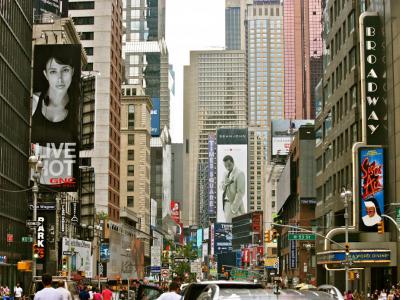
In recent decades, though, the city has rewritten Broadway’s script. Cars have gradually ceded space to people, and sections of the street have transformed into pedestrian plazas, pocket parks, and bike lanes. Times Square, Duffy Square, and Herald Square traded honking horns for café tables and performers in painted outfits. Even Madison and Union Square saw Broadway narrow to make room for walkers instead of windshields.
At the southern end, near Bowling Green and City Hall Park, Lower Broadway still plays host to the city’s legendary ticker-tape parades—snowstorms of paper drifting from office towers as heroes of every kind roll past. These days, it’s more shredded confetti and fewer actual tickers, but the “Canyon of Heroes” effect remains.
And then there’s the stretch that needs no introduction: The Great White Way, a phrase coined in 1901 to describe Broadway’s theater district. Between 42nd and 53rd Streets, the lights burn bright, the marquees compete for your attention, and the plays and musicals rewrite themselves nightly through applause.
From colonial trail to cultural artery, Broadway carries centuries of stories—and somehow still finds room for more...
Today’s Broadway runs a lot farther than its original ancestor. It launches from Bowling Green at Manhattan’s southern tip, slips through the boroughs, wanders into Westchester County, and keeps going until it reaches Sleepy Hollow. If you’re searching for New York’s oldest continuous street, this is the one.
Jump to 1907, when part of Broadway—stretching from Times Square to Sherman Square—earned a new identity as Automobile Row. Car dealerships, repair shops, and glittering showrooms lined both sides, turning the street into a motor-age catwalk. Over time, the traffic patterns tightened, and Broadway became mainly a one-way river of cars.
In recent decades, though, the city has rewritten Broadway’s script. Cars have gradually ceded space to people, and sections of the street have transformed into pedestrian plazas, pocket parks, and bike lanes. Times Square, Duffy Square, and Herald Square traded honking horns for café tables and performers in painted outfits. Even Madison and Union Square saw Broadway narrow to make room for walkers instead of windshields.
At the southern end, near Bowling Green and City Hall Park, Lower Broadway still plays host to the city’s legendary ticker-tape parades—snowstorms of paper drifting from office towers as heroes of every kind roll past. These days, it’s more shredded confetti and fewer actual tickers, but the “Canyon of Heroes” effect remains.
And then there’s the stretch that needs no introduction: The Great White Way, a phrase coined in 1901 to describe Broadway’s theater district. Between 42nd and 53rd Streets, the lights burn bright, the marquees compete for your attention, and the plays and musicals rewrite themselves nightly through applause.
From colonial trail to cultural artery, Broadway carries centuries of stories—and somehow still finds room for more...

2) National September 11 Memorial & Museum (must see)
September 11, 2001, Tuesday morning, 7 am. Flights were bound from New York to points west. By 8:45 am an American Airlines Boeing 767 slammed into the north tower of the World Trade Center. Less than 20 minutes later, another 767 hit the south tower. The Twin Towers collapsed in flames and 2,977 people died. This day would never be forgotten.
The National September 11 Memorial & Museum is a memorial and museum in New York City commemorating the September 11, 2001, and the 1993 World Trade Center bombing attacks. By November 2003, the memorial design project had been awarded to architect Michael Arad and landscape architect Peter Walker. Their memorial is called "Reflecting Absence." It is a forest of white oak trees surrounding two recessed pools formed by the footprints of the Twin Towers.
The park is level with the street. The names of victims who died from the attacks, including the 1993 bombing, are inscribed on parapets around the waterfalls. The waterfalls are intended to mute outside noises and create a meditative atmosphere at the site.
A callery pear tree that survived, called the "Survivor Tree," was replanted at the World Trade Center. It is thriving. Six other "survivor" pear trees and linden trees have been planted at other sites.
The "Memorial Glade" is a path that follows a temporary ramp used by first responders. It has six enormous stones that jut up through the ground as if violently pushed. The stones simply "strength and resistance."
The September 11 Museum at the site opened in May 2014. It has a collection of over 40,000 images, 14,000 artifacts, and about 3,500 recordings, including 500 hours of videos. There are steel items from the towers, such as the "Last Column." The museum is designed by the architectural firm Davis Brody Bond. It is 70 feet underground, accessible through a pavilion.
The pavilion follows a deconstructivist design, resembling collapsed buildings. Two "tridents" from the towers are inside. One of the museum walls is the old "slurry" wall holding back the Hudson River. The bodies of 1,115 victims were moved to a bedrock crypt space as part of the museum.
The National September 11 Memorial & Museum is a memorial and museum in New York City commemorating the September 11, 2001, and the 1993 World Trade Center bombing attacks. By November 2003, the memorial design project had been awarded to architect Michael Arad and landscape architect Peter Walker. Their memorial is called "Reflecting Absence." It is a forest of white oak trees surrounding two recessed pools formed by the footprints of the Twin Towers.
The park is level with the street. The names of victims who died from the attacks, including the 1993 bombing, are inscribed on parapets around the waterfalls. The waterfalls are intended to mute outside noises and create a meditative atmosphere at the site.
A callery pear tree that survived, called the "Survivor Tree," was replanted at the World Trade Center. It is thriving. Six other "survivor" pear trees and linden trees have been planted at other sites.
The "Memorial Glade" is a path that follows a temporary ramp used by first responders. It has six enormous stones that jut up through the ground as if violently pushed. The stones simply "strength and resistance."
The September 11 Museum at the site opened in May 2014. It has a collection of over 40,000 images, 14,000 artifacts, and about 3,500 recordings, including 500 hours of videos. There are steel items from the towers, such as the "Last Column." The museum is designed by the architectural firm Davis Brody Bond. It is 70 feet underground, accessible through a pavilion.
The pavilion follows a deconstructivist design, resembling collapsed buildings. Two "tridents" from the towers are inside. One of the museum walls is the old "slurry" wall holding back the Hudson River. The bodies of 1,115 victims were moved to a bedrock crypt space as part of the museum.
3) Chelsea Market (must see)
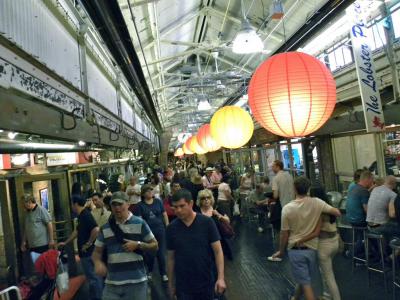
The Chelsea Market stands as a remarkable testament to both redevelopment and preservation, as it has revitalized a former Nabisco factory (where the iconic Oreo cookie was originally crafted), into a bustling shopping destination, appealing to both culinary enthusiasts and fashion aficionados. With over two dozen food vendors to choose from, foodies can revel in a myriad of delectable options. Experience the fusion of Korean flavors with ramen at MOKBAR, savor delectable crepes at BAR SUZETTE, relish in Cambodian sandwiches at NUM PANG, or indulge in piping hot mini-doughnuts at DOUGHNUTTERY. For a more indulgent treat, savor the impeccable seafood and raw bar at CULL & PISTOL, or enjoy upscale American comfort food at Friedman's Lunch.
Those seeking non-food delights may peruse the curated collection of Moroccan art and design at IMPORTS FROM MARRAKESH, explore the latest literary gems at POSMAN BOOKS, find a fashionable outfit at ANTHROPOLOGIE, or browse the expertly-staffed CHELSEA WINE VAULT for a bottle of fine wine. At the Tenth Ave entrance, you'll discover ARTISTS AND FLEAS, a permanent market showcasing the creations of local designers and craftspeople. This vibrant marketplace is the perfect spot to uncover a unique wallet, trendy sunglasses, or a striking statement piece of jewelry.
Those seeking non-food delights may peruse the curated collection of Moroccan art and design at IMPORTS FROM MARRAKESH, explore the latest literary gems at POSMAN BOOKS, find a fashionable outfit at ANTHROPOLOGIE, or browse the expertly-staffed CHELSEA WINE VAULT for a bottle of fine wine. At the Tenth Ave entrance, you'll discover ARTISTS AND FLEAS, a permanent market showcasing the creations of local designers and craftspeople. This vibrant marketplace is the perfect spot to uncover a unique wallet, trendy sunglasses, or a striking statement piece of jewelry.
4) Empire State Building (must see)
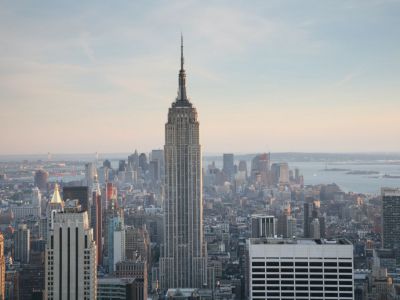
Meet the undisputed champion of New York’s Art Deco era: the Empire State Building, a 102-story giant that rises over 1,450 feet above Midtown’s daily hustle. It once ruled as the tallest building on Earth; today it’s still impressive enough to hold a lineup of titles—seventh-tallest in New York, ninth in the United States, and still one of the tallest freestanding structures anywhere in the Americas.
Its name comes straight from New York’s proud nickname, the “Empire State,” and its streamlined design was the work of the Shreve, Lamb & Harmon architectural firm. Construction began in 1930, wrapped up just a year later, and replaced the former Waldorf-Astoria Hotel that once stood on the same block. From the start, the goal was simple: to build the biggest, boldest skyscraper the world had ever seen.
You’ll find this landmark in Midtown South, planted along Fifth Avenue between 34th and 35th Streets. Three observatories—on the 80th, 86th, and 102nd floors—offer wraparound views that make the city look like an architectural toy box. And thanks to its starring role in more than 250 films and TV shows, beginning with King Kong in 1933, the building’s Hollywood résumé is nearly as tall as the tower itself.
The exterior keeps things classic: Indiana limestone, granite, and clean geometric ornamentation that embodies Art Deco style without telling a story in symbols. The main entrance features metal doors framed by sleek vertical piers topped with sculpted eagles, along with a gold-lettered transom that proudly spells out the building’s name.
In recognition of its cultural and architectural significance, the Empire State Building was declared a New York City Landmark in 1980 and added to the National Register of Historic Places in 1986. Today, it remains one of Manhattan’s most enduring icons—an unmistakable marker on the skyline and an essential stop for anyone wanting to feel the full vertical spirit of New York.
Its name comes straight from New York’s proud nickname, the “Empire State,” and its streamlined design was the work of the Shreve, Lamb & Harmon architectural firm. Construction began in 1930, wrapped up just a year later, and replaced the former Waldorf-Astoria Hotel that once stood on the same block. From the start, the goal was simple: to build the biggest, boldest skyscraper the world had ever seen.
You’ll find this landmark in Midtown South, planted along Fifth Avenue between 34th and 35th Streets. Three observatories—on the 80th, 86th, and 102nd floors—offer wraparound views that make the city look like an architectural toy box. And thanks to its starring role in more than 250 films and TV shows, beginning with King Kong in 1933, the building’s Hollywood résumé is nearly as tall as the tower itself.
The exterior keeps things classic: Indiana limestone, granite, and clean geometric ornamentation that embodies Art Deco style without telling a story in symbols. The main entrance features metal doors framed by sleek vertical piers topped with sculpted eagles, along with a gold-lettered transom that proudly spells out the building’s name.
In recognition of its cultural and architectural significance, the Empire State Building was declared a New York City Landmark in 1980 and added to the National Register of Historic Places in 1986. Today, it remains one of Manhattan’s most enduring icons—an unmistakable marker on the skyline and an essential stop for anyone wanting to feel the full vertical spirit of New York.
5) St. Patrick's Cathedral (must see)
In case you wonder why New York has two Saint Patrick’s Cathedrals, it’s not because the city has twice as many saints—it’s because the first one simply couldn’t keep up. The Old Cathedral from 1815 did its best, but by the mid-1800s, the Archdiocese had outgrown it. So, in 1858, construction began on a new spiritual heavyweight: the towering Gothic Revival cathedral that now occupies the block between 50th and 51st Streets on Madison Avenue. Designed by James Renwick Jr. and formally opened in 1879, it rises directly across from Rockefeller Center, as if keeping an eye on the skating rink...
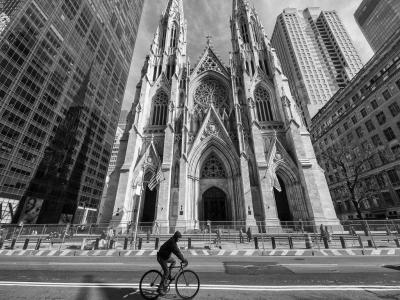
From the outside, the building is a full Gothic drama. Marble everywhere, pointed arches stacked like architectural exclamation marks, and stained-glass windows glowing in neat vertical ranks. The whole structure stretches 332 feet in length, with transepts spanning 174 feet. But the true attention-grabbers are the twin spires—330 feet of pure, sky-seeking ambition—framing the bronze entrance doors.
Step inside, and the scale refuses to let up. A broad central aisle is flanked by two narrower ones, separated by 32 marble columns that seem determined to out-pose each other. Look up, and you’ll see ribbed Gothic vaults meeting in elegant bosses overhead. Along the sides, twelve chapels create quieter pockets of devotion, while seating for 2,400 fills the nave with long lines of wooden pews.
Even the high altar has a story. The original version was shipped off to Fordham University Church in the Bronx, making room for the current altar carved from grey-white Italian marble and crowned by a bronze baldachin. It rises beneath a statue of Christ the King, complete with angels and decorative pinnacles.
Today, the “new” Saint Patrick’s Cathedral is firmly established as one of Manhattan’s defining landmarks, recognized both as a New York City designated landmark and listed on the National Register of Historic Places—a cathedral built to impress, and one that still succeeds brilliantly!
From the outside, the building is a full Gothic drama. Marble everywhere, pointed arches stacked like architectural exclamation marks, and stained-glass windows glowing in neat vertical ranks. The whole structure stretches 332 feet in length, with transepts spanning 174 feet. But the true attention-grabbers are the twin spires—330 feet of pure, sky-seeking ambition—framing the bronze entrance doors.
Step inside, and the scale refuses to let up. A broad central aisle is flanked by two narrower ones, separated by 32 marble columns that seem determined to out-pose each other. Look up, and you’ll see ribbed Gothic vaults meeting in elegant bosses overhead. Along the sides, twelve chapels create quieter pockets of devotion, while seating for 2,400 fills the nave with long lines of wooden pews.
Even the high altar has a story. The original version was shipped off to Fordham University Church in the Bronx, making room for the current altar carved from grey-white Italian marble and crowned by a bronze baldachin. It rises beneath a statue of Christ the King, complete with angels and decorative pinnacles.
Today, the “new” Saint Patrick’s Cathedral is firmly established as one of Manhattan’s defining landmarks, recognized both as a New York City designated landmark and listed on the National Register of Historic Places—a cathedral built to impress, and one that still succeeds brilliantly!
