Custom Walk in Pittsburgh, Pennsylvania by bruce_jones2_7a98b created on 2025-05-03
Guide Location: USA » Pittsburgh
Guide Type: Custom Walk
# of Sights: 10
Tour Duration: 4 Hour(s)
Travel Distance: 9.7 Km or 6 Miles
Share Key: N9ZYL
Guide Type: Custom Walk
# of Sights: 10
Tour Duration: 4 Hour(s)
Travel Distance: 9.7 Km or 6 Miles
Share Key: N9ZYL
How It Works
Please retrieve this walk in the GPSmyCity app. Once done, the app will guide you from one tour stop to the next as if you had a personal tour guide. If you created the walk on this website or come to the page via a link, please follow the instructions below to retrieve the walk in the app.
Retrieve This Walk in App
Step 1. Download the app "GPSmyCity: Walks in 1K+ Cities" on Apple App Store or Google Play Store.



Step 2. In the GPSmyCity app, download(or launch) the guide "Pittsburgh Map and Walking Tours".
Step 3. Tap the menu button located at upper right corner of the "Walks" screen and select "Retrieve custom walk". Enter the share key: N9ZYL
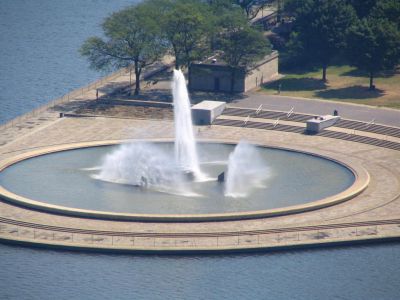
1) Point State Park
Point State Park, nestled at the scenic confluence of the Allegheny and Monongahela rivers which together form the Ohio River, stands as a verdant oasis amid the urban landscape of Pittsburgh. Spanning across 36 acres, this park is not only a recreational haven but also a rich historical site, echoing the stories of the area's past.
The inception of Point State Park traces back to the 1950s when the land, previously occupied by industrial entities, was acquired through eminent domain. This move paved the way for the creation of a public space that would offer respite and leisure to the city's inhabitants and visitors alike. After nearly two decades of planning and construction, the park officially opened its gates in August 1974, celebrated by the completion of its now-iconic fountain.
Point State Park is also a portal to the past, housing the remnants and outlines of Fort Pitt and Fort Duquesne, two of the oldest structures in Pittsburgh. These forts play a crucial role in the narrative of the region, marking pivotal moments in the French and Indian War (1754–1763). The Fort Pitt Museum, located within the park's confines, offers visitors a glimpse into this tumultuous period, emphasizing Pittsburgh's strategic importance in American history.
Beyond its historical significance, Point State Park serves as a vibrant center for cultural and recreational activities. It is a popular gathering spot for workers, visitors, and residents seeking a peaceful escape from the hustle and bustle of downtown Pittsburgh. The park is also a focal point for major city events, including the Venture Outdoors Festival, Three Rivers Arts Festival, and Three Rivers Regatta, each attracting thousands of attendees who come to celebrate Pittsburgh's lively community spirit and rich cultural heritage.
The inception of Point State Park traces back to the 1950s when the land, previously occupied by industrial entities, was acquired through eminent domain. This move paved the way for the creation of a public space that would offer respite and leisure to the city's inhabitants and visitors alike. After nearly two decades of planning and construction, the park officially opened its gates in August 1974, celebrated by the completion of its now-iconic fountain.
Point State Park is also a portal to the past, housing the remnants and outlines of Fort Pitt and Fort Duquesne, two of the oldest structures in Pittsburgh. These forts play a crucial role in the narrative of the region, marking pivotal moments in the French and Indian War (1754–1763). The Fort Pitt Museum, located within the park's confines, offers visitors a glimpse into this tumultuous period, emphasizing Pittsburgh's strategic importance in American history.
Beyond its historical significance, Point State Park serves as a vibrant center for cultural and recreational activities. It is a popular gathering spot for workers, visitors, and residents seeking a peaceful escape from the hustle and bustle of downtown Pittsburgh. The park is also a focal point for major city events, including the Venture Outdoors Festival, Three Rivers Arts Festival, and Three Rivers Regatta, each attracting thousands of attendees who come to celebrate Pittsburgh's lively community spirit and rich cultural heritage.
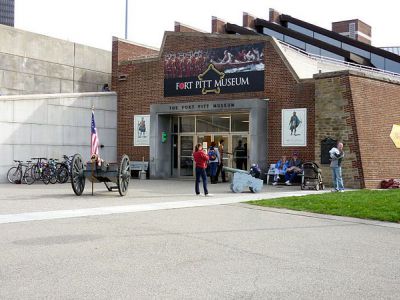
2) Fort Pitt Museum
Point State Park is filled with numerous sites and activities that can't be found in any other U.S. city. One of the outstanding sites is Fort Pitt Museum. This indoor/outdoor museum is located in a recreated Fort Pitt. It details the fort's important roles during the American Revolution and the Whiskey Rebellion.
Visitors to the museum will see numerous artifacts from the early days of Pennsylvania and the city of Pittsburgh. They will take a trip into a history with a recreation of 18th century frontier life. The tour includes a trader's cabin, soldier's barracks and a replica casemate.
Tourists can also take part in some hands-on activities at the Fort Pitt Museum. They are welcome to practice tomahawk throwing, take a guided tour or watch a living history exhibit. The Royal American Regiment will display how to properly fire a musket. Food is prepared outdoors over an open fire. Visitors will even see wood chopping and sewing demonstrations outdoors.
Visitors to the museum will see numerous artifacts from the early days of Pennsylvania and the city of Pittsburgh. They will take a trip into a history with a recreation of 18th century frontier life. The tour includes a trader's cabin, soldier's barracks and a replica casemate.
Tourists can also take part in some hands-on activities at the Fort Pitt Museum. They are welcome to practice tomahawk throwing, take a guided tour or watch a living history exhibit. The Royal American Regiment will display how to properly fire a musket. Food is prepared outdoors over an open fire. Visitors will even see wood chopping and sewing demonstrations outdoors.
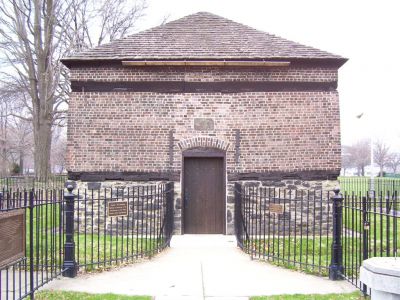
3) Fort Pitt Blockhouse (must see)
The blockhouse is the only structure left of Fort Pitt, making it the oldest structure in this part of the state. The fort was built in 1764 by the British as a defense against Native American attacks. Later, it was used as a trading post, and then as housing.
After Henry Bouquet stopped the siege at Fort Pitt he ordered the construction of a number of supporting structures around the periphery. The blockhouse is all that remains of his defensive structure. This is thanks to the fact the blockhouse was the only building that remained in use as a house when the fort was demolished in 1792.
Visitors can go to Point State Park to view the Fort Pitt Blockhouse at any time while during the park's open hours. They can view the interior and exterior of the blockhouse to see the full structure of the building.
Outside of the blockhouse is the Edith Ammon Memorial Garden. The landscaping was created to honor the memory of Edith Ammon, who was instrumental in preserving the blockhouse. Indeed, Ammon helped the Pittsburgh chapter of the Daughter's of the Revolution gain ownership of the Fort Pitt Blockhouse. They then restored it and opened it to the public in 1894.
Point State Park is located at the confluence of the Ohio and Monongahela Rivers. Tourists to the park can walk along the Three Rivers Heritage Trail, which will lead them to the Fort Pitt blockhouse as well as the accompanying museum. They can also take the time to visit Fort Duquesne and the Point State Park Fountain.
Why You Should Visit:
To see an important piece of American Revolutionary history
To view the building techniques of simple structures from the late 18th century
Tips:
There is no cost to visit the Fort Pitt blockhouse. It is open during daylight hours on weekends throughout the year. From April through October, the fort is open on Wednesdays and Thursdays as well.
After Henry Bouquet stopped the siege at Fort Pitt he ordered the construction of a number of supporting structures around the periphery. The blockhouse is all that remains of his defensive structure. This is thanks to the fact the blockhouse was the only building that remained in use as a house when the fort was demolished in 1792.
Visitors can go to Point State Park to view the Fort Pitt Blockhouse at any time while during the park's open hours. They can view the interior and exterior of the blockhouse to see the full structure of the building.
Outside of the blockhouse is the Edith Ammon Memorial Garden. The landscaping was created to honor the memory of Edith Ammon, who was instrumental in preserving the blockhouse. Indeed, Ammon helped the Pittsburgh chapter of the Daughter's of the Revolution gain ownership of the Fort Pitt Blockhouse. They then restored it and opened it to the public in 1894.
Point State Park is located at the confluence of the Ohio and Monongahela Rivers. Tourists to the park can walk along the Three Rivers Heritage Trail, which will lead them to the Fort Pitt blockhouse as well as the accompanying museum. They can also take the time to visit Fort Duquesne and the Point State Park Fountain.
Why You Should Visit:
To see an important piece of American Revolutionary history
To view the building techniques of simple structures from the late 18th century
Tips:
There is no cost to visit the Fort Pitt blockhouse. It is open during daylight hours on weekends throughout the year. From April through October, the fort is open on Wednesdays and Thursdays as well.
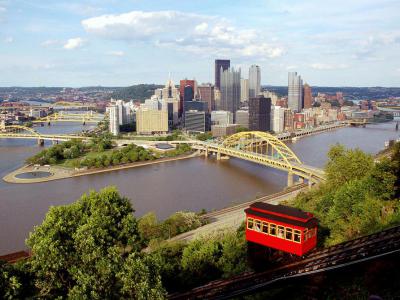
4) Duquesne Incline (Lower Station)
The Duquesne Incline is a type of railway system located near the South Side neighborhood of Pittsburgh, running up Mount Washington. Initially powered by steam upon its completion in 1877, the purpose of the Duquesne Incline was primarily to transport goods up and down Mount Washington during the late 19th century. Over time, it transitioned to carrying passengers, particularly residents of Mount Washington who sought to avoid the steep footpaths leading to the summit. At one point, there were multiple inclines constructed on Mount Washington, but with the development of more roads on the hill, most of them were shut down. By the late 1960s, only the Monongahela Incline and the Duquesne Incline remained operational.
In 1962, the Duquesne Incline ceased operations, seemingly indefinitely. It required significant repairs, and due to low patronage, the private owners of the incline took little action. However, residents of the local Duquesne Heights community initiated a fundraising campaign to support the incline's restoration. The campaign was highly successful, leading to the reopening of the incline on July 1, 1963, under the management of a non-profit organization dedicated to its preservation.
Subsequently, the Duquesne Incline underwent extensive refurbishment. The cars were stripped of their paint to reveal the original wooden structure, and an observation deck was constructed at the summit, offering visitors a panoramic view of Pittsburgh's "Golden Triangle." Today, the Duquesne Incline stands as one of the most popular tourist attractions in the city.
In 1962, the Duquesne Incline ceased operations, seemingly indefinitely. It required significant repairs, and due to low patronage, the private owners of the incline took little action. However, residents of the local Duquesne Heights community initiated a fundraising campaign to support the incline's restoration. The campaign was highly successful, leading to the reopening of the incline on July 1, 1963, under the management of a non-profit organization dedicated to its preservation.
Subsequently, the Duquesne Incline underwent extensive refurbishment. The cars were stripped of their paint to reveal the original wooden structure, and an observation deck was constructed at the summit, offering visitors a panoramic view of Pittsburgh's "Golden Triangle." Today, the Duquesne Incline stands as one of the most popular tourist attractions in the city.
5) Point of View Park
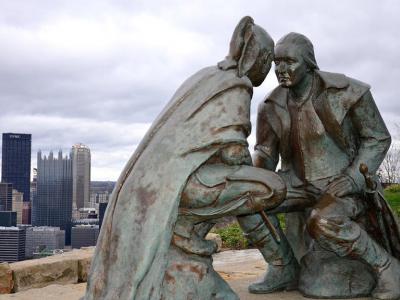
Point of View Park is a prominent landmark situated on Mount Washington's edge, at the westernmost point of Grand View Scenic Byway Park, within the designated Pennsylvania scenic byway. This unique park offers visitors not just a panoramic view of Pittsburgh but also serves as a cultural and historical emblem through its eponymous bronze sculpture, "Point of View."
The sculpture, which has given the park its name, was dedicated in 2006 and stands as a significant piece of public art. It artfully depicts a historic meeting between George Washington and the Seneca leader Guyasuta. The two figures are shown with their weapons down, engaging in a face-to-face dialogue in October 1770, a moment captured during Washington's exploration of land along the Ohio River for future settlement. This encounter highlights a pivotal moment of dialogue and mutual respect between two leaders from different cultures at a formative time in American history.
Prior to its official dedication in October 2006, locals affectionately referred to the site as "Photography Park." This nickname stemmed from its popularity among tourists and photographers alike, who were drawn to its concrete overlook for the purpose of capturing the stunning cityscape below. The park's transformation from a favored photography spot to a historical landmark encapsulates its dual appeal as both a scenic viewpoint and a commemorative space, reflecting the rich tapestry of Pittsburgh's past and present.
The sculpture, which has given the park its name, was dedicated in 2006 and stands as a significant piece of public art. It artfully depicts a historic meeting between George Washington and the Seneca leader Guyasuta. The two figures are shown with their weapons down, engaging in a face-to-face dialogue in October 1770, a moment captured during Washington's exploration of land along the Ohio River for future settlement. This encounter highlights a pivotal moment of dialogue and mutual respect between two leaders from different cultures at a formative time in American history.
Prior to its official dedication in October 2006, locals affectionately referred to the site as "Photography Park." This nickname stemmed from its popularity among tourists and photographers alike, who were drawn to its concrete overlook for the purpose of capturing the stunning cityscape below. The park's transformation from a favored photography spot to a historical landmark encapsulates its dual appeal as both a scenic viewpoint and a commemorative space, reflecting the rich tapestry of Pittsburgh's past and present.
6) Duquesne Incline (Upper Station) (must see)
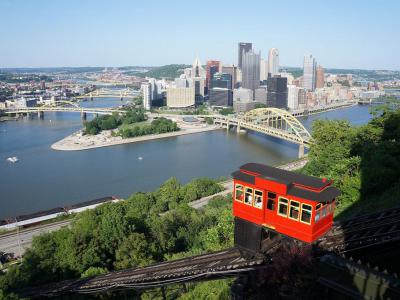
The Duquesne Incline is a type of railway system located close to the South Side neighborhood of Pittsburgh. It runs up Mount Washington in the city.
Initially powered by steam upon its completion in 1877, the purpose of the Duquesne Incline was to transport goods up and down Mount Washington during the late 19th century. Over time, it began to transport passengers, particularly residents of Mount Washington who found walking up the steep footpaths to be tiresome. Similar inclines were constructed across Mount Washington during this period. However, as more roads were built on the hill, most of these other inclines were shut down. By the late 1960s, only the Monongahela Incline and the Duquesne Incline remained operational.
In 1962, the Duquesne Incline was shut down, seemingly for good. It required significant repairs, but with few passengers, the private owners of the incline took little action. However, residents of Duquesne Heights initiated a fundraising campaign to support the incline's restoration. The campaign was highly successful, and on July 1, 1963, the incline reopened under the management of a non-profit organization committed to its preservation.
Since then, the Duquesne Incline has undergone extensive refurbishment. The cars have been restored to reveal their original wooden design after removing layers of paint. Additionally, an observation deck was constructed at the top, providing visitors with a panoramic view of Pittsburgh's "Golden Triangle." Today, the Duquesne Incline is one of the most popular tourist attractions in the city.
Initially powered by steam upon its completion in 1877, the purpose of the Duquesne Incline was to transport goods up and down Mount Washington during the late 19th century. Over time, it began to transport passengers, particularly residents of Mount Washington who found walking up the steep footpaths to be tiresome. Similar inclines were constructed across Mount Washington during this period. However, as more roads were built on the hill, most of these other inclines were shut down. By the late 1960s, only the Monongahela Incline and the Duquesne Incline remained operational.
In 1962, the Duquesne Incline was shut down, seemingly for good. It required significant repairs, but with few passengers, the private owners of the incline took little action. However, residents of Duquesne Heights initiated a fundraising campaign to support the incline's restoration. The campaign was highly successful, and on July 1, 1963, the incline reopened under the management of a non-profit organization committed to its preservation.
Since then, the Duquesne Incline has undergone extensive refurbishment. The cars have been restored to reveal their original wooden design after removing layers of paint. Additionally, an observation deck was constructed at the top, providing visitors with a panoramic view of Pittsburgh's "Golden Triangle." Today, the Duquesne Incline is one of the most popular tourist attractions in the city.
7) Monongahela Incline (Upper Station) (must see)
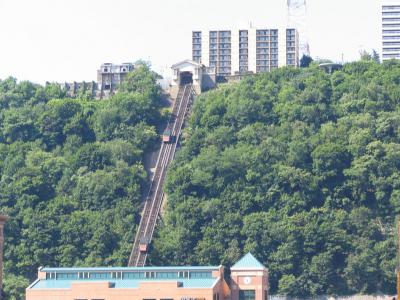
Constructed in 1870, the Monongahela Incline stands as the oldest continuously operating funicular in the United States. Alongside its counterpart, the Duquesne Incline, it represents one of only two surviving inclines from the original 17 passenger-carrying inclines established in Pittsburgh during the late 19th century.
The rapid expansion of Pittsburgh's industrial sector in 1860 spurred a significant influx of labor, primarily from German immigrants. This surge in population led to a pressing housing shortage, as industry claimed much of the flat terrain near the river, leaving only the steep hillsides of Mount Washington, also known as "Coal Hill," available for residential development. However, accessibility between the hill and other areas was limited by inadequate roads and public transportation.
Drawing on memories of cable cars from their native land, the predominantly German immigrant community residing on Mount Washington proposed the construction of inclines along the face of Coal Hill. This initiative materialized into the Monongahela Incline, which commenced operations on May 28, 1870.
Today, the Port Authority of Allegheny County oversees the operation of the Monongahela Incline, along with Pittsburgh's transit system, primarily for tourism purposes. Serving as a popular attraction, the incline transports visitors to the summit of Mount Washington, offering breathtaking vistas of downtown Pittsburgh and its surroundings.
The rapid expansion of Pittsburgh's industrial sector in 1860 spurred a significant influx of labor, primarily from German immigrants. This surge in population led to a pressing housing shortage, as industry claimed much of the flat terrain near the river, leaving only the steep hillsides of Mount Washington, also known as "Coal Hill," available for residential development. However, accessibility between the hill and other areas was limited by inadequate roads and public transportation.
Drawing on memories of cable cars from their native land, the predominantly German immigrant community residing on Mount Washington proposed the construction of inclines along the face of Coal Hill. This initiative materialized into the Monongahela Incline, which commenced operations on May 28, 1870.
Today, the Port Authority of Allegheny County oversees the operation of the Monongahela Incline, along with Pittsburgh's transit system, primarily for tourism purposes. Serving as a popular attraction, the incline transports visitors to the summit of Mount Washington, offering breathtaking vistas of downtown Pittsburgh and its surroundings.
8) Monongahela Incline (Lower Station)
Constructed in 1870, the Monongahela Incline stands as the oldest continuously functioning funicular in the United States. It is one of the two remaining inclines, alongside the nearby Duquesne Incline, among the original 17 passenger-carrying inclines erected in Pittsburgh during the late 19th century.
Pittsburgh's burgeoning industrial sector in 1860 sparked a significant need for labor, drawing predominantly German immigrants to the area. This led to a notable housing shortage as industries predominantly occupied the flat lands by the river, leaving only the steep hillsides of Mt. Washington, also known as "Coal Hill," available for residential purposes. However, commuting between the hill and other regions was challenging due to the absence of adequate roads or public transportation.
The German immigrants residing on Mt. Washington, recalling the cable cars (seilbahns) from their homeland, proposed the construction of inclines along the slope of Coal Hill. The outcome was the Monongahela Incline, which commenced operations on May 28, 1870.
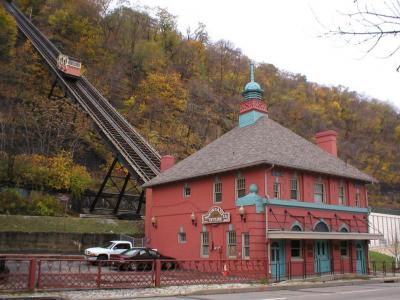
Presently, the Monongahela Incline is managed by the Port Authority of Allegheny County, which oversees Pittsburgh's entire transit network. Commuters can transfer between the incline, light rail, and buses. The lower station of the incline is situated across from the Station Square shopping complex, conveniently accessible via the light rail system at the Station Square station.
The Monongahela Incline transports visitors to the summit of Mount Washington, offering a breathtaking panoramic view of downtown Pittsburgh and its surroundings. Alongside the nearby Duquesne Incline, it constitutes one of the premier attractions in present-day Pittsburgh.
Pittsburgh's burgeoning industrial sector in 1860 sparked a significant need for labor, drawing predominantly German immigrants to the area. This led to a notable housing shortage as industries predominantly occupied the flat lands by the river, leaving only the steep hillsides of Mt. Washington, also known as "Coal Hill," available for residential purposes. However, commuting between the hill and other regions was challenging due to the absence of adequate roads or public transportation.
The German immigrants residing on Mt. Washington, recalling the cable cars (seilbahns) from their homeland, proposed the construction of inclines along the slope of Coal Hill. The outcome was the Monongahela Incline, which commenced operations on May 28, 1870.
Presently, the Monongahela Incline is managed by the Port Authority of Allegheny County, which oversees Pittsburgh's entire transit network. Commuters can transfer between the incline, light rail, and buses. The lower station of the incline is situated across from the Station Square shopping complex, conveniently accessible via the light rail system at the Station Square station.
The Monongahela Incline transports visitors to the summit of Mount Washington, offering a breathtaking panoramic view of downtown Pittsburgh and its surroundings. Alongside the nearby Duquesne Incline, it constitutes one of the premier attractions in present-day Pittsburgh.
9) Nickelodeon (America's First Commercial Movie Theater) (must see)
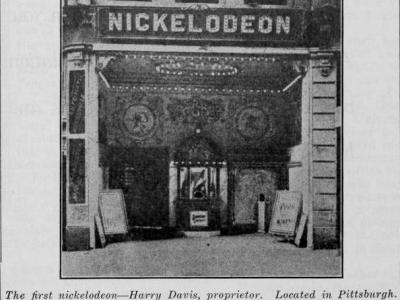
The very first moving picture theater in the United States, called Nickelodeon, opened on June 19, 1905 in a small storefront on Smithfield Street in Pittsburgh. Developed by John Harris and Harry Davis, the venue had 96 seats and only charged five cents, or one nickel, per show that lasted 15 minutes. The name Nickelodeon is a combination of two words: "nickel" (the cost of admission) and "odeon" (the Greek word for "theatre").
Prior to that, moving pictures had been projected on store fronts, in warehouses and other locations throughout the world, but Harris and Davis's Nickelodeon was the first structure fully designated to this purpose.
The new entertainment facility proved to be a hit and attracted 450 customers on day one, followed by another 1,500 the next day. The entrepreneurs soon expanded the theater to 200 seats, seeing around 7,000 people visiting every day between 8 am and midnight at its peak. In fact, the theater was so successful that soon nickelodeons sprang up all over the country, reaching over 8,000 nationwide by 1908.
Back in early 1900s, Pittsburgh was the epicenter of the film world. Ironically the first Nickelodeon was short-lived due to its own success. It was demolished only five years after the original opening in favor of the newer, larger, purpose-built cinema that could accommodate bigger audiences for longer feature films. Even though the first Nickelodeon no longer exists, its impact can still be felt by moviegoers. It was this genius invention by John Harris and Harry Davis that led to the creation of the motion picture theatre industry that we know today.
To commemorate the historic event on June 19, 1905, a plaque in honor of the first Nickelodeon theater has been placed at its former location on Smithfield Street. "This was the beginning of the motion picture theater industry", it says.
Why You Should Visit:
If you are regular moviegoer, a visit to the birthplace of commercial movie theater in the world is a most-do in Pittsburgh.
Prior to that, moving pictures had been projected on store fronts, in warehouses and other locations throughout the world, but Harris and Davis's Nickelodeon was the first structure fully designated to this purpose.
The new entertainment facility proved to be a hit and attracted 450 customers on day one, followed by another 1,500 the next day. The entrepreneurs soon expanded the theater to 200 seats, seeing around 7,000 people visiting every day between 8 am and midnight at its peak. In fact, the theater was so successful that soon nickelodeons sprang up all over the country, reaching over 8,000 nationwide by 1908.
Back in early 1900s, Pittsburgh was the epicenter of the film world. Ironically the first Nickelodeon was short-lived due to its own success. It was demolished only five years after the original opening in favor of the newer, larger, purpose-built cinema that could accommodate bigger audiences for longer feature films. Even though the first Nickelodeon no longer exists, its impact can still be felt by moviegoers. It was this genius invention by John Harris and Harry Davis that led to the creation of the motion picture theatre industry that we know today.
To commemorate the historic event on June 19, 1905, a plaque in honor of the first Nickelodeon theater has been placed at its former location on Smithfield Street. "This was the beginning of the motion picture theater industry", it says.
Why You Should Visit:
If you are regular moviegoer, a visit to the birthplace of commercial movie theater in the world is a most-do in Pittsburgh.
10) U.S. Steel Tower
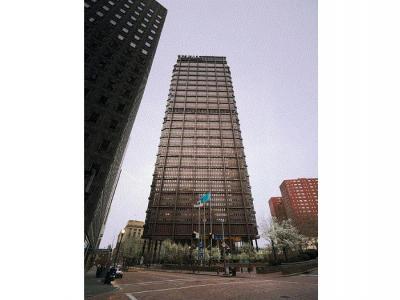
The U.S. Steel Tower, also known as the Steel Building, is located on Grant Street and holds the title of Pittsburgh's tallest skyscraper. It ranks as the fourth tallest in Pennsylvania and the 37th tallest in the entire United States. Its construction finished in 1970, boasting an impressive 64 floors reaching a height of 841 feet (256 meters). Notably, the tower's design features a distinctive triangular shape with recessed corners.
An architectural milestone was achieved with the implementation of liquid-filled fireproofed columns, a groundbreaking innovation at the time. U.S. Steel strategically positioned these robust steel columns on the building's exterior to showcase the innovative Cor-ten steel. This special steel type, resistant to various weather conditions like rain, snow, and fog, forms a protective layer of dark brown oxidation over time. This coating prevents further corrosion, eliminating the need for frequent painting and expensive rust-prevention maintenance.
Initially, the weathering process led to some discoloration of the surrounding city sidewalks and nearby structures. Although a cleanup initiative was undertaken by the corporation after the weathering was completed, traces of rust remain evident on the sidewalks. The Cor-Ten steel used for the tower was manufactured at the former U.S. Steel Homestead Works. With over 44,000 U.S. tons (40,000 metric tons) of structural steel and nearly an acre of office space per floor, the tower stands as a symbol of architectural and engineering excellence.
An architectural milestone was achieved with the implementation of liquid-filled fireproofed columns, a groundbreaking innovation at the time. U.S. Steel strategically positioned these robust steel columns on the building's exterior to showcase the innovative Cor-ten steel. This special steel type, resistant to various weather conditions like rain, snow, and fog, forms a protective layer of dark brown oxidation over time. This coating prevents further corrosion, eliminating the need for frequent painting and expensive rust-prevention maintenance.
Initially, the weathering process led to some discoloration of the surrounding city sidewalks and nearby structures. Although a cleanup initiative was undertaken by the corporation after the weathering was completed, traces of rust remain evident on the sidewalks. The Cor-Ten steel used for the tower was manufactured at the former U.S. Steel Homestead Works. With over 44,000 U.S. tons (40,000 metric tons) of structural steel and nearly an acre of office space per floor, the tower stands as a symbol of architectural and engineering excellence.
