Custom Walk in Nashville, Tennessee by stefany_a_dresh_ed473 created on 2025-05-09
Guide Location: USA » Nashville
Guide Type: Custom Walk
# of Sights: 6
Tour Duration: 2 Hour(s)
Travel Distance: 4.8 Km or 3 Miles
Share Key: JMCH5
Guide Type: Custom Walk
# of Sights: 6
Tour Duration: 2 Hour(s)
Travel Distance: 4.8 Km or 3 Miles
Share Key: JMCH5
How It Works
Please retrieve this walk in the GPSmyCity app. Once done, the app will guide you from one tour stop to the next as if you had a personal tour guide. If you created the walk on this website or come to the page via a link, please follow the instructions below to retrieve the walk in the app.
Retrieve This Walk in App
Step 1. Download the app "GPSmyCity: Walks in 1K+ Cities" on Apple App Store or Google Play Store.



Step 2. In the GPSmyCity app, download(or launch) the guide "Nashville Map and Walking Tours".
Step 3. Tap the menu button located at upper right corner of the "Walks" screen and select "Retrieve custom walk". Enter the share key: JMCH5
1) The Parthenon (must see)
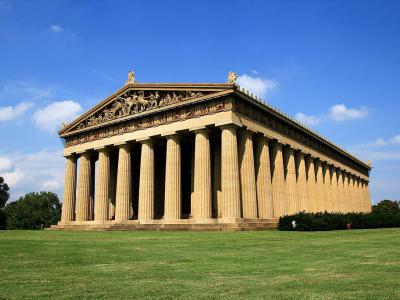
Nashville's Parthenon is an exact replica of the original Parthenon located in Athens. It was constructed in 1897 as part of the Tennessee Centennial Exposition. The decision to build this replica was influenced by Nashville's nickname, "the Athens of the South," which made it a fitting choice for the centerpiece of the 1897 fair. While several buildings at the Exposition were inspired by ancient architecture, the Parthenon was the only one that faithfully reproduced the original and has since been preserved by the city.
Today, the Parthenon serves as an art museum and occupies a central position in Centennial Park, a sizable public park just west of downtown Nashville. The highlight of the Parthenon is the 1990 recreation of the Athena Parthenos statue by Alan LeQuire, replicating its role in ancient Greece.
Functioning as an art museum, the Parthenon houses a permanent collection of 63 paintings created by American artists from the 19th and 20th centuries, generously donated by James M. Cowan. Additionally, the museum offers gallery spaces for hosting various temporary exhibitions and shows.
During the summer season, local theater productions often use the Parthenon as a backdrop for staging classic Greek plays like Euripides' "Medea" and Sophocles' "Antigone." These performances typically take place on the Parthenon's steps and are often offered to the public free of charge. Some productions, such as Mary Zimmerman's "Metamorphoses," have even been presented indoors, at the base of the Athena statue.
In 2002, the Parthenon underwent a comprehensive restoration, including cleaning and refurbishment of its exterior. Furthermore, the exterior lighting system was upgraded to allow for the illumination of the building's columns in various colors, creating a versatile display of visual effects for different events.
Why You Should Visit:
Almost like being at the original! You can go inside for a small price or just enjoy it from the outside. Fun to take pictures with.
This is also a perfect spot to stop for a picnic lunch. Nice tree coverage, lake and picnic area as well as walking trails.
Tip:
You can also buy tickets inside the gift shop to save time if the ticket line is a bit long.
Today, the Parthenon serves as an art museum and occupies a central position in Centennial Park, a sizable public park just west of downtown Nashville. The highlight of the Parthenon is the 1990 recreation of the Athena Parthenos statue by Alan LeQuire, replicating its role in ancient Greece.
Functioning as an art museum, the Parthenon houses a permanent collection of 63 paintings created by American artists from the 19th and 20th centuries, generously donated by James M. Cowan. Additionally, the museum offers gallery spaces for hosting various temporary exhibitions and shows.
During the summer season, local theater productions often use the Parthenon as a backdrop for staging classic Greek plays like Euripides' "Medea" and Sophocles' "Antigone." These performances typically take place on the Parthenon's steps and are often offered to the public free of charge. Some productions, such as Mary Zimmerman's "Metamorphoses," have even been presented indoors, at the base of the Athena statue.
In 2002, the Parthenon underwent a comprehensive restoration, including cleaning and refurbishment of its exterior. Furthermore, the exterior lighting system was upgraded to allow for the illumination of the building's columns in various colors, creating a versatile display of visual effects for different events.
Why You Should Visit:
Almost like being at the original! You can go inside for a small price or just enjoy it from the outside. Fun to take pictures with.
This is also a perfect spot to stop for a picnic lunch. Nice tree coverage, lake and picnic area as well as walking trails.
Tip:
You can also buy tickets inside the gift shop to save time if the ticket line is a bit long.
2) Music Row
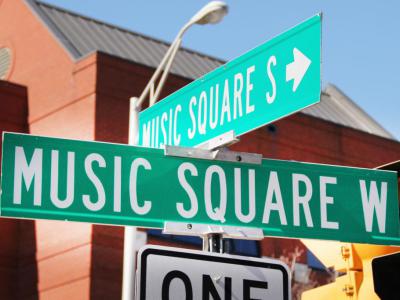
Quite the historic (and beautiful) neighborhood, Music Row is also, arguably, among the most famous places in Nashville, if not the entire state of Tennessee. There's not that much to do, per se, on a visit, but well worth a walk to see where the magic happens, as the mix of old restored homes and modern buildings house the majority of the entire country music industry. Many a brave soul tested their luck and abilities here in various forms; some have succeeded, but many have not. It's still one of the best areas in town for spotting those in the former category, so keep your eyes peeled.
Take a few pictures with the guitars and the big microphone, then proceed to check out the variety of entertainment industry ventures – from law firms to music publishers to record labels and studios to marketing and management firms, performing rights organizations, and even companies that press CDs. If it pertains to music, you'll probably find it here.
The apex of the two streets that compose Music Row funnels into Demonbreun, which is a popular spot to eat (and drink) for industry workers and those who want to party more like a local than a tourist.
Take a few pictures with the guitars and the big microphone, then proceed to check out the variety of entertainment industry ventures – from law firms to music publishers to record labels and studios to marketing and management firms, performing rights organizations, and even companies that press CDs. If it pertains to music, you'll probably find it here.
The apex of the two streets that compose Music Row funnels into Demonbreun, which is a popular spot to eat (and drink) for industry workers and those who want to party more like a local than a tourist.
3) Music City Walk of Fame
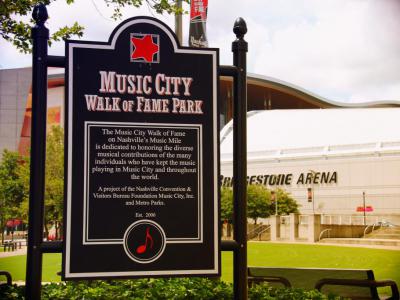
Across the street from the Country Music Hall of Fame & Museum, you can experience another of the popular tourist attractions in Nashville, established in 2006 to honor significant contributors the city's musical heritage and significant achievements in the music industry. Each honoree is commemorated with a large stainless steel and terrazzo star embedded in the sidewalk in Walk of Fame Park, which is located between the Country Music Hall of Fame, Bridgestone Arena and Schermerhorn Symphony Center.
Honorees are inducted twice annually, in the spring and fall. The first inductees were Reba McEntire, Ronnie Milsap, Kenneth Schermerhorn, The Fisk Jubilee Singers, Boudleaux and Felice Bryant, and Roy Orbison. Look for your favorites, from Kris Kristofferson to Loretta Lynn to Johnny Cash to Elvis Presley to Hank Williams to Eddy Arnold to Little Jimmy Dickens to Ernest Tubb to Kenny Rogers. The walk is free and brings back a lot of memories.
Honorees are inducted twice annually, in the spring and fall. The first inductees were Reba McEntire, Ronnie Milsap, Kenneth Schermerhorn, The Fisk Jubilee Singers, Boudleaux and Felice Bryant, and Roy Orbison. Look for your favorites, from Kris Kristofferson to Loretta Lynn to Johnny Cash to Elvis Presley to Hank Williams to Eddy Arnold to Little Jimmy Dickens to Ernest Tubb to Kenny Rogers. The walk is free and brings back a lot of memories.
4) Tootsies Orchid Lounge
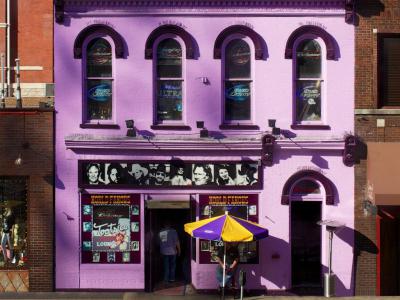
Despite being neither a singer nor a songwriter, Hattie Louis Bess – better known as Tootsie – has been inducted into Nashville's Country Music Hall of Fame. Founder of the most celebrated honky-tonk bar ever conceived, she purchased the building standing right behind the Ryman Auditorium in 1960. Originally called Mom's, the name was changed to Tootsies Orchid Lounge when a painter painted the lounge purple. Today, the exterior color remains unchanged.
History was made at Tootsie's. In the early days, Willie Nelson, Patsy Cline, Mel Tillis, Kris Kristrofferson, Waylon Jennings, Roger Miller and other famous country musicians hung out here (the former received his first songwriting gig after singing at Tootsies). At her funeral in 1978 (she was buried in an orchid gown), Roy Acuff spoke and Connie Smith sang some of Tootsie's favorite hymns. A 60-minute documentary, "Tootsie's Orchid Lounge: Where the Music Began", was released in 1996.
Plastered throughout the bar are pictures and memorabilia of past and present individuals who have influenced country music, along with pictures of hopefuls and never-wills who came to Music City chasing their dreams. Tootsie was known to slip $5 and $10 bills into the pockets of luckless singers, writers and pickers.
History was made at Tootsie's. In the early days, Willie Nelson, Patsy Cline, Mel Tillis, Kris Kristrofferson, Waylon Jennings, Roger Miller and other famous country musicians hung out here (the former received his first songwriting gig after singing at Tootsies). At her funeral in 1978 (she was buried in an orchid gown), Roy Acuff spoke and Connie Smith sang some of Tootsie's favorite hymns. A 60-minute documentary, "Tootsie's Orchid Lounge: Where the Music Began", was released in 1996.
Plastered throughout the bar are pictures and memorabilia of past and present individuals who have influenced country music, along with pictures of hopefuls and never-wills who came to Music City chasing their dreams. Tootsie was known to slip $5 and $10 bills into the pockets of luckless singers, writers and pickers.
5) Lower Broadway (must see)
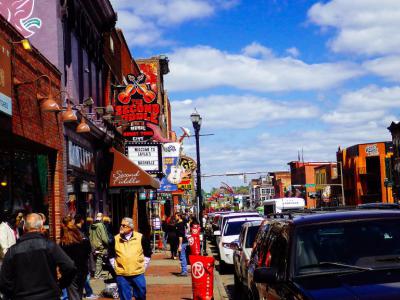
Lower Broadway is a vibrant and bustling street located in the heart of downtown Nashville. Often referred to as the city's entertainment district, Lower Broadway is renowned for its legendary honky-tonks, live country music, and southern hospitality, earning it the affectionate nickname "Honky Tonk Highway."
Running from 1st to 5th Avenue, Lower Broadway is lined with neon-lit venues, restaurants, souvenir shops, and landmarks steeped in music history. It's the beating heart of Nashville's country music scene, where both aspiring musicians and established country stars alike perform for locals and tourists.
Several iconic venues dot the street, including Tootsie's Orchid Lounge, Legends Corner, and Robert's Western World, each offering live music from early afternoon into the early hours of the morning. The street is also home to the Johnny Cash Museum, recognizing the life and music of one of country music's most influential artists.
At the end of Lower Broadway sits the Cumberland River, and the majestic riverfront views serve as the backdrop to the Ascend Amphitheater, a modern outdoor venue. A short stroll away is the Country Music Hall of Fame and Museum and the Bridgestone Arena, further embedding the street in the rich tapestry of Nashville's music scene.
Lower Broadway's energetic atmosphere and non-stop live music make it a favorite for locals and a must-visit for visitors seeking the authentic Nashville experience. Whether you're a lifelong country music fan, a budding musician, or a curious traveler, Lower Broadway offers a unique glimpse into the soul of Music City.
Running from 1st to 5th Avenue, Lower Broadway is lined with neon-lit venues, restaurants, souvenir shops, and landmarks steeped in music history. It's the beating heart of Nashville's country music scene, where both aspiring musicians and established country stars alike perform for locals and tourists.
Several iconic venues dot the street, including Tootsie's Orchid Lounge, Legends Corner, and Robert's Western World, each offering live music from early afternoon into the early hours of the morning. The street is also home to the Johnny Cash Museum, recognizing the life and music of one of country music's most influential artists.
At the end of Lower Broadway sits the Cumberland River, and the majestic riverfront views serve as the backdrop to the Ascend Amphitheater, a modern outdoor venue. A short stroll away is the Country Music Hall of Fame and Museum and the Bridgestone Arena, further embedding the street in the rich tapestry of Nashville's music scene.
Lower Broadway's energetic atmosphere and non-stop live music make it a favorite for locals and a must-visit for visitors seeking the authentic Nashville experience. Whether you're a lifelong country music fan, a budding musician, or a curious traveler, Lower Broadway offers a unique glimpse into the soul of Music City.
6) Johnny Cash Museum (must see)
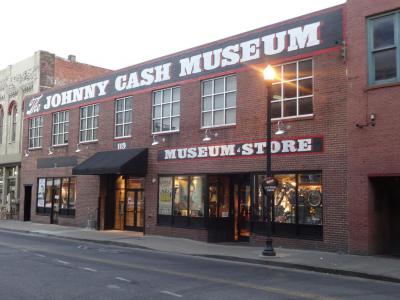
The Johnny Cash Museum, located in downtown Nashville, Tennessee, is a tribute to one of the most influential musicians of the 20th century. Dedicated to preserving the legacy of "The Man in Black," the museum offers an in-depth look at Johnny Cash's life, music, and impact on the world.
Opened in 2013, the museum was founded by Bill Miller, a close friend of Cash, and is considered the largest archive of Johnny Cash artifacts and memorabilia in the world. It houses a comprehensive collection that includes stage costumes, instruments, personal letters, artwork, and handwritten song lyrics, as well as rare recordings and photographs.
The exhibits within the Johnny Cash Museum tell a chronological story of Cash's extraordinary life, starting with his early years in Dyess, Arkansas, through his legendary music career, to his enduring influence on music and culture. Interactive exhibits and a series of films also provide a multifaceted exploration of Cash's work and his contributions to country music and American history.
The museum has received numerous accolades and is considered one of the best music museums in the world. It is not just a destination for Johnny Cash fans, but also for anyone interested in the history of American music, providing a profound understanding of the man behind the music, his values, and his lasting influence on the music industry.
Opened in 2013, the museum was founded by Bill Miller, a close friend of Cash, and is considered the largest archive of Johnny Cash artifacts and memorabilia in the world. It houses a comprehensive collection that includes stage costumes, instruments, personal letters, artwork, and handwritten song lyrics, as well as rare recordings and photographs.
The exhibits within the Johnny Cash Museum tell a chronological story of Cash's extraordinary life, starting with his early years in Dyess, Arkansas, through his legendary music career, to his enduring influence on music and culture. Interactive exhibits and a series of films also provide a multifaceted exploration of Cash's work and his contributions to country music and American history.
The museum has received numerous accolades and is considered one of the best music museums in the world. It is not just a destination for Johnny Cash fans, but also for anyone interested in the history of American music, providing a profound understanding of the man behind the music, his values, and his lasting influence on the music industry.
