Custom Walk in London, England by moringgold_8c9a2 created on 2025-05-15
Guide Location: England » London
Guide Type: Custom Walk
# of Sights: 5
Tour Duration: 1 Hour(s)
Travel Distance: 2.8 Km or 1.7 Miles
Share Key: YDJDZ
Guide Type: Custom Walk
# of Sights: 5
Tour Duration: 1 Hour(s)
Travel Distance: 2.8 Km or 1.7 Miles
Share Key: YDJDZ
How It Works
Please retrieve this walk in the GPSmyCity app. Once done, the app will guide you from one tour stop to the next as if you had a personal tour guide. If you created the walk on this website or come to the page via a link, please follow the instructions below to retrieve the walk in the app.
Retrieve This Walk in App
Step 1. Download the app "GPSmyCity: Walks in 1K+ Cities" on Apple App Store or Google Play Store.



Step 2. In the GPSmyCity app, download(or launch) the guide "London Map and Walking Tours".
Step 3. Tap the menu button located at upper right corner of the "Walks" screen and select "Retrieve custom walk". Enter the share key: YDJDZ
1) Blackfriars Bridge
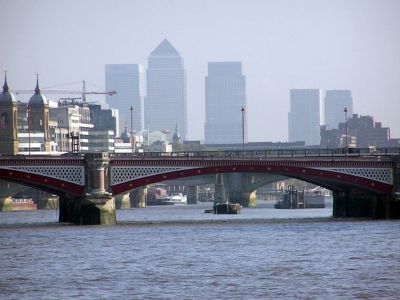
Blackfriars Bridge is tangible proof that even bridges in London have dramatic backstories and excellent taste in accessories.
The original structure made its debut in 1769, the brainchild of 26-year-old architectural prodigy Robert Mylne. He had just returned from Rome, full of Renaissance dreams and Piranesi prints, and decided to channel them into nine graceful, semi-elliptical arches of Portland stone. A scenic marvel with St. Paul’s Cathedral looming nobly in the background, it was so picturesque that 18th-century painters couldn’t resist putting it on canvas. One of the best-known results is William Marlow’s romantic rendering of Saint Paul’s from the South Bank. Very moody. Very oil-paint-on-canvas energy.
But alas, arches don’t last forever, especially when river water gets feisty. By 1869, Queen Victoria cut the ribbon on the new-and-improved Blackfriars Road Bridge, almost exactly a century after its predecessor was inaugurated. This time, engineers ditched the stone and went full steam ahead with five elliptical wrought-iron arches, designed not to upset the Thames or its boat traffic. The bridge’s granite piers, styled like medieval pulpits, are a nod to the 13th-century Dominican friary that gave the area its name. (No, not a brand of gin, though that would've been fun.) As for the color scheme, it's red, white, gold, and plenty of royal drama.
Look closely and you’ll spot seabirds on the east side, freshwater birds on the west, and a very stoic silver dragon guarding the entrance to the City of London like a mythical customs officer.
By 1910, the bridge had to bulk up-hello, trams and London’s ever-growing swarm of vehicles. Today, it spans a beefy 105 feet (or 32 meters), making it the widest bridge over the Thames. That’s right: a true heavyweight champion of river crossings.
More recently (in 2007), Blackfriars Bridge had its own moment of magic for Potterheads, soaring onto the silver screen in Harry Potter and the Order of the Phoenix, when the Order whisked Harry away from Privet Drive to Grimmauld Place. Look closely, and you’ll catch them flying under the Blackfriars, capes flapping and all that. Muggles didn’t even blink.
Tip:
Wander into the southern pedestrian subway and you’ll still see Mylne’s original bridge, lovingly preserved in tile. Because even demolished bridges deserve a good portrait.
The original structure made its debut in 1769, the brainchild of 26-year-old architectural prodigy Robert Mylne. He had just returned from Rome, full of Renaissance dreams and Piranesi prints, and decided to channel them into nine graceful, semi-elliptical arches of Portland stone. A scenic marvel with St. Paul’s Cathedral looming nobly in the background, it was so picturesque that 18th-century painters couldn’t resist putting it on canvas. One of the best-known results is William Marlow’s romantic rendering of Saint Paul’s from the South Bank. Very moody. Very oil-paint-on-canvas energy.
But alas, arches don’t last forever, especially when river water gets feisty. By 1869, Queen Victoria cut the ribbon on the new-and-improved Blackfriars Road Bridge, almost exactly a century after its predecessor was inaugurated. This time, engineers ditched the stone and went full steam ahead with five elliptical wrought-iron arches, designed not to upset the Thames or its boat traffic. The bridge’s granite piers, styled like medieval pulpits, are a nod to the 13th-century Dominican friary that gave the area its name. (No, not a brand of gin, though that would've been fun.) As for the color scheme, it's red, white, gold, and plenty of royal drama.
Look closely and you’ll spot seabirds on the east side, freshwater birds on the west, and a very stoic silver dragon guarding the entrance to the City of London like a mythical customs officer.
By 1910, the bridge had to bulk up-hello, trams and London’s ever-growing swarm of vehicles. Today, it spans a beefy 105 feet (or 32 meters), making it the widest bridge over the Thames. That’s right: a true heavyweight champion of river crossings.
More recently (in 2007), Blackfriars Bridge had its own moment of magic for Potterheads, soaring onto the silver screen in Harry Potter and the Order of the Phoenix, when the Order whisked Harry away from Privet Drive to Grimmauld Place. Look closely, and you’ll catch them flying under the Blackfriars, capes flapping and all that. Muggles didn’t even blink.
Tip:
Wander into the southern pedestrian subway and you’ll still see Mylne’s original bridge, lovingly preserved in tile. Because even demolished bridges deserve a good portrait.
2) St. Paul's Cathedral (must see)
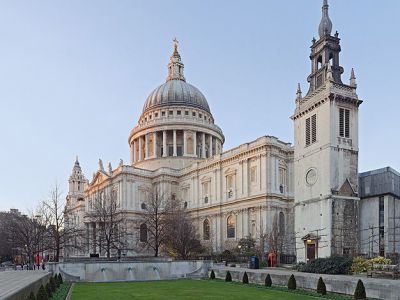
For centuries, Saint Paul's Cathedral has stood tall, quite literally, as London’s ultimate comeback story in stone form. After the Great Fire of 1666 turned the medieval cathedral (originally founded in 1087) into a smoldering memory, Sir Christopher Wren got the challenge of designing the masterpiece we see today.
Construction began in 1675 and took 35 years. Wren’s first design was too modern. The second-too modern again and too Catholic-looking. He eventually struck a deal with the Anglican clergy: throw in a classic English spire, but sneak in a magnificent triple-stacked dome instead. Now it’s the second-largest cathedral dome in the world after St. Peter’s in Rome. Subtle flex.
During WWII and the Blitz, flames again came for the cathedral, and again, it stood its ground. Brave volunteers fought fires on the dome, saving it from complete destruction. Saint Paul’s became a beacon of hope in the rubble. Fittingly, above the south entrance, you’ll spot the Latin word "Resurgam," meaning “I shall rise again.” Very on brand.
Inside, the cathedral is pure English Baroque drama. Climb 257 steps to the Whispering Gallery, where even your gossip echoes in style. Add another 119 steps for the Stone Gallery and 152 more for the Golden Gallery-because apparently, stairs build character. But the panoramic views of London are worth every calf cramp.
Down below in the crypt, you’ll find the final resting places of national legends: the Duke of Wellington, Admiral Nelson, and of course, Wren himself. His epitaph reads: “If you seek his monument, look around you.”
Saint Paul’s was basically Dickens' favorite rooftop. In Master Humphrey’s Clock, he climbs to the top for a bird’s eye view of life’s contradictions, which, come to think of it, London is full of. In David Copperfield, Peggotty enjoys the view too. Dickens knew this neighborhood well and even attended the Duke of Wellington’s funeral here in 1852.
Back in Shakespeare’s day, the area around Saint Paul’s was bustling with booksellers. This was the epicenter of the English publishing world- the Bard’s plays were printed and sold right here. Odds are he browsed the stalls himself, possibly muttering, “To plagiarize, or not to plagiarize...”
And for the modern-day wizarding crowd: yes, that staircase you recognize from Harry Potter and the Prisoner of Azkaban is real. The magical-looking Geometric Staircase-aka the Dean’s Stair-floats elegantly in the cathedral’s South West Bell Tower. You might remember it from Professor Trelawney’s Divination class or The Goblet of Fire. You’ll need a ticket to see it, but for Potterheads, it’s practically a rite of passage.
Tip:
Book online to skip the queue. And maybe spring for the audio tour-unless you’ve got me in your ear, of course.
Construction began in 1675 and took 35 years. Wren’s first design was too modern. The second-too modern again and too Catholic-looking. He eventually struck a deal with the Anglican clergy: throw in a classic English spire, but sneak in a magnificent triple-stacked dome instead. Now it’s the second-largest cathedral dome in the world after St. Peter’s in Rome. Subtle flex.
During WWII and the Blitz, flames again came for the cathedral, and again, it stood its ground. Brave volunteers fought fires on the dome, saving it from complete destruction. Saint Paul’s became a beacon of hope in the rubble. Fittingly, above the south entrance, you’ll spot the Latin word "Resurgam," meaning “I shall rise again.” Very on brand.
Inside, the cathedral is pure English Baroque drama. Climb 257 steps to the Whispering Gallery, where even your gossip echoes in style. Add another 119 steps for the Stone Gallery and 152 more for the Golden Gallery-because apparently, stairs build character. But the panoramic views of London are worth every calf cramp.
Down below in the crypt, you’ll find the final resting places of national legends: the Duke of Wellington, Admiral Nelson, and of course, Wren himself. His epitaph reads: “If you seek his monument, look around you.”
Saint Paul’s was basically Dickens' favorite rooftop. In Master Humphrey’s Clock, he climbs to the top for a bird’s eye view of life’s contradictions, which, come to think of it, London is full of. In David Copperfield, Peggotty enjoys the view too. Dickens knew this neighborhood well and even attended the Duke of Wellington’s funeral here in 1852.
Back in Shakespeare’s day, the area around Saint Paul’s was bustling with booksellers. This was the epicenter of the English publishing world- the Bard’s plays were printed and sold right here. Odds are he browsed the stalls himself, possibly muttering, “To plagiarize, or not to plagiarize...”
And for the modern-day wizarding crowd: yes, that staircase you recognize from Harry Potter and the Prisoner of Azkaban is real. The magical-looking Geometric Staircase-aka the Dean’s Stair-floats elegantly in the cathedral’s South West Bell Tower. You might remember it from Professor Trelawney’s Divination class or The Goblet of Fire. You’ll need a ticket to see it, but for Potterheads, it’s practically a rite of passage.
Tip:
Book online to skip the queue. And maybe spring for the audio tour-unless you’ve got me in your ear, of course.
3) Sky Garden
Designed by Uruguayan architect Rafael Viñoly, 20 Fenchurch Street is better known by its catchier nickname-the “Walkie-Talkie.” Why? Well, because it looks exactly like one, just supersized and stuck smack in the London skyline. Not everyone is a fan of its chunky silhouette, but love it or mock it, the building makes quite the statement-and unlike most skyscrapers, it actually lets the public in for free.
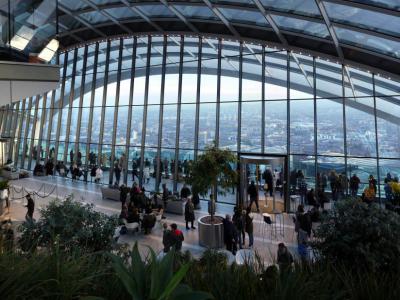
At the top sits the Sky Garden, a three-story glass crown perched on the 35th, 36th, and 37th floors. To get in, you’ll need to be quick on the click-free tickets drop every Monday, and they vanish faster than a London cab on a rainy night. Once you’ve secured your spot, you’ll be treated to one of the best panoramic views in the city, complete with a side of wine or dinner if you book a table. Yes, the bars and restaurants stay open late for those who like their skyline with a cocktail.
From this lofty perch, the view is a who’s who of London’s architectural elite: look south for the jagged elegance of The Shard, or north for a full lineup of nicknamed giants-Tower 42, the Gherkin, the Cheesegrater, the Scalpel, and the tall-and-polished 22 Bishopsgate.
As for the “garden” part of Sky Garden, it’s not just a name. You’ll find a leafy collection of semitropical trees, succulents, and flowering showstoppers like African lilies, Red Hot Pokers, and Birds of Paradise, all bordered by wafts of French lavender. It’s basically a high-rise greenhouse with views, drinks, and a better Instagram ratio than most city parks.
Bottom line: whether you’re a lover of lush greenery, skyline spotting, or just in it for the gram-the Walkie-Talkie talks back.
At the top sits the Sky Garden, a three-story glass crown perched on the 35th, 36th, and 37th floors. To get in, you’ll need to be quick on the click-free tickets drop every Monday, and they vanish faster than a London cab on a rainy night. Once you’ve secured your spot, you’ll be treated to one of the best panoramic views in the city, complete with a side of wine or dinner if you book a table. Yes, the bars and restaurants stay open late for those who like their skyline with a cocktail.
From this lofty perch, the view is a who’s who of London’s architectural elite: look south for the jagged elegance of The Shard, or north for a full lineup of nicknamed giants-Tower 42, the Gherkin, the Cheesegrater, the Scalpel, and the tall-and-polished 22 Bishopsgate.
As for the “garden” part of Sky Garden, it’s not just a name. You’ll find a leafy collection of semitropical trees, succulents, and flowering showstoppers like African lilies, Red Hot Pokers, and Birds of Paradise, all bordered by wafts of French lavender. It’s basically a high-rise greenhouse with views, drinks, and a better Instagram ratio than most city parks.
Bottom line: whether you’re a lover of lush greenery, skyline spotting, or just in it for the gram-the Walkie-Talkie talks back.
4) London Bridge
For pretty much as long as London has been… well, London, there’s been a bridge standing right here. The first one went up over 2,000 years ago, and since then it’s been a bit of a revolving door for bridges-Romans built one, William the Conqueror gave it a go, and King John had his moment too.
Back in 1014, when the Danes were running the show in London, King Ethelred the Unready-a man as prepared for battle as his name suggests-decided to team up with King Olaf of Norway and a band of Vikings. Yes, Saxons and Vikings were together at last. They sailed up the Thames, tied ropes to the wooden supports of the bridge, let the tide carry them downstream, and yoink!-down came the bridge. And just like that, the world got its catchiest medieval jingle: “London Bridge is Falling Down.”
By Tudor times, the bridge was basically a medieval high street, with 600 buildings, some six stories tall, crammed shoulder to shoulder. It was so packed, it became its own city ward. And as if bumper-to-bumper Tudor traffic wasn’t enough, the bridge also had a rather grim flair for home decor-namely, the severed heads of traitors displayed proudly on spikes. Yikes...
But the bridge couldn’t handle the modern hustle. By the 1960s, it was literally sinking at one end, buckling under the weight of traffic and time. So what did Britain do? Sell it, of course! For £1 million, or about $2.4 million back then, an American oil tycoon bought it, shipped it piece-by-piece across the Atlantic, and reassembled it over a lake in Arizona, where it stands to this day, probably wondering what happened.
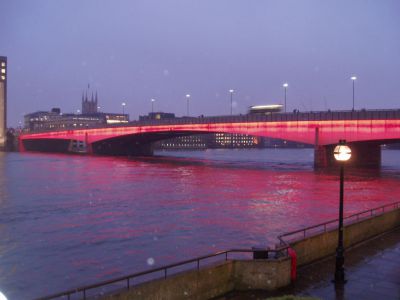
The current London Bridge, built in 1973, is a minimalist affair: clean lines, pre-stressed concrete, some polished granite, and about as much flair as a spreadsheet. But hey-it gets the job done.
And once a year, for one glorious Sunday in autumn, the bridge trades buses and bikes for a flock of sheep. It's the Sheep Drive, an ancient right of the Freemen of the City, who lead their woolly companions across the bridge in a ceremony that's part tradition, part traffic-stopping spectacle.
Because why not?
Back in 1014, when the Danes were running the show in London, King Ethelred the Unready-a man as prepared for battle as his name suggests-decided to team up with King Olaf of Norway and a band of Vikings. Yes, Saxons and Vikings were together at last. They sailed up the Thames, tied ropes to the wooden supports of the bridge, let the tide carry them downstream, and yoink!-down came the bridge. And just like that, the world got its catchiest medieval jingle: “London Bridge is Falling Down.”
By Tudor times, the bridge was basically a medieval high street, with 600 buildings, some six stories tall, crammed shoulder to shoulder. It was so packed, it became its own city ward. And as if bumper-to-bumper Tudor traffic wasn’t enough, the bridge also had a rather grim flair for home decor-namely, the severed heads of traitors displayed proudly on spikes. Yikes...
But the bridge couldn’t handle the modern hustle. By the 1960s, it was literally sinking at one end, buckling under the weight of traffic and time. So what did Britain do? Sell it, of course! For £1 million, or about $2.4 million back then, an American oil tycoon bought it, shipped it piece-by-piece across the Atlantic, and reassembled it over a lake in Arizona, where it stands to this day, probably wondering what happened.
The current London Bridge, built in 1973, is a minimalist affair: clean lines, pre-stressed concrete, some polished granite, and about as much flair as a spreadsheet. But hey-it gets the job done.
And once a year, for one glorious Sunday in autumn, the bridge trades buses and bikes for a flock of sheep. It's the Sheep Drive, an ancient right of the Freemen of the City, who lead their woolly companions across the bridge in a ceremony that's part tradition, part traffic-stopping spectacle.
Because why not?
5) Borough Market (must see)
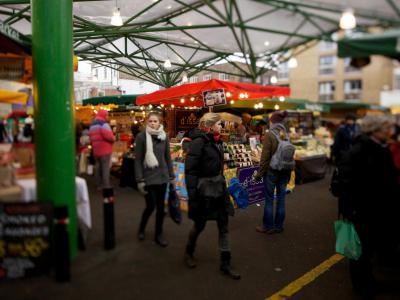
Borough Market is London’s oldest and most atmospheric food market, boasting a history that spans over 1,000 years. Its origins trace back to the 11th century - and possibly earlier - when farmers would bring fresh produce to London Bridge, then the only southern entrance into the city. By the 18th century, the market had become so chaotic that Parliament decided to shut it down in 1756, though local volunteers soon revived it nearby. The structures seen today, with ornate Victorian ironwork and soaring arcades, were developed largely in the 19th century.
Today, with a railway rumbling overhead, this historic market hums below as a vibrant maze of culinary treasures. Visitors can explore an impressive range of artisan stalls offering cheeses, fresh bread, meats, seafood, organic produce, spices, handmade sweets, and gourmet street food. While British classics like meat pies and sausages are readily available, the real appeal lies in the diversity - from Ethiopian stews and Indian curries to Spanish paella and Middle Eastern falafel.
Navigating the market is part of the fun. Begin your adventure through the central labyrinth of food stalls until you reach Stoney Street on the western edge. From there, stroll along Park Street - a film location favorite - where you’ll find a lively pub and the famous Neal’s Yard Dairy cheese shop. Across the way, the Ginger Pig draws crowds for its traditional English bacon and sausages. For a local favorite, stop by Maria’s Market Café, a classic haunt for longtime market workers. Around every corner, more delights await, including covered terraces with extra seating for diners.
Rain or shine, Borough Market delivers. The partial roof makes it an all-weather destination, and beyond eating and shopping, visitors can enjoy food tastings, seasonal festivals, cooking demos, and culinary workshops. The market thrives on community and celebration, drawing food lovers from around the world.
Conveniently located near landmarks like Southwark Cathedral, The Shard, and Shakespeare’s Globe Theatre, it’s a perfect stop during a day exploring London’s South Bank.
Tip:
Before committing to a meal, take your time wandering. Getting a bit lost is part of the charm - and often leads to the tastiest surprises.
Today, with a railway rumbling overhead, this historic market hums below as a vibrant maze of culinary treasures. Visitors can explore an impressive range of artisan stalls offering cheeses, fresh bread, meats, seafood, organic produce, spices, handmade sweets, and gourmet street food. While British classics like meat pies and sausages are readily available, the real appeal lies in the diversity - from Ethiopian stews and Indian curries to Spanish paella and Middle Eastern falafel.
Navigating the market is part of the fun. Begin your adventure through the central labyrinth of food stalls until you reach Stoney Street on the western edge. From there, stroll along Park Street - a film location favorite - where you’ll find a lively pub and the famous Neal’s Yard Dairy cheese shop. Across the way, the Ginger Pig draws crowds for its traditional English bacon and sausages. For a local favorite, stop by Maria’s Market Café, a classic haunt for longtime market workers. Around every corner, more delights await, including covered terraces with extra seating for diners.
Rain or shine, Borough Market delivers. The partial roof makes it an all-weather destination, and beyond eating and shopping, visitors can enjoy food tastings, seasonal festivals, cooking demos, and culinary workshops. The market thrives on community and celebration, drawing food lovers from around the world.
Conveniently located near landmarks like Southwark Cathedral, The Shard, and Shakespeare’s Globe Theatre, it’s a perfect stop during a day exploring London’s South Bank.
Tip:
Before committing to a meal, take your time wandering. Getting a bit lost is part of the charm - and often leads to the tastiest surprises.
