Custom Walk in Yokohama, Japan by joecanarsi3552 created on 2025-05-18
Guide Location: Japan » Yokohama
Guide Type: Custom Walk
# of Sights: 7
Tour Duration: 1 Hour(s)
Travel Distance: 2.7 Km or 1.7 Miles
Share Key: N32Q7
Guide Type: Custom Walk
# of Sights: 7
Tour Duration: 1 Hour(s)
Travel Distance: 2.7 Km or 1.7 Miles
Share Key: N32Q7
How It Works
Please retrieve this walk in the GPSmyCity app. Once done, the app will guide you from one tour stop to the next as if you had a personal tour guide. If you created the walk on this website or come to the page via a link, please follow the instructions below to retrieve the walk in the app.
Retrieve This Walk in App
Step 1. Download the app "GPSmyCity: Walks in 1K+ Cities" on Apple App Store or Google Play Store.



Step 2. In the GPSmyCity app, download(or launch) the guide "Yokohama Map and Walking Tours".
Step 3. Tap the menu button located at upper right corner of the "Walks" screen and select "Retrieve custom walk". Enter the share key: N32Q7
1) Motomachi and Yamate Area
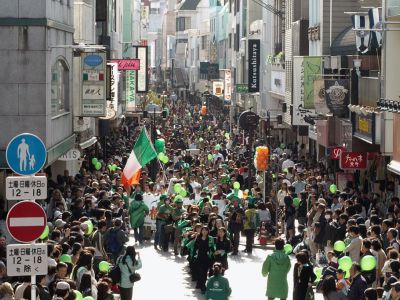
The Motomachi and Yamate neighborhoods in Yokohama are known for their mix of cultures, buildings, and histories, reflecting the city's early connections to international trade. When Yokohama became a trade port in 1859, many foreigners settled in the area, especially on Yamate Hill due to its appeal for living and business. This led to Yamate becoming a neighborhood with a unique, almost non-Japanese feel, with Western-style buildings and a cosmopolitan atmosphere.
Motomachi Street, at the base of Yamate Hill, is famous for shopping. The street and nearby homes have a Western look, making it interesting for both locals and tourists. Although Motomachi is no longer just for foreigners, it's still a prestigious place to live. Today, its streets have popular cafes, art galleries, and parks like the Italian Garden, Yamate Park, and Yokohama Foreign General Cemetery, which preserve the area's historical charm.
Next to the historic Yamate and Yokohama Chinatown, Motomachi Shopping Street spans about five blocks with over 230 stores. This lively shopping area has a mix of local and international brands and hosts the Motomachi Charming Sale twice a year, drawing crowds for discounts.
Motomachi was once a small village of farmers and fishermen until the Port of Yokohama opened. The growing number of foreign residents commuting between Yamate and Kannai led to shops catering to their tastes on Motomachi Street. By the 1970s and 1980s, Motomachi became known for the "Hama Tora" fashion trend among young women, with stores like Fukuzo, Mihama, and Kitamura leading the way.
Motomachi Street, at the base of Yamate Hill, is famous for shopping. The street and nearby homes have a Western look, making it interesting for both locals and tourists. Although Motomachi is no longer just for foreigners, it's still a prestigious place to live. Today, its streets have popular cafes, art galleries, and parks like the Italian Garden, Yamate Park, and Yokohama Foreign General Cemetery, which preserve the area's historical charm.
Next to the historic Yamate and Yokohama Chinatown, Motomachi Shopping Street spans about five blocks with over 230 stores. This lively shopping area has a mix of local and international brands and hosts the Motomachi Charming Sale twice a year, drawing crowds for discounts.
Motomachi was once a small village of farmers and fishermen until the Port of Yokohama opened. The growing number of foreign residents commuting between Yamate and Kannai led to shops catering to their tastes on Motomachi Street. By the 1970s and 1980s, Motomachi became known for the "Hama Tora" fashion trend among young women, with stores like Fukuzo, Mihama, and Kitamura leading the way.
2) Motomachi Shopping Street
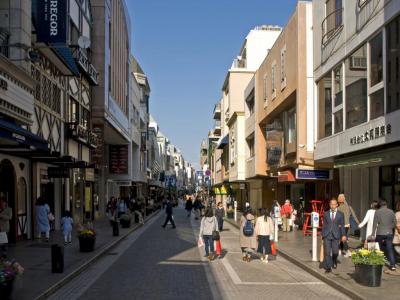
The Motomachi Shopping Street is a historic shopping district in Yokohama. Its history dates to 1859, when the area was divided into two districts for Japanese businesses and foreign residents. The area became the residence of thousands of foreign people, who were living and working here, and businesses built up around them.
The area changed over the years due to natural disasters and external forces. The street renovation project started in 1979 and finished in 1985.
The symbol of Motomachi Shopping Street is "Fly Through the Light," a 34-foot-tall phoenix-shaped sculpture made from blue stainless-steel pipe.
The Motomachi Shopping Street hosts over 100 shops, offices, and restaurants. Some of the shops are Seven Sisters, Lacoste, and Brooks Brothers. Eateries range from elegant, full-service restaurants to pastry shops to Starbucks.
There are also the entertainment options like art galleries, a photography studio, spa salons, and even a pet grooming spot.
The area changed over the years due to natural disasters and external forces. The street renovation project started in 1979 and finished in 1985.
The symbol of Motomachi Shopping Street is "Fly Through the Light," a 34-foot-tall phoenix-shaped sculpture made from blue stainless-steel pipe.
The Motomachi Shopping Street hosts over 100 shops, offices, and restaurants. Some of the shops are Seven Sisters, Lacoste, and Brooks Brothers. Eateries range from elegant, full-service restaurants to pastry shops to Starbucks.
There are also the entertainment options like art galleries, a photography studio, spa salons, and even a pet grooming spot.
3) Kanteibyo Temple
Kanteibyo Temple, located in the heart of Yokohama's Chinatown, is a significant spiritual and cultural site. It houses the statue of Guan Gong (Guan Yu), a revered figure in Chinese mythology known for his bravery and loyalty, particularly from the historical novel "Romance of the Three Kingdoms." Guan Gong is worshipped at the temple not only as a symbol of martial prowess but also as a deity associated with prosperity in business and finance.
The temple has a history marked by resilience and reconstruction. Established in 1871, it has been destroyed and rebuilt several times due to natural disasters and wartime events. Despite facing destruction during the Great Kanto Earthquake in 1923, air attacks in World War II, and lightning strikes in 1986, it was rebuilt each time. The current structure, completed in 2000, carries on the tradition of honoring Chinese deities and symbolizes the community's enduring spirit.
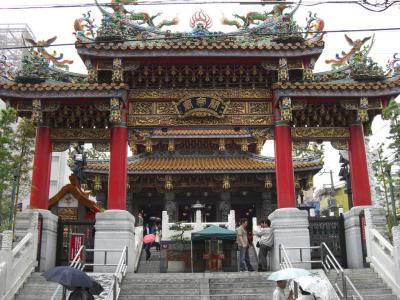
Kanteibyo Temple's architecture and design are captivating, featuring a vibrant red exterior and intricate details in line with traditional Chinese styles. Dragon statues guard the entrance, symbolizing protection and power, while the interior is adorned with lavish gold decorations, reflecting the temple's spiritual importance. At its center stands the statue of Guan Yu, drawing worshippers seeking blessings for prosperity.
Besides Guan Gong, the temple is also a place where visitors can pay homage to the Jade Emperor and other Chinese gods believed to bring good fortune. Thus, Kanteibyo Temple serves as more than just a religious site; it is a symbol of faith, cultural heritage, and community resilience in Yokohama's Chinatown, attracting both believers and curious visitors alike.
The temple has a history marked by resilience and reconstruction. Established in 1871, it has been destroyed and rebuilt several times due to natural disasters and wartime events. Despite facing destruction during the Great Kanto Earthquake in 1923, air attacks in World War II, and lightning strikes in 1986, it was rebuilt each time. The current structure, completed in 2000, carries on the tradition of honoring Chinese deities and symbolizes the community's enduring spirit.
Kanteibyo Temple's architecture and design are captivating, featuring a vibrant red exterior and intricate details in line with traditional Chinese styles. Dragon statues guard the entrance, symbolizing protection and power, while the interior is adorned with lavish gold decorations, reflecting the temple's spiritual importance. At its center stands the statue of Guan Yu, drawing worshippers seeking blessings for prosperity.
Besides Guan Gong, the temple is also a place where visitors can pay homage to the Jade Emperor and other Chinese gods believed to bring good fortune. Thus, Kanteibyo Temple serves as more than just a religious site; it is a symbol of faith, cultural heritage, and community resilience in Yokohama's Chinatown, attracting both believers and curious visitors alike.
4) Ichiba-Dori Shopping Street
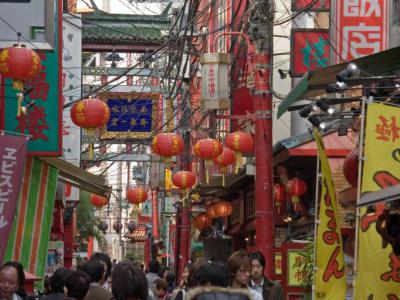
The Ichiba-Dori Shopping Street is one of the primary streets in Yokohama, Chinatown. It runs north and south from Chukagai Odori and Kanteibyo Road. The Ichiba-Dori Shopping Street is easily located due to the traditional gates at each end of the street.
The street was established in the 1920s, when food stores started popping up to provide produce, fish, and meat products to the area's restaurants. Today, the pedestrian street offers much more than grocers and butchers. It abounds with full-service restaurants and street food stations. Tourists can grab Chinese dumplings while they walk or sit down for a multi-course meal.
In keeping with its name, there are plenty of spots to buy souvenirs on the Ichiba-Dori Shopping Street. There are also palm readers who are happy to read the future for a price.
The narrow street is decorated with Chinese paper lanterns, hanging from above. They illuminate at night, creating a welcoming atmosphere that is reminiscent of the streets of Hong Kong and Shanghai.
The street was established in the 1920s, when food stores started popping up to provide produce, fish, and meat products to the area's restaurants. Today, the pedestrian street offers much more than grocers and butchers. It abounds with full-service restaurants and street food stations. Tourists can grab Chinese dumplings while they walk or sit down for a multi-course meal.
In keeping with its name, there are plenty of spots to buy souvenirs on the Ichiba-Dori Shopping Street. There are also palm readers who are happy to read the future for a price.
The narrow street is decorated with Chinese paper lanterns, hanging from above. They illuminate at night, creating a welcoming atmosphere that is reminiscent of the streets of Hong Kong and Shanghai.
5) Choyomon Gate and Chinatown (must see)
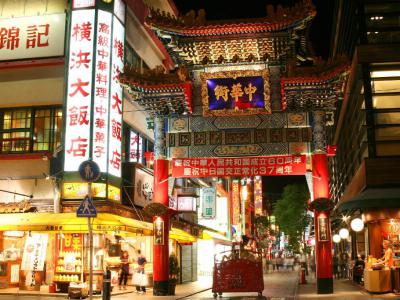
Yokohama Chinatown is the largest Chinatown in Japan. The area has about 250 shops and restaurants that cater mainly to tourists who want to see the historic neighborhood.
Yokohama Chinatown can trace its roots to 1859 with the opening of the seaport. Ferry services from Shanghai and Hong Kong to Yokohama brought many Chinese immigrants. They soon established a school, a community center, shops, and restaurants.
Issues that hampered Chinatown's growth began almost as soon as Chinese immigrants arrived. Laws in Yokohama prevented Chinese citizens from performing certain types of work. The Great Kanto Earthquake caused massive death and destruction. Perhaps the biggest obstacle to Chinatown's growth was World War II.
Things began turning around after the end of the war. The goodwill gate was built in 1955. Chinatown became officially recognized for the first time, given the name Yokohama Chinatown or, in Japanese, Yokohama Chukagai.
Tourism became very important to Chinatown in the late 20th century. Once Japan established diplomatic relations with China, sightseeing in Yokohama Chinatown became a popular pastime. It also became a primary destination for those visiting Yokohama.
There are more than 150 Chinese restaurants in Yokohama Chinatown. They serve cuisine from the many regions of China as well as Taiwan. There are also medicinal cafes and buffets.
Tourists can browse dozens of shops and entertainment venues. Among these are arcades, photography studios, karaoke bars and much more. There are even spots where tourists can learn how to make dim sum, paper lanterns, and other traditional Chinese crafts.
Yokohama Chinatown can trace its roots to 1859 with the opening of the seaport. Ferry services from Shanghai and Hong Kong to Yokohama brought many Chinese immigrants. They soon established a school, a community center, shops, and restaurants.
Issues that hampered Chinatown's growth began almost as soon as Chinese immigrants arrived. Laws in Yokohama prevented Chinese citizens from performing certain types of work. The Great Kanto Earthquake caused massive death and destruction. Perhaps the biggest obstacle to Chinatown's growth was World War II.
Things began turning around after the end of the war. The goodwill gate was built in 1955. Chinatown became officially recognized for the first time, given the name Yokohama Chinatown or, in Japanese, Yokohama Chukagai.
Tourism became very important to Chinatown in the late 20th century. Once Japan established diplomatic relations with China, sightseeing in Yokohama Chinatown became a popular pastime. It also became a primary destination for those visiting Yokohama.
There are more than 150 Chinese restaurants in Yokohama Chinatown. They serve cuisine from the many regions of China as well as Taiwan. There are also medicinal cafes and buffets.
Tourists can browse dozens of shops and entertainment venues. Among these are arcades, photography studios, karaoke bars and much more. There are even spots where tourists can learn how to make dim sum, paper lanterns, and other traditional Chinese crafts.
6) Red Brick Warehouse
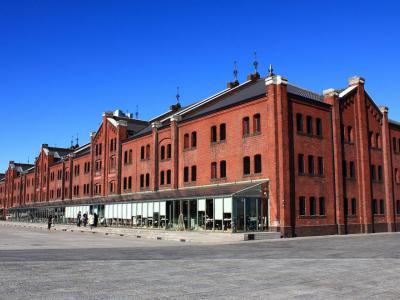
The Red Brick Warehouse is a shopping mall, banquet hall, and event venue. Officially called the Newport Pier Bonded Warehouse, the historical edifice, designed as a custom building for incoming freight at the Port of Yokohama, became one of the most recognizable landmarks in Yokohama.
The Yokohama Red Brick Warehouse was planned as a part of the construction of harbor facilities in the late 19th century. Both buildings of the Warehouse were finished in 1913. The Red Brick Warehouse was designed by the Japanese architect Yorinaka Tsumaki, famous for his style mixing elements of classic Western European with Japanese architecture.
The Great Kanto Earthquake of 1923 damaged both buildings. Reconstruction efforts were completed in 1930. However, the occupying forces of the United States seized the buildings after World War II. Though the Warehouse was returned to Japan in the 1950s, the edifice gradually fell into disrepair and was abandoned in 1989.
Japanese architectural firm Takenaka Corporation took over the restoration and restructuring of the buildings in the 1990s. They officially opened as Yokohama Red Brick Warehouse in 2002. Building one is a three-story event venue that hosts art exhibitions, film festivals, music competitions, and plays. Building two is a three-story shopping mall with restaurants and an open balcony.
The Yokohama Red Brick Warehouse was planned as a part of the construction of harbor facilities in the late 19th century. Both buildings of the Warehouse were finished in 1913. The Red Brick Warehouse was designed by the Japanese architect Yorinaka Tsumaki, famous for his style mixing elements of classic Western European with Japanese architecture.
The Great Kanto Earthquake of 1923 damaged both buildings. Reconstruction efforts were completed in 1930. However, the occupying forces of the United States seized the buildings after World War II. Though the Warehouse was returned to Japan in the 1950s, the edifice gradually fell into disrepair and was abandoned in 1989.
Japanese architectural firm Takenaka Corporation took over the restoration and restructuring of the buildings in the 1990s. They officially opened as Yokohama Red Brick Warehouse in 2002. Building one is a three-story event venue that hosts art exhibitions, film festivals, music competitions, and plays. Building two is a three-story shopping mall with restaurants and an open balcony.
7) CupNoodles Museum Yokohama (must see)
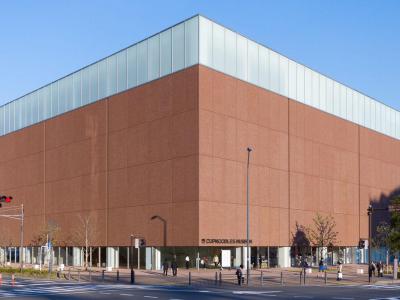
The Cup Noodles Museum is a fun and interactive museum in Yokohama. It is a four-story museum that provides exhibits and attractions dedicated to instant noodles and its creator and founder, Momofuku Ando. The visitors will learn about the history of instant noodles and Momofuku Ando's story.
The CupNoodles Museum has many different areas that visitors can experience and fully immerse themselves in the world of instant ramen. The Chicken Ramen Factory lets patrons make their own noodles, and the CupNoodles Factory allows them to design a cup, choose their broth and pick four toppings from a selection to create a unique cup of noodles they can then enjoy.
The Instant Noodles History Cube and the Momofuku Ando Story are historical exhibits in the museum. The Noodles Bazaar displays a different kind of noodles. Visitors can even try them to experience the tastes and textures of the noodles from around the world.
The museum also includes CupNoodles Park. The interactive exhibit is specifically geared toward children from ages three to 12. They can pretend to be a noodle as they go through the life-size manufacturing process. They will enter a noodle net (climbing net), a seasoning pool (ball pit), a virtual fryer, and a slide. They can even enter a life-size noodle cup.
The CupNoodles Museum has many different areas that visitors can experience and fully immerse themselves in the world of instant ramen. The Chicken Ramen Factory lets patrons make their own noodles, and the CupNoodles Factory allows them to design a cup, choose their broth and pick four toppings from a selection to create a unique cup of noodles they can then enjoy.
The Instant Noodles History Cube and the Momofuku Ando Story are historical exhibits in the museum. The Noodles Bazaar displays a different kind of noodles. Visitors can even try them to experience the tastes and textures of the noodles from around the world.
The museum also includes CupNoodles Park. The interactive exhibit is specifically geared toward children from ages three to 12. They can pretend to be a noodle as they go through the life-size manufacturing process. They will enter a noodle net (climbing net), a seasoning pool (ball pit), a virtual fryer, and a slide. They can even enter a life-size noodle cup.
