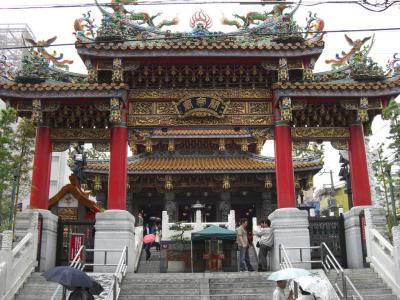


Kanteibyo Temple, Yokohama
Kanteibyo Temple, located in the heart of Yokohama's Chinatown, is a significant spiritual and cultural site. It houses the statue of Guan Gong, a revered figure in Chinese mythology known for his bravery and loyalty, particularly from the historical novel "Romance of the Three Kingdoms." Guan Gong is worshipped at the temple not only as a symbol of martial prowess but also as a deity associated with prosperity in business and finance.
The temple has a history marked by resilience and reconstruction. Established in 1871, it has been destroyed and rebuilt several times due to natural disasters and wartime events. Despite facing destruction during the Great Kanto Earthquake in 1923, air attacks in World War II, and lightning strikes in 1986, it was rebuilt each time. The current structure, completed in 2000, carries on the tradition of honoring Chinese deities and symbolizes the community's enduring spirit.
Kanteibyo Temple's architecture and design are captivating, featuring a vibrant red exterior and intricate details in line with traditional Chinese styles. Dragon statues guard the entrance, symbolizing protection and power, while the interior is adorned with lavish gold decorations, reflecting the temple's spiritual importance. At its center stands the statue of Guan Gong, drawing worshippers seeking blessings for prosperity.
Besides Guan Gong, the temple is also a place where visitors can pay homage to the Jade Emperor and other Chinese gods believed to bring good fortune.
The temple has a history marked by resilience and reconstruction. Established in 1871, it has been destroyed and rebuilt several times due to natural disasters and wartime events. Despite facing destruction during the Great Kanto Earthquake in 1923, air attacks in World War II, and lightning strikes in 1986, it was rebuilt each time. The current structure, completed in 2000, carries on the tradition of honoring Chinese deities and symbolizes the community's enduring spirit.
Kanteibyo Temple's architecture and design are captivating, featuring a vibrant red exterior and intricate details in line with traditional Chinese styles. Dragon statues guard the entrance, symbolizing protection and power, while the interior is adorned with lavish gold decorations, reflecting the temple's spiritual importance. At its center stands the statue of Guan Gong, drawing worshippers seeking blessings for prosperity.
Besides Guan Gong, the temple is also a place where visitors can pay homage to the Jade Emperor and other Chinese gods believed to bring good fortune.
Want to visit this sight? Check out these Self-Guided Walking Tours in Yokohama. Alternatively, you can download the mobile app "GPSmyCity: Walks in 1K+ Cities" from Apple App Store or Google Play Store. The app turns your mobile device to a personal tour guide and it works offline, so no data plan is needed when traveling abroad.
Download The GPSmyCity App



Kanteibyo Temple on Map
Sight Name: Kanteibyo Temple
Sight Location: Yokohama, Japan (See walking tours in Yokohama)
Sight Type: Religious
Guide(s) Containing This Sight:
Sight Location: Yokohama, Japan (See walking tours in Yokohama)
Sight Type: Religious
Guide(s) Containing This Sight:
Nearby Sights



Walking Tours in Yokohama, Japan

Create Your Own Walk in Yokohama
Creating your own self-guided walk in Yokohama is easy and fun. Choose the city attractions that you want to see and a walk route map will be created just for you. You can even set your hotel as the start point of the walk.
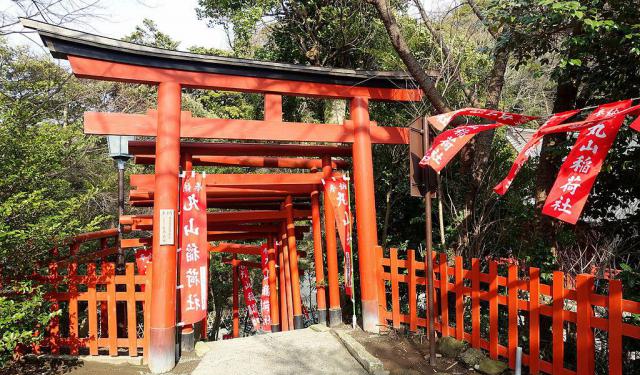
Kamakura Temples Walking Tour
Kamakura’s temples are inseparable from the story of the city itself. Once a small fishing village on Japan’s Pacific coast, Kamakura rose to national prominence in 1185, when the military leader Minamoto no Yoritomo established Japan’s first warrior government here. For nearly 150 years, Kamakura served as the political center of Japan, and its temples became both spiritual sanctuaries and... view more
Tour Duration: 2 Hours
Travel Distance: 4.7 Km or 2.9 Miles
Tour Duration: 2 Hours
Travel Distance: 4.7 Km or 2.9 Miles
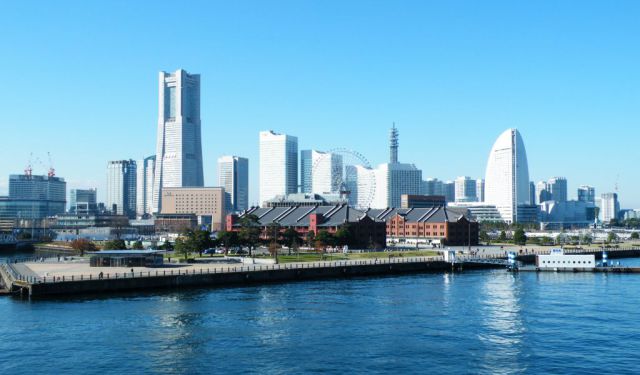
Yokohama Downtown Walking Tour
French writer Jules Verne featured Yokohama in his famous novel Around the World in Eighty Days. Even then, in 1873, Yokohama was seen as a symbol of modern, international Japan.
The city is Japan’s second-largest and one of its most important ports. The name Yokohama is derived from the words yoko, meaning “horizontal” or “sideways,” and hama, meaning “beach.” The name refers to... view more
Tour Duration: 2 Hours
Travel Distance: 3.7 Km or 2.3 Miles
The city is Japan’s second-largest and one of its most important ports. The name Yokohama is derived from the words yoko, meaning “horizontal” or “sideways,” and hama, meaning “beach.” The name refers to... view more
Tour Duration: 2 Hours
Travel Distance: 3.7 Km or 2.3 Miles
City Walks Overview
