Custom Walk in Prague, Czech Republic by gmcgreevy_4b498 created on 2025-05-19
Guide Location: Czech Republic » Prague
Guide Type: Custom Walk
# of Sights: 9
Tour Duration: 1 Hour(s)
Travel Distance: 1.5 Km or 0.9 Miles
Share Key: Z6NH9
Guide Type: Custom Walk
# of Sights: 9
Tour Duration: 1 Hour(s)
Travel Distance: 1.5 Km or 0.9 Miles
Share Key: Z6NH9
How It Works
Please retrieve this walk in the GPSmyCity app. Once done, the app will guide you from one tour stop to the next as if you had a personal tour guide. If you created the walk on this website or come to the page via a link, please follow the instructions below to retrieve the walk in the app.
Retrieve This Walk in App
Step 1. Download the app "GPSmyCity: Walks in 1K+ Cities" on Apple App Store or Google Play Store.



Step 2. In the GPSmyCity app, download(or launch) the guide "Prague Map and Walking Tours".
Step 3. Tap the menu button located at upper right corner of the "Walks" screen and select "Retrieve custom walk". Enter the share key: Z6NH9
1) Charles Bridge (must see)
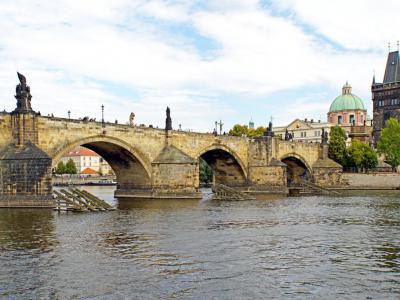
One of Prague’s most iconic landmarks, the Charles Bridge wasn’t just built; it was timed. Construction began on July 9, 1357, at exactly 5:31 in the morning. The oddly precise timing wasn’t random. Holy Roman Emperor Charles IV was a firm believer in numerology and astrology. That moment created a palindrome-135797531-which, in his mind, would grant the bridge strength and longevity. Whether that worked, or whether the secret ingredient was the rumored mix of eggs, wine, or milk stirred into the foundations, we’ll never know. But over six centuries later, the bridge still stands.
Stretching over the Vltava River, it runs 516 meters long and nearly 10 meters wide, supported by 16 sturdy arches with ice guards to fend off the river’s freeze. Until 1841, this was the only way to cross from Prague’s Old Town to the Castle and the Lesser Town. With the boom in traffic in the 20th century, the bridge eventually closed to vehicles and became pedestrian-only in 1978.
Lining both sides are 30 striking Baroque statues, added from the late 1600s through the early 20th century. They complement the Gothic structure underneath and turn any stroll into a kind of open-air museum. As you head toward Lesser Town, keep an eye out for the bronze crucifix-the oldest statue on the bridge-as well as the dramatic tableau of Saint Francis Xavier converting four royal figures from faraway lands: an Indian, Moor, Chinese, and Tartar. Perhaps the most famous is the eighth statue on the right: Saint John of Nepomuk, thrown into the river for refusing to betray the Queen’s confession. Locals say touching his plaque brings luck-or guarantees you’ll return to Prague one day.
Tip: For a quieter, more magical walk, go at dawn or after sunset-when the statues seem to whisper, and the city hushes just long enough to hear them.
Stretching over the Vltava River, it runs 516 meters long and nearly 10 meters wide, supported by 16 sturdy arches with ice guards to fend off the river’s freeze. Until 1841, this was the only way to cross from Prague’s Old Town to the Castle and the Lesser Town. With the boom in traffic in the 20th century, the bridge eventually closed to vehicles and became pedestrian-only in 1978.
Lining both sides are 30 striking Baroque statues, added from the late 1600s through the early 20th century. They complement the Gothic structure underneath and turn any stroll into a kind of open-air museum. As you head toward Lesser Town, keep an eye out for the bronze crucifix-the oldest statue on the bridge-as well as the dramatic tableau of Saint Francis Xavier converting four royal figures from faraway lands: an Indian, Moor, Chinese, and Tartar. Perhaps the most famous is the eighth statue on the right: Saint John of Nepomuk, thrown into the river for refusing to betray the Queen’s confession. Locals say touching his plaque brings luck-or guarantees you’ll return to Prague one day.
Tip: For a quieter, more magical walk, go at dawn or after sunset-when the statues seem to whisper, and the city hushes just long enough to hear them.
2) Charles Bridge Market
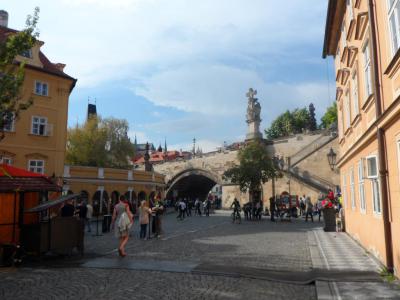
Brace yourselves for the tourist frenzy at one of Prague's "must-see" attractions nestled snugly under the shadow of the Charles Bridge. Prepare to be dazzled by a mishmash of traditional Czech souvenirs and contemporary art, because where else can you find such a unique blend of cultural offerings?Prepare to be dazzled by a kaleidoscope of traditional Czech pottery, jewelry, paintings, and attire.
As if the array of goods weren't enough, brace yourself for a spectacle of street performances. Every evening, a motley crew of musicians, dancers, and entertainers grace the cobblestone streets, regaling passersby with their talents. Take a moment to bask in the ambience, soak up the lively atmosphere, and perhaps even join in the merriment before embarking on your shopping extravaganza.
As if the array of goods weren't enough, brace yourself for a spectacle of street performances. Every evening, a motley crew of musicians, dancers, and entertainers grace the cobblestone streets, regaling passersby with their talents. Take a moment to bask in the ambience, soak up the lively atmosphere, and perhaps even join in the merriment before embarking on your shopping extravaganza.
3) Karlova Street
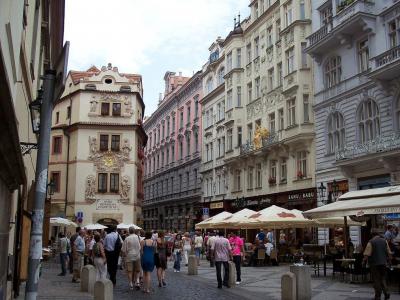
The lively artery linking Old Town Square to Charles Bridge, Karlova Street is rarely quiet. Day and night, it's a steady stream of visitors weaving between souvenir stalls and shopfronts, trying to stay the course as the narrow path twists toward the river. Once part of the historic Royal Route, Karlova wears its Baroque face proudly-though many buildings still hide older Gothic and Romanesque cellars and vaults beneath the surface.
A walk here feels like leafing through a living storybook. Keep an eye out for the unique house signs-each with a legend of its own. “At the Blue Pike,” once frequented by King Wenceslas IV and his magician Zito, offers a glimpse into Prague’s medieval past. “At the French Crown” was home to famed astronomer Johannes Kepler, while further along, “At the Golden Crown” and “At the White Horse” beckon with their 16th-century Gothic elegance.
If you need a break, step through the peaceful courtyards of the Klementinum just off the street’s north side. To support local talent, pop into MANUFAKTURA at number 26-an excellent spot for high-quality Czech souvenirs, all sourced from regional artisans. Or swing by LOCAL ARTISTS at number 21, where every meticulously crafted item celebrates the timeless beauty of Czech craftsmanship-from handmade ceramics to beer-infused cosmetics.
A walk here feels like leafing through a living storybook. Keep an eye out for the unique house signs-each with a legend of its own. “At the Blue Pike,” once frequented by King Wenceslas IV and his magician Zito, offers a glimpse into Prague’s medieval past. “At the French Crown” was home to famed astronomer Johannes Kepler, while further along, “At the Golden Crown” and “At the White Horse” beckon with their 16th-century Gothic elegance.
If you need a break, step through the peaceful courtyards of the Klementinum just off the street’s north side. To support local talent, pop into MANUFAKTURA at number 26-an excellent spot for high-quality Czech souvenirs, all sourced from regional artisans. Or swing by LOCAL ARTISTS at number 21, where every meticulously crafted item celebrates the timeless beauty of Czech craftsmanship-from handmade ceramics to beer-infused cosmetics.
4) Astronomical Clock (must see)
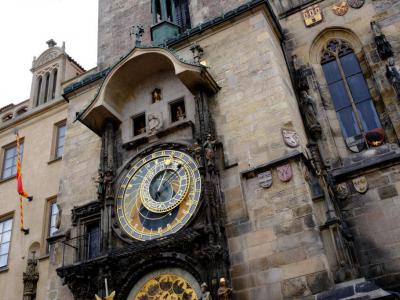
The Astronomical Clock on Prague’s Old Town Square has been drawing curious eyes since the 15th century. Every hour from 9 a.m. to 9 p.m., a theatrical blend of medieval engineering and storytelling never fails to draw a crowd. The clock’s beauty is matched by its complexity, with layers of astronomical and calendar dials showcasing the scientific prowess of its creators.
The main dial presents a symbolic view of Earth and Sky, split between day and night. Surrounding that is a ring showing old Bohemian time, while the astronomical display charts the sun and planets as they orbit the Earth-back when the universe revolved around us, of course. Another circle traces the paths of the sun and moon through the zodiac. A final ring on the edge shows the day, date, and the name of the saint commemorated-a matter of significance in medieval times.
But it’s the show on the hour that captures the most attention. From tiny trapdoors above the clock face, a parade of carved apostles appears, led by Christ, moving steadily past two small windows. Overhead, four figures symbolize medieval threats-Death with an hourglass, Greed clutching gold, Vanity admiring his reflection, and a Turk shaking his head. Below, statues representing Philosophy, Religion, Astronomy, and History observe the scene. As the show concludes, a golden rooster flaps and crows, and the clock strikes the hour to polite applause before the spectators disperse.
Local legend adds an eerie layer: the master clockmaker, Hanus, was blinded to ensure he’d never replicate his work elsewhere. In revenge, he damaged the clock, and no one could repair it for a hundred years. Another tale suggests that if the clock ever stops for too long, the fate of Prague may hang in the balance.
Tip: For a bird’s-eye view, take the elevator-or brave the stairs-to the top of the tower. The view is worth every step.
The main dial presents a symbolic view of Earth and Sky, split between day and night. Surrounding that is a ring showing old Bohemian time, while the astronomical display charts the sun and planets as they orbit the Earth-back when the universe revolved around us, of course. Another circle traces the paths of the sun and moon through the zodiac. A final ring on the edge shows the day, date, and the name of the saint commemorated-a matter of significance in medieval times.
But it’s the show on the hour that captures the most attention. From tiny trapdoors above the clock face, a parade of carved apostles appears, led by Christ, moving steadily past two small windows. Overhead, four figures symbolize medieval threats-Death with an hourglass, Greed clutching gold, Vanity admiring his reflection, and a Turk shaking his head. Below, statues representing Philosophy, Religion, Astronomy, and History observe the scene. As the show concludes, a golden rooster flaps and crows, and the clock strikes the hour to polite applause before the spectators disperse.
Local legend adds an eerie layer: the master clockmaker, Hanus, was blinded to ensure he’d never replicate his work elsewhere. In revenge, he damaged the clock, and no one could repair it for a hundred years. Another tale suggests that if the clock ever stops for too long, the fate of Prague may hang in the balance.
Tip: For a bird’s-eye view, take the elevator-or brave the stairs-to the top of the tower. The view is worth every step.
5) Old Town Hall (must see)
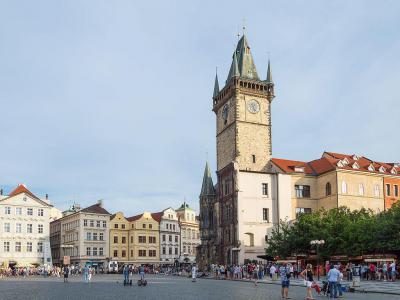
Rising on the eastern edge of Prague’s Old Town Square, the Old Town Hall has watched over the city since 1338, when it became the seat of the Old Town’s self-rule. Over the centuries, as surrounding buildings were added into the mix, the complex evolved into a unique blend of styles-Gothic at its core, but with Renaissance and Baroque elements layered in.
The centerpiece is the tall Gothic tower, built in the 14th century and stretching nearly 70 meters into the sky. From the top, you’re treated to sweeping views across Prague’s rooftops and the square below. Just beneath the tower ticks one of the city's most beloved attractions: the Astronomical Clock. Installed in 1410, it’s one of the oldest working examples in the world, famous for its hourly show of the Twelve Apostles-a mechanical spectacle that still draws a crowd.
Visitors can explore the historic interiors, each telling a different chapter of Prague’s past. The Gothic Council Chamber, the intimate Chapel of the Virgin Mary, and the Romanesque underground rooms all invite exploration.
The building has also stood witness to some of Czech history’s darker chapters. In 1621, it was here that 27 Czech Protestant leaders were executed following the Battle of White Mountain. Their memory lives on in the 27 white crosses set into the pavement just outside the entrance. And during the Prague Uprising in May 1945, the eastern wing was destroyed and never rebuilt-leaving behind a striking gap that still marks the cost of conflict.
The centerpiece is the tall Gothic tower, built in the 14th century and stretching nearly 70 meters into the sky. From the top, you’re treated to sweeping views across Prague’s rooftops and the square below. Just beneath the tower ticks one of the city's most beloved attractions: the Astronomical Clock. Installed in 1410, it’s one of the oldest working examples in the world, famous for its hourly show of the Twelve Apostles-a mechanical spectacle that still draws a crowd.
Visitors can explore the historic interiors, each telling a different chapter of Prague’s past. The Gothic Council Chamber, the intimate Chapel of the Virgin Mary, and the Romanesque underground rooms all invite exploration.
The building has also stood witness to some of Czech history’s darker chapters. In 1621, it was here that 27 Czech Protestant leaders were executed following the Battle of White Mountain. Their memory lives on in the 27 white crosses set into the pavement just outside the entrance. And during the Prague Uprising in May 1945, the eastern wing was destroyed and never rebuilt-leaving behind a striking gap that still marks the cost of conflict.
6) Old Town Square
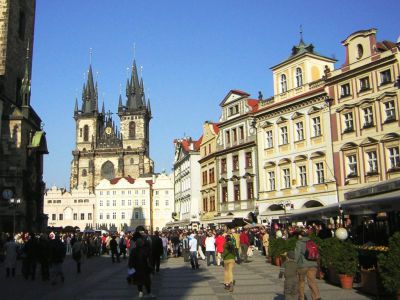
When in Prague, chances are you’ll be drawn into the Old Town Square-set right in the city’s historic core. It opens up dramatically from the winding alleys around it, and the sheer scale might catch you off guard. Once a bustling medieval marketplace, it’s now a lively, pedestrian-friendly zone filled with shops, cafés, hotels, and street performers. The kind of place where you can relax with fellow travelers, soak in centuries of history, or get swept up in the city’s nightlife as live musicians vie for your attention.
Some of Prague’s most iconic medieval landmarks gather here. You’ll spot the Old Town City Hall, built in 1364, best known for its intricate Astronomical Clock that still draws a crowd every hour. To the north, the 18th-century Saint Nicholas Church gleams in the sunlight, its white façade now home to classical concerts.
Towering above everything else are the spires of the Týn Church, an unmistakable Gothic presence and one of the city’s most photographed churches. Access is tucked behind the Týn School, itself a beautiful Gothic building with graceful arcades. Just nearby, the Stone Bell House hosts exhibitions of modern and contemporary art, while the neighboring Kinsky Palace-now part of the National Gallery-shows off its delicate Rococo façade.
Look south and you’ll see rows of Baroque and Renaissance townhouses, each marked not by numbers but by colorful names and symbols: At the Golden Unicorn, At the Blue Star, At the Red Fox... a throwback to the days before numbered addresses.
At the heart of the square stands the powerful Jan Hus Memorial, erected 500 years after the religious reformer's execution. Burned at the stake in 1415 for his beliefs, Hus remains a symbol of Czech defiance and conviction, known for his firm position against corruption and the abuse of power within the Catholic Church
Tip: Climb the clock tower-or take the elevator-for a sweeping 360-degree view of Prague’s rooftops and beyond. It’s the kind of panorama that sticks with you.
Some of Prague’s most iconic medieval landmarks gather here. You’ll spot the Old Town City Hall, built in 1364, best known for its intricate Astronomical Clock that still draws a crowd every hour. To the north, the 18th-century Saint Nicholas Church gleams in the sunlight, its white façade now home to classical concerts.
Towering above everything else are the spires of the Týn Church, an unmistakable Gothic presence and one of the city’s most photographed churches. Access is tucked behind the Týn School, itself a beautiful Gothic building with graceful arcades. Just nearby, the Stone Bell House hosts exhibitions of modern and contemporary art, while the neighboring Kinsky Palace-now part of the National Gallery-shows off its delicate Rococo façade.
Look south and you’ll see rows of Baroque and Renaissance townhouses, each marked not by numbers but by colorful names and symbols: At the Golden Unicorn, At the Blue Star, At the Red Fox... a throwback to the days before numbered addresses.
At the heart of the square stands the powerful Jan Hus Memorial, erected 500 years after the religious reformer's execution. Burned at the stake in 1415 for his beliefs, Hus remains a symbol of Czech defiance and conviction, known for his firm position against corruption and the abuse of power within the Catholic Church
Tip: Climb the clock tower-or take the elevator-for a sweeping 360-degree view of Prague’s rooftops and beyond. It’s the kind of panorama that sticks with you.
7) Church of Our Lady before Tyn (must see)
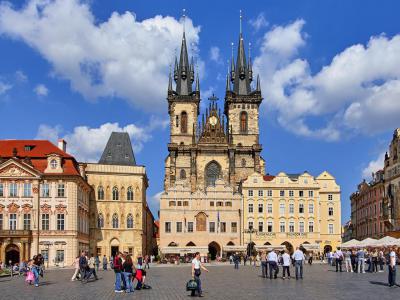
Standing tall over Prague’s Old Town, this mighty 14th-century Gothic marvel commands attention like few others. Marked by its uneven twin spires topped with smaller turrets, it is visible from nearly every angle in the city-a reliable landmark for orientation. Alongside the nearby Jan Hus monument, Týn Church stirs deep national pride and adds to that dreamlike quality often dubbed “Magic Prague”"-no wonder Disney used it as an inspiration for his fairytale castle. After dark, bathed in a warm orange glow, the church looks straight out of a storybook.
For a postcard-worthy view of the exterior, grab a ticket to the Clock Tower across the square and ride the lift to the top. Entry to the church itself is free, though a bit hidden: look for the narrow passage-specifically, the last arch on the left among the row of restaurants when you’re facing the spires from the square.
Inside, the Baroque-era makeover is on full display-ornate gilded woodwork, vivid stained glass, and a forest of soaring altarpieces surround you from every angle. They rise beside columns, frame the sanctuary, and line the walls in dazzling abundance.
Fans of astronomy will want to pay their respects at the marble tomb of Tycho Brahe, royal astronomer to Emperor Rudolf II. His likeness is carved into a wooden relief, surrounded by celestial symbols. And if you’re lucky, you might catch a concert on the grand 17th-century organ-check with Via Musica for tickets. The acoustics alone are worth it.
For a postcard-worthy view of the exterior, grab a ticket to the Clock Tower across the square and ride the lift to the top. Entry to the church itself is free, though a bit hidden: look for the narrow passage-specifically, the last arch on the left among the row of restaurants when you’re facing the spires from the square.
Inside, the Baroque-era makeover is on full display-ornate gilded woodwork, vivid stained glass, and a forest of soaring altarpieces surround you from every angle. They rise beside columns, frame the sanctuary, and line the walls in dazzling abundance.
Fans of astronomy will want to pay their respects at the marble tomb of Tycho Brahe, royal astronomer to Emperor Rudolf II. His likeness is carved into a wooden relief, surrounded by celestial symbols. And if you’re lucky, you might catch a concert on the grand 17th-century organ-check with Via Musica for tickets. The acoustics alone are worth it.
8) Old Jewish Cemetery
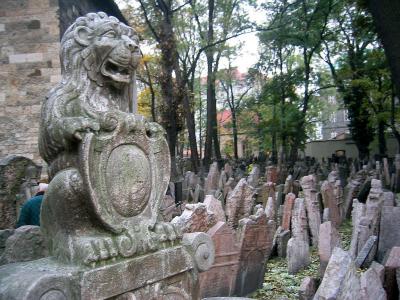
The Old Jewish Cemetery in Prague is one of the most hauntingly beautiful sites in the city-and one of the largest of its kind in Europe. For centuries, it served as the only permitted burial ground for the Jewish community, with graves dating from the early 15th century all the way to 1787. Because space within the walled ghetto was so limited, burials were layered-sometimes up to twelve deep-resulting in a sea of tombstones tilted, clustered, and rising unevenly from the earth. The 12,000 visible headstones you see today represent just a portion of those actually buried here.
In the beginning, gravestones were modest-simple markers for simple times. Over the years, however, they grew increasingly ornate. By the 17th century, headstones featured decorative flourishes like pilasters, volutes, and even carved false doorways, symbolizing the passage from one world to the next. Inscriptions are written in Hebrew and often include the deceased's name, along with the date of death or burial. From the Renaissance onward, brief eulogies were expanded to include poetic praise, while engraved symbols began to appear-clues to the person’s character, name, or profession. A pair of hands might represent a descendant of priests; a pair of scissors could point to a tailor.
Among the cemetery’s most notable graves is that of Avigdor Kara, a 15th-century poet whose original headstone now resides in the Maisel Synagogue. His is the oldest marked burial in the cemetery. Another revered figure laid to rest here is Rabbi Judah Loew ben Bezalel-better known as Rabbi Löw-the brilliant scholar and mystic behind the legend of the Golem. Even today, visitors leave tiny scraps of paper bearing prayers and wishes tucked into the cracks of his tombstone, hoping for a little intervention from the spiritual world.
In the beginning, gravestones were modest-simple markers for simple times. Over the years, however, they grew increasingly ornate. By the 17th century, headstones featured decorative flourishes like pilasters, volutes, and even carved false doorways, symbolizing the passage from one world to the next. Inscriptions are written in Hebrew and often include the deceased's name, along with the date of death or burial. From the Renaissance onward, brief eulogies were expanded to include poetic praise, while engraved symbols began to appear-clues to the person’s character, name, or profession. A pair of hands might represent a descendant of priests; a pair of scissors could point to a tailor.
Among the cemetery’s most notable graves is that of Avigdor Kara, a 15th-century poet whose original headstone now resides in the Maisel Synagogue. His is the oldest marked burial in the cemetery. Another revered figure laid to rest here is Rabbi Judah Loew ben Bezalel-better known as Rabbi Löw-the brilliant scholar and mystic behind the legend of the Golem. Even today, visitors leave tiny scraps of paper bearing prayers and wishes tucked into the cracks of his tombstone, hoping for a little intervention from the spiritual world.
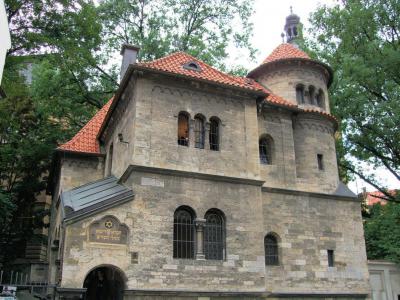
9) Ceremonial Hall
As you step out of the Old Jewish Cemetery and glance to your left, you’ll notice a building that looks like a small fortress or perhaps a nobleman’s residence from another era. That’s the Ceremonial Hall, and while it may not come with a dramatic backstory, its purpose was deeply rooted in the rituals of Jewish life and death.
Built in the early 20th century in a bold Neo-Romanesque style, the hall was commissioned by the Prague Jewish Burial Society. This was no ordinary society-it was made up of respected members entrusted with the sacred task of caring for the dead. Inside, the building was arranged with purpose: the basement was used as a morgue, the ground floor held a space for ritual purification, and the upper floor served as a meeting hall-where the Burial Society conducted business, held ceremonies, and even hosted annual banquets.
Until its closure for renovations in July 2024, the Ceremonial Hall was home to a fascinating exhibit titled “Jewish Customs and Traditions”. The display explored the full spectrum of Jewish life-from birth to death-with special focus on religious rites and communal practices. One of the highlights was an evocative 18th-century painting series illustrating burial customs, along with ceremonial objects and archival materials related to the Burial Society’s history.
The hall is currently undergoing extensive restoration, with plans to reopen by the end of 2026. When it returns, visitors can look forward to an updated core exhibition, once again dedicated to the rituals and traditions that have shaped Jewish identity for centuries. For the latest announcements, keep an eye on the official website of the Jewish Museum in Prague.
Built in the early 20th century in a bold Neo-Romanesque style, the hall was commissioned by the Prague Jewish Burial Society. This was no ordinary society-it was made up of respected members entrusted with the sacred task of caring for the dead. Inside, the building was arranged with purpose: the basement was used as a morgue, the ground floor held a space for ritual purification, and the upper floor served as a meeting hall-where the Burial Society conducted business, held ceremonies, and even hosted annual banquets.
Until its closure for renovations in July 2024, the Ceremonial Hall was home to a fascinating exhibit titled “Jewish Customs and Traditions”. The display explored the full spectrum of Jewish life-from birth to death-with special focus on religious rites and communal practices. One of the highlights was an evocative 18th-century painting series illustrating burial customs, along with ceremonial objects and archival materials related to the Burial Society’s history.
The hall is currently undergoing extensive restoration, with plans to reopen by the end of 2026. When it returns, visitors can look forward to an updated core exhibition, once again dedicated to the rituals and traditions that have shaped Jewish identity for centuries. For the latest announcements, keep an eye on the official website of the Jewish Museum in Prague.
