Custom Walk in Belgrade, Serbia by lovecat16_f287d created on 2025-05-20
Guide Location: Serbia » Belgrade
Guide Type: Custom Walk
# of Sights: 9
Tour Duration: 6 Hour(s)
Travel Distance: 14.9 Km or 9.3 Miles
Share Key: 39VDW
Guide Type: Custom Walk
# of Sights: 9
Tour Duration: 6 Hour(s)
Travel Distance: 14.9 Km or 9.3 Miles
Share Key: 39VDW
How It Works
Please retrieve this walk in the GPSmyCity app. Once done, the app will guide you from one tour stop to the next as if you had a personal tour guide. If you created the walk on this website or come to the page via a link, please follow the instructions below to retrieve the walk in the app.
Retrieve This Walk in App
Step 1. Download the app "GPSmyCity: Walks in 1K+ Cities" on Apple App Store or Google Play Store.



Step 2. In the GPSmyCity app, download(or launch) the guide "Belgrade Map and Walking Tours".
Step 3. Tap the menu button located at upper right corner of the "Walks" screen and select "Retrieve custom walk". Enter the share key: 39VDW
1) St. Mark's Church
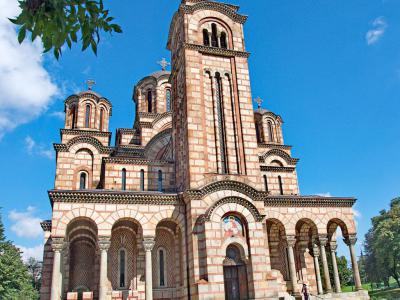
Located in Tasmajdan Park near Parliament, the Church of Saint Mark is a Serbian Orthodox church built in the Byzantine style. The building you see today was mostly completed by 1940, but there was a church dating from 1835 on this same site.
That original church was built of wood and also dedicated to Saint Mark. It was built in an existing cemetery. Here, King Alexander Obrenovic I and Queen Draga Obrenovic were buried after they were assassinated during the May Coup in 1903.
The original church was hit by German bombs and badly damaged on Palm Sunday in 1941. The rubble was cleared in 1942.
At the time, the new church's exterior had been completed, but finishing work was stalled due to the war. Nevertheless, divine service took place inside during the war. Officially, the building was consecrated in 1948.
The church has three altars. One of the altars contains a mosaic that is believed to be one of the largest in the world, spanning 1,400 square feet (130 square meters). It is made of Venetian glass and is titled "Mother of God, Larger than Heaven."
The park surrounding the church is worth a stroll. The grounds were rearranged in 2017. Large amounts of pavement were removed, and green spaces with granite slabs were added in their place. To the church's right is a ceremonial space, patterned after Capitoline Hill in Rome. It is meant to be an expansion of the church.
That original church was built of wood and also dedicated to Saint Mark. It was built in an existing cemetery. Here, King Alexander Obrenovic I and Queen Draga Obrenovic were buried after they were assassinated during the May Coup in 1903.
The original church was hit by German bombs and badly damaged on Palm Sunday in 1941. The rubble was cleared in 1942.
At the time, the new church's exterior had been completed, but finishing work was stalled due to the war. Nevertheless, divine service took place inside during the war. Officially, the building was consecrated in 1948.
The church has three altars. One of the altars contains a mosaic that is believed to be one of the largest in the world, spanning 1,400 square feet (130 square meters). It is made of Venetian glass and is titled "Mother of God, Larger than Heaven."
The park surrounding the church is worth a stroll. The grounds were rearranged in 2017. Large amounts of pavement were removed, and green spaces with granite slabs were added in their place. To the church's right is a ceremonial space, patterned after Capitoline Hill in Rome. It is meant to be an expansion of the church.
2) Church of Alexander of Neva
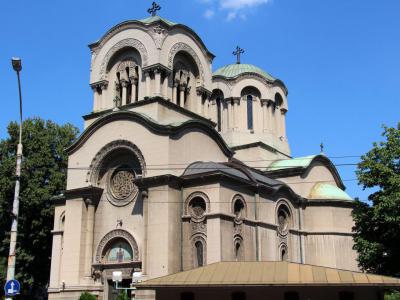
The Church of Saint Alexander Nevsky is a prominent Serbian Orthodox church located in the Dorćol area of the Old Town (Stari Grad) municipality in Belgrade. The church is dedicated to Saint Alexander Nevsky, a revered Russian national saint, and is part of the Archeparchy of Belgrade and Karlovci of the Serbian Orthodox Church.
The Church of Saint Alexander Nevsky's site has a long history from the Austrian occupation of northern Serbia (1717-1739). Capucine monks, authorized by Emperor Charles VI on August 23, 1718, converted a mosque into a church dedicated to the Virgin Mary, likely the Bajram-beg mosque. Despite their small number, they conducted missionary work and cared for the sick in hospitals, converting over 1,000 imperial soldiers to Catholicism by 1725.
The first church on this site was constructed in 1877 in the Morava architectural style, a distinctive style associated with Serbian medieval architecture. Initially, this church was a modest wooden structure filled with bricks. However, it was demolished in 1891 due to urban development, despite opposition from the Serbian Orthodox Church.
Plans for a larger church emerged in 1912, with architect Jelisaveta Načić, the first woman to graduate from the architectural department of the Technical Faculty in Belgrade, being selected to design it. The foundation stone was consecrated by Metropolitan Dimitrije on May 12, 1912, in the presence of the heir to the throne, Alexander Karađorđević. The construction was interrupted by World War I and resumed afterward, with the church being completed in 1928 or 1929. The final structure was built in the Serbian-Byzantine style, which combines elements of Byzantine and Serbian medieval architecture.
The Church of Saint Alexander Nevsky was designated a cultural monument in 1983 by the Serbian Institute for Protection of Monuments, underscoring its historical and architectural importance. Today, it remains a significant religious and cultural landmark in Belgrade, reflecting the city's rich history and the enduring legacy of its architectural heritage.
The Church of Saint Alexander Nevsky's site has a long history from the Austrian occupation of northern Serbia (1717-1739). Capucine monks, authorized by Emperor Charles VI on August 23, 1718, converted a mosque into a church dedicated to the Virgin Mary, likely the Bajram-beg mosque. Despite their small number, they conducted missionary work and cared for the sick in hospitals, converting over 1,000 imperial soldiers to Catholicism by 1725.
The first church on this site was constructed in 1877 in the Morava architectural style, a distinctive style associated with Serbian medieval architecture. Initially, this church was a modest wooden structure filled with bricks. However, it was demolished in 1891 due to urban development, despite opposition from the Serbian Orthodox Church.
Plans for a larger church emerged in 1912, with architect Jelisaveta Načić, the first woman to graduate from the architectural department of the Technical Faculty in Belgrade, being selected to design it. The foundation stone was consecrated by Metropolitan Dimitrije on May 12, 1912, in the presence of the heir to the throne, Alexander Karađorđević. The construction was interrupted by World War I and resumed afterward, with the church being completed in 1928 or 1929. The final structure was built in the Serbian-Byzantine style, which combines elements of Byzantine and Serbian medieval architecture.
The Church of Saint Alexander Nevsky was designated a cultural monument in 1983 by the Serbian Institute for Protection of Monuments, underscoring its historical and architectural importance. Today, it remains a significant religious and cultural landmark in Belgrade, reflecting the city's rich history and the enduring legacy of its architectural heritage.
3) Bajrakli Mosque
The Bajrakli Mosque is a significant Islamic religious and cultural site located in Belgrade, Serbia, specifically on Gospodar Jevremova Street in the Dorćol neighborhood. Constructed around 1575, it stands as the only mosque in Belgrade out of the original 273 that existed during the Ottoman Empire's rule over Serbia.
During the Austrian occupation of Serbia from 1717 to 1739, the mosque was converted into a Roman Catholic church. However, it reverted to its original function as a mosque when the Ottomans regained control of Belgrade.
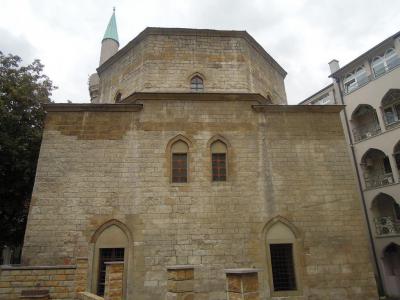
The mosque is a single-story cubic structure with a dome and minaret, featuring sturdy stone walls pierced by small brick and stone openings. Its design includes an octagonal dome supported by oriental domed arches and trompes, adorned with simple console designs. The facade showcases an odd number of windows, including one on each side of the dome's tambour, all framed by ogee oriental arches. A slender minaret with a conical roof and circular terrace stands on the northwest exterior, where the muezzin calls the faithful to prayer.
The mosque’s interior decoration is modest, with walls featuring shallow moldings, rare stylized floral and geometrical motifs, and calligraphic inscriptions of Quranic verses, the names of the first righteous caliphs, and the magnificent properties and names of Allah written in Arabic letters on specially decorated carved panels.
The Bajrakli Mosque serves as the main Islamic cultural center in Belgrade. Due to its historical significance, rarity, and preservation of its original purpose, it was placed under state protection as a cultural monument in 1946 and was declared a cultural monument of great value in 1979.
During the Austrian occupation of Serbia from 1717 to 1739, the mosque was converted into a Roman Catholic church. However, it reverted to its original function as a mosque when the Ottomans regained control of Belgrade.
The mosque is a single-story cubic structure with a dome and minaret, featuring sturdy stone walls pierced by small brick and stone openings. Its design includes an octagonal dome supported by oriental domed arches and trompes, adorned with simple console designs. The facade showcases an odd number of windows, including one on each side of the dome's tambour, all framed by ogee oriental arches. A slender minaret with a conical roof and circular terrace stands on the northwest exterior, where the muezzin calls the faithful to prayer.
The mosque’s interior decoration is modest, with walls featuring shallow moldings, rare stylized floral and geometrical motifs, and calligraphic inscriptions of Quranic verses, the names of the first righteous caliphs, and the magnificent properties and names of Allah written in Arabic letters on specially decorated carved panels.
The Bajrakli Mosque serves as the main Islamic cultural center in Belgrade. Due to its historical significance, rarity, and preservation of its original purpose, it was placed under state protection as a cultural monument in 1946 and was declared a cultural monument of great value in 1979.
4) Ružica (Rose) Church
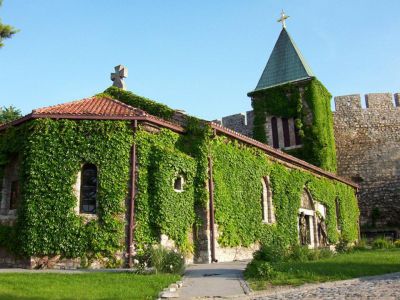
Rose Church is a Serbian Orthodox church in the Belgrade Fortress. The original church was built in the 15th century, though the details about who designed and built the church are unknown. It was reconstructed in 1869 and again in 1925 after significant damage during World War I.
Serbian Orthodox services began in 1869 after the completion of the bell tower building. The first bell was placed in 1870. The later reconstruction added two chandeliers, three candelabra and metal reliefs made from sabres, shell cases and bullets.
Two statues were added in 1925. The statues are of a lancer and an infantry soldier. Like the reliefs, that statues were made of scrap materials from the war. The walls were also covered in paintings by Andrej Bicenko.
Ružica means "little rose." A myth about where the church earned its name is that three sisters built three churches within the complex. The sisters were named Cveta, Marica and Ružica. Each church bore one of their names.
Serbian Orthodox services began in 1869 after the completion of the bell tower building. The first bell was placed in 1870. The later reconstruction added two chandeliers, three candelabra and metal reliefs made from sabres, shell cases and bullets.
Two statues were added in 1925. The statues are of a lancer and an infantry soldier. Like the reliefs, that statues were made of scrap materials from the war. The walls were also covered in paintings by Andrej Bicenko.
Ružica means "little rose." A myth about where the church earned its name is that three sisters built three churches within the complex. The sisters were named Cveta, Marica and Ružica. Each church bore one of their names.
5) Church of St. Archangel Michael
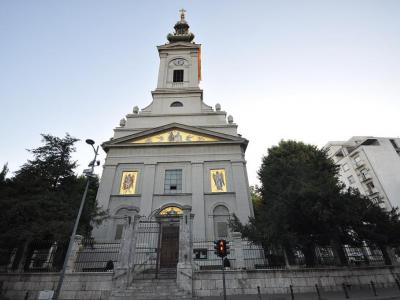
The Cathedral Church of Saint Michael the Archangel is a prominent Serbian Orthodox cathedral located in the old part of Belgrade, at the intersection of Kralja Petra and Kneza Sime Markovića streets. Constructed between 1837 and 1840 on the site of an older church dedicated to Archangel Michael, it stands as one of the most significant places of worship in Serbia and was declared a Cultural Monument of Exceptional Importance in 1979.
The church is one of the few remaining monuments in Belgrade from the first half of the 19th century, a period marked by the struggle for independence from Turkish centralism to final freedom from Ottoman rule. The original church on this site, described by Protestant priest and travel writer Stjepan Gerlach in the 16th century, was spacious but not large enough to accommodate all the Christian citizens of Belgrade.
The cathedral's construction features a single nave design with a semi-circular apse to the east and a narthex to the west, above which a high bell tower rises. The interior is divided into the altar space, nave, and narthex, which contains a baptistery and stairs leading to the bell tower. The architecture reflects neoclassical influences with a recognizable baroque tower, inspired by contemporaneous church designs in Austria and possibly modeled after the older cathedral church in Sremski Karlovci.
Dimitrije Petrović crafted the gold-plated carved iconostasis, while the distinguished 19th-century Serbian painter Dimitrije Avramović painted the icons and wall compositions between 1841 and 1845. Avramović's work, influenced by the historical school of Vienna and the German Nazarenes, features a dramatic color scheme and plastic-dramatic rhythm that create a unique Serbian manner. His monumental religious compositions are highly regarded in Serbian art history.
The cathedral also houses a valuable treasury containing applied art objects, including golden items from the 18th and 19th centuries, priests' garments, crosses, individual icons from the latter half of the 19th century, and other culturally and historically significant objects.
The church is one of the few remaining monuments in Belgrade from the first half of the 19th century, a period marked by the struggle for independence from Turkish centralism to final freedom from Ottoman rule. The original church on this site, described by Protestant priest and travel writer Stjepan Gerlach in the 16th century, was spacious but not large enough to accommodate all the Christian citizens of Belgrade.
The cathedral's construction features a single nave design with a semi-circular apse to the east and a narthex to the west, above which a high bell tower rises. The interior is divided into the altar space, nave, and narthex, which contains a baptistery and stairs leading to the bell tower. The architecture reflects neoclassical influences with a recognizable baroque tower, inspired by contemporaneous church designs in Austria and possibly modeled after the older cathedral church in Sremski Karlovci.
Dimitrije Petrović crafted the gold-plated carved iconostasis, while the distinguished 19th-century Serbian painter Dimitrije Avramović painted the icons and wall compositions between 1841 and 1845. Avramović's work, influenced by the historical school of Vienna and the German Nazarenes, features a dramatic color scheme and plastic-dramatic rhythm that create a unique Serbian manner. His monumental religious compositions are highly regarded in Serbian art history.
The cathedral also houses a valuable treasury containing applied art objects, including golden items from the 18th and 19th centuries, priests' garments, crosses, individual icons from the latter half of the 19th century, and other culturally and historically significant objects.
6) Serbian Orthodox Church
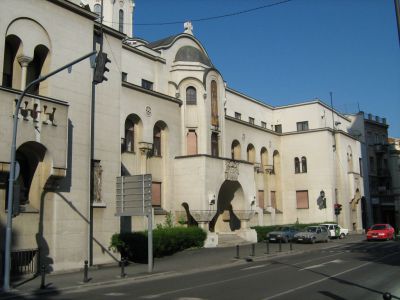
The Serbian Orthodox Church in Belgrade boasts a deeply rooted history that is pivotal to the spiritual and cultural identity of the Serbian people. This church's foundations trace back to the 13th century when it was established by Archbishop Saint Sava and subsequently recognized as an autocephalous church by Constantinople in 1219. This marked the beginning of its independent ecclesiastical authority.
The evolution of the Serbian Orthodox Church paralleled the expansion and enhanced status of the medieval Kingdom of Serbia. A significant milestone occurred when King Stefan Dušan was crowned tsar in the mid-14th century, elevating Serbia to an empire. In sync with this political rise, the Archbishopric of Peć, the church's headquarters, was elevated to a Patriarchate in 1346, reflecting the increased prestige and influence of the church.
During the 14th century, the Serbian Church reached its zenith in power and prestige, a period during which the Serbian Orthodox clergy held influential positions such as the title of Protos at Mount Athos, a prominent monastic community. However, the latter part of the century witnessed the onset of challenges, particularly with the rise of the Ottoman Empire.
The Ottoman conquest of Serbia in 1459 marked a significant shift. Although the empire incorporated Serbia as a province and promoted the conversion to Islam, a majority of Serbs remained steadfast in their Orthodox Christian faith. Despite the challenges and disruptions faced during the Ottoman period, the Serbian Orthodox Church persevered as a crucial institution for the Serbian people.
However, after the death of Patriarch Arsenios II in 1463, the church encountered a period of uncertainty due to the absence of a successor, reflecting the broader struggles of the Serbian Orthodox community during this era. Nevertheless, its enduring presence throughout these turbulent times underscores its resilience and lasting significance in Serbian history and identity.
The evolution of the Serbian Orthodox Church paralleled the expansion and enhanced status of the medieval Kingdom of Serbia. A significant milestone occurred when King Stefan Dušan was crowned tsar in the mid-14th century, elevating Serbia to an empire. In sync with this political rise, the Archbishopric of Peć, the church's headquarters, was elevated to a Patriarchate in 1346, reflecting the increased prestige and influence of the church.
During the 14th century, the Serbian Church reached its zenith in power and prestige, a period during which the Serbian Orthodox clergy held influential positions such as the title of Protos at Mount Athos, a prominent monastic community. However, the latter part of the century witnessed the onset of challenges, particularly with the rise of the Ottoman Empire.
The Ottoman conquest of Serbia in 1459 marked a significant shift. Although the empire incorporated Serbia as a province and promoted the conversion to Islam, a majority of Serbs remained steadfast in their Orthodox Christian faith. Despite the challenges and disruptions faced during the Ottoman period, the Serbian Orthodox Church persevered as a crucial institution for the Serbian people.
However, after the death of Patriarch Arsenios II in 1463, the church encountered a period of uncertainty due to the absence of a successor, reflecting the broader struggles of the Serbian Orthodox community during this era. Nevertheless, its enduring presence throughout these turbulent times underscores its resilience and lasting significance in Serbian history and identity.
7) Presentation of the Virgin Mary Monastery
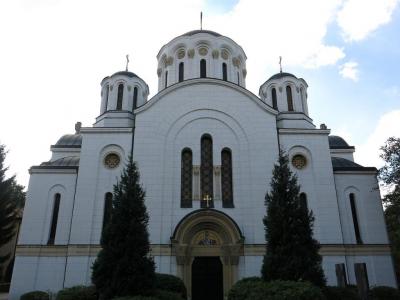
The Presentation of the Virgin Mary Monastery, a Serbian Orthodox monastery, is situated in Senjak, an urban settlement within the Savski Venac municipality in Belgrade. The foundations of this temple were consecrated on August 11, 1935, and it was officially built and consecrated on October 25, 1936. According to legend, the construction of the church is linked to a vision experienced by its founder, Perside Milenković, who dreamt thrice about building the monastery in its current location.
The monastery has significant historical and cultural value. The Holy Confessor Dositej Vasić was originally buried in the monastery gate and was later transferred to the monastery temple's ark in 2009. The monastery is recognized as an immovable cultural property and a cultural monument.
Within the monastery residence is a chapel dedicated to Saint Nicholas the Wonderworker, housing three arks containing relics of various saints. Additionally, the monastery treasury holds old manuscripts, printed liturgical books, and icons brought to Serbia by Russian nuns after the October coup. The monastery grounds include three pits containing the remains of those killed on Saint Dmitrov's Day in 1944 and victims of the Allied bombing on Easter 1944.
Architecturally, the monastery was designed by Petra Popović. The church is built in the shape of an inscribed cross, featuring a central dome at the intersection and four smaller domes between the arms of the cross. Its interior includes a wooden stasis, choir counters, backrests, portals for kissing icons, and a ciborium with a five-domed canopy, all decorated with shallow relief floral motifs. Simple decorations adorn the episcopal and royal wooden thrones. The central dome's interior is highlighted by a metal chandelier crafted by sculptor Slobodan Rekalić, with icons painted by Ivana Pecin.
The Presentation of the Virgin Mary Monastery stands as a significant spiritual, cultural, and historical site within Belgrade, embodying the rich traditions of the Serbian Orthodox Church.
The monastery has significant historical and cultural value. The Holy Confessor Dositej Vasić was originally buried in the monastery gate and was later transferred to the monastery temple's ark in 2009. The monastery is recognized as an immovable cultural property and a cultural monument.
Within the monastery residence is a chapel dedicated to Saint Nicholas the Wonderworker, housing three arks containing relics of various saints. Additionally, the monastery treasury holds old manuscripts, printed liturgical books, and icons brought to Serbia by Russian nuns after the October coup. The monastery grounds include three pits containing the remains of those killed on Saint Dmitrov's Day in 1944 and victims of the Allied bombing on Easter 1944.
Architecturally, the monastery was designed by Petra Popović. The church is built in the shape of an inscribed cross, featuring a central dome at the intersection and four smaller domes between the arms of the cross. Its interior includes a wooden stasis, choir counters, backrests, portals for kissing icons, and a ciborium with a five-domed canopy, all decorated with shallow relief floral motifs. Simple decorations adorn the episcopal and royal wooden thrones. The central dome's interior is highlighted by a metal chandelier crafted by sculptor Slobodan Rekalić, with icons painted by Ivana Pecin.
The Presentation of the Virgin Mary Monastery stands as a significant spiritual, cultural, and historical site within Belgrade, embodying the rich traditions of the Serbian Orthodox Church.
8) Church of the Holy Apostles Peter and Paul
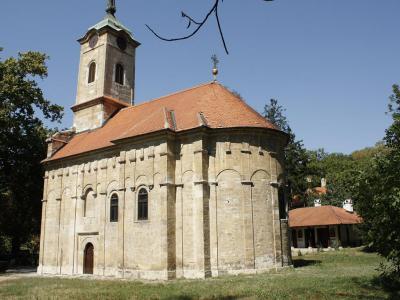
The Church of the Holy Apostles Peter and Paul, also known as the Topčider Church, is a Serbian Orthodox Church situated in Topčider Park in the Savski Venac municipality of Belgrade. Built between 1832 and 1834, the church was an endowment from Prince Miloš Obrenović, who also founded it. It stands adjacent to the Residence of Prince Miloš and was declared a cultural monument protected by the state in 1949.
Construction of the church began on July 28, 1832, led by Janja Mihajlović, Nikola Đorđević, and Hadži Nikola Živković. Due to poor payment and delays, the construction was extended until the summer of 1834. Prince Miloš's frugality influenced the material selection, resulting in parts of the bell tower and konak being constructed from old headstones, one of which features a carving of horse pliers.
Prince Miloš donated three bells to the church, but during the Austro-Hungarian occupation in World War I, two were removed and melted for arms production in Vienna. The smallest bell survived and remains today.
The church's iconostasis is particularly notable. The original, created between 1834 and 1837 by various painters, was moved to a parish church in Barič in 1874. The current iconostasis, crafted by renowned artist Stevan Todorović and his collaborator Nikola Marković, features unique elements. Todorović replaced traditional motifs with unconventional choices, such as painting young Tobias with angels on the south altar doors instead of Saint Archdeacon Stephen. The iconostasis also includes Saint Stefan Dečanski and Saint Sava, the latter depicted differently from the well-known representation at Mileševa Monastery. Unusually, none of the saints are painted with halos. The carvings were done by sculptor Dimitrije Petrović.
Construction of the church began on July 28, 1832, led by Janja Mihajlović, Nikola Đorđević, and Hadži Nikola Živković. Due to poor payment and delays, the construction was extended until the summer of 1834. Prince Miloš's frugality influenced the material selection, resulting in parts of the bell tower and konak being constructed from old headstones, one of which features a carving of horse pliers.
Prince Miloš donated three bells to the church, but during the Austro-Hungarian occupation in World War I, two were removed and melted for arms production in Vienna. The smallest bell survived and remains today.
The church's iconostasis is particularly notable. The original, created between 1834 and 1837 by various painters, was moved to a parish church in Barič in 1874. The current iconostasis, crafted by renowned artist Stevan Todorović and his collaborator Nikola Marković, features unique elements. Todorović replaced traditional motifs with unconventional choices, such as painting young Tobias with angels on the south altar doors instead of Saint Archdeacon Stephen. The iconostasis also includes Saint Stefan Dečanski and Saint Sava, the latter depicted differently from the well-known representation at Mileševa Monastery. Unusually, none of the saints are painted with halos. The carvings were done by sculptor Dimitrije Petrović.
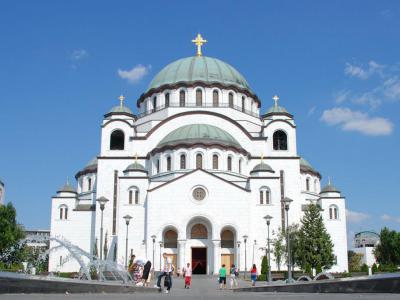
9) Cathedral of Saint Sava (must see)
Modeled after the Hagia Sophia in Istanbul, the Temple of Saint Sava is Belgrade's most imposing landmark. It is dedicated to Saint Sava, the founder of the Serbian Orthodox Church and a national hero.
The church was planned to be the bishop's seat and the main cathedral for the Serbian Orthodox religion. You can trace the initial plans for building a church back to 1894. But the first stones of the church weren't laid until 1935, and construction was paused during the war years and communist rule.
The tide turned for the church in 1985 when a liturgy was held, attended by over 100,000 people. This proved that the church still had significant power with the population, and the communist leaders had to back down and allow the church construction to go on.
During construction, the greatest achievement was undoubtedly the lifting of the church's enormous concrete dome in 1989. The dome is 39.5 meters (130 feet) in diameter, weighs 4,000 tons, and is clad in copper. It was lifted into place using hydraulic machines, a process that took 20 days. The construction technology that made it possible was created specifically for the task.
The church sits on the Vračar plateau, the site where Ottomans burnt Saint Sava's remains in 1594. Sava lived in the 13th century and was known as the Enlightener. Besides being the first Archbishop of the Serbian Orthodox Church, he is remembered as the founder of Serbian law, a diplomat, and one of the most important people in the country's history.
Saint Sava's is one of the largest Eastern Orthodox churches and one of the largest churches in the world. When the Hagia Sophia was again converted to a mosque in 2020, church leaders hoped that Saint Sava's would replace it as a "New Hagia Sophia."
One of the most notable interior features of the church is the use of light, thanks to the enormous dome and four apses. In addition, the interior is clad with 130,000 square feet of golden mosaics. The impressive installation was funded thanks to gifts from the Russian Federation and the Republic of Serbia.
The church was planned to be the bishop's seat and the main cathedral for the Serbian Orthodox religion. You can trace the initial plans for building a church back to 1894. But the first stones of the church weren't laid until 1935, and construction was paused during the war years and communist rule.
The tide turned for the church in 1985 when a liturgy was held, attended by over 100,000 people. This proved that the church still had significant power with the population, and the communist leaders had to back down and allow the church construction to go on.
During construction, the greatest achievement was undoubtedly the lifting of the church's enormous concrete dome in 1989. The dome is 39.5 meters (130 feet) in diameter, weighs 4,000 tons, and is clad in copper. It was lifted into place using hydraulic machines, a process that took 20 days. The construction technology that made it possible was created specifically for the task.
The church sits on the Vračar plateau, the site where Ottomans burnt Saint Sava's remains in 1594. Sava lived in the 13th century and was known as the Enlightener. Besides being the first Archbishop of the Serbian Orthodox Church, he is remembered as the founder of Serbian law, a diplomat, and one of the most important people in the country's history.
Saint Sava's is one of the largest Eastern Orthodox churches and one of the largest churches in the world. When the Hagia Sophia was again converted to a mosque in 2020, church leaders hoped that Saint Sava's would replace it as a "New Hagia Sophia."
One of the most notable interior features of the church is the use of light, thanks to the enormous dome and four apses. In addition, the interior is clad with 130,000 square feet of golden mosaics. The impressive installation was funded thanks to gifts from the Russian Federation and the Republic of Serbia.
