Custom Walk in Bangkok, Thailand by cpocknee_8447f created on 2025-05-23
Guide Location: Thailand » Bangkok
Guide Type: Custom Walk
# of Sights: 9
Tour Duration: 8 Hour(s)
Travel Distance: 21.2 Km or 13.2 Miles
Share Key: 7Y4AS
Guide Type: Custom Walk
# of Sights: 9
Tour Duration: 8 Hour(s)
Travel Distance: 21.2 Km or 13.2 Miles
Share Key: 7Y4AS
How It Works
Please retrieve this walk in the GPSmyCity app. Once done, the app will guide you from one tour stop to the next as if you had a personal tour guide. If you created the walk on this website or come to the page via a link, please follow the instructions below to retrieve the walk in the app.
Retrieve This Walk in App
Step 1. Download the app "GPSmyCity: Walks in 1K+ Cities" on Apple App Store or Google Play Store.



Step 2. In the GPSmyCity app, download(or launch) the guide "Bangkok Map and Walking Tours".
Step 3. Tap the menu button located at upper right corner of the "Walks" screen and select "Retrieve custom walk". Enter the share key: 7Y4AS
1) Khaosan Road
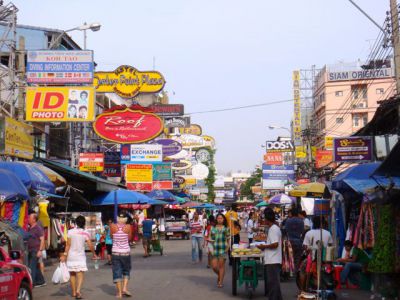
Khaosan Road, often called "the place to disappear" or described poetically as "a short road with the longest dream," is surprisingly brief, stretching just 410 meters. This road was built in 1892 during King Rama V's rule. The name "Khaosan" means "milled rice," pointing back to its history as a key rice trading spot.
In the past 40 years, Khaosan Road has become a globally known hub for budget travelers, offering a range of affordable accommodations. These range from very basic rooms to more comfortable 3-star hotels. During peak tourist season, the road welcomes between 40,000 and 50,000 visitors daily, while off-peak times see about 20,000 daily visitors.
Khaosan Road is a melting pot of diverse individuals. You'll find young Westerners taking a break from their privileged lives, high school graduates on their gap year, Israelis recently finished with military service, university students on vacation or a sabbatical, young Japanese experiencing a coming-of-age ritual, typical vacationers, former volunteers from different organizations, and others.
The area's shops offer various items including handicrafts, art, clothing, local fruit, pirated CDs and DVDs, a variety of fake IDs, second-hand books, and other items essential for backpackers. After sunset, the atmosphere shifts as bars open up, music fills the air, street food vendors offer exotic snacks like barbecued insects, and promoters advertise unique shows. Khaosan Road is especially lively before the Thai New Year (Songkran festival) in mid-April, known for its massive water fights.
Additionally, the historic Wat Chana Songkram Buddhist temple, under royal patronage, sits across from Khaosan Road to the west. The area to the northwest is home to an Islamic community and several small mosques.
In the past 40 years, Khaosan Road has become a globally known hub for budget travelers, offering a range of affordable accommodations. These range from very basic rooms to more comfortable 3-star hotels. During peak tourist season, the road welcomes between 40,000 and 50,000 visitors daily, while off-peak times see about 20,000 daily visitors.
Khaosan Road is a melting pot of diverse individuals. You'll find young Westerners taking a break from their privileged lives, high school graduates on their gap year, Israelis recently finished with military service, university students on vacation or a sabbatical, young Japanese experiencing a coming-of-age ritual, typical vacationers, former volunteers from different organizations, and others.
The area's shops offer various items including handicrafts, art, clothing, local fruit, pirated CDs and DVDs, a variety of fake IDs, second-hand books, and other items essential for backpackers. After sunset, the atmosphere shifts as bars open up, music fills the air, street food vendors offer exotic snacks like barbecued insects, and promoters advertise unique shows. Khaosan Road is especially lively before the Thai New Year (Songkran festival) in mid-April, known for its massive water fights.
Additionally, the historic Wat Chana Songkram Buddhist temple, under royal patronage, sits across from Khaosan Road to the west. The area to the northwest is home to an Islamic community and several small mosques.
2) Wat Intharawihan (Temple of the Standing Buddha)
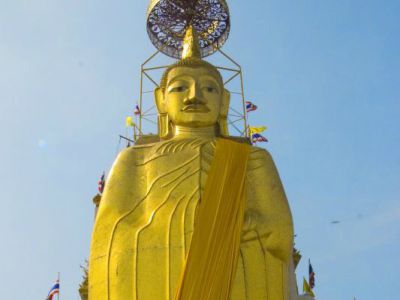
Wat Intharawihan is one of Thailand's most frequently visited temples. Built during the later Ayutthaya period, it is located in the Nakhon District of Bangkok. The main feature of the temple is a 32 meter high, 10 meters wide standing Buddha known as Luang Pho To or Phrasiariyametri. The topknot of the Buddha image contains a relic of Lord Buddha brought from Sri Lanka and took over 60 years to complete.
The statue faces east, holds alms-bowls in hands and remains sheathed with 24K golden mosaics brought from Italy. The peculiarity of the image is that it is very thin with prominently flat facial features. However, as a whole, it displays a very modernistic architectural style.
A closer look at the gigantic image reveals that even the gilded toenails of the statue are quite large. Smaller Buddha images are also placed near the feet of the statue. Next to the entrance of the temple, many caged birds are available for sale. People believe that purchasing and releasing the birds while standing on the base of the statue brings good luck, prosperity and success. Many Thais, as well as tourists, visit the temple every day and make various offerings at the feet of the statue in order to mark their devotion.
Why You Should Visit:
To see the impressively large outdoor Buddha statue as well as the museum underneath and several smaller structures.
The statue faces east, holds alms-bowls in hands and remains sheathed with 24K golden mosaics brought from Italy. The peculiarity of the image is that it is very thin with prominently flat facial features. However, as a whole, it displays a very modernistic architectural style.
A closer look at the gigantic image reveals that even the gilded toenails of the statue are quite large. Smaller Buddha images are also placed near the feet of the statue. Next to the entrance of the temple, many caged birds are available for sale. People believe that purchasing and releasing the birds while standing on the base of the statue brings good luck, prosperity and success. Many Thais, as well as tourists, visit the temple every day and make various offerings at the feet of the statue in order to mark their devotion.
Why You Should Visit:
To see the impressively large outdoor Buddha statue as well as the museum underneath and several smaller structures.
3) Wat Arun (Temple of Dawn) (must see)
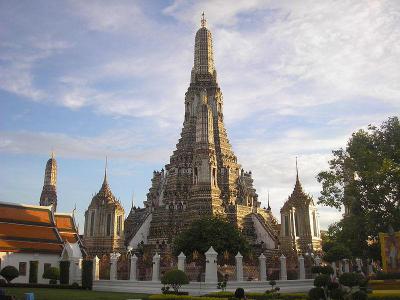
Wat Arun, located in the Bangkok Yai district of Bangkok, is a prominent Buddhist temple. It rests on the western bank of the Chao Phraya River in the Thonburi area. This temple takes its name from Aruṇa, a Hindu deity symbolizing the radiant energies of the rising sun. Wat Arun is one of Thailand's most renowned landmarks. Although the temple has a history dating back to at least the 17th century, its distinctive prang (tower-like spire) was constructed in the early 19th century under the reigns of Rama II and Rama III.
The central feature of Wat Arun is its central prang, adorned with vibrant porcelain. It resembles a stupa-like pagoda embellished with colorful faience. Its height is reported differently in various sources, ranging from 66.8 meters (219 feet) to 86 meters (282 feet). Four smaller satellite prang surround its corners, adorned with shells from Mauritia mauritiana and fragments of porcelain.
At the pinnacle of the central prang is a seven-pronged trident often referred to as the "Trident of Shiva." Surrounding the prang's base, you'll find various depictions of ancient Chinese soldiers and animals. Above the second terrace, there are four statues of the Hindu god Indra mounted on Erawan, his celestial mount.
The central prang is believed to have three significant levels: the base represents Traiphum, signifying all realms of existence; the middle stands for Tavatimsa, the Tusita Heaven where all desires find fulfillment; and the top denotes Devaphum, indicating the six heavens within the seven realms of happiness. Along the riverside, there are six pavilions constructed in the Chinese architectural style. These pavilions are crafted from green granite and feature landing bridges.
Adjacent to the prang stands the Ordination Hall, housing a Niramitr Buddha image, purportedly designed by Rama II. The front entrance of the Ordination Hall boasts a roof adorned with a central spire, decorated with colored ceramics and stuccowork covered in colored china. Inside, you'll find a grand altar adorned with red, grey, and white marble decorations. Two temple guardian figures, representing demons, stand at the entrance. The murals inside were commissioned during the reign of Rama V.
Why You Should Visit:
Lovely, colorful, and less crowded than the other major temples in the area.
Not many Buddhist temples are this white and bright with pieces of different types of ceramic tiles and fragments of multi-colored porcelain decorated on almost every inch.
Tip:
Make sure you are properly dressed so that you won't be required to rent a sarong or be turned away.
Some people will suggest renting a boat to visit the temple. It will cost you a lot, so pass on that! Just cross with the ferry for a mere 4 THB.
The best time to visit would be evening since you can get a glimpse of the temple's structure & details in daylight as well as when lit up artificially after sunset.
The central feature of Wat Arun is its central prang, adorned with vibrant porcelain. It resembles a stupa-like pagoda embellished with colorful faience. Its height is reported differently in various sources, ranging from 66.8 meters (219 feet) to 86 meters (282 feet). Four smaller satellite prang surround its corners, adorned with shells from Mauritia mauritiana and fragments of porcelain.
At the pinnacle of the central prang is a seven-pronged trident often referred to as the "Trident of Shiva." Surrounding the prang's base, you'll find various depictions of ancient Chinese soldiers and animals. Above the second terrace, there are four statues of the Hindu god Indra mounted on Erawan, his celestial mount.
The central prang is believed to have three significant levels: the base represents Traiphum, signifying all realms of existence; the middle stands for Tavatimsa, the Tusita Heaven where all desires find fulfillment; and the top denotes Devaphum, indicating the six heavens within the seven realms of happiness. Along the riverside, there are six pavilions constructed in the Chinese architectural style. These pavilions are crafted from green granite and feature landing bridges.
Adjacent to the prang stands the Ordination Hall, housing a Niramitr Buddha image, purportedly designed by Rama II. The front entrance of the Ordination Hall boasts a roof adorned with a central spire, decorated with colored ceramics and stuccowork covered in colored china. Inside, you'll find a grand altar adorned with red, grey, and white marble decorations. Two temple guardian figures, representing demons, stand at the entrance. The murals inside were commissioned during the reign of Rama V.
Why You Should Visit:
Lovely, colorful, and less crowded than the other major temples in the area.
Not many Buddhist temples are this white and bright with pieces of different types of ceramic tiles and fragments of multi-colored porcelain decorated on almost every inch.
Tip:
Make sure you are properly dressed so that you won't be required to rent a sarong or be turned away.
Some people will suggest renting a boat to visit the temple. It will cost you a lot, so pass on that! Just cross with the ferry for a mere 4 THB.
The best time to visit would be evening since you can get a glimpse of the temple's structure & details in daylight as well as when lit up artificially after sunset.
4) Chinatown Gate (must see)
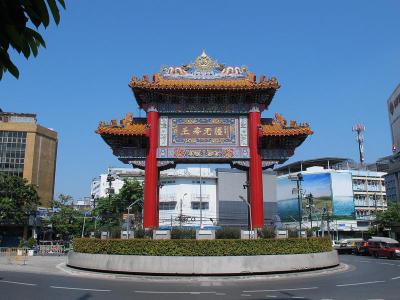
Built in 1999 as part of the celebrations of King Bhumibol Adulyadej's 72's birthday, the Chinatown Gate is sometimes called "Odean Gate" after the Odean cinema that once stood nearby. The words on the gate say "Sheng Shou Wu Jiang", translated as "Long Live the King". During Chinese New Year celebrations, the gate becomes the center of activities where people make their offerings.
Chinatown Gate is the entrance to many sites, a brief description of which is given below:
- Wat Traimit, a small temple, home to the world's largest five-ton-plus solid gold Buddha image;
- Li Thi Miew Temple, one of the more open and accessible of many Chinese temples in Chinatown;
- Wat Kanikaphon, a small temple with some interesting details, founded by a former Madame who owned a brothel;
- Tien Fa Charity, a small clinic run by a charitable foundation, with a large chapel to the goddess Ming in its courtyard;
- Sampaeng Lane, Chinatown's original main street, now a small narrow alley crowded with shops selling mostly inexpensive household items and a very old Chinese pharmacy – definitely worth a look;
- Wat Mangkon Kamalawat, the Chinese-Buddhist temple – a center of festivities during important festivals such as the Chinese New Year and the vegetarian festival;
- Phahurat Market, a small community center for Sikhs and other immigrants from the subcontinent, home to a large number of fabric and wedding stalls;
- Wat Chakrawat, one of Bangkok's three biggest monasteries, housing some very unusual buildings and a few crocodiles!;
- The Old Siam, a shopping center where you will find tourist-friendly western and Thai restaurants and fast food outlets.
In short, Chinatown Gate gives you the visa to enter into a whole new world to explore and enjoy!
Tip:
Plan ahead so you can visit the top spots and leave room in your stomach for the unexpected – but be sure to eat where the locals are queueing.
Chinatown Gate is the entrance to many sites, a brief description of which is given below:
- Wat Traimit, a small temple, home to the world's largest five-ton-plus solid gold Buddha image;
- Li Thi Miew Temple, one of the more open and accessible of many Chinese temples in Chinatown;
- Wat Kanikaphon, a small temple with some interesting details, founded by a former Madame who owned a brothel;
- Tien Fa Charity, a small clinic run by a charitable foundation, with a large chapel to the goddess Ming in its courtyard;
- Sampaeng Lane, Chinatown's original main street, now a small narrow alley crowded with shops selling mostly inexpensive household items and a very old Chinese pharmacy – definitely worth a look;
- Wat Mangkon Kamalawat, the Chinese-Buddhist temple – a center of festivities during important festivals such as the Chinese New Year and the vegetarian festival;
- Phahurat Market, a small community center for Sikhs and other immigrants from the subcontinent, home to a large number of fabric and wedding stalls;
- Wat Chakrawat, one of Bangkok's three biggest monasteries, housing some very unusual buildings and a few crocodiles!;
- The Old Siam, a shopping center where you will find tourist-friendly western and Thai restaurants and fast food outlets.
In short, Chinatown Gate gives you the visa to enter into a whole new world to explore and enjoy!
Tip:
Plan ahead so you can visit the top spots and leave room in your stomach for the unexpected – but be sure to eat where the locals are queueing.
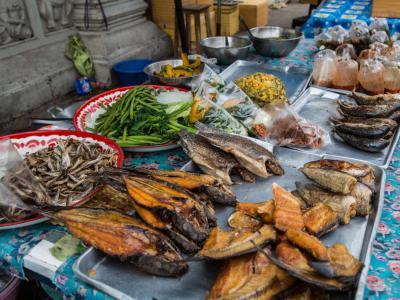
5) Lumphini Park Food Stalls
Grab a bottle of water or cool drink and take a nice relaxing walk through the city's oldest (and biggest) park to admire the grass, the trees, the monitor lizards, birds and flora in a quiet, serene environment. There's plenty of exercise equipment to get a workout in or take a run around the perimeter or along the paths. Other activities include Chinese Tai Chi, aerobics, tennis, badminton, cycling, paddleboat, going to the pool, and more – a great respite from the traffic and hecticness of Bangkok!
Make sure to buy fish food (20 baht per bag) as you enter, and if you're an early bird, absolutely grab a local breakfast from the food stalls. The vegetarian one (marked by yellow triangle banner) sells excellent plates of brown rice with eggplant, tofu, soya, and okra for just 50 baht. You can then finish off with steamed rice sweets and an iced Thai coffee or some fresh juice (the best one can get!) – cheap, tasty, and a great way to experience the local vibe.
Tip:
The food stalls close by 9am, so plan accordingly.
Make sure to buy fish food (20 baht per bag) as you enter, and if you're an early bird, absolutely grab a local breakfast from the food stalls. The vegetarian one (marked by yellow triangle banner) sells excellent plates of brown rice with eggplant, tofu, soya, and okra for just 50 baht. You can then finish off with steamed rice sweets and an iced Thai coffee or some fresh juice (the best one can get!) – cheap, tasty, and a great way to experience the local vibe.
Tip:
The food stalls close by 9am, so plan accordingly.

6) Lumphini Park (must see)
Grab a bottle of water or cool drink and take a nice relaxing walk through the city's oldest (and biggest) park to admire the grass, the trees, the monitor lizards, birds and flora in a quiet, serene environment. There's plenty of exercise equipment to get a workout in or take a run around the perimeter or along the paths. Other activities include Chinese Tai Chi, aerobics, tennis, badminton, cycling, paddleboat, going to the pool, and more – a great respite from the traffic and hecticness of Bangkok!
Make sure to buy fish food (20 baht per bag) as you enter, and if you're an early bird, absolutely grab a local breakfast from the food stalls. The vegetarian one (marked by yellow triangle banner) sells excellent plates of brown rice with eggplant, tofu, soya, and okra for just 50 baht. You can then finish off with steamed rice sweets and an iced Thai coffee or some fresh juice (the best one can get!) – cheap, tasty, and a great way to experience the local vibe.
Tip:
The food stalls close by 9am, so plan accordingly.
Make sure to buy fish food (20 baht per bag) as you enter, and if you're an early bird, absolutely grab a local breakfast from the food stalls. The vegetarian one (marked by yellow triangle banner) sells excellent plates of brown rice with eggplant, tofu, soya, and okra for just 50 baht. You can then finish off with steamed rice sweets and an iced Thai coffee or some fresh juice (the best one can get!) – cheap, tasty, and a great way to experience the local vibe.
Tip:
The food stalls close by 9am, so plan accordingly.
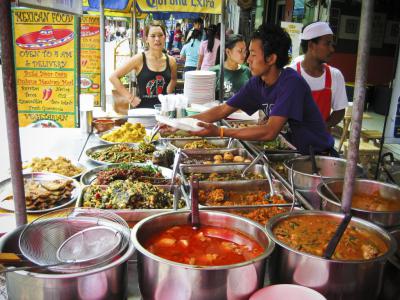
7) Convent Road
Amid the odd-numbered sois of Silom, the busy tree-shaded lane of Soi Convent starts with a barrage of food stalls and continues with several restaurants catering for various tastes – from Irish pub grub to fancy fusion.
For all-authentic Thai dishes at a great price, try the very local, down-to-earth HAI SOLTAM (Mon-Sat: 10am–9pm), providing an opportunity to try as many different papaya salads as you can. The nearby INDIGO (11:30am–11pm) is a charming, well-regarded French restaurant in an old, wooden building with a large garden. The management is "hands-on" making all the French classics delicious; the veal chop, in particular, is something almost impossible to find anywhere else in Bangkok. With an innovative inside/outside design, the EAT ME RESTAURANT (3pm–1am) down a narrow laneway serves many inventive and delicious cocktails, while the food offers a true fusion of classic and contemporary touches in both Western and Eastern dishes, which include nice vegetarian options.
A good place to stroll if looking to escape the crowds of Silom Road!
For all-authentic Thai dishes at a great price, try the very local, down-to-earth HAI SOLTAM (Mon-Sat: 10am–9pm), providing an opportunity to try as many different papaya salads as you can. The nearby INDIGO (11:30am–11pm) is a charming, well-regarded French restaurant in an old, wooden building with a large garden. The management is "hands-on" making all the French classics delicious; the veal chop, in particular, is something almost impossible to find anywhere else in Bangkok. With an innovative inside/outside design, the EAT ME RESTAURANT (3pm–1am) down a narrow laneway serves many inventive and delicious cocktails, while the food offers a true fusion of classic and contemporary touches in both Western and Eastern dishes, which include nice vegetarian options.
A good place to stroll if looking to escape the crowds of Silom Road!
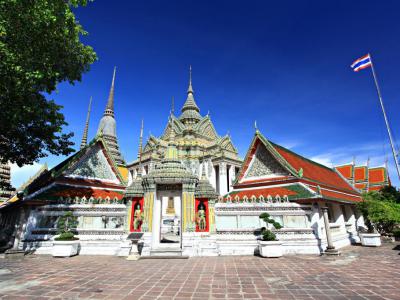
8) Wat Pho (Temple of the Reclining Buddha) (must see)
Wat Pho (the Temple of the Reclining Buddha) is the oldest Buddhist temple in Bangkok, located behind the splendid Temple of the Emerald Buddha, and is one of the city's largest. Built around 200 years before Bangkok became Thailand's capital, the temple is mainly famous for housing the huge Reclining Buddha statue along with the largest number of Buddha images within. The Wat was almost entirely rebuilt during the reign of Rama I, when the capital was moved to Bangkok.
The highly impressive gold-plated Reclining Buddha is 46 meters long and 15 meters high, and is designed to illustrate the passing of the Buddha into nirvana. The feet and the eyes are engraved with mother-of-pearl decoration. The bottoms of the Buddha's feet are intricately decorated with 108 auspicious scenes in Chinese and Indian styles.
The Wat Pho complex consists of two walled compounds, bisected north-south by Sanamchai Road running east-west. Reclining Buddha and a massage school are found in the northern walled compound. People visit mostly this section which comprises a large temple hall enclosed by 394 bronze Buddha images. There are also 91 chedis of varying sizes around the ground. The library, impressively decorated with figures and pagodas made of porcelain, is also present nearby. The large grounds of Wat Pho contain more than 1,000 Buddha images in total, most brought from the ruins of the former capitals Ayuthaya and Sukhothai.
Wat Pho is also famous as Thailand's first university, as well as the birthplace and training center of traditional Thai massage. Stimulating rather than relaxing, and incorporating yoga style postures to relieve stress and improve blood circulation, traditional Thai massage is quite different from the other forms of therapeutic massage. Wat Pho is a good place to try it – many of the rich and famous are known to have come here specifically for that. Try and see if you like it!
Traditional Thai dance and music are also taught within the temple, on Sundays. Astrologers and palm readers are likewise available for consultation. For a very small donation, that helps to maintain the temple, you can also receive a blessing from a monk.
Tip:
Make sure to bring exact THB amount for the entry tickets because, for some weird reason, they won't give any change.
It takes about 2 hours to just go round and make photos, but you can easily spend 4-5 hours in this huge complex altogether.
The admission ticket comes with a bottle of water and there are refill stations with cool clean water inside.
Women and men must wear long pants (covering knees) and shirts with long sleeves.
To enter the sanctum sanctorum, you'll have to take your shoes off.
The highly impressive gold-plated Reclining Buddha is 46 meters long and 15 meters high, and is designed to illustrate the passing of the Buddha into nirvana. The feet and the eyes are engraved with mother-of-pearl decoration. The bottoms of the Buddha's feet are intricately decorated with 108 auspicious scenes in Chinese and Indian styles.
The Wat Pho complex consists of two walled compounds, bisected north-south by Sanamchai Road running east-west. Reclining Buddha and a massage school are found in the northern walled compound. People visit mostly this section which comprises a large temple hall enclosed by 394 bronze Buddha images. There are also 91 chedis of varying sizes around the ground. The library, impressively decorated with figures and pagodas made of porcelain, is also present nearby. The large grounds of Wat Pho contain more than 1,000 Buddha images in total, most brought from the ruins of the former capitals Ayuthaya and Sukhothai.
Wat Pho is also famous as Thailand's first university, as well as the birthplace and training center of traditional Thai massage. Stimulating rather than relaxing, and incorporating yoga style postures to relieve stress and improve blood circulation, traditional Thai massage is quite different from the other forms of therapeutic massage. Wat Pho is a good place to try it – many of the rich and famous are known to have come here specifically for that. Try and see if you like it!
Traditional Thai dance and music are also taught within the temple, on Sundays. Astrologers and palm readers are likewise available for consultation. For a very small donation, that helps to maintain the temple, you can also receive a blessing from a monk.
Tip:
Make sure to bring exact THB amount for the entry tickets because, for some weird reason, they won't give any change.
It takes about 2 hours to just go round and make photos, but you can easily spend 4-5 hours in this huge complex altogether.
The admission ticket comes with a bottle of water and there are refill stations with cool clean water inside.
Women and men must wear long pants (covering knees) and shirts with long sleeves.
To enter the sanctum sanctorum, you'll have to take your shoes off.
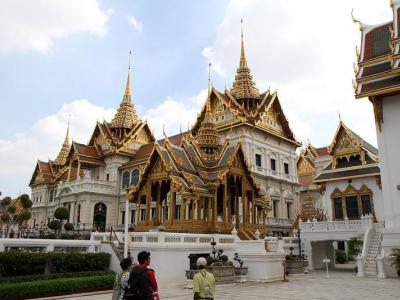
9) The Royal Grand Palace (must see)
The Royal Grand Palace, a building complex in Bangkok, served as the official residence of the Kings of Thailand from the 18th century onwards. King Rama I ordered the construction of a magnificent new Palace in 1782 when he moved the capital from Thonburi to Bangkok. The chosen area was, however, occupied by Chinese merchants whom he asked to relocate. The Palace has been constantly expanded and many additional structures were added over time.
Originally the palace consisted of several wooden buildings surrounded on four sides with a high defensive wall, 1900 meters in length and enclosing an area of 218,400 square meters. The Palace is rectangular in shape with the western side next to a river, the royal temple situated to the east side and all structures facing north. The King ordered the construction of the Temple of the Emerald Buddha as a royal temple and as his personal place of worship. Around the turn of the 20th century, Thai Kings stopped living in the palace. Today, the palace is used for all kinds of other ceremonial and auspicious happenings including royal funerals, marriages and state banquets.
The palace is divided into three quarters: the outer quarters, the middle quarters and the inner quarters. The Outer Court housed the government departments in which the king was directly involved including civil administration, army, and the treasury. The Temple of the Emerald Budha takes up one corner of the complex next to the outer court. In the middle is the Central Court, where the residence of the king and the halls for conducting state business were located. Behind the central court was the inner court where the king's royal consorts and daughters lived. It was like a small city entirely populated by women and boys under the age of puberty.
The Grand Palace with its beautiful architecture and intricate details is living proof of the creativity and craftsmanship of Thai people. Today, the complex remains the spiritual heart of the Thai Kingdom. The Grand Palace with the Temple of the Emerald Buddha is Thailand's most sacred site. All visitors must be properly dressed before being allowed entry to the temple. No bare feet and no see-through clothes are allowed.
Definitely the city's most famous landmark, the dazzling and spectacular Grand Palace is one must-see sight. Your visit to Bangkok would not be complete without visiting it.
Tip:
Come early – the place gets quite crowded around 12pm.
They offer free English tours at 10am, 10:30, 1pm, 1:30pm or an audio guide for other languages (200 THB).
Entry fee is 500 THB, which includes the ticket to a theater play (like a Thai musical). Pick-up and drop to the theater from the Grand Palace are also included.
Originally the palace consisted of several wooden buildings surrounded on four sides with a high defensive wall, 1900 meters in length and enclosing an area of 218,400 square meters. The Palace is rectangular in shape with the western side next to a river, the royal temple situated to the east side and all structures facing north. The King ordered the construction of the Temple of the Emerald Buddha as a royal temple and as his personal place of worship. Around the turn of the 20th century, Thai Kings stopped living in the palace. Today, the palace is used for all kinds of other ceremonial and auspicious happenings including royal funerals, marriages and state banquets.
The palace is divided into three quarters: the outer quarters, the middle quarters and the inner quarters. The Outer Court housed the government departments in which the king was directly involved including civil administration, army, and the treasury. The Temple of the Emerald Budha takes up one corner of the complex next to the outer court. In the middle is the Central Court, where the residence of the king and the halls for conducting state business were located. Behind the central court was the inner court where the king's royal consorts and daughters lived. It was like a small city entirely populated by women and boys under the age of puberty.
The Grand Palace with its beautiful architecture and intricate details is living proof of the creativity and craftsmanship of Thai people. Today, the complex remains the spiritual heart of the Thai Kingdom. The Grand Palace with the Temple of the Emerald Buddha is Thailand's most sacred site. All visitors must be properly dressed before being allowed entry to the temple. No bare feet and no see-through clothes are allowed.
Definitely the city's most famous landmark, the dazzling and spectacular Grand Palace is one must-see sight. Your visit to Bangkok would not be complete without visiting it.
Tip:
Come early – the place gets quite crowded around 12pm.
They offer free English tours at 10am, 10:30, 1pm, 1:30pm or an audio guide for other languages (200 THB).
Entry fee is 500 THB, which includes the ticket to a theater play (like a Thai musical). Pick-up and drop to the theater from the Grand Palace are also included.
