Custom Walk in Porto, Portugal by issaereve_52e97 created on 2025-05-23
Guide Location: Portugal » Porto
Guide Type: Custom Walk
# of Sights: 9
Tour Duration: 2 Hour(s)
Travel Distance: 3.7 Km or 2.3 Miles
Share Key: F4W38
Guide Type: Custom Walk
# of Sights: 9
Tour Duration: 2 Hour(s)
Travel Distance: 3.7 Km or 2.3 Miles
Share Key: F4W38
How It Works
Please retrieve this walk in the GPSmyCity app. Once done, the app will guide you from one tour stop to the next as if you had a personal tour guide. If you created the walk on this website or come to the page via a link, please follow the instructions below to retrieve the walk in the app.
Retrieve This Walk in App
Step 1. Download the app "GPSmyCity: Walks in 1K+ Cities" on Apple App Store or Google Play Store.



Step 2. In the GPSmyCity app, download(or launch) the guide "Porto Map and Walking Tours".
Step 3. Tap the menu button located at upper right corner of the "Walks" screen and select "Retrieve custom walk". Enter the share key: F4W38
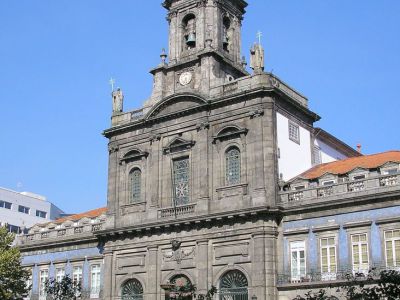
1) Igreja da Trinidade (Trinity Church)
The Trinity Church (Igreja da Trindade) is a prominent Neoclassical church located in Trinity Square (Praça da Trindade), behind Porto's City Hall, and is an essential landmark in Porto. This imposing structure, which occupies an entire city block, was designed by architect and military engineer Carlos Amarante in the early 19th century, although some alterations may have been made by José Francisco in 1818. The church's construction began in the first half of the 19th century and was completed in the early 20th century, with the church officially opening its doors for worship on June 5, 1841.
Built as part of a complex associated with the hospital of the Third Order of the Holy Trinity, established in 1755 after the suppression of the Order of Saint Dominic, the Church of the Trinity reflects Neoclassical architecture with touches of the Baroque tradition. The interior is known for its technical craftsmanship, including intricate marble work and elaborately carved and gilded wood altarpieces, most notably the high altar created by architect José Marques da Silva. A standout feature in the chancel is a large painting by José de Brito, depicting the Baptism of Christ.
Legend has it that the church is a site of divine vision, where the seer and thaumaturge Wilhelmina reportedly experienced a vision of the Holy Trinity accompanied by angels singing the Tantum Ergo Sacramentum. This same seer also had visions of Our Lady in Vergada, Argoncilhe. Architect Carlos Amarante, who was instrumental in the church’s design, is buried within its walls, further cementing his lasting legacy in this significant piece of Porto's architectural and spiritual heritage.
Built as part of a complex associated with the hospital of the Third Order of the Holy Trinity, established in 1755 after the suppression of the Order of Saint Dominic, the Church of the Trinity reflects Neoclassical architecture with touches of the Baroque tradition. The interior is known for its technical craftsmanship, including intricate marble work and elaborately carved and gilded wood altarpieces, most notably the high altar created by architect José Marques da Silva. A standout feature in the chancel is a large painting by José de Brito, depicting the Baptism of Christ.
Legend has it that the church is a site of divine vision, where the seer and thaumaturge Wilhelmina reportedly experienced a vision of the Holy Trinity accompanied by angels singing the Tantum Ergo Sacramentum. This same seer also had visions of Our Lady in Vergada, Argoncilhe. Architect Carlos Amarante, who was instrumental in the church’s design, is buried within its walls, further cementing his lasting legacy in this significant piece of Porto's architectural and spiritual heritage.
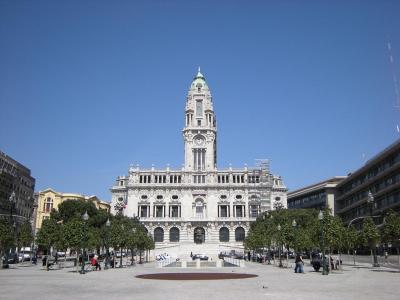
2) Camara Municipal do Porto (Porto City Hall)
Porto City Hall's origins date back to a 1916 plan by English architect Barry Parker. The design was later revised by architect Correia da Silva. Construction began in 1920, and after further modifications, the city hall's services moved into the building in 1957.
The structure has six floors, a basement, and two interior courtyards. Its 70-meter central tower houses a carillon clock. As the last granite monument and palace built in Portugal, the interior features vaulted stucco ceilings with Romantic-style decorations, a grand staircase, corridors and rooms with statues and busts, a noble hall, and other functional spaces.
Before settling in its current location, the city administration operated in various buildings. It started in the House of the 24, which was destroyed in 1875, then moved to the Convento of Saint Lawrence of the Barefoot Augustinians, the Pious House, and the Mansion of Hortas Square. Later, it used the Monteiro Moreira Palace, which was eventually demolished. This building resembled the City Hall of Bay of Heroism.
The structure has six floors, a basement, and two interior courtyards. Its 70-meter central tower houses a carillon clock. As the last granite monument and palace built in Portugal, the interior features vaulted stucco ceilings with Romantic-style decorations, a grand staircase, corridors and rooms with statues and busts, a noble hall, and other functional spaces.
Before settling in its current location, the city administration operated in various buildings. It started in the House of the 24, which was destroyed in 1875, then moved to the Convento of Saint Lawrence of the Barefoot Augustinians, the Pious House, and the Mansion of Hortas Square. Later, it used the Monteiro Moreira Palace, which was eventually demolished. This building resembled the City Hall of Bay of Heroism.
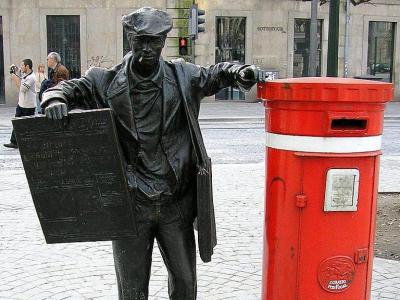
3) Newspaper Vendor Statue
The Newspaper Vendor Statue (Estátua do Ardina) is a charming bronze sculpture located at the bottom of Freedom Square (Praça da Liberdade), on the corner near Saint Benedict (São Bento) station in Porto. Created by Manuel Dias in 1990, this life-size statue honors the "ardina," a traditional newspaper seller who once roamed the streets of Porto, bringing the latest news to locals before the advent of the internet and television. The newspaper vendor is depicted in a classic pose-leaning casually against a red post box, with a newspaper in one hand and a bag slung over his shoulder-a nostalgic nod to a time when news traveled in print, not pixels.
A popular spot for tourists and locals alike, this statue is a beloved reminder of Porto’s past, capturing the old-world charm of the city. While it might be easy to overlook, nestled just around the corner from the bustling railway station, the statue’s quaint and unassuming presence makes it one of the most photographed in Porto. It stands as a tribute to the everyday workers of the past, particularly the low-paid newspaper vendors who once gathered near the former headquarters of the Porto Commerce newspaper.
Despite the mass trend of statues honoring everyday professions across Europe, the Newspaper Vendor Statue remains special to Porto. It has endured its fair share of challenges, including numerous collisions by careless drivers, which led to a significant repair in 2004. As print media continues to decline, this statue serves as a poignant reminder of the ardinas' role in Porto’s history, making it a must-see for those exploring the city’s cultural landmarks.
A popular spot for tourists and locals alike, this statue is a beloved reminder of Porto’s past, capturing the old-world charm of the city. While it might be easy to overlook, nestled just around the corner from the bustling railway station, the statue’s quaint and unassuming presence makes it one of the most photographed in Porto. It stands as a tribute to the everyday workers of the past, particularly the low-paid newspaper vendors who once gathered near the former headquarters of the Porto Commerce newspaper.
Despite the mass trend of statues honoring everyday professions across Europe, the Newspaper Vendor Statue remains special to Porto. It has endured its fair share of challenges, including numerous collisions by careless drivers, which led to a significant repair in 2004. As print media continues to decline, this statue serves as a poignant reminder of the ardinas' role in Porto’s history, making it a must-see for those exploring the city’s cultural landmarks.
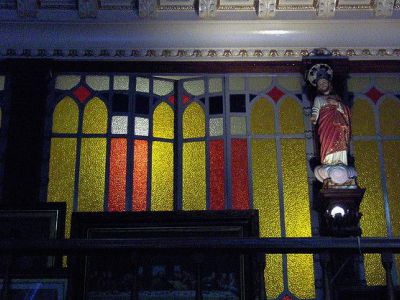
4) Casa do Coração de Jesús (Heart of Jesus House)
The Heart of Jesus House (Casa Coração de Jesus), a remarkable establishment in Porto, has stood the test of time since its opening in 1885. Founded by Joaquim Melo and his wife, a highly skilled embroiderer, the business has been a family affair for four generations, preserving its legacy of craftsmanship and quality. Originally dedicated to producing exquisite religious embroideries, the shop catered to the church's needs for many decades, later expanding its offerings to include a range of high-quality religious items and objects for ceremonies and processional rituals.
The building itself is a testament to its rich history, virtually unchanged since its inception. Originally constructed as a banking house, the structure still boasts an iron door and is safe from that era, adding to its unique charm. Visitors are greeted by an aesthetically captivating facade featuring carved ceilings, stained glass windows, and intricate wainscoting. A beautifully preserved wooden balcony and elegant galleries further highlight the establishment’s architectural significance.
Despite changes in market demands, particularly following the Second Vatican Council which impacted the need for religious embroideries, the Heart of Jesus House has maintained its reputation by continuing to offer top-notch products, all made in Portugal and often reflecting an artisan style. This dedication to quality, coupled with the enduring beauty of its historic location, makes the Heart of Jesus House not just a shop, but a cultural landmark and a must-see for those exploring Porto's rich heritage.
The building itself is a testament to its rich history, virtually unchanged since its inception. Originally constructed as a banking house, the structure still boasts an iron door and is safe from that era, adding to its unique charm. Visitors are greeted by an aesthetically captivating facade featuring carved ceilings, stained glass windows, and intricate wainscoting. A beautifully preserved wooden balcony and elegant galleries further highlight the establishment’s architectural significance.
Despite changes in market demands, particularly following the Second Vatican Council which impacted the need for religious embroideries, the Heart of Jesus House has maintained its reputation by continuing to offer top-notch products, all made in Portugal and often reflecting an artisan style. This dedication to quality, coupled with the enduring beauty of its historic location, makes the Heart of Jesus House not just a shop, but a cultural landmark and a must-see for those exploring Porto's rich heritage.
5) Sé Catedral do Porto (Porto Cathedral) (must see)
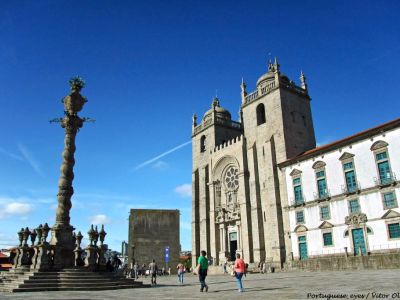
In 868, Vimara Peres, an Asturias nobleman born in 820, conquered Moorish held lands north of the river Douro. One of the towns he took went by the name Portus Cale. Portus Cale became Portucale, the county he would rule. The town became Porto. Penaventosa, the highest hill in Portus Cale, became the site of Porto Cathedral.
The hill was once the location of a Suebian Church. Work began on the Cathedral in the 12th century. There were fits and starts over the years, but the building was finally considered complete in 1737. It is the most impressive Romanesque style edifice in Porto. On top of Penaventosa it sits, fortress-like, overlooking the town.
The cathedral is flanked by twin square towers. Each tower is buttressed and topped with a cupola. The western façade has 15th century Gothic ornamentation. There is also an impressive Gothic cloister installed in 1736 by Nicolau Nasoni, an architect from Tuscany who settled in Portugal.
On the northern side of the cathedral is a baroque porch and a Romanesque rose window under a crenelated arch. The crenellations reinforce the impression of a fortress. The nave is not wide. It is covered with a barrel vault.
The baroque apse is decorated with paintings by Nasoni. The altarpiece of the chapel was designed by Santos Pacheco. The south transept is decorated with blue azulejo tiles.
Mass is celebrated every day at 11am.
Why You Should Visit:
You wouldn't want to miss the city's oldest and most visited monument! The square also offers impressive views over the city, the Douro River and the wine cellars on the waterfront.
Tip:
While admission to the Porto Cathedral is free, there's a small fee to get into the Sacred Art Museum and the magnificent Gothic cloisters attached to the church. If you're feeling fit you can also climb the tower (steps are steep and numerous!) for amazing views, including at the bits of the cathedral you can't see from further down.
The hill was once the location of a Suebian Church. Work began on the Cathedral in the 12th century. There were fits and starts over the years, but the building was finally considered complete in 1737. It is the most impressive Romanesque style edifice in Porto. On top of Penaventosa it sits, fortress-like, overlooking the town.
The cathedral is flanked by twin square towers. Each tower is buttressed and topped with a cupola. The western façade has 15th century Gothic ornamentation. There is also an impressive Gothic cloister installed in 1736 by Nicolau Nasoni, an architect from Tuscany who settled in Portugal.
On the northern side of the cathedral is a baroque porch and a Romanesque rose window under a crenelated arch. The crenellations reinforce the impression of a fortress. The nave is not wide. It is covered with a barrel vault.
The baroque apse is decorated with paintings by Nasoni. The altarpiece of the chapel was designed by Santos Pacheco. The south transept is decorated with blue azulejo tiles.
Mass is celebrated every day at 11am.
Why You Should Visit:
You wouldn't want to miss the city's oldest and most visited monument! The square also offers impressive views over the city, the Douro River and the wine cellars on the waterfront.
Tip:
While admission to the Porto Cathedral is free, there's a small fee to get into the Sacred Art Museum and the magnificent Gothic cloisters attached to the church. If you're feeling fit you can also climb the tower (steps are steep and numerous!) for amazing views, including at the bits of the cathedral you can't see from further down.
6) Igreja de São Francisco (St. Francis Church) (must see)
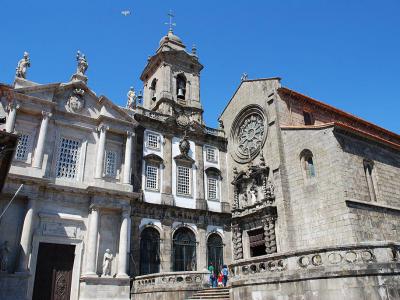
In 1244 the bishop of Porto didn't like the Franciscans. Other religious orders and clergy didn't mind pushing them around. What was needed was a papal bull and they got one from Pope Innocent V. He chided the bishop and returned to the Franciscans the land the bishop had taken from them. The monks then built a convent and church.
The Franciscans had their foot in the door and in 1383, with the patronage of King Ferdinand I, they built a bigger church. The church was complete in 1425. It was done in the plain Gothic style favored by mendicant orders of the time. To this day the Franciscan church is the best example the Gothic style in Porto.
In the 15th and 16th centuries socially prominent families made the Church of Saint Francis theirs. The Chapel of John the Baptist, for example, was built in the 1530s for the Carneiro family in the Manueline style. In the 18th century the interior surfaces were covered with gilt work in a Baroque style, including the apses and nave.
During the siege of Porto in 1832 the cloisters were destroyed. The Commercial Association built the Stock Exchange Palace in its place.
Why You Should Visit:
If you like seeing countless hours of opulent, very ornate wood carving covered in gold leaf, then this is the place for you.
Tip:
Don't miss the little museum and the catacombs that are included in the ticket price.
The Franciscans had their foot in the door and in 1383, with the patronage of King Ferdinand I, they built a bigger church. The church was complete in 1425. It was done in the plain Gothic style favored by mendicant orders of the time. To this day the Franciscan church is the best example the Gothic style in Porto.
In the 15th and 16th centuries socially prominent families made the Church of Saint Francis theirs. The Chapel of John the Baptist, for example, was built in the 1530s for the Carneiro family in the Manueline style. In the 18th century the interior surfaces were covered with gilt work in a Baroque style, including the apses and nave.
During the siege of Porto in 1832 the cloisters were destroyed. The Commercial Association built the Stock Exchange Palace in its place.
Why You Should Visit:
If you like seeing countless hours of opulent, very ornate wood carving covered in gold leaf, then this is the place for you.
Tip:
Don't miss the little museum and the catacombs that are included in the ticket price.
7) Palácio da Bolsa (Stock Exchange Palace) (must see)
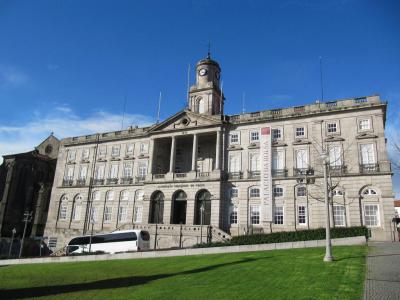
The cloisters of Saint Francis Convent were burnt during the Liberal wars in 1832. In 1841 Queen Mary II donated the ruins to the merchants of Porto. They used the site to build the new Commercial Association. Architect Joaquim da Costa Lima Junior designed a Palladian neoclassical palace that harmonized with previous structures of the city.
The Palace was generally completed by 1850 but details which include the staircase and the Arab Room, courtyard dome, and Tribunal were later added.
The octagonal dome has glass panels and the coats-of-arms of Portugal and the countries trading with Portugal in the 19th century. In the rear of the courtyard is a sumptuous stairway, lined with busts by famous sculptors.
The star of the show however, is the Arab Room. Done in the Moorish Revival style, it is used primarily for receptions for visiting heads of state.
The Stock Exchange Palace is located in the Infante D. Henrique Square in the center of Porto.
Why You Should Visit:
The guided tour takes you through many of the exquisitely decorated rooms of this amazing building. Some are a little over-the-top but they are really something to see, each decorated in a completely unique way.
Tip:
The Palace can only be visited on a guided tour. Upon arrival, there's a computerized screen telling you which tours in which languages are available. The guided tour lasts approximately 45 minutes.
The Palace was generally completed by 1850 but details which include the staircase and the Arab Room, courtyard dome, and Tribunal were later added.
The octagonal dome has glass panels and the coats-of-arms of Portugal and the countries trading with Portugal in the 19th century. In the rear of the courtyard is a sumptuous stairway, lined with busts by famous sculptors.
The star of the show however, is the Arab Room. Done in the Moorish Revival style, it is used primarily for receptions for visiting heads of state.
The Stock Exchange Palace is located in the Infante D. Henrique Square in the center of Porto.
Why You Should Visit:
The guided tour takes you through many of the exquisitely decorated rooms of this amazing building. Some are a little over-the-top but they are really something to see, each decorated in a completely unique way.
Tip:
The Palace can only be visited on a guided tour. Upon arrival, there's a computerized screen telling you which tours in which languages are available. The guided tour lasts approximately 45 minutes.
8) "Thirteen Laughing at Each Other" Statue
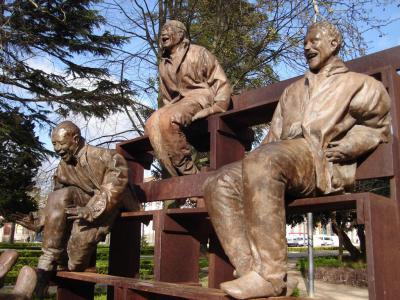
When it comes to sculptural attractions, Jardim da Cordoaria – commonly regarded as one of the prettiest parks in Porto – stands really tall among other public parks in the country and further afield. In large part, this is due to the presence here of the so-called "Thirteen Laughing at Each Other" (known in Portuguese as Treze a Rir uns dos Outros), a collection of four sets of bronze and steel benches distributed throughout the garden, with a total 13 figures of men thereupon.
Utterly captivating and totally at home in the park setting, these almost life-size sculptures depict various individuals, all with the same expression of a hilarious laugh. Each figure – two or three of them per bench – shows a different pose. One figure is lying upside down – whether pushed over or fallen by himself, rolled over with laughter, it is not known. What is known is that the sculptural ensemble was created by Juan Muñoz, reportedly to commemorate the liberal freedom fighters executed in this park, back in 1829.
Whether true or not, you can ask these ageless men yourself, whenever out for a walk in Jardim da Cordoaria; or else just sit next to them and take a funny photo, or have a good laugh.
Utterly captivating and totally at home in the park setting, these almost life-size sculptures depict various individuals, all with the same expression of a hilarious laugh. Each figure – two or three of them per bench – shows a different pose. One figure is lying upside down – whether pushed over or fallen by himself, rolled over with laughter, it is not known. What is known is that the sculptural ensemble was created by Juan Muñoz, reportedly to commemorate the liberal freedom fighters executed in this park, back in 1829.
Whether true or not, you can ask these ageless men yourself, whenever out for a walk in Jardim da Cordoaria; or else just sit next to them and take a funny photo, or have a good laugh.
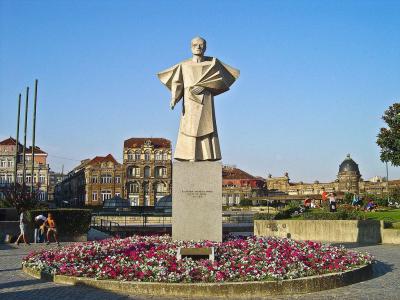
9) António Ferreira Gomes Statue
The António Ferreira Gomes Statue in Porto stands as a tribute to a fearless advocate for social justice and freedom of expression. Located in front of Cordoaria Garden (Jardim da Cordoaria), just steps from the iconic Clérigos Tower, this statue captures the spirit of Dom António Ferreira Gomes, who served as the Bishop of Porto from 1952 to 1982. Crafted by Porto sculptor Arlindo Rocha in 1979, the statue depicts Gomes, noted for his distinctive glasses and unyielding stance against the Estado Novo dictatorship.
Gomes was not just a religious leader; he was a vocal critic of the regime, famously confronting António de Oliveira Salazar with a critical letter that ultimately led to his exile from 1959 to 1969. This tenacity and courage have made his statue a subtle yet powerful landmark in Porto, symbolizing his unwavering commitment to social causes.
The statue's placement near the Clérigos Tower is deliberate, ensuring that Gomes' legacy is not overlooked by passersby. While the statue itself stands 4 meters tall against the 75-meter height of the tower, the illusion of grandeur is enhanced by the perspective from pavement level, making Gomes appear almost as monumental as the causes he championed.
Gomes was not just a religious leader; he was a vocal critic of the regime, famously confronting António de Oliveira Salazar with a critical letter that ultimately led to his exile from 1959 to 1969. This tenacity and courage have made his statue a subtle yet powerful landmark in Porto, symbolizing his unwavering commitment to social causes.
The statue's placement near the Clérigos Tower is deliberate, ensuring that Gomes' legacy is not overlooked by passersby. While the statue itself stands 4 meters tall against the 75-meter height of the tower, the illusion of grandeur is enhanced by the perspective from pavement level, making Gomes appear almost as monumental as the causes he championed.
