Custom Walk in Bristol, England by pgeehreng_fd346 created on 2025-05-27
Guide Location: England » Bristol
Guide Type: Custom Walk
# of Sights: 7
Tour Duration: 3 Hour(s)
Travel Distance: 7.1 Km or 4.4 Miles
Share Key: 63PWA
Guide Type: Custom Walk
# of Sights: 7
Tour Duration: 3 Hour(s)
Travel Distance: 7.1 Km or 4.4 Miles
Share Key: 63PWA
How It Works
Please retrieve this walk in the GPSmyCity app. Once done, the app will guide you from one tour stop to the next as if you had a personal tour guide. If you created the walk on this website or come to the page via a link, please follow the instructions below to retrieve the walk in the app.
Retrieve This Walk in App
Step 1. Download the app "GPSmyCity: Walks in 1K+ Cities" on Apple App Store or Google Play Store.



Step 2. In the GPSmyCity app, download(or launch) the guide "Bristol Map and Walking Tours".
Step 3. Tap the menu button located at upper right corner of the "Walks" screen and select "Retrieve custom walk". Enter the share key: 63PWA
1) Bristol Harbourside (must see)
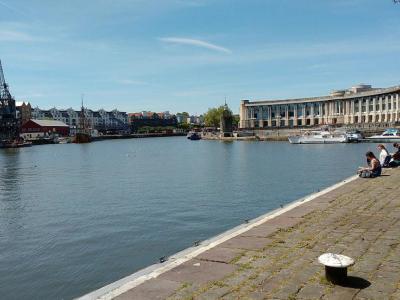
Bristol Harbourside didn’t always deal in flat whites, gallery openings, and paddleboard rentals. For centuries, this was the city’s commercial heart-a dockland buzzing with ships hauling West Country goods out and exotic cargo in. Then, in the late 20th century, the big ships moved downstream to Avonmouth, and the old docks were left high and dry-perfect for reinvention. Now, 19th-century cranes and warehouses share the space with glass-fronted apartments, theatres, and museums, living proof that Bristol can turn its hand from industry to artistry without missing a beat.
There’s no shortage of ways to fill your day here. Take to the water by rowing, paddleboarding, or hitching a ride on a harbour cruise. Stick to dry land and you can cycle the harbourside paths or wander between museums, galleries, and Banksy sightings-the Arnolfini Art Center caters to the contemporary crowd, while M Shed Museum tells Bristol’s story in dockside detail. For a deeper dive into maritime history, step aboard Brunel’s SS Great Britain and see how Victorian engineering took on the Atlantic.
The food scene is as international as the cargo once unloaded here-think Caribbean roti, Middle Eastern mezze, or a solid British pie, all within a few steps of each other. And when the light fades, the waterside opts for a softer glow, as the harbour lights flicker in the ripples.
Just a short walk from Bristol Cathedral, Queen Square, or the Old City, the Harbourside works as a full day out or a leisurely detour. Stick around long enough and you’ll hear buskers, seagulls, and laughter all competing for the same bit of airspace.
There’s no shortage of ways to fill your day here. Take to the water by rowing, paddleboarding, or hitching a ride on a harbour cruise. Stick to dry land and you can cycle the harbourside paths or wander between museums, galleries, and Banksy sightings-the Arnolfini Art Center caters to the contemporary crowd, while M Shed Museum tells Bristol’s story in dockside detail. For a deeper dive into maritime history, step aboard Brunel’s SS Great Britain and see how Victorian engineering took on the Atlantic.
The food scene is as international as the cargo once unloaded here-think Caribbean roti, Middle Eastern mezze, or a solid British pie, all within a few steps of each other. And when the light fades, the waterside opts for a softer glow, as the harbour lights flicker in the ripples.
Just a short walk from Bristol Cathedral, Queen Square, or the Old City, the Harbourside works as a full day out or a leisurely detour. Stick around long enough and you’ll hear buskers, seagulls, and laughter all competing for the same bit of airspace.
2) Banksy - Well Hung Lover
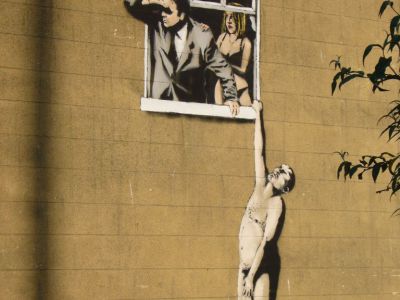
On the wall of a former sexual health clinic, five metres above Frogmore Street, a naked man hangs by one arm from a windowsill, his free hand strategically placed. Above him, a suited figure leans out, scanning the street for the lover he can’t see. Beside him, a woman in lingerie rests her hand on his shoulder, a picture of guilty calm. The scene is Banksy at full voltage – sly, economical, and loaded with visual innuendo.
The mural appeared in 2006, after three days behind tarpaulin-wrapped scaffolding. When the cover came off, Bristol found itself staring at a home-grown scandal in spray paint. The Council had been on a mission to scrub graffiti from the city, but this one hit a nerve. The building’s owner at the time – a member of Massive Attack music group – had commissioned it, and when the Council later bought the property, they put it to the people. Ninety-seven percent voted to let it stay.
That vote made Well Hung Lover the first street piece in the UK to receive official blessing after the fact. The clinic moved on, the mural stayed put, and its survival became part of Bristol’s civic identity – cheeky, defiant. Even paintball vandals couldn’t take that away; they just added another layer to the story.
The mural appeared in 2006, after three days behind tarpaulin-wrapped scaffolding. When the cover came off, Bristol found itself staring at a home-grown scandal in spray paint. The Council had been on a mission to scrub graffiti from the city, but this one hit a nerve. The building’s owner at the time – a member of Massive Attack music group – had commissioned it, and when the Council later bought the property, they put it to the people. Ninety-seven percent voted to let it stay.
That vote made Well Hung Lover the first street piece in the UK to receive official blessing after the fact. The clinic moved on, the mural stayed put, and its survival became part of Bristol’s civic identity – cheeky, defiant. Even paintball vandals couldn’t take that away; they just added another layer to the story.
3) Cabot Tower (must see)
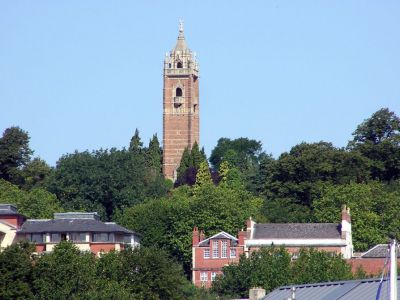
Cabot Tower rose between 1897 and 1898 as Bristol’s grand nod to John Cabot’s 1497 voyage, when he set sail from the city and ended up in what is now Newfoundland, Canada. Architect William Venn Gough gave it a mix of Neo-Gothic drama and Tudor Revival charm, using warm red sandstone dressed with pale Bath stone. It was meant to have a lift, but that idea stayed firmly on paper-so it’s legwork all the way up its 32 metres, equal to 105 feet.
Brandon Hill, its home turf, has its own backstory. A chapel once stood here, later replaced by a windmill, before the hill became part of Britain’s oldest public park. The grounds mix manicured gardens, wooded paths, and open lawns with enough wildlife to make city life feel far away.
The main draw is the climb: a winding, narrow staircase leading to two viewing platforms. The payoff is a sweep of rooftops, harbour waters, and-on clear days-the distant Mendip Hills. Nearby panels fill in the details of Cabot’s crossing and the tower’s creation, adding context to the scenery.
Entry won’t cost a penny, and between the history, the architecture, and the views, it’s a firm favourite for anyone after a picnic, a photo, or just the feeling of standing on one of Bristol’s best lookout points.
Brandon Hill, its home turf, has its own backstory. A chapel once stood here, later replaced by a windmill, before the hill became part of Britain’s oldest public park. The grounds mix manicured gardens, wooded paths, and open lawns with enough wildlife to make city life feel far away.
The main draw is the climb: a winding, narrow staircase leading to two viewing platforms. The payoff is a sweep of rooftops, harbour waters, and-on clear days-the distant Mendip Hills. Nearby panels fill in the details of Cabot’s crossing and the tower’s creation, adding context to the scenery.
Entry won’t cost a penny, and between the history, the architecture, and the views, it’s a firm favourite for anyone after a picnic, a photo, or just the feeling of standing on one of Bristol’s best lookout points.
4) Clifton Observatory and Caves (must see)
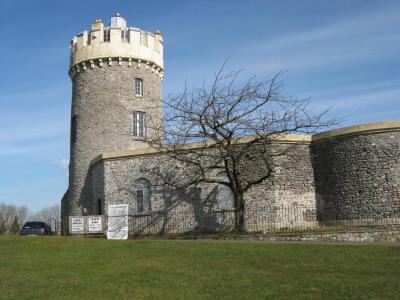
The Clifton Observatory in Bristol is a historic site with a rich and fascinating history. The building, which is now used as an observatory, was originally erected in 1766 as a windmill for corn. It later became known as the Snuff Mill after being converted to the grinding of snuff. Unfortunately, it was damaged by fire in 1777 and remained derelict for over 50 years until it was rented by artist William West in 1828.
West transformed the old mill into a studio, installing telescopes and a camera obscura, which were used by artists of the Bristol School to draw the Avon Gorge and Leigh Woods. He called his photographic technique 'photogenic drawing' and it was based on the work of William Fox Talbot. Today, many examples of these paintings can be seen in the Bristol City Museum and Art Gallery.
The Observatory is now home to a 5 inches (13 cm) convex lens and sloping mirror which projects a panoramic view vertically downward into the darkened room below. Visitors can view the true image (not a mirror image) on a fixed circular table 5 feet (1.5 meters) in diameter with a concave metal surface and can turn the mirror by hand to change the direction of view. This unique attraction has been on top of Clifton Tower since 1828.
In addition to the observatory, West also built a tunnel from the Observatory to Saint Vincent's Cave (also known as Ghyston's Cave or Giants' Cave), which opens onto Saint Vincent's Rocks on the cliff face, 250 feet (76 meters) above the floor of the Avon gorge and 90 feet (27 meters) below the cliff top. The tunnel, which took two years to build, was first opened to the public in 1837.
Saint Vincent's Cave has an interesting history of its own. It was first mentioned as a chapel in AD 305 and has been used as a holy place and a place of refuge throughout history. Although the cave is in limestone, there are few formations in the natural passages.
The Clifton Observatory has been designated by English Heritage as a grade II* listed building and is on the Buildings at Risk Register.
West transformed the old mill into a studio, installing telescopes and a camera obscura, which were used by artists of the Bristol School to draw the Avon Gorge and Leigh Woods. He called his photographic technique 'photogenic drawing' and it was based on the work of William Fox Talbot. Today, many examples of these paintings can be seen in the Bristol City Museum and Art Gallery.
The Observatory is now home to a 5 inches (13 cm) convex lens and sloping mirror which projects a panoramic view vertically downward into the darkened room below. Visitors can view the true image (not a mirror image) on a fixed circular table 5 feet (1.5 meters) in diameter with a concave metal surface and can turn the mirror by hand to change the direction of view. This unique attraction has been on top of Clifton Tower since 1828.
In addition to the observatory, West also built a tunnel from the Observatory to Saint Vincent's Cave (also known as Ghyston's Cave or Giants' Cave), which opens onto Saint Vincent's Rocks on the cliff face, 250 feet (76 meters) above the floor of the Avon gorge and 90 feet (27 meters) below the cliff top. The tunnel, which took two years to build, was first opened to the public in 1837.
Saint Vincent's Cave has an interesting history of its own. It was first mentioned as a chapel in AD 305 and has been used as a holy place and a place of refuge throughout history. Although the cave is in limestone, there are few formations in the natural passages.
The Clifton Observatory has been designated by English Heritage as a grade II* listed building and is on the Buildings at Risk Register.
5) The Clifton Suspension Bridge (must see)
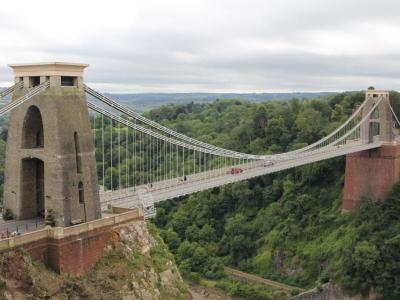
The Clifton Suspension Bridge is an iconic landmark in Bristol spanning the picturesque Avon Gorge and the River Avon. It serves as a vital link between Clifton in Bristol and Leigh Woods in North Somerset. Designed by William Henry Barlow and John Hawkshaw, with inspiration from an earlier design by the legendary engineer Isambard Kingdom Brunel, the bridge has stood as a testament to engineering brilliance since its opening in 1864. The bridge's importance and historical significance are recognized by its Grade I listed building status.
The idea of constructing a bridge across the Avon Gorge was first conceived in 1753. Initial plans called for a stone bridge, but subsequent iterations envisioned a wrought iron structure. However, construction attempts based on Brunel's design were met with setbacks, including the Bristol riots of 1831. The revised version of Brunel's plans was ultimately completed after his death.
The Clifton and Leigh towers of the bridge are similar in size but have distinct designs. Clifton Tower has side cut-outs, while Leigh Tower has pointed arches on a red sandstone abutment. The bridge's functionality depends on roller-mounted "saddles" on each tower, allowing movement of the wrought iron chains when loads pass. The bridge deck is suspended by 162 vertical wrought-iron rods arranged in matching pairs.
The Clifton Suspension Bridge in Bristol is not just a bridge, but also a symbol of the city. It appears on postcards, promotional materials, and websites. It is often featured in films, ads, and TV shows due to its impressive architecture. The bridge has witnessed significant cultural events, including the first modern bungee jump in 1979, the farewell flight of the Concorde in 2003, and the handover of the Olympic Torch Relay in 2012, highlighting its role in the city's heritage.
The idea of constructing a bridge across the Avon Gorge was first conceived in 1753. Initial plans called for a stone bridge, but subsequent iterations envisioned a wrought iron structure. However, construction attempts based on Brunel's design were met with setbacks, including the Bristol riots of 1831. The revised version of Brunel's plans was ultimately completed after his death.
The Clifton and Leigh towers of the bridge are similar in size but have distinct designs. Clifton Tower has side cut-outs, while Leigh Tower has pointed arches on a red sandstone abutment. The bridge's functionality depends on roller-mounted "saddles" on each tower, allowing movement of the wrought iron chains when loads pass. The bridge deck is suspended by 162 vertical wrought-iron rods arranged in matching pairs.
The Clifton Suspension Bridge in Bristol is not just a bridge, but also a symbol of the city. It appears on postcards, promotional materials, and websites. It is often featured in films, ads, and TV shows due to its impressive architecture. The bridge has witnessed significant cultural events, including the first modern bungee jump in 1979, the farewell flight of the Concorde in 2003, and the handover of the Olympic Torch Relay in 2012, highlighting its role in the city's heritage.
6) Girl with a Pierced Eardrum
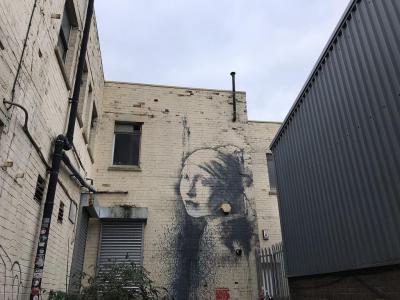
If you’re wandering along Bristol’s Harbourside and spot a classic gone rogue, you’ve found Banksy’s Girl with a Pierced Eardrum. Painted in October 2014 on the side of a Hanover Place building-handily located between the clock tower and a burger van-it takes the Dutch master’s Girl with a Pearl Earring and swaps the jewel for… a security alarm. It’s Banksy doing what he does best: blending fine art references with a sly jab at modern surveillance culture, all in sharp-edged stencil form.
Its arrival was perfectly timed, appearing just after breathless headlines claimed the artist had been arrested and unmasked. Within a day, someone treated it to a splash of black paint-street art’s version of a handshake. Far from spoiling it, the drips arguably gave the piece another layer of texture.
True to Bristol’s habit of letting its art evolve with the times, the girl gained a blue surgical mask in 2020, a low-key nod to the pandemic years. Like much of the city’s street art, it wears its history in layers: paint, politics, and passing moments.
Part of the fun is that it’s exactly where it was painted-no gallery glass, no neat labels-just a building wall by the docks, framed by old warehouses, cafés, and other murals. Whether you’re a Banksy devotee or just someone with a coffee in hand, it’s worth the short detour to see how a single security alarm, in the right hands, can upstage an Old Master.
Its arrival was perfectly timed, appearing just after breathless headlines claimed the artist had been arrested and unmasked. Within a day, someone treated it to a splash of black paint-street art’s version of a handshake. Far from spoiling it, the drips arguably gave the piece another layer of texture.
True to Bristol’s habit of letting its art evolve with the times, the girl gained a blue surgical mask in 2020, a low-key nod to the pandemic years. Like much of the city’s street art, it wears its history in layers: paint, politics, and passing moments.
Part of the fun is that it’s exactly where it was painted-no gallery glass, no neat labels-just a building wall by the docks, framed by old warehouses, cafés, and other murals. Whether you’re a Banksy devotee or just someone with a coffee in hand, it’s worth the short detour to see how a single security alarm, in the right hands, can upstage an Old Master.
7) M Shed Museum (must see)
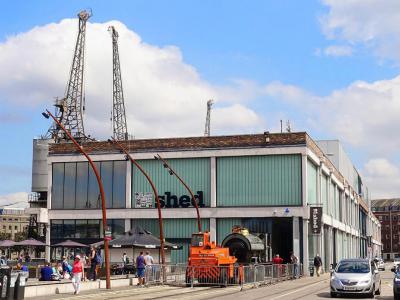
M Shed is a museum located on Prince's Wharf in Bristol, housed in a dockside transit shed that was formerly occupied by Bristol Industrial Museum. The museum is named after the way the port identified each of its sheds. The exhibits at M Shed showcase 3,000 artifacts and stories of Bristol's history, including its role in the slave trade, as well as items related to transport, people, and the arts. Admission to the museum is free, and it opened in June 2011. In its first year, it had 700,000 visitors.
The museum also has a collection of historic vessels moored in front of it, including a fireboat, two tugboats, and a replica caravel. Visitors can also see four electrically powered cargo cranes on the quayside, three of which are operational. The museum contains a shop, a learning space, and a cafe.
M Shed has three main galleries, each showcasing a different aspect of Bristol's history. There are also newspaper clippings, political episodes, and a temporary gallery displaying changing exhibitions throughout the year.
In June 2021, the statue of slave trader Edward Colston, which was toppled during the George Floyd protests in 2020, went on display at M Shed to spark a city-wide conversation about its future. The museum also hosted an exhibition of Nick Park's Wallace and Gromit models and a mural painted by local artists Andy Council and Luke Palmer.
The museum also has a collection of historic vessels moored in front of it, including a fireboat, two tugboats, and a replica caravel. Visitors can also see four electrically powered cargo cranes on the quayside, three of which are operational. The museum contains a shop, a learning space, and a cafe.
M Shed has three main galleries, each showcasing a different aspect of Bristol's history. There are also newspaper clippings, political episodes, and a temporary gallery displaying changing exhibitions throughout the year.
In June 2021, the statue of slave trader Edward Colston, which was toppled during the George Floyd protests in 2020, went on display at M Shed to spark a city-wide conversation about its future. The museum also hosted an exhibition of Nick Park's Wallace and Gromit models and a mural painted by local artists Andy Council and Luke Palmer.
