Custom Walk in Antigua, Guatemala by jallen_72065_83326 created on 2025-05-28
Guide Location: Guatemala » Antigua
Guide Type: Custom Walk
# of Sights: 5
Tour Duration: 3 Hour(s)
Travel Distance: 6.2 Km or 3.9 Miles
Share Key: DG2JB
Guide Type: Custom Walk
# of Sights: 5
Tour Duration: 3 Hour(s)
Travel Distance: 6.2 Km or 3.9 Miles
Share Key: DG2JB
How It Works
Please retrieve this walk in the GPSmyCity app. Once done, the app will guide you from one tour stop to the next as if you had a personal tour guide. If you created the walk on this website or come to the page via a link, please follow the instructions below to retrieve the walk in the app.
Retrieve This Walk in App
Step 1. Download the app "GPSmyCity: Walks in 1K+ Cities" on Apple App Store or Google Play Store.



Step 2. In the GPSmyCity app, download(or launch) the guide "Antigua Map and Walking Tours".
Step 3. Tap the menu button located at upper right corner of the "Walks" screen and select "Retrieve custom walk". Enter the share key: DG2JB
1) Craft Market
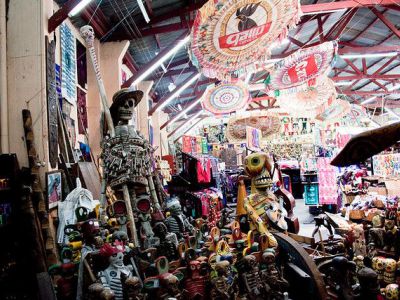
The Craft Market in Antigua is a vibrant hub of traditional artistry and cultural exchange nestled within the cobblestone streets of this charming colonial city. The market is renowned for its wide array of artisanal crafts, showcasing the rich cultural heritage of Guatemala's indigenous communities. Visitors can explore stalls brimming with handmade textiles, intricate woven fabrics, vibrant clothing, embroidered blouses known as "huipiles," and exquisitely crafted jewelry adorned with traditional motifs and colorful beads.
What sets the Craft Market apart is its emphasis on preserving traditional techniques passed down through generations. Skilled artisans often demonstrate weaving, embroidery, and pottery-making, providing visitors with a fascinating glimpse into the meticulous process behind each artisanal piece.
Beyond textiles and jewelry, the market offers an eclectic mix of goods, including wooden masks, ceramics, leather goods, paintings, and hand-carved items. Each item tells a story, reflecting Guatemala's diverse cultural tapestry and the artisans' dedication to their craft.
The Craft Market serves as a melting pot of cultures, attracting visitors from around the globe who come to appreciate and purchase these unique treasures. It's not uncommon to engage in conversations with artisans about their craft, the significance of certain designs, or even the history of Guatemala itself, fostering meaningful cultural exchanges.
By shopping at the Craft Market, visitors directly support local artisans and their communities, contributing to sustainable livelihoods and the preservation of Guatemala's cultural heritage. Many artisans rely on the market as their primary source of income, making each purchase a meaningful investment in their craft and cultural legacy.
What sets the Craft Market apart is its emphasis on preserving traditional techniques passed down through generations. Skilled artisans often demonstrate weaving, embroidery, and pottery-making, providing visitors with a fascinating glimpse into the meticulous process behind each artisanal piece.
Beyond textiles and jewelry, the market offers an eclectic mix of goods, including wooden masks, ceramics, leather goods, paintings, and hand-carved items. Each item tells a story, reflecting Guatemala's diverse cultural tapestry and the artisans' dedication to their craft.
The Craft Market serves as a melting pot of cultures, attracting visitors from around the globe who come to appreciate and purchase these unique treasures. It's not uncommon to engage in conversations with artisans about their craft, the significance of certain designs, or even the history of Guatemala itself, fostering meaningful cultural exchanges.
By shopping at the Craft Market, visitors directly support local artisans and their communities, contributing to sustainable livelihoods and the preservation of Guatemala's cultural heritage. Many artisans rely on the market as their primary source of income, making each purchase a meaningful investment in their craft and cultural legacy.
2) Santa Catalina Arch (must see)
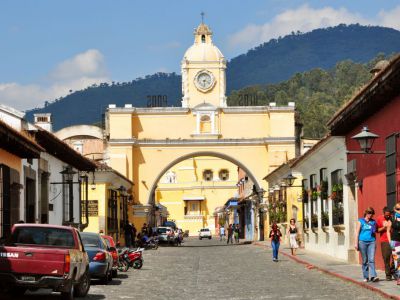
The Santa Catalina Arch is the most iconic landmark in Antigua Guatemala. Built in 1694 and located on 5th Avenue North, it originally connected the Santa Catalina Convent to a school on the other side of the street. At the time the cloistered nuns lived in the Santa Catalina Convent while they taught at the school during the day.
However there was a dilemma. The cloistered nuns had to avoid all contact with the outside world so they could not simply walk across a busy street to reach the school. To solve the problem, an arch above the street was built to connect the convent and the school. Within the arch there is a hidden passageway enabling the nuns to cross the street without being seen in public. It was an ingenious idea that worked perfectly!
The arch has suffered damage over the years, especially during the catastrophic earthquake of 1773. But miraculously, it has survived and it is now a symbol of the city’s resilience. A clock was added to the top of the arch in the era of the Central American Federation in the 1830s and it needs to be wound every three days.
Today, the Santa Catalina Arch is the most famous city monument and easily the most photographed.
However there was a dilemma. The cloistered nuns had to avoid all contact with the outside world so they could not simply walk across a busy street to reach the school. To solve the problem, an arch above the street was built to connect the convent and the school. Within the arch there is a hidden passageway enabling the nuns to cross the street without being seen in public. It was an ingenious idea that worked perfectly!
The arch has suffered damage over the years, especially during the catastrophic earthquake of 1773. But miraculously, it has survived and it is now a symbol of the city’s resilience. A clock was added to the top of the arch in the era of the Central American Federation in the 1830s and it needs to be wound every three days.
Today, the Santa Catalina Arch is the most famous city monument and easily the most photographed.
3) Cerro de la Cruz (Hill of the Cross) (must see)
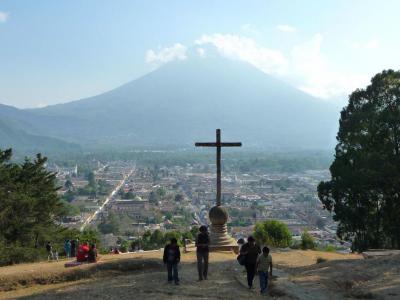
Cerro de la Cruz, or Hill of the Cross, is one of Antigua's most famous points of interest. The city's views that you can enjoy from the top of the hill are just one reason to take a climb here. In addition to the city, you will also have an excellent view of the volcano.
The walk to the top of the hill takes about ten minutes. Several noteworthy landmarks are within sight from the top of the hill, including Antigua Guatemala Cathedral. You'll also enjoy the cross that rises over the summit that gives this hill its name.
Although there are steps set into the hill's side, the hike might seem a bit strenuous. As an alternative to walking, you might consider having a local guide with a car take you to the top. You'll enjoy the same outstanding view while taking less time to get there.
The walk to the top of the hill takes about ten minutes. Several noteworthy landmarks are within sight from the top of the hill, including Antigua Guatemala Cathedral. You'll also enjoy the cross that rises over the summit that gives this hill its name.
Although there are steps set into the hill's side, the hike might seem a bit strenuous. As an alternative to walking, you might consider having a local guide with a car take you to the top. You'll enjoy the same outstanding view while taking less time to get there.
4) Convent of the Capuchins (must see)
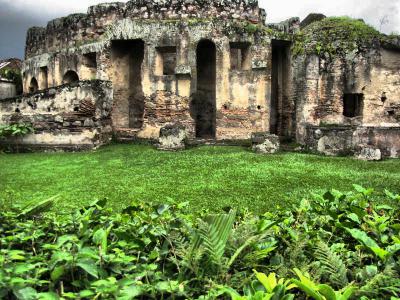
One of the finest examples of an 18th-century convent in Guatemala, the Convent of the Capuchins was consecrated in 1736. In fact, it was the last convent to be built in the city, and the first one that stopped asking for a donation to the new nuns, allowing then poor ladies to embrace religious life. Daily routine for the nuns was ruled by strict regulations, which included, for some, maximum discipline on poverty, penance and fasting. Drinking chocolate was strictly forbidden and the requirement that they should survive on the tithing only.
Like the rest of the city, the building complex suffered damage during the 1751 and 1773 earthquakes, and was abandoned by order of the Captain-General at the time. Today, the monastery's well-preserved cells, gardens, and courtyards are open for public viewing and provide excellent photo-ops. Each twist and turn presents a view your camera will ache to capture! It's also interesting to see how small the cloisters were, and how the nuns lived during colonial times.
Tip:
The only guide is the map in the first room, so study it carefully! Don't miss the round room beneath the Nun's tower: sing quietly and be rewarded – the acoustics are incredible. The 2nd-floor art display is new and very nice, as well.
Like the rest of the city, the building complex suffered damage during the 1751 and 1773 earthquakes, and was abandoned by order of the Captain-General at the time. Today, the monastery's well-preserved cells, gardens, and courtyards are open for public viewing and provide excellent photo-ops. Each twist and turn presents a view your camera will ache to capture! It's also interesting to see how small the cloisters were, and how the nuns lived during colonial times.
Tip:
The only guide is the map in the first room, so study it carefully! Don't miss the round room beneath the Nun's tower: sing quietly and be rewarded – the acoustics are incredible. The 2nd-floor art display is new and very nice, as well.
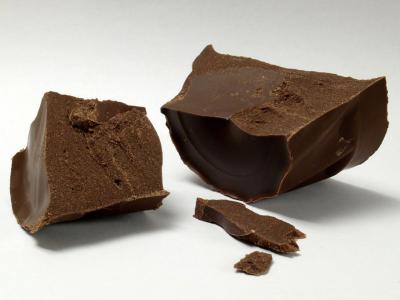
5) ChocoMuseo (Chocolate Museum) (must see)
The Chocolate Museum in Antigua, Guatemala, offers one of the best ranges of overall experiences for those who love everything chocolate-related. One of the biggest highlights is a free tour where you can learn all about cacao beans and pods, in an experience that is perfect for visitors of all ages.
There are also three workshops visitors can enjoy, including one where you can make chocolate from the bean. You can also enjoy a mini-workshop if you're short on time. Another popular workshop lets you learn how to make the ganache required for shelled bonbons and truffles.
One of the things that stands out about this museum is its open production area. When you take one of these tours and buy from the Chocolate Museum, you're supporting local entrepreneurs. Meeting with the people behind local chocolate production is an excellent way to gain a new appreciation for this indulgent, sweet treat.
There are also three workshops visitors can enjoy, including one where you can make chocolate from the bean. You can also enjoy a mini-workshop if you're short on time. Another popular workshop lets you learn how to make the ganache required for shelled bonbons and truffles.
One of the things that stands out about this museum is its open production area. When you take one of these tours and buy from the Chocolate Museum, you're supporting local entrepreneurs. Meeting with the people behind local chocolate production is an excellent way to gain a new appreciation for this indulgent, sweet treat.
