Custom Walk in Antigua, Guatemala by bmerritt_7795b created on 2025-05-29
Guide Location: Guatemala » Antigua
Guide Type: Custom Walk
# of Sights: 6
Tour Duration: 2 Hour(s)
Travel Distance: 3 Km or 1.9 Miles
Share Key: MEX8Z
Guide Type: Custom Walk
# of Sights: 6
Tour Duration: 2 Hour(s)
Travel Distance: 3 Km or 1.9 Miles
Share Key: MEX8Z
How It Works
Please retrieve this walk in the GPSmyCity app. Once done, the app will guide you from one tour stop to the next as if you had a personal tour guide. If you created the walk on this website or come to the page via a link, please follow the instructions below to retrieve the walk in the app.
Retrieve This Walk in App
Step 1. Download the app "GPSmyCity: Walks in 1K+ Cities" on Apple App Store or Google Play Store.



Step 2. In the GPSmyCity app, download(or launch) the guide "Antigua Map and Walking Tours".
Step 3. Tap the menu button located at upper right corner of the "Walks" screen and select "Retrieve custom walk". Enter the share key: MEX8Z
1) Santa Catalina Arch (must see)
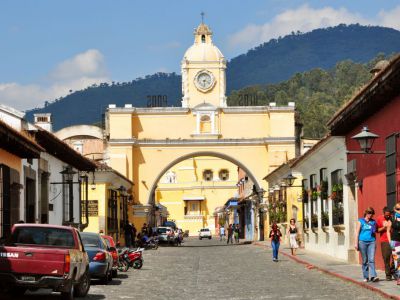
The Santa Catalina Arch is the most iconic landmark in Antigua Guatemala. Built in 1694 and located on 5th Avenue North, it originally connected the Santa Catalina Convent to a school on the other side of the street. At the time the cloistered nuns lived in the Santa Catalina Convent while they taught at the school during the day.
However there was a dilemma. The cloistered nuns had to avoid all contact with the outside world so they could not simply walk across a busy street to reach the school. To solve the problem, an arch above the street was built to connect the convent and the school. Within the arch there is a hidden passageway enabling the nuns to cross the street without being seen in public. It was an ingenious idea that worked perfectly!
The arch has suffered damage over the years, especially during the catastrophic earthquake of 1773. But miraculously, it has survived and it is now a symbol of the city’s resilience. A clock was added to the top of the arch in the era of the Central American Federation in the 1830s and it needs to be wound every three days.
Today, the Santa Catalina Arch is the most famous city monument and easily the most photographed.
However there was a dilemma. The cloistered nuns had to avoid all contact with the outside world so they could not simply walk across a busy street to reach the school. To solve the problem, an arch above the street was built to connect the convent and the school. Within the arch there is a hidden passageway enabling the nuns to cross the street without being seen in public. It was an ingenious idea that worked perfectly!
The arch has suffered damage over the years, especially during the catastrophic earthquake of 1773. But miraculously, it has survived and it is now a symbol of the city’s resilience. A clock was added to the top of the arch in the era of the Central American Federation in the 1830s and it needs to be wound every three days.
Today, the Santa Catalina Arch is the most famous city monument and easily the most photographed.
2) Craft Market
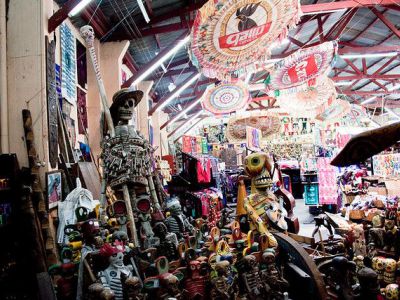
The Craft Market in Antigua is a vibrant hub of traditional artistry and cultural exchange nestled within the cobblestone streets of this charming colonial city. The market is renowned for its wide array of artisanal crafts, showcasing the rich cultural heritage of Guatemala's indigenous communities. Visitors can explore stalls brimming with handmade textiles, intricate woven fabrics, vibrant clothing, embroidered blouses known as "huipiles," and exquisitely crafted jewelry adorned with traditional motifs and colorful beads.
What sets the Craft Market apart is its emphasis on preserving traditional techniques passed down through generations. Skilled artisans often demonstrate weaving, embroidery, and pottery-making, providing visitors with a fascinating glimpse into the meticulous process behind each artisanal piece.
Beyond textiles and jewelry, the market offers an eclectic mix of goods, including wooden masks, ceramics, leather goods, paintings, and hand-carved items. Each item tells a story, reflecting Guatemala's diverse cultural tapestry and the artisans' dedication to their craft.
The Craft Market serves as a melting pot of cultures, attracting visitors from around the globe who come to appreciate and purchase these unique treasures. It's not uncommon to engage in conversations with artisans about their craft, the significance of certain designs, or even the history of Guatemala itself, fostering meaningful cultural exchanges.
By shopping at the Craft Market, visitors directly support local artisans and their communities, contributing to sustainable livelihoods and the preservation of Guatemala's cultural heritage. Many artisans rely on the market as their primary source of income, making each purchase a meaningful investment in their craft and cultural legacy.
What sets the Craft Market apart is its emphasis on preserving traditional techniques passed down through generations. Skilled artisans often demonstrate weaving, embroidery, and pottery-making, providing visitors with a fascinating glimpse into the meticulous process behind each artisanal piece.
Beyond textiles and jewelry, the market offers an eclectic mix of goods, including wooden masks, ceramics, leather goods, paintings, and hand-carved items. Each item tells a story, reflecting Guatemala's diverse cultural tapestry and the artisans' dedication to their craft.
The Craft Market serves as a melting pot of cultures, attracting visitors from around the globe who come to appreciate and purchase these unique treasures. It's not uncommon to engage in conversations with artisans about their craft, the significance of certain designs, or even the history of Guatemala itself, fostering meaningful cultural exchanges.
By shopping at the Craft Market, visitors directly support local artisans and their communities, contributing to sustainable livelihoods and the preservation of Guatemala's cultural heritage. Many artisans rely on the market as their primary source of income, making each purchase a meaningful investment in their craft and cultural legacy.
3) Santa Lucia Church
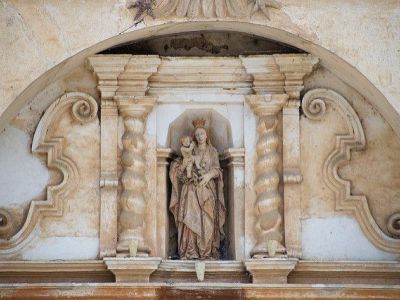
Santa Lucia Church in Antigua stands as a historical and architectural landmark with deep roots dating back to 1542, coinciding with the founding year of Antigua itself. This makes it one of the earliest religious sites in the region, constructed just 18 years after the fall of Iximché, the last Mayan-Cakchiquel city. Unique among the ecclesiastical structures in Antigua, Santa Lucia features a twin bell tower design that sets it apart from the more commonly ornate facades of other local churches.
From its inception, the Church of Santa Lucía was a pioneer in inclusivity, being one of the first temples to welcome both indigenous people and new settlers to participate in its liturgies. This openness marked a significant step in blending local and European traditions and fostering a communal religious life in the nascent colonial city.
Despite suffering considerable damage during the earthquakes of 1717 and the more destructive one in 1773, Santa Lucia Church has resiliently withstood these trials. It continues to fulfill its religious role, housing several revered images including that of the Virgen de la Candelaria, which plays a central role in annual processions held on the first Sunday of February.
The church's location in Ciudad Vieja enhances its historical significance, positioned near the scenic port of the bell towers and surrounded by a quaint semi-landscaped square. This setting not only reflects the church’s storied past but also its continued importance as a place of worship and community gathering in Antigua, Guatemala.
From its inception, the Church of Santa Lucía was a pioneer in inclusivity, being one of the first temples to welcome both indigenous people and new settlers to participate in its liturgies. This openness marked a significant step in blending local and European traditions and fostering a communal religious life in the nascent colonial city.
Despite suffering considerable damage during the earthquakes of 1717 and the more destructive one in 1773, Santa Lucia Church has resiliently withstood these trials. It continues to fulfill its religious role, housing several revered images including that of the Virgen de la Candelaria, which plays a central role in annual processions held on the first Sunday of February.
The church's location in Ciudad Vieja enhances its historical significance, positioned near the scenic port of the bell towers and surrounded by a quaint semi-landscaped square. This setting not only reflects the church’s storied past but also its continued importance as a place of worship and community gathering in Antigua, Guatemala.
4) Union Water Tank
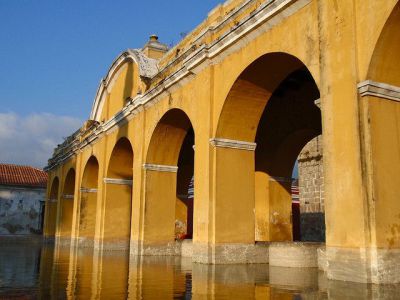
The Union Water Tank in Antigua holds significant historical and cultural importance. Originally inaugurated as Plaza de la Union in 1853 under the command of Jose Maria Palomo, this site reflects the social dynamics of the era when only the wealthiest had private laundries and baths. Initially a practical venue, it was where the local community gathered to wash clothes and collect water, fundamental daily activities at the time.
Over the years, the plaza was transformed and renamed the "Union Water Tank" to reflect its primary use. Today, while no longer serving as a communal laundry site, it has been repurposed into a charming fountain, becoming a focal point for tourists. Visitors to the Union Water Tank can enjoy the surrounding park adorned with tall palm trees, providing a scenic spot to relax and admire the breathtaking views of the Volcan de Agua, often picturesque with its peak shrouded in clouds.
This location not only offers a glimpse into the historical lifestyle of Antigua but also serves as a tranquil retreat where one can appreciate the natural beauty and architectural heritage of Guatemala.
Over the years, the plaza was transformed and renamed the "Union Water Tank" to reflect its primary use. Today, while no longer serving as a communal laundry site, it has been repurposed into a charming fountain, becoming a focal point for tourists. Visitors to the Union Water Tank can enjoy the surrounding park adorned with tall palm trees, providing a scenic spot to relax and admire the breathtaking views of the Volcan de Agua, often picturesque with its peak shrouded in clouds.
This location not only offers a glimpse into the historical lifestyle of Antigua but also serves as a tranquil retreat where one can appreciate the natural beauty and architectural heritage of Guatemala.
5) Palacio de los Capitanes (Palace of the Captains)
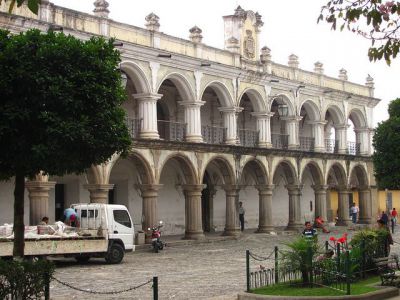
The Palace of the Captains (Palacio de los Capitanes) in Antigua located on the southeast corner of the Central Plaza, is an iconic symbol of colonial history and architectural grandeur. Constructed in 1558, the palace’s architectural design features a two-story arcade with 54 arches and an open corridor of semicircular arches that support the second floor, spanning the entire side of the large Central Park. Originally serving as the headquarters for the Captain General of Guatemala, the palace was a center of power, housing key governmental, administrative, and military offices including the Royal Tax office, the jail, and army headquarters.
Throughout its history, the palace has experienced luxury, destruction by earthquakes, and numerous renovations. It was the epicenter of governance for the Captaincy General of Guatemala and was pivotal during the era when it served as the government center for Central America, housing the Mint and the residences of high-ranking officials and their families. Over the centuries, the palace endured significant damage from earthquakes, notably in 1773, which led to the city’s relocation to the Valley of the Hermitage and resulted in the building being stripped of many of its materials in 1775.
Restored in the 1930s and declared a World Heritage Site in 1979, the Palace of the Captains now hosts the National Museum of Art of Guatemala (MUNAG), showcasing a rich collection of artworks spanning contemporary, modern, republican, colonial, and pre-Hispanic periods. This reflects more than three thousand years of Guatemala’s cultural heritage. This design and the historical significance of the Palace of the Captains make it not only a key tourist attraction but also a venerable emblem of the Central American region.
Throughout its history, the palace has experienced luxury, destruction by earthquakes, and numerous renovations. It was the epicenter of governance for the Captaincy General of Guatemala and was pivotal during the era when it served as the government center for Central America, housing the Mint and the residences of high-ranking officials and their families. Over the centuries, the palace endured significant damage from earthquakes, notably in 1773, which led to the city’s relocation to the Valley of the Hermitage and resulted in the building being stripped of many of its materials in 1775.
Restored in the 1930s and declared a World Heritage Site in 1979, the Palace of the Captains now hosts the National Museum of Art of Guatemala (MUNAG), showcasing a rich collection of artworks spanning contemporary, modern, republican, colonial, and pre-Hispanic periods. This reflects more than three thousand years of Guatemala’s cultural heritage. This design and the historical significance of the Palace of the Captains make it not only a key tourist attraction but also a venerable emblem of the Central American region.
6) Parque Central (Central Plaza) (must see)
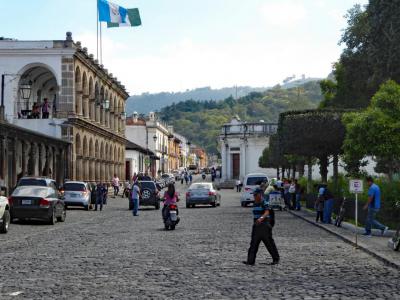
One of the reasons so many visitors enjoy visiting Parque Central is because of its popularity as a gathering place. There are plenty of trees that provide shade, as well as benches that encourage enjoyment of this space. There is a central fountain featuring a mermaid, a replica of a fountain from 1738.
This park stands out as part of Antigua's central square area. The Colonial-era buildings that line the park help add to its Old World charm. Some of the nearby landmarks you'll be able to spot include The Museum of Santiago de los Caballeros and Palacio de los Capitanes.
If you enjoy handcrafted items, there are local artisans who set up along the walkway areas every day. Marimba bands also regularly play at night, providing a lively backdrop for activity in the area. Regardless of whether you're sightseeing, shopping for crafts, enjoying the music, or people-watching, you're sure to have a great time.
This park stands out as part of Antigua's central square area. The Colonial-era buildings that line the park help add to its Old World charm. Some of the nearby landmarks you'll be able to spot include The Museum of Santiago de los Caballeros and Palacio de los Capitanes.
If you enjoy handcrafted items, there are local artisans who set up along the walkway areas every day. Marimba bands also regularly play at night, providing a lively backdrop for activity in the area. Regardless of whether you're sightseeing, shopping for crafts, enjoying the music, or people-watching, you're sure to have a great time.
