Custom Walk in Chicago, Illinois by leslie_b_vanmeter_bd422 created on 2025-05-30
Guide Location: USA » Chicago
Guide Type: Custom Walk
# of Sights: 6
Tour Duration: 3 Hour(s)
Travel Distance: 7.2 Km or 4.5 Miles
Share Key: CMTVS
Guide Type: Custom Walk
# of Sights: 6
Tour Duration: 3 Hour(s)
Travel Distance: 7.2 Km or 4.5 Miles
Share Key: CMTVS
How It Works
Please retrieve this walk in the GPSmyCity app. Once done, the app will guide you from one tour stop to the next as if you had a personal tour guide. If you created the walk on this website or come to the page via a link, please follow the instructions below to retrieve the walk in the app.
Retrieve This Walk in App
Step 1. Download the app "GPSmyCity: Walks in 1K+ Cities" on Apple App Store or Google Play Store.



Step 2. In the GPSmyCity app, download(or launch) the guide "Chicago Map and Walking Tours".
Step 3. Tap the menu button located at upper right corner of the "Walks" screen and select "Retrieve custom walk". Enter the share key: CMTVS
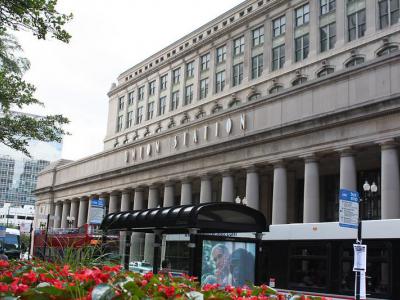
1) Union Station
You can experience the grandeur of the golden age of train travel at Union Station, one of the few remaining majestic American railroad stations. This station was a crucial component of Burnham's 1909 Plan of Chicago, designed to spearhead West Loop development. In the 1940s and 1950s, over 100,000 travelers strolled across the pink marble floors of the Great Hall daily, or rested beneath its airy, vaulted ceilings on wooden benches. Today, that number has significantly reduced, and many passengers skip the hall, opting to buy tickets onboard the trains. Nonetheless, one of the highlights of the decade-long improvement project is the restoration of the Great Hall's iconic staricases and massive skylight which, according to engineers, enhances natural light by about 50 percent.
The eight-story office tower, positioned well behind the base and nearly invisible from the street, was originally intended to reach twenty stories. Another noteworthy aspect is the double "stub end" tracks, the only ones in the United States where northbound and southbound tracks for different railroads terminate at the same point.
Upon its completion, Union Station was lauded as a remarkable achievement in railroad facility planning. Today, this monumental Neoclassical station serves as the last surviving railroad terminal that nearly every cross-country Amtrak train passes through.
The eight-story office tower, positioned well behind the base and nearly invisible from the street, was originally intended to reach twenty stories. Another noteworthy aspect is the double "stub end" tracks, the only ones in the United States where northbound and southbound tracks for different railroads terminate at the same point.
Upon its completion, Union Station was lauded as a remarkable achievement in railroad facility planning. Today, this monumental Neoclassical station serves as the last surviving railroad terminal that nearly every cross-country Amtrak train passes through.
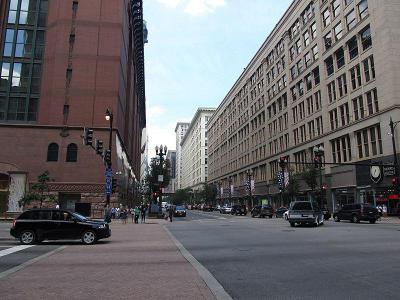
2) State Street
Once a meandering Indian trail that stretched for miles along Chicago's eastern boundary, this route served as the final shopping destination for thousands of pioneers embarking on their westward journey to government lands in Nebraska, Kansas, and the Dakotas. In the early 1800s, this trail was a challenging path, often submerged in deep mud that humorously earned a reputation for being capable of swallowing a horse and buggy. Over time, with the aid of state-funded improvements, it adopted the moniker "State Road" and transformed into a dynamic and economically robust commercial thoroughfare. In 1870, the prestigious Palmer House hotel was constructed as part of an effort to elevate the street's status and prominence.
In the 1900s, the street became Chicago's main shopping destination and even got mentioned in the song "Chicago" as "State Street, that great street." However, the second half of the 20th century saw it eclipsed by Michigan Avenue's Magnificent Mile as a shopping district. Various projects to restore State Street's glory have been met with some success, and now the iconic retail corridor is once again pleasing visitors with a blend of affordable and stylish shopping, enjoying ongoing residential as well as more traditional commercial development. Among the retail anchors here are Macy’s multi-level department store, Block 37, the Sullivan Center Target, and more.
During the 1900s, State Street emerged as Chicago's premier shopping destination, even earning a mention in the iconic song 'Chicago' as "State Street, that great street"; however, in the latter half of the 20th century, it relinquished its shopping district prominence to the Magnificent Mile along Michigan Avenue. Several initiatives aimed at restoring the street's former glory have achieved some success. Today, this iconic retail corridor once again delights visitors with a mix of affordable and fashionable shopping, having seen continued residential development alongside traditional commercial establishments. Interestingly, many of the historic elements that appear to have stood for decades were actually part of a 1996 renovation. Streetlights are replicas of those that once lined the sidewalks from 1926 to 1958, while the subway entrances boast new and festive designs featuring ample clear glass. Planters, tree grates, and signage all harken back to the era of "that great street".
Notable retail anchors along State Street include Macy's multi-level department store, Block 37, the Target store, and more.
In the 1900s, the street became Chicago's main shopping destination and even got mentioned in the song "Chicago" as "State Street, that great street." However, the second half of the 20th century saw it eclipsed by Michigan Avenue's Magnificent Mile as a shopping district. Various projects to restore State Street's glory have been met with some success, and now the iconic retail corridor is once again pleasing visitors with a blend of affordable and stylish shopping, enjoying ongoing residential as well as more traditional commercial development. Among the retail anchors here are Macy’s multi-level department store, Block 37, the Sullivan Center Target, and more.
During the 1900s, State Street emerged as Chicago's premier shopping destination, even earning a mention in the iconic song 'Chicago' as "State Street, that great street"; however, in the latter half of the 20th century, it relinquished its shopping district prominence to the Magnificent Mile along Michigan Avenue. Several initiatives aimed at restoring the street's former glory have achieved some success. Today, this iconic retail corridor once again delights visitors with a mix of affordable and fashionable shopping, having seen continued residential development alongside traditional commercial establishments. Interestingly, many of the historic elements that appear to have stood for decades were actually part of a 1996 renovation. Streetlights are replicas of those that once lined the sidewalks from 1926 to 1958, while the subway entrances boast new and festive designs featuring ample clear glass. Planters, tree grates, and signage all harken back to the era of "that great street".
Notable retail anchors along State Street include Macy's multi-level department store, Block 37, the Target store, and more.
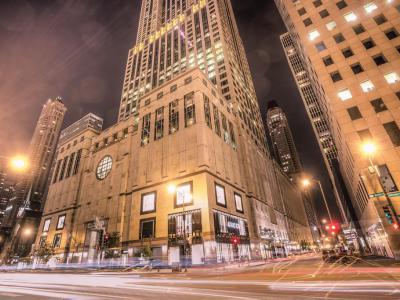
3) 900 North Michigan Shops
Ditch any preconceived notions you may have about shopping malls being dull suburban landscapes. Among the Mag Mile's retail gems like Water Tower Place and The Shops at North Bridge, you'll discover the 900 North Michigan Shops, an upscale haven. In fact, it's the most prestigious of them all, boasting an impressive lineup of tenants and fine dining establishments. Its sophisticated Deco design perfectly complements the high-end atmosphere of the boutiques it hosts. As you stroll through, you'll encounter the Chicago outposts of retail giants like Bloomingdale's and L.K. Bennett, along with a myriad of boutique stores including Gucci, J. Crew, and Psycho Bunny.
Architecturally, this mixed-use structure, brought to life by the creators of Water Tower Place, builds upon the commercial triumphs of its predecessor while rectifying some past shortcomings. The eight-story shopping block boldly extends to the lot line, greeting visitors with a welcoming entrance and generous, eye-catching display windows to entice passersby. Inside, a spacious yet understated neo-Deco atrium welcomes you, cleverly positioning the anchor store towards the rear so that shoppers encounter the boutique offerings first. Entrances to the hotel, offices, and condominium floors are discreetly tucked away on the side streets. Similar to Water Tower Place, the exterior is an ensemble of embellished boxes, albeit with an even more ambitious decorative scheme. While it may not all seamlessly harmonize, the quartet of imposing lanterns adorning the building's pinnacle is an absolute visual treat.
Why You Should Visit:
Really nice collection of high-end stores, providing a truly enjoyable shopping experience, as well as a relaxed place to unwind. Up on the top floor, you'll find an exceptional food court with a variety of options, perfect for sipping a cup of coffee or treating yourself to scrumptious desserts as you immerse yourself in a day of shopping (or perhaps gather inspiration for clothing and jewelry designs).
Architecturally, this mixed-use structure, brought to life by the creators of Water Tower Place, builds upon the commercial triumphs of its predecessor while rectifying some past shortcomings. The eight-story shopping block boldly extends to the lot line, greeting visitors with a welcoming entrance and generous, eye-catching display windows to entice passersby. Inside, a spacious yet understated neo-Deco atrium welcomes you, cleverly positioning the anchor store towards the rear so that shoppers encounter the boutique offerings first. Entrances to the hotel, offices, and condominium floors are discreetly tucked away on the side streets. Similar to Water Tower Place, the exterior is an ensemble of embellished boxes, albeit with an even more ambitious decorative scheme. While it may not all seamlessly harmonize, the quartet of imposing lanterns adorning the building's pinnacle is an absolute visual treat.
Why You Should Visit:
Really nice collection of high-end stores, providing a truly enjoyable shopping experience, as well as a relaxed place to unwind. Up on the top floor, you'll find an exceptional food court with a variety of options, perfect for sipping a cup of coffee or treating yourself to scrumptious desserts as you immerse yourself in a day of shopping (or perhaps gather inspiration for clothing and jewelry designs).
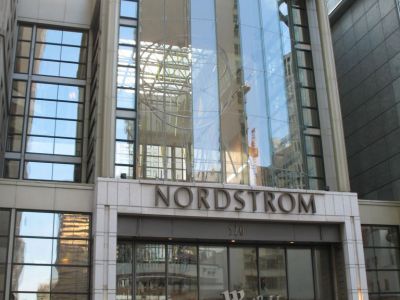
4) The Shops at North Bridge
The shopping complex once known as Westfield North Bridge has undergone a name makeover and is now referred to as "The Shops at North Bridge". This sprawling hub of urban retail and entertainment officially has Nordstrom as its anchor store – a heavyweight competitor in the retail arena, giving the likes of Macy's and Neiman Marcus a run for their money. Alongside Nordstrom, you'll find stylish establishments like Hugo Boss, APM Monaco, MCM Worldwide, and MAC Cosmetics, which collectively elevate the mall experience and add flair to the Magnificent Mile shopping scene.
But that's not all; North Bridge isn't just about shopping. It also houses five hotels, three parking garages, and two office buildings. Among these stands the American Medical Association building on State Street, a creation of Japanese architect Kenzo Tange, and the oldest structure in this complex. It's a vast venue, but fear not! The main entrance atrium has a concierge desk that's like a human Google, ready to provide you with all the answers.
And let's talk about food – because shopping can work up an appetite, and this four-level shopping center offers quite a few dining options. You can savor the flavors of Eataly, indulge in the surf and turf at Joe's Seafood Prime Steak & Stone Crab, relish the finest seafood at Eddie V’s Prime Seafood, grab a casual bite at Doc B's Restaurant, or sink your teeth into some juicy burgers at Shake Shack.
But that's not all; North Bridge isn't just about shopping. It also houses five hotels, three parking garages, and two office buildings. Among these stands the American Medical Association building on State Street, a creation of Japanese architect Kenzo Tange, and the oldest structure in this complex. It's a vast venue, but fear not! The main entrance atrium has a concierge desk that's like a human Google, ready to provide you with all the answers.
And let's talk about food – because shopping can work up an appetite, and this four-level shopping center offers quite a few dining options. You can savor the flavors of Eataly, indulge in the surf and turf at Joe's Seafood Prime Steak & Stone Crab, relish the finest seafood at Eddie V’s Prime Seafood, grab a casual bite at Doc B's Restaurant, or sink your teeth into some juicy burgers at Shake Shack.
5) Millennium Park (must see)
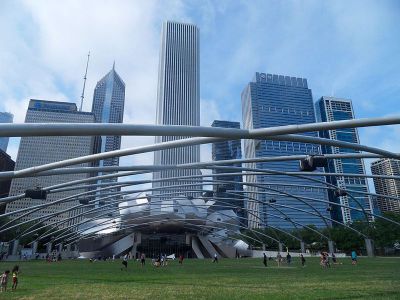
In 2004, when Anish Kapoor's colossal, gleaming Cloud Gate sculpture, the lively fountains, the captivating Crown Fountain, and a Disney-esque music pavilion all came together in this park, they quickly won the affection of both Chicagoans and tourists. This public space, which cost $250 million more than planned and opened four years later than scheduled, stands out as Chicago's most dazzling, showcasing contemporary architecture and design. Paul Goldberger, the architecture critic for The New York Times, hailed it as "one of the great new models for a kind of urban park." It has been embraced by locals and visitors alike and is widely considered the most impressive public project in Chicago since the 1893 World's Fair.
The park's origins trace back to a moment when Mayor Richard M. Daley conceived of it while sitting in his dentist's chair across the street, gazing at the sea of parking lots and railyards that occupied the site until the late 1990s. The initial design, created by the globally renowned Skidmore, Owings and Merrill firm based in Chicago, adhered to the traditional style of Grant Park, featuring formal fountains and gardens. However, private donors who had pledged to supplement public funding for the park's construction rejected this design as too conservative. Cindy Pritzker, a prominent Chicago philanthropist and the spouse of the late Jay Pritzker, the founder of the Hyatt hotel chain and the esteemed Pritzker Prize in architecture, eventually persuaded Frank Gehry (a previous Pritzker Prize laureate) to design the park's central pavilion, along with a bridge leading to the lake across Columbus Avenue. Gehry's involvement attracted other exceptional talents to the project, resulting in an impressively diverse yet cohesive masterpiece.
The star attraction undoubtedly lies in Gehry's remarkable Jay Pritzker Pavilion, featuring striking ribbons of stainless steel soaring 40 feet into the sky, resembling petals enveloping the music stage. Other notable elements include the Harris Theater for Music and Dance, offering an indoor option for performing arts enthusiasts, the McCormick Tribune Ice Rink, and the Lurie Garden, a year-round delight.
The park's origins trace back to a moment when Mayor Richard M. Daley conceived of it while sitting in his dentist's chair across the street, gazing at the sea of parking lots and railyards that occupied the site until the late 1990s. The initial design, created by the globally renowned Skidmore, Owings and Merrill firm based in Chicago, adhered to the traditional style of Grant Park, featuring formal fountains and gardens. However, private donors who had pledged to supplement public funding for the park's construction rejected this design as too conservative. Cindy Pritzker, a prominent Chicago philanthropist and the spouse of the late Jay Pritzker, the founder of the Hyatt hotel chain and the esteemed Pritzker Prize in architecture, eventually persuaded Frank Gehry (a previous Pritzker Prize laureate) to design the park's central pavilion, along with a bridge leading to the lake across Columbus Avenue. Gehry's involvement attracted other exceptional talents to the project, resulting in an impressively diverse yet cohesive masterpiece.
The star attraction undoubtedly lies in Gehry's remarkable Jay Pritzker Pavilion, featuring striking ribbons of stainless steel soaring 40 feet into the sky, resembling petals enveloping the music stage. Other notable elements include the Harris Theater for Music and Dance, offering an indoor option for performing arts enthusiasts, the McCormick Tribune Ice Rink, and the Lurie Garden, a year-round delight.
6) Willis Tower - Skydeck Chicago (must see)
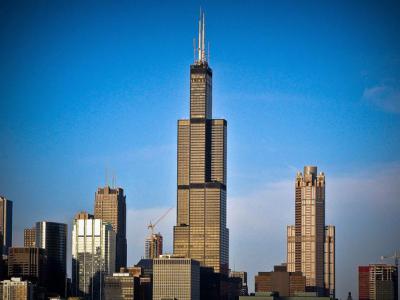
While London and Paris are recognized respectively for their Big Ben and Eiffel Tower, Chicago has its own architectural landmark that makes its skyline unmistakable for any other place – the Willis Tower. Designed by Skidmore, Owings & Merrill in 1974 and formerly known as the Sears Tower, the building once stood as the tallest skyscraper in the world, until 1996. Recommended by the readers of the Chicago Tribune as one of the "7 wonders of Chicago", this impressive structure rises 1,730 feet tall, spanning 110 stories. While it may have yielded its title and embraced a new name, the fascination of the Skydeck on the 103rd floor remains unmatched. On clear days, it provides breathtaking vistas encompassing the states of Illinois, Michigan, Wisconsin, and Indiana.
The journey in the elevator, lasting a mere 70 seconds, is transformed into an exhilarating experience through video monitors. Within the observatory, interactive exhibits breathe life into Chicago's visionaries, entrepreneurs, architects, musicians, and sports icons. Additionally, computer kiosks, available in six languages, aid international travelers in discovering Chicago's most sought-after destinations. Yet, for many visitors, the ultimate highlight is stepping onto the Ledge, a glass enclosure protruding 4.3 feet from the building, creating the illusion of being suspended 1,353 feet above the ground.
Despite occupying an entire city block and boasting over four million square feet of interior space, the tower was remarkably constructed in just three years. Its innovative design featured nine massive steel "tubes" of varying lengths, bundled together to provide both strength and flexibility. The concept for these distinct levels is said to have originated from the observation of someone shaking cigarettes out of a pack. Initially intended to accommodate up to 13,000 employees of the department store Sears Roebuck & Co., the tower changed hands in 1989 when it was sold to three property developers and is now home to a diverse range of commercial tenants. Remarkably, it houses one hundred elevators and 16,000 windows, all of which are thankfully equipped with automatic window-cleaning systems.
Tip:
Before deciding to ascend, it is advisable to check the visibility ratings, either on your phone or at the security desk. If visibility is less than five miles, it's best to plan your visit for another time.
The journey in the elevator, lasting a mere 70 seconds, is transformed into an exhilarating experience through video monitors. Within the observatory, interactive exhibits breathe life into Chicago's visionaries, entrepreneurs, architects, musicians, and sports icons. Additionally, computer kiosks, available in six languages, aid international travelers in discovering Chicago's most sought-after destinations. Yet, for many visitors, the ultimate highlight is stepping onto the Ledge, a glass enclosure protruding 4.3 feet from the building, creating the illusion of being suspended 1,353 feet above the ground.
Despite occupying an entire city block and boasting over four million square feet of interior space, the tower was remarkably constructed in just three years. Its innovative design featured nine massive steel "tubes" of varying lengths, bundled together to provide both strength and flexibility. The concept for these distinct levels is said to have originated from the observation of someone shaking cigarettes out of a pack. Initially intended to accommodate up to 13,000 employees of the department store Sears Roebuck & Co., the tower changed hands in 1989 when it was sold to three property developers and is now home to a diverse range of commercial tenants. Remarkably, it houses one hundred elevators and 16,000 windows, all of which are thankfully equipped with automatic window-cleaning systems.
Tip:
Before deciding to ascend, it is advisable to check the visibility ratings, either on your phone or at the security desk. If visibility is less than five miles, it's best to plan your visit for another time.
