Custom Walk in Los Angeles, California by sy_aimen_5d7dd created on 2025-06-04
Guide Location: USA » Los Angeles
Guide Type: Custom Walk
# of Sights: 5
Tour Duration: 1 Hour(s)
Travel Distance: 0.8 Km or 0.5 Miles
Share Key: FXBCG
Guide Type: Custom Walk
# of Sights: 5
Tour Duration: 1 Hour(s)
Travel Distance: 0.8 Km or 0.5 Miles
Share Key: FXBCG
How It Works
Please retrieve this walk in the GPSmyCity app. Once done, the app will guide you from one tour stop to the next as if you had a personal tour guide. If you created the walk on this website or come to the page via a link, please follow the instructions below to retrieve the walk in the app.
Retrieve This Walk in App
Step 1. Download the app "GPSmyCity: Walks in 1K+ Cities" on Apple App Store or Google Play Store.



Step 2. In the GPSmyCity app, download(or launch) the guide "Los Angeles Map and Walking Tours".
Step 3. Tap the menu button located at upper right corner of the "Walks" screen and select "Retrieve custom walk". Enter the share key: FXBCG
1) El Capitan Theatre
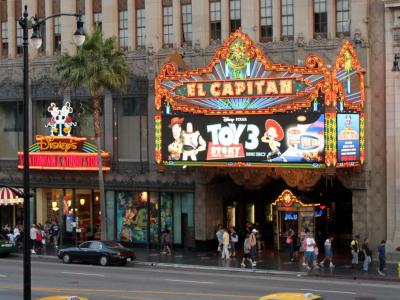
If you want to give your children – or yourself, for that matter – a great deal of cultural treat while in Los Angeles, the best place to go to is the El Capitan Theatre on Hollywood Boulevard.
This movie theater was commissioned by Charles Toberman in collaboration with Sid Grauman, a showman who had previously worked on two other theme theaters. Opened in 1926 as a live theater, El Capitan boasted a Spanish Colonial Revival exterior and a beautiful Eastern Indian red and gold interior. For more than ten years afterwards, some of the greatest artists of the time had performed here, including Clark Gable and Will Rogers.
Towards the end of the 1930s, audiences fell off and in 1941, after Orson Wells had used the place for the premier of his controversial film “Citizen Kane”, the theater closed for over a year. It reopened in 1942 as a movie house, called Hollywood Paramount, remodeled in Art Moderne and completely devoid of Sid Grauman’s original decor.
In the late 1980s the Walt Disney Company bought the theater and restored it to its original 1926 appearance, complete with a magnificent Wurlitzer organ and hi-tech special effect equipment installed.
Before enjoying one of Disney’s great films, your kids will absolutely love the show on the stage in front of the screen, featuring characters from the film they are about to see. The children will be transfixed which is a great change from having them fidget through long boring advertising spots.
This movie theater was commissioned by Charles Toberman in collaboration with Sid Grauman, a showman who had previously worked on two other theme theaters. Opened in 1926 as a live theater, El Capitan boasted a Spanish Colonial Revival exterior and a beautiful Eastern Indian red and gold interior. For more than ten years afterwards, some of the greatest artists of the time had performed here, including Clark Gable and Will Rogers.
Towards the end of the 1930s, audiences fell off and in 1941, after Orson Wells had used the place for the premier of his controversial film “Citizen Kane”, the theater closed for over a year. It reopened in 1942 as a movie house, called Hollywood Paramount, remodeled in Art Moderne and completely devoid of Sid Grauman’s original decor.
In the late 1980s the Walt Disney Company bought the theater and restored it to its original 1926 appearance, complete with a magnificent Wurlitzer organ and hi-tech special effect equipment installed.
Before enjoying one of Disney’s great films, your kids will absolutely love the show on the stage in front of the screen, featuring characters from the film they are about to see. The children will be transfixed which is a great change from having them fidget through long boring advertising spots.
2) Hollywood Museum
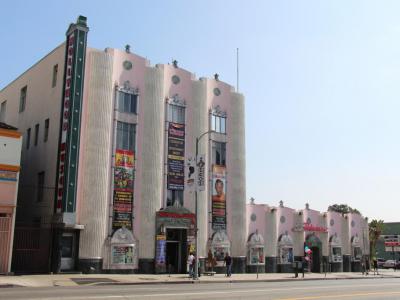
The Hollywood Museum is a fascinating place to learn about the “Dream Factory”, from its beginnings to the present day.
The museum is located on Highland Avenue and is housed in the Max Factor Building. The exhibitions cover 35,000 square feet, spread out over four floors, but for all that the place is filled to overflowing with clothes, art designs, sets, make-up, and special effects.
The entrance foyer has kept its original Art Deco style, with white and rose marble, chandeliers and antique furniture, delicately adorned in gold and silver leaf. On this floor is the exhibition of Max Factor’s make-up studio and a black and white photo gallery with over 1000 photos of stars from the silent movies to the present and stills from films such as "The Planet of the Apes" (original version) and "Jurassic Park".
The basement was once a speakeasy during the Prohibition and a bowling alley. Today it is the “Chamber of Horrors” with a replica of the stage set from the film "The Silence of the Lambs". It is rather creepy, as it features the cell corridor Judy Foster walked along to reach Hannibal Lecter’s cell, in which you can see props from the film and the gruesome mask Hannibal was made to wear.
The first and second floors are given over to historical and modern costumes, souvenirs donated by the great stars, movie advertising posters, props, another photo gallery, an example of the 1st Technicolor film and a Roman bed that was used in “Gladiator”.
Why You Should Visit:
Looks like the most touristy of attractions, but if you love movies, this is a treasure of real costumes, props, and memorabilia.
Definitely not geared for very young children, but adults and teens will enjoy it.
Tip:
Talk to the staff! Many have worked in the business and have great stories to tell.
The museum is located on Highland Avenue and is housed in the Max Factor Building. The exhibitions cover 35,000 square feet, spread out over four floors, but for all that the place is filled to overflowing with clothes, art designs, sets, make-up, and special effects.
The entrance foyer has kept its original Art Deco style, with white and rose marble, chandeliers and antique furniture, delicately adorned in gold and silver leaf. On this floor is the exhibition of Max Factor’s make-up studio and a black and white photo gallery with over 1000 photos of stars from the silent movies to the present and stills from films such as "The Planet of the Apes" (original version) and "Jurassic Park".
The basement was once a speakeasy during the Prohibition and a bowling alley. Today it is the “Chamber of Horrors” with a replica of the stage set from the film "The Silence of the Lambs". It is rather creepy, as it features the cell corridor Judy Foster walked along to reach Hannibal Lecter’s cell, in which you can see props from the film and the gruesome mask Hannibal was made to wear.
The first and second floors are given over to historical and modern costumes, souvenirs donated by the great stars, movie advertising posters, props, another photo gallery, an example of the 1st Technicolor film and a Roman bed that was used in “Gladiator”.
Why You Should Visit:
Looks like the most touristy of attractions, but if you love movies, this is a treasure of real costumes, props, and memorabilia.
Definitely not geared for very young children, but adults and teens will enjoy it.
Tip:
Talk to the staff! Many have worked in the business and have great stories to tell.
3) TCL Chinese Theatre (must see)
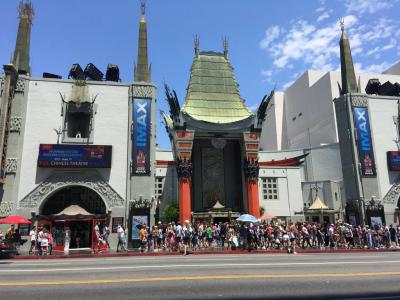
TCL Chinese Theatre (formerly known as Grauman's Chinese Theater) on Hollywood Boulevard’s famous Walk of Fame is a unique building that you certainly wouldn't want to miss.
The theatre owes its Chinese design to Raymond M. Kennedy, while Jean Klossner created its forecourt. The building appears in the form of a giant pagoda with a huge dragon in bas relief over the wonderfully decorated front doors, complemented by tiny dragons featured on the copper roof, and two beautiful Ming Heaven Dogs standing guard on each side of the entrance.
The theatre was opened in 1927 with Cecil B. de Mille’s silent epic “King of Kings”, and has since been the choice venue for the premiere of many great films, including “Star Wars” in 1977. Its interior is decorated in red and gold, with Chinese art and statues; the red curtains in front of the screen have delicate golden trees and birds printed on them.
In the forecourt, you will see over 200 signatures, hand- and footprints, and even pistol prints (from Roy Rogers’ pistols) and hoof prints from Trigger! There are several stories surrounding the origin of the prints: Sid Grauman said he’d accidentally stepped into the wet concrete and then decided to invite superstars Mary Pickford and Douglas Fairbanks (some of the theatre’s backers) to do the same. Today you can see here the imprint of Harry Potter’s magic wand, as well as those of Hermione Granger and Ron Weasley, among others.
Tip:
There is no charge to walk around and take photos – you only pay for the movie-going experience and guided tour.
The theatre owes its Chinese design to Raymond M. Kennedy, while Jean Klossner created its forecourt. The building appears in the form of a giant pagoda with a huge dragon in bas relief over the wonderfully decorated front doors, complemented by tiny dragons featured on the copper roof, and two beautiful Ming Heaven Dogs standing guard on each side of the entrance.
The theatre was opened in 1927 with Cecil B. de Mille’s silent epic “King of Kings”, and has since been the choice venue for the premiere of many great films, including “Star Wars” in 1977. Its interior is decorated in red and gold, with Chinese art and statues; the red curtains in front of the screen have delicate golden trees and birds printed on them.
In the forecourt, you will see over 200 signatures, hand- and footprints, and even pistol prints (from Roy Rogers’ pistols) and hoof prints from Trigger! There are several stories surrounding the origin of the prints: Sid Grauman said he’d accidentally stepped into the wet concrete and then decided to invite superstars Mary Pickford and Douglas Fairbanks (some of the theatre’s backers) to do the same. Today you can see here the imprint of Harry Potter’s magic wand, as well as those of Hermione Granger and Ron Weasley, among others.
Tip:
There is no charge to walk around and take photos – you only pay for the movie-going experience and guided tour.
4) Hollywood Roosevelt Hotel
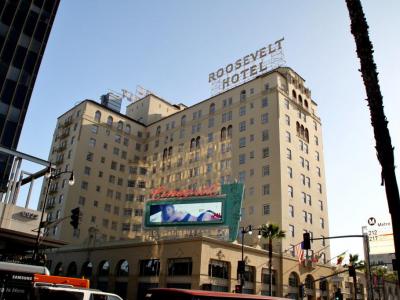
The Hollywood Roosevelt Hotel, situated in the Hollywood district of Los Angeles, is a historic establishment with a rich history. It was inaugurated on May 15, 1927, making it the city's oldest continuously operating hotel and a prime example of the architectural style prevalent during Los Angeles' Golden Era. The hotel derives its name from Theodore Roosevelt, the 26th President of the United States.
On May 16, 1929, the inaugural Academy Awards ceremony took place within the hotel's Blossom Ballroom. Interestingly, during that time, the term "Oscar" for the award had not yet been coined. Additionally, the hotel has hosted the Golden Raspberry Awards, which recognize the year's worst films, on multiple occasions.
The Hollywood Roosevelt Hotel has also played a significant role in the world of cinema. Several scenes from the 1988 film "Sunset," featuring Bruce Willis and James Garner, were filmed here, including a recreation of the 1929 Academy Awards ceremony. Furthermore, the Cinegrill nightclub inside the hotel served as the backdrop for a memorable scene in the 1989 film "The Fabulous Baker Boys," where Michelle Pfeiffer's character, Susie, sang "Makin' Whoopie" while Jeff Bridges' character, Jack, played the piano.
Numerous other notable films have been shot at this location, such as "Internal Affairs" with Richard Gere, "Beverly Hills Cop II" starring Eddie Murphy, and "Catch Me If You Can," directed by Steven Spielberg and featuring Leonardo DiCaprio and Tom Hanks. Additionally, various television shows, including "Knots Landing," "Moonlighting," and "Curb Your Enthusiasm," have used the hotel as a filming location.
On May 16, 1929, the inaugural Academy Awards ceremony took place within the hotel's Blossom Ballroom. Interestingly, during that time, the term "Oscar" for the award had not yet been coined. Additionally, the hotel has hosted the Golden Raspberry Awards, which recognize the year's worst films, on multiple occasions.
The Hollywood Roosevelt Hotel has also played a significant role in the world of cinema. Several scenes from the 1988 film "Sunset," featuring Bruce Willis and James Garner, were filmed here, including a recreation of the 1929 Academy Awards ceremony. Furthermore, the Cinegrill nightclub inside the hotel served as the backdrop for a memorable scene in the 1989 film "The Fabulous Baker Boys," where Michelle Pfeiffer's character, Susie, sang "Makin' Whoopie" while Jeff Bridges' character, Jack, played the piano.
Numerous other notable films have been shot at this location, such as "Internal Affairs" with Richard Gere, "Beverly Hills Cop II" starring Eddie Murphy, and "Catch Me If You Can," directed by Steven Spielberg and featuring Leonardo DiCaprio and Tom Hanks. Additionally, various television shows, including "Knots Landing," "Moonlighting," and "Curb Your Enthusiasm," have used the hotel as a filming location.
5) Hollywood Walk of Fame (must see)
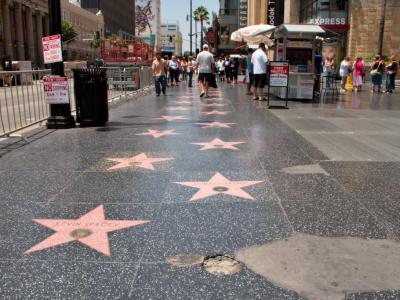
The Hollywood Walk of Fame is spread out over 15 blocks on Hollywood Boulevard and three blocks on Vine Street. It is the most visited area of Los Angeles with over 10 million visitors every year.
The idea first started in 1952, but the final design wasn’t agreed on until 1956. There are over 2500 stars to be seen and about 20 are added every year. The five-point stars are cast in pink terrazzo and edged in brass. This is then embedded in a dark grey terrazzo block and set into the pavement. A great deal of ceremony is attached to this and the honored person is invited to the ceremony and presented with a small replica to take home.
On the upper part of the star is the person’s name written in brass; on the lower part is a symbol depicting one of the five categories the person falls into: a classic film camera represents films; a television receiver represents television programs including everything, from soap operas to documentary films; the radio microphone is, of course, for radio broadcasts; the comedy/tragedy masks represent the theater and live performances; and the phonograph record is for the music world.
These permanent monuments are administrated by the Chamber of Commerce who decides which actor, director, producer, theater company, musician and even fictional character should receive this honor. One has two choices when visiting the Walk of Fame: either just wander along, looking at all the stars, or buy a guide to tell you where your favorite stars are located.
Tip:
To enjoy it and to avoid the crazy crowd, go early between 10am-3pm.
If you want to take a snap with any of the people dressing as a character, then be ready to pay cash for it.
The idea first started in 1952, but the final design wasn’t agreed on until 1956. There are over 2500 stars to be seen and about 20 are added every year. The five-point stars are cast in pink terrazzo and edged in brass. This is then embedded in a dark grey terrazzo block and set into the pavement. A great deal of ceremony is attached to this and the honored person is invited to the ceremony and presented with a small replica to take home.
On the upper part of the star is the person’s name written in brass; on the lower part is a symbol depicting one of the five categories the person falls into: a classic film camera represents films; a television receiver represents television programs including everything, from soap operas to documentary films; the radio microphone is, of course, for radio broadcasts; the comedy/tragedy masks represent the theater and live performances; and the phonograph record is for the music world.
These permanent monuments are administrated by the Chamber of Commerce who decides which actor, director, producer, theater company, musician and even fictional character should receive this honor. One has two choices when visiting the Walk of Fame: either just wander along, looking at all the stars, or buy a guide to tell you where your favorite stars are located.
Tip:
To enjoy it and to avoid the crazy crowd, go early between 10am-3pm.
If you want to take a snap with any of the people dressing as a character, then be ready to pay cash for it.
