Custom Walk in Moscow, Russia by arwa_jamjoom_beb69 created on 2025-06-07
Guide Location: Russia » Moscow
Guide Type: Custom Walk
# of Sights: 16
Tour Duration: 16 Hour(s)
Travel Distance: 43.5 Km or 27 Miles
Share Key: P3X7X
Guide Type: Custom Walk
# of Sights: 16
Tour Duration: 16 Hour(s)
Travel Distance: 43.5 Km or 27 Miles
Share Key: P3X7X
How It Works
Please retrieve this walk in the GPSmyCity app. Once done, the app will guide you from one tour stop to the next as if you had a personal tour guide. If you created the walk on this website or come to the page via a link, please follow the instructions below to retrieve the walk in the app.
Retrieve This Walk in App
Step 1. Download the app "GPSmyCity: Walks in 1K+ Cities" on Apple App Store or Google Play Store.



Step 2. In the GPSmyCity app, download(or launch) the guide "Moscow Map and Walking Tours".
Step 3. Tap the menu button located at upper right corner of the "Walks" screen and select "Retrieve custom walk". Enter the share key: P3X7X
1) Kremlin (must see)
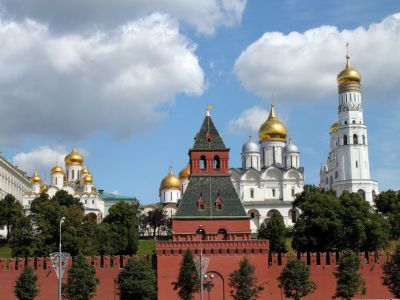
The word Kremlin means fortress or fortified city. Situated in the heart of the Russian capital, the Moscow Kremlin (Russian: Moskovskiy Kreml) is a historic citadel overlooking the Moskva River to the south, Saint Basil's Cathedral and Red Square to the east, and the Alexander Garden to the west.
The complex comprises five palaces, four cathedrals, and the enclosing Kremlin Wall with towers. Within its walls you will find the most varied monuments, museums and administrative buildings, such as the Grand Kremlin Palace, formerly the Tsar's Moscow residence. Presently, the Kremlin is also the official residence of the Russian President.
Established in 1961, the Kremlin Museums were among the first Soviet patrimonies inscribed on the World Heritage List in 1990. Among them are the Armoury Chamber (complete with the Russian Diamond Fund), Tsar Cannon, Tsar Bell, artillery pieces, and more.
The Kremlin Wall was built between the 15th and 16th centuries, replacing the original wooden wall dated from the foundation of Moscow in 1147. The Soviet government moved to Moscow from Petrograd (today's St. Petersburg) in 1918. Both Vladimir Lenin and Joseph Stalin had their personal rooms in the Kremlin. In a bid to remove all the "relics of the tsarist regime" Stalin had the golden eagles on the towers replaced with shining stars, while the wall near Lenin's Mausoleum was turned into the Kremlin Wall Necropolis.
In his turn, Vladimir Putin authorized the construction of helipad inside the Kremlin to avoid disruptions of traffic caused by presidential motorcades. The helipad was completed in May 2013.
Why You Should Visit:
A key feature of any Moscow tour, the Kremlin bursts with interest and, except for presidential and administrative buildings, is open to the public for group and individual guided tours.
Impressive and well maintained, including the park that goes with it and features lots of fountains and storybook sculptures.
Tip:
Take your photos from the opposite bank of the Moskva river or from the boat.
You can also get a fantastic view of the East walls from the new viewing bridge in Zaryadye Park.
The lines to enter the Kremlin are usually quite long, and the area itself is large, so you'll need to account for that time.
For access to different areas in addition to Kremlin, such as the Armoury, the Diamond Fund or the church area, you will need separate tickets.
The complex comprises five palaces, four cathedrals, and the enclosing Kremlin Wall with towers. Within its walls you will find the most varied monuments, museums and administrative buildings, such as the Grand Kremlin Palace, formerly the Tsar's Moscow residence. Presently, the Kremlin is also the official residence of the Russian President.
Established in 1961, the Kremlin Museums were among the first Soviet patrimonies inscribed on the World Heritage List in 1990. Among them are the Armoury Chamber (complete with the Russian Diamond Fund), Tsar Cannon, Tsar Bell, artillery pieces, and more.
The Kremlin Wall was built between the 15th and 16th centuries, replacing the original wooden wall dated from the foundation of Moscow in 1147. The Soviet government moved to Moscow from Petrograd (today's St. Petersburg) in 1918. Both Vladimir Lenin and Joseph Stalin had their personal rooms in the Kremlin. In a bid to remove all the "relics of the tsarist regime" Stalin had the golden eagles on the towers replaced with shining stars, while the wall near Lenin's Mausoleum was turned into the Kremlin Wall Necropolis.
In his turn, Vladimir Putin authorized the construction of helipad inside the Kremlin to avoid disruptions of traffic caused by presidential motorcades. The helipad was completed in May 2013.
Why You Should Visit:
A key feature of any Moscow tour, the Kremlin bursts with interest and, except for presidential and administrative buildings, is open to the public for group and individual guided tours.
Impressive and well maintained, including the park that goes with it and features lots of fountains and storybook sculptures.
Tip:
Take your photos from the opposite bank of the Moskva river or from the boat.
You can also get a fantastic view of the East walls from the new viewing bridge in Zaryadye Park.
The lines to enter the Kremlin are usually quite long, and the area itself is large, so you'll need to account for that time.
For access to different areas in addition to Kremlin, such as the Armoury, the Diamond Fund or the church area, you will need separate tickets.
Sight description based on Wikipedia.
2) Tverskaya Street
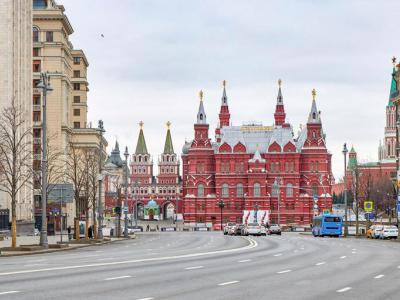
Tverskaya Street (Russian: Tverskaya Ulitsa) is the Moscow answer to New York's 5th Avenue, London's Oxford Street and Paris's Champs-Élysées. This is the most expensive thoroughfare in the country and the third most expensive street in the world, based on commercial rent. The bustling boulevard is also the beating heart of the capital's social life and entertainment.
Tverskaya emerged in the 12th century, linking Moscow to its superior, and later chief rival, Tver. The nobility considered fashionable to settle here. Among the Palladian mansions dating from the reign of Catherine the Great are the residence of the Mayor of Moscow (1778–82, rebuilt in), and the English Club (1780s). Towards the end of the 19th century, the street was reconstructed, with the stately neoclassical mansions giving way to the grandiose commercial buildings, such as the eclectic Hotel National (1901-1903) boasting a landmark Russian Art Nouveau interior.
Between the Revolution of 1917 and the rise of Stalinist architecture in the mid-1930s, the street acquired three modernist buildings: constructivist Izvestia Building (1925–1927), Central Telegraph Building (1927-29), and a stern "black cube" of the Lenin Institute (1926). In 1932 Tverskaya was renamed Gorky Street, after Maxim Gorky, the famous revolutionary writer admired by Lenin and Stalin. It was also widened and turned into an avenue, so as to bury the reminders of the ‘tsarism’ epoch (sadly, along with some valuable old houses, too). The most precious ones, however, from the Soviet standpoint, were preserved. Among them was the Moscow Town Hall – presently, the Mayor's office – moved back from the road by 13.5 meters in 1938. What's remarkable is that the building was moved and put on a new foundation in just 41 minutes!!!
The main radial street of Moscow, it stretches from the Kremlin northwards, encompassing all of the city, offering a snapshot of all its European history, stunning architecture, and diverse walks of life.
Walking the entire length of Tverskaya may take some time. If you go for it, do it closer to midnight when the traffic is low, air is fresher and the buildings are intricately lit. Some say, it's better to start from the north and progress "down the hill" towards the Kremlin, which is helpful given that the street is really long.
Tverskaya emerged in the 12th century, linking Moscow to its superior, and later chief rival, Tver. The nobility considered fashionable to settle here. Among the Palladian mansions dating from the reign of Catherine the Great are the residence of the Mayor of Moscow (1778–82, rebuilt in), and the English Club (1780s). Towards the end of the 19th century, the street was reconstructed, with the stately neoclassical mansions giving way to the grandiose commercial buildings, such as the eclectic Hotel National (1901-1903) boasting a landmark Russian Art Nouveau interior.
Between the Revolution of 1917 and the rise of Stalinist architecture in the mid-1930s, the street acquired three modernist buildings: constructivist Izvestia Building (1925–1927), Central Telegraph Building (1927-29), and a stern "black cube" of the Lenin Institute (1926). In 1932 Tverskaya was renamed Gorky Street, after Maxim Gorky, the famous revolutionary writer admired by Lenin and Stalin. It was also widened and turned into an avenue, so as to bury the reminders of the ‘tsarism’ epoch (sadly, along with some valuable old houses, too). The most precious ones, however, from the Soviet standpoint, were preserved. Among them was the Moscow Town Hall – presently, the Mayor's office – moved back from the road by 13.5 meters in 1938. What's remarkable is that the building was moved and put on a new foundation in just 41 minutes!!!
The main radial street of Moscow, it stretches from the Kremlin northwards, encompassing all of the city, offering a snapshot of all its European history, stunning architecture, and diverse walks of life.
Walking the entire length of Tverskaya may take some time. If you go for it, do it closer to midnight when the traffic is low, air is fresher and the buildings are intricately lit. Some say, it's better to start from the north and progress "down the hill" towards the Kremlin, which is helpful given that the street is really long.
Sight description based on Wikipedia.
3) Lenin's Mausoleum (must see)
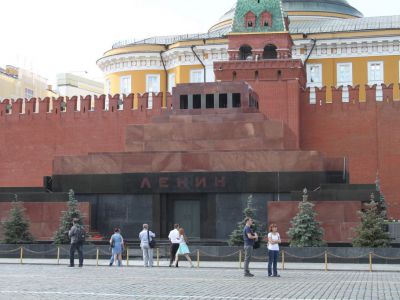
The Red Square Mausoleum is the final resting place of Vladimir Lenin, the illustrious leader of the Russian Revolution and the founder of the Soviet state. Lenin died on January 21, 1924, aged 53. Despite his expressed will to be buried alongside his mother in St. Petersburg, the overall public sentiment suggested that a simple burial would not be enough.
In response to thousands of appeals urging to preserve Lenin’s memory for future generations, Stalin pushed for the decision to embalm his body and the government began the task of constructing a proper tomb for it. The marble and granite mausoleum, replacing a temporary wooden one, was designed by Alexey Shchusev and completed in 1930.
Here Lenin’s body has been on display ever since, with rare exceptions during wartime in the 1940s when it was evacuated to Siberia. Over the decades, it has been one of the main tourist attractions in Moscow, visited by tens of millions of people.
Contrary to the rumors about a “wax mummy” being on display, it is in fact Lenin that you see. A special and complicated embalming process helps to keep the body presentable to the public. An interesting side note about the tomb is that Joseph Stalin was briefly interred there beside Lenin until the government removed it and buried in the Kremlin Wall Necropolis during the de-Stalinization campaign in the 1960s.
No photography, video or audio recording of any sort is allowed inside the mausoleum. All visitors are searched prior to entering and are obliged to show respect during the visit: no talking, smoking, hands in pockets, or wearing hats (except for females).
Why You Should Visit:
A glimpse of the historic figure, if only for a minute or so!
Tip:
Remember to keep moving – you won't be there to stop and stare.
The entrance is free.
In response to thousands of appeals urging to preserve Lenin’s memory for future generations, Stalin pushed for the decision to embalm his body and the government began the task of constructing a proper tomb for it. The marble and granite mausoleum, replacing a temporary wooden one, was designed by Alexey Shchusev and completed in 1930.
Here Lenin’s body has been on display ever since, with rare exceptions during wartime in the 1940s when it was evacuated to Siberia. Over the decades, it has been one of the main tourist attractions in Moscow, visited by tens of millions of people.
Contrary to the rumors about a “wax mummy” being on display, it is in fact Lenin that you see. A special and complicated embalming process helps to keep the body presentable to the public. An interesting side note about the tomb is that Joseph Stalin was briefly interred there beside Lenin until the government removed it and buried in the Kremlin Wall Necropolis during the de-Stalinization campaign in the 1960s.
No photography, video or audio recording of any sort is allowed inside the mausoleum. All visitors are searched prior to entering and are obliged to show respect during the visit: no talking, smoking, hands in pockets, or wearing hats (except for females).
Why You Should Visit:
A glimpse of the historic figure, if only for a minute or so!
Tip:
Remember to keep moving – you won't be there to stop and stare.
The entrance is free.
4) Gostiny Dvor
What to buy here: Zhostovo tray.
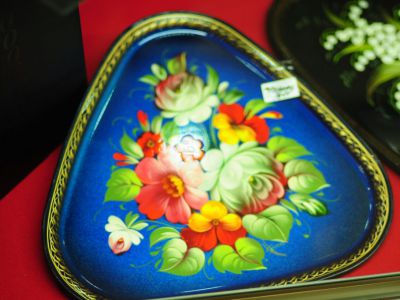
As well as a samovar, a Zhostovo hammered tray will make an outstanding decoration to any tea party, for it is not just a tray but firstly an artwork. The trays are hammered at the Zhostovo Manufactory which has been successfully working since 1825. The most popular motive is live-looking, slightly radiant fruit and flowers on a pitch-black background. The legend says that in the early 19th century Zhostovo painters used to travel about the country making sketches of what they wanted to paint on the trays, this is where such a large collection of floral designs comes from. Shiny apples, transparent grapes, enigmatic purple plums glow in the dark space of a tray with mysterious light: they resemble the fruit on the Italian Renaissance paintings. Sometimes, however, the trays show beautiful Russian landscapes and romantic old churches. More seldom they have portraits of people on them. Each tray created at the Zhostovo Decorative Art Manufactory is hand-painted and signed by the artist. Their price starts at $70.
As well as a samovar, a Zhostovo hammered tray will make an outstanding decoration to any tea party, for it is not just a tray but firstly an artwork. The trays are hammered at the Zhostovo Manufactory which has been successfully working since 1825. The most popular motive is live-looking, slightly radiant fruit and flowers on a pitch-black background. The legend says that in the early 19th century Zhostovo painters used to travel about the country making sketches of what they wanted to paint on the trays, this is where such a large collection of floral designs comes from. Shiny apples, transparent grapes, enigmatic purple plums glow in the dark space of a tray with mysterious light: they resemble the fruit on the Italian Renaissance paintings. Sometimes, however, the trays show beautiful Russian landscapes and romantic old churches. More seldom they have portraits of people on them. Each tray created at the Zhostovo Decorative Art Manufactory is hand-painted and signed by the artist. Their price starts at $70.
Image Courtesy of Ludmila Brus.
5) GUM Department Store (must see)
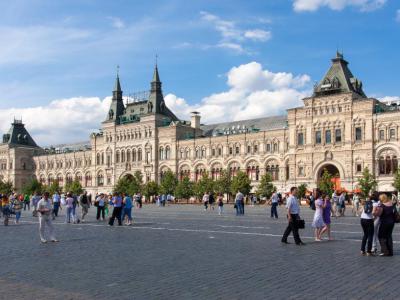
Overlooking Red Square, the famous shopping center, known as GUM, has been in place since 1893. The emporium was built by architect Alexander Pomerantsev and engineer Vladimir Shukhov, and was initially called the Upper Trading Rows. The current abbreviation “GUM” emerged after the Revolution of 1917 and first stood for Gosuderstvenny Universalny Magazin (State Department Store). Later, following the collapse of the Soviet Union and privatization, it was changed to Glavnyi Universalny Magazin (Main Universal Store).
Under Joseph Stalin, GUM served as an office building. It resumed being a shopping mall only after his death in 1953. During the Soviet era it was mostly all queues, as people lined up for the hard-to-get items amid the nationwide deficit of consumer goods. Unlike other stores, GUM never suffered from shortages of inventory. Moreover, its upper floor housed the secret Section 200 which served exclusively the highest ranking members of the PolitBureau, the Communist Party and other Soviet elite.
In the 1990s, the mall was privatized and changed several hands. Today GUM is famed for its exclusive boutiques carrying some of the top international labels money can buy. Still, GUM is more than just a luxury shopping venue.
Many cultural and artistic events take place here on a regular basis. Within the mall there are several notable eateries, such as Café Festivalnoe, Beluga Caviar Bar, Stolovaya № 57 and № 1, to mention but a few well worth visiting. Also, in winter there is a grand skating rink outside GUM where some of the top Russian figure skaters can be spotted alongside regular folk.
Why You Should Visit:
Huge number of boutiques, including many high-end, plus eateries serving some of the best meals near Red Square.
Architecturally mesmerizing, with the glass ceiling being star of the show.
Particularly worth visiting at night, when it's lit up.
Tip:
Try lining up for the special & very popular ice cream at kiosks to enrich the experience. Enjoying ice cream whilst walking under the glass arcade is quite a treat.
Also, take a moment (and some cash) to explore the onsite luxury toilet.
Under Joseph Stalin, GUM served as an office building. It resumed being a shopping mall only after his death in 1953. During the Soviet era it was mostly all queues, as people lined up for the hard-to-get items amid the nationwide deficit of consumer goods. Unlike other stores, GUM never suffered from shortages of inventory. Moreover, its upper floor housed the secret Section 200 which served exclusively the highest ranking members of the PolitBureau, the Communist Party and other Soviet elite.
In the 1990s, the mall was privatized and changed several hands. Today GUM is famed for its exclusive boutiques carrying some of the top international labels money can buy. Still, GUM is more than just a luxury shopping venue.
Many cultural and artistic events take place here on a regular basis. Within the mall there are several notable eateries, such as Café Festivalnoe, Beluga Caviar Bar, Stolovaya № 57 and № 1, to mention but a few well worth visiting. Also, in winter there is a grand skating rink outside GUM where some of the top Russian figure skaters can be spotted alongside regular folk.
Why You Should Visit:
Huge number of boutiques, including many high-end, plus eateries serving some of the best meals near Red Square.
Architecturally mesmerizing, with the glass ceiling being star of the show.
Particularly worth visiting at night, when it's lit up.
Tip:
Try lining up for the special & very popular ice cream at kiosks to enrich the experience. Enjoying ice cream whilst walking under the glass arcade is quite a treat.
Also, take a moment (and some cash) to explore the onsite luxury toilet.
6) Moscow Metro: Revolution Square Station (must see)
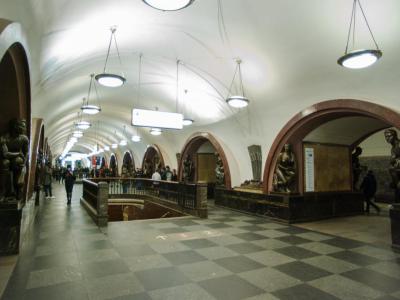
The Revolution Square subway station (Russian: Ploshchad Revolyutsii) is one of the oldest on the Moscow Metro network. It opened in 1938, designed by Soviet architect Alexey Dushkin, featuring red and yellow marble arches resting on low pylons faced with black Armenian marble.
The most eye-catching element of the decoration is the 76 bronze statues depicting people of the Soviet Union: soldiers, farmers, athletes, writers, aviators, industrial workers, and schoolchildren – created in the style of socialist realism. The sculptures are grouped in 10 pairs replicated four times throughout the station, flanking the archways and two platforms.
The pairs are placed in a certain order, symbolizing Russia's transformation from the pre-revolutionary past, through the revolution, into the post-revolutionary present, and are as follows:
Male worker-partisan & soldier
Male agricultural laborer & sailor with pistol
Male sailor & female aviator
Male frontier guard with a dog & female sharpshooter
Male miner & engineer
Male & female agricultural laborers
Male & female students
Male football player & female athlete
Mother & father in swim clothing
Male & female students in Young Pioneer uniforms
Local folklore has it that some of the sculptures bring good luck, if rubbed. This concerns specific parts of the sculptures, such as the sailor's pistol, the patrolman's dog's nose, the roosters, and the female student's shoe. Numerous passengers touch or rub the statues as they pass, thus giving their bronze a permanent shine.
Why You Should Visit:
Among many nice metro stations in Moscow, this is one of the most beautiful – makes your feel like you're in a museum or in palace hallways!
Tip:
Amateur photography is allowed, but professional photography requires a special permit from the metro authorities.
To see the station in its full splendor, you need to have a valid ticket. If you intend to get in and out without traveling, consider the minimal possible option, which is a one-way ticket worth under $1.
The most eye-catching element of the decoration is the 76 bronze statues depicting people of the Soviet Union: soldiers, farmers, athletes, writers, aviators, industrial workers, and schoolchildren – created in the style of socialist realism. The sculptures are grouped in 10 pairs replicated four times throughout the station, flanking the archways and two platforms.
The pairs are placed in a certain order, symbolizing Russia's transformation from the pre-revolutionary past, through the revolution, into the post-revolutionary present, and are as follows:
Male worker-partisan & soldier
Male agricultural laborer & sailor with pistol
Male sailor & female aviator
Male frontier guard with a dog & female sharpshooter
Male miner & engineer
Male & female agricultural laborers
Male & female students
Male football player & female athlete
Mother & father in swim clothing
Male & female students in Young Pioneer uniforms
Local folklore has it that some of the sculptures bring good luck, if rubbed. This concerns specific parts of the sculptures, such as the sailor's pistol, the patrolman's dog's nose, the roosters, and the female student's shoe. Numerous passengers touch or rub the statues as they pass, thus giving their bronze a permanent shine.
Why You Should Visit:
Among many nice metro stations in Moscow, this is one of the most beautiful – makes your feel like you're in a museum or in palace hallways!
Tip:
Amateur photography is allowed, but professional photography requires a special permit from the metro authorities.
To see the station in its full splendor, you need to have a valid ticket. If you intend to get in and out without traveling, consider the minimal possible option, which is a one-way ticket worth under $1.
Sight description based on Wikipedia.
7) Aerolift
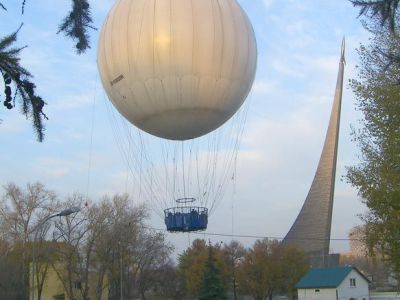
The basket of Aerolift is a spherical aerostat which offers the possibility to see the city from a height of 150 meters. A trip with the aerostat lasts about ten minutes. Trips at night are available if you wish to see the city's lights and the impressive panorama from above.
8) Memorial Museum of Cosmonautics (must see)
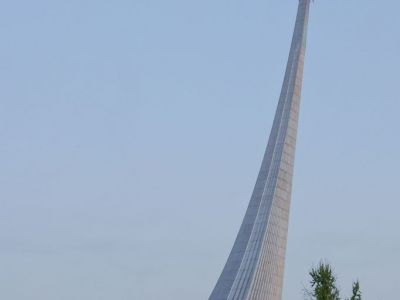
The Memorial Museum of Cosmonautics explores the history of space exploration, with a strong focus on the Soviet and Russian space programs. It opened in 1981, close to the twentieth anniversary of Yuri Gagarin’s first human spaceflight. The museum is located beneath the Monument to the Conquerors of Space, whose tall titanium structure represents a rocket rising into the sky. After major reconstruction, the museum reopened in 2009 with expanded exhibition spaces.
Its collection includes spacecraft, engineering models, spacesuits, photographs, documents and equipment used during important missions. One of the most notable exhibits is the original descent capsule that carried the dogs Belka and Strelka safely back to Earth in 1960. A technical replica of Sputnik 1, the first artificial Earth satellite launched in 1957, also recalls the beginning of the Space Age.
Several galleries focus on people who shaped early spaceflight, including Yuri Gagarin, Sergei Korolev and Alexei Leonov. Personal objects, mission records and scientific instruments help explain both the technical challenges and human experience of travelling beyond Earth. Visitors can also see examples of spacesuits, food containers and equipment designed for working in weightlessness.
Later sections examine lunar and planetary research, satellites, orbital stations and international cooperation. A full-scale model of part of the Mir space station shows the compact environment where crews lived and worked during long missions. Models, maps and interactive displays explain rocket launches, cosmonaut training and life in orbit, while smaller items such as medals, letters and photographs provide a more personal view of the history of space exploration.
Its collection includes spacecraft, engineering models, spacesuits, photographs, documents and equipment used during important missions. One of the most notable exhibits is the original descent capsule that carried the dogs Belka and Strelka safely back to Earth in 1960. A technical replica of Sputnik 1, the first artificial Earth satellite launched in 1957, also recalls the beginning of the Space Age.
Several galleries focus on people who shaped early spaceflight, including Yuri Gagarin, Sergei Korolev and Alexei Leonov. Personal objects, mission records and scientific instruments help explain both the technical challenges and human experience of travelling beyond Earth. Visitors can also see examples of spacesuits, food containers and equipment designed for working in weightlessness.
Later sections examine lunar and planetary research, satellites, orbital stations and international cooperation. A full-scale model of part of the Mir space station shows the compact environment where crews lived and worked during long missions. Models, maps and interactive displays explain rocket launches, cosmonaut training and life in orbit, while smaller items such as medals, letters and photographs provide a more personal view of the history of space exploration.
9) VDNKh Central Pavilion (must see)
Exhibition of Achievements of National Economy, abbreviated as VDNKh or VDNH, Russian: ВДНХ, pronounced [vɛ dɛ ɛn xa]) is a permanent general purpose trade show and amusement park in Moscow, Russia. Between 1991 and 2014 it was also called the All-Russia Exhibition Centre.
VDNKh is located in Ostankinsky District of Moscow, less than a kilometer from Ostankino Tower. Cosmonauts Alley and the Worker and Kolkhoz Woman statue are situated just outside the main entrance to VDNKh. It also borders Moscow Botanical Garden and a smaller Ostankino Park, and in recent years the three parks served as a united park complex.
During winter, VDNKh converts into a main Skating Rink with a total area of 60,000 square metres.
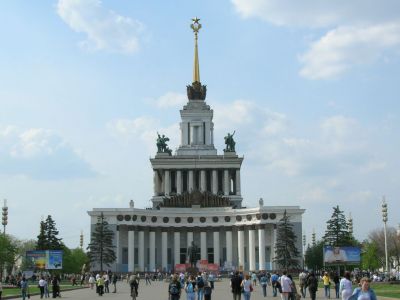
The Central Pavilion, also known as Pavilion №1, was designed by Yu.V. Shuko and E.A. Stolyarov in wedding-cake style. It is a 97-meter high tower (including the spire) crowned with a gold-plated sculpture. The Pavilion is an excellent representative of Russian classical architecture. Before the fall of the Soviet Union, a statue of Vladimir Lenin used to stand in the front of the pavilion. The monumental building has undergone renovation and was unveiled on June 1st, 2018, as the Main Alley leading to it reopened to the public.
VDNKh is located in Ostankinsky District of Moscow, less than a kilometer from Ostankino Tower. Cosmonauts Alley and the Worker and Kolkhoz Woman statue are situated just outside the main entrance to VDNKh. It also borders Moscow Botanical Garden and a smaller Ostankino Park, and in recent years the three parks served as a united park complex.
During winter, VDNKh converts into a main Skating Rink with a total area of 60,000 square metres.
The Central Pavilion, also known as Pavilion №1, was designed by Yu.V. Shuko and E.A. Stolyarov in wedding-cake style. It is a 97-meter high tower (including the spire) crowned with a gold-plated sculpture. The Pavilion is an excellent representative of Russian classical architecture. Before the fall of the Soviet Union, a statue of Vladimir Lenin used to stand in the front of the pavilion. The monumental building has undergone renovation and was unveiled on June 1st, 2018, as the Main Alley leading to it reopened to the public.
10) Yeliseevsky Store
Grand in terms of the vast selection of exclusive edibles on offer, the Yeliseyevsky grocery store in Moscow is a prime destination for those with a gourmet bent. Renowned for its opulent Neo-baroque interior and refined atmosphere, this is by far the most palatial deli in entire Russia, rivaled perhaps only by its namesake “cousin” in St. Petersburg.
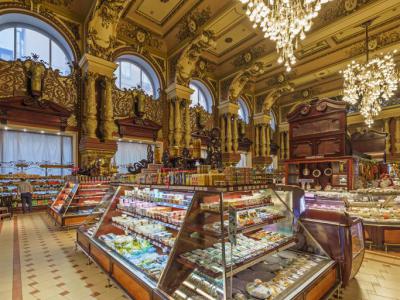
A short glance at the lavish decoration – stained glass, gilded woodwork and grand chandeliers – will suffice to deduce the historic heritage dating back hundreds of years. The building was constructed in the 1790s by architect Matvei Kazakov for Yekaterina Kozitskaya, widow of Catherine the Great's state-secretary Grigory Kozitsky. It took another 100 years before the millionaire merchant Grigory Yeliseyev opted to buy this premise to start trading in fine foods, alcohol and colonial goods.
During the Soviet period, the delicatessen on Tverskaya Street was re-titled Gastronome №1, though the locals kept using the old name – Yeliseyevsky. People from all over the country flocked here to procure food items not found anywhere else. Albeit less cosmopolitan, the sheer range was still substantial even then. The Gastronome №1 made national news in 1982 when its director received capital punishment on corruption charges.
Decades on, following the collapse of the Soviet Union, the grand old store is once again back to its former glory, heaving with all manner of delicacies. If you're a passing tourist, popping in for a choice of vodka and caviar – if not for gawking at the store's gilded grandeur – will make for an entertaining epicurean excursion. Open 24 hours.
A short glance at the lavish decoration – stained glass, gilded woodwork and grand chandeliers – will suffice to deduce the historic heritage dating back hundreds of years. The building was constructed in the 1790s by architect Matvei Kazakov for Yekaterina Kozitskaya, widow of Catherine the Great's state-secretary Grigory Kozitsky. It took another 100 years before the millionaire merchant Grigory Yeliseyev opted to buy this premise to start trading in fine foods, alcohol and colonial goods.
During the Soviet period, the delicatessen on Tverskaya Street was re-titled Gastronome №1, though the locals kept using the old name – Yeliseyevsky. People from all over the country flocked here to procure food items not found anywhere else. Albeit less cosmopolitan, the sheer range was still substantial even then. The Gastronome №1 made national news in 1982 when its director received capital punishment on corruption charges.
Decades on, following the collapse of the Soviet Union, the grand old store is once again back to its former glory, heaving with all manner of delicacies. If you're a passing tourist, popping in for a choice of vodka and caviar – if not for gawking at the store's gilded grandeur – will make for an entertaining epicurean excursion. Open 24 hours.

11) "Pyotr Tchaikovsky and Moscow" Museum
The Pyotr Tchaikovsky and Moscow Museum occupies part of a historic 19th-century estate where composer Pyotr Ilyich Tchaikovsky lived from September 1872 until November 1873. During this period, he worked on several important compositions, including his Second Symphony, music for Alexander Ostrovsky’s The Snow Maiden, and the symphonic fantasy The Tempest, inspired by Shakespeare. The museum opened here in 2007.
Its main exhibition, “Tchaikovsky and the World,” presents more than 500 objects connected with the composer’s life and work. Personal belongings, manuscripts, letters, photographs, musical scores and other documents explore his character, daily routines and relationships with relatives and friends. Displays also examine his connections with musicians, artists, publishers and patrons who influenced his career and the wider cultural life of his time.
The historic setting adds context to the collection, linking the exhibits with a place where Tchaikovsky actually lived and composed. Rather than recreating the apartment entirely as a memorial interior, the museum places his personal story within the broader musical culture of the late 19th century. Concerts, temporary exhibitions and educational programmes are also regularly held in its halls.
Its main exhibition, “Tchaikovsky and the World,” presents more than 500 objects connected with the composer’s life and work. Personal belongings, manuscripts, letters, photographs, musical scores and other documents explore his character, daily routines and relationships with relatives and friends. Displays also examine his connections with musicians, artists, publishers and patrons who influenced his career and the wider cultural life of his time.
The historic setting adds context to the collection, linking the exhibits with a place where Tchaikovsky actually lived and composed. Rather than recreating the apartment entirely as a memorial interior, the museum places his personal story within the broader musical culture of the late 19th century. Concerts, temporary exhibitions and educational programmes are also regularly held in its halls.
12) Arbatskaya Metro Station
Arbatskaya Metro Station is the deep-level station on the Arbatsko-Pokrovskaya Line, opened in 1953. It was built as part of a new, deeper route after the earlier shallow line was damaged during World War II. The station lies about 41 metres underground and was designed with civil-defence requirements in mind, allowing it to function as a shelter as well as a transport hub.
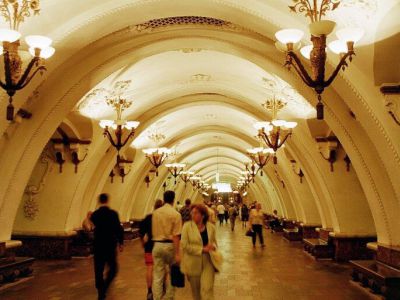
Architects Leonid Polyakov, Yury Zenkevich and Valentin Pelevin gave the station the elaborate character associated with Soviet metro architecture of the early 1950s. Its long central hall has an unusual elliptical form, with sweeping white arches, ornamental plasterwork and rows of large chandeliers. Red marble covers the lower parts of the pylons, while floral reliefs and decorative details soften the massive underground structure.
The repeated arches create a strong sense of depth when viewed along the platform, making the station especially interesting for architecture and photography. Its scale also reflects the grand approach to public transport design during the late Stalin period. Arbatskaya forms part of a large interchange complex connected with Biblioteka Imeni Lenina, Borovitskaya and Aleksandrovsky Sad stations.
Architects Leonid Polyakov, Yury Zenkevich and Valentin Pelevin gave the station the elaborate character associated with Soviet metro architecture of the early 1950s. Its long central hall has an unusual elliptical form, with sweeping white arches, ornamental plasterwork and rows of large chandeliers. Red marble covers the lower parts of the pylons, while floral reliefs and decorative details soften the massive underground structure.
The repeated arches create a strong sense of depth when viewed along the platform, making the station especially interesting for architecture and photography. Its scale also reflects the grand approach to public transport design during the late Stalin period. Arbatskaya forms part of a large interchange complex connected with Biblioteka Imeni Lenina, Borovitskaya and Aleksandrovsky Sad stations.
13) Kremlin Armoury (must see)
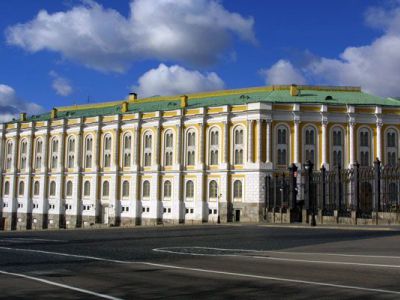
Established in 1806 by Tsar Alexander I, The Kremlin Armoury (Russian: Oruzheinaya Palata) is the first public museum in Moscow. Located in the Moscow Kremlin it is now part of Moscow Kremlin Museums. The Armoury itself originated as the royal arsenal in 1508, charged with producing, purchasing and storing weapons, jewelry and various household items of the royal family.
In 1700, it was enriched with treasures from the Golden and Silver chambers of the Russian tsars. After the Bolshevik Revolution, the collection grew further with treasures looted from the Patriarch sacristy, Kremlin cathedrals, monasteries and private collections. Apart from the numerous pieces of Russian and European weaponry, the museum also holds tens of arms and armours from Persia and Turkey.
The Armoury is also home to the Russian Diamond Fund, holding unique collections of the Russian, Western European and Eastern applied arts spanning the period from the 5th to the 20th centuries. Some of the highlights include the Imperial Crown of Russia, Monomakh's Cap, the ivory throne of Ivan the Terrible, and the largest collection of Fabergé eggs owned by a single proprietor.
Why You Should Visit:
A unique collection of Russia's historic artifacts, from Alexander the Great's boots to crowns, jewels and gem-encrusted items, splendid costumes, royal coaches, religious artifacts, state gifts, a beautiful Fabergé display and so on...
Tip:
Getting tickets online is a great time-saver because all you have to do is go to the ticket office and claim your pre-purchased tickets.
Tickets to the Armoury are for a specific time and separate from the Cathedral tickets, so make sure you check for your entrance time.
Once inside, you can easily borrow audio guides (deposit required) and can stroll through the halls.
Visit Duration: approximately 2 hours
In 1700, it was enriched with treasures from the Golden and Silver chambers of the Russian tsars. After the Bolshevik Revolution, the collection grew further with treasures looted from the Patriarch sacristy, Kremlin cathedrals, monasteries and private collections. Apart from the numerous pieces of Russian and European weaponry, the museum also holds tens of arms and armours from Persia and Turkey.
The Armoury is also home to the Russian Diamond Fund, holding unique collections of the Russian, Western European and Eastern applied arts spanning the period from the 5th to the 20th centuries. Some of the highlights include the Imperial Crown of Russia, Monomakh's Cap, the ivory throne of Ivan the Terrible, and the largest collection of Fabergé eggs owned by a single proprietor.
Why You Should Visit:
A unique collection of Russia's historic artifacts, from Alexander the Great's boots to crowns, jewels and gem-encrusted items, splendid costumes, royal coaches, religious artifacts, state gifts, a beautiful Fabergé display and so on...
Tip:
Getting tickets online is a great time-saver because all you have to do is go to the ticket office and claim your pre-purchased tickets.
Tickets to the Armoury are for a specific time and separate from the Cathedral tickets, so make sure you check for your entrance time.
Once inside, you can easily borrow audio guides (deposit required) and can stroll through the halls.
Visit Duration: approximately 2 hours
Sight description based on Wikipedia.
14) Cathedral of Christ the Savior (must see)
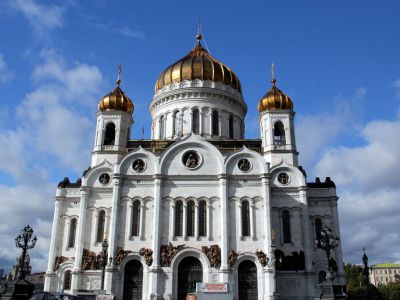
The Cathedral of Christ the Savior was conceived after Russia’s victory over Napoleon in the Patriotic War of 1812. Emperor Alexander I first proposed a memorial church, but the project later changed under Nicholas I, who approved a Russian-Byzantine design by architect Konstantin Thon. Construction of the original cathedral began in 1839, and it was consecrated in 1883 after decades of work.
Its appearance is dominated by a large central gilded dome surrounded by four smaller domes, rising above pale stone façades with arched windows and sculptural reliefs. The exterior decoration includes bronze scenes connected with Russian religious and military history. Inside, broad marble surfaces, gilding, icons and large wall paintings create a richly decorated Orthodox setting. The high central space draws the eye upward toward the dome and painted biblical scenes.
The cathedral’s history reflects some of the major political changes of the 20th century. Soviet authorities demolished the original building in 1931 to make way for the planned Palace of the Soviets, a vast project that was never completed. The site was later occupied by the open-air Moskva swimming pool, which operated for several decades.
Reconstruction began after the Soviet period, with the new cathedral closely reproducing Thon’s 19th-century design. It was completed and consecrated in 2000 and again became an important centre of Russian Orthodox worship. The complex also includes the lower Church of the Transfiguration. Its position beside the river provides clear views of the gilded domes and monumental façades from nearby pedestrian areas. Visitors can explore its restored decoration, architecture and history of destruction and rebuilding.
Its appearance is dominated by a large central gilded dome surrounded by four smaller domes, rising above pale stone façades with arched windows and sculptural reliefs. The exterior decoration includes bronze scenes connected with Russian religious and military history. Inside, broad marble surfaces, gilding, icons and large wall paintings create a richly decorated Orthodox setting. The high central space draws the eye upward toward the dome and painted biblical scenes.
The cathedral’s history reflects some of the major political changes of the 20th century. Soviet authorities demolished the original building in 1931 to make way for the planned Palace of the Soviets, a vast project that was never completed. The site was later occupied by the open-air Moskva swimming pool, which operated for several decades.
Reconstruction began after the Soviet period, with the new cathedral closely reproducing Thon’s 19th-century design. It was completed and consecrated in 2000 and again became an important centre of Russian Orthodox worship. The complex also includes the lower Church of the Transfiguration. Its position beside the river provides clear views of the gilded domes and monumental façades from nearby pedestrian areas. Visitors can explore its restored decoration, architecture and history of destruction and rebuilding.
15) Tretyakov Gallery (must see)
The State Tretyakov Gallery is an art gallery in Moscow, Russia, the foremost depository of Russian fine art in the world.
The gallery's history starts in 1856 when the Moscow merchant Pavel Mikhailovich Tretyakov acquired works by Russian artists of his day with the aim of creating a collection, which might later grow into a museum of national art. In 1892, Tretyakov presented his already famous collection of approximately 2,000 works (1,362 paintings, 526 drawings, and 9 sculptures) to the Russian nation.
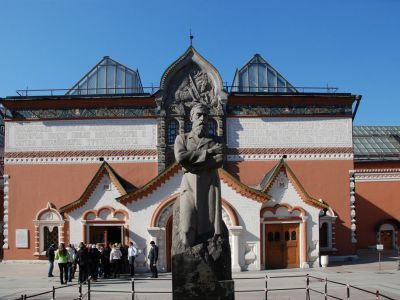
The façade of the gallery building was designed by the painter Viktor Vasnetsov in a peculiar Russian fairy-tale style. It was built in 1902–04 to the south from the Moscow Kremlin. During the 20th century, the gallery expanded to several neighboring buildings, including the 17th-century church of St. Nicholas in Tolmachi.
The collection contains more than 130,000 exhibits, ranging from 'Theotokos of Vladimir' and Andrei Rublev's 'Trinity' to the monumental 'Composition VII' by Wassily Kandinsky and the 'Black Square' by Kazimir Malevich.
In 1985, the Tretyakov Gallery was administratively merged with a gallery of contemporary art, housed in a large modern building along the Garden Ring, immediately south of the Krymsky Bridge. The grounds of this branch of the museum contain a collection of Socialist Realism sculpture, including such highlights as Yevgeny Vuchetich's iconic statue 'Iron Felix' (which was removed from Lubyanka Square in 1991), the 'Swords Into Plowshares' sculpture representing a nude worker forging a plough out of a sword, and the 'Young Russia' monument. Nearby is Zurab Tsereteli's 86-meter-tall statue of Peter the Great, one of the tallest outdoor statues in the world.
Near the gallery of modern art there is a sculpture garden called "the graveyard of fallen monuments" that displays statues of the former Soviet Union that were relocated.
There are plans to demolish the gallery constructed in the late Soviet modernism style, though public opinion is strongly against this.
Why You Should Visit:
Huge and a joy to behold! It has a work from so many of the world's masters as well as being an absolute treasure trove of Russian works.
Tip:
Unless you're an admirer of royalty portraits, move at a faster pace through the first 15 halls and slow down at the 16th hall, where art begins to develop towards impressionism. Don't miss the sea scenery by Ayvazovski, or the countryside and forests by Shishkin, Repin, etc. From that point on, each hall leads to more modern, captivating art.
The gallery's history starts in 1856 when the Moscow merchant Pavel Mikhailovich Tretyakov acquired works by Russian artists of his day with the aim of creating a collection, which might later grow into a museum of national art. In 1892, Tretyakov presented his already famous collection of approximately 2,000 works (1,362 paintings, 526 drawings, and 9 sculptures) to the Russian nation.
The façade of the gallery building was designed by the painter Viktor Vasnetsov in a peculiar Russian fairy-tale style. It was built in 1902–04 to the south from the Moscow Kremlin. During the 20th century, the gallery expanded to several neighboring buildings, including the 17th-century church of St. Nicholas in Tolmachi.
The collection contains more than 130,000 exhibits, ranging from 'Theotokos of Vladimir' and Andrei Rublev's 'Trinity' to the monumental 'Composition VII' by Wassily Kandinsky and the 'Black Square' by Kazimir Malevich.
In 1985, the Tretyakov Gallery was administratively merged with a gallery of contemporary art, housed in a large modern building along the Garden Ring, immediately south of the Krymsky Bridge. The grounds of this branch of the museum contain a collection of Socialist Realism sculpture, including such highlights as Yevgeny Vuchetich's iconic statue 'Iron Felix' (which was removed from Lubyanka Square in 1991), the 'Swords Into Plowshares' sculpture representing a nude worker forging a plough out of a sword, and the 'Young Russia' monument. Nearby is Zurab Tsereteli's 86-meter-tall statue of Peter the Great, one of the tallest outdoor statues in the world.
Near the gallery of modern art there is a sculpture garden called "the graveyard of fallen monuments" that displays statues of the former Soviet Union that were relocated.
There are plans to demolish the gallery constructed in the late Soviet modernism style, though public opinion is strongly against this.
Why You Should Visit:
Huge and a joy to behold! It has a work from so many of the world's masters as well as being an absolute treasure trove of Russian works.
Tip:
Unless you're an admirer of royalty portraits, move at a faster pace through the first 15 halls and slow down at the 16th hall, where art begins to develop towards impressionism. Don't miss the sea scenery by Ayvazovski, or the countryside and forests by Shishkin, Repin, etc. From that point on, each hall leads to more modern, captivating art.
Sight description based on Wikipedia.
16) Taritsyno Palace (must see)
Taritsyno Palace, also known as Tsaritsyno Palace, was created as part of a country residence for Empress Catherine II in the late 18th century. Architect Vasily Bazhenov began developing the estate in 1776, designing a large ensemble that mixed Gothic-inspired details with Russian architectural traditions. Catherine rejected parts of his design after visiting the estate in 1785, and architect Matvey Kazakov was later commissioned to create a new Grand Palace.
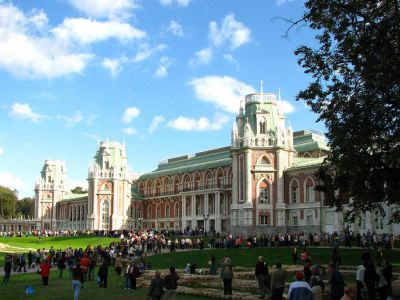
The Grand Palace is the main structure of the complex. Its long red-brick façades are decorated with white-stone details, pointed arches, tall windows and tower-like sections. Kazakov combined Gothic forms with a symmetrical layout influenced by Classical architecture. Construction continued for several years, but the palace was never completed during Catherine’s lifetime. Work stopped after her death in 1796, leaving the building unfinished for more than two centuries.
A major reconstruction in the 2000s restored and completed the Grand Palace, adapting its interiors for exhibitions and museum spaces. Today, visitors can explore displays connected with the history of the imperial estate, Catherine II, decorative arts and the architects who shaped the complex. The restored interiors are modern interpretations rather than surviving rooms from the empress’s period.
The palace forms part of a large landscaped estate with ponds, lawns, wooded paths and ornamental architecture. Nearby buildings include the Bread House, decorative bridges, gates and smaller pavilions designed by Bazhenov. Walking through the grounds reveals the contrast between his more experimental structures and Kazakov’s larger palace, while the surrounding park preserves the scale and layout of the former imperial residence.
The Grand Palace is the main structure of the complex. Its long red-brick façades are decorated with white-stone details, pointed arches, tall windows and tower-like sections. Kazakov combined Gothic forms with a symmetrical layout influenced by Classical architecture. Construction continued for several years, but the palace was never completed during Catherine’s lifetime. Work stopped after her death in 1796, leaving the building unfinished for more than two centuries.
A major reconstruction in the 2000s restored and completed the Grand Palace, adapting its interiors for exhibitions and museum spaces. Today, visitors can explore displays connected with the history of the imperial estate, Catherine II, decorative arts and the architects who shaped the complex. The restored interiors are modern interpretations rather than surviving rooms from the empress’s period.
The palace forms part of a large landscaped estate with ponds, lawns, wooded paths and ornamental architecture. Nearby buildings include the Bread House, decorative bridges, gates and smaller pavilions designed by Bazhenov. Walking through the grounds reveals the contrast between his more experimental structures and Kazakov’s larger palace, while the surrounding park preserves the scale and layout of the former imperial residence.
