Custom Walk in Riga, Latvia by mathias_huber_9b5cf created on 2025-06-11
Guide Location: Latvia » Riga
Guide Type: Custom Walk
# of Sights: 15
Tour Duration: 2 Hour(s)
Travel Distance: 2 Km or 1.2 Miles
Share Key: 2A257
Guide Type: Custom Walk
# of Sights: 15
Tour Duration: 2 Hour(s)
Travel Distance: 2 Km or 1.2 Miles
Share Key: 2A257
How It Works
Please retrieve this walk in the GPSmyCity app. Once done, the app will guide you from one tour stop to the next as if you had a personal tour guide. If you created the walk on this website or come to the page via a link, please follow the instructions below to retrieve the walk in the app.
Retrieve This Walk in App
Step 1. Download the app "GPSmyCity: Walks in 1K+ Cities" on Apple App Store or Google Play Store.



Step 2. In the GPSmyCity app, download(or launch) the guide "Riga Map and Walking Tours".
Step 3. Tap the menu button located at upper right corner of the "Walks" screen and select "Retrieve custom walk". Enter the share key: 2A257
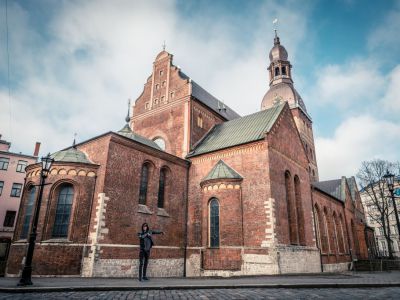
1) Riga Cathedral (must see)
Riga Cathedral, formally known as The Cathedral Church of Saint Mary, is the Evangelical Lutheran cathedral located in Riga. It serves as the seat of the Archbishop of Riga. The cathedral is one of Latvia's most iconic landmarks, often featured in paintings, photographs, and television travelogues, and is noted for its weathercock, similar to other historic churches in the city.
The church was established near the River Daugava in 1211 by Livonian Bishop Albert of Riga, who hailed from Lower Saxony in northwestern Germany. It is recognized as the largest medieval church in the Baltic states and has undergone numerous modifications throughout its history. Notable figures associated with the cathedral include David Caspari, rector of the cathedral school in the late 17th century, and his son Georg Caspari, who also served at the cathedral.
In a 1923 referendum, the Lutheran Church was compelled to share the cathedral with the Roman Catholic Church. However, this decision was reversed in the 1931 Latvian Riga Cathedral referendum, restoring it solely to the Lutheran Church. During the Soviet occupation from 1939 to 1989, religious services were banned, and the cathedral functioned as a concert hall. The Museum of the History of Riga and Navigation was housed in the cathedral's southern wing during this period. Religious services resumed in 1991, and the cathedral is now actively used by the Evangelical Lutheran Church of Latvia.
A prominent feature of the Riga Cathedral is its organ, built by E.F. Walcker & Sons of Ludwigsburg, Germany, in 1882-83 and inaugurated on January 31, 1884. During World War II, a recording captured the sound of battle as Latvian composer Lūcija Garūta played the organ for a cantata.
The church was established near the River Daugava in 1211 by Livonian Bishop Albert of Riga, who hailed from Lower Saxony in northwestern Germany. It is recognized as the largest medieval church in the Baltic states and has undergone numerous modifications throughout its history. Notable figures associated with the cathedral include David Caspari, rector of the cathedral school in the late 17th century, and his son Georg Caspari, who also served at the cathedral.
In a 1923 referendum, the Lutheran Church was compelled to share the cathedral with the Roman Catholic Church. However, this decision was reversed in the 1931 Latvian Riga Cathedral referendum, restoring it solely to the Lutheran Church. During the Soviet occupation from 1939 to 1989, religious services were banned, and the cathedral functioned as a concert hall. The Museum of the History of Riga and Navigation was housed in the cathedral's southern wing during this period. Religious services resumed in 1991, and the cathedral is now actively used by the Evangelical Lutheran Church of Latvia.
A prominent feature of the Riga Cathedral is its organ, built by E.F. Walcker & Sons of Ludwigsburg, Germany, in 1882-83 and inaugurated on January 31, 1884. During World War II, a recording captured the sound of battle as Latvian composer Lūcija Garūta played the organ for a cantata.
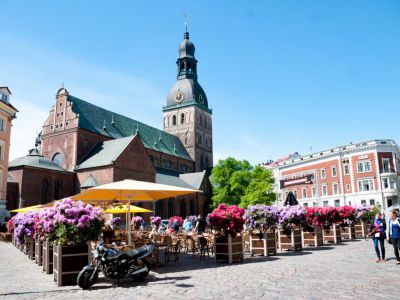
2) Cathedral Square (aka Dome Square)
Another of Old Riga's cobblestone squares lies squarely in front of the Riga Cathedral. Commonly called the Dome Cathedral, this is one of Riga's trademark buildings. The word "Dome" comes from the German "Dom," which also means cathedral. It is considered to be the largest medieval church in the Baltics.
The church was built on the river in 1211 by Livonian Bishop Albert of Riga from Lower Saxony. It was Roman Catholic until a 1923 referendum forced it to be shared with the Lutheran Church. During the Soviet Era, the church was used as a concert hall. Religious services were restarted in 1991, and today it is used by the Evangelical Lutheran Church of Latvia.
Cathedral Square is the site of various events during the year, including a popular Christmas Market. It's a great place for souvenirs and local delicacies. But no matter what time of the year you stop through, there's bound to be something going on. From art installations and cultural festivals to bustling sidewalk cafes and great people watching, Cathedral Square is at the center of it all.
The church was built on the river in 1211 by Livonian Bishop Albert of Riga from Lower Saxony. It was Roman Catholic until a 1923 referendum forced it to be shared with the Lutheran Church. During the Soviet Era, the church was used as a concert hall. Religious services were restarted in 1991, and today it is used by the Evangelical Lutheran Church of Latvia.
Cathedral Square is the site of various events during the year, including a popular Christmas Market. It's a great place for souvenirs and local delicacies. But no matter what time of the year you stop through, there's bound to be something going on. From art installations and cultural festivals to bustling sidewalk cafes and great people watching, Cathedral Square is at the center of it all.
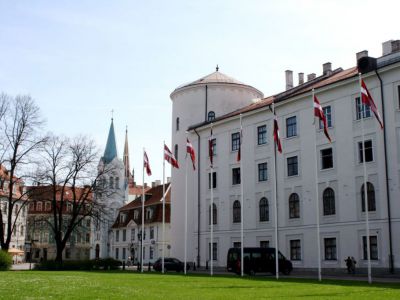
3) Riga Castle (Rigas Pils)
It has been rebuilt and remodeled countless times, but the original castle was built here in 1330. It's located outside the boundaries of Old Riga, thanks to a treaty between Riga at the Livonian Order. After a conflict between the parties, the Order agreed to build the castle outside Riga's border.
The castle was meant to be home to the Master of the Livonian Order in its early years. However, constant conflicts with the Rigans caused the Master to move to the Castle of Cēsis.
Over the following centuries, ownership of the castle bounced between leaders of ruling parties. First, the Lithuanians, then Polish, Swedish, Russian Empire, Soviet, and finally Latvian parties resided in the castle. Each left their own marks on the structure, rebuilding it as necessary for their purposes.
The structure suffered major damage after a fire incident in 2013. The fire claimed over 3,200 square meters of the castle, including much of the roof and attic. Thankfully, none of the priceless art collections housed in the museums were affected.
Today the castle is the official residence of the President of Latvia and the Latvian government. There are also several museums located in the castle.
The castle was meant to be home to the Master of the Livonian Order in its early years. However, constant conflicts with the Rigans caused the Master to move to the Castle of Cēsis.
Over the following centuries, ownership of the castle bounced between leaders of ruling parties. First, the Lithuanians, then Polish, Swedish, Russian Empire, Soviet, and finally Latvian parties resided in the castle. Each left their own marks on the structure, rebuilding it as necessary for their purposes.
The structure suffered major damage after a fire incident in 2013. The fire claimed over 3,200 square meters of the castle, including much of the roof and attic. Thankfully, none of the priceless art collections housed in the museums were affected.
Today the castle is the official residence of the President of Latvia and the Latvian government. There are also several museums located in the castle.
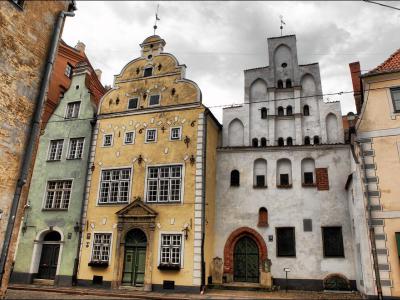
4) Three Brothers
The Three Brothers are a unique set of architectural treasures in Old Riga. The name applies to three adjacent houses, each built at different times and in different styles. Together the treehouses represent the oldest dwellings in the city, and each one demonstrates a different development period.
The oldest house is at number 17 Maza Pils Street--it dates from the late 1400s. It has crow-stepped gables and a few Gothic and Renaissance details. The interior is one large room with an attic.
The exterior of its neighbor at 19 Maza Pils Street is from 1646. The exterior style of this building has elements of Dutch Mannerism. This is the middle building and has a distinctive pale yellow exterior. Above the door, the Latin inscription reads, "Glory to God alone!"
Number 21 Maza Pils Street is the newest, a narrow Baroque structure last updated in the 17th century. The green color was meant to guard against evil spirits.
Today, Number 21 houses the Latvian Museum of Architecture and State Inspectorate for Heritage Protection. It's open to the public and is a good place to see photos of the history of Riga. The Three Brothers earned the European Heritage Label in 2020.
The oldest house is at number 17 Maza Pils Street--it dates from the late 1400s. It has crow-stepped gables and a few Gothic and Renaissance details. The interior is one large room with an attic.
The exterior of its neighbor at 19 Maza Pils Street is from 1646. The exterior style of this building has elements of Dutch Mannerism. This is the middle building and has a distinctive pale yellow exterior. Above the door, the Latin inscription reads, "Glory to God alone!"
Number 21 Maza Pils Street is the newest, a narrow Baroque structure last updated in the 17th century. The green color was meant to guard against evil spirits.
Today, Number 21 houses the Latvian Museum of Architecture and State Inspectorate for Heritage Protection. It's open to the public and is a good place to see photos of the history of Riga. The Three Brothers earned the European Heritage Label in 2020.
5) Saint James Cathedral
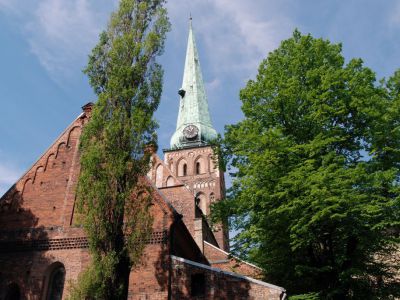
Located in the old part of Riga, on Klostera Street, Saint James' Cathedral (or Saint Jacob's Cathedral) is one of the oldest catholic temples in Latvia. The first mention of the church dates back to 1225, although the building itself is believed to have been in place since 1210, when Bishop Albert requested three churches to be built to serve rural parishes. In 1522, it became a Lutheran church, the first one to hold a Lutheran sermon in Latvian, although in 1584 it was given back to the Jesuits.
In the following centuries the church had changed hands several times, serving consecutively the Swedish, Russian and even Estonian Lutheran communities. In 1812, it was even used as a storage depot by the French troops. In 1901, Saint James' altar (oldest in Riga), built in 1680, was replaced with a new one. Since 1923, the cathedral has been in Catholic possession.
The church represents a mixture of Gothic and Romanesque architectural styles and is made of red brick and limestone. Art Nouveau motifs are also present in the decoration. The three floor Gothic tower is the only church tower left in Riga that has a spire. The cathedral forms part of the old Riga UNESCO world heritage site.
In the following centuries the church had changed hands several times, serving consecutively the Swedish, Russian and even Estonian Lutheran communities. In 1812, it was even used as a storage depot by the French troops. In 1901, Saint James' altar (oldest in Riga), built in 1680, was replaced with a new one. Since 1923, the cathedral has been in Catholic possession.
The church represents a mixture of Gothic and Romanesque architectural styles and is made of red brick and limestone. Art Nouveau motifs are also present in the decoration. The three floor Gothic tower is the only church tower left in Riga that has a spire. The cathedral forms part of the old Riga UNESCO world heritage site.
6) Swedish Gate and City Wall
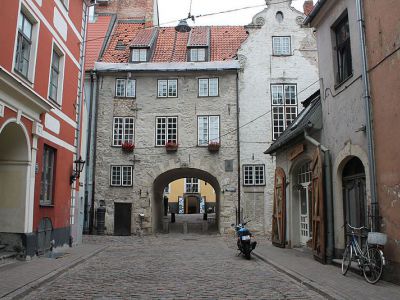
The Swedish Gate and the Old City Wall are what's left of the once mighty fortification system that surrounded Riga in the Middle Ages. Much of the complex, built between the 13th and 16th centuries, was destroyed by time or invaders or torn down in the 19th century.
The Swedish Gate is the only city gate still in place, and was built in 1698 by the Swedes, who ruled the city at that time. It stands on the site of the Jürgen tower, a semicircular defensive structure, whose lower part was later built into the nearby house no.11. The apartment above the gate is said to have been, at some point, occupied by an executioner who used to put a red rose in the window each time a convict was beheaded. In 1926, the property was leased from the Society of Architects of Latvia, and rebuilt.
During the Soviet period, the complex underwent two renovations: one in 1953-1956, run by A.A. Reynfeldsa, during which it was extended with a new building, no.13; and another time in 1986-1987, during which it was attached with the freshly built house no.15.
Today, the gate and the walls no longer serve their original fortifying purpose, but merely separate the Old Town from the busy nearby area, packed with bars, restaurants and other businesses.
The Swedish Gate is the only city gate still in place, and was built in 1698 by the Swedes, who ruled the city at that time. It stands on the site of the Jürgen tower, a semicircular defensive structure, whose lower part was later built into the nearby house no.11. The apartment above the gate is said to have been, at some point, occupied by an executioner who used to put a red rose in the window each time a convict was beheaded. In 1926, the property was leased from the Society of Architects of Latvia, and rebuilt.
During the Soviet period, the complex underwent two renovations: one in 1953-1956, run by A.A. Reynfeldsa, during which it was extended with a new building, no.13; and another time in 1986-1987, during which it was attached with the freshly built house no.15.
Today, the gate and the walls no longer serve their original fortifying purpose, but merely separate the Old Town from the busy nearby area, packed with bars, restaurants and other businesses.

7) Powder Tower
The Powder Tower, located in Riga, is a significant historical monument that has played various roles through the centuries. Originally part of the city’s defensive system, the tower has been standing since at least 1330, initially known as the Sand Tower due to the nearby sand hills. The structure as it is known today was rebuilt in 1650 after being destroyed, except for the basement, during the Swedish attack on Poland in 1621.
The architectural design of the Powder Tower is notable for its horseshoe-shaped horizontal cross-section. The walls facing the city's outskirts are three meters thick, showcasing its defensive purpose, while the city-side wall was constructed of wood, a cheaper material than bricks at the time. The tower's name, "Powder Tower," originates from the 17th century when it was used to store gunpowder. It was also armed with 11 cannons and featured a robust "bomb catcher" between the fifth and sixth floors, consisting of a one-meter-thick ceiling made from three layers of oak and pine logs, designed to absorb the impact of attacks.
Beyond its military use, the Powder Tower has also served as a prison and housed torture chambers, and weapons were stored there until 1883. Cannonballs embedded in the walls commemorate the Second Northern War, adding to the historical ambiance of the structure.
In modern times, the Powder Tower was renovated from 1937 to 1940 and incorporated into the Latvian War Museum, enriching its role as a keeper of history. Today, it stands not only as a reminder of Riga's tumultuous past but also as an educational resource that contributes to the cultural heritage of Latvia.
The architectural design of the Powder Tower is notable for its horseshoe-shaped horizontal cross-section. The walls facing the city's outskirts are three meters thick, showcasing its defensive purpose, while the city-side wall was constructed of wood, a cheaper material than bricks at the time. The tower's name, "Powder Tower," originates from the 17th century when it was used to store gunpowder. It was also armed with 11 cannons and featured a robust "bomb catcher" between the fifth and sixth floors, consisting of a one-meter-thick ceiling made from three layers of oak and pine logs, designed to absorb the impact of attacks.
Beyond its military use, the Powder Tower has also served as a prison and housed torture chambers, and weapons were stored there until 1883. Cannonballs embedded in the walls commemorate the Second Northern War, adding to the historical ambiance of the structure.
In modern times, the Powder Tower was renovated from 1937 to 1940 and incorporated into the Latvian War Museum, enriching its role as a keeper of history. Today, it stands not only as a reminder of Riga's tumultuous past but also as an educational resource that contributes to the cultural heritage of Latvia.

8) Kaļķu Iela (Lime Street)
One of the oldest streets in Riga, Lime Street runs from Town Hall Square northeast to the edge of the old city. It was first mentioned in 1407.
A stroll down Lime Street will reveal many treasures and surprises. Number 11 is a bank from the 18th century. Number 16 is the impressive Mikhail Chekhov Russian Theatre of Riga, founded in 1883. Finally, Number 20 is the Lion Pharmacy, the oldest in Riga that traces its lineage to 1653.
During the Soviet Era, Lime Street was merged with two nearby thoroughfares to form the principal street through Soviet Riga. It was called Lenin Street.
The street is a bustling central shopping and entertainment district for the city. Sidewalk cafes line the wide walking lanes, interspersed with fine dining establishments and trendy shops. There are also banks, hotels, and fast food choices.
The street ends at Bastejkalna Park and the Freedom Monument. You'll also find the Laima Clock, a popular local meeting spot. The distinctive clock is restored and dates from 1924.
A stroll down Lime Street will reveal many treasures and surprises. Number 11 is a bank from the 18th century. Number 16 is the impressive Mikhail Chekhov Russian Theatre of Riga, founded in 1883. Finally, Number 20 is the Lion Pharmacy, the oldest in Riga that traces its lineage to 1653.
During the Soviet Era, Lime Street was merged with two nearby thoroughfares to form the principal street through Soviet Riga. It was called Lenin Street.
The street is a bustling central shopping and entertainment district for the city. Sidewalk cafes line the wide walking lanes, interspersed with fine dining establishments and trendy shops. There are also banks, hotels, and fast food choices.
The street ends at Bastejkalna Park and the Freedom Monument. You'll also find the Laima Clock, a popular local meeting spot. The distinctive clock is restored and dates from 1924.
9) Riga Russian Theater
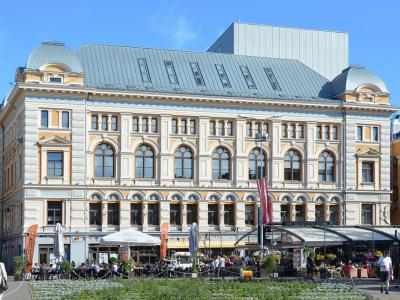
The Mikhail Chekhov Riga Russian Theatre, commonly known as the Russian Theatre, stands as a historic and cultural pillar in Riga. Established in 1883 and originally named the Riga Russian Drama Theatre, it is the oldest Russian-language drama theatre outside of Russia and the second oldest theatre in Riga, following the German Theatre.
From its inception, the theatre drew a diverse audience, reflecting the multicultural fabric of the region. Its early years were marked by growth and a golden age under the leadership of Konstantin Nezlobin from 1902 to 1915, during which the theatre's reputation flourished across Europe, with performances in major cities like Berlin, Stockholm, and Copenhagen.
World War I and the subsequent Latvian War of Independence (1918–20) brought challenges, including a temporary suspension of performances. However, the theatre resumed in 1922 under Latvia's new regime, continuing to thrive and tour extensively.
During the Soviet occupation starting in 1940, the theatre was nationalized and faced strict censorship, yet managed to preserve its traditions and pass them on to future generations. It did not operate during World War II but reopened thereafter, adapting to the changing political landscape.
Following the dissolution of the Soviet Union and Latvia's regained independence in the early 1990s, the theatre entered a new era of creativity. It was renamed in 2006 in honor of Michael Chekhov, a notable figure in the Latvian theatrical scene, who influenced the performing arts during his time in Riga from 1932 to 1934.
Today, under the leadership of Dana Bjorka since January 8, 2018, the Mikhail Chekhov Riga Russian Theatre continues to innovate while offering a mix of classical and contemporary plays. It maintains Russian as its primary language but has increasingly presented bilingual shows in Russian and Latvian, reflecting its commitment to cultural inclusivity and adaptation in modern Latvia.
From its inception, the theatre drew a diverse audience, reflecting the multicultural fabric of the region. Its early years were marked by growth and a golden age under the leadership of Konstantin Nezlobin from 1902 to 1915, during which the theatre's reputation flourished across Europe, with performances in major cities like Berlin, Stockholm, and Copenhagen.
World War I and the subsequent Latvian War of Independence (1918–20) brought challenges, including a temporary suspension of performances. However, the theatre resumed in 1922 under Latvia's new regime, continuing to thrive and tour extensively.
During the Soviet occupation starting in 1940, the theatre was nationalized and faced strict censorship, yet managed to preserve its traditions and pass them on to future generations. It did not operate during World War II but reopened thereafter, adapting to the changing political landscape.
Following the dissolution of the Soviet Union and Latvia's regained independence in the early 1990s, the theatre entered a new era of creativity. It was renamed in 2006 in honor of Michael Chekhov, a notable figure in the Latvian theatrical scene, who influenced the performing arts during his time in Riga from 1932 to 1934.
Today, under the leadership of Dana Bjorka since January 8, 2018, the Mikhail Chekhov Riga Russian Theatre continues to innovate while offering a mix of classical and contemporary plays. It maintains Russian as its primary language but has increasingly presented bilingual shows in Russian and Latvian, reflecting its commitment to cultural inclusivity and adaptation in modern Latvia.
10) Vecriga (Old Town)
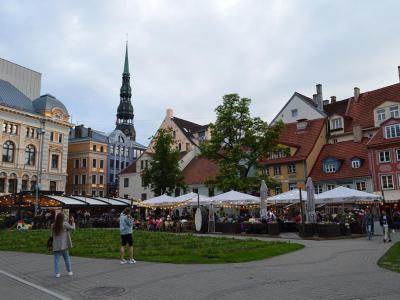
Vecrīga, or Old Riga, serves as the historical heart of Riga, situated within the Central District on the eastern side of the Daugava River. This neighborhood is celebrated for its historic churches and cathedrals, including the Riga Cathedral, Saint James's Cathedral, and Saint Peter's Church. These religious structures, along with its comprehensive collection of Renaissance, Baroque, and Medieval architecture, contribute to Vecrīga's charm and historical significance.
Originally, Vecrīga encompassed the entire city of Riga before its expansion in the late 19th century. The area was historically fortified with a wall, except on the side facing the riverbank of the Daugava. Following the demolition of this wall, the adjacent river waters were redirected to create the Riga City Canal, adding a picturesque element to the area.
In recognition of its cultural and historical value, Vecrīga is included in the UNESCO World Heritage Site listing for the "Historic Centre of Riga," which also covers most of the surrounding Central district. The early 1990s saw significant changes in Vecrīga’s accessibility, as its streets were closed to regular traffic. Now, only residents and local delivery vehicles with special permits can access the area, preserving its tranquil and historic atmosphere.
Notably, Vecrīga is not just a relic of the past but a living part of the city, showcasing not only ancient architectural styles but also the distinct Art Nouveau style, particularly through the works of Mikhail Eisenstein, a renowned architect both locally and internationally. This blend of architectural styles and the area’s rich history make Vecrīga a key destination for both visitors and scholars alike, offering a unique glimpse into the layered past of Riga.
Originally, Vecrīga encompassed the entire city of Riga before its expansion in the late 19th century. The area was historically fortified with a wall, except on the side facing the riverbank of the Daugava. Following the demolition of this wall, the adjacent river waters were redirected to create the Riga City Canal, adding a picturesque element to the area.
In recognition of its cultural and historical value, Vecrīga is included in the UNESCO World Heritage Site listing for the "Historic Centre of Riga," which also covers most of the surrounding Central district. The early 1990s saw significant changes in Vecrīga’s accessibility, as its streets were closed to regular traffic. Now, only residents and local delivery vehicles with special permits can access the area, preserving its tranquil and historic atmosphere.
Notably, Vecrīga is not just a relic of the past but a living part of the city, showcasing not only ancient architectural styles but also the distinct Art Nouveau style, particularly through the works of Mikhail Eisenstein, a renowned architect both locally and internationally. This blend of architectural styles and the area’s rich history make Vecrīga a key destination for both visitors and scholars alike, offering a unique glimpse into the layered past of Riga.
11) Bremen Musicians Statue
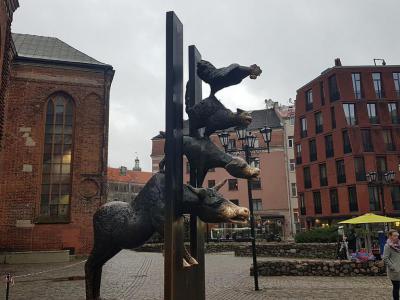
Located in the Old Town of Riga, the Bremen Musicians Statue illustrates the famous tale by the Grimm Brothers, featuring the donkey, the dog, the cat and the rooster who stand atop each other. The statue captures the moment when the four form a pyramid to peek into the house that they intend to free from the highwaymen.
The monument was a gift to Riga made in 1990 (when Latvia was still part of the Soviet Union) by the fraternal city of Bremen, Germany. It wasn't, however, the copy of the monument in Bremen, but the original work which some people suspected of having a subtle political undertone. One interpretation was that the animals peep through the iron curtain (represented, in this particular case, by the frame) with much surprise, hence the look on their faces. Another interpretation is that the four animals represent four types of politicians.
Regardless of them both, the statue remains one of the top tourist sights in Riga. It is said that rubbing the donkey’s nose three times may bring luck. Locals, however, believe that rubbing it four times may considerably increase one's lucky chances.
The monument was a gift to Riga made in 1990 (when Latvia was still part of the Soviet Union) by the fraternal city of Bremen, Germany. It wasn't, however, the copy of the monument in Bremen, but the original work which some people suspected of having a subtle political undertone. One interpretation was that the animals peep through the iron curtain (represented, in this particular case, by the frame) with much surprise, hence the look on their faces. Another interpretation is that the four animals represent four types of politicians.
Regardless of them both, the statue remains one of the top tourist sights in Riga. It is said that rubbing the donkey’s nose three times may bring luck. Locals, however, believe that rubbing it four times may considerably increase one's lucky chances.
12) Saint Peter's Church (must see)
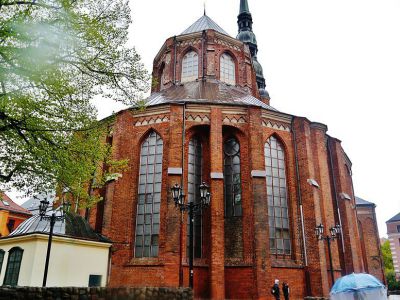
You can trace the history of this beautiful church back to 1209. Having such a long story to tell, it's not surprising that the tales are traced to the building styles of various periods. The church has Gothic, Romanesque, and Baroque elements.
Little remains of the original Gothic construction. Only the central section of the church, including the outer nave walls and a few pillars, remain from those early years.
The second construction period was overseen by master builder Johannes Rumeschottel from Germany. This was in 1409, but work was interrupted by wars and the plague. Nevertheless, by the late 15th century, the church had a mighty basilica with three aisles and vaulted ceilings. It also sported a new bell tower, 136 meters (446 feet) tall, with a steeple.
The final construction period occurred in the late 1600s when the western facade and new bell tower were built after a devastating fire in the city. Many of the furnishings and the vaulted ceiling were refurbished as well. When finished, the new tower and steeple was the tallest wooden structure in Europe.
The church was reconstructed after artillery fire destroyed it during World War II. The bronze candelabrum--a standing lantern--was taken from the church to Wloclawek, Poland. It was displayed there until 2012 when it was returned to Riga.
The steeple was completed in 1970, and the clock tower in the early 1970s. The rooster atop the steeple weighs 158 kilograms and includes 140 grams of gold plating. The bell plays the Latvian folk melody "Riga Resounds" five times a day, and the bell chimes hourly. There is an elevator that takes guests up the tower, where you can take in the view of Riga from a height of 72 meters (236 feet).
Today, the church is owned by the Evangelical Lutheran Church of Latvia. Services resumed here in 1991. In addition to the view from the tower's top, strolling through the art collection and seeing the beautiful nave are must-dos in Riga.
Little remains of the original Gothic construction. Only the central section of the church, including the outer nave walls and a few pillars, remain from those early years.
The second construction period was overseen by master builder Johannes Rumeschottel from Germany. This was in 1409, but work was interrupted by wars and the plague. Nevertheless, by the late 15th century, the church had a mighty basilica with three aisles and vaulted ceilings. It also sported a new bell tower, 136 meters (446 feet) tall, with a steeple.
The final construction period occurred in the late 1600s when the western facade and new bell tower were built after a devastating fire in the city. Many of the furnishings and the vaulted ceiling were refurbished as well. When finished, the new tower and steeple was the tallest wooden structure in Europe.
The church was reconstructed after artillery fire destroyed it during World War II. The bronze candelabrum--a standing lantern--was taken from the church to Wloclawek, Poland. It was displayed there until 2012 when it was returned to Riga.
The steeple was completed in 1970, and the clock tower in the early 1970s. The rooster atop the steeple weighs 158 kilograms and includes 140 grams of gold plating. The bell plays the Latvian folk melody "Riga Resounds" five times a day, and the bell chimes hourly. There is an elevator that takes guests up the tower, where you can take in the view of Riga from a height of 72 meters (236 feet).
Today, the church is owned by the Evangelical Lutheran Church of Latvia. Services resumed here in 1991. In addition to the view from the tower's top, strolling through the art collection and seeing the beautiful nave are must-dos in Riga.
13) Town Hall Square (must see)
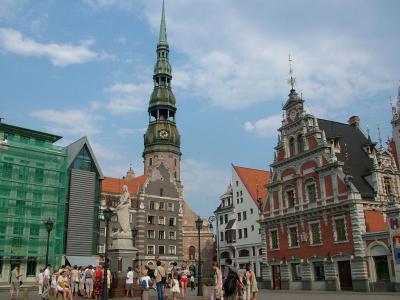
This cobblestone town square marks the center of Old Riga. It's surrounded by beautiful architecture, including the House of the Black Heads and Riga City Hall.
In the center of the Square stands a statue of Roland. He was Charlemagne's nephew and a Frankish military leader. His reputation for stringent but just governance has led to him becoming a symbol of justice in Northern Germany. The statue has stood next to the town's well since 1897.
However, the Square's biggest claim to fame is that it was the site of the first lit and decorated Christmas tree in 1510. There is a plank marking the location, and, of course, a tree is decorated here every year during the holidays.
Bombs leveled Town Hall Square and its surrounding buildings during World War II. Everything you see today was rebuilt in the years following the war. The House of the Black Heads was reopened in 1999, and the Town Hall Building in 2003.
The Square is a great place to begin your explorations of Riga--the narrow cobblestone streets wind through some of the most beautiful architecture you'll find. The scene is especially stunning at night when the buildings are lit for maximum effect.
In the center of the Square stands a statue of Roland. He was Charlemagne's nephew and a Frankish military leader. His reputation for stringent but just governance has led to him becoming a symbol of justice in Northern Germany. The statue has stood next to the town's well since 1897.
However, the Square's biggest claim to fame is that it was the site of the first lit and decorated Christmas tree in 1510. There is a plank marking the location, and, of course, a tree is decorated here every year during the holidays.
Bombs leveled Town Hall Square and its surrounding buildings during World War II. Everything you see today was rebuilt in the years following the war. The House of the Black Heads was reopened in 1999, and the Town Hall Building in 2003.
The Square is a great place to begin your explorations of Riga--the narrow cobblestone streets wind through some of the most beautiful architecture you'll find. The scene is especially stunning at night when the buildings are lit for maximum effect.
14) House of Blackheads (Melngalvju Nams) (must see)
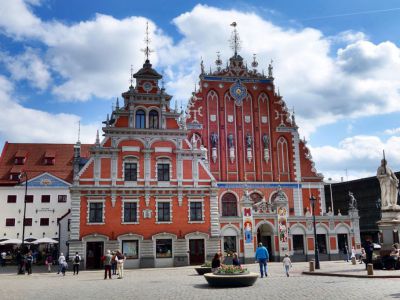
The House of the Black Heads is now a museum celebrating commerce in Riga. The building was originally erected in 1334 and has dominated Town Hall Square for centuries.
It was built by the Brotherhood of the Black Heads, a local guild made up of unmarried Riga merchants, shipowners, and foreigners. The organization was active from the middle of the 14th century until about 1940, although a chapter in Hamburg still meets. It began as a military society but gradually transitioned into a social organization.
The House of Black Heads was meant to be a meeting place for the society, where they would host banquets and cultural events. The first decorated Christmas tree was displayed on the square outside in 1510.
The building was destroyed during World War II--first leveled by Germans bombs in 1941 and then further demolished by the Soviets in 1948. As it stands today, the building was reconstructed in the late 1990s. Locals donated a few Euros each person to put a brick in the wall during an event called "I Build the House of the Black Heads."
The building has been rebuilt to its previous glory and is open to the public. The upper levels have grand ballrooms where some of Riga's most posh cultural events occurred. There are also spaces used by former Presidents of Latvia, as this house was used as the Presidential residence between 2012 and 2016.
Most interesting are the cellars, which were buried and re-excavated during the rebuilding and restoration efforts. Here you can walk through original 14th-century corridors in the authentic underground of medieval Riga. This space was used to store goods and is now used as an exhibit space.
The museum is open Wednesdays through Sundays. On the last Sunday of every month, they hold a free one-hour-long guided house tour, available in both English and German.
It was built by the Brotherhood of the Black Heads, a local guild made up of unmarried Riga merchants, shipowners, and foreigners. The organization was active from the middle of the 14th century until about 1940, although a chapter in Hamburg still meets. It began as a military society but gradually transitioned into a social organization.
The House of Black Heads was meant to be a meeting place for the society, where they would host banquets and cultural events. The first decorated Christmas tree was displayed on the square outside in 1510.
The building was destroyed during World War II--first leveled by Germans bombs in 1941 and then further demolished by the Soviets in 1948. As it stands today, the building was reconstructed in the late 1990s. Locals donated a few Euros each person to put a brick in the wall during an event called "I Build the House of the Black Heads."
The building has been rebuilt to its previous glory and is open to the public. The upper levels have grand ballrooms where some of Riga's most posh cultural events occurred. There are also spaces used by former Presidents of Latvia, as this house was used as the Presidential residence between 2012 and 2016.
Most interesting are the cellars, which were buried and re-excavated during the rebuilding and restoration efforts. Here you can walk through original 14th-century corridors in the authentic underground of medieval Riga. This space was used to store goods and is now used as an exhibit space.
The museum is open Wednesdays through Sundays. On the last Sunday of every month, they hold a free one-hour-long guided house tour, available in both English and German.
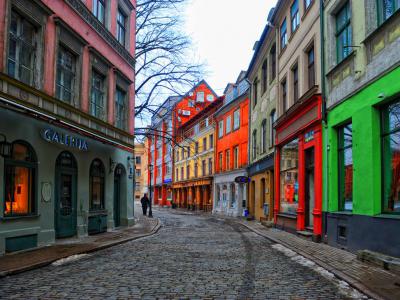
15) Jauniela
Jauniela Street in Riga epitomizes the enchanting allure of the historical Old Town, despite its name translating to "New Street." This picturesque avenue is framed by an array of pastel-colored buildings that rest on cobblestone paths, lending it a vibrant yet historic charm. Recognized as one of the prettiest streets in Riga's Old Town, Jauniela is also among the most dynamic, and bustling with hotels, bars, and restaurants that cater to both locals and tourists.
The street's pedestrian-friendly design ensures that it is a common fixture on walking tours of Riga, particularly those focused on architecture. Visitors are likely to be drawn here to admire the Art Nouveau façade of the Neiburgs Hotel, among other architectural delights. Jauniela is strategically positioned near major landmarks like the Riga Cathedral, making it an ideal route for those looking to combine historical exploration with culinary ventures or leisurely strolls.
In addition to its architectural marvels, Jauniela Street has gained fame as a filming location for notable period dramas, including adaptations of "War and Peace" and "Sherlock Holmes." The street is not just a feast for the eyes but also serves as a hub of cultural expression, showcasing vibrant street art that reflects the creativity of local artists. It offers a rich tapestry of experiences from dining in exquisite cafes serving traditional Latvian cuisine to shopping in quaint boutiques that offer unique, handcrafted souvenirs.
For anyone visiting Riga, a trip down Jauniela Street promises a blend of historical intrigue, architectural beauty, and cultural vibrancy, making it an unforgettable part of any journey through Latvia's capital.
The street's pedestrian-friendly design ensures that it is a common fixture on walking tours of Riga, particularly those focused on architecture. Visitors are likely to be drawn here to admire the Art Nouveau façade of the Neiburgs Hotel, among other architectural delights. Jauniela is strategically positioned near major landmarks like the Riga Cathedral, making it an ideal route for those looking to combine historical exploration with culinary ventures or leisurely strolls.
In addition to its architectural marvels, Jauniela Street has gained fame as a filming location for notable period dramas, including adaptations of "War and Peace" and "Sherlock Holmes." The street is not just a feast for the eyes but also serves as a hub of cultural expression, showcasing vibrant street art that reflects the creativity of local artists. It offers a rich tapestry of experiences from dining in exquisite cafes serving traditional Latvian cuisine to shopping in quaint boutiques that offer unique, handcrafted souvenirs.
For anyone visiting Riga, a trip down Jauniela Street promises a blend of historical intrigue, architectural beauty, and cultural vibrancy, making it an unforgettable part of any journey through Latvia's capital.
