Custom Walk in Boston, Massachusetts by fligglet_53959 created on 2025-06-12
Guide Location: USA » Boston
Guide Type: Custom Walk
# of Sights: 12
Tour Duration: 9 Hour(s)
Travel Distance: 24.1 Km or 15 Miles
Share Key: P58LZ
Guide Type: Custom Walk
# of Sights: 12
Tour Duration: 9 Hour(s)
Travel Distance: 24.1 Km or 15 Miles
Share Key: P58LZ
How It Works
Please retrieve this walk in the GPSmyCity app. Once done, the app will guide you from one tour stop to the next as if you had a personal tour guide. If you created the walk on this website or come to the page via a link, please follow the instructions below to retrieve the walk in the app.
Retrieve This Walk in App
Step 1. Download the app "GPSmyCity: Walks in 1K+ Cities" on Apple App Store or Google Play Store.



Step 2. In the GPSmyCity app, download(or launch) the guide "Boston Map and Walking Tours".
Step 3. Tap the menu button located at upper right corner of the "Walks" screen and select "Retrieve custom walk". Enter the share key: P58LZ
1) Boston Common (must see)
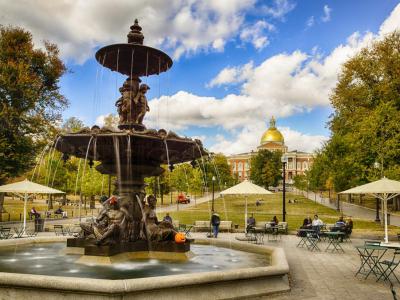
Boston Common, the city's primary open space, spans fifty acres of greenery, effectively serving as a buffer between the historic and bustling Downtown area and its upscale neighbors, Beacon Hill and Back Bay. While it may not have the meticulous landscaping of the nearby Public Garden, it still offers an abundance of benches and open lawns for relaxing breaks, and it frequently transforms into a venue for concerts, events, and public gatherings.
Before John Winthrop and his fellow Puritan settlers designated Boston Common for public use, it served as pastureland for the Reverend William Braxton. Blaxton was a priest of the Church of England. In 1623, as chaplain to the Ferdinando Gorges expedition, he sailed on the ship Katherine to the settlement of Weymouth, Massachusetts. The expedition failed, and everyone returned to England in 1625. But Blaxton stayed and became the first European to settle in Boston.
Puritans from Charlestown joined Blaxton in 1630 and awarded him fifty acres. He cannily sold it back to them in 1634, and this land became known as Boston Common, the oldest city park in the United States. Soon after, it took on darker associations, functioning as a site for hangings, including those of alleged pirates, witches, and various religious dissenters. An unfortunate commoner by the name of Rachell Whall met her end here for the theft of a bonnet valued at 75¢.
In 1789, newly elected President George Washington made a memorable appearance on the Common. Over the years, renowned figures like Martin Luther King, Jr., Pope John Paul II, and Mikhail Gorbachev have delivered speeches on its grounds, while Judy Garland enthralled more than 100,000 fans with her performance here in 1967. The history of this place also extends far into the past, with prehistoric Native American sites dating back up to 8,500 years found within its boundaries.
Around the park, there are several noteworthy sites to explore, including Brewer Fountain Plaza, the Boston Common Visitor Information Center, the Soldiers and Sailors Monument, the Frog Pond, the Central Burying Ground, and the recently restored Robert Gould Shaw 54th Regiment Memorial.
Before John Winthrop and his fellow Puritan settlers designated Boston Common for public use, it served as pastureland for the Reverend William Braxton. Blaxton was a priest of the Church of England. In 1623, as chaplain to the Ferdinando Gorges expedition, he sailed on the ship Katherine to the settlement of Weymouth, Massachusetts. The expedition failed, and everyone returned to England in 1625. But Blaxton stayed and became the first European to settle in Boston.
Puritans from Charlestown joined Blaxton in 1630 and awarded him fifty acres. He cannily sold it back to them in 1634, and this land became known as Boston Common, the oldest city park in the United States. Soon after, it took on darker associations, functioning as a site for hangings, including those of alleged pirates, witches, and various religious dissenters. An unfortunate commoner by the name of Rachell Whall met her end here for the theft of a bonnet valued at 75¢.
In 1789, newly elected President George Washington made a memorable appearance on the Common. Over the years, renowned figures like Martin Luther King, Jr., Pope John Paul II, and Mikhail Gorbachev have delivered speeches on its grounds, while Judy Garland enthralled more than 100,000 fans with her performance here in 1967. The history of this place also extends far into the past, with prehistoric Native American sites dating back up to 8,500 years found within its boundaries.
Around the park, there are several noteworthy sites to explore, including Brewer Fountain Plaza, the Boston Common Visitor Information Center, the Soldiers and Sailors Monument, the Frog Pond, the Central Burying Ground, and the recently restored Robert Gould Shaw 54th Regiment Memorial.
2) Boston Public Garden (must see)
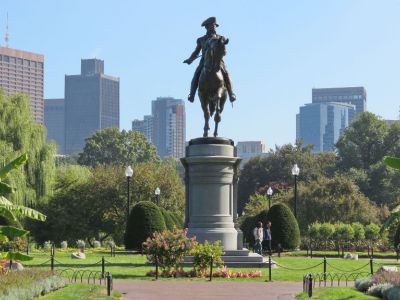
America's oldest botanical garden features exquisite formal plantings that have captured the hearts of visitors for generations. In its heart lies a 4-acre lagoon, a beloved feature since 1877, famous for its Swan Boats, guided by a captain, offering a serene and picturesque experience. A delightful addition to this landscape is the 'Make Way for Ducklings' bronze sculptures crafted by Nancy Schön, paying homage to the 1941 children's story penned by Robert McCloskey.
Now, remember, the Boston Public Garden and Boston Common are distinct entities with unique histories and purposes, with a clear-cut boundary at Charles Street. Boston Common has been a public expanse since the city's inception in 1630, while the Public Garden emerged later, occupying what was once salt marshes on the fringes of the Common and reflecting the influence of Victorian-era park designs.
Near the Swan Boat terminal, you'll stumble upon what might be the world's tiniest suspension bridge, thoughtfully designed in 1867 to span the pond's narrowest point. The garden's main walkways feature replanted flower beds each spring, with the vibrand display of tulips stealing the show in early May. Additionally, you can explore a diverse collection of native and European tree species.
Why You Should Visit:
Despite a period of decline during the urban renewal fervor of the 1970s, this garden stands today as a cherished oasis, often considered the more polished and formal counterpart to the neighboring Boston Common. An integral part of the city's Emerald Necklace, it offers a lush retreat throughout the year. With plantings nurtured by 14 city greenhouses, the garden showcases an array of tulips, roses, and flowering shrubs that can be enjoyed while leisurely cruising the tranquil lagoon.
Now, remember, the Boston Public Garden and Boston Common are distinct entities with unique histories and purposes, with a clear-cut boundary at Charles Street. Boston Common has been a public expanse since the city's inception in 1630, while the Public Garden emerged later, occupying what was once salt marshes on the fringes of the Common and reflecting the influence of Victorian-era park designs.
Near the Swan Boat terminal, you'll stumble upon what might be the world's tiniest suspension bridge, thoughtfully designed in 1867 to span the pond's narrowest point. The garden's main walkways feature replanted flower beds each spring, with the vibrand display of tulips stealing the show in early May. Additionally, you can explore a diverse collection of native and European tree species.
Why You Should Visit:
Despite a period of decline during the urban renewal fervor of the 1970s, this garden stands today as a cherished oasis, often considered the more polished and formal counterpart to the neighboring Boston Common. An integral part of the city's Emerald Necklace, it offers a lush retreat throughout the year. With plantings nurtured by 14 city greenhouses, the garden showcases an array of tulips, roses, and flowering shrubs that can be enjoyed while leisurely cruising the tranquil lagoon.
3) Newbury Street (must see)
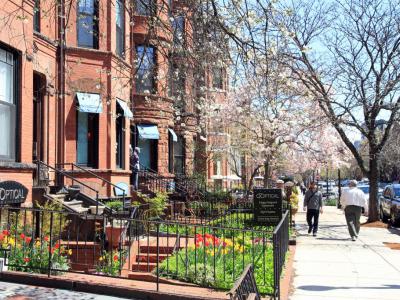
Traditionally for Boston, Newbury Street has embodied a fusion of fashion and trends, similar to New York's 5th Avenue, when it comes to high-end and designer stores. One defining characteristic of this street is its constant evolution, driven by changes in rents and prevailing trends, particularly over the past few decades. Due to Newbury's reputation as a shopping haven, numerous out-of-state chains have established a presence here, alongside a plethora of charming specialty shops, ultra-modern art galleries, salons, and dazzling jewelers (just take note that the closer you get to Arlington Street, the more upscale the stores become).
The landscape of restaurants, bars and cafes is also ever-changing and eclectic, with many offering patio seating and stylish bay windows, making this the perfect sunny-weather spot to see and be seen while indulging in coffee or exotic delicacies. Some notable highlights include the rustic Italian eatery Piattini; the intimate La Voile, celebrated for its authentic French cuisine; and the relaxed Pavement Coffeehouse, serving premium coffee, espresso drinks, tea, and baked goods.
Sidewalks are wide enough to accommodate foot traffic, and the street itself is lined with beautiful architectural details and lush foliage.
Why You Should Visit:
Boston's answer to Los Angeles' Rodeo Drive, Newbury Street is a haven for shoppers. Here, you'll find a diverse range of stores, catering to various budgets and tastes. From luxurious brands like Valentino and Max Mara to more budget-friendly options like H&M and ZARA, as well as charming specialty shops like The Fish & Bone, Newbury Comics, and MUJI, there's something for everyone.
The landscape of restaurants, bars and cafes is also ever-changing and eclectic, with many offering patio seating and stylish bay windows, making this the perfect sunny-weather spot to see and be seen while indulging in coffee or exotic delicacies. Some notable highlights include the rustic Italian eatery Piattini; the intimate La Voile, celebrated for its authentic French cuisine; and the relaxed Pavement Coffeehouse, serving premium coffee, espresso drinks, tea, and baked goods.
Sidewalks are wide enough to accommodate foot traffic, and the street itself is lined with beautiful architectural details and lush foliage.
Why You Should Visit:
Boston's answer to Los Angeles' Rodeo Drive, Newbury Street is a haven for shoppers. Here, you'll find a diverse range of stores, catering to various budgets and tastes. From luxurious brands like Valentino and Max Mara to more budget-friendly options like H&M and ZARA, as well as charming specialty shops like The Fish & Bone, Newbury Comics, and MUJI, there's something for everyone.
4) Museum of Fine Arts (must see)
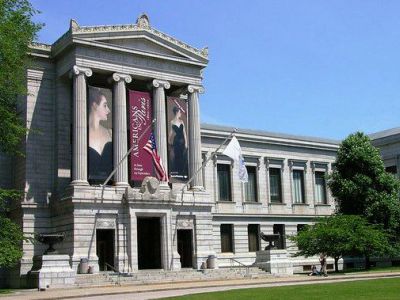
The Museum of Fine Arts (MFA) is a world-renowned institution, showcasing a rich collection that includes Mario Testino's inaugural U.S. photography exhibit and an impressive permanent collection featuring artworks by luminaries such as Renoir and Van Gogh. Every year, over a million visitors are drawn to this Neoclassical marvel to explore an array of art, spanning from contemporary to Egyptian and Asian, among other genres.
The foundation of the MFA's collection, totaling around 450,000 objects, was established through various means, including paintings and sculptures from the Boston Athenæum, historical portraits from the city of Boston, and contributions from local universities. Notable highlights encompass over 70 works by John Singleton Copley, major pieces by artists like Winslow Homer, John Singer Sargent, Fitz Henry Lane, and Edward Hopper, as well as a diverse range of American art, from New England folk art and Colonial portraiture to the abstract expressionism of 1950s and 1960s New York.
The museum's contemporary wing, housed in the striking I. M. Pei-designed building, showcases art that pushes boundaries, adding a touch of avant-garde to this traditionally inclined city. Meanwhile, within the Art of the Americas wing, a glass-enclosed courtyard hosts the New American Café, one of the four dining options available on-site.
On Wednesdays, admission is free after 4 PM, and your ticket grants a $2 discount at the nearby Isabella Stewart Gardner Museum within two days of your visit.
Tip:
Choose a pleasant day to visit, as the Japanese gardens offer a serene setting to contemplate the MFA's masterpieces.
To save time, purchase your tickets online in advance, as lines can get quite long.
Note that the museum requires you to check any bag larger than 11 inches by 15 inches, including purses.
The foundation of the MFA's collection, totaling around 450,000 objects, was established through various means, including paintings and sculptures from the Boston Athenæum, historical portraits from the city of Boston, and contributions from local universities. Notable highlights encompass over 70 works by John Singleton Copley, major pieces by artists like Winslow Homer, John Singer Sargent, Fitz Henry Lane, and Edward Hopper, as well as a diverse range of American art, from New England folk art and Colonial portraiture to the abstract expressionism of 1950s and 1960s New York.
The museum's contemporary wing, housed in the striking I. M. Pei-designed building, showcases art that pushes boundaries, adding a touch of avant-garde to this traditionally inclined city. Meanwhile, within the Art of the Americas wing, a glass-enclosed courtyard hosts the New American Café, one of the four dining options available on-site.
On Wednesdays, admission is free after 4 PM, and your ticket grants a $2 discount at the nearby Isabella Stewart Gardner Museum within two days of your visit.
Tip:
Choose a pleasant day to visit, as the Japanese gardens offer a serene setting to contemplate the MFA's masterpieces.
To save time, purchase your tickets online in advance, as lines can get quite long.
Note that the museum requires you to check any bag larger than 11 inches by 15 inches, including purses.
5) Isabella Stewart Gardner Museum (must see)
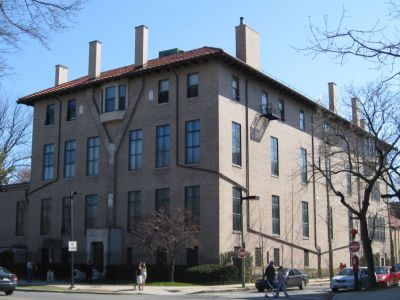
Isabella Stewart, a vivacious woman of high society, made her way to Boston in 1860 with the intention of marrying John Lowell Gardner, a prominent figure in the city. Known as "Mrs. Jack," she set out on a mission to defy the conventions of proper Bostonians. Mrs. Jack went on to construct a Venetian-style palace to house her impressive art collection, much of which she acquired during her travels around the world. In her will, she specified that the building must remain exactly as she left it, from the grand paintings and sculptures to the smallest trinket in a hallway cabinet, and so it has remained.
Gardner's palace boasts an array of masterpieces, including Titian's 'Europa', Giotto's 'Presentation of Christ in the Temple', and John Singer Sargent's 'El Jaleo'. The Venetian courtyard is adorned with eight charming balconies, while the themed rooms transport you to different worlds, from the Raphael Room to the Spanish Cloister, Gothic Room, Chinese Loggia, and the magnificent Tapestry Room, where Gardner once entertained luminaries like Henry James and Edith Wharton.
On a fateful day in March 1990, the Gardner Museum became the scene of a rather sensational art heist. Thieves, disguised as police officers, made off with 12 precious artworks, including Vermeer's 'The Concert'. To this day, none of the stolen art has been recovered. Mrs. Gardner's will prohibited replacing the stolen pieces with others, leaving empty spaces on the walls where the paintings once hung. This audacious heist is the subject of the 2021 Netflix documentary, 'This is a Robbery'.
The modern addition, designed by Renzo Piano, encompasses a music hall, exhibition spaces, and conservation labs. The museum store is the ideal place to find gifts and souvenirs, and there's a glass-enclosed cafe that offers delightful garden views.
Tip:
As a visitor, take some time savor the beauty of the central courtyard. Surrounded by graceful arcades and balconies, this Italian-style oasis features a garden bursting with lush greenery, statues, and an exquisite Roman mosaic floor. The flower displays change with the seasons, ensuring a colorful experience, while a glass roof bathes the space in natural light.
Gardner's palace boasts an array of masterpieces, including Titian's 'Europa', Giotto's 'Presentation of Christ in the Temple', and John Singer Sargent's 'El Jaleo'. The Venetian courtyard is adorned with eight charming balconies, while the themed rooms transport you to different worlds, from the Raphael Room to the Spanish Cloister, Gothic Room, Chinese Loggia, and the magnificent Tapestry Room, where Gardner once entertained luminaries like Henry James and Edith Wharton.
On a fateful day in March 1990, the Gardner Museum became the scene of a rather sensational art heist. Thieves, disguised as police officers, made off with 12 precious artworks, including Vermeer's 'The Concert'. To this day, none of the stolen art has been recovered. Mrs. Gardner's will prohibited replacing the stolen pieces with others, leaving empty spaces on the walls where the paintings once hung. This audacious heist is the subject of the 2021 Netflix documentary, 'This is a Robbery'.
The modern addition, designed by Renzo Piano, encompasses a music hall, exhibition spaces, and conservation labs. The museum store is the ideal place to find gifts and souvenirs, and there's a glass-enclosed cafe that offers delightful garden views.
Tip:
As a visitor, take some time savor the beauty of the central courtyard. Surrounded by graceful arcades and balconies, this Italian-style oasis features a garden bursting with lush greenery, statues, and an exquisite Roman mosaic floor. The flower displays change with the seasons, ensuring a colorful experience, while a glass roof bathes the space in natural light.
6) John F. Kennedy Presidential Library and Museum (must see)
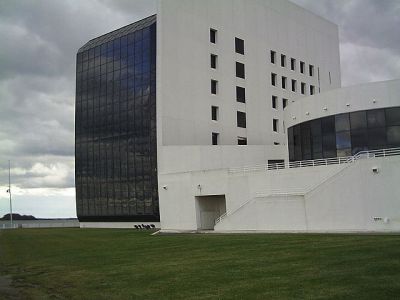
Located at Columbia Point, the John F. Kennedy Presidential Library and Museum offers a captivating window into a recent and historically significant era. It is housed within a striking, glass-fronted, curvilinear building designed by the renowned architect I.M. Pei, who allegedly considered it his favorite commission. The museum's setting provides sweeping panoramic views of Boston Harbor.
Upon entering, visitors are greeted by an informative eighteen-minute film that traces Kennedy's political journey up to the 1960 Democratic National Convention, narrated with soundbites from Kennedy himself. As you transition from the auditorium to the exhibition area, you'll explore displays that delve into the 1960 presidential campaign and the key moments of Kennedy's brief administration. These exhibits are set against stylized recreations of his campaign headquarters, the CBS studio where the historic televised debate with Richard Nixon took place, and the main White House corridor. Of particular interest are the campaign exhibits, which showcase television and radio ads that reflect the idealized self-image America held at that time.
The section dedicated to Kennedy's presidency takes a more serious tone and features a gripping 22-minute film about the Cuban Missile Crisis, which effectively conveys the tension of the event, albeit possibly with some embellishment of Kennedy's role. A somber corridor towards the end of this section continuously plays the televised announcement of President Kennedy's assassination on November 22, 1963. In contrast, the Jackie Kennedy exhibits offer a lighter perspective, tracing her journey from a young debutante to First Lady and popular icon. The displays include her outfits, camera, and baby brush.
The museum's highlight may well be its final section: a 115-foot-high glass atrium that overlooks the harbor. Here, a grand American flag presides over excerpts from Kennedy's 'Profiles in Courage,' a moving experience that can even touch the most skeptical JFK critic.
For those interested in research, the library is open to the public by appointment for specific archival requests and houses JFK's extensive papers, totaling around 8.4 million pages from his truncated term in the Oval Office. It's also the repository for Ernest Hemingway's original manuscripts, which were rescued from Cuba with Kennedy's assistance following Hemingway's suicide in 1961.
Tip:
Don't forget to visit the museum's gift store, where you can find books and JFK-themed souvenirs. If you're hungry, the museum cafe offers a delightful dining experience with panoramic views of the city skyline and harbor.
Upon entering, visitors are greeted by an informative eighteen-minute film that traces Kennedy's political journey up to the 1960 Democratic National Convention, narrated with soundbites from Kennedy himself. As you transition from the auditorium to the exhibition area, you'll explore displays that delve into the 1960 presidential campaign and the key moments of Kennedy's brief administration. These exhibits are set against stylized recreations of his campaign headquarters, the CBS studio where the historic televised debate with Richard Nixon took place, and the main White House corridor. Of particular interest are the campaign exhibits, which showcase television and radio ads that reflect the idealized self-image America held at that time.
The section dedicated to Kennedy's presidency takes a more serious tone and features a gripping 22-minute film about the Cuban Missile Crisis, which effectively conveys the tension of the event, albeit possibly with some embellishment of Kennedy's role. A somber corridor towards the end of this section continuously plays the televised announcement of President Kennedy's assassination on November 22, 1963. In contrast, the Jackie Kennedy exhibits offer a lighter perspective, tracing her journey from a young debutante to First Lady and popular icon. The displays include her outfits, camera, and baby brush.
The museum's highlight may well be its final section: a 115-foot-high glass atrium that overlooks the harbor. Here, a grand American flag presides over excerpts from Kennedy's 'Profiles in Courage,' a moving experience that can even touch the most skeptical JFK critic.
For those interested in research, the library is open to the public by appointment for specific archival requests and houses JFK's extensive papers, totaling around 8.4 million pages from his truncated term in the Oval Office. It's also the repository for Ernest Hemingway's original manuscripts, which were rescued from Cuba with Kennedy's assistance following Hemingway's suicide in 1961.
Tip:
Don't forget to visit the museum's gift store, where you can find books and JFK-themed souvenirs. If you're hungry, the museum cafe offers a delightful dining experience with panoramic views of the city skyline and harbor.
7) Boston Tea Party Ships and Museum (must see)
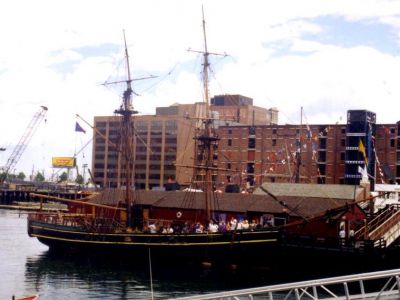
This immersive experience transports you back to the historic events of December 16, 1773, when the Boston Tea Party unfolded. Climb aboard a replica of an 18th-century sailing vessel and engage in a dramatic reenactment of this pivotal event. Costumed actors guide you through the tumultuous night when colonists vehemently protested unfair taxation by hurling 342 tea chests into Boston Harbor.
While the original Tea Party site is buried beneath the city, replica British East India Company ships are anchored in the Fort Point Channel. Meanwhile, inside the interactive museum, you'll find a wealth of exhibits that put the event into its broader historical context. Experience a virtual debate between Sam Adams and King George III, gaining unique perspectives on the events that shaped America's destiny. Among the museum's prized artifacts is the Robinson Half Chest, one of the few surviving tea chests from the protest, accompanied by an enlightening audio presentation.
After your historical journey, make sure to visit the gift shop, where you can find collectibles and souvenirs to commemorate your visit. And for a delightful respite, unwind at Abigail's Tea Room, offering a selection of refreshments and a chance to sample teas that were popular during the colonial era.
Why You Should Visit:
Whether it's the engaging reenactments, the opportunity to toss tea crates into Boston Harbor, or the historical authenticity, this museum provides a captivating glimpse into revolutionary America. You'll love the beautiful waterfront views, too!
While the original Tea Party site is buried beneath the city, replica British East India Company ships are anchored in the Fort Point Channel. Meanwhile, inside the interactive museum, you'll find a wealth of exhibits that put the event into its broader historical context. Experience a virtual debate between Sam Adams and King George III, gaining unique perspectives on the events that shaped America's destiny. Among the museum's prized artifacts is the Robinson Half Chest, one of the few surviving tea chests from the protest, accompanied by an enlightening audio presentation.
After your historical journey, make sure to visit the gift shop, where you can find collectibles and souvenirs to commemorate your visit. And for a delightful respite, unwind at Abigail's Tea Room, offering a selection of refreshments and a chance to sample teas that were popular during the colonial era.
Why You Should Visit:
Whether it's the engaging reenactments, the opportunity to toss tea crates into Boston Harbor, or the historical authenticity, this museum provides a captivating glimpse into revolutionary America. You'll love the beautiful waterfront views, too!
8) Faneuil Hall Marketplace (must see)
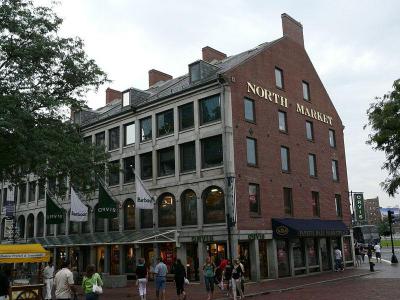
Faneuil Hall Marketplace, situated in a pedestrian zone east of Government Center, is a vibrant public gathering spot that appeals to both tourists and, to a lesser extent, locals. It's an excellent place to enjoy a meal, soak in a bit of history, and take advantage of free Wi-Fi access. Originally constructed during colonial times as a marketplace to accommodate the city's burgeoning mercantile industry, it saw a decline in the 19th century and, like the surrounding area, remained relatively inactive until the 1960s. At that point, it was successfully revitalized as a restaurant and shopping complex.
The much-talked-about Faneuil Hall itself might not appear particularly imposing from the outside. It's a modest four-story brick building crowned with a golden grasshopper weathervane-certainly not the grand auditorium that one might envision as the birthplace of Revolutionary War meetings, earning it the moniker "Cradle of Liberty". In its earlier days, the first floor housed an open-air market, while the second floor served as a space for political gatherings. This is where fiery revolutionaries like Samuel Adams and James Otis rallied popular support for independence by protesting British tax policies.
Today, the first floor houses an array of tourist-centric shops and an info-desk, but the second is more impressive, with the auditorium preserved to reflect the alterations made by Charles Bulfinch in 1805. Its centerpiece is a flamboyant (albeit somewhat exaggerated) canvas depicting "The Great Debate", during which Daniel Webster argued for the concept of the United States as one nation against South Carolina Senator Robert Hayne. While the debate indeed took place, the painting includes several 19th-century figures like Nathaniel Hawthorne and Alexis de Tocqueville, who were not actually present-the artist added them to boost the painting's appeal.
A more grounded story relates to how Boston sailors secured free passage back home from Britain during the War of 1812: captive Boston sailors who escaped to the American consulate were asked what adorned Faneuil Hall as a weathervane. Those who correctly identified it as a grasshopper were considered true Bostonians and given a free journey back, while those who couldn't were eyed with suspicion.
On the top floor, the Ancient & Honorable Artillery Co of Massachusetts, established in 1638, curates a peculiar collection of antique firearms, political memorabilia, and curious artifacts.
The much-talked-about Faneuil Hall itself might not appear particularly imposing from the outside. It's a modest four-story brick building crowned with a golden grasshopper weathervane-certainly not the grand auditorium that one might envision as the birthplace of Revolutionary War meetings, earning it the moniker "Cradle of Liberty". In its earlier days, the first floor housed an open-air market, while the second floor served as a space for political gatherings. This is where fiery revolutionaries like Samuel Adams and James Otis rallied popular support for independence by protesting British tax policies.
Today, the first floor houses an array of tourist-centric shops and an info-desk, but the second is more impressive, with the auditorium preserved to reflect the alterations made by Charles Bulfinch in 1805. Its centerpiece is a flamboyant (albeit somewhat exaggerated) canvas depicting "The Great Debate", during which Daniel Webster argued for the concept of the United States as one nation against South Carolina Senator Robert Hayne. While the debate indeed took place, the painting includes several 19th-century figures like Nathaniel Hawthorne and Alexis de Tocqueville, who were not actually present-the artist added them to boost the painting's appeal.
A more grounded story relates to how Boston sailors secured free passage back home from Britain during the War of 1812: captive Boston sailors who escaped to the American consulate were asked what adorned Faneuil Hall as a weathervane. Those who correctly identified it as a grasshopper were considered true Bostonians and given a free journey back, while those who couldn't were eyed with suspicion.
On the top floor, the Ancient & Honorable Artillery Co of Massachusetts, established in 1638, curates a peculiar collection of antique firearms, political memorabilia, and curious artifacts.
9) Paul Revere House (must see)
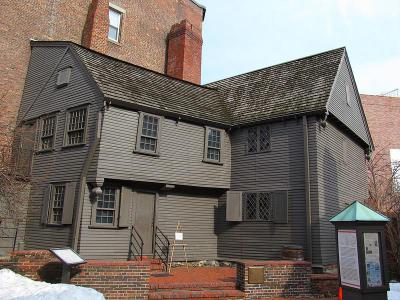
A small triangular enclave adorned with cobblestones and gaslights, North Square stands out as one of Boston's most historically significant and aesthetically appealing corners. Here, eateries take a back seat to the Paul Revere House, which holds the distinction of being downtown Boston's oldest residential address, located at 19 North Square. Paul Revere, a lifelong North Ender, called this place home from 1770 to 1800, with the exception of much of 1775 when he was in hiding from the British in Watertown.
Originally built around 1680, the small Tudor-style structure, constructed with post-and-beam framing, underwent various uses over the years, including stints as a grocery store, tenement, and cigar factory. In 1908, it was painstakingly restored to its 17th-century appearance (remarkably, 90% of the framework is original). The house stands on the site where the grander residence of Puritan leader Increase Mather (father of Cotton Mather) once stood before it was destroyed in the Great Fire of 1676.
While the building's significance lies more in its historical longevity than its architectural grandeur, its third-floor Elizabethan-style overhang and leaded windowpanes provide a nice contrast to the surrounding red-brick buildings. Upstairs, you can explore examples of Revere's handcrafted silverware, worth a look for their craftsmanship and historical value. The museum also hosts a series of compact yet thought-provoking rotating exhibitions, shedding light on subjects such as the mythologizing of Revere's famous horseback ride.
Throughout the year, special events are organized, many of which are family-friendly. These events often feature period-costumed characters engaging in role-play, serving colonial-era treats like apple-cider cake, showcasing a silversmith practicing his craft, entertaining crowds with dulcimer music, or staging military reenactments in authentic period attire.
Originally built around 1680, the small Tudor-style structure, constructed with post-and-beam framing, underwent various uses over the years, including stints as a grocery store, tenement, and cigar factory. In 1908, it was painstakingly restored to its 17th-century appearance (remarkably, 90% of the framework is original). The house stands on the site where the grander residence of Puritan leader Increase Mather (father of Cotton Mather) once stood before it was destroyed in the Great Fire of 1676.
While the building's significance lies more in its historical longevity than its architectural grandeur, its third-floor Elizabethan-style overhang and leaded windowpanes provide a nice contrast to the surrounding red-brick buildings. Upstairs, you can explore examples of Revere's handcrafted silverware, worth a look for their craftsmanship and historical value. The museum also hosts a series of compact yet thought-provoking rotating exhibitions, shedding light on subjects such as the mythologizing of Revere's famous horseback ride.
Throughout the year, special events are organized, many of which are family-friendly. These events often feature period-costumed characters engaging in role-play, serving colonial-era treats like apple-cider cake, showcasing a silversmith practicing his craft, entertaining crowds with dulcimer music, or staging military reenactments in authentic period attire.
10) Old North Church (must see)
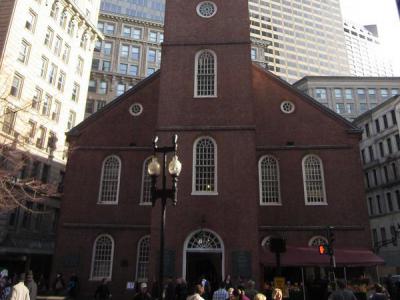
Few places in Boston possess the iconic significance of the modest yet dignified Old North Church, which stands proudly above the uniform red-brick buildings that surround it. Erected in 1723, it is Boston's oldest church building, instantly recognizable by its towering 191-foot steeple. The weather vane crowning its pinnacle is the original colonial one, although the steeple itself is a reconstruction. Both the original steeple, in 1804, and its replacement, in 1954, succumbed to hurricanes.
However, it was not the steeple but a pair of lanterns that etched the church's place in history. On the night of April 18, 1775, the church sexton, Robert Newman, is said to have hung two lanterns inside the church, signaling to the colonial militia the movement of British forces from Boston Common with the famous message, "One if by land, two if by sea". This signal was meant for the colonial militia in Charlestown, as a contingency plan in case Paul Revere's crossing of the Charles River was unsuccessful.
Revere had already received word of the impending British movement and was en route to Lexington when the lanterns were lit, enlisting Newman's help to alert Charlestown in the event his mission was compromised. As it turned out, both Revere and fellow rider William Dawes were detained by British patrols, and only Dr. Samuel Prescott, the lesser-known third rider of the night, successfully reached Concord.
Inside the church, visitors encounter a spotlessly white and well-lit interior, thanks to Palladian windows behind the pulpit. Other notable features include twelve bricks embedded in the vestibule wall from a prison cell in Boston, England, where early Pilgrims were incarcerated. Additionally, there are four 17th-century cherubim near the organ, which were plundered from a French vessel. Churchgoers can even set their watches by the clock at the rear, dating back to 1726, making it the oldest working clock in an American public building.
The eight bells inside the belfry, open to the public during summer tours, were the first to be cast for the British Empire in North America and have since tolled the death of every U.S. president.
Some of Old North Church's most charming features can be found in several gardens outside the church itself. These include the small Washington Memorial Garden, adorned with commemorative plaques honoring past church members, and the inviting 18th-Century Garden, boasting terraces adorned with lilies, roses, and intriguing umbrella-shaped flowers fittingly known as archangels.
However, it was not the steeple but a pair of lanterns that etched the church's place in history. On the night of April 18, 1775, the church sexton, Robert Newman, is said to have hung two lanterns inside the church, signaling to the colonial militia the movement of British forces from Boston Common with the famous message, "One if by land, two if by sea". This signal was meant for the colonial militia in Charlestown, as a contingency plan in case Paul Revere's crossing of the Charles River was unsuccessful.
Revere had already received word of the impending British movement and was en route to Lexington when the lanterns were lit, enlisting Newman's help to alert Charlestown in the event his mission was compromised. As it turned out, both Revere and fellow rider William Dawes were detained by British patrols, and only Dr. Samuel Prescott, the lesser-known third rider of the night, successfully reached Concord.
Inside the church, visitors encounter a spotlessly white and well-lit interior, thanks to Palladian windows behind the pulpit. Other notable features include twelve bricks embedded in the vestibule wall from a prison cell in Boston, England, where early Pilgrims were incarcerated. Additionally, there are four 17th-century cherubim near the organ, which were plundered from a French vessel. Churchgoers can even set their watches by the clock at the rear, dating back to 1726, making it the oldest working clock in an American public building.
The eight bells inside the belfry, open to the public during summer tours, were the first to be cast for the British Empire in North America and have since tolled the death of every U.S. president.
Some of Old North Church's most charming features can be found in several gardens outside the church itself. These include the small Washington Memorial Garden, adorned with commemorative plaques honoring past church members, and the inviting 18th-Century Garden, boasting terraces adorned with lilies, roses, and intriguing umbrella-shaped flowers fittingly known as archangels.
11) USS 'Constitution' (must see)
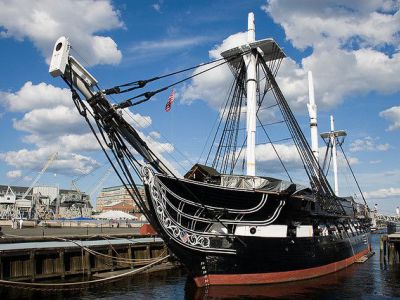
USS 'Constitution', named in honor of the United States Constitution by President George Washington, gained the famous moniker "Old Ironsides" owing to its remarkable 25-inch-thick hull at the waterline. In a pivotal moment during the War of 1812 against Great Britain, the ship engaged in a battle with HMS 'Guerrière', leaving the British vessel severely damaged. Witnessing British cannonballs seemingly bounce off USS 'Constitution's' formidable hull, a sailor reportedly exclaimed, "Huzzah! Her sides are made of iron!" Throughout the same conflict, the frigate captured numerous merchant ships and emerged victorious in confrontations with four other British warships. During the American Civil War, the 'Constitution' served as a training vessel for the U.S. Naval Academy.
Retired from active service in 1881, the 'Constitution' now serves the mission of promoting understanding and education about the Navy's contributions to peace and warfare. While the ship is typically docked at Pier 1 of the Boston Navy Yard, marking one end of the Freedom Trail, the USS 'Constitution' Museum is conveniently situated nearby within a restored shipyard building at the base of Pier 2..
Featuring nearly 2,000 artifacts and over 10,000 archival records related to the USS 'Constitution', the museum's exhibits ignite enthusiasm for maritime culture and naval service. Visitors of all ages can enjoy "All Hands on Deck: A Sailor's Life in 1812", an immersive experience that allows participants to scrub decks, climb aloft to furl a sail, partake in a meal of salted meat and ship's biscuit, and even retire to a hammock. History enthusiasts can delve into the ship's comprehensive history, from its construction to its pivotal battles.
Why You Should Visit:
To fully appreciate the world's oldest commissioned warship, with the opportunity to explore most of its spaces through a free guided tour. Meanwhile, the adjacent museum offers engaging exhibits and a souvenir shop for mementos and refreshments.
Tip:
While visiting, don't miss the Navy Yard Visitor Center and the USS 'Cassin Young', a World War II-era Fletcher-class destroyer.
For families with children, the museum's second floor offers interactive learning experiences.
Retired from active service in 1881, the 'Constitution' now serves the mission of promoting understanding and education about the Navy's contributions to peace and warfare. While the ship is typically docked at Pier 1 of the Boston Navy Yard, marking one end of the Freedom Trail, the USS 'Constitution' Museum is conveniently situated nearby within a restored shipyard building at the base of Pier 2..
Featuring nearly 2,000 artifacts and over 10,000 archival records related to the USS 'Constitution', the museum's exhibits ignite enthusiasm for maritime culture and naval service. Visitors of all ages can enjoy "All Hands on Deck: A Sailor's Life in 1812", an immersive experience that allows participants to scrub decks, climb aloft to furl a sail, partake in a meal of salted meat and ship's biscuit, and even retire to a hammock. History enthusiasts can delve into the ship's comprehensive history, from its construction to its pivotal battles.
Why You Should Visit:
To fully appreciate the world's oldest commissioned warship, with the opportunity to explore most of its spaces through a free guided tour. Meanwhile, the adjacent museum offers engaging exhibits and a souvenir shop for mementos and refreshments.
Tip:
While visiting, don't miss the Navy Yard Visitor Center and the USS 'Cassin Young', a World War II-era Fletcher-class destroyer.
For families with children, the museum's second floor offers interactive learning experiences.
12) Old State House (must see)
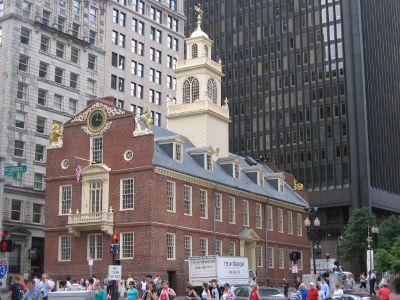
As the oldest surviving public building in Boston, this colonial-era landmark has one of the most easily recognizable facades in the city. Its gable is adorned with a brightly gilded lion and silver unicorn, symbols representing British imperial power. From 1713 until the Revolutionary period, this structure served as the seat of colonial government. After the British evacuated Boston in 1776, it continued to function as the center of the independent Commonwealth until its replacement on Beacon Hill was constructed.
An impassioned speech delivered by James Otis in the Council Chamber on the second floor ignited the pursuit of independence from Britain. Otis, initially a Crown appointee who later aligned with the colonial cause, vehemently opposed the Writs of Assistance, which granted the British the authority to inspect private property without restriction. Legend has it that, on certain nights, one can still hear echoes of his anti-British rhetoric, accompanied by the enthusiastic cheers of the crowd he galvanized.
The balcony overlooking State Street is as renowned as Otis's speech, as it was from here on July 18, 1776, that the Declaration of Independence was first publicly read in Boston, just after its arrival from Philadelphia. That very night, the lion and unicorn figures symbolizing British rule, which were mounted above the balcony, were torn down and burned in front of the Bunch of Grapes tavern; the current ones on display are replicas. In a gesture of goodwill, Queen Elizabeth II, the first British monarch to visit Boston since the Revolution, delivered a speech from the balcony during the American bicentennial celebrations in 1976.
Today, the site hosts a small yet comprehensive museum. The ground-level permanent exhibit, titled "Colony to Commonwealth", features a series of well-curated displays that chronicle Boston's pivotal role in inciting the Revolutionary War. Among the exhibits are remnants from Boston's infamous tea party, the royal arms plaque that once adorned Province House (the official residence of colonial governors), the flag used by the Sons of Liberty to announce their gatherings, a stylish jacket owned by (Founding Father) John Hancock, and Paul Revere's stirring engraving of the Boston Massacre, one of the most evocative images of the Revolutionary era. Additionally, every half-hour, a colonial "guest speaker" in character provides insights into early Boston life and answers questions for the audience.
An impassioned speech delivered by James Otis in the Council Chamber on the second floor ignited the pursuit of independence from Britain. Otis, initially a Crown appointee who later aligned with the colonial cause, vehemently opposed the Writs of Assistance, which granted the British the authority to inspect private property without restriction. Legend has it that, on certain nights, one can still hear echoes of his anti-British rhetoric, accompanied by the enthusiastic cheers of the crowd he galvanized.
The balcony overlooking State Street is as renowned as Otis's speech, as it was from here on July 18, 1776, that the Declaration of Independence was first publicly read in Boston, just after its arrival from Philadelphia. That very night, the lion and unicorn figures symbolizing British rule, which were mounted above the balcony, were torn down and burned in front of the Bunch of Grapes tavern; the current ones on display are replicas. In a gesture of goodwill, Queen Elizabeth II, the first British monarch to visit Boston since the Revolution, delivered a speech from the balcony during the American bicentennial celebrations in 1976.
Today, the site hosts a small yet comprehensive museum. The ground-level permanent exhibit, titled "Colony to Commonwealth", features a series of well-curated displays that chronicle Boston's pivotal role in inciting the Revolutionary War. Among the exhibits are remnants from Boston's infamous tea party, the royal arms plaque that once adorned Province House (the official residence of colonial governors), the flag used by the Sons of Liberty to announce their gatherings, a stylish jacket owned by (Founding Father) John Hancock, and Paul Revere's stirring engraving of the Boston Massacre, one of the most evocative images of the Revolutionary era. Additionally, every half-hour, a colonial "guest speaker" in character provides insights into early Boston life and answers questions for the audience.
