Custom Walk in Cadiz, Spain by jvlupo_7e878 created on 2025-06-15
Guide Location: Spain » Cadiz
Guide Type: Custom Walk
# of Sights: 14
Tour Duration: 4 Hour(s)
Travel Distance: 8.8 Km or 5.5 Miles
Share Key: V73FP
Guide Type: Custom Walk
# of Sights: 14
Tour Duration: 4 Hour(s)
Travel Distance: 8.8 Km or 5.5 Miles
Share Key: V73FP
How It Works
Please retrieve this walk in the GPSmyCity app. Once done, the app will guide you from one tour stop to the next as if you had a personal tour guide. If you created the walk on this website or come to the page via a link, please follow the instructions below to retrieve the walk in the app.
Retrieve This Walk in App
Step 1. Download the app "GPSmyCity: Walks in 1K+ Cities" on Apple App Store or Google Play Store.



Step 2. In the GPSmyCity app, download(or launch) the guide "Cadiz Map and Walking Tours".
Step 3. Tap the menu button located at upper right corner of the "Walks" screen and select "Retrieve custom walk". Enter the share key: V73FP
1) Mercado Central (Central Market) (must see)
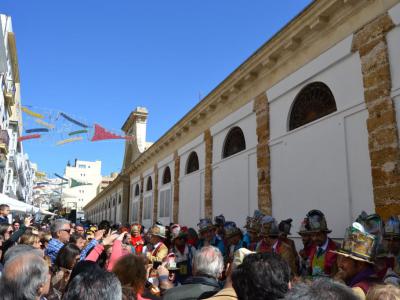
Once just a humble farmers' market, the Central Market of Cádiz decided to upgrade in the late 1890s. Enter Torcuato Benjumeda, the city’s go-to architect (he also did the Town Hall and the Church of Saint Joseph, no big deal), who designed the new market like a Roman forum with snacks: an open quadrangle lined with sturdy Doric columns, giving grocery shopping a touch of classical solemnity.
Part of the market was built right over the old Convent of the Shoeless-so while you're picking out seafood, you're also standing on a bit of sacred ground. That central space is now the main pavilion, flanked by two additional columned wings added to keep up with the city’s growing appetite for produce.
A major facelift in the early 2000s brought the market into the modern era without losing its historic charm. Today, there are over 170 stalls hawking everything from fresh seafood to baked goods, vegetables, meat, and just enough quirky side stands to keep you guessing-yes, you can pick up pickles, paper bags, and fishing gear, all in one go.
The central pavilion is a seafood lover’s dream, with counters piled high with octopus, tuna, shrimp, and whatever else the Atlantic decided to deliver that morning. Step into the left wing, and you’ll find the Gastronomic Corner, a foodie haven where locals and tourists alike graze on Cádiz’s greatest hits. The right wing leans carnivorous, featuring butchers and the occasional oddball veggie stand.
List of highlights from the tasting lineup that are worth trying out are: El Comado does wine and meats like it’s hosting your birthday party. La Tapería de Luna serves up soups and tapas that feel like home. Gadisushi delivers Japanese precision with Andalusian flair. Gadesbeer keeps things hoppy. La Sartén takes eggs and tortillas seriously. And Queso 360? Cheese from every corner of the planet.
The Central Market is a culinary microcosm of Cádiz, dressed in columns and ready to feed you.
Part of the market was built right over the old Convent of the Shoeless-so while you're picking out seafood, you're also standing on a bit of sacred ground. That central space is now the main pavilion, flanked by two additional columned wings added to keep up with the city’s growing appetite for produce.
A major facelift in the early 2000s brought the market into the modern era without losing its historic charm. Today, there are over 170 stalls hawking everything from fresh seafood to baked goods, vegetables, meat, and just enough quirky side stands to keep you guessing-yes, you can pick up pickles, paper bags, and fishing gear, all in one go.
The central pavilion is a seafood lover’s dream, with counters piled high with octopus, tuna, shrimp, and whatever else the Atlantic decided to deliver that morning. Step into the left wing, and you’ll find the Gastronomic Corner, a foodie haven where locals and tourists alike graze on Cádiz’s greatest hits. The right wing leans carnivorous, featuring butchers and the occasional oddball veggie stand.
List of highlights from the tasting lineup that are worth trying out are: El Comado does wine and meats like it’s hosting your birthday party. La Tapería de Luna serves up soups and tapas that feel like home. Gadisushi delivers Japanese precision with Andalusian flair. Gadesbeer keeps things hoppy. La Sartén takes eggs and tortillas seriously. And Queso 360? Cheese from every corner of the planet.
The Central Market is a culinary microcosm of Cádiz, dressed in columns and ready to feed you.
2) Yacimiento Arqueologico Gadir (Gadir Archaeological Site)
As a reminder, Cádiz is ancient-with-receipts old. By the time Hannibal was packing up elephants for the Second Punic War, Cádiz had already been around for about 700 years. That’s right-while much of Europe was still figuring out the wheel, the Phoenicians had settled here, around 1000 BC. They called it Gadir, which went on to become part of the “Phoenician Belt” encircling the Strait of Gibraltar-basically the VIP section of ancient Mediterranean trade.
Fast forward a few thousand years and cue the surprise twist: during routine renovations of the Noricum Puppet Theatre, someone hit archaeological gold. In 2014, the newly uncovered Gadir Archaeological Site was opened to the public, instantly becoming one of Cádiz’s most jaw-dropping attractions. It’s located on what was once the highest point of ancient Erytheia-the smallest island in the Cádiz archipelago and, apparently, the perfect place to bury history under a puppet stage.
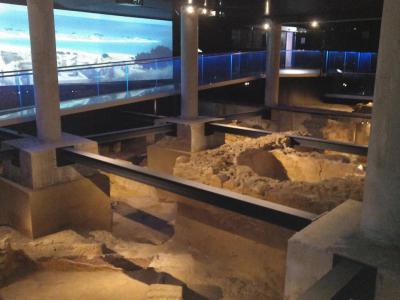
Today, Gadir is a museum-meets-time machine. The site is cleverly organized into layers of history, with bilingual guides and glass walkways that let you literally walk over 3,000 years of city life without tripping over the past. From above, you can peer into two levels of remains. The lower level reveals eight Phoenician homes and streets, still holding onto their layout like it’s 900 BC and nothing’s changed but the tourists.
The upper level serves up Roman-era life: a fish-processing factory (because even back then, Cádiz had strong seafood game), a fabric-dyeing workshop, and a cistern-all from the 2nd century BC. Oh, and then there’s Mattan-the nickname for a young man whose skeleton was found in a house destroyed by fire in the 7th century BC. His story is truly tragic, but his nickname – legendary.
Cadiz is showing off at this point. You came for the beaches and the tapas; you stayed because the sidewalk cracked open and said, “Hey, want to see what we were doing three millennia ago?”
Fast forward a few thousand years and cue the surprise twist: during routine renovations of the Noricum Puppet Theatre, someone hit archaeological gold. In 2014, the newly uncovered Gadir Archaeological Site was opened to the public, instantly becoming one of Cádiz’s most jaw-dropping attractions. It’s located on what was once the highest point of ancient Erytheia-the smallest island in the Cádiz archipelago and, apparently, the perfect place to bury history under a puppet stage.
Today, Gadir is a museum-meets-time machine. The site is cleverly organized into layers of history, with bilingual guides and glass walkways that let you literally walk over 3,000 years of city life without tripping over the past. From above, you can peer into two levels of remains. The lower level reveals eight Phoenician homes and streets, still holding onto their layout like it’s 900 BC and nothing’s changed but the tourists.
The upper level serves up Roman-era life: a fish-processing factory (because even back then, Cádiz had strong seafood game), a fabric-dyeing workshop, and a cistern-all from the 2nd century BC. Oh, and then there’s Mattan-the nickname for a young man whose skeleton was found in a house destroyed by fire in the 7th century BC. His story is truly tragic, but his nickname – legendary.
Cadiz is showing off at this point. You came for the beaches and the tapas; you stayed because the sidewalk cracked open and said, “Hey, want to see what we were doing three millennia ago?”
3) Torre Tavira (Tavira Tower) (must see)
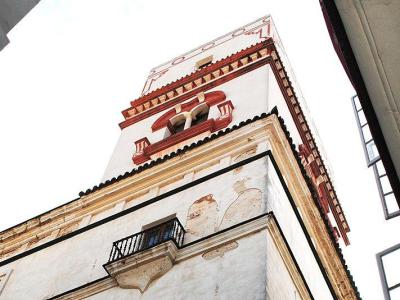
The Tavira Tower isn’t just another old lookout-it’s Cádiz’s version of a rooftop with a 300-year-old guest list. At 149 feet above sea level, it holds the title of tallest spot in the Old City, giving anyone at the top a serious advantage in the 18th-century game of “What ship is that?”
Originally part of The Palace of the Marquises of Recaño , the tower came with all the aristocratic bells and whistles. Cádiz was booming from its trade with the Americas and needed more than your average harbor patrol. All of this resulted in a skyline punctuated by over 126 watchtowers, with Tavira Tower sitting at the very top.
Built in 1780, Tavira Tower was always meant to be the city’s official lookout. And who better to man the post than Don Antonio Tavira, the first watchman and the man who gave the tower its name? He didn’t just climb the stairs-he left a legacy.
Today, Tavira Tower still keeps an eye on things-with a twist. Step into the Camera Obscura, and a guide will darken the room and light up your curiosity. Thanks to an old-school optical system (think spy tech meets science fair), real-time images of the city and sea are projected onto a circular table. It’s like Google Earth, but powered by mirrors and 18th-century ingenuity. The show lasts about 20 minutes, long enough to be amazed but short enough to still grab a tapa afterward.
The other rooms of the tower house exhibitions on Cádiz’s golden age, the evolution of the camera obscura, and a star-studded chapter on Spain’s 1812 Constitution-yes, the country’s very first, penned right here in Cádiz.
So climb up, squint out, and time-travel a little. Tavira Tower offers the best views in town-and not just the physical kind.
Originally part of The Palace of the Marquises of Recaño , the tower came with all the aristocratic bells and whistles. Cádiz was booming from its trade with the Americas and needed more than your average harbor patrol. All of this resulted in a skyline punctuated by over 126 watchtowers, with Tavira Tower sitting at the very top.
Built in 1780, Tavira Tower was always meant to be the city’s official lookout. And who better to man the post than Don Antonio Tavira, the first watchman and the man who gave the tower its name? He didn’t just climb the stairs-he left a legacy.
Today, Tavira Tower still keeps an eye on things-with a twist. Step into the Camera Obscura, and a guide will darken the room and light up your curiosity. Thanks to an old-school optical system (think spy tech meets science fair), real-time images of the city and sea are projected onto a circular table. It’s like Google Earth, but powered by mirrors and 18th-century ingenuity. The show lasts about 20 minutes, long enough to be amazed but short enough to still grab a tapa afterward.
The other rooms of the tower house exhibitions on Cádiz’s golden age, the evolution of the camera obscura, and a star-studded chapter on Spain’s 1812 Constitution-yes, the country’s very first, penned right here in Cádiz.
So climb up, squint out, and time-travel a little. Tavira Tower offers the best views in town-and not just the physical kind.
4) Playa de La Caleta (La Caleta Beach) (must see)
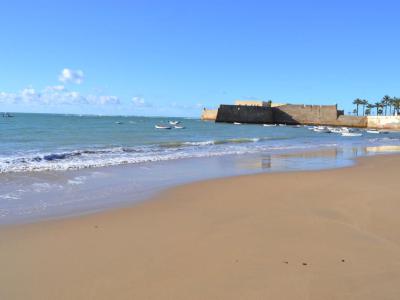
There are over 66 beaches dotting the island, but let’s be honest-La Caleta steals the spotlight. Nestled between the Castle of Santa Catalina and the Castle of San Sebastian, this little slice of paradise doesn’t just rest on its laurels-it proudly waves its blue flag every year, flaunting sparkling clean waters and pristine facilities.
It’s popular, to say the least, so don’t expect a secluded getaway-but hey, when you’ve got sunsets that can stop traffic and views that practically scream “Instagram,” who’s complaining?
The two castles that flank the beach are certainly impressive-no surprise there. But if you’re after true eye candy, head to the Spa of Our Lady of La Palma and Real. Built in the early 20th century, it was once a neglected relic, but it’s been resurrected and is now home to the Subaquatic Archaeology Centre of the Andalusian Historical Institute. Because, apparently, even spas need a little depth.
Historically speaking, La Caleta was once the link between the two islands of ancient Cadiz. Phoenician boats landed here, and let’s just say they didn’t just drop off some fish-this beach is practically built on history. From ancient shipwrecks to buried treasures, this is the birthplace of Cádiz.
It’s not just history buffs who are drawn to La Caleta-the beach has also served as a movie star. You’ve seen it in 007’s James Bond: Die Another Day. The scene with Halle Berry in a bikini and Pierce Brosnan sipping a mojito at La Habana? Spoiler alert-it was shot right here in La Caleta, Cádiz. So if you’re looking for a place that’s part historical treasure and part silver-screen legend, grab your sunscreen and head to La Caleta-where the past, present, and movie magic collide.
It’s popular, to say the least, so don’t expect a secluded getaway-but hey, when you’ve got sunsets that can stop traffic and views that practically scream “Instagram,” who’s complaining?
The two castles that flank the beach are certainly impressive-no surprise there. But if you’re after true eye candy, head to the Spa of Our Lady of La Palma and Real. Built in the early 20th century, it was once a neglected relic, but it’s been resurrected and is now home to the Subaquatic Archaeology Centre of the Andalusian Historical Institute. Because, apparently, even spas need a little depth.
Historically speaking, La Caleta was once the link between the two islands of ancient Cadiz. Phoenician boats landed here, and let’s just say they didn’t just drop off some fish-this beach is practically built on history. From ancient shipwrecks to buried treasures, this is the birthplace of Cádiz.
It’s not just history buffs who are drawn to La Caleta-the beach has also served as a movie star. You’ve seen it in 007’s James Bond: Die Another Day. The scene with Halle Berry in a bikini and Pierce Brosnan sipping a mojito at La Habana? Spoiler alert-it was shot right here in La Caleta, Cádiz. So if you’re looking for a place that’s part historical treasure and part silver-screen legend, grab your sunscreen and head to La Caleta-where the past, present, and movie magic collide.
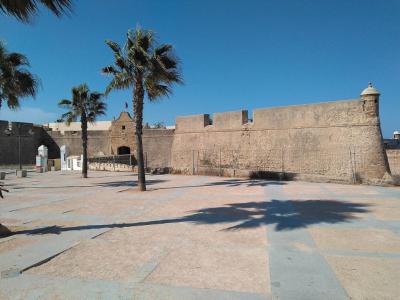
5) Castillo de Santa Catalina (Castle of Santa Catalina)
In 1596, Cádiz found itself on the wrong end of a very bad visit from the Anglo-Dutch party crashers led by the Duke of Essex and Admiral Howard. These weren’t your average tourists-they looted the city, torched the Spanish fleet, and left Cádiz smoldering in ruins. The damage was so severe that Spain, quite literally, went broke the next year. Oops.
One witty chronicler summed it up best: Spain had “all heads of command and none were feet that would follow.” In short: too many bosses, not enough hustle. King Philip, less than amused, launched not one but two more armadas in a fit of salty vengeance. Both failed. Cádiz was still in pieces. But out of the ashes came something solid: hope. And hope, as it turns out, looked a lot like a fortress.
Construction of the Castle of Santa Catalina began in 1598, part therapy, part defense strategy. The original design came from Cristóbal de Rojas. Sadly, Rojas didn’t live to see it finished; that job went to Ignacio de Sala, who wrapped it up in 1621, just in time for Philip III to pat himself on the back.
Perched dramatically at the tip of La Caleta Beach, the fortress was a prototype for colonial forts in Cuba, Mexico, and Puerto Rico. With pavilions, cisterns, barracks, sentry boxes, a dry moat, and a state of the art drawbridge, it checks all the classic fortress boxes. The views from the battlements don't disappoint either so you might forget they once housed military prisoners.
These days, Santa Catalina has swapped cannons for culture. It now hosts exhibitions, concerts, and the Alcances Documentary Film Festival-now that's a transformation worth discovering.
One witty chronicler summed it up best: Spain had “all heads of command and none were feet that would follow.” In short: too many bosses, not enough hustle. King Philip, less than amused, launched not one but two more armadas in a fit of salty vengeance. Both failed. Cádiz was still in pieces. But out of the ashes came something solid: hope. And hope, as it turns out, looked a lot like a fortress.
Construction of the Castle of Santa Catalina began in 1598, part therapy, part defense strategy. The original design came from Cristóbal de Rojas. Sadly, Rojas didn’t live to see it finished; that job went to Ignacio de Sala, who wrapped it up in 1621, just in time for Philip III to pat himself on the back.
Perched dramatically at the tip of La Caleta Beach, the fortress was a prototype for colonial forts in Cuba, Mexico, and Puerto Rico. With pavilions, cisterns, barracks, sentry boxes, a dry moat, and a state of the art drawbridge, it checks all the classic fortress boxes. The views from the battlements don't disappoint either so you might forget they once housed military prisoners.
These days, Santa Catalina has swapped cannons for culture. It now hosts exhibitions, concerts, and the Alcances Documentary Film Festival-now that's a transformation worth discovering.
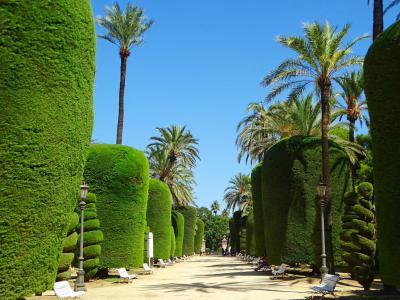
6) Parque Genoves (Genoves Park) (must see)
Genovés Park is the Old City's answer to “How green can you get?”-a leafy, 30,000-square-meter escape hatch from Cádiz’s cobbled ocean. Born in 1892 and holding the title of “biggest urban oasis” until Celestino Mutis Park snatched the crown in 2012, it still reigns supreme in charm and botanical bragging rights.
Back in the day, this patch of land was charmingly known as the “Walk of Parsley”-a windswept military no-man’s-land wedged between the barracks of Composanto and La Bomba. Not exactly picnic material. That all changed when someone had the bright idea to swap soldiers for shrubbery. Today, visitors enter through Rocío Jurado Square and stroll down an avenue flanked by manicured flowerbeds.
And what flowerbeds! Nestled between date palms and cypress trees, oyster stone fountains gurgle away, surrounded by over 150 species of exotic flora. There’s a Canary Islands dragon tree looking mildly suspicious, a New Zealand Christmas tree flexing its floral muscles, and a Monkey Puzzle Tree that seems just as confused as everyone else.
Kids love the whimsical waterfall, grotto, and the delightfully odd “Children Under the Umbrella” sculpture. Bronze tributes also abound: from local legend Manuel de Falla to Trafalgar’s epic sea squabble, this park doesn’t skimp on cultural seasoning.
With wrought-iron gates, Victorian-style lampposts, and a kiosk straight out of a Dickens novel, Genovés Park is part garden, part time machine. Don’t miss the open-air José María Pemán Summer Theatre, where Cádiz’s drama queens (and kings) take to the stage under the stars.
Back in the day, this patch of land was charmingly known as the “Walk of Parsley”-a windswept military no-man’s-land wedged between the barracks of Composanto and La Bomba. Not exactly picnic material. That all changed when someone had the bright idea to swap soldiers for shrubbery. Today, visitors enter through Rocío Jurado Square and stroll down an avenue flanked by manicured flowerbeds.
And what flowerbeds! Nestled between date palms and cypress trees, oyster stone fountains gurgle away, surrounded by over 150 species of exotic flora. There’s a Canary Islands dragon tree looking mildly suspicious, a New Zealand Christmas tree flexing its floral muscles, and a Monkey Puzzle Tree that seems just as confused as everyone else.
Kids love the whimsical waterfall, grotto, and the delightfully odd “Children Under the Umbrella” sculpture. Bronze tributes also abound: from local legend Manuel de Falla to Trafalgar’s epic sea squabble, this park doesn’t skimp on cultural seasoning.
With wrought-iron gates, Victorian-style lampposts, and a kiosk straight out of a Dickens novel, Genovés Park is part garden, part time machine. Don’t miss the open-air José María Pemán Summer Theatre, where Cádiz’s drama queens (and kings) take to the stage under the stars.
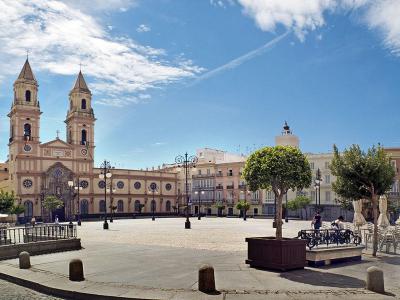
7) Plaza de San Antonio (San Antonio Square)
San Antonio Square has long been one of Cádiz’s beating hearts. Back in the day it was called the Field of Rockrose, but its fortunes changed in the 1600s when a small hermitage to Saint Antonio popped up-and gave the square its current name. A nearby well kept Cádiz hydrated for years, making this more than just a meeting spot; it was survival central.
By the 18th century, the square had grown into a proper hub for trade, faith, and politics. It was here that Spain’s landmark Constitution of 1812 was proclaimed-and, not so long after, where the liberal movement of 1820 met its violent end. In short, if Cádiz had breaking news, chances are it was announced-or crushed-right here.
The architecture around the square keeps the drama going. The façades show a neat uniformity, except for the slimmer outline of the Church of Saint Antonio, which still draws the eye. The Gaditano Casino, an 18th-century Baroque beauty, was later remodeled during the reign of Queen Isabel II, giving it a 19th-century makeover that mixed Romantic and revival styles. Step inside and you’ll also find Moorish-inspired decorations added in 1890.
Then there’s the old Aramburu Bank, sporting a white marble front from the 1700s but modernized with a splash of early 20th-century style. Add to that the House Museum of writer José María Pemán, once the home of Cádiz’s celebrated literary figure, and the square becomes part open-air gallery, part history book.
Today, San Antonio Square is more than a patch of paving stones-it’s where Cádiz layers faith, politics, and artistry into one lively setting. Sit at a café, look up at the façades, and you’re not just in a square-you’re sitting in the middle of four centuries of stories.
By the 18th century, the square had grown into a proper hub for trade, faith, and politics. It was here that Spain’s landmark Constitution of 1812 was proclaimed-and, not so long after, where the liberal movement of 1820 met its violent end. In short, if Cádiz had breaking news, chances are it was announced-or crushed-right here.
The architecture around the square keeps the drama going. The façades show a neat uniformity, except for the slimmer outline of the Church of Saint Antonio, which still draws the eye. The Gaditano Casino, an 18th-century Baroque beauty, was later remodeled during the reign of Queen Isabel II, giving it a 19th-century makeover that mixed Romantic and revival styles. Step inside and you’ll also find Moorish-inspired decorations added in 1890.
Then there’s the old Aramburu Bank, sporting a white marble front from the 1700s but modernized with a splash of early 20th-century style. Add to that the House Museum of writer José María Pemán, once the home of Cádiz’s celebrated literary figure, and the square becomes part open-air gallery, part history book.
Today, San Antonio Square is more than a patch of paving stones-it’s where Cádiz layers faith, politics, and artistry into one lively setting. Sit at a café, look up at the façades, and you’re not just in a square-you’re sitting in the middle of four centuries of stories.
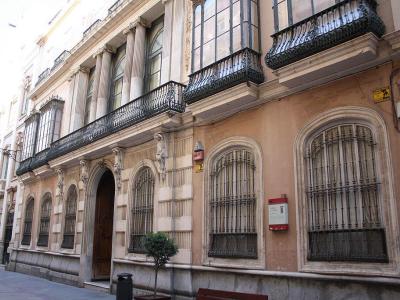
8) Palacio de Mora (Mora Palace)
The Mora Palace, stands out in the historic center, being a fantastic example of 19th-century Isabelline architecture. Designed by architect Juan de la Vega y Correa and completed in 1862, the palace was inaugurated with a gala presided over by Queen Isabella II.
The building’s façade is divided into three parts, with a central doorway topped by a prominent marble balcony supported by sculpted figures. Decorative iron terraces and curved balconies, especially along Ancha Street, enhance its visual appeal, while enclosed wooden and glass galleries known as “cierros” add a characteristic local touch. Inside, the layout centers around a main courtyard, complemented by smaller rear patios and a garden.
Over time, the residence passed through generations of the Aramburu and Carranza families, before eventually being repurposed. Restored in 1997, the building preserves many of its original modernist interior elements, including stained glass and decorative flourishes.
Designated a Cultural Heritage Site in 1981, the Mora Palace remains one of the most distinguished examples of 19th-century civil architecture.
The building’s façade is divided into three parts, with a central doorway topped by a prominent marble balcony supported by sculpted figures. Decorative iron terraces and curved balconies, especially along Ancha Street, enhance its visual appeal, while enclosed wooden and glass galleries known as “cierros” add a characteristic local touch. Inside, the layout centers around a main courtyard, complemented by smaller rear patios and a garden.
Over time, the residence passed through generations of the Aramburu and Carranza families, before eventually being repurposed. Restored in 1997, the building preserves many of its original modernist interior elements, including stained glass and decorative flourishes.
Designated a Cultural Heritage Site in 1981, the Mora Palace remains one of the most distinguished examples of 19th-century civil architecture.
9) Plaza de España (Square of Spain)
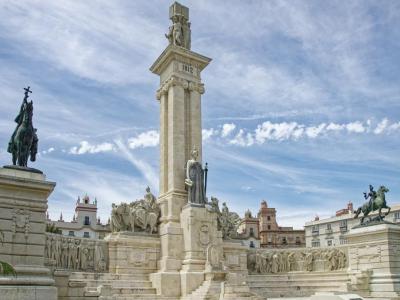
Square of Spain is Cádiz’s mix of sunshine, history, and political drama-basically an outdoor living room with better architecture. Its centerpiece is a gleaming white monument to the Spanish Constitution of 1812, one of Europe’s first written constitutions and a big deal for Cádiz, which hosted its signing. The design is no slouch, representing two bronze horsemen symbolizing war and peace, plus a heroic Hercules, the city’s mythic mascot, keeping watch over it all.
But the monument isn’t the only show here. The Customs Palace, with its imposing neoclassical façade and heavy columns, still struts its stuff as the provincial government’s headquarters. Then there’s the House of the Five Towers-literally five connected houses, each topped with its own little watchtower. Built in the late 1700s, it’s a textbook example of Cádiz architecture on the cusp of change, shifting from elaborate Baroque to the cleaner lines of Neoclassicism.
On the north side, the San Carlos neighborhood frames the square with elegant 18th-century homes, their façades reflecting the city’s golden age of trade and power. All of it sits around leafy parkland, where benches invite you to imagine what life looked like here two centuries ago.
The best part about the square is you don’t need a history degree to enjoy it-just a good pair of sunglasses and maybe an ice cream in hand.
But the monument isn’t the only show here. The Customs Palace, with its imposing neoclassical façade and heavy columns, still struts its stuff as the provincial government’s headquarters. Then there’s the House of the Five Towers-literally five connected houses, each topped with its own little watchtower. Built in the late 1700s, it’s a textbook example of Cádiz architecture on the cusp of change, shifting from elaborate Baroque to the cleaner lines of Neoclassicism.
On the north side, the San Carlos neighborhood frames the square with elegant 18th-century homes, their façades reflecting the city’s golden age of trade and power. All of it sits around leafy parkland, where benches invite you to imagine what life looked like here two centuries ago.
The best part about the square is you don’t need a history degree to enjoy it-just a good pair of sunglasses and maybe an ice cream in hand.
10) Plaza de San Juan de Dios (Saint John of God Square) and Old Town Hall
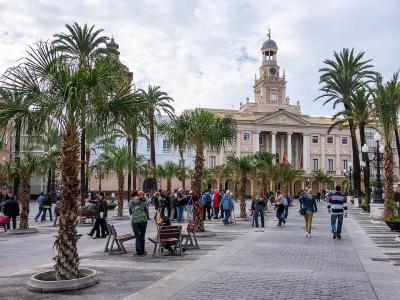
Saint John of God Square-or as locals call it, La Corredera-is Cádiz’s front porch, living room, and civic stage all rolled into one. Originally laid out in the 15th century, when Columbus was still just doodling ship ideas, the square was built just outside the old city walls. Back then, Cádiz was a cluster of sandy islands, and this area was a sea-splashed stretch of reclaimed land.
Entry came via the sea-facing gate, now charmingly known as the Arch of the People-because nothing says “democratic access” like a once-fortified gateway.
By the 18th century, things were getting crowded, and the old Consistorial Houses-essentially the city’s early bureaucratic digs-were torn down to make way for something a bit grander. The current Town Hall took shape, with a Neoclassical heart and, in 1865, a bit of Gothic flair. Moreover, an Isabelline-style façade was added, topped with a pediment that features none other than Hercules, flexing his mythological credentials as the alleged founder of Gadeira-Cádiz’s ancient alter ego.
And if that name sounds old, it should. By the time Hannibal showed up during the Second Punic War (218 to 201 BC), Cádiz was already centuries into its coastal career. As far as ancient cities go, Cádiz doesn’t just have history-it remembers it.
Today, the square is less about defending the harbor and more about sipping coffee under the palms while the Town Hall keeps an eye on things-just as it’s done for generations.
Entry came via the sea-facing gate, now charmingly known as the Arch of the People-because nothing says “democratic access” like a once-fortified gateway.
By the 18th century, things were getting crowded, and the old Consistorial Houses-essentially the city’s early bureaucratic digs-were torn down to make way for something a bit grander. The current Town Hall took shape, with a Neoclassical heart and, in 1865, a bit of Gothic flair. Moreover, an Isabelline-style façade was added, topped with a pediment that features none other than Hercules, flexing his mythological credentials as the alleged founder of Gadeira-Cádiz’s ancient alter ego.
And if that name sounds old, it should. By the time Hannibal showed up during the Second Punic War (218 to 201 BC), Cádiz was already centuries into its coastal career. As far as ancient cities go, Cádiz doesn’t just have history-it remembers it.
Today, the square is less about defending the harbor and more about sipping coffee under the palms while the Town Hall keeps an eye on things-just as it’s done for generations.
11) Playa Victoria (Victoria Beach) (must see)
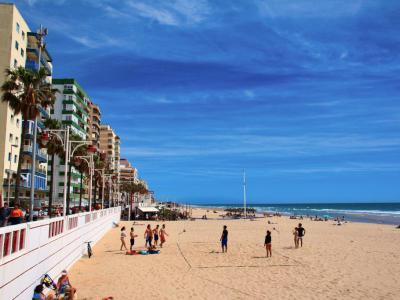
Victoria Beach (Playa Victoria) is a stunning urban beach located on the Costa de la Luz, just outside the city of Cádiz. The beach stretches for approximately 3 kilometers along the Atlantic Ocean coast, making it one of the longest beaches in the area. It has earned the reputation of being the best urban beach in Europe and has continuously received the Blue Flag certification for cleanliness since 1987. Victoria Beach was also the first beach in Spain to receive an environmental management certification and Q for Tourism Quality, highlighting its commitment to sustainability.
The beach boasts near-white sands and crystal-clear waters facing out into the Atlantic, with some rocks beneath the waves to be aware of. Public facilities on the beach include showers, lifeguard stations, football pitches, goalposts for beach rugby, and volleyball nets. Visitors can also rent sunbeds, and umbrellas, and peddle boats to enhance their beach experience.
One of the most iconic features of Victoria Beach is the street vendors who sell a variety of snacks, drinks, and clothing accessories. They are a common sight on the beach, and visitors can enjoy a cold beer, soft drinks, or a bag of chips while soaking up the sun. Some vendors also sell cooked seafood, such as shrimps, crabs, and prawns, and handmade jewelry.
In addition to the street vendors, Victoria Beach is home to a vibrant night market that offers artisan products to passers-by. The promenade alongside the beach is lined with hotels, bars, restaurants, and nightclubs, making it a popular destination for locals and tourists alike.
During the summer months, Victoria Beach has a dedicated tourist information office with English-speaking staff to assist visitors. The beach also hosts an outdoor cinema, providing a unique experience for those who want to catch a movie under the stars. With its stunning natural beauty, wide range of facilities, and cultural offerings, Victoria Beach is a must-visit destination for anyone traveling to Cadiz.
The beach boasts near-white sands and crystal-clear waters facing out into the Atlantic, with some rocks beneath the waves to be aware of. Public facilities on the beach include showers, lifeguard stations, football pitches, goalposts for beach rugby, and volleyball nets. Visitors can also rent sunbeds, and umbrellas, and peddle boats to enhance their beach experience.
One of the most iconic features of Victoria Beach is the street vendors who sell a variety of snacks, drinks, and clothing accessories. They are a common sight on the beach, and visitors can enjoy a cold beer, soft drinks, or a bag of chips while soaking up the sun. Some vendors also sell cooked seafood, such as shrimps, crabs, and prawns, and handmade jewelry.
In addition to the street vendors, Victoria Beach is home to a vibrant night market that offers artisan products to passers-by. The promenade alongside the beach is lined with hotels, bars, restaurants, and nightclubs, making it a popular destination for locals and tourists alike.
During the summer months, Victoria Beach has a dedicated tourist information office with English-speaking staff to assist visitors. The beach also hosts an outdoor cinema, providing a unique experience for those who want to catch a movie under the stars. With its stunning natural beauty, wide range of facilities, and cultural offerings, Victoria Beach is a must-visit destination for anyone traveling to Cadiz.
12) Playa de Santa Maria del Mar (Santa Maria del Mar Beach)
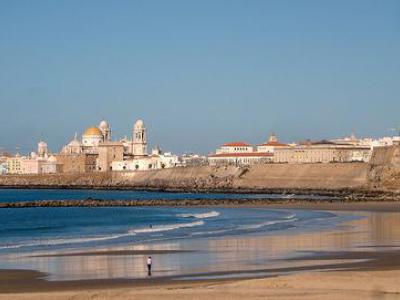
The Santa Maria del Mar Beach is a charming and intimate beach, nestled just outside the historic city walls along the Costa de la Luz. Framed by two stone piers that give it a distinctive shell-like shape, this beach offers a calm, sheltered stretch of golden sand with great views of the old town. Though smaller than its neighboring Victoria Beach, it stands out for its cleanliness, accessibility, and peaceful atmosphere.
The beach can be reached via spiral staircases and ramps that descend from the coastal promenade, making it easily accessible for most visitors. Nearby chiringuitos and surrounding cafés and shops add convenience and local flavor.
The beach can be reached via spiral staircases and ramps that descend from the coastal promenade, making it easily accessible for most visitors. Nearby chiringuitos and surrounding cafés and shops add convenience and local flavor.
13) Teatro Romano (Roman Theatre)
The Roman Theatre of Cádiz-also known as the Balbi Theatre-is proof that even in ancient times, Cádiz knew how to put on a show. Unearthed in 1980 after centuries of playing hide-and-seek beneath the medieval city, this 1st-century BC structure was built around 70 BC, back when the Roman Empire was still figuring out how to get the better of the Greeks.
The brains (and probably the ego) behind it? Lucius Cornelius Balbus the Elder, a Cádiz-born Roman politician, friend of Julius Caesar. Along with his nephew, Balbus the Younger, he had big dreams of expanding Gades-today’s Cádiz-into a gleaming Neapolis, or “New City.” So far, we’ve found their theatre and signs of an amphitheater, suggesting these guys were building more than just infrastructure-they were building a vibe.
By the end of the 3rd century AD, though, the curtain had dropped. The theatre was abandoned, and over time it was scavenged for stone, turned into a stable, a storehouse, and even a medieval apartment complex. Eventually, the ruins became the foundation for a Moorish fort aptly called the Castle of the Theatre-because sometimes history just layers itself like a lasagna.
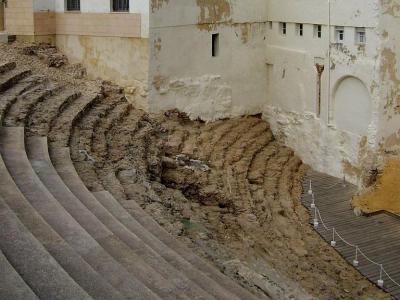
Even partially excavated, this site is considered one of the oldest and possibly the largest Roman theatres in Spain. It features a classic horseshoe-shaped auditorium with parabolic tiered seating and a vaulted distribution gallery hidden beneath. The outer wall, made from finely cut ashlar stone, it's as imposing as ever.
The modern Theatre Visitors' Center is your backstage pass to the past. Inside, you’ll find detailed models and exhibits covering three acts: the Theatre of Neapolis, the Castle of the Theatre, and the original Theatre of Balbus. Spoiler: there’s no popcorn, but the ruins do all the storytelling you need.
The brains (and probably the ego) behind it? Lucius Cornelius Balbus the Elder, a Cádiz-born Roman politician, friend of Julius Caesar. Along with his nephew, Balbus the Younger, he had big dreams of expanding Gades-today’s Cádiz-into a gleaming Neapolis, or “New City.” So far, we’ve found their theatre and signs of an amphitheater, suggesting these guys were building more than just infrastructure-they were building a vibe.
By the end of the 3rd century AD, though, the curtain had dropped. The theatre was abandoned, and over time it was scavenged for stone, turned into a stable, a storehouse, and even a medieval apartment complex. Eventually, the ruins became the foundation for a Moorish fort aptly called the Castle of the Theatre-because sometimes history just layers itself like a lasagna.
Even partially excavated, this site is considered one of the oldest and possibly the largest Roman theatres in Spain. It features a classic horseshoe-shaped auditorium with parabolic tiered seating and a vaulted distribution gallery hidden beneath. The outer wall, made from finely cut ashlar stone, it's as imposing as ever.
The modern Theatre Visitors' Center is your backstage pass to the past. Inside, you’ll find detailed models and exhibits covering three acts: the Theatre of Neapolis, the Castle of the Theatre, and the original Theatre of Balbus. Spoiler: there’s no popcorn, but the ruins do all the storytelling you need.
14) Cadiz Cathedral and Square (must see)
The 18th century was Cádiz’s golden era-literally. Gold from the Americas was flowing in, wigs were high, and civic pride was even higher. So naturally, the city decided it needed a cathedral that didn’t just rival Seville’s-it had to outshine the Giralda, Seville's precious tower.
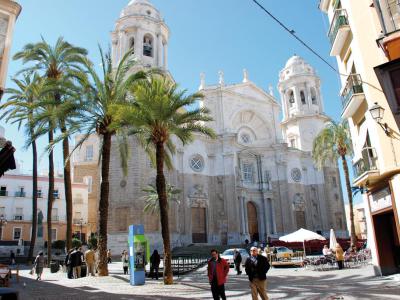
After the original architect stormed off in 1739, a tag-team of architects spanning nearly a century followed, each adding their own stylistic flair. The result was a cathedral that pirouettes from Baroque to Rococo to Neoclassical like it couldn’t make up its mind. Surprisingly or not, the cathedral ended up looking fabulous.
The layout follows the traditional cross shape, with three main aisles and a walkway that curves around the altar like a quiet loop. Rows of polished Corinthian columns hold up elegant vaulted ceilings, and there's a crypt downstairs big enough to make any vampire rethink retirement. The altar sits high and proud, commanding your gaze, while above it all, a dome crowns the space like a golden exclamation mark. And in the choir loft? Not one, but two powerful organs-more than enough to fill the church (and your spine) with musical thunder.
Nevertheless, the main showpiece is the Clock Tower, also known as the Levante Tower. Standing at 184 feet tall, it’s your best bet for sweeping views of the El Pópulo district, the Field of the South, and the harbor, with the Atlantic winking in the distance.
The Cathedral Square outside wasn’t always so open and grand-it was created during Cádiz’s 1721 urban makeover, which included demolishing a few modest houses to make room for this dramatic entrance. The square runs along the seafront and is paved in white marble, because if you're going to build a cathedral this extra, your plaza needs to match.
Don't miss the Rose Arch, which once led to the old Tablas Square and now serves as a charming pass-through to the Town Castle. Within the square itself, you’ll also find the Church of Santa Cruz (the old cathedral from 1669) and the Jesuit Church of Santiago, built in 1563 and still standing tall.
After the original architect stormed off in 1739, a tag-team of architects spanning nearly a century followed, each adding their own stylistic flair. The result was a cathedral that pirouettes from Baroque to Rococo to Neoclassical like it couldn’t make up its mind. Surprisingly or not, the cathedral ended up looking fabulous.
The layout follows the traditional cross shape, with three main aisles and a walkway that curves around the altar like a quiet loop. Rows of polished Corinthian columns hold up elegant vaulted ceilings, and there's a crypt downstairs big enough to make any vampire rethink retirement. The altar sits high and proud, commanding your gaze, while above it all, a dome crowns the space like a golden exclamation mark. And in the choir loft? Not one, but two powerful organs-more than enough to fill the church (and your spine) with musical thunder.
Nevertheless, the main showpiece is the Clock Tower, also known as the Levante Tower. Standing at 184 feet tall, it’s your best bet for sweeping views of the El Pópulo district, the Field of the South, and the harbor, with the Atlantic winking in the distance.
The Cathedral Square outside wasn’t always so open and grand-it was created during Cádiz’s 1721 urban makeover, which included demolishing a few modest houses to make room for this dramatic entrance. The square runs along the seafront and is paved in white marble, because if you're going to build a cathedral this extra, your plaza needs to match.
Don't miss the Rose Arch, which once led to the old Tablas Square and now serves as a charming pass-through to the Town Castle. Within the square itself, you’ll also find the Church of Santa Cruz (the old cathedral from 1669) and the Jesuit Church of Santiago, built in 1563 and still standing tall.
