Custom Walk in Kyoto, Japan by bobcatdudes_824c2 created on 2025-06-16
Guide Location: Japan » Kyoto
Guide Type: Custom Walk
# of Sights: 13
Tour Duration: 10 Hour(s)
Travel Distance: 26.3 Km or 16.3 Miles
Share Key: ZSJZ8
Guide Type: Custom Walk
# of Sights: 13
Tour Duration: 10 Hour(s)
Travel Distance: 26.3 Km or 16.3 Miles
Share Key: ZSJZ8
How It Works
Please retrieve this walk in the GPSmyCity app. Once done, the app will guide you from one tour stop to the next as if you had a personal tour guide. If you created the walk on this website or come to the page via a link, please follow the instructions below to retrieve the walk in the app.
Retrieve This Walk in App
Step 1. Download the app "GPSmyCity: Walks in 1K+ Cities" on Apple App Store or Google Play Store.



Step 2. In the GPSmyCity app, download(or launch) the guide "Kyoto Map and Walking Tours".
Step 3. Tap the menu button located at upper right corner of the "Walks" screen and select "Retrieve custom walk". Enter the share key: ZSJZ8
1) Fushimi Inari Taisha Shrine (must see)
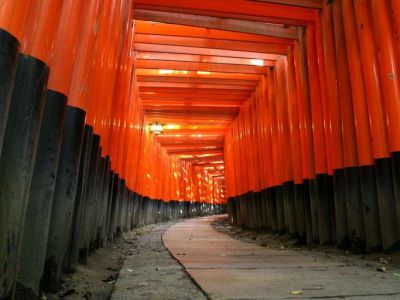
If you can only squeeze in one Shinto shrine visit during your Kyoto stay, Fushimi Inari-Taisha should be your top choice. As the primary shrine for 40,000 Inari dedications nationwide, it holds sway as the divine abode of fertility, rice, sake, and prosperity.
A sight to behold, this captivating complex sprawls across a mountain, boasting over 10,000 vermillion torii gates that weave through dense woodlands along a 4-kilometer trail. Stone foxes, guardians with granary keys, dot the landscape, alongside five shrines, mausoleums, and sake-laden altars. In Shinto belief, foxes serve as messengers to 'kami' (gods), bridging our world and the next.
While wandering through the crimson tunnel may feel surreal, the shrine's focus remains firmly rooted in worldly affairs. Originally honoring rice and sake gods since AD 711, its emphasis later shifted to commerce, evidenced by black kanji inscriptions on torii gates, each donated by businesses hoping for prosperity.
Venture to the hilltop, where countless altars await, erected by devotees after individual visions of Inari. Traditional stores peddle noodles and religious items, while a viewing point offers a stunning panorama of southern Kyoto. With its playful yet sacred ambiance, embellished by myriad fox statues, the hill exudes an enchanting allure, making Fushimi Inari the city's crown jewel.
Why You Should Visit:
Apart from ample photo ops along the winding mountain trails, it offers a mystical journey through sacred terrain, rejuvenated by crisp mountain air.
Tips:
While amenities are sparse, stores and eateries dot the path, but consider carrying water. The trek to the summit is rewarding, especially in solitude, so aim for an early start to avoid crowds and relish the serene charm.
A sight to behold, this captivating complex sprawls across a mountain, boasting over 10,000 vermillion torii gates that weave through dense woodlands along a 4-kilometer trail. Stone foxes, guardians with granary keys, dot the landscape, alongside five shrines, mausoleums, and sake-laden altars. In Shinto belief, foxes serve as messengers to 'kami' (gods), bridging our world and the next.
While wandering through the crimson tunnel may feel surreal, the shrine's focus remains firmly rooted in worldly affairs. Originally honoring rice and sake gods since AD 711, its emphasis later shifted to commerce, evidenced by black kanji inscriptions on torii gates, each donated by businesses hoping for prosperity.
Venture to the hilltop, where countless altars await, erected by devotees after individual visions of Inari. Traditional stores peddle noodles and religious items, while a viewing point offers a stunning panorama of southern Kyoto. With its playful yet sacred ambiance, embellished by myriad fox statues, the hill exudes an enchanting allure, making Fushimi Inari the city's crown jewel.
Why You Should Visit:
Apart from ample photo ops along the winding mountain trails, it offers a mystical journey through sacred terrain, rejuvenated by crisp mountain air.
Tips:
While amenities are sparse, stores and eateries dot the path, but consider carrying water. The trek to the summit is rewarding, especially in solitude, so aim for an early start to avoid crowds and relish the serene charm.
2) Sanjusangen-do Temple (must see)
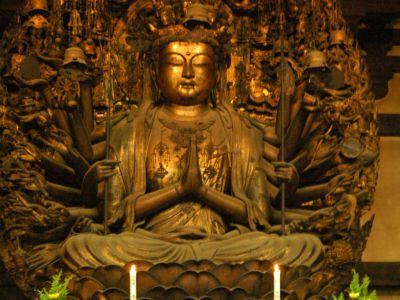
Sanjūsangen-dō is truly remarkable in every aspect. Stretching a staggering 387 feet (118 meters), it holds the title of the longest wooden building worldwide. Within its walls stand 1,000 life-sized Buddha figures, arranged on each side of an immense sitting statue. Constructed in the 1160s, this hall served as the private sanctuary of Go-Shirakawa, a former emperor, within his vast estate.
Motivated by his faith in Amida, the ex-emperor sought to honor the deity who vowed to welcome all who invoked his name into his Pure Land paradise. The statues portray Kannon, a messenger of Amida and bodhisattva bridging the gap between worlds. Here, Kannon takes the form of the so-called Senjū Kannon, with eleven faces and a thousand arms!
Walking amidst these rows of statues can evoke a sense of awe akin to standing before a celestial choir. Despite their uniform appearance at first glance, each statue is subtly unique in body shape, eye width, and robe design. Legend has it that with enough contemplation, one may even recognize a familiar face among them.
Unfortunately, the original brightly colored building, representing the Pure Land, fell victim to fire in 1249; as a result, 875 of the statues had to be replaced. Facing west towards Amida's Pure Land, worshippers would have been greeted by the dazzling spectacle of the statues bathed in the morning sun's first rays when the central doors swung open. In a city renowned for its enchanting moments, this sight undoubtedly stood out as the most magical.
Tips:
Photography inside the hall is strictly prohibited, so consider purchasing the inexpensive guidebook with lovely pictures and informative text as a keepsake. And before departing, take a leisurely 10-15 minute stroll through the small garden surrounding the hall, a tranquil oasis deserving of appreciation.
Motivated by his faith in Amida, the ex-emperor sought to honor the deity who vowed to welcome all who invoked his name into his Pure Land paradise. The statues portray Kannon, a messenger of Amida and bodhisattva bridging the gap between worlds. Here, Kannon takes the form of the so-called Senjū Kannon, with eleven faces and a thousand arms!
Walking amidst these rows of statues can evoke a sense of awe akin to standing before a celestial choir. Despite their uniform appearance at first glance, each statue is subtly unique in body shape, eye width, and robe design. Legend has it that with enough contemplation, one may even recognize a familiar face among them.
Unfortunately, the original brightly colored building, representing the Pure Land, fell victim to fire in 1249; as a result, 875 of the statues had to be replaced. Facing west towards Amida's Pure Land, worshippers would have been greeted by the dazzling spectacle of the statues bathed in the morning sun's first rays when the central doors swung open. In a city renowned for its enchanting moments, this sight undoubtedly stood out as the most magical.
Tips:
Photography inside the hall is strictly prohibited, so consider purchasing the inexpensive guidebook with lovely pictures and informative text as a keepsake. And before departing, take a leisurely 10-15 minute stroll through the small garden surrounding the hall, a tranquil oasis deserving of appreciation.
3) Shosei-en Garden
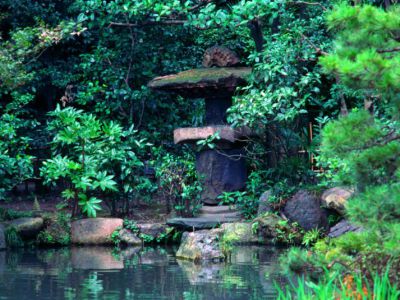
Shosei-en, also known as Kikoku-tei or Trifoliate Orange Villa, is a serene garden nestled within the domain of Higashi Hongan-ji Temple, the principal sanctuary of the Otani school of Shin Buddhism. Detachmed from the main temple precincts, the garden bears its own allure, characterized by the resilient presence of hardy orange trees ("kikoku") that line its hedges.
The genesis of Higashi Hongan-ji Temple traces back to the benevolence of Tokugawa Ieyasu, the first shogun of the Edo period, who bestowed land upon its foundation in 1602. Later, in 1641, Shogun Tokugawa Iemitsu further augmented the temple's domain with additional land, from which Shosei-en emerged in 1653, following the retirement of Sennyo, the thirteenth head abbot of Higashi Hongan-ji. Over the centuries, it evolved into a cherished venue for gatherings, hosting esteemed guests from both near and far.
Today, the garden remains a captivating blend of history and natural beauty, offering visitors thirteen scenic highlights that evoke the charm of the Edo period. From the quaint Chinese Corridor Bridge crowned with a rustic cypress bark roof to the elegantly arched Snow-capped Bridge reminiscent of scenes from Monet's paintings, each element evokes a timeless beauty that transcends seasons.
Tip:
While a suggested route guides your exploration, the true allure lies in wandering off the beaten path, uncovering hidden vistas and unexpected perspectives that breathe new life into this timeless gem.
The genesis of Higashi Hongan-ji Temple traces back to the benevolence of Tokugawa Ieyasu, the first shogun of the Edo period, who bestowed land upon its foundation in 1602. Later, in 1641, Shogun Tokugawa Iemitsu further augmented the temple's domain with additional land, from which Shosei-en emerged in 1653, following the retirement of Sennyo, the thirteenth head abbot of Higashi Hongan-ji. Over the centuries, it evolved into a cherished venue for gatherings, hosting esteemed guests from both near and far.
Today, the garden remains a captivating blend of history and natural beauty, offering visitors thirteen scenic highlights that evoke the charm of the Edo period. From the quaint Chinese Corridor Bridge crowned with a rustic cypress bark roof to the elegantly arched Snow-capped Bridge reminiscent of scenes from Monet's paintings, each element evokes a timeless beauty that transcends seasons.
Tip:
While a suggested route guides your exploration, the true allure lies in wandering off the beaten path, uncovering hidden vistas and unexpected perspectives that breathe new life into this timeless gem.
4) Minamiza Kabuki Theater
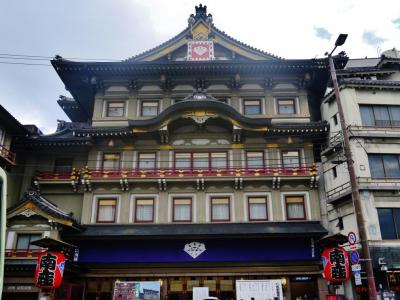
Slide into the southeast corner of Shijo-dori street-just behind a popular noodle shop-and you’ll stumble upon the grand dame of Japanese theater: Minamiza. While it hosts a variety of performances, including the newest forms of live entertainment, truth be told-kabuki is the main character here. We're talking full-throttle drama, wild costumes, and men playing everyone (yes, even the ladies). This colorful, dramatic genre of storytelling has been Kyoto's favorite spectacle since the early 17th century, and somehow, it never got old.
Back in the 1600s, kabuki fever ran wild-there were in total seven theaters around town. The shows were so popular they spilled out into the dry bed of the Kamo River, turning it into Kyoto’s liveliest (and dustiest) hotspot.
Four centuries on, Minamiza is the only survivor of time's relentless march-but still flawless after all these years. While the original stage traces its roots back to the early Edo Period (between 1596 and 1615), the current building was completed only in 1929. In 1996, the theater earned the title of Registered Tangible Cultural Property, and shortly after, was also registered as a Structure of Historical Design in Kyoto. Renovated in 2018, she’s now even shinier, but still very much in her prime.
Tip:
To grasp the performed story in English, make sure to rent audio headsets ($7 apiece) and brace yourself for a three-hour-plus sit-down. Yes, kabuki is a marathon, not a sprint, but you can munch on your snacks during intermission.
And if you fancy souvenirs (like those actor postcards and other theatrical trinkets), grab them before the show or during intermissions, as concession stands close after the curtain falls.
Also, Kabuki is a hot ticket, so book early and expect to shell out $30 to $200, depending on your seat.
And while locals may show up looking like extras from a historical drama (dressing up for kabuki in a kimono is the norm), no one will bat an eye at your jeans-so long as you spare them the facepalm moment and leave your cargo shorts at home...
Back in the 1600s, kabuki fever ran wild-there were in total seven theaters around town. The shows were so popular they spilled out into the dry bed of the Kamo River, turning it into Kyoto’s liveliest (and dustiest) hotspot.
Four centuries on, Minamiza is the only survivor of time's relentless march-but still flawless after all these years. While the original stage traces its roots back to the early Edo Period (between 1596 and 1615), the current building was completed only in 1929. In 1996, the theater earned the title of Registered Tangible Cultural Property, and shortly after, was also registered as a Structure of Historical Design in Kyoto. Renovated in 2018, she’s now even shinier, but still very much in her prime.
Tip:
To grasp the performed story in English, make sure to rent audio headsets ($7 apiece) and brace yourself for a three-hour-plus sit-down. Yes, kabuki is a marathon, not a sprint, but you can munch on your snacks during intermission.
And if you fancy souvenirs (like those actor postcards and other theatrical trinkets), grab them before the show or during intermissions, as concession stands close after the curtain falls.
Also, Kabuki is a hot ticket, so book early and expect to shell out $30 to $200, depending on your seat.
And while locals may show up looking like extras from a historical drama (dressing up for kabuki in a kimono is the norm), no one will bat an eye at your jeans-so long as you spare them the facepalm moment and leave your cargo shorts at home...
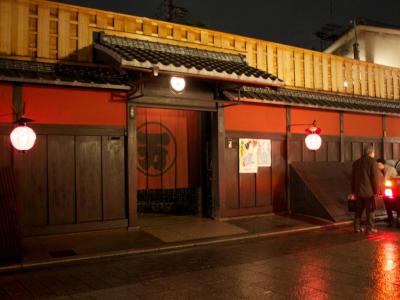
5) Ichiriki Teahouse
Let’s set the scene: you're wandering Kyoto’s Gion district, home to the flutter of kimono sleeves, the faint strum of a shamisen (a three-stringed Japanese musical instrument), and the quiet power of secrets whispered behind paper walls. Just off the intersection of Shijo and Hanamikoji, past the rickshaws and Instagram hopefuls, looms the bold red facade of Ichiriki Teahouse-a place so exclusive, you’d have better luck booking tea with a ghost than getting a seat here without a proper introduction.
For over 300 years, Ichiriki hasn’t just been the VIP lounge of geisha entertainment-it’s been a hotbed of historical drama. By day, it hosted Kyoto’s elite in tatami-clad elegance. By night-at least in the 19th century-it became a shadowy rendezvous point for samurai rebels who were less into sipping tea and more into overthrowing governments. That’s right: plots to topple the shogunate were brewed here alongside the matcha.
But rewind another century, and things get even juicier. Enter the 47 Ronin, Japan’s most famous revenge squad. The whole saga starts with a nobleman, Asano, who lost his temper while at Edo Castle, trying to sword-slap a smug court official named Kira. Bad idea... For his troubles, Asano was ordered to commit ritual suicide ('seppuku'), thus leaving his loyal samurai jobless-and furious.
Now masterless, these ronin scattered into obscurity… or so it seemed. Their leader, Oishi Kuranosuke, put on an Oscar-worthy performance, faking a midlife crisis here at Ichiriki. Think less revenge, more sake-fueled gambling binge. But it was all a smokescreen. After two years of pretending to be the world’s most irresponsible ex-samurai, Oishi and the gang struck, exacting their revenge on Kira, who lost his head-literally-thus fulfilling their solemn vow. As for the ronin themselves, despite facing the ultimate consequence of ritual suicide, their valor and sacrifice elevated them to legendary status, immortalizing both their tale and the legacy of Ichiriki teahouse for generations to come.
So, whenever you stroll past Ichiriki, remember: it’s not just a fancy teahouse. It’s the quiet epicenter of loyalty, espionage, and centuries-old revenge plots. You know… typical Gion vibes.
For over 300 years, Ichiriki hasn’t just been the VIP lounge of geisha entertainment-it’s been a hotbed of historical drama. By day, it hosted Kyoto’s elite in tatami-clad elegance. By night-at least in the 19th century-it became a shadowy rendezvous point for samurai rebels who were less into sipping tea and more into overthrowing governments. That’s right: plots to topple the shogunate were brewed here alongside the matcha.
But rewind another century, and things get even juicier. Enter the 47 Ronin, Japan’s most famous revenge squad. The whole saga starts with a nobleman, Asano, who lost his temper while at Edo Castle, trying to sword-slap a smug court official named Kira. Bad idea... For his troubles, Asano was ordered to commit ritual suicide ('seppuku'), thus leaving his loyal samurai jobless-and furious.
Now masterless, these ronin scattered into obscurity… or so it seemed. Their leader, Oishi Kuranosuke, put on an Oscar-worthy performance, faking a midlife crisis here at Ichiriki. Think less revenge, more sake-fueled gambling binge. But it was all a smokescreen. After two years of pretending to be the world’s most irresponsible ex-samurai, Oishi and the gang struck, exacting their revenge on Kira, who lost his head-literally-thus fulfilling their solemn vow. As for the ronin themselves, despite facing the ultimate consequence of ritual suicide, their valor and sacrifice elevated them to legendary status, immortalizing both their tale and the legacy of Ichiriki teahouse for generations to come.
So, whenever you stroll past Ichiriki, remember: it’s not just a fancy teahouse. It’s the quiet epicenter of loyalty, espionage, and centuries-old revenge plots. You know… typical Gion vibes.
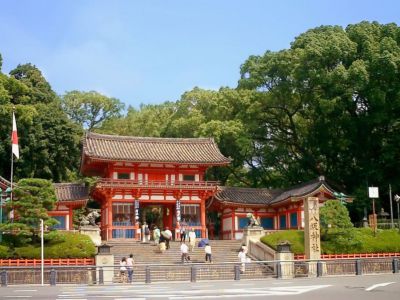
6) Yasaka-jinja Shrine
At the eastern edge of Gion's main street looms a towering vermilion gate that practically begs to be photographed. And judging by the steady stream of visitors posing on its steps for countless snapshots, it surely gets its wish.
Passing through, you’re in for a sensory parade: food stalls sizzling away, tempting you with every imaginable treat as they lead you toward the heart of the scene-Yasaka Shrine. A triple row of lanterns, casting a glow, transforms it into a fairy tale come to life.
Each July, Yasaka Shrine takes center stage as the proud host of the renowned Gion Festival, a lively spectacle drawing throngs of revelers with its array of side events and delectable food offerings. At this time, the area bursts to life with floats, fanfare, and enough street snacks to feed a small army of festivalgoers.
The festival's roots trace back to the year 869. Back then, during a particularly rough epidemic, portable shrines were paraded around town in a divine plea for mercy. Centuries since, it has blossomed into an annual event, yet Yasaka Shrine remains a captivating destination year-round, beyond the festival fervor. Still, nowadays, most of the crowds here are for the energy, the lanterns, and yes, the Instagram shots.
Take a moment to admire the Main Hall, elegantly capped with a cypress bark roof that’s been standing strong since 1654. The grounds are dotted with smaller shrines dedicated to gods from across Japan-some famous, some niche, and one especially popular with geishas, thanks to its focus on beauty.
Tip:
Adjacent lies Maruyama Park. Designed during the Meiji era (between 1868 and 1912), its borrowed waters from Lake Biwa feed scenic carp ponds and arching bridges that deliver peak postcard material, imbuing the surroundings with an unmistakably Japanese ambiance. Springtime is wild with cherry blossoms, but for a quieter moment, come at night-when the lantern glow from Yasaka spills into the park like a soft whisper from the past...
Passing through, you’re in for a sensory parade: food stalls sizzling away, tempting you with every imaginable treat as they lead you toward the heart of the scene-Yasaka Shrine. A triple row of lanterns, casting a glow, transforms it into a fairy tale come to life.
Each July, Yasaka Shrine takes center stage as the proud host of the renowned Gion Festival, a lively spectacle drawing throngs of revelers with its array of side events and delectable food offerings. At this time, the area bursts to life with floats, fanfare, and enough street snacks to feed a small army of festivalgoers.
The festival's roots trace back to the year 869. Back then, during a particularly rough epidemic, portable shrines were paraded around town in a divine plea for mercy. Centuries since, it has blossomed into an annual event, yet Yasaka Shrine remains a captivating destination year-round, beyond the festival fervor. Still, nowadays, most of the crowds here are for the energy, the lanterns, and yes, the Instagram shots.
Take a moment to admire the Main Hall, elegantly capped with a cypress bark roof that’s been standing strong since 1654. The grounds are dotted with smaller shrines dedicated to gods from across Japan-some famous, some niche, and one especially popular with geishas, thanks to its focus on beauty.
Tip:
Adjacent lies Maruyama Park. Designed during the Meiji era (between 1868 and 1912), its borrowed waters from Lake Biwa feed scenic carp ponds and arching bridges that deliver peak postcard material, imbuing the surroundings with an unmistakably Japanese ambiance. Springtime is wild with cherry blossoms, but for a quieter moment, come at night-when the lantern glow from Yasaka spills into the park like a soft whisper from the past...
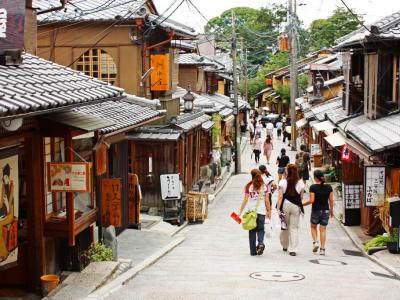
7) Ninen-zaka & Sannen-zakaa Streets (must see)
If you ever thought that time-travel on foot is not possible, welcome to Ninen-zaka and Sannen-zaka, Kyoto’s prettiest pair of gently sloping stone-paved streets. Just south of the famous Kiyomizu-dera Temple, these twin time capsules have been charming pilgrims, poets, and now Instagrammers since the Heian period (as far back as the 8th century AD). Their names-translating to “Two-Year Hill” and “Three-Year Hill,” respectively-aren’t just quaint poetry; legend has it that if you trip here, you’ll be cursed with two or three years of bad luck. So watch your step, but do it stylishly...
Lined with wooden machiya townhouses straight out of an Edo-era painting, these streets now brim with modern temptations in historical disguise-such as matcha lattes in teahouses, delicate sweets that look too pretty to eat, and souvenir shops where even the magnets feel refined. Early mornings bring soft golden light and far fewer tourists-ideal for catching that postcard-perfect shot of Yasaka Pagoda or wandering down a lantern-lit alley like a wandering extra in a samurai drama.
No cars, no chaos-just the click-clack of wooden geta sandals on stone and the scent of roasted tea in the air. It’s like Kyoto whispered, “Slow down,” and these hills listened. For a walk that’s part history lesson, part sensory feast, and 100% Kyoto, Ninen-zaka and Sannen-zaka are more than just pathways-they’re an experience with a side of superstition...
Lined with wooden machiya townhouses straight out of an Edo-era painting, these streets now brim with modern temptations in historical disguise-such as matcha lattes in teahouses, delicate sweets that look too pretty to eat, and souvenir shops where even the magnets feel refined. Early mornings bring soft golden light and far fewer tourists-ideal for catching that postcard-perfect shot of Yasaka Pagoda or wandering down a lantern-lit alley like a wandering extra in a samurai drama.
No cars, no chaos-just the click-clack of wooden geta sandals on stone and the scent of roasted tea in the air. It’s like Kyoto whispered, “Slow down,” and these hills listened. For a walk that’s part history lesson, part sensory feast, and 100% Kyoto, Ninen-zaka and Sannen-zaka are more than just pathways-they’re an experience with a side of superstition...
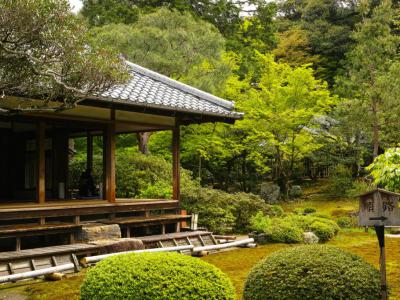
8) Shoren-in Temple
If you need a break from the tourist stampede in Kyoto, Shoren-in might just be your secret hideout-less crowded, more enchanted. Once an imperial residence and run by monks with royal blood, this temple's palatial architecture still exudes the quiet elegance of old aristocracy.
As you enter, you'll be greeted by a grove of ancient camphor trees that have been standing here for over 700 years. Inside the Kacho-den hall, you’ll find lotus blossoms blooming across the walls and portraits of the legendary 36 Immortal Poets giving you the silent treatment. Then, there’s the massive tatami room-ideal for unwinding while soaking in a picture-perfect pond garden designed by the master artist Soami, Kyoto’s own 16th-century landscaping guru. With a moss garden, dry landscape garden, and azalea garden also on offer, this is, indeed, a paradise for garden lovers.
Follow the covered walkways (reminiscent of Heian-era palaces) and you’ll reach the main hall, featuring, instead of your usual Buddha statue, a rather unusual object of worship: a glowing mandala, holding center stage. Around the corner is the Kobun-tei tea house, lovingly rebuilt after a 1993 fire, now home to delicate art by Uemura Atsushi, a Kyoto native painter renowned for his depictions of birds and flowers.
And when spring or autumn hits, Shoren-in goes full showtime, becoming the “Vegas of temples” with its dazzling illuminations. Thanks to its patron deity, Shijoko Nyorai, the god of light, the temple transforms into a luminous dreamscape. Illuminations ripple through the gardens like sacred electricity-turning this peaceful haven into one of Kyoto’s most surreal night spectacles.
As you enter, you'll be greeted by a grove of ancient camphor trees that have been standing here for over 700 years. Inside the Kacho-den hall, you’ll find lotus blossoms blooming across the walls and portraits of the legendary 36 Immortal Poets giving you the silent treatment. Then, there’s the massive tatami room-ideal for unwinding while soaking in a picture-perfect pond garden designed by the master artist Soami, Kyoto’s own 16th-century landscaping guru. With a moss garden, dry landscape garden, and azalea garden also on offer, this is, indeed, a paradise for garden lovers.
Follow the covered walkways (reminiscent of Heian-era palaces) and you’ll reach the main hall, featuring, instead of your usual Buddha statue, a rather unusual object of worship: a glowing mandala, holding center stage. Around the corner is the Kobun-tei tea house, lovingly rebuilt after a 1993 fire, now home to delicate art by Uemura Atsushi, a Kyoto native painter renowned for his depictions of birds and flowers.
And when spring or autumn hits, Shoren-in goes full showtime, becoming the “Vegas of temples” with its dazzling illuminations. Thanks to its patron deity, Shijoko Nyorai, the god of light, the temple transforms into a luminous dreamscape. Illuminations ripple through the gardens like sacred electricity-turning this peaceful haven into one of Kyoto’s most surreal night spectacles.
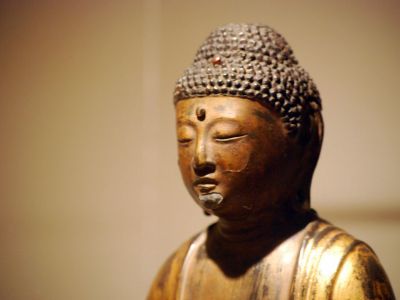
9) Hosomi Museum
Established in 1998, this private museum showcases a remarkable collection of Japanese art and artifacts amassed by renowned Japanese industrialist, Hosomi Ryo, hailing from Osaka. With over 1000 exquisite works spanning various periods and genres, visitors are given a comprehensive glimpse into Japan's rich artistic heritage.
Explore a section dedicated to ancient figurines unearthed from tombs and Buddhist ceremonial paraphernalia, or immerse yourself in the intricate narrative scrolls dating back to the Muromachi period. Admire the diverse array of lacquer objects spanning different epochs in Japanese history, alongside the world's finest collection of Rimpa art-a fusion of Yamato-e and ink painting techniques.
In addition to its impressive exhibits, the museum hosts art seminars, lectures, and special exhibitions aimed at promoting traditional Japanese artistry. The building features three floors above ground and two below, garnering acclaim with its award-winning design honored with the 40th Building Contractors Society Architecture Prize.
Tip:
Delight in the daily tea ceremonies held at the serene Kokoan Japanese Tea Room, or peruse the Art Cube shop offering museum replicas, souvenirs, and books. For a culinary treat, indulge in Japanese and Italian fare at Café Cube, the museum's very own restaurant.
Explore a section dedicated to ancient figurines unearthed from tombs and Buddhist ceremonial paraphernalia, or immerse yourself in the intricate narrative scrolls dating back to the Muromachi period. Admire the diverse array of lacquer objects spanning different epochs in Japanese history, alongside the world's finest collection of Rimpa art-a fusion of Yamato-e and ink painting techniques.
In addition to its impressive exhibits, the museum hosts art seminars, lectures, and special exhibitions aimed at promoting traditional Japanese artistry. The building features three floors above ground and two below, garnering acclaim with its award-winning design honored with the 40th Building Contractors Society Architecture Prize.
Tip:
Delight in the daily tea ceremonies held at the serene Kokoan Japanese Tea Room, or peruse the Art Cube shop offering museum replicas, souvenirs, and books. For a culinary treat, indulge in Japanese and Italian fare at Café Cube, the museum's very own restaurant.
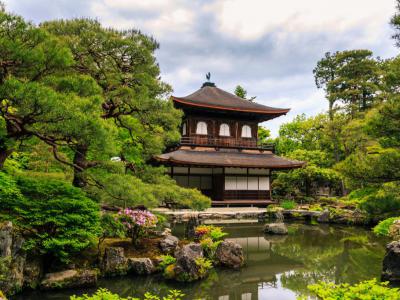
10) Ginkaku-ji Temple (must see)
You know you’re fancy when your retirement home becomes a UNESCO World Heritage Site. That’s exactly what happened to Yoshimasa, the eighth Ashikaga shogun, who picked this peaceful patch of Kyoto as his personal endgame-and in the process, helped perfect the art of the Japanese tea ceremony. Welcome to Ginkaku-ji, a 15th-century Zen temple often nicknamed the “Silver Pavilion.” The twist is that it’s not actually silver. That glimmer you see is just moonlight flirting with its once-black lacquered walls-nature’s optical illusion at its finest...
But the sparkle doesn’t stop there. Often called the 'little sibling' of Kinkaku-ji (or Golden Pavilion), it boasts even more scenic and exquisite gardens. The real scene-stealer is the 1.75-acre dry sand garden-a flawlessly raked expanse meant to reflect moonlight like a silvery sea. At its heart stands a conical mound modeled after Mount Fuji, proof that Zen monks could outdo any landscaper with a rake and a dream.
Take the Moon-Viewing Platform, then follow the winding path through mossy gardens, over quaint bridges, past koi ponds and whispering streams. It'll lead you to a hilltop view that rolls out the entire temple complex-and most of Kyoto, if you're lucky. The stone-and-bamboo walkway keeps things civilized, so even the uphill part feels like a meditative stroll.
Yes, it gets crowded. But thanks to the one-way route, you won’t be playing tourist bumper cars. Just zen out and go with the flow.
What you'll get in the end is garden perfection, bamboo vibes, and moonlit drama, not to mention a gift shop full of rabbit-themed treasures (that you didn’t even know you needed) and fan souvenirs not found anywhere else in Kyoto...
Pro tip: Hit it early or at golden hour. Kyoto sunsets are too pretty to miss...
But the sparkle doesn’t stop there. Often called the 'little sibling' of Kinkaku-ji (or Golden Pavilion), it boasts even more scenic and exquisite gardens. The real scene-stealer is the 1.75-acre dry sand garden-a flawlessly raked expanse meant to reflect moonlight like a silvery sea. At its heart stands a conical mound modeled after Mount Fuji, proof that Zen monks could outdo any landscaper with a rake and a dream.
Take the Moon-Viewing Platform, then follow the winding path through mossy gardens, over quaint bridges, past koi ponds and whispering streams. It'll lead you to a hilltop view that rolls out the entire temple complex-and most of Kyoto, if you're lucky. The stone-and-bamboo walkway keeps things civilized, so even the uphill part feels like a meditative stroll.
Yes, it gets crowded. But thanks to the one-way route, you won’t be playing tourist bumper cars. Just zen out and go with the flow.
What you'll get in the end is garden perfection, bamboo vibes, and moonlit drama, not to mention a gift shop full of rabbit-themed treasures (that you didn’t even know you needed) and fan souvenirs not found anywhere else in Kyoto...
Pro tip: Hit it early or at golden hour. Kyoto sunsets are too pretty to miss...
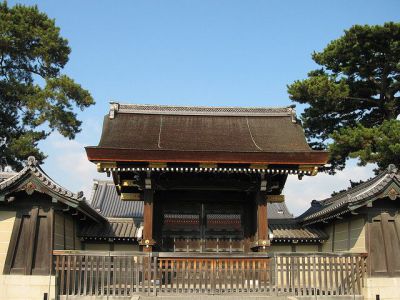
11) Kyoto Imperial Palace (must see)
The Kyoto Imperial Palace-once the VIP lounge of Japan’s emperors (back when Kyoto still held the title of capital city)-was established in 794. This place remained home to the Imperial Family up until 1869, when the royals packed up and moved to Tokyo during the Meiji Restoration period (which brought about the modernization and Westernization of the country at the turn of the 20th century). The palace you see today dates from 1855, rebuilt after a series of devastating fires. Luckily, the entire complex retained its timeless look-with elegant wooden buildings, sweeping rooflines, and a firm commitment to traditional flair, complemented by a modern touch.
Set within the spacious Kyoto Gyoen National Garden, the palace grounds once teemed with court nobles and aristocrats. Back in its glory days, this leafy enclave held over 200 noble residences-like an elite gated community, only without the gates... These days, the grounds are open to the public and lined with some 50,000 trees, offering peace, shade, and the occasional squirrel sighting. Despite the modern calm, this place still hosts formal imperial ceremonies, keeping tradition alive with a bow and a fan flutter.
The palace itself, affectionately called Gosho by locals, is refreshingly unfortified-no defensive moats, towers, or any “keep out” signs. Instead, it embraces a philosophy of openness, with wide verandas looking out on reflective ponds, and sliding doors inviting the outdoors in. While you can’t wander inside the buildings, the gravel paths, the manicured, serene courtyards, and the dignified architecture outside are yours to explore and admire, camera in hand.
Curious minds can either follow a self-guided route marked with English signs or take a free one-hour guided tour from the Imperial Household Office-just make sure to bring your passport and a sense of wonder. Tours run daily at 10 AM and 2 PM and cover highlights like the grand Shishinden Hall, ornate gates, and the tree-filled serenity of Kyoto Gyoen Park, replete with shaded walkways, plum groves, and quiet retreats. So, whether you come for the history, the architecture, or just a break from temple fatigue, the Kyoto Imperial Palace delivers timeless elegance, minus the royal curtsies...
Set within the spacious Kyoto Gyoen National Garden, the palace grounds once teemed with court nobles and aristocrats. Back in its glory days, this leafy enclave held over 200 noble residences-like an elite gated community, only without the gates... These days, the grounds are open to the public and lined with some 50,000 trees, offering peace, shade, and the occasional squirrel sighting. Despite the modern calm, this place still hosts formal imperial ceremonies, keeping tradition alive with a bow and a fan flutter.
The palace itself, affectionately called Gosho by locals, is refreshingly unfortified-no defensive moats, towers, or any “keep out” signs. Instead, it embraces a philosophy of openness, with wide verandas looking out on reflective ponds, and sliding doors inviting the outdoors in. While you can’t wander inside the buildings, the gravel paths, the manicured, serene courtyards, and the dignified architecture outside are yours to explore and admire, camera in hand.
Curious minds can either follow a self-guided route marked with English signs or take a free one-hour guided tour from the Imperial Household Office-just make sure to bring your passport and a sense of wonder. Tours run daily at 10 AM and 2 PM and cover highlights like the grand Shishinden Hall, ornate gates, and the tree-filled serenity of Kyoto Gyoen Park, replete with shaded walkways, plum groves, and quiet retreats. So, whether you come for the history, the architecture, or just a break from temple fatigue, the Kyoto Imperial Palace delivers timeless elegance, minus the royal curtsies...

12) Ippodo Tea
After indulging in the diverse brews offered at numerous teahouses around the city, you might find yourself yearning to bring home some top-quality tea. Look no further than this traditional tea shop, a purveyor of the finest Japanese tea in Kyoto for over three centuries. Here, tea-drinking transcends mere consumption; it's an immersive experience steeped in history, culture, and the art of tea-making. Upon visiting, you'll receive an English leaflet detailing prices and descriptions, ensuring a seamless shopping experience.
Tip:
For those eager to prolong the tea-drinking experience, the shop features an adjoining teahouse, Kaboku Tearoom. Simply select your preferences at the small ticket machine to join the queue, and they'll promptly accommodate you when it's your turn.
Tip:
For those eager to prolong the tea-drinking experience, the shop features an adjoining teahouse, Kaboku Tearoom. Simply select your preferences at the small ticket machine to join the queue, and they'll promptly accommodate you when it's your turn.
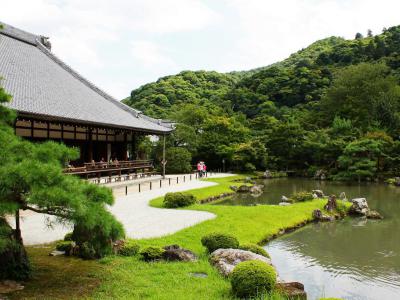
13) Tenryu-ji Temple – Sogenchi Garden
Considered one of Kyoto's very best sights, the garden enveloping Tenryu-ji Temple seamlessly blends elements of nature to create a harmonious landscape. White sand, arranged in wave patterns, intermingles with moss, flowers and trees, punctuated by an impressive collection of rocks set upon a tranquil pond. Sole survivor from the temple's original design, the pond itself forms the shape of the Chinese character "kokoro", meaning "enlightened heart". Intended to be admired from the veranda of the Abbot's Quarters, it presents a three-dimensional tableau, featuring a waterfall, peninsula, and rocky shoreline mimicking a seascape, all framed by the distant hills.
A leisurely stroll along the path on the pond's far side guides visitors past shrubbery carefully positioned to obscure direct views of the pond and heighten focus on the surrounding flora. For Muso Soseki, the garden's designer and first temple abbot, it served as a conduit to realizing one's inner Buddha nature, emphasizing contemplation as a path to enlightenment.
Take your time to wander the garden, soaking in its breathtaking vistas and capturing memorable photos. Despite its compact size, exploring alongside the temple (which requires a combined ticket) can be completed in under an hour, even at a leisurely pace. And even if you opt not to enter the temple buildings, glimpses into some of them can be enjoyed while circling the pond.
A leisurely stroll along the path on the pond's far side guides visitors past shrubbery carefully positioned to obscure direct views of the pond and heighten focus on the surrounding flora. For Muso Soseki, the garden's designer and first temple abbot, it served as a conduit to realizing one's inner Buddha nature, emphasizing contemplation as a path to enlightenment.
Take your time to wander the garden, soaking in its breathtaking vistas and capturing memorable photos. Despite its compact size, exploring alongside the temple (which requires a combined ticket) can be completed in under an hour, even at a leisurely pace. And even if you opt not to enter the temple buildings, glimpses into some of them can be enjoyed while circling the pond.
