Custom Walk in Brno, Czech Republic by darius9384 created on 2025-06-18
Guide Location: Czech Republic » Brno
Guide Type: Custom Walk
# of Sights: 13
Tour Duration: 3 Hour(s)
Travel Distance: 4.1 Km or 2.5 Miles
Share Key: WXTWW
Guide Type: Custom Walk
# of Sights: 13
Tour Duration: 3 Hour(s)
Travel Distance: 4.1 Km or 2.5 Miles
Share Key: WXTWW
How It Works
Please retrieve this walk in the GPSmyCity app. Once done, the app will guide you from one tour stop to the next as if you had a personal tour guide. If you created the walk on this website or come to the page via a link, please follow the instructions below to retrieve the walk in the app.
Retrieve This Walk in App
Step 1. Download the app "GPSmyCity: Walks in 1K+ Cities" on Apple App Store or Google Play Store.



Step 2. In the GPSmyCity app, download(or launch) the guide "Brno Map and Walking Tours".
Step 3. Tap the menu button located at upper right corner of the "Walks" screen and select "Retrieve custom walk". Enter the share key: WXTWW

1) Janáček Theater
The Janáček Theatre (Janáčkovo divadlo) is a prominent opera house located in Brno. As the largest of the three venues operated by the National Theatre Brno (NdB), alongside the Mahen and Reduta theatres, it serves as a central hub for opera and ballet performances in the city. The theatre's construction began in 1960 after a prolonged period of planning and architectural competitions, culminating in its grand opening in October 1965. Over the years, the theatre has hosted the premieres of numerous operas and ballets, establishing itself as a cornerstone of the Czech performing arts scene.
Architecturally, the Janáček Theatre is noteworthy for its north-facing façade, which overlooks a landscaped green space that includes a memorial to its namesake, the famous Czech composer Leoš Janáček. The building is an example of Neofunctionalism, reflecting the evolution of Czech architecture throughout the 20th century.
When it was completed in the mid-1960s, the Janáček Theatre was the largest and most technologically advanced theatre in Czechoslovakia. Designed by architect Jan Víšek, the building includes a main stage and auditorium with a circle of boxes above it, along with various essential facilities such as dressing rooms, rehearsal rooms, offices, workshops, and storage areas. The theatre also houses social spaces, including a restaurant, a café, and a theatre club, making it a vibrant cultural and social center.
The surrounding area of the theatre, which was renovated in 2015, features a relaxation zone with a unique light fountain and is adorned with sculptures, including a group sculpture of the Mrštík brothers by Vincenc Makovský and a statue of Leoš Janáček by Stanislav Hanzl. These artistic elements contribute to the theatre's role not only as a performance venue but also as a cultural landmark in Brno.
Architecturally, the Janáček Theatre is noteworthy for its north-facing façade, which overlooks a landscaped green space that includes a memorial to its namesake, the famous Czech composer Leoš Janáček. The building is an example of Neofunctionalism, reflecting the evolution of Czech architecture throughout the 20th century.
When it was completed in the mid-1960s, the Janáček Theatre was the largest and most technologically advanced theatre in Czechoslovakia. Designed by architect Jan Víšek, the building includes a main stage and auditorium with a circle of boxes above it, along with various essential facilities such as dressing rooms, rehearsal rooms, offices, workshops, and storage areas. The theatre also houses social spaces, including a restaurant, a café, and a theatre club, making it a vibrant cultural and social center.
The surrounding area of the theatre, which was renovated in 2015, features a relaxation zone with a unique light fountain and is adorned with sculptures, including a group sculpture of the Mrštík brothers by Vincenc Makovský and a statue of Leoš Janáček by Stanislav Hanzl. These artistic elements contribute to the theatre's role not only as a performance venue but also as a cultural landmark in Brno.
2) Měnínská Brána (Měnín Gate)
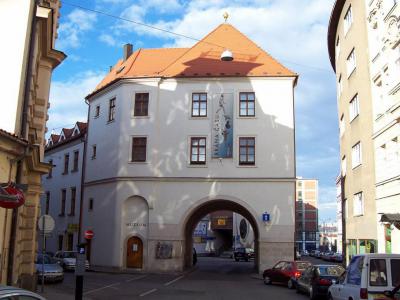
The Měnín Gate (Měnínská Brána) in Brno is the only preserved city gate among the original five that once allowed entry into the city. Located on Měnínská Street, near Náměstí Svobody (Freedom Square), the gate dates back to the 13th century, when it was an integral part of Brno's city walls.
The earliest known records of the Měnín Gate are from 1293, indicating its historical significance. Originally located where Kobližná and Jánská Streets meet today, by 1348, the primary city gate had shifted slightly southward. The gate underwent significant changes around 1500, acquiring its present appearance. Historical accounts suggest that the gate had three or four levels during this period.
The gate's role diminished in the mid-17th century when a large bastion was constructed in front of it as part of the Baroque fortifications. By 1839, the gate was shortened and converted into a house, marking the end of its function as a city gate. Over the next decade, passage through the gate was closed off. Subsequently, the gate was purchased by Mrs. Navrátilová, a local businesswoman known for introducing ''tvarůžky'', a distinctive cheese from Olomouc, to Brno. She used the building's basement to ripen the cheese, and the proceeds from its sales funded the renovation of the gate. Her family continued to reside in the building for four generations.
In 1945, the gate was severely damaged by artillery fire during World War II. The deteriorating structure was acquired by the city of Brno towards the end of the 1960s and was later sold to a private owner, who failed to maintain it. Eventually, the city reclaimed the property, and between 1978 and 1982, the gate was extensively renovated. Since 1970, the Měnín Gate has been used for exhibition purposes and has been under the management of the Brno City Museum. In 2010, it began housing a toy museum, adding to its cultural significance in the city.
The earliest known records of the Měnín Gate are from 1293, indicating its historical significance. Originally located where Kobližná and Jánská Streets meet today, by 1348, the primary city gate had shifted slightly southward. The gate underwent significant changes around 1500, acquiring its present appearance. Historical accounts suggest that the gate had three or four levels during this period.
The gate's role diminished in the mid-17th century when a large bastion was constructed in front of it as part of the Baroque fortifications. By 1839, the gate was shortened and converted into a house, marking the end of its function as a city gate. Over the next decade, passage through the gate was closed off. Subsequently, the gate was purchased by Mrs. Navrátilová, a local businesswoman known for introducing ''tvarůžky'', a distinctive cheese from Olomouc, to Brno. She used the building's basement to ripen the cheese, and the proceeds from its sales funded the renovation of the gate. Her family continued to reside in the building for four generations.
In 1945, the gate was severely damaged by artillery fire during World War II. The deteriorating structure was acquired by the city of Brno towards the end of the 1960s and was later sold to a private owner, who failed to maintain it. Eventually, the city reclaimed the property, and between 1978 and 1982, the gate was extensively renovated. Since 1970, the Měnín Gate has been used for exhibition purposes and has been under the management of the Brno City Museum. In 2010, it began housing a toy museum, adding to its cultural significance in the city.
3) Masarykova Street
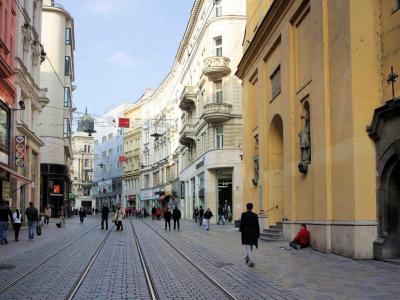
Masarykova Street is a popular shopping area in Brno. Tourists will find shops that sell food, souvenirs, and clothing. They will also encounter a variety of bars and restaurants.
The street was officially named Masarykova Street in 1930, but its history dates hundreds of years before that. It was used as a major trade route since the 12th century. Construction on the street began in 1850 and was completed in 1864.
Masarykova Street, formerly Ferdinand Street, was renamed following the fall of the monarchy. Its current name is in honor of Tomas Garrigue Masaryk, the first president of the Czechoslovak Republic.
Many buildings along Masarykova Street hold interest to lovers of architecture. Architects like Viktor Kovacic, Leopold Bauer, Otto Eisler, and Rudolf Lubinsky designed residential palaces and functional buildings during the late 19th and early 20th centuries.
Masarykova Street connects Liberty Square with the train station.
The street was officially named Masarykova Street in 1930, but its history dates hundreds of years before that. It was used as a major trade route since the 12th century. Construction on the street began in 1850 and was completed in 1864.
Masarykova Street, formerly Ferdinand Street, was renamed following the fall of the monarchy. Its current name is in honor of Tomas Garrigue Masaryk, the first president of the Czechoslovak Republic.
Many buildings along Masarykova Street hold interest to lovers of architecture. Architects like Viktor Kovacic, Leopold Bauer, Otto Eisler, and Rudolf Lubinsky designed residential palaces and functional buildings during the late 19th and early 20th centuries.
Masarykova Street connects Liberty Square with the train station.
4) Divadlo Reduta (Reduta Theatre)
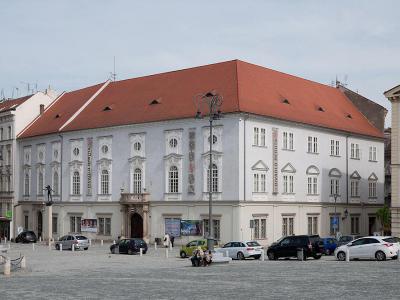
The Reduta Theatre (Divadlo Reduta) in Brno stands as a significant cultural landmark with a rich history dating back to Renaissance times. Situated on the city's oldest square (Zelný trh) it is the oldest theatre building in Central Europe, with its first mention in 1608. The theatre's origins lie in a complex of medieval houses purchased and remodeled by the Brno city council at the beginning of the 17th century. One of these houses, known as the Liechtenstein House, became a tavern in 1605 and later added assembly rooms. By 1634, an adjoining building was incorporated, creating a hall for occasional theatrical performances.
In the 1730s, the building underwent significant renovations, including the addition of a new theater and ballroom, and became known as the Taverna Theatre, or Theater in der Taffern to the city's German-speaking residents. It primarily hosted performances in German and Italian. A notable event in its history was the concert performed by the young Wolfgang Amadeus Mozart and his sister Nannerl on 30 December 1767, after the Mozart family sought refuge in Brno during a smallpox epidemic in Vienna.
The theatre faced several challenges, including extensive fires in 1785 and 1786, which led to its reconstruction in the Neoclassical architectural style with a new two-story main hall. Renamed the Reduta Theatre, it continued to primarily feature German plays, with Czech performances being rare. Another devastating fire in 1870 led to the theatre's closure, after which it was repurposed as a city market hall.
Following the establishment of Czechoslovakia in 1918, the theatre resumed its cultural activities. In the 1950s, the building was redesigned by architects Bohuslav and Kamil Fuchs and served as a venue for Czech operettas until the 1990s. The last major reconstruction of the Reduta Theatre was completed in 2005, a project that earned the Grand Prix in a competition held by the Czech Chamber of Architects.
Today, the Reduta Theatre is part of the National Theatre in Brno. It does not have a permanent ensemble but regularly hosts guest performances by various artists and ensembles from the Czech Republic and Slovakia, continuing its long-standing tradition as a center of cultural and theatrical life in Brno.
In the 1730s, the building underwent significant renovations, including the addition of a new theater and ballroom, and became known as the Taverna Theatre, or Theater in der Taffern to the city's German-speaking residents. It primarily hosted performances in German and Italian. A notable event in its history was the concert performed by the young Wolfgang Amadeus Mozart and his sister Nannerl on 30 December 1767, after the Mozart family sought refuge in Brno during a smallpox epidemic in Vienna.
The theatre faced several challenges, including extensive fires in 1785 and 1786, which led to its reconstruction in the Neoclassical architectural style with a new two-story main hall. Renamed the Reduta Theatre, it continued to primarily feature German plays, with Czech performances being rare. Another devastating fire in 1870 led to the theatre's closure, after which it was repurposed as a city market hall.
Following the establishment of Czechoslovakia in 1918, the theatre resumed its cultural activities. In the 1950s, the building was redesigned by architects Bohuslav and Kamil Fuchs and served as a venue for Czech operettas until the 1990s. The last major reconstruction of the Reduta Theatre was completed in 2005, a project that earned the Grand Prix in a competition held by the Czech Chamber of Architects.
Today, the Reduta Theatre is part of the National Theatre in Brno. It does not have a permanent ensemble but regularly hosts guest performances by various artists and ensembles from the Czech Republic and Slovakia, continuing its long-standing tradition as a center of cultural and theatrical life in Brno.
5) Zelný Trh (Vegetable Market Square) and Parnas Fountain
Vegetable Market Square is a traditional marketplace in the historical center of Brno. It first opened in 1190, before Brno was established. It was a general market before it focused on fruits and vegetables. The market has been in continuous use since its opening.
Vegetable Market Square offers shops selling vegetables, fruit, flowers, baked goods, cheese, spices, and other food items. There are also several restaurants and food carts in the square.
Along with shopping, many landmarks are located in and around Vegetable Market Square. Visitors will find easy access to Dietrichstein Palace and the Moravian Museum. They will also see the Reduta Theatre, the oldest theatre building in Central Europe. Tourists enjoy the Labyrinth under the Vegetable Market, a unique system of underground passages and cellars from the Middle Ages.
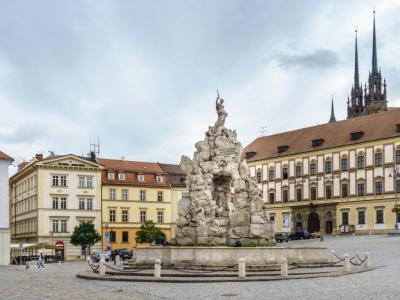
The Vegetable Market Square houses a monumental Parnas Fountain. The Baroque-style fountain was placed in the square in 1695. It was designed by Austrian architect Johann Bernhard Fischer von Erlach and built by Austrian sculptor Adam Tobias Kracker.
The basin of the fountain supports a six-pointed layout which serves as a base for imitation rocks with caves. There are mythical figures, including Heracles leading the three-headed dog Cerberus on a chain. The work is one of the most valuable monuments of Baroque sculpture in Brno.
Vegetable Market Square offers shops selling vegetables, fruit, flowers, baked goods, cheese, spices, and other food items. There are also several restaurants and food carts in the square.
Along with shopping, many landmarks are located in and around Vegetable Market Square. Visitors will find easy access to Dietrichstein Palace and the Moravian Museum. They will also see the Reduta Theatre, the oldest theatre building in Central Europe. Tourists enjoy the Labyrinth under the Vegetable Market, a unique system of underground passages and cellars from the Middle Ages.
The Vegetable Market Square houses a monumental Parnas Fountain. The Baroque-style fountain was placed in the square in 1695. It was designed by Austrian architect Johann Bernhard Fischer von Erlach and built by Austrian sculptor Adam Tobias Kracker.
The basin of the fountain supports a six-pointed layout which serves as a base for imitation rocks with caves. There are mythical figures, including Heracles leading the three-headed dog Cerberus on a chain. The work is one of the most valuable monuments of Baroque sculpture in Brno.
6) Moravské Zemské Muzeum (Moravian Museum)
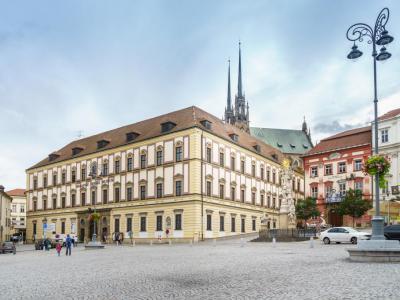
The Moravian Museum is a scientific and cultural museum within the Dietrichstein Palace. It is the second-largest and second-oldest museum in the Czech Republic. Currently, the museum is funded by the Ministry of Culture and is a member of the Czech Association of Museums and Galleries.
Dietrichstein Palace was built in 1616 as a home for Cardinal Franz von Dietrichstein. The Baroque-style building is one of the largest in the city. It was turned into the Moravian Museum by Emperor Francis II in 1817 and was established with the help of renowned natural scientist Christian Carl Andre and Supreme Czech Chancellor Antonin Bedrich Mitrovsky.
Exhibits in the Moravian Museum show the history of Moravia, minerals found within the land, cultural changes throughout the years, and artifacts from prehistory. Its collections contain over six million objects from the natural and social sciences.
While the central location of the Moravian Museum is in Dietrichstein Palace, there are several other exhibition places throughout the city. Some of these are the Palace of Noble Ladies, the Anthropos Pavilion, and the Mendel Museum. There are also homes, castles and monuments owned and managed by the museum.
Dietrichstein Palace was built in 1616 as a home for Cardinal Franz von Dietrichstein. The Baroque-style building is one of the largest in the city. It was turned into the Moravian Museum by Emperor Francis II in 1817 and was established with the help of renowned natural scientist Christian Carl Andre and Supreme Czech Chancellor Antonin Bedrich Mitrovsky.
Exhibits in the Moravian Museum show the history of Moravia, minerals found within the land, cultural changes throughout the years, and artifacts from prehistory. Its collections contain over six million objects from the natural and social sciences.
While the central location of the Moravian Museum is in Dietrichstein Palace, there are several other exhibition places throughout the city. Some of these are the Palace of Noble Ladies, the Anthropos Pavilion, and the Mendel Museum. There are also homes, castles and monuments owned and managed by the museum.
7) Katedrála Sv. Petra a Pavla (Cathedral of St. Peter and Paul) (must see)
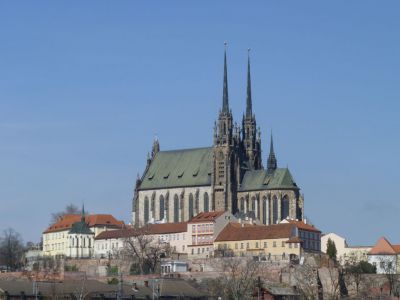
The Cathedral of Saint Peter and Paul is a Roman Catholic cathedral and parish church located on Petrov hill in Brno. It is more commonly referred to as "Petrov" by locals. The cathedral that stands today was built in the late 17th century with many additions and renovations undergone over the years.
Some historical records show churches on the site of Petrov since the 12th century. The first was a Romanesque chapel built in 1140. The next was a Romanesque and Gothic church dedicated to Saint Peter in 1230. A new religious edifice dedicated to Saint Peter and Saint Paul was erected in the 15th century. It burned in 1643 during the Thirty Years War.
The exterior of the Cathedral of Saint Peter and Paul was designed in the Gothic Revival style by architect Frantisek Benedikt Klicnik. The towers, standing at more than 275 feet, were added in 1909. They were designed by architect August Kirstein.
The interior was designed by architect Moric Grimm in the late 18th century. Most of the Baroque features remain in place today. Gothic work on the interior was added by architects August Prokop and K. Woresch in the late 19th century. They added a chapel and presbytery, a high altar with carved scenes of the twelve apostles, and the crucifixion designed by Viennese sculptor Josef Leimer.
The cathedral bells ring at 11 AM rather than noon as a nod to the Thirty Years' War. During that war, the Swedes stated they would end the attack if they had not taken the city by midday on August 15. The church bells rang an hour early to put an end to the siege. They have continued to ring early since then.
Some historical records show churches on the site of Petrov since the 12th century. The first was a Romanesque chapel built in 1140. The next was a Romanesque and Gothic church dedicated to Saint Peter in 1230. A new religious edifice dedicated to Saint Peter and Saint Paul was erected in the 15th century. It burned in 1643 during the Thirty Years War.
The exterior of the Cathedral of Saint Peter and Paul was designed in the Gothic Revival style by architect Frantisek Benedikt Klicnik. The towers, standing at more than 275 feet, were added in 1909. They were designed by architect August Kirstein.
The interior was designed by architect Moric Grimm in the late 18th century. Most of the Baroque features remain in place today. Gothic work on the interior was added by architects August Prokop and K. Woresch in the late 19th century. They added a chapel and presbytery, a high altar with carved scenes of the twelve apostles, and the crucifixion designed by Viennese sculptor Josef Leimer.
The cathedral bells ring at 11 AM rather than noon as a nod to the Thirty Years' War. During that war, the Swedes stated they would end the attack if they had not taken the city by midday on August 15. The church bells rang an hour early to put an end to the siege. They have continued to ring early since then.
8) Špilberk Castle (must see)
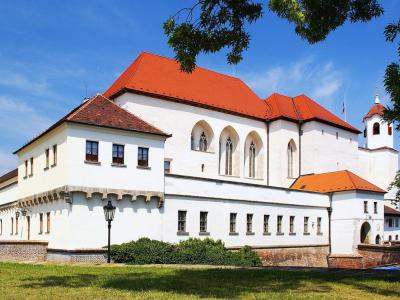
Spilberk Castle is a castle and citadel from the 13th century. Its construction began under the Premyslid kings, a Bohemian royal dynasty, and was completed by King Ottokar II of Bohemia.
The royal castle was eventually used as a fortification and later became a prison. Spilberk Castle was known as the harshest prison in all of the Austrian Empire. It was first used to imprison Protestants, then became the place for revolutionaries and other political prisoners.
The prison was dissolved in 1855 by Emperor Franz Joseph I. Once the prisoners had all been moved out, it was converted into barracks. However, it served again as a prison during World War II. Civilian objectors and prisoners of war were held in the castle until they were either put to death or sent to Nazi concentration camps.
Spilberk Castle left its dark history behind in 1959 when it became the seat of the Brno City Museum. A permanent exhibit shows the castle's history from its time as a fortress to its tenure as a prison. The history of Brno is also on display. Other permanent exhibits include medicinal research of the region, architecture, and a showcase on fireworks and pyrotechnics.
The castle has a restored lapidarium where stone monuments are displayed. The lapidarium is only available via guided tours. Visitors will also enjoy the Lookout Tower. This tower is the highest spot in Brno that offers a 360-degree view of the city. Visitors should note that the spiral staircase has more than 100 steps to reach the top.
The royal castle was eventually used as a fortification and later became a prison. Spilberk Castle was known as the harshest prison in all of the Austrian Empire. It was first used to imprison Protestants, then became the place for revolutionaries and other political prisoners.
The prison was dissolved in 1855 by Emperor Franz Joseph I. Once the prisoners had all been moved out, it was converted into barracks. However, it served again as a prison during World War II. Civilian objectors and prisoners of war were held in the castle until they were either put to death or sent to Nazi concentration camps.
Spilberk Castle left its dark history behind in 1959 when it became the seat of the Brno City Museum. A permanent exhibit shows the castle's history from its time as a fortress to its tenure as a prison. The history of Brno is also on display. Other permanent exhibits include medicinal research of the region, architecture, and a showcase on fireworks and pyrotechnics.
The castle has a restored lapidarium where stone monuments are displayed. The lapidarium is only available via guided tours. Visitors will also enjoy the Lookout Tower. This tower is the highest spot in Brno that offers a 360-degree view of the city. Visitors should note that the spiral staircase has more than 100 steps to reach the top.
9) Nová Radnice (New Town Hall)
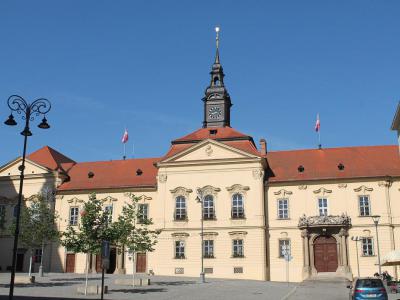
The New Town Hall (Nová Radnice) in Brno is a historically significant building located on Dominican Square. Originally known as the Estates House or the Provincial House, this complex of predominantly Baroque buildings served the Moravian provincial administration before becoming the seat of Brno's city government in 1935. Before this, the city administration was housed in the Old Town Hall, which is now dedicated to cultural activities.
The New Town Hall's architectural heritage spans several styles, including Baroque, Gothic, and Renaissance elements. Among its most notable features are the Gothic cloister, the Renaissance staircase, a sundial, historic portals, and a fountain adorned with allegories of the twelve months. Particularly striking are the two limestone balconies from 1733, with their elaborate balustrades made of sculpted human forms and eagles with outstretched wings. These balconies have witnessed significant historical events, including speeches by Adolf Hitler in 1939 and Queen Elizabeth II in 1996.
The building's transformation into the New Town Hall was overseen by architect Josef Polášek, who was tasked with modifying the structure to meet the needs of Brno’s growing civic administration. His design led to an extensive reconstruction process, which was completed in 1935, resulting in a building that now serves as the headquarters for the Mayor of Brno, the Brno City Council, and various departments of the Brno City Municipality.
The New Town Hall is a cultural monument, recognized officially since 1964, and it remains a central location for municipal governance and official ceremonies. It also serves as a venue for guided tours, where visitors can explore spaces such as the Knight’s Hall, the Assembly Hall, and the newly renovated City Council chamber. The Knights’ Hall, in particular, is a popular site for weddings and features the painting "The Joys of Rural Life" by Antonín Procházka.
The New Town Hall's architectural heritage spans several styles, including Baroque, Gothic, and Renaissance elements. Among its most notable features are the Gothic cloister, the Renaissance staircase, a sundial, historic portals, and a fountain adorned with allegories of the twelve months. Particularly striking are the two limestone balconies from 1733, with their elaborate balustrades made of sculpted human forms and eagles with outstretched wings. These balconies have witnessed significant historical events, including speeches by Adolf Hitler in 1939 and Queen Elizabeth II in 1996.
The building's transformation into the New Town Hall was overseen by architect Josef Polášek, who was tasked with modifying the structure to meet the needs of Brno’s growing civic administration. His design led to an extensive reconstruction process, which was completed in 1935, resulting in a building that now serves as the headquarters for the Mayor of Brno, the Brno City Council, and various departments of the Brno City Municipality.
The New Town Hall is a cultural monument, recognized officially since 1964, and it remains a central location for municipal governance and official ceremonies. It also serves as a venue for guided tours, where visitors can explore spaces such as the Knight’s Hall, the Assembly Hall, and the newly renovated City Council chamber. The Knights’ Hall, in particular, is a popular site for weddings and features the painting "The Joys of Rural Life" by Antonín Procházka.
10) Špilberk Park
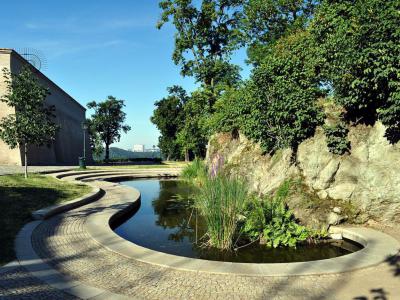
Špilberk Park, located in Brno, is a vast and verdant area situated on the hill beneath the historic Špilberk Castle. This park is one of Brno's most significant green spaces, offering a rich variety of trees and plants that provide a tranquil environment for visitors. It is a beloved spot among locals, who frequent the park for relaxation and leisure activities.
The park is interwoven with paths that lead up to Špilberk Castle, which stands as a central landmark. The journey to the castle involves climbing a steep hill, surrounded by mature trees, offering scenic views and a sense of immersion in nature. Among the various routes to the castle, the one from Šilinger Square, along Pellicova Street, is particularly notable. This street is named after the renowned Italian poet Pellico, who was once imprisoned in Špilberk Castle.
Špilberk Park is more than just a natural retreat; it is also home to several interesting attractions. On the southern slope, visitors can enjoy an outdoor gym and a children's playground at the base of the hill. As one ascends, one encounters a remarkable sculpture of the local poet Jan Skácel, created by artist Jiří Sobotka. This oversized sculpture, made of steel tubes, allows visitors to symbolically see the Old Brno neighborhood through the poet's eyes.
Further up the southern slope, a lookout gazebo from 1885 offers panoramic views of the city, and nearby, a pétanque court invites friendly competition. The park's north-western edge is marked by the gilded cupola of the Orthodox Church of Saint Wenceslas, located near another playground.
Špilberk Park also honors significant historical and cultural figures. On the northern slope, there is a memorial to Christian d’Elvert, the park's founder, as well as a memorial to the local composer and choirmaster Pavel Křížkovský. Additionally, on the eastern slope stands a memorial dedicated to the Italian Carbonari, revolutionaries who were imprisoned at Špilberk Castle during the 19th century when it was known as the "prison of nations."
The park is interwoven with paths that lead up to Špilberk Castle, which stands as a central landmark. The journey to the castle involves climbing a steep hill, surrounded by mature trees, offering scenic views and a sense of immersion in nature. Among the various routes to the castle, the one from Šilinger Square, along Pellicova Street, is particularly notable. This street is named after the renowned Italian poet Pellico, who was once imprisoned in Špilberk Castle.
Špilberk Park is more than just a natural retreat; it is also home to several interesting attractions. On the southern slope, visitors can enjoy an outdoor gym and a children's playground at the base of the hill. As one ascends, one encounters a remarkable sculpture of the local poet Jan Skácel, created by artist Jiří Sobotka. This oversized sculpture, made of steel tubes, allows visitors to symbolically see the Old Brno neighborhood through the poet's eyes.
Further up the southern slope, a lookout gazebo from 1885 offers panoramic views of the city, and nearby, a pétanque court invites friendly competition. The park's north-western edge is marked by the gilded cupola of the Orthodox Church of Saint Wenceslas, located near another playground.
Špilberk Park also honors significant historical and cultural figures. On the northern slope, there is a memorial to Christian d’Elvert, the park's founder, as well as a memorial to the local composer and choirmaster Pavel Křížkovský. Additionally, on the eastern slope stands a memorial dedicated to the Italian Carbonari, revolutionaries who were imprisoned at Špilberk Castle during the 19th century when it was known as the "prison of nations."
11) The Old Town Hall (must see)
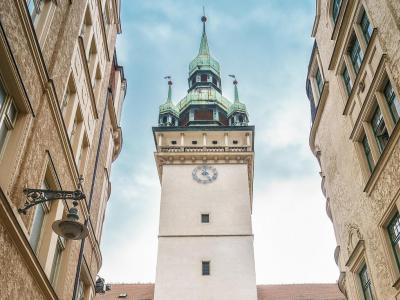
The Old Town Hall is a building in Brno's historical center. While it previously served as a home for public meetings, it is now a cultural center. The Old Town Hall has an art gallery, history exhibit, and information center.
The building is the oldest secular edifice in Brno that is still standing. The original structure, built in 1240, was greatly expanded during the 15th century, with new additions steadily constructed from 1577 through 1905. It ceased its use as a town hall in 1935. Most of the construction and details use the Gothic architecture style by Austrian architect and sculptor Anton Pilgram.
The Old Town Hall's courtyard is a venue for concerts, open-air theatres, film screenings, and festivals. The courtyard uses Renaissance arcades with early Baroque touches.
The Old Town Hall is open year-round. However, only those tourists who visit Brno from June through September may climb the 206-foot tower to see a stunning view of the city.
The building is the oldest secular edifice in Brno that is still standing. The original structure, built in 1240, was greatly expanded during the 15th century, with new additions steadily constructed from 1577 through 1905. It ceased its use as a town hall in 1935. Most of the construction and details use the Gothic architecture style by Austrian architect and sculptor Anton Pilgram.
The Old Town Hall's courtyard is a venue for concerts, open-air theatres, film screenings, and festivals. The courtyard uses Renaissance arcades with early Baroque touches.
The Old Town Hall is open year-round. However, only those tourists who visit Brno from June through September may climb the 206-foot tower to see a stunning view of the city.
12) St. James' Church and Brno Ossuary (must see)
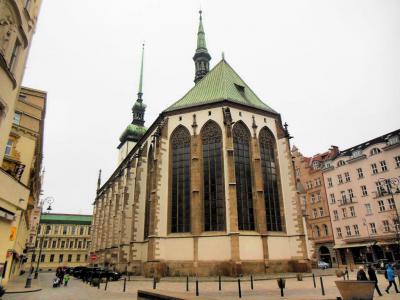
The Church of St. James the Greater is a stunning Late Gothic, three-aisled church adorned with Baroque details. Its origins date back to the early 13th century. Inside, you'll find the grave of Marshal Louis Raduit de Souches, the renowned defender of Brno during the Thirty Years' War, alongside a rare ossuary.
The church has recently undergone renovations, and its brilliance has been fully restored. It features now a brand-new guided tour through its monumental four-story roof structure. Visitors can also enjoy a modern audio-visual light show that delves into the history of Brno and the St. James' Church.
The Brno Ossuary is an underground vault under the Church of Saint James. It is the second-largest ossuary in Europe. The number of people buried here is estimated to exceed 50,000.
The ossuary was founded in the 17th century. The purpose of the space was to find a final resting place for bones while freeing up space in the overly crowded cemetery at the Church of Saint James. It became customary to re-open graves about ten years after burial and have the remains moved into the ossuary.
The reforms introduced by Roman Emperor Joseph II in 1784 resulted in churchyards being closed down for hygienic reasons. The remains from the graves were placed in crypts instead. The headstones at the Saint James Cemetery were removed and used to pave the ground. The ossuary was gradually forgotten.
It was rediscovered in 2001. Brno Ossuary opened to the public in 2012.
The church has recently undergone renovations, and its brilliance has been fully restored. It features now a brand-new guided tour through its monumental four-story roof structure. Visitors can also enjoy a modern audio-visual light show that delves into the history of Brno and the St. James' Church.
The Brno Ossuary is an underground vault under the Church of Saint James. It is the second-largest ossuary in Europe. The number of people buried here is estimated to exceed 50,000.
The ossuary was founded in the 17th century. The purpose of the space was to find a final resting place for bones while freeing up space in the overly crowded cemetery at the Church of Saint James. It became customary to re-open graves about ten years after burial and have the remains moved into the ossuary.
The reforms introduced by Roman Emperor Joseph II in 1784 resulted in churchyards being closed down for hygienic reasons. The remains from the graves were placed in crypts instead. The headstones at the Saint James Cemetery were removed and used to pave the ground. The ossuary was gradually forgotten.
It was rediscovered in 2001. Brno Ossuary opened to the public in 2012.
13) Náměstí Svobody (Liberty Square) (must see)
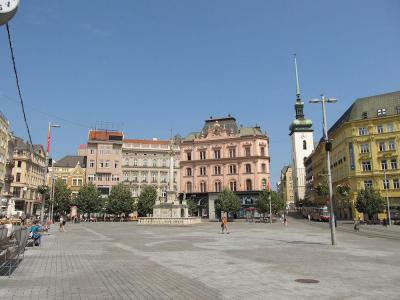
Liberty Square (Náměstí Svobody) is the vibrant heart of Brno. Unlike typical historical city centers, Liberty Square has a unique character that blends the old with the new, creating an atmosphere that is both dynamic and steeped in history.
The square's unusual triangular shape was defined by ancient trade routes and a stream that once served as the city's sewer in the 13th century. This area, historically known as Lower Market (Dolní trh) and later Big Square (Velké náměstí), has been a central part of Brno since it was first mentioned in records from the 13th century.
One of the most striking features of Liberty Square is the black granite astronomical clock, which has become a symbol of the city. This clock, resembling a spaceship, only shows the time 11:00 AM, a nod to Brno's legendary history. It commemorates the successful defense of the city during the Swedish siege in 1645. Every day at this time, a small glass of marble drops from the clock, offering a unique souvenir for those quick enough to catch it.
The square is also home to several historically and architecturally significant buildings. The House of the Lords of Lipá, a Renaissance-style building, is adorned with etched mythological and biblical scenes. Klein Palace, a Renaissance Revival structure, reflects the industrial legacy of the Klein family, known for their ironworks. The House of Four Giants, designed in 1902, features four imposing figures supporting the building's facade.
In addition to its architectural landmarks, Liberty Square is adorned with several sculptures and monuments. The early Baroque plague column from 1689 serves as a poignant reminder of past plague outbreaks in the city. Two bronze fountains, featuring poetic inscriptions by local poet Jan Skácel, add to the square's artistic charm.
Throughout the year, Liberty Square hosts numerous cultural events, including Easter markets, wine festivals celebrating the opening of Saint Martin’s wines, and the festive Brno Christmas market. These events bring the square to life, making it not just a historical site but a lively gathering place for both locals and visitors.
The square's unusual triangular shape was defined by ancient trade routes and a stream that once served as the city's sewer in the 13th century. This area, historically known as Lower Market (Dolní trh) and later Big Square (Velké náměstí), has been a central part of Brno since it was first mentioned in records from the 13th century.
One of the most striking features of Liberty Square is the black granite astronomical clock, which has become a symbol of the city. This clock, resembling a spaceship, only shows the time 11:00 AM, a nod to Brno's legendary history. It commemorates the successful defense of the city during the Swedish siege in 1645. Every day at this time, a small glass of marble drops from the clock, offering a unique souvenir for those quick enough to catch it.
The square is also home to several historically and architecturally significant buildings. The House of the Lords of Lipá, a Renaissance-style building, is adorned with etched mythological and biblical scenes. Klein Palace, a Renaissance Revival structure, reflects the industrial legacy of the Klein family, known for their ironworks. The House of Four Giants, designed in 1902, features four imposing figures supporting the building's facade.
In addition to its architectural landmarks, Liberty Square is adorned with several sculptures and monuments. The early Baroque plague column from 1689 serves as a poignant reminder of past plague outbreaks in the city. Two bronze fountains, featuring poetic inscriptions by local poet Jan Skácel, add to the square's artistic charm.
Throughout the year, Liberty Square hosts numerous cultural events, including Easter markets, wine festivals celebrating the opening of Saint Martin’s wines, and the festive Brno Christmas market. These events bring the square to life, making it not just a historical site but a lively gathering place for both locals and visitors.
