Custom Walk in Malaga, Spain by jsuever_9f93a created on 2025-06-23
Guide Location: Spain » Malaga
Guide Type: Custom Walk
# of Sights: 14
Tour Duration: 6 Hour(s)
Travel Distance: 15.2 Km or 9.4 Miles
Share Key: MLU4R
Guide Type: Custom Walk
# of Sights: 14
Tour Duration: 6 Hour(s)
Travel Distance: 15.2 Km or 9.4 Miles
Share Key: MLU4R
How It Works
Please retrieve this walk in the GPSmyCity app. Once done, the app will guide you from one tour stop to the next as if you had a personal tour guide. If you created the walk on this website or come to the page via a link, please follow the instructions below to retrieve the walk in the app.
Retrieve This Walk in App
Step 1. Download the app "GPSmyCity: Walks in 1K+ Cities" on Apple App Store or Google Play Store.



Step 2. In the GPSmyCity app, download(or launch) the guide "Malaga Map and Walking Tours".
Step 3. Tap the menu button located at upper right corner of the "Walks" screen and select "Retrieve custom walk". Enter the share key: MLU4R
1) Puerto de Malaga (Port of Málaga) (must see)
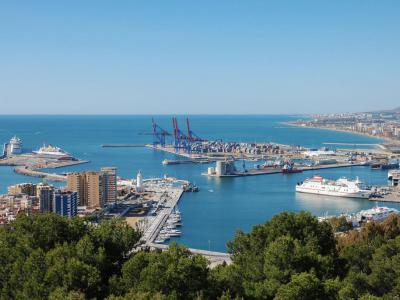
Phoenicians from Tyre were familiar with Malaga. They had founded the port in the year 1,000 BC or thereabouts, and they had named it for the Semetic word for Salt, "Malaka." Fish were salted on the first dock, a single quay running along the shoreline. During the Roman era the port was famous for minerals, almonds, wine and oil.
As Malaga was named the capital of Islamic Granada, trade and business expanded. When Ferdinand and Isabella entered the city in 1487 the port also became strategically important to the new regime. It served to embark troops for the Spanish conquest of the Rif area of North Africa and Oran.
The port experienced rapid expansion in the 16th and 17th centuries. It became Spain's the major place of export. King Philip V commissioned French engineer Bartolome Thurns to expand the port to meet military and business needs. The result was the construction of the East Dock and the New Quay. The first lighthouse appeared in 1814.
The port today is less important for marine trade but thriving in tourism. It is full of bars and restaurants with lively nightlife entertainments. During the day it is a great place to have a walk and enjoy the sea view.
As Malaga was named the capital of Islamic Granada, trade and business expanded. When Ferdinand and Isabella entered the city in 1487 the port also became strategically important to the new regime. It served to embark troops for the Spanish conquest of the Rif area of North Africa and Oran.
The port experienced rapid expansion in the 16th and 17th centuries. It became Spain's the major place of export. King Philip V commissioned French engineer Bartolome Thurns to expand the port to meet military and business needs. The result was the construction of the East Dock and the New Quay. The first lighthouse appeared in 1814.
The port today is less important for marine trade but thriving in tourism. It is full of bars and restaurants with lively nightlife entertainments. During the day it is a great place to have a walk and enjoy the sea view.

2) Plaza y Acera de La Marina (Marina Square and Sidewalk)
Jaime Fernandez Pimentel wanted to memorialize "Diego" the "cenachero" who sold fish from baskets in front of Jaime's childhood home on Carreteria Street. There are no more cenacheros, but Jaime's statue of Diego stands today, a lasting symbol of Malaga, in the Marina Square, a popular square in the Centro district of the city.
The Marina Square is a major nexus of the city. It intersects with the Alameda Principal, the Paseo del Parque, and Molina Lario Street, with access to the Port of Malaga. The square was originally designed in 1848. Land was reclaimed from the sea and the old walls from the Nasrid era were demolished.
Plaza de la Marina is the original name of the square. Since 1848 the area name has changed twice. It became Plaza de la Marina again in 1942 as the square was remodeled and expanded, buildings demolished and a fountain installed.
In 1984 there was more remodeling. Underground parking and a garden were installed. There is now a tourist office and a skateboarding area in the plaza. In the future the Port of Malaga will be merged with the park and the square will be completely pedestrianized.
The Marina Square is a major nexus of the city. It intersects with the Alameda Principal, the Paseo del Parque, and Molina Lario Street, with access to the Port of Malaga. The square was originally designed in 1848. Land was reclaimed from the sea and the old walls from the Nasrid era were demolished.
Plaza de la Marina is the original name of the square. Since 1848 the area name has changed twice. It became Plaza de la Marina again in 1942 as the square was remodeled and expanded, buildings demolished and a fountain installed.
In 1984 there was more remodeling. Underground parking and a garden were installed. There is now a tourist office and a skateboarding area in the plaza. In the future the Port of Malaga will be merged with the park and the square will be completely pedestrianized.
3) Mercado de Atarazanas (Shipyards Market) (must see)
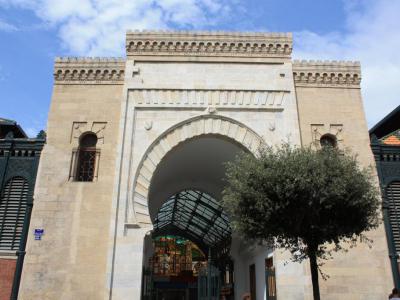
When is a shipyard not a shipyard? When there are no ships in the yard, or there is no yard and there is no water and it's really a market. But during the rule of Mohammed V (1354-1391} the market was actually a shipyard. With seven stone horseshoe arches, it was among the most impressive buildings around.
Only one arch is still there. It serves as the entrance to the Shipyards Market. There are a couple of small shields at the top of the arch with the inscription in Arabic, "Only God is the victor, glory be to Him."
When the Catholics took over the city in 1487 the Atarazanas was used as a convent. The sea was much closer then and the waves and the ships were perhaps too distracting. The convent was given up in favor of a military storage facility. Then it was a hospital and then a medical school. In 1868 the government said, "tear it down. Make a market."
Along came architect Joaquin Rucoba. He rebuilt the Atarazanas, keeping only one arch as the main entrance in the center of the south facade. The new market was done in an Arabic style with arched windows and panels and iron for stone. It also has inside a huge stained glass window showing the main sights of Malaga.
The market is bustling every day except Sunday from 8am to 2pm. Meats, fish, fresh fruit and vegetables are available in separate stalls. The market is not only a place for local products, it is also famous for its tapas.
Only one arch is still there. It serves as the entrance to the Shipyards Market. There are a couple of small shields at the top of the arch with the inscription in Arabic, "Only God is the victor, glory be to Him."
When the Catholics took over the city in 1487 the Atarazanas was used as a convent. The sea was much closer then and the waves and the ships were perhaps too distracting. The convent was given up in favor of a military storage facility. Then it was a hospital and then a medical school. In 1868 the government said, "tear it down. Make a market."
Along came architect Joaquin Rucoba. He rebuilt the Atarazanas, keeping only one arch as the main entrance in the center of the south facade. The new market was done in an Arabic style with arched windows and panels and iron for stone. It also has inside a huge stained glass window showing the main sights of Malaga.
The market is bustling every day except Sunday from 8am to 2pm. Meats, fish, fresh fruit and vegetables are available in separate stalls. The market is not only a place for local products, it is also famous for its tapas.
4) Calle Larios (Larios Street) (must see)
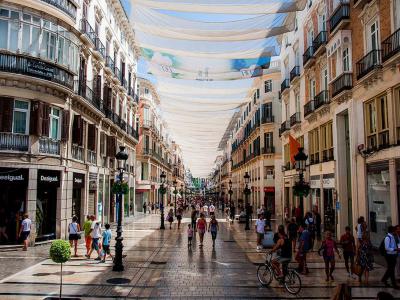
Someone in Malaga really liked Chicago buildings in the 1880s. Chief suspect might be Jose Maria Sancha, architect and designer of Calle Larios. Or, the Chicago architecture fan might also be Sancha's colleague, Manuel Rivera. But no. Building design was by Chicago enthusiast and Spanish Architect, Eduardo Strachan Viana-Cardenas.
The street is pedestrianized to encourage strolling and shopping, especially shopping. It extends from the Constitution Square in the north to Alameda Principal in the south. It is reputed to be the most expensive street to live on in Malaga, and one of the most expensive to live on throughout Spain.
In 1880 a corporation formed by the city to fund creation of the street raised over one million pesetas. Shares were 25,000 pesetas each. Most were purchased by the Larios family. It was to no-one's surprise that the street was named for Manuel Larios. A statue of him by Mariano Benlliure is at the south end of the street.
During the time of the Second Republic the street was briefly renamed "Calle 14 de Abril" for the date of the introduction of democracy. In the Spanish civil war the street was bombed but spared much architectural damage.
Larios Street is very popular. It is lined with banks, cafes and businesses. Besides the statue of Manuel Larios there is the sculpture of the Quiromantic Dove, by Jose Sigal.
The street is pedestrianized to encourage strolling and shopping, especially shopping. It extends from the Constitution Square in the north to Alameda Principal in the south. It is reputed to be the most expensive street to live on in Malaga, and one of the most expensive to live on throughout Spain.
In 1880 a corporation formed by the city to fund creation of the street raised over one million pesetas. Shares were 25,000 pesetas each. Most were purchased by the Larios family. It was to no-one's surprise that the street was named for Manuel Larios. A statue of him by Mariano Benlliure is at the south end of the street.
During the time of the Second Republic the street was briefly renamed "Calle 14 de Abril" for the date of the introduction of democracy. In the Spanish civil war the street was bombed but spared much architectural damage.
Larios Street is very popular. It is lined with banks, cafes and businesses. Besides the statue of Manuel Larios there is the sculpture of the Quiromantic Dove, by Jose Sigal.
5) Catedral de Málaga (Malaga Cathedral) (must see)
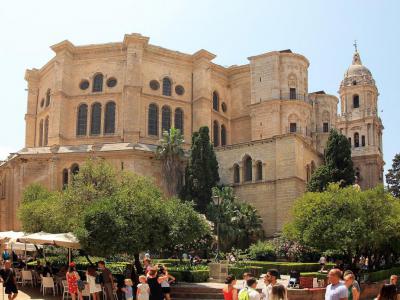
Malaga Cathedral has the nickname, "La Manquita" or "the One-armed Lady." The "arms" of the Cathedral are its towers. The north tower of the cathedral is 276 feet high. The south tower is unfinished. A plaque at the stunted south tower explains why. The funds earmarked for the tower were given to the American revolutionaries instead.
This windfall for the Americans occurred through the good offices of Luis de Unzaga, who was governor of what is now Louisiana, with connections to King Carlos III of Spain. So, the cathedral has been short-armed since at least 1776. Groundbreaking for the cathedral took place in 1528. It was considered finished in 1782.
The cathedral is designed by Diego de Siloe in the Renaissance tradition, inside and out. De Siloe learned the Italian Renaissance styles in Naples in 1517. He combined these elements with Spanish Gothic and Arab architectural motifs. The cathedral has a nave and two aisles. The stalls of the choir are the work of Pedro de Mena.
The facade of the cathedral differs from the rest of the building in that it is in Baroque style. It is in two levels. There are three arches on the lower level with portals flanked by marble columns. Medallions above the doors represent the patron saints of Malaga, Cyriacus and Paula and the Annunciation of the Virgin.
Why You Should Visit:
Richly decorated and architecturally interesting. Very interesting chapels all around inside and the views from the bell tower over the city and beyond should definitely not be missed if you are fit.
This windfall for the Americans occurred through the good offices of Luis de Unzaga, who was governor of what is now Louisiana, with connections to King Carlos III of Spain. So, the cathedral has been short-armed since at least 1776. Groundbreaking for the cathedral took place in 1528. It was considered finished in 1782.
The cathedral is designed by Diego de Siloe in the Renaissance tradition, inside and out. De Siloe learned the Italian Renaissance styles in Naples in 1517. He combined these elements with Spanish Gothic and Arab architectural motifs. The cathedral has a nave and two aisles. The stalls of the choir are the work of Pedro de Mena.
The facade of the cathedral differs from the rest of the building in that it is in Baroque style. It is in two levels. There are three arches on the lower level with portals flanked by marble columns. Medallions above the doors represent the patron saints of Malaga, Cyriacus and Paula and the Annunciation of the Virgin.
Why You Should Visit:
Richly decorated and architecturally interesting. Very interesting chapels all around inside and the views from the bell tower over the city and beyond should definitely not be missed if you are fit.

6) Museo Carmen Thyssen Malaga (Carmen Thyssen Museum) (must see)
The Carmen Thyssen Museum (Museo Carmen Thyssen Malaga), located in the heart of Malaga, is a celebrated cultural institution dedicated to 19th-century Spanish painting, with a special emphasis on Andalusian art. This museum stems from the personal collection of Carmen Cervera, the fifth wife of Baron Hans Heinrich Thyssen-Bornemisza, who began her journey as an art collector in the 1980s.
Cervera’s collection complements the broader Thyssen family art collection displayed at the Thyssen-Bornemisza Museum in Madrid since 1992. In 1999, she agreed to exhibit her works at the Madrid Museum temporarily while a permanent home for her collection was sought. The solution came in the form of the Carmen Thyssen Museum in Malaga, which officially opened to the public on March 24, 2011.
Housed within the 16th-century Baroque Villalon Palace, the museum combines historical charm with modern design. RG Associate Architects undertook the extensive project, reconstructing parts of the palace and adding purpose-built exhibition spaces. The museum spans 7,147 square meters, with 5,185 square meters allocated for exhibitions, including three rooms for its permanent collection and two dedicated to temporary displays. The Old Masters collection is displayed in the palace itself.
The site is also archaeologically significant. Excavations since 2005 have unearthed Roman-era remains, offering insight into continuous occupation from the 1st to the 5th century AD. Highlights include a suburban villa featuring a fish-salting factory, a monumental nymphaeum adorned with fish-themed wall paintings, geometric mosaics, and remnants of a bronze sculpture. The area later saw periods of abandonment, a brief revival for fish production in the 5th century, and eventually became a necropolis during the Byzantine era.
The Carmen Thyssen Museum stands as a beacon of art and history, intertwining Andalusian heritage with contemporary appreciation for Spanish painting, making it a must-visit cultural landmark in Malaga.
Cervera’s collection complements the broader Thyssen family art collection displayed at the Thyssen-Bornemisza Museum in Madrid since 1992. In 1999, she agreed to exhibit her works at the Madrid Museum temporarily while a permanent home for her collection was sought. The solution came in the form of the Carmen Thyssen Museum in Malaga, which officially opened to the public on March 24, 2011.
Housed within the 16th-century Baroque Villalon Palace, the museum combines historical charm with modern design. RG Associate Architects undertook the extensive project, reconstructing parts of the palace and adding purpose-built exhibition spaces. The museum spans 7,147 square meters, with 5,185 square meters allocated for exhibitions, including three rooms for its permanent collection and two dedicated to temporary displays. The Old Masters collection is displayed in the palace itself.
The site is also archaeologically significant. Excavations since 2005 have unearthed Roman-era remains, offering insight into continuous occupation from the 1st to the 5th century AD. Highlights include a suburban villa featuring a fish-salting factory, a monumental nymphaeum adorned with fish-themed wall paintings, geometric mosaics, and remnants of a bronze sculpture. The area later saw periods of abandonment, a brief revival for fish production in the 5th century, and eventually became a necropolis during the Byzantine era.
The Carmen Thyssen Museum stands as a beacon of art and history, intertwining Andalusian heritage with contemporary appreciation for Spanish painting, making it a must-visit cultural landmark in Malaga.
7) Historic Botanical Garden of The Conception (must see)
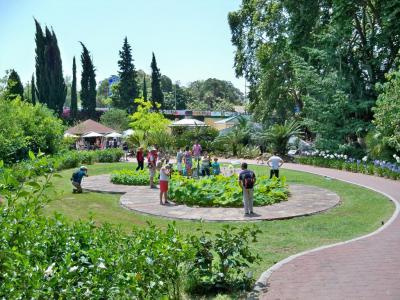
The Historic Botanical Garden of the Conception (Jardin Botanico Historico La Concepcion) is a lush oasis of subtropical beauty with over 150 years of history. Situated at the northern gateway to Malaga, this unique site stands out as one of Europe's few subtropical botanical gardens, boasting more than 50,000 plants from over 2,000 species. The garden features an impressive collection of palms, bamboo, aquatic plants, and other botanical treasures, all anchored by its historic core.
Established in 1855, the Conception was the creation of Jorge Loring y Oyarzabal and Amalia Heredia Livermore, prominent figures of Malaga’s 19th-century upper bourgeoisie. Jorge Loring, a successful businessman and influential politician, partnered with his wife Amalia, a cultured enthusiast of plants, books, and archaeology, to develop this estate. Their vision transformed the Conception into both a botanical haven and a repository of archaeological artifacts, including Roman sculptures and mosaics.
The design of the garden was greatly influenced by the expertise of French gardener Chamoussant and other skilled botanists. Following the financial decline of the Loring-Heredia family, the estate was acquired in 1911 by the Echevarria Azcarate family, who expanded the garden’s collection and enhanced its beauty. In 1943, the site was recognized as a historical-artistic garden and later declared an Asset of Cultural Interest.
The City of Malaga purchased the property in 1990, initiating extensive restoration work that culminated in its public opening in 1994. The garden was revitalized, blending its historic charm with modern botanical features. Spanning 55 hectares, the Conception includes a 25-hectare historical garden surrounded by thematic gardens and a natural Mediterranean forest.
The modern sections incorporate features such as the "Around the World in Eighty Trees" route, a palm tree world map, and dedicated areas for cacti, succulents, orchids, and carnivorous plants. These additions reflect a systematic approach to botanical study, enriching the garden's academic and ecological value.
Today, the Historic Botanical Garden of the Conception serves as both a serene retreat and an educational hub. It invites visitors to immerse themselves in the beauty of nature while appreciating the cultural and scientific heritage that has shaped this remarkable space.
Established in 1855, the Conception was the creation of Jorge Loring y Oyarzabal and Amalia Heredia Livermore, prominent figures of Malaga’s 19th-century upper bourgeoisie. Jorge Loring, a successful businessman and influential politician, partnered with his wife Amalia, a cultured enthusiast of plants, books, and archaeology, to develop this estate. Their vision transformed the Conception into both a botanical haven and a repository of archaeological artifacts, including Roman sculptures and mosaics.
The design of the garden was greatly influenced by the expertise of French gardener Chamoussant and other skilled botanists. Following the financial decline of the Loring-Heredia family, the estate was acquired in 1911 by the Echevarria Azcarate family, who expanded the garden’s collection and enhanced its beauty. In 1943, the site was recognized as a historical-artistic garden and later declared an Asset of Cultural Interest.
The City of Malaga purchased the property in 1990, initiating extensive restoration work that culminated in its public opening in 1994. The garden was revitalized, blending its historic charm with modern botanical features. Spanning 55 hectares, the Conception includes a 25-hectare historical garden surrounded by thematic gardens and a natural Mediterranean forest.
The modern sections incorporate features such as the "Around the World in Eighty Trees" route, a palm tree world map, and dedicated areas for cacti, succulents, orchids, and carnivorous plants. These additions reflect a systematic approach to botanical study, enriching the garden's academic and ecological value.
Today, the Historic Botanical Garden of the Conception serves as both a serene retreat and an educational hub. It invites visitors to immerse themselves in the beauty of nature while appreciating the cultural and scientific heritage that has shaped this remarkable space.
8) Plaza de la Merced (Merced Square) (must see)
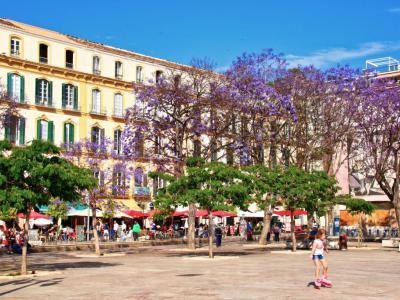
Merced Square is a part of the neighborhood of La Merced in Malaga. In August of 1487 the formal surrender of the city by the Moors took place in this square. The procession was led by Bishop Pedro de Toledo. There were the Catholic Monarchs, knights, nobility, and freed Christian captives. It was quite a party.
In 1507 the Mercedarian Friars arrived at the Square. They built a church and a large convent. It was the mission of the Mercedarians to free Christians slaves from captivity. The square is outside of the old Moorish city walls. It is a true square, laid down by Roman builders, not formed by a simple confluence of streets.
In the center of the square is the Monument to Torrijos, erected in the 19th century. Rafael Mitjana designed the monument to memorialize General Jose Maria Torrijos and 48 of his followers who were executed by order of Ferdinand VII. The base of the monument houses the remains of General Torrijos and his men.
There is a statue of Pablo Picasso in the square. He is sitting on a bench with his notebook and pencil. He sits to one side, leaving plenty of room for anyone who would like to sit next to him. The house Picasso was born in is Number 15 of the Plaza. It is now a museum and the office of the Pablo Ruiz Picasso Foundation.
Why You Should Visit:
Very pretty square wherein you can get a good look at and sit next to Picasso himself for a photo opportunity.
The understated element is its proximity to a range of bars & restaurants that bedeck the area immediately surrounding.
In 1507 the Mercedarian Friars arrived at the Square. They built a church and a large convent. It was the mission of the Mercedarians to free Christians slaves from captivity. The square is outside of the old Moorish city walls. It is a true square, laid down by Roman builders, not formed by a simple confluence of streets.
In the center of the square is the Monument to Torrijos, erected in the 19th century. Rafael Mitjana designed the monument to memorialize General Jose Maria Torrijos and 48 of his followers who were executed by order of Ferdinand VII. The base of the monument houses the remains of General Torrijos and his men.
There is a statue of Pablo Picasso in the square. He is sitting on a bench with his notebook and pencil. He sits to one side, leaving plenty of room for anyone who would like to sit next to him. The house Picasso was born in is Number 15 of the Plaza. It is now a museum and the office of the Pablo Ruiz Picasso Foundation.
Why You Should Visit:
Very pretty square wherein you can get a good look at and sit next to Picasso himself for a photo opportunity.
The understated element is its proximity to a range of bars & restaurants that bedeck the area immediately surrounding.
9) Museo Picasso Málaga (Picasso Museum) (must see)
Pablo Picasso's father, Jose Ruiz, was the curator of the city museum of Malaga. The museum was not often open to the public because of limited budgets. Part of Jose's compensation was the exclusive use of a room in the building as an art studio. Pablo did his first sketches in that room, working with his father.
Now Picasso has a museum in Paris, and another in Barcelona. He has several of them but the Picasso Museum in Malaga is close to home. Six hundred feet away from the Picasso Museum is the Merced Square where he was born. In 2003 the Picasso Museum had its grand opening with the King and Queen of Spain in attendance.
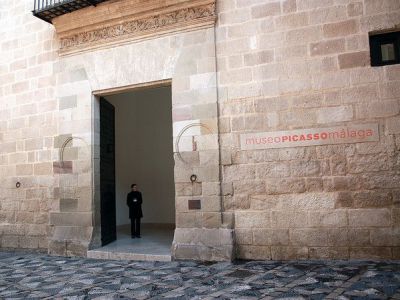
The Buenavista Palace that housed the museum was built in the 16th century. It was built for one Diego de Cazalla. Under the Palace were the remains of a Nasrid palace which have partially survived.
The 20th century conversion of the dilapidated palace into a museum was a challenging project led by architect Richard Gluckman. The palace alone was not large enough to accommodate all the functions of a proper museum. It was necessary to acquire two neighboring houses that had fallen into disrepair.
Christine Picasso, widow of the artist's eldest son Paulo Ruiz-Picasso, and her son Bernard have donated 155 of Picasso's works to the Museum. The collection includes early studies in Cubism and his later re-doing of Old Masters. Additional pieces are on loan. There are documents, photos and a library with nearly a thousand titles devoted to Picasso.
Tip:
It is possible to get in for free on a Sunday at noon but be aware the queues can be huge and the wait is long.
Now Picasso has a museum in Paris, and another in Barcelona. He has several of them but the Picasso Museum in Malaga is close to home. Six hundred feet away from the Picasso Museum is the Merced Square where he was born. In 2003 the Picasso Museum had its grand opening with the King and Queen of Spain in attendance.
The Buenavista Palace that housed the museum was built in the 16th century. It was built for one Diego de Cazalla. Under the Palace were the remains of a Nasrid palace which have partially survived.
The 20th century conversion of the dilapidated palace into a museum was a challenging project led by architect Richard Gluckman. The palace alone was not large enough to accommodate all the functions of a proper museum. It was necessary to acquire two neighboring houses that had fallen into disrepair.
Christine Picasso, widow of the artist's eldest son Paulo Ruiz-Picasso, and her son Bernard have donated 155 of Picasso's works to the Museum. The collection includes early studies in Cubism and his later re-doing of Old Masters. Additional pieces are on loan. There are documents, photos and a library with nearly a thousand titles devoted to Picasso.
Tip:
It is possible to get in for free on a Sunday at noon but be aware the queues can be huge and the wait is long.
10) Alcazaba of Malaga (Malaga Fortress) (must see)
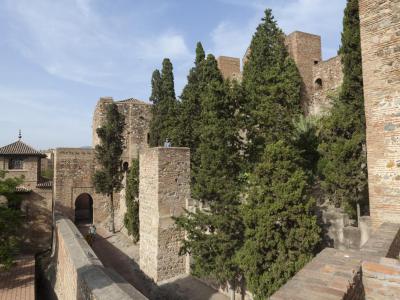
The Malaga Fortress is built on a hill near the center of Malaga. As a military installation, it is ideally situated. It overlooks both the city below and the sea. It is enclosed by two massive walls of stone. It was also attached to the city ramparts and it has strategically located defensive towers.
The outer fortress is accessed by the Vault Gate. The gate was designed to double back on itself, making it difficult for intruders to enter. These days, however, visitors may use the elevator.
A pathway leads up past gardens and ornate fountains through the Gate of Columns or Tower of Christ and then turns abruptly once again with intruders in mind. The inner fortress can be reached by the Gate of the Granada Quarters, which defends the western edge of the palace. The Tower of Tribute takes care of the eastern edge.
Inside this second defensive wall is the palace itself and houses which were built on three patios in the 11th, 13th and 14th centuries. Among them are the Quarters of Granada. The Quarters would serve as residences of governors and as Royal Apartments.
The Malaga Fortress is located at the foot the Gibralfaro hill. It is connected to the Arab defenses by a walled-in passageway called Coracha. The Roman Theatre and the customs building share a space. Here is the opportunity to compare Roman, Renaissance and Arab construction together.
Arab historians claim the palace was built by 1063 by order of King Badis of the Berber Taifa of Granada. Building materials were transported to the site for general construction and the columns while the old Roman theatre supplied materials for capitals and other like uses.
Ferdinand and Isabella seized Malaga in 1487 by one of the longest sieges of the Reconquest. They entered the fortress and raised their royal standard at the Tower of Tribute. That was the day Spain became Spain.
The outer fortress is accessed by the Vault Gate. The gate was designed to double back on itself, making it difficult for intruders to enter. These days, however, visitors may use the elevator.
A pathway leads up past gardens and ornate fountains through the Gate of Columns or Tower of Christ and then turns abruptly once again with intruders in mind. The inner fortress can be reached by the Gate of the Granada Quarters, which defends the western edge of the palace. The Tower of Tribute takes care of the eastern edge.
Inside this second defensive wall is the palace itself and houses which were built on three patios in the 11th, 13th and 14th centuries. Among them are the Quarters of Granada. The Quarters would serve as residences of governors and as Royal Apartments.
The Malaga Fortress is located at the foot the Gibralfaro hill. It is connected to the Arab defenses by a walled-in passageway called Coracha. The Roman Theatre and the customs building share a space. Here is the opportunity to compare Roman, Renaissance and Arab construction together.
Arab historians claim the palace was built by 1063 by order of King Badis of the Berber Taifa of Granada. Building materials were transported to the site for general construction and the columns while the old Roman theatre supplied materials for capitals and other like uses.
Ferdinand and Isabella seized Malaga in 1487 by one of the longest sieges of the Reconquest. They entered the fortress and raised their royal standard at the Tower of Tribute. That was the day Spain became Spain.
11) Mirador del Gibralfaro (Gibralfaro Viewpoint)
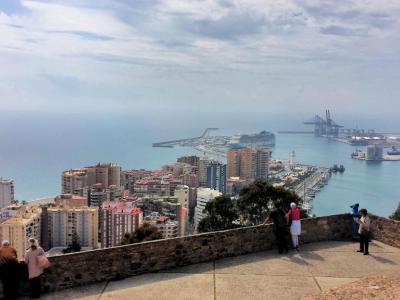
Gibralfaro Viewpoint (Mirador del Gibralfaro) is one of the most breathtaking vantage points in the city. Positioned 130 meters above Mount Gibralfaro and adjacent to the Alcazaba, this watchtower provides a panoramic view that captivates tourists who come from far and wide.
From the Gibralfaro Viewpoint, visitors can see the Malagueta bullring and the Paseo del Parque, which are two of the most iconic landmarks in the city. This viewpoint is a popular spot for tourists to capture a snapshot of the traditional image of Malaga and its stunning surroundings.
In addition to the city's historic landmarks, the viewpoint also provides a view of the large cruise ships that enter the port, offering a glimpse into Malaga's bustling maritime activity. The scene is especially picturesque when viewed from the viewpoint's perch among the pine trees next to the Parador Nacional.
To reach the Gibralfaro Viewpoint, visitors can embark on a short hike from various points in the city center, or drive up to the road that surrounds the Gibralfaro neighborhood. It is a highly accessible destination, making it a must-visit spot for anyone touring Malaga.
The Gibralfaro Viewpoint is a truly unforgettable experience that offers stunning views of Malaga's most famous landmarks and panoramic scenes that are worth capturing in photographs.
From the Gibralfaro Viewpoint, visitors can see the Malagueta bullring and the Paseo del Parque, which are two of the most iconic landmarks in the city. This viewpoint is a popular spot for tourists to capture a snapshot of the traditional image of Malaga and its stunning surroundings.
In addition to the city's historic landmarks, the viewpoint also provides a view of the large cruise ships that enter the port, offering a glimpse into Malaga's bustling maritime activity. The scene is especially picturesque when viewed from the viewpoint's perch among the pine trees next to the Parador Nacional.
To reach the Gibralfaro Viewpoint, visitors can embark on a short hike from various points in the city center, or drive up to the road that surrounds the Gibralfaro neighborhood. It is a highly accessible destination, making it a must-visit spot for anyone touring Malaga.
The Gibralfaro Viewpoint is a truly unforgettable experience that offers stunning views of Malaga's most famous landmarks and panoramic scenes that are worth capturing in photographs.
12) Castillo de Gibralfaro (Gibralfaro Castle) (must see)
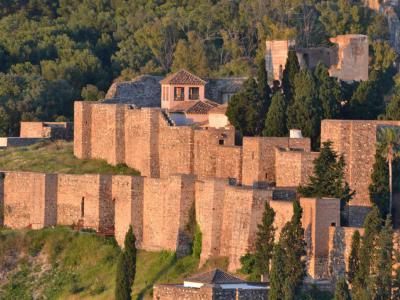
This castle is an ancient fortress resting on top of the Gibralfaro Hill. The peak is 131 meters high and offers spectacular views of the city of Malaga and the Mediterranean Sea. The image of the structure is depicted on the seal and flag of Malaga City.
The Moors erected the fortress near an old lighthouse constructed by the Phoenicians. The name Gibralfaro comes from 'gabel' which means rock in Arabic and 'faro' meaning lighthouse in Greek. Abd-al-Rahman III, the Caliph of Cordoba commissioned the construction of a castle at the site. Yusef I, the Sultan of Grenada, built additional structures including a walled passage that connects the castle with the Alcazaba, in the 14th century.
The Christian monarchs, Ferdinand and Isabella, laid siege to the castle for three months. The siege ended only when hunger forced the Moorish armies to surrender. This was the first time that both armies used gunpowder. After victory, Ferdinand stayed at the castle while Isabella remained in the city.
Today visitors can reach the castle by bus, taxi or by climbing the steps to the summit. They can only see the ruins of the castle and the mosque that once stood at the location. There are several bread ovens and wells within the property. The old gunpowder room now houses an information center and there is a small one-room museum with exhibits that tell the once glorious tale of the castle.
Why You Should Visit:
Excellent attraction not just for history buffs but for anyone wanting to get the best views of this beautiful city and the sea.
Another advantage of starting any historic endeavor at this castle is that you are then able to work your way down the hill (public footpath) to the next phase of historic attractions.
Tip:
The site is perhaps best experienced by walking around the walls which can sometimes be high and often unprotected, as well as narrow – so do be patient and do take care. Taking young children onto the walls is not a very good idea, or if you do, make sure to permanently hold on to them... and tightly.
The Moors erected the fortress near an old lighthouse constructed by the Phoenicians. The name Gibralfaro comes from 'gabel' which means rock in Arabic and 'faro' meaning lighthouse in Greek. Abd-al-Rahman III, the Caliph of Cordoba commissioned the construction of a castle at the site. Yusef I, the Sultan of Grenada, built additional structures including a walled passage that connects the castle with the Alcazaba, in the 14th century.
The Christian monarchs, Ferdinand and Isabella, laid siege to the castle for three months. The siege ended only when hunger forced the Moorish armies to surrender. This was the first time that both armies used gunpowder. After victory, Ferdinand stayed at the castle while Isabella remained in the city.
Today visitors can reach the castle by bus, taxi or by climbing the steps to the summit. They can only see the ruins of the castle and the mosque that once stood at the location. There are several bread ovens and wells within the property. The old gunpowder room now houses an information center and there is a small one-room museum with exhibits that tell the once glorious tale of the castle.
Why You Should Visit:
Excellent attraction not just for history buffs but for anyone wanting to get the best views of this beautiful city and the sea.
Another advantage of starting any historic endeavor at this castle is that you are then able to work your way down the hill (public footpath) to the next phase of historic attractions.
Tip:
The site is perhaps best experienced by walking around the walls which can sometimes be high and often unprotected, as well as narrow – so do be patient and do take care. Taking young children onto the walls is not a very good idea, or if you do, make sure to permanently hold on to them... and tightly.
13) Jardines de Pedro Luis Alonso (Gardens of Pedro Luis Alonso)
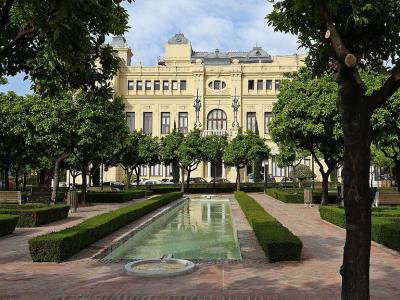
This garden, located on the East of Malaga’s Town Hall was laid after the war in 1945. It combines Mediterranean, French, Hispanic and Moorish design and showcases the wealth of botanical species that grow in and around Malaga.
The Jardines de Pedro Luis Alonso was designed by landscape artist, Guerrero Strachan who planned many of the parks and gardens in Malaga. It is named after the mayor of Malaga who held office at the time when the garden was first opened to the public. The design is based on Latin landscape garden art traditions. The garden is surrounded by cypress hedges in French Hispanic style and the hedges also divide the area into segments. The segments are filled with colorful flower beds. The walkways are lined with orange trees that provide shade, color and fragrance. There are also ponds with regal looking swans.
The landscape of the Pedro Luis Alonzo garden is landscaped in harmony with the buildings that surround it. It is located near the City Hall and against some of the walls of the Alcazaba and Gibralfaro fortresses. The design blends with the Mediterranean architecture of the city hall and the Moorish architecture of the Alcazaba and the Gibralfaro Castle.
The Jardines de Pedro Luis Alonso was designed by landscape artist, Guerrero Strachan who planned many of the parks and gardens in Malaga. It is named after the mayor of Malaga who held office at the time when the garden was first opened to the public. The design is based on Latin landscape garden art traditions. The garden is surrounded by cypress hedges in French Hispanic style and the hedges also divide the area into segments. The segments are filled with colorful flower beds. The walkways are lined with orange trees that provide shade, color and fragrance. There are also ponds with regal looking swans.
The landscape of the Pedro Luis Alonzo garden is landscaped in harmony with the buildings that surround it. It is located near the City Hall and against some of the walls of the Alcazaba and Gibralfaro fortresses. The design blends with the Mediterranean architecture of the city hall and the Moorish architecture of the Alcazaba and the Gibralfaro Castle.
14) Parque de Malaga (Park of Malaga) (must see)
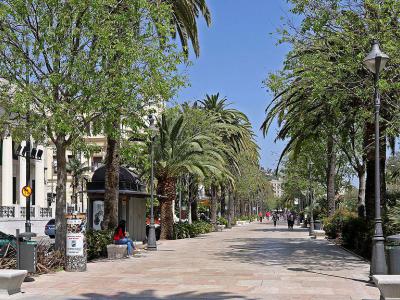
Designed as a flourishing Mediterranean garden, replete with tropical and subtropical species, Park of Malaga is one of the most outstanding parks in Europe. It has botanical contributions from five continents. The park was established in the late 19th century on land reclaimed from the sea.
There is a promenade running through the park lined with Baroque and Renaissance gardens on each side. Benches are covered with Sevillian tiles. Busts and obelisks are dedicated to people of Malaga. There are fountains like Muneca Fountain and Fountain of the Nymph. The Fountain of the Three Graces is in the General Torrijos Square.
The park reaches from the General Torrijos Square to the Marina Square. It lies between the Alameda Principal and the Paseo de Espana alongside Guadiaro Quay. There are three walkways. One on the north side of the Alameda Principal Extension and two on the south side.
The park covers 97,500 square feet, including the rose garden and trees by the City Council and the gardens of the Dark Gate. It is intended to be a place of serenity, marked with gardens, benches, a small open-air theatre, fountains and children's parks. It is also a refuge for the footsore tourist.
There is a promenade running through the park lined with Baroque and Renaissance gardens on each side. Benches are covered with Sevillian tiles. Busts and obelisks are dedicated to people of Malaga. There are fountains like Muneca Fountain and Fountain of the Nymph. The Fountain of the Three Graces is in the General Torrijos Square.
The park reaches from the General Torrijos Square to the Marina Square. It lies between the Alameda Principal and the Paseo de Espana alongside Guadiaro Quay. There are three walkways. One on the north side of the Alameda Principal Extension and two on the south side.
The park covers 97,500 square feet, including the rose garden and trees by the City Council and the gardens of the Dark Gate. It is intended to be a place of serenity, marked with gardens, benches, a small open-air theatre, fountains and children's parks. It is also a refuge for the footsore tourist.
