Custom Walk in London, England by morrisdana_395d5 created on 2025-07-01
Guide Location: England » London
Guide Type: Custom Walk
# of Sights: 9
Tour Duration: 2 Hour(s)
Travel Distance: 2.5 Km or 1.6 Miles
Share Key: DUXWD
Guide Type: Custom Walk
# of Sights: 9
Tour Duration: 2 Hour(s)
Travel Distance: 2.5 Km or 1.6 Miles
Share Key: DUXWD
How It Works
Please retrieve this walk in the GPSmyCity app. Once done, the app will guide you from one tour stop to the next as if you had a personal tour guide. If you created the walk on this website or come to the page via a link, please follow the instructions below to retrieve the walk in the app.
Retrieve This Walk in App
Step 1. Download the app "GPSmyCity: Walks in 1K+ Cities" on Apple App Store or Google Play Store.



Step 2. In the GPSmyCity app, download(or launch) the guide "London Map and Walking Tours".
Step 3. Tap the menu button located at upper right corner of the "Walks" screen and select "Retrieve custom walk". Enter the share key: DUXWD
1) St. Paul's Cathedral (must see)
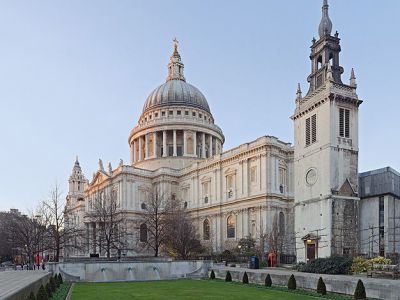
For centuries, Saint Paul's Cathedral has stood tall, quite literally, as London’s ultimate comeback story in stone form. After the Great Fire of 1666 turned the medieval cathedral (originally founded in 1087) into a smoldering memory, Sir Christopher Wren got the challenge of designing the masterpiece we see today.
Construction began in 1675 and took 35 years. Wren’s first design was too modern. The second-too modern again and too Catholic-looking. He eventually struck a deal with the Anglican clergy: throw in a classic English spire, but sneak in a magnificent triple-stacked dome instead. Now it’s the second-largest cathedral dome in the world after St. Peter’s in Rome. Subtle flex.
During WWII and the Blitz, flames again came for the cathedral, and again, it stood its ground. Brave volunteers fought fires on the dome, saving it from complete destruction. Saint Paul’s became a beacon of hope in the rubble. Fittingly, above the south entrance, you’ll spot the Latin word "Resurgam," meaning “I shall rise again.” Very on brand.
Inside, the cathedral is pure English Baroque drama. Climb 257 steps to the Whispering Gallery, where even your gossip echoes in style. Add another 119 steps for the Stone Gallery and 152 more for the Golden Gallery-because apparently, stairs build character. But the panoramic views of London are worth every calf cramp.
Down below in the crypt, you’ll find the final resting places of national legends: the Duke of Wellington, Admiral Nelson, and of course, Wren himself. His epitaph reads: “If you seek his monument, look around you.”
Saint Paul’s was basically Dickens' favorite rooftop. In Master Humphrey’s Clock, he climbs to the top for a bird’s eye view of life’s contradictions, which, come to think of it, London is full of. In David Copperfield, Peggotty enjoys the view too. Dickens knew this neighborhood well and even attended the Duke of Wellington’s funeral here in 1852.
Back in Shakespeare’s day, the area around Saint Paul’s was bustling with booksellers. This was the epicenter of the English publishing world- the Bard’s plays were printed and sold right here. Odds are he browsed the stalls himself, possibly muttering, “To plagiarize, or not to plagiarize...”
And for the modern-day wizarding crowd: yes, that staircase you recognize from Harry Potter and the Prisoner of Azkaban is real. The magical-looking Geometric Staircase-aka the Dean’s Stair-floats elegantly in the cathedral’s South West Bell Tower. You might remember it from Professor Trelawney’s Divination class or The Goblet of Fire. You’ll need a ticket to see it, but for Potterheads, it’s practically a rite of passage.
Tip:
Book online to skip the queue. And maybe spring for the audio tour-unless you’ve got me in your ear, of course.
Construction began in 1675 and took 35 years. Wren’s first design was too modern. The second-too modern again and too Catholic-looking. He eventually struck a deal with the Anglican clergy: throw in a classic English spire, but sneak in a magnificent triple-stacked dome instead. Now it’s the second-largest cathedral dome in the world after St. Peter’s in Rome. Subtle flex.
During WWII and the Blitz, flames again came for the cathedral, and again, it stood its ground. Brave volunteers fought fires on the dome, saving it from complete destruction. Saint Paul’s became a beacon of hope in the rubble. Fittingly, above the south entrance, you’ll spot the Latin word "Resurgam," meaning “I shall rise again.” Very on brand.
Inside, the cathedral is pure English Baroque drama. Climb 257 steps to the Whispering Gallery, where even your gossip echoes in style. Add another 119 steps for the Stone Gallery and 152 more for the Golden Gallery-because apparently, stairs build character. But the panoramic views of London are worth every calf cramp.
Down below in the crypt, you’ll find the final resting places of national legends: the Duke of Wellington, Admiral Nelson, and of course, Wren himself. His epitaph reads: “If you seek his monument, look around you.”
Saint Paul’s was basically Dickens' favorite rooftop. In Master Humphrey’s Clock, he climbs to the top for a bird’s eye view of life’s contradictions, which, come to think of it, London is full of. In David Copperfield, Peggotty enjoys the view too. Dickens knew this neighborhood well and even attended the Duke of Wellington’s funeral here in 1852.
Back in Shakespeare’s day, the area around Saint Paul’s was bustling with booksellers. This was the epicenter of the English publishing world- the Bard’s plays were printed and sold right here. Odds are he browsed the stalls himself, possibly muttering, “To plagiarize, or not to plagiarize...”
And for the modern-day wizarding crowd: yes, that staircase you recognize from Harry Potter and the Prisoner of Azkaban is real. The magical-looking Geometric Staircase-aka the Dean’s Stair-floats elegantly in the cathedral’s South West Bell Tower. You might remember it from Professor Trelawney’s Divination class or The Goblet of Fire. You’ll need a ticket to see it, but for Potterheads, it’s practically a rite of passage.
Tip:
Book online to skip the queue. And maybe spring for the audio tour-unless you’ve got me in your ear, of course.
2) Blackfriars Gatehouse (Shakespeare's former property)
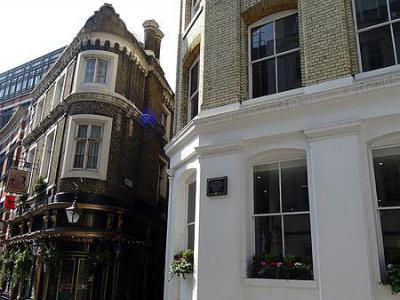
If you head to the Cockpit pub in the City of London today, you're standing right where Shakespeare once made a very smart real estate move. The Blackfriars Gatehouse, sitting just a pint’s throw from the old Blackfriars Playhouse, was the Bard’s one and only known property purchase in London. Pretty handy location, too-King’s Men, Shakespeare’s theater company, were performing his plays at Blackfriars just like they were over at the Globe, keeping the Elizabethan drama scene very much alive.
Now, a little backstory: the theater itself was built on the bones of a Dominican monastery founded way back in 1275-until Henry VIII, in full "dissolver of monasteries" mode, shut it down in 1538. Goodbye monks, hello actors!
Some decades later, on March 10, 1613, Shakespeare bought the Gatehouse from one Henry Walker-a "citizen and minstrel" (i.e., musician with property to spare)-for a hefty £140. That deed is still around today, safely tucked in the London Metropolitan Archives. And here’s the kicker: it’s one of only six places on Earth where you can see Shakespeare’s actual signature. Six. Total.
Despite all the juicy proximity to two major theaters, there's no hard proof that Shakespeare actually lived in the Gatehouse. Maybe he thought about it. Maybe he liked the idea of an easy stroll to work. But when he died in Stratford-upon-Avon three years later, the house stayed more investment property than bachelor pad-bequeathed to his daughter, Susanna, who got the last word in her father's London affairs.
Now, a little backstory: the theater itself was built on the bones of a Dominican monastery founded way back in 1275-until Henry VIII, in full "dissolver of monasteries" mode, shut it down in 1538. Goodbye monks, hello actors!
Some decades later, on March 10, 1613, Shakespeare bought the Gatehouse from one Henry Walker-a "citizen and minstrel" (i.e., musician with property to spare)-for a hefty £140. That deed is still around today, safely tucked in the London Metropolitan Archives. And here’s the kicker: it’s one of only six places on Earth where you can see Shakespeare’s actual signature. Six. Total.
Despite all the juicy proximity to two major theaters, there's no hard proof that Shakespeare actually lived in the Gatehouse. Maybe he thought about it. Maybe he liked the idea of an easy stroll to work. But when he died in Stratford-upon-Avon three years later, the house stayed more investment property than bachelor pad-bequeathed to his daughter, Susanna, who got the last word in her father's London affairs.
3) Dr. Johnson's House
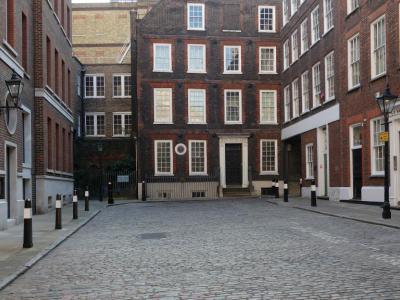
Dr. Samuel Johnson, a renowned 18th-century scholar, is widely known for his sharp and often controversial remarks, meticulously documented and published by his biographer, James Boswell, an esteemed diarist in the world of literature. From 1748 to 1759, the good doctor resided at 17 Gough Square, where he undertook the monumental task of creating the first comprehensive English dictionary, titled "A Dictionary of the English Language," which was published in 1755. This monumental work was painstakingly compiled in the attic, where six scribes and their assistants toiled at high desks throughout the day.
The splendid Georgian house still retains several features from the era and is adorned with authentic 18th-century furnishings. Visitors will find a modest collection of artifacts related to Dr. Johnson and the historical context of his time, including a tea set once owned by his friend Mrs. Thrale, as well as portraits of Johnson and his contemporaries. Additionally, the institution hosts periodic exhibitions and special events. A statue honoring one of Johnson's beloved cats, Hodge, can be seen outside.
Tip:
For a charming post-visit experience, venture around the corner to Wine Office Court, where the venerable pub "Ye Olde Cheshire Cheese" awaits. This pub, a favorite watering hole of both Johnson and Boswell, offers a delightful 17th-century ambiance to savor after your tour.
The splendid Georgian house still retains several features from the era and is adorned with authentic 18th-century furnishings. Visitors will find a modest collection of artifacts related to Dr. Johnson and the historical context of his time, including a tea set once owned by his friend Mrs. Thrale, as well as portraits of Johnson and his contemporaries. Additionally, the institution hosts periodic exhibitions and special events. A statue honoring one of Johnson's beloved cats, Hodge, can be seen outside.
Tip:
For a charming post-visit experience, venture around the corner to Wine Office Court, where the venerable pub "Ye Olde Cheshire Cheese" awaits. This pub, a favorite watering hole of both Johnson and Boswell, offers a delightful 17th-century ambiance to savor after your tour.
4) Middle Temple
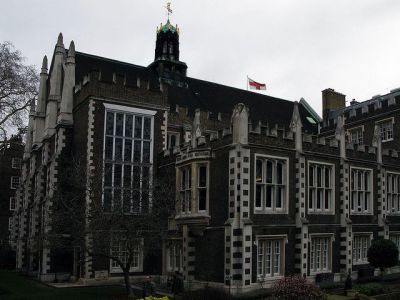
Welcome to Temple, where London's legal elite rub shoulders with medieval ghosts and the spirit of Dickens still loiters by the fountain.
Temple is home to two of the legendary Inns of Court: Middle Temple and Inner Temple. But before the barristers moved in with their powdered wigs and legal jargon, this was sacred turf for the Knights Templar. Yep, the original warrior-monks. Their headquarters were right here, and rumor has it, their initiation rites went down in the crypt of Temple Church. Built in the 12th century and maintained by the Inns since 1608, this church still boasts a mighty Elizabethan organ and 13th-century stone knights lying eternally in its iconic round chapel-forever on break from crusading.
Step into Middle Temple, and it’s like time travel-Victorian fog not included. Charles Dickens himself described the place as having gates that whisper: “Who enters here leaves noise behind.” Over the years, its roll call has included heavyweights like Sir Walter Raleigh (a 17th-century English statesman, soldier, writer and explorer), novelist William Makepeace Thackeray (author of Vanity Fair), and, yes, Dickens himself-because, of course, he couldn't resist a good atmospheric setting.
Also, don’t miss Middle Temple Hall-a Tudor dream with timber for days. Over 100 feet long, 40 feet wide, and topped with a hammer-beam roof that would make any medieval carpenter proud. The walls are dressed in coats of arms and oil paintings that give serious “Game of Thrones meets courtroom drama” energy. These days, it’s mostly reserved for members, fancy receptions, and the occasional concert-so consider it the velvet rope of legal London.
Wander a little and you'll find Fountain Court-a peaceful courtyard where law students dine and Dickens once eavesdropped for inspiration. He even featured the bubbling fountain in Martin Chuzzlewit. And just nearby is Garden Court-a lush square overlooking the Thames, straight out of Great Expectations. This was Pip’s pad, where a stormy night and an ominous message-“Don’t go home”-set the stage for one of literature’s great reveals.
So go ahead, get lost in Temple's winding paths. Just don’t be surprised if you bump into a barrister… or a ghost.
Temple is home to two of the legendary Inns of Court: Middle Temple and Inner Temple. But before the barristers moved in with their powdered wigs and legal jargon, this was sacred turf for the Knights Templar. Yep, the original warrior-monks. Their headquarters were right here, and rumor has it, their initiation rites went down in the crypt of Temple Church. Built in the 12th century and maintained by the Inns since 1608, this church still boasts a mighty Elizabethan organ and 13th-century stone knights lying eternally in its iconic round chapel-forever on break from crusading.
Step into Middle Temple, and it’s like time travel-Victorian fog not included. Charles Dickens himself described the place as having gates that whisper: “Who enters here leaves noise behind.” Over the years, its roll call has included heavyweights like Sir Walter Raleigh (a 17th-century English statesman, soldier, writer and explorer), novelist William Makepeace Thackeray (author of Vanity Fair), and, yes, Dickens himself-because, of course, he couldn't resist a good atmospheric setting.
Also, don’t miss Middle Temple Hall-a Tudor dream with timber for days. Over 100 feet long, 40 feet wide, and topped with a hammer-beam roof that would make any medieval carpenter proud. The walls are dressed in coats of arms and oil paintings that give serious “Game of Thrones meets courtroom drama” energy. These days, it’s mostly reserved for members, fancy receptions, and the occasional concert-so consider it the velvet rope of legal London.
Wander a little and you'll find Fountain Court-a peaceful courtyard where law students dine and Dickens once eavesdropped for inspiration. He even featured the bubbling fountain in Martin Chuzzlewit. And just nearby is Garden Court-a lush square overlooking the Thames, straight out of Great Expectations. This was Pip’s pad, where a stormy night and an ominous message-“Don’t go home”-set the stage for one of literature’s great reveals.
So go ahead, get lost in Temple's winding paths. Just don’t be surprised if you bump into a barrister… or a ghost.
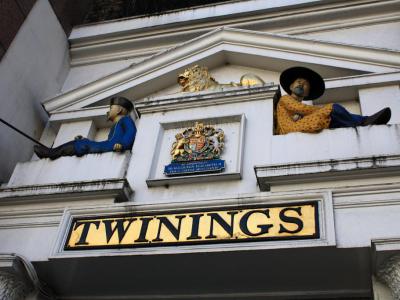
5) Twinings (Jane Austen's Favorite Tea Shop in London)
Twinings' flagship store, a venerable establishment nestled in the heart of London, holds a rich history that dates back over three centuries. The journey of Twinings began with Thomas Twining in 1706 when he acquired Tom's Coffee House, a serendipitous name for an establishment destined for a different beverage. Situated in a prime location, the coffee house was strategically positioned amidst the opulent neighborhoods emerging around Devereux Court, following the aftermath of the Great Fire of London. In a fiercely competitive market boasting over 2000 coffee houses, Thomas Twining sought to distinguish his business by introducing high-quality tea. Despite the exorbitant tea taxes, this exotic beverage was rapidly gaining popularity, particularly among the upper-class ladies of London.
A visit to Twinings' flagship store allows tea enthusiasts to step back in time and savor the same exquisite teas that once delighted the palate of the iconic Jane Austen. With a legacy spanning more than three centuries on Strand Street, this esteemed tea shop has been immortalized in Austen's writings. In her diaries, there are references to her mother, Cassandra, who would often task her with procuring Twinings tea to bring back to the West. Twinings' flagship store stands as a testament to the enduring allure of tea and its integral role in London's history.
A visit to Twinings' flagship store allows tea enthusiasts to step back in time and savor the same exquisite teas that once delighted the palate of the iconic Jane Austen. With a legacy spanning more than three centuries on Strand Street, this esteemed tea shop has been immortalized in Austen's writings. In her diaries, there are references to her mother, Cassandra, who would often task her with procuring Twinings tea to bring back to the West. Twinings' flagship store stands as a testament to the enduring allure of tea and its integral role in London's history.
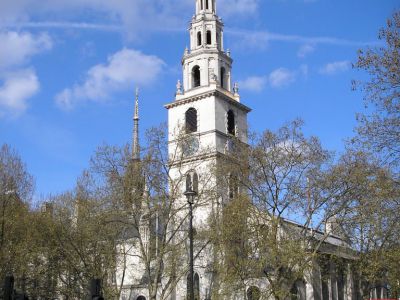
6) St. Clement Danes Church
Perched proudly in splendid isolation on a traffic island, this magnificent church was crafted by Christopher Wren in 1680. Its appellation harks back to an earlier church constructed on this spot by the descendants of Danish invaders permitted by Alfred the Great to settle in London during the 9th century. From the 17th to the 19th centuries, it served as the final resting place for numerous individuals, and their commemorative plaques now reside in the underground crypt.
Although the church suffered severe damage during World War II, it underwent reconstruction and emerged as the central place of worship for the Royal Air Force (RAF). Inside, the RAF's symbols, memorials, and monuments dominate the space. The nave and aisles are adorned with more than eight hundred squadron and unit emblems, while weighty volumes encased in ornate glass cabinets bear the names of over 150,000 men and women who lost their lives while serving in the RAF. Occasionally, RAF bands hold concerts here.
The bells outside chime to a variety of melodies, including the tune from the classic nursery rhyme "Oranges and Lemons". which mentions the church in its lyrics. Meanwhile, right in front, a statue of Gladstone is flanked by four allegorical female figures, with two air chiefs on either side: Lord Dowding, the overseer of the Battle of Britain, and "Bomber" Harris, the mastermind behind the intense bombing campaign on Germany that resulted in the deaths of 500,000 civilians (as well as over 55,000 Allied airmen, whose names are commemorated on the plinth). While Churchill held ultimate responsibility, Harris bore the brunt of the criticism.
Although the church suffered severe damage during World War II, it underwent reconstruction and emerged as the central place of worship for the Royal Air Force (RAF). Inside, the RAF's symbols, memorials, and monuments dominate the space. The nave and aisles are adorned with more than eight hundred squadron and unit emblems, while weighty volumes encased in ornate glass cabinets bear the names of over 150,000 men and women who lost their lives while serving in the RAF. Occasionally, RAF bands hold concerts here.
The bells outside chime to a variety of melodies, including the tune from the classic nursery rhyme "Oranges and Lemons". which mentions the church in its lyrics. Meanwhile, right in front, a statue of Gladstone is flanked by four allegorical female figures, with two air chiefs on either side: Lord Dowding, the overseer of the Battle of Britain, and "Bomber" Harris, the mastermind behind the intense bombing campaign on Germany that resulted in the deaths of 500,000 civilians (as well as over 55,000 Allied airmen, whose names are commemorated on the plinth). While Churchill held ultimate responsibility, Harris bore the brunt of the criticism.
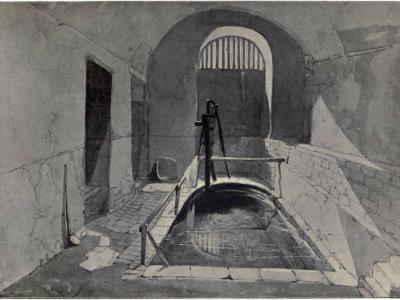
7) Roman Bath
A leisurely walk along Surrey Street will lead you away from the Strand and into Strand Lane, where you can catch a glimpse through a window of what was once believed to be a Roman Bath. The pool, measuring 15 feet (4.5 meters) in length, gained fame after its appearance in one of the Harry Potter films; however, it actually dates back to 1612 and served a purpose during Victorian times when claims of its Roman origins contributed to its popularity as a cold bath. At that time, there were two such baths on this site, but they ceased operation in 1893 when the Norfolk Hotel expanded its premises. What remains of them is now visible only through the window, but if you wish to examine it more closely, you can arrange an appointment (contact Westminster Council one week in advance, from mid-April to mid-October).
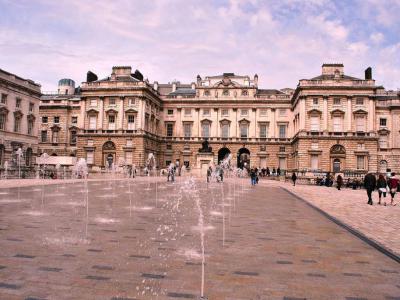
8) Somerset House
Somerset House, featuring four wings that encircle a spacious courtyard reminiscent of a Parisian hôtel, stands as the final remnant of the grand riverside mansions that once graced the Strand. While its appearance may suggest an ancient aristocratic palace, this edifice was actually purpose-built in 1776 by William Chambers to accommodate government offices, including the Navy Office.
Today, Somerset House's courtyard, paved with granite, offers a delightful retreat, thanks to a 55-jet fountain that gracefully spurts water from the cobblestones, performing a syncopated dance every half-hour (daily from 10am to 11pm). Throughout the year, the courtyard buzzes with activity, hosting open-air performances, concerts, installations, and during the winter season, an ice rink.
Inside, the building unfolds into a labyrinth of corridors, staircases, and exhibition spaces, housing several cafés and restaurants. The northern wing is home to the Courtauld Gallery, renowned for its exceptional collection of Impressionist and Post-Impressionist paintings. Meanwhile, the southern wing boasts a charming riverside terrace with a café-restaurant, and at riverbank level, you'll find the Embankment Galleries, showcasing innovative special exhibitions on contemporary art and design.
The east and west wings also contain galleries where temporary exhibitions spanning various visual arts, from sculpture to photography, are regularly presented throughout most of the year, often with free admission.
Today, Somerset House's courtyard, paved with granite, offers a delightful retreat, thanks to a 55-jet fountain that gracefully spurts water from the cobblestones, performing a syncopated dance every half-hour (daily from 10am to 11pm). Throughout the year, the courtyard buzzes with activity, hosting open-air performances, concerts, installations, and during the winter season, an ice rink.
Inside, the building unfolds into a labyrinth of corridors, staircases, and exhibition spaces, housing several cafés and restaurants. The northern wing is home to the Courtauld Gallery, renowned for its exceptional collection of Impressionist and Post-Impressionist paintings. Meanwhile, the southern wing boasts a charming riverside terrace with a café-restaurant, and at riverbank level, you'll find the Embankment Galleries, showcasing innovative special exhibitions on contemporary art and design.
The east and west wings also contain galleries where temporary exhibitions spanning various visual arts, from sculpture to photography, are regularly presented throughout most of the year, often with free admission.
9) Seven Dials
Situated between Covent Garden and Soho, you'll find Seven Dials, a quaint cobblestone area that beckons fashion enthusiasts with its vintage clothing and accessory boutiques, streetwear specialists, and cosmetics shops. It's a fantastic destination for shopping without the hefty London price tags, and it also offers a glimpse into the history of the UK's capital city.
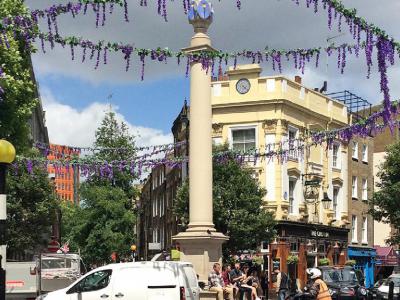
Comprising seven interconnected streets and courtyards, this area was once part of the Saint Giles Rookery, a destitute neighborhood frequented by the impoverished, prostitutes, and petty thieves. Thanks to its seven escape routes, pickpockets frequently eluded capture. However, in 1690, Thomas Neale envisioned a transformation of this locale into an upper-middle-class district. His original plan centered on a square where six streets converged, featuring a pillar adorned with six sundials. Just before the project's completion, a seventh street was added, and while the name Seven Dials persisted, a seventh sundial was never affixed to the pillar. Nevertheless, the central spike was often interpreted as such.
In 1773, the Town Council removed the column, ostensibly for repairs but primarily to disperse the "undesirable elements" congregating at the central square. This move didn't significantly reduce crime, but it became a topic of local discussion. Over time, the "undesirable elements" lost interest and relocated to more lucrative areas, leading this spot to evolve into a favored gathering place for students.
Pubs and shops were either refurbished or newly opened around the pillar, which was replaced by a replica of the original in 1988. Today, Seven Dials draws millions of tourists annually who come to meander through its charming cobbled streets and discover hidden courtyards brimming with unique shops, boutiques, high-end cosmetics stores, bars, and restaurants.
Comprising seven interconnected streets and courtyards, this area was once part of the Saint Giles Rookery, a destitute neighborhood frequented by the impoverished, prostitutes, and petty thieves. Thanks to its seven escape routes, pickpockets frequently eluded capture. However, in 1690, Thomas Neale envisioned a transformation of this locale into an upper-middle-class district. His original plan centered on a square where six streets converged, featuring a pillar adorned with six sundials. Just before the project's completion, a seventh street was added, and while the name Seven Dials persisted, a seventh sundial was never affixed to the pillar. Nevertheless, the central spike was often interpreted as such.
In 1773, the Town Council removed the column, ostensibly for repairs but primarily to disperse the "undesirable elements" congregating at the central square. This move didn't significantly reduce crime, but it became a topic of local discussion. Over time, the "undesirable elements" lost interest and relocated to more lucrative areas, leading this spot to evolve into a favored gathering place for students.
Pubs and shops were either refurbished or newly opened around the pillar, which was replaced by a replica of the original in 1988. Today, Seven Dials draws millions of tourists annually who come to meander through its charming cobbled streets and discover hidden courtyards brimming with unique shops, boutiques, high-end cosmetics stores, bars, and restaurants.
