Custom Walk in Luxembourg, Luxembourg by ol_ivash_f367e created on 2025-07-01
Guide Location: Luxembourg » Luxembourg
Guide Type: Custom Walk
# of Sights: 14
Tour Duration: 2 Hours
Travel Distance: 2.8 Km or 1.7 Miles
Share Key: N48L3
Guide Type: Custom Walk
# of Sights: 14
Tour Duration: 2 Hours
Travel Distance: 2.8 Km or 1.7 Miles
Share Key: N48L3
How It Works
Please retrieve this walk in the GPSmyCity app. Once done, the app will guide you from one tour stop to the next as if you had a personal tour guide. If you created the walk on this website or come to the page via a link, please follow the instructions below to retrieve the walk in the app.
Retrieve This Walk in App
Step 1. Download the app "GPSmyCity: Walks in 1K+ Cities" on Apple App Store or Google Play Store.



Step 2. In the GPSmyCity app, download(or launch) the guide "Luxembourg Map and Walking Tours".
Step 3. Tap the menu button located at upper right corner of the "Walks" screen and select "Retrieve custom walk". Enter the share key: N48L3
1) Grand Rue
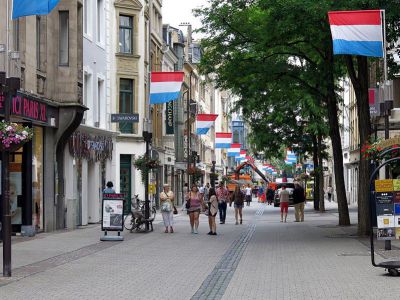
Grand Rue runs east to west through the heart of Luxembourg City's Upper Town, just north of Arms Square. Head toward the square's northern side and enter Grand Rue through one of the short connecting streets. You will recognize it as a broad pedestrian shopping street lined almost continuously with storefronts.
As you walk, look above the modern shop windows. Many businesses occupy the ground floors of older townhouses, while the upper levels are used for apartments and offices. International brands stand alongside smaller local shops, cafés, and boutiques, making Grand Rue one of the city's main commercial streets.
If you follow Grand Rue westward, you will eventually reach the Royal-Hamilius complex near Place Hamilius. It is easy to spot by its large, contemporary façades, which contrast sharply with the older buildings nearby. Completed in 2019, the complex combines shops, offices, apartments, restaurants, and public spaces.
For Luxembourg's historic sights, turn back and walk east along Grand Rue. Continue toward Rue du Marché-aux-Herbes, where you will find the Grand Ducal Palace. Look for its richly decorated façade, ornamental windows, and, when present, guards standing outside. The palace is the official residence of Luxembourg's grand ducal family.
From the palace, continue along the old-town streets and follow Rue de l'Eau. At the end, turn right onto Rue Sigefroi. Soon you will see Saint Michael's Church, recognizable by its pale façade and church tower. A religious building has stood on this site since the 10th century, making it one of Luxembourg's oldest church locations.
Head along Rue Sigefroi to reach the Bock Promontory, the rocky outcrop associated with the origins of Luxembourg City. Here you can explore the Bock Casemates and Archaeological Crypt. The casemates are a network of defensive galleries cut into the rock, with openings offering excellent views across the Alzette valley.
Nearby, look for the Walls of the Corniche, a walkway following the old ramparts. From here, you can look down over the Grund district and across the valley toward the Rham Plateau.
If you need maps or directions before setting out, the Cityshopping Info Point is located at No. 2 Arms Square, inside the Cercle Cité building.
As you walk, look above the modern shop windows. Many businesses occupy the ground floors of older townhouses, while the upper levels are used for apartments and offices. International brands stand alongside smaller local shops, cafés, and boutiques, making Grand Rue one of the city's main commercial streets.
If you follow Grand Rue westward, you will eventually reach the Royal-Hamilius complex near Place Hamilius. It is easy to spot by its large, contemporary façades, which contrast sharply with the older buildings nearby. Completed in 2019, the complex combines shops, offices, apartments, restaurants, and public spaces.
For Luxembourg's historic sights, turn back and walk east along Grand Rue. Continue toward Rue du Marché-aux-Herbes, where you will find the Grand Ducal Palace. Look for its richly decorated façade, ornamental windows, and, when present, guards standing outside. The palace is the official residence of Luxembourg's grand ducal family.
From the palace, continue along the old-town streets and follow Rue de l'Eau. At the end, turn right onto Rue Sigefroi. Soon you will see Saint Michael's Church, recognizable by its pale façade and church tower. A religious building has stood on this site since the 10th century, making it one of Luxembourg's oldest church locations.
Head along Rue Sigefroi to reach the Bock Promontory, the rocky outcrop associated with the origins of Luxembourg City. Here you can explore the Bock Casemates and Archaeological Crypt. The casemates are a network of defensive galleries cut into the rock, with openings offering excellent views across the Alzette valley.
Nearby, look for the Walls of the Corniche, a walkway following the old ramparts. From here, you can look down over the Grund district and across the valley toward the Rham Plateau.
If you need maps or directions before setting out, the Cityshopping Info Point is located at No. 2 Arms Square, inside the Cercle Cité building.
2) Place d'Armes (Arms Square)
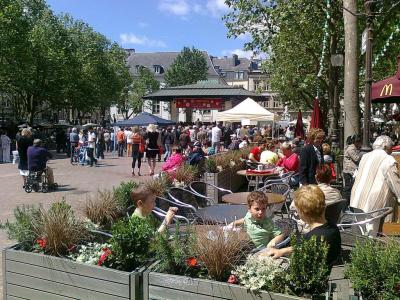
Arms Square is one of the liveliest gathering places in Luxembourg City’s Old Town. The entire square is pedestrian-only, and in warmer months its edges fill with restaurant and café terraces. Concerts, markets, and other outdoor events are often held here. Near the center, the music kiosk, or bandstand, makes a useful orientation point.
From the bandstand, face east along the square. The large historic building closing off this end is Cercle Cité. You can recognize it by its pale stone façade, broad ground-floor arches, tall upper windows, clock, and corner tower. Built in the early 20th century, it originally served municipal and ceremonial functions. In the 1950s, it was also used by early European institutions, including the Court of Justice of the European Coal and Steel Community. Today, it serves mainly as a venue for exhibitions, conferences, and cultural events.
Before moving on, look high on the façade. There you will see a sculpted relief showing Countess Ermesinde presenting Luxembourg’s citizens with their charter of freedom in 1244.
Now, turn around and walk west, back past the bandstand to the opposite end of the square. Here, in Square Jan Palach, stands the Dicks-Lentz Monument, easily identified by the tall column topped by a lion. It honors two important Luxembourgish poets: Edmond de la Fontaine, known as Dicks, and Michel Lentz, who wrote the words of Luxembourg’s national anthem. The lion represents the Grand Duchy, while figures below symbolize industry and agriculture. The monument also bears the national motto, “We want to remain what we are.”
From here, look back across Arms Square and imagine its earlier military role. After a major fire devastated much of the Upper Town in 1554, Dutch engineer Sebastian van Noyen planned a new market here. The present square was laid out in 1671 and later used as a parade ground for the city garrison, which explains its name. Under Louis XIV, it was paved and planted with lime trees. Today, the former military square is a relaxed social center filled with cafés, music, and public life.
From the bandstand, face east along the square. The large historic building closing off this end is Cercle Cité. You can recognize it by its pale stone façade, broad ground-floor arches, tall upper windows, clock, and corner tower. Built in the early 20th century, it originally served municipal and ceremonial functions. In the 1950s, it was also used by early European institutions, including the Court of Justice of the European Coal and Steel Community. Today, it serves mainly as a venue for exhibitions, conferences, and cultural events.
Before moving on, look high on the façade. There you will see a sculpted relief showing Countess Ermesinde presenting Luxembourg’s citizens with their charter of freedom in 1244.
Now, turn around and walk west, back past the bandstand to the opposite end of the square. Here, in Square Jan Palach, stands the Dicks-Lentz Monument, easily identified by the tall column topped by a lion. It honors two important Luxembourgish poets: Edmond de la Fontaine, known as Dicks, and Michel Lentz, who wrote the words of Luxembourg’s national anthem. The lion represents the Grand Duchy, while figures below symbolize industry and agriculture. The monument also bears the national motto, “We want to remain what we are.”
From here, look back across Arms Square and imagine its earlier military role. After a major fire devastated much of the Upper Town in 1554, Dutch engineer Sebastian van Noyen planned a new market here. The present square was laid out in 1671 and later used as a parade ground for the city garrison, which explains its name. Under Louis XIV, it was paved and planted with lime trees. Today, the former military square is a relaxed social center filled with cafés, music, and public life.
3) Luxembourg City Tourist Office
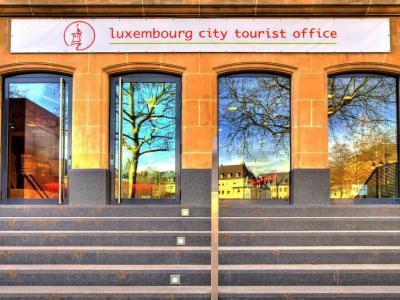
Luxembourg City Tourist Office: Located at Place Guillaume II, Luxembourg City’s excellent tourist office not only offers multi-lingual advice from knowledgeable and friendly staff and a wide variety of helpful publications, it also has a gift shop. The small display case is filled with the souvenirs, from Peckvillchen whistles to the ‘Renert’ fox sculpture.
What to buy here: Sculpture old and new.
Find quality reproductions of pieces by Luxembourgish sculptors from the 12th to 20th centuries or even of ancient artifacts found in the region. Alternatively, discover the work of contemporary artists imaginatively treating traditional themes. Reproductions include the ‘Renert’ fox sculpture based on the original sculpture that stands in Place Guillaume II, inspired by the famous writer Michel Rodange, as well as a Gallo-Roman bronze wild boar sculpture dating from the first century A.D. Contemporary works cover a broad range of styles, with artists like Jeannot Bewing and Pascale Seil often inspired by history and legend. Pieces start from about €200.
What to buy here: Sculpture old and new.
Find quality reproductions of pieces by Luxembourgish sculptors from the 12th to 20th centuries or even of ancient artifacts found in the region. Alternatively, discover the work of contemporary artists imaginatively treating traditional themes. Reproductions include the ‘Renert’ fox sculpture based on the original sculpture that stands in Place Guillaume II, inspired by the famous writer Michel Rodange, as well as a Gallo-Roman bronze wild boar sculpture dating from the first century A.D. Contemporary works cover a broad range of styles, with artists like Jeannot Bewing and Pascale Seil often inspired by history and legend. Pieces start from about €200.
4) Adolphe Bridge (must see)
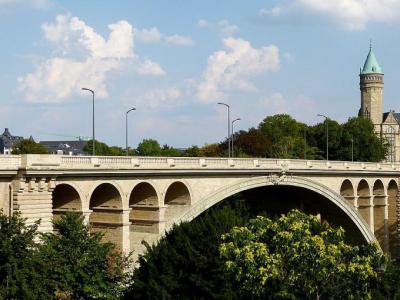
Even though it's more than 100 years old, the Adolphe Bridge is referred to as the 'new bridge' by the locals. The 'old bridge,' by contrast, refers to the Passarelle or Luxembourg Viaduct.
The bridge was needed as the city expanded, and the Old Bridge was unable to accommodate the amount of traffic that the city now saw. Local architect Albert Rodange was hired to develop plans for the new bridge, but the city also hired Frenchman Paul Séjourné, who had years of bridge-building experience.
Séjourné's final plan was audacious for the day. Instead of building the bridge like a traditional viaduct with many medium-sized arches, Séjourné sought to make the bridge with one large central arch and many smaller ones to support it. The main structures were made of sandstone, while the roadway was made of a relatively new material-reinforced concrete.
The original structure was opened in 1903 and featured both road and rail traffic. The rails were eventually removed when Luxembourg phased out the use of tram cars. In 2004, the bridge was structurally reinforced with prestressed steel bars.
Between 2014 and 2017, plans were put into action to reintroduce trams in Luxembourg. The bridge was widened and reinforced to accept the new rail lines. Additionally, a second level was suspended below the current level that carries pedestrian and bicycle traffic.
The beautiful bridge has inspired some copycats. Both the bridge over the River Garonne at Toulon and the Walnut Land Bridge in Philadelphia are based on the Adolphe Bridge.
Why You Should Visit:
The views from the pedestrian bridge of the valley below and Luxembourg, in general, are lovely. The bridge connects old town Luxembourg on the north with the Gare District to the south.
Tips:
Great views of the bridge can be seen from Constitution Square, near the Gëlle Fra monument, and from the Pétrusse Valley below. One of the best overlooks of the bridge is from the Pétrusse Casemates. If you're after photos, the bridge is lit well at night for stunning time-lapses or long exposures.
The Adolphe Bridge's pedestrian path is a great way to connect from Ville-Haute to the Plateau Bourbon and Gare District on the south side.
The bridge was needed as the city expanded, and the Old Bridge was unable to accommodate the amount of traffic that the city now saw. Local architect Albert Rodange was hired to develop plans for the new bridge, but the city also hired Frenchman Paul Séjourné, who had years of bridge-building experience.
Séjourné's final plan was audacious for the day. Instead of building the bridge like a traditional viaduct with many medium-sized arches, Séjourné sought to make the bridge with one large central arch and many smaller ones to support it. The main structures were made of sandstone, while the roadway was made of a relatively new material-reinforced concrete.
The original structure was opened in 1903 and featured both road and rail traffic. The rails were eventually removed when Luxembourg phased out the use of tram cars. In 2004, the bridge was structurally reinforced with prestressed steel bars.
Between 2014 and 2017, plans were put into action to reintroduce trams in Luxembourg. The bridge was widened and reinforced to accept the new rail lines. Additionally, a second level was suspended below the current level that carries pedestrian and bicycle traffic.
The beautiful bridge has inspired some copycats. Both the bridge over the River Garonne at Toulon and the Walnut Land Bridge in Philadelphia are based on the Adolphe Bridge.
Why You Should Visit:
The views from the pedestrian bridge of the valley below and Luxembourg, in general, are lovely. The bridge connects old town Luxembourg on the north with the Gare District to the south.
Tips:
Great views of the bridge can be seen from Constitution Square, near the Gëlle Fra monument, and from the Pétrusse Valley below. One of the best overlooks of the bridge is from the Pétrusse Casemates. If you're after photos, the bridge is lit well at night for stunning time-lapses or long exposures.
The Adolphe Bridge's pedestrian path is a great way to connect from Ville-Haute to the Plateau Bourbon and Gare District on the south side.
5) Gëlle Fra (Golden Lady)
As you enter Constitution Square, look for the tall stone monument rising above the open plaza. This is the Gëlle Fra, Luxembourgish for the “Golden Lady,” one of Luxembourg City’s best-known memorials. The square occupies the site of the former Beck Bastion, part of the city’s old fortress system, and overlooks the deep Pétrusse Valley below.
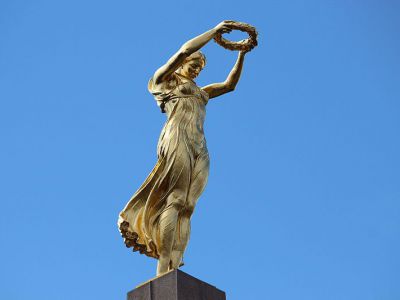
At the center of the memorial stands a 21-meter-high granite obelisk. Look all the way to the top, where a gilded bronze female figure holds a laurel wreath above her head. Representing victory and peace, she gives the monument its familiar name. The memorial was created by Luxembourgish sculptor Claus Cito and unveiled in 1923.
The monument originally honored Luxembourgers who volunteered to fight with the Allied forces during the First World War. Luxembourg itself had been occupied by Germany and remained officially neutral, but more than 3,000 Luxembourgers living abroad joined the French armed forces. Many were killed or wounded. At the base of the obelisk, notice the bronze figures representing those who fought and those who mourned them.
During the German occupation in 1940, the monument became a powerful symbol of Luxembourgish national identity. Nazi authorities dismantled it, and the Golden Lady disappeared. Parts of the statue were finally rediscovered in 1980 beneath the stands of Luxembourg’s national football stadium, and the restored monument was returned to Constitution Square in 1985. Today, it also commemorates Luxembourg’s soldiers who served during the Second World War and the Korean War.
Now, walk toward the edge of the square and look across the valley. Below you are the green paths of Pétrusse Park, while the impressive Adolphe Bridge spans the valley to your right. The entrances to the Pétrusse Casemates, part of Luxembourg’s historic underground defenses, are also nearby.
Finally, step back far enough to take in the entire monument from base to summit. During the Christmas market season, a Ferris wheel is often installed nearby, offering an unusually close elevated view of the Golden Lady and the surrounding city.
At the center of the memorial stands a 21-meter-high granite obelisk. Look all the way to the top, where a gilded bronze female figure holds a laurel wreath above her head. Representing victory and peace, she gives the monument its familiar name. The memorial was created by Luxembourgish sculptor Claus Cito and unveiled in 1923.
The monument originally honored Luxembourgers who volunteered to fight with the Allied forces during the First World War. Luxembourg itself had been occupied by Germany and remained officially neutral, but more than 3,000 Luxembourgers living abroad joined the French armed forces. Many were killed or wounded. At the base of the obelisk, notice the bronze figures representing those who fought and those who mourned them.
During the German occupation in 1940, the monument became a powerful symbol of Luxembourgish national identity. Nazi authorities dismantled it, and the Golden Lady disappeared. Parts of the statue were finally rediscovered in 1980 beneath the stands of Luxembourg’s national football stadium, and the restored monument was returned to Constitution Square in 1985. Today, it also commemorates Luxembourg’s soldiers who served during the Second World War and the Korean War.
Now, walk toward the edge of the square and look across the valley. Below you are the green paths of Pétrusse Park, while the impressive Adolphe Bridge spans the valley to your right. The entrances to the Pétrusse Casemates, part of Luxembourg’s historic underground defenses, are also nearby.
Finally, step back far enough to take in the entire monument from base to summit. During the Christmas market season, a Ferris wheel is often installed nearby, offering an unusually close elevated view of the Golden Lady and the surrounding city.
Sight description based on Wikipedia.
6) Notre-Dame Cathedral (must see)
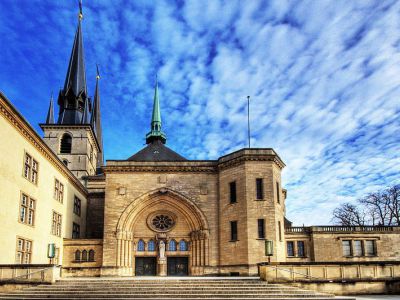
Notre-Dame Cathedral stands with its historic entrance facing Rue Notre-Dame. As you're getting closer, look up at the richly carved portal, decorated with figures of the Virgin Mary, Saint Peter, and Saint Paul. Step back before entering to see the cathedral’s three towers. The western bell tower belongs to the original Jesuit church, built between 1613 and 1621, while the central and eastern towers were added during the major enlargement of 1935-38. The church became a cathedral in 1870 and remains the only cathedral in the Grand Duchy.
Once inside, stand in the central nave and look upward at the pointed arches, ribbed vaults, and cylindrical columns. The older part of the building combines late Gothic structure with Renaissance and Baroque decoration. As you continue toward the sanctuary, notice how the space becomes broader where the 20th-century transept and choir begin.
Keep an eye out for the cathedral’s stained-glass windows, especially around the choir. Several were designed by noted artists, including Louis Barillet and Josef Oberberger, and they fill the interior with colored light when the sun is favorable.
Near the front, look toward the main altar and choir. At the far end stands the cathedral’s most important devotional object: Our Lady of Luxembourg, the Consoler of the Afflicted. This small wooden Madonna and Child is the patroness of Luxembourg and plays a central role in the annual Octave pilgrimage, when it is carried in procession through the city. Also look for the cathedral’s richly carved pulpit and sculptural decoration, where biblical scenes and ornamental details reflect the artistic ambitions of the original Jesuit church.
Before leaving, follow signs toward the crypt, if it is open. Its entrance is marked by two sculpted lions. Inside are the tombs of members of Luxembourg’s Grand Ducal family, together with the monument of John the Blind, King of Bohemia and Count of Luxembourg.
Tip:
Take time to look upward, as the vaulting, stained glass, and carved details are easy to miss.
The cathedral currently opens to visitors daily, generally from 8:00 am to 6:00 pm Monday through Saturday, and 9:00 am to 7:00 pm on Sunday, although access can change during services and special ceremonies. If the crypt is open, it is also worth visiting: apart from the royal tombs, it offers a very different, quieter perspective on the cathedral and is pleasantly cool during warm weather.
Once inside, stand in the central nave and look upward at the pointed arches, ribbed vaults, and cylindrical columns. The older part of the building combines late Gothic structure with Renaissance and Baroque decoration. As you continue toward the sanctuary, notice how the space becomes broader where the 20th-century transept and choir begin.
Keep an eye out for the cathedral’s stained-glass windows, especially around the choir. Several were designed by noted artists, including Louis Barillet and Josef Oberberger, and they fill the interior with colored light when the sun is favorable.
Near the front, look toward the main altar and choir. At the far end stands the cathedral’s most important devotional object: Our Lady of Luxembourg, the Consoler of the Afflicted. This small wooden Madonna and Child is the patroness of Luxembourg and plays a central role in the annual Octave pilgrimage, when it is carried in procession through the city. Also look for the cathedral’s richly carved pulpit and sculptural decoration, where biblical scenes and ornamental details reflect the artistic ambitions of the original Jesuit church.
Before leaving, follow signs toward the crypt, if it is open. Its entrance is marked by two sculpted lions. Inside are the tombs of members of Luxembourg’s Grand Ducal family, together with the monument of John the Blind, King of Bohemia and Count of Luxembourg.
Tip:
Take time to look upward, as the vaulting, stained glass, and carved details are easy to miss.
The cathedral currently opens to visitors daily, generally from 8:00 am to 6:00 pm Monday through Saturday, and 9:00 am to 7:00 pm on Sunday, although access can change during services and special ceremonies. If the crypt is open, it is also worth visiting: apart from the royal tombs, it offers a very different, quieter perspective on the cathedral and is pleasantly cool during warm weather.
7) Luxembourg City Hall
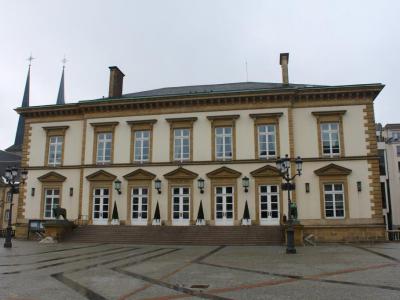
Nestled on the southwestern edge of Place Guillaume II, Luxembourg City Hall (Hôtel de Ville) is an elegant neoclassical landmark and the vibrant administrative heart of Luxembourg City. Constructed between 1830 and 1838 on the site of a former Franciscan monastery, much of the original stone was reused in its construction, lending continuity to this historic corner of the Ville Haute quarter. The building quietly dominates the open space of the square, flanked by two bronzed lions added in 1931 and accented with flags and refined symmetry.
Since its completion, the city hall has been the hub of local governance, housing council meetings, the private office of the mayor, and hosting foreign dignitaries visiting the capital. Its first council meeting took place on 22 October 1838, though the official unveiling-delayed until 15 July 1844-was presided over by Grand Duke William II, who stood proudly before the unveiled building and equestrian statue on the square.
For the curious visitor, the town hall is best appreciated both up close-admiring the clean neoclassical facade, lion sculptures, and period details-and as part of a stroll through Place Guillaume II. The square, colloquially named Knuedler after the Franciscan friars who once inhabited the site, is a local hub for music, markets, and gatherings. Nearby, the Luxembourg City Tourist Office is easy to spot, should you wish to pick up maps, book guided tours, or join in seasonal events held in the square.
Whether you're a history aficionado or simply admiring architecture during your city walk, Luxembourg City Hall offers a lovely blend of civic history and urban charm. Standing quietly yet confidently in the heart of the capital, it connects centuries of local governance with Luxembourg’s evolving role as a European crossroads-and it’s free to admire!
Since its completion, the city hall has been the hub of local governance, housing council meetings, the private office of the mayor, and hosting foreign dignitaries visiting the capital. Its first council meeting took place on 22 October 1838, though the official unveiling-delayed until 15 July 1844-was presided over by Grand Duke William II, who stood proudly before the unveiled building and equestrian statue on the square.
For the curious visitor, the town hall is best appreciated both up close-admiring the clean neoclassical facade, lion sculptures, and period details-and as part of a stroll through Place Guillaume II. The square, colloquially named Knuedler after the Franciscan friars who once inhabited the site, is a local hub for music, markets, and gatherings. Nearby, the Luxembourg City Tourist Office is easy to spot, should you wish to pick up maps, book guided tours, or join in seasonal events held in the square.
Whether you're a history aficionado or simply admiring architecture during your city walk, Luxembourg City Hall offers a lovely blend of civic history and urban charm. Standing quietly yet confidently in the heart of the capital, it connects centuries of local governance with Luxembourg’s evolving role as a European crossroads-and it’s free to admire!
8) Place Guillaume II
Place Guillaume II, affectionately known by locals as “Knuedler”, is one of the most iconic public squares in Luxembourg City’s historic Ville Haute (Upper Town). Originally the site of a Franciscan monastery dating from the 13th century, its name derives from the knot worn in the friars’ belts (Luxembourgish knued). After the monastery was confiscated by the French in 1797 and later demolished, the square was redeveloped, eventually gifted to the city by Napoleon in the early 19th century.
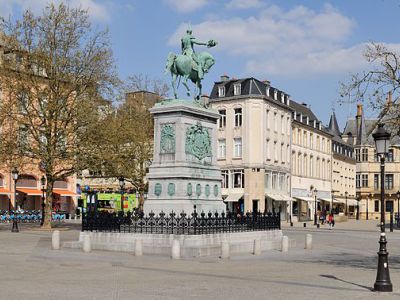
The western edge of Place Guillaume II is dominated by the elegant neoclassical City Hall (Hôtel de Ville), completed in 1838 and featuring distinctive twin lion sculptures added in 1938 by Auguste Trémont. On the eastern side, you’ll find the striking equestrian statue of Grand Duke William II, erected in 1884 to commemorate the ruler who granted Luxembourg its first parliamentary constitution. The pedestal is adorned with heraldic symbols representing the House of Orange-Nassau and all twelve cantons of the Grand Duchy.
Today, the square buzzes with life, especially on Wednesdays and Saturdays, when a lively farmers’ market springs up, featuring local gardeners and vendors selling produce, flowers, cheese, preserves, and more. Beyond its market charm, Knuedler hosts seasonal open-air concerts and cultural events, including the long-running Rock um Knuedler festival, which attracted up to 10,000 guests before recent interruptions-celebrated for bringing international acts to the heart of the city.
A stroll through Place Guillaume II is more than just sightseeing-it’s an immersion into Luxembourg’s past and present. From its medieval roots and historic architecture to its everyday vibrancy as a community hub, this square captures the spirit of the city.
The western edge of Place Guillaume II is dominated by the elegant neoclassical City Hall (Hôtel de Ville), completed in 1838 and featuring distinctive twin lion sculptures added in 1938 by Auguste Trémont. On the eastern side, you’ll find the striking equestrian statue of Grand Duke William II, erected in 1884 to commemorate the ruler who granted Luxembourg its first parliamentary constitution. The pedestal is adorned with heraldic symbols representing the House of Orange-Nassau and all twelve cantons of the Grand Duchy.
Today, the square buzzes with life, especially on Wednesdays and Saturdays, when a lively farmers’ market springs up, featuring local gardeners and vendors selling produce, flowers, cheese, preserves, and more. Beyond its market charm, Knuedler hosts seasonal open-air concerts and cultural events, including the long-running Rock um Knuedler festival, which attracted up to 10,000 guests before recent interruptions-celebrated for bringing international acts to the heart of the city.
A stroll through Place Guillaume II is more than just sightseeing-it’s an immersion into Luxembourg’s past and present. From its medieval roots and historic architecture to its everyday vibrancy as a community hub, this square captures the spirit of the city.
9) Grand Ducal Palace (must see)
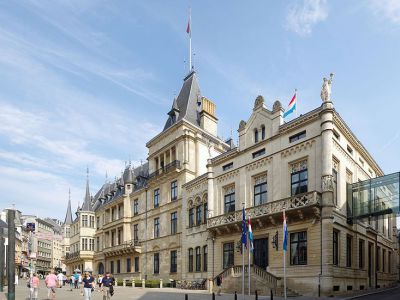
The Grand Ducal Palace at 17 Rue du Marché-aux-Herbes marks the heart of Luxembourg City’s Old Town. As you approach it along the narrow street, look for the richly decorated stone façade with tall windows, projecting bays, and Renaissance ornament. This is the historic core of the palace, built in 1572-1573 as the city hall on the site of an earlier municipal building dating from 1418. Since 1890, it has served as the official city residence and workplace of Luxembourg’s head of state.
Before entering, take time to study the façade. The oldest section directly in front of you is distinguished by its Flemish Renaissance decoration and wrought-iron balcony. Facing the palace, look toward the right-hand side, where the complex continues into later additions. Farther along is the Chamber of Deputies, Luxembourg’s parliament building, which adjoins the palace but serves a separate function.
Near the main entrance, look for the uniformed sentry and guard box, one of the easiest ways to identify the building. Ceremonial changing-of-the-guard events are occasionally held outside and attract many spectators.
During the summer opening season, guided tours provide access to the palace interior. One of the first highlights is the Grand Staircase, whose ornate bronze and wrought-iron balustrade leads to the ceremonial rooms on the first floor.
Among the most impressive spaces is the Ballroom, recognizable by its chandeliers, decorated ceiling, gilded details, and connection to the balcony overlooking the street. Nearby is the Kings’ Salon, where portraits of Luxembourg’s former sovereigns decorate the walls. Tours may also include the formal dining room and the Grand Duke’s office, emphasizing that the palace remains an active working building rather than simply a historic monument.
Although this is the Grand Duke’s official city residence, the Grand Ducal family’s principal home is Berg Castle at Colmar-Berg.
Guided visits are normally offered during July and August and last about 75 minutes. Tours begin at the Luxembourg City Tourist Office on Place Guillaume II, a short walk from the palace. Photography is not permitted inside.
Even if you can't enter, the palace is worth seeing for its ornate Renaissance façade, ceremonial guards, and unusual combination of monarchy and parliament within one closely connected architectural complex.
Tip:
For the best exterior view, stand across Rue du Marché-aux-Herbes, stepping as far back as the opposite side allows, and angle your camera slightly upward to capture the carved upper stonework, balcony, and roofline.
Before entering, take time to study the façade. The oldest section directly in front of you is distinguished by its Flemish Renaissance decoration and wrought-iron balcony. Facing the palace, look toward the right-hand side, where the complex continues into later additions. Farther along is the Chamber of Deputies, Luxembourg’s parliament building, which adjoins the palace but serves a separate function.
Near the main entrance, look for the uniformed sentry and guard box, one of the easiest ways to identify the building. Ceremonial changing-of-the-guard events are occasionally held outside and attract many spectators.
During the summer opening season, guided tours provide access to the palace interior. One of the first highlights is the Grand Staircase, whose ornate bronze and wrought-iron balustrade leads to the ceremonial rooms on the first floor.
Among the most impressive spaces is the Ballroom, recognizable by its chandeliers, decorated ceiling, gilded details, and connection to the balcony overlooking the street. Nearby is the Kings’ Salon, where portraits of Luxembourg’s former sovereigns decorate the walls. Tours may also include the formal dining room and the Grand Duke’s office, emphasizing that the palace remains an active working building rather than simply a historic monument.
Although this is the Grand Duke’s official city residence, the Grand Ducal family’s principal home is Berg Castle at Colmar-Berg.
Guided visits are normally offered during July and August and last about 75 minutes. Tours begin at the Luxembourg City Tourist Office on Place Guillaume II, a short walk from the palace. Photography is not permitted inside.
Even if you can't enter, the palace is worth seeing for its ornate Renaissance façade, ceremonial guards, and unusual combination of monarchy and parliament within one closely connected architectural complex.
Tip:
For the best exterior view, stand across Rue du Marché-aux-Herbes, stepping as far back as the opposite side allows, and angle your camera slightly upward to capture the carved upper stonework, balcony, and roofline.
10) Luxembourg City History Museum
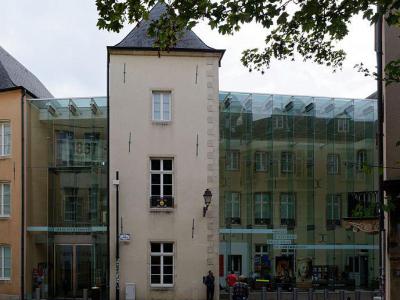
The Luxembourg City History Museum presents a vivid and immersive introduction to the development of Luxembourg City from its earliest origins in the 10th century to the cosmopolitan capital of today. Housed in four beautifully restored 17th- to 19th-century houses in the old town, the building juxtaposes historic architecture with a sleek glass façade and panoramic elevator that offers sweeping views over the Grund district and Rham plateau, reflecting the city’s multi‐layered character.
Inside, the permanent exhibition “The Luxembourg Story” is spread over three subterranean levels and two above, showcasing around 500 original artifacts, urban models, photographs, audiovisual sequences, and interactive multimedia. These exhibits trace Luxembourg’s evolution through four key historical periods-from medieval town and fortress to capital city, wartime occupation, European hub, and finally into the future urban space represented by a tactile 3D city model and interactive planning table.
The museum also features rotating temporary exhibitions on themes such as local culture, contemporary urban issues, or artistic projects, all housed on the upper levels above the permanent galleries. The UNESCO Visitor Centre is integrated into this space, further connecting the city’s heritage with its status as a World Heritage Site.
For tourists, this museum is more than a chronological narrative-it’s a sensory journey through the architectural, social, and political forces that shaped Luxembourg. With its interactive displays, dramatic elevation views, and central location in the Old Town, the Luxembourg City History Museum is an accessible and engaging starting point for understanding the identity and evolution of this elegant European capital.
Inside, the permanent exhibition “The Luxembourg Story” is spread over three subterranean levels and two above, showcasing around 500 original artifacts, urban models, photographs, audiovisual sequences, and interactive multimedia. These exhibits trace Luxembourg’s evolution through four key historical periods-from medieval town and fortress to capital city, wartime occupation, European hub, and finally into the future urban space represented by a tactile 3D city model and interactive planning table.
The museum also features rotating temporary exhibitions on themes such as local culture, contemporary urban issues, or artistic projects, all housed on the upper levels above the permanent galleries. The UNESCO Visitor Centre is integrated into this space, further connecting the city’s heritage with its status as a World Heritage Site.
For tourists, this museum is more than a chronological narrative-it’s a sensory journey through the architectural, social, and political forces that shaped Luxembourg. With its interactive displays, dramatic elevation views, and central location in the Old Town, the Luxembourg City History Museum is an accessible and engaging starting point for understanding the identity and evolution of this elegant European capital.
11) Hôtel de la Chambre des Députés (Hall of the Chamber of Deputies)
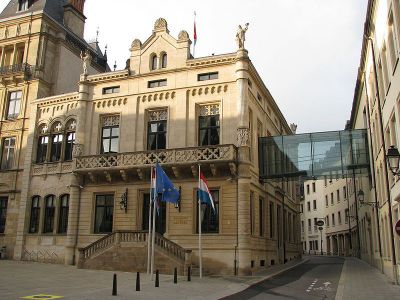
The Hall of the Chamber of Deputies (Hôtel de la Chambre des Députés), located in the heart of Luxembourg City’s old town, serves as the official seat of Luxembourg’s national legislature. The current building was completed in 1860 on the site of a former Franciscan monastery, reflecting the country’s political evolution following its independence in the 19th century. With its sandstone façade, arched windows, and modest neo-Renaissance detailing, the structure blends harmoniously with the historic architecture of the surrounding Ville Haute district.
Although not generally open for casual public visits, the building is of interest to those curious about Luxembourg’s political institutions and history. Its location is just steps from the Grand Ducal Palace, making it a natural stop for visitors exploring the area. When in session, the Chamber hosts debates, votes, and legislative discussions that shape the country’s policy landscape, and these proceedings can be followed online or through public broadcasts.
The Hall of the Chamber of Deputies is also part of the architectural narrative that defines Luxembourg’s civic core. While its exterior is relatively understated, it carries symbolic weight as a space where democratic processes unfold. Visitors interested in the intersection of architecture and governance will appreciate its careful integration into the urban fabric and its role in national identity.
In contrast to grand legislative buildings in other capitals, the Hall of the Chamber of Deputies reflects Luxembourg’s emphasis on accessibility, discretion, and civic continuity. Its proximity to key sites such as the Place d'Armes and the Corniche adds to its appeal for those on a historical walking tour of the city.
Although not generally open for casual public visits, the building is of interest to those curious about Luxembourg’s political institutions and history. Its location is just steps from the Grand Ducal Palace, making it a natural stop for visitors exploring the area. When in session, the Chamber hosts debates, votes, and legislative discussions that shape the country’s policy landscape, and these proceedings can be followed online or through public broadcasts.
The Hall of the Chamber of Deputies is also part of the architectural narrative that defines Luxembourg’s civic core. While its exterior is relatively understated, it carries symbolic weight as a space where democratic processes unfold. Visitors interested in the intersection of architecture and governance will appreciate its careful integration into the urban fabric and its role in national identity.
In contrast to grand legislative buildings in other capitals, the Hall of the Chamber of Deputies reflects Luxembourg’s emphasis on accessibility, discretion, and civic continuity. Its proximity to key sites such as the Place d'Armes and the Corniche adds to its appeal for those on a historical walking tour of the city.
12) Chemin de la Corniche (Walls of the Corniche) (must see)
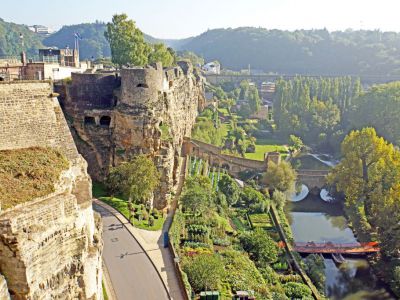
The Walls of the Corniche follow Luxembourg City’s old fortifications high above the Alzette Valley. Luxembourg writer Batty Weber famously called it “the most beautiful balcony in Europe,” and the walk remains one of the best places to understand the city’s unusual geography.
Begin near the Bock promontory and follow the stone walkway along the edge of the Upper Town. Much of the route runs over ramparts built by the Spanish and French in the 17th century. As you walk, keep looking down into the valley on your left. The houses clustered beside the Alzette River belong to Grund, one of Luxembourg’s oldest lower-town districts.
Among the buildings below, look for the large complex of Neumünster Abbey, distinguished by its long pale façades and church. Across the valley rises the Rham Plateau, another important part of Luxembourg’s former defensive system.
The views you enjoy today are partly the result of the fortress dismantling that began after the Treaty of London in 1867, which ultimately established Luxembourg as a perpetually neutral and fully independent state. Until around 1870, steep sections of the Corniche included staircases, while defensive walls with loopholes restricted the view. Many of these barriers were subsequently removed, and the route was leveled, opening up the panorama you see today.
Continue along the ramparts toward the Holy Ghost Citadel. Along the way, notice the surviving stone walls and defensive structures-reminders of the centuries when Luxembourg ranked among Europe’s strongest fortified cities. The Old Quarters and remaining fortifications have been part of a UNESCO World Heritage Site since 1994.
Near the Bock end of the walk, Saint Michael’s Church is only a short distance uphill, while the Bock fortifications and casemates are close by. From the Corniche, routes also descend toward Grund, allowing you to continue your walk at river level and see the walls from below.
Begin near the Bock promontory and follow the stone walkway along the edge of the Upper Town. Much of the route runs over ramparts built by the Spanish and French in the 17th century. As you walk, keep looking down into the valley on your left. The houses clustered beside the Alzette River belong to Grund, one of Luxembourg’s oldest lower-town districts.
Among the buildings below, look for the large complex of Neumünster Abbey, distinguished by its long pale façades and church. Across the valley rises the Rham Plateau, another important part of Luxembourg’s former defensive system.
The views you enjoy today are partly the result of the fortress dismantling that began after the Treaty of London in 1867, which ultimately established Luxembourg as a perpetually neutral and fully independent state. Until around 1870, steep sections of the Corniche included staircases, while defensive walls with loopholes restricted the view. Many of these barriers were subsequently removed, and the route was leveled, opening up the panorama you see today.
Continue along the ramparts toward the Holy Ghost Citadel. Along the way, notice the surviving stone walls and defensive structures-reminders of the centuries when Luxembourg ranked among Europe’s strongest fortified cities. The Old Quarters and remaining fortifications have been part of a UNESCO World Heritage Site since 1994.
Near the Bock end of the walk, Saint Michael’s Church is only a short distance uphill, while the Bock fortifications and casemates are close by. From the Corniche, routes also descend toward Grund, allowing you to continue your walk at river level and see the walls from below.
13) Bock Casemates (must see)
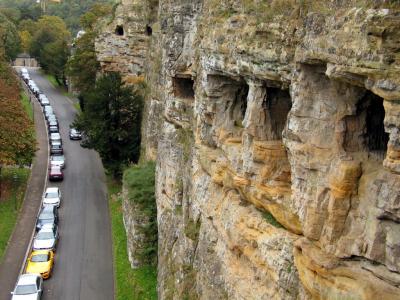
Luxembourg takes great pride in its nickname “Gibraltar of the North,” which was earned thanks to the immense strength of its fortifications. Indeed, while the city changed hands several times over the centuries, its defenses made it extremely difficult to conquer. Even when Luxembourg did surrender to French forces in 1795, much of the fortress itself remained intact.
The story begins here, at Bock Rock, a steep rocky promontory rising above the Alzette River on the northeastern side of the Old Town. Its naturally defensive position attracted settlers from an early period, but the decisive moment came in 963, when Count Siegfried acquired the site and established a castle here. A town gradually grew around this stronghold, and successive defensive walls were connected to the Bock.
As Luxembourg passed under different rulers, each added new layers of fortifications. By the 16th century, the city had become heavily fortified, enclosed by walls, bastions, guarded gates, and military installations. The Spanish excavated underground defensive galleries in the 17th century, while the Austrians greatly expanded them during the 18th century. Much of the network known today as the Bock Casemates took shape during this Austrian period.
While these defenses protected the city, they also restricted its growth and complicated trade and movement. That military era came to an end in 1867, when the Treaty of London declared Luxembourg neutral and required much of the fortress to be dismantled. Large sections disappeared, but substantial remains survived, including the most impressive of them, the Bock Casemates.
Inside, you can follow passages carved directly into the rock, with openings once used for cannons and observation. During wartime, these underground spaces could accommodate hundreds of soldiers, along with weapons, supplies, and equipment.
As you explore, also look for the Castle Bridge, the stone bridge built by the Austrians in 1735 to connect the Bock with the Old Town. Its unusual design allowed movement between the two sides on several different levels.
Near the entrance to the casemates, you will also find the Archaeological Crypt, where traces of the original medieval castle can be seen.
Since 1994, Luxembourg’s Old Town and surviving fortifications have been listed as a UNESCO World Heritage Site. While here, take a moment to enjoy the view over the Alzette valley, the Grund district, and the historic city below-this is one of the best panoramas in Luxembourg.
The story begins here, at Bock Rock, a steep rocky promontory rising above the Alzette River on the northeastern side of the Old Town. Its naturally defensive position attracted settlers from an early period, but the decisive moment came in 963, when Count Siegfried acquired the site and established a castle here. A town gradually grew around this stronghold, and successive defensive walls were connected to the Bock.
As Luxembourg passed under different rulers, each added new layers of fortifications. By the 16th century, the city had become heavily fortified, enclosed by walls, bastions, guarded gates, and military installations. The Spanish excavated underground defensive galleries in the 17th century, while the Austrians greatly expanded them during the 18th century. Much of the network known today as the Bock Casemates took shape during this Austrian period.
While these defenses protected the city, they also restricted its growth and complicated trade and movement. That military era came to an end in 1867, when the Treaty of London declared Luxembourg neutral and required much of the fortress to be dismantled. Large sections disappeared, but substantial remains survived, including the most impressive of them, the Bock Casemates.
Inside, you can follow passages carved directly into the rock, with openings once used for cannons and observation. During wartime, these underground spaces could accommodate hundreds of soldiers, along with weapons, supplies, and equipment.
As you explore, also look for the Castle Bridge, the stone bridge built by the Austrians in 1735 to connect the Bock with the Old Town. Its unusual design allowed movement between the two sides on several different levels.
Near the entrance to the casemates, you will also find the Archaeological Crypt, where traces of the original medieval castle can be seen.
Since 1994, Luxembourg’s Old Town and surviving fortifications have been listed as a UNESCO World Heritage Site. While here, take a moment to enjoy the view over the Alzette valley, the Grund district, and the historic city below-this is one of the best panoramas in Luxembourg.
14) Neumünster Abbey (must see)
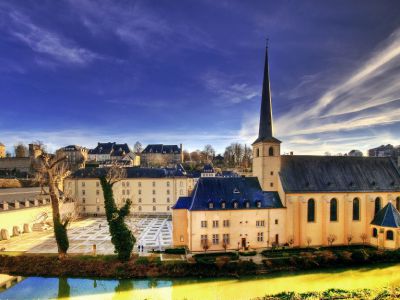
Situated in Luxembourg City’s Grund district, beside the Alzette River, Neumünster Abbey is one of the most atmospheric historic complexes in the lower town. Today, this former monastery has been transformed into a lively cultural center, hosting concerts, exhibitions, conferences, and public events. It is also home to the European Institute of Cultural Routes.
Entering the complex, check out the former cloister and its quiet courtyard. One of the highlights here is the Lucien Wercollier Cloister, which displays works by the celebrated Luxembourg sculptor Lucien Wercollier. His modern sculptures create an interesting contrast with the historic stone surroundings.
The present abbey dates largely from 1688, with further expansion in the early 18th century. It replaced the earlier Benedictine Altmünster Abbey, destroyed in 1542. The rebuilt complex included a church and four wings arranged around an internal courtyard.
After the French Revolution, the monastery was confiscated, and its religious role came to an end. Over the years, the buildings served a variety of purposes, including as a military hospital, police station, barracks, and prison. During the Second World War, when Luxembourg was occupied by Nazi Germany, political prisoners and members of the Luxembourg resistance were held here.
Neumünster Abbey has also played a role in more recent European history. In 2005, the treaties of accession that paved the way for Bulgaria and Romania to join the European Union were signed here.
Today, the abbey’s stone courtyards, riverside setting, and mixture of medieval surroundings and modern cultural life make it well worth exploring.
Entering the complex, check out the former cloister and its quiet courtyard. One of the highlights here is the Lucien Wercollier Cloister, which displays works by the celebrated Luxembourg sculptor Lucien Wercollier. His modern sculptures create an interesting contrast with the historic stone surroundings.
The present abbey dates largely from 1688, with further expansion in the early 18th century. It replaced the earlier Benedictine Altmünster Abbey, destroyed in 1542. The rebuilt complex included a church and four wings arranged around an internal courtyard.
After the French Revolution, the monastery was confiscated, and its religious role came to an end. Over the years, the buildings served a variety of purposes, including as a military hospital, police station, barracks, and prison. During the Second World War, when Luxembourg was occupied by Nazi Germany, political prisoners and members of the Luxembourg resistance were held here.
Neumünster Abbey has also played a role in more recent European history. In 2005, the treaties of accession that paved the way for Bulgaria and Romania to join the European Union were signed here.
Today, the abbey’s stone courtyards, riverside setting, and mixture of medieval surroundings and modern cultural life make it well worth exploring.
