Custom Walk in Antigua, Guatemala by routine_annonce_4i_9a527 created on 2025-07-03
Guide Location: Guatemala » Antigua
Guide Type: Custom Walk
# of Sights: 7
Tour Duration: 2 Hour(s)
Travel Distance: 2.8 Km or 1.7 Miles
Share Key: M6NJE
Guide Type: Custom Walk
# of Sights: 7
Tour Duration: 2 Hour(s)
Travel Distance: 2.8 Km or 1.7 Miles
Share Key: M6NJE
How It Works
Please retrieve this walk in the GPSmyCity app. Once done, the app will guide you from one tour stop to the next as if you had a personal tour guide. If you created the walk on this website or come to the page via a link, please follow the instructions below to retrieve the walk in the app.
Retrieve This Walk in App
Step 1. Download the app "GPSmyCity: Walks in 1K+ Cities" on Apple App Store or Google Play Store.



Step 2. In the GPSmyCity app, download(or launch) the guide "Antigua Map and Walking Tours".
Step 3. Tap the menu button located at upper right corner of the "Walks" screen and select "Retrieve custom walk". Enter the share key: M6NJE
1) Santa Catalina Arch (must see)
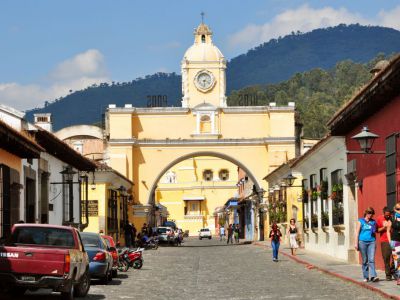
The Santa Catalina Arch is the most iconic landmark in Antigua Guatemala. Built in 1694 and located on 5th Avenue North, it originally connected the Santa Catalina Convent to a school on the other side of the street. At the time the cloistered nuns lived in the Santa Catalina Convent while they taught at the school during the day.
However there was a dilemma. The cloistered nuns had to avoid all contact with the outside world so they could not simply walk across a busy street to reach the school. To solve the problem, an arch above the street was built to connect the convent and the school. Within the arch there is a hidden passageway enabling the nuns to cross the street without being seen in public. It was an ingenious idea that worked perfectly!
The arch has suffered damage over the years, especially during the catastrophic earthquake of 1773. But miraculously, it has survived and it is now a symbol of the city’s resilience. A clock was added to the top of the arch in the era of the Central American Federation in the 1830s and it needs to be wound every three days.
Today, the Santa Catalina Arch is the most famous city monument and easily the most photographed.
However there was a dilemma. The cloistered nuns had to avoid all contact with the outside world so they could not simply walk across a busy street to reach the school. To solve the problem, an arch above the street was built to connect the convent and the school. Within the arch there is a hidden passageway enabling the nuns to cross the street without being seen in public. It was an ingenious idea that worked perfectly!
The arch has suffered damage over the years, especially during the catastrophic earthquake of 1773. But miraculously, it has survived and it is now a symbol of the city’s resilience. A clock was added to the top of the arch in the era of the Central American Federation in the 1830s and it needs to be wound every three days.
Today, the Santa Catalina Arch is the most famous city monument and easily the most photographed.
2) Parque Central (Central Plaza) (must see)
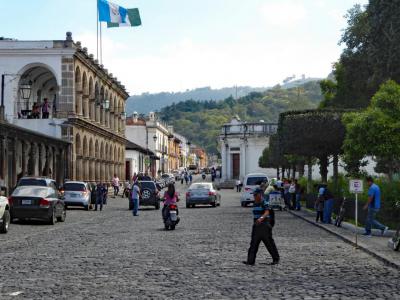
One of the reasons so many visitors enjoy visiting Parque Central is because of its popularity as a gathering place. There are plenty of trees that provide shade, as well as benches that encourage enjoyment of this space. There is a central fountain featuring a mermaid, a replica of a fountain from 1738.
This park stands out as part of Antigua's central square area. The Colonial-era buildings that line the park help add to its Old World charm. Some of the nearby landmarks you'll be able to spot include The Museum of Santiago de los Caballeros and Palacio de los Capitanes.
If you enjoy handcrafted items, there are local artisans who set up along the walkway areas every day. Marimba bands also regularly play at night, providing a lively backdrop for activity in the area. Regardless of whether you're sightseeing, shopping for crafts, enjoying the music, or people-watching, you're sure to have a great time.
This park stands out as part of Antigua's central square area. The Colonial-era buildings that line the park help add to its Old World charm. Some of the nearby landmarks you'll be able to spot include The Museum of Santiago de los Caballeros and Palacio de los Capitanes.
If you enjoy handcrafted items, there are local artisans who set up along the walkway areas every day. Marimba bands also regularly play at night, providing a lively backdrop for activity in the area. Regardless of whether you're sightseeing, shopping for crafts, enjoying the music, or people-watching, you're sure to have a great time.
3) San Jose Cathedral (ruins)
The first cathedral on this site was begun in 1545; construction was so poor, however, that the structure was in a constant state of disrepair, and an earthquake in 1583 brought down much of the roof. In 1670 work started on a new cathedral worthy of the town's role as a capital city.
For 11 years the town watched as conscripted Maya labored and the most spectacular colonial building in Central America took shape. The scale of the new cathedral was astounding: a vast dome, five naves, eighteen chapels, and a central chamber measuring 90m by 20m. Its altar was inlaid with mother-of-pearl, ivory and silver, and carvings of saints and paintings by the most revered of European and colonial artists covered the walls.
The new cathedral held out the 1689/1717 quakes, but its walls were weakened and the 1773 upheaval sent them tumbling to the ground. Today, two of the chapels have been restored as the Church of San José, which opens off the Parque Central; inside is a figure of Christ by the colonial sculptor Quirio Cataño, who also carved the famous Black Christ of Esquipulas.
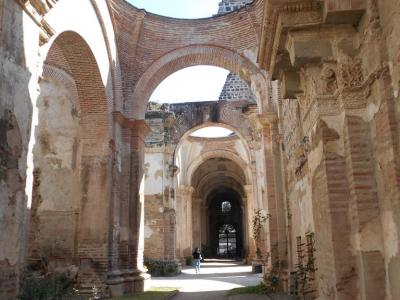
Behind the church, entered from 5 Calle Oriente, are the ruins of the rest of the structure; a mass of fallen masonry, broken arches and hefty pillars, cracked and moss-covered, the great original cupola now a window to the sky. At the very rear of the original nave, steps lead down to a burial vault, blackened by candle smoke, that's regularly used for Maya religious ceremonies – an example of the coexistence of pagan and Catholic beliefs, so characteristic of Guatemala.
For 11 years the town watched as conscripted Maya labored and the most spectacular colonial building in Central America took shape. The scale of the new cathedral was astounding: a vast dome, five naves, eighteen chapels, and a central chamber measuring 90m by 20m. Its altar was inlaid with mother-of-pearl, ivory and silver, and carvings of saints and paintings by the most revered of European and colonial artists covered the walls.
The new cathedral held out the 1689/1717 quakes, but its walls were weakened and the 1773 upheaval sent them tumbling to the ground. Today, two of the chapels have been restored as the Church of San José, which opens off the Parque Central; inside is a figure of Christ by the colonial sculptor Quirio Cataño, who also carved the famous Black Christ of Esquipulas.
Behind the church, entered from 5 Calle Oriente, are the ruins of the rest of the structure; a mass of fallen masonry, broken arches and hefty pillars, cracked and moss-covered, the great original cupola now a window to the sky. At the very rear of the original nave, steps lead down to a burial vault, blackened by candle smoke, that's regularly used for Maya religious ceremonies – an example of the coexistence of pagan and Catholic beliefs, so characteristic of Guatemala.
4) Jade Maya (Jade Museum)
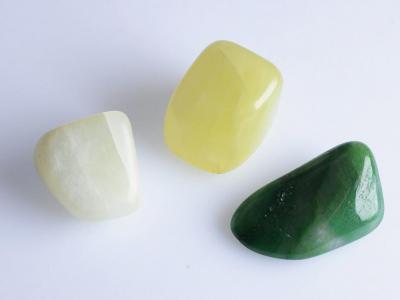
Jade Museum has displays covering over 3,000 years of history and seven distinct cultures. Part jeweler, part museum, Jade Museum has played a leading role in introducing the world to Guatemala's jadeite trade. This company has been present in Antigua since 1974.
Mary Lou Ridinger, an archaeologist, and her husband Jay are the company's founders. The jade that is sustainably mined is used to craft museum-quality jewelry that showcases pre-Colombian art forms. Starting the jade industry again in this area helped restore a lost art.
The jewelry on display in the showroom encompasses many types, from earrings and necklaces to woven bracelets. Sculptures and carvings crafted from jade are also here, from mask replicas to figurines of wildlife and models of Maya artifacts. Visitors shopping for jewelry or collectibles or wanting to learn more about jade craft will be satisfied with their experience.
Mary Lou Ridinger, an archaeologist, and her husband Jay are the company's founders. The jade that is sustainably mined is used to craft museum-quality jewelry that showcases pre-Colombian art forms. Starting the jade industry again in this area helped restore a lost art.
The jewelry on display in the showroom encompasses many types, from earrings and necklaces to woven bracelets. Sculptures and carvings crafted from jade are also here, from mask replicas to figurines of wildlife and models of Maya artifacts. Visitors shopping for jewelry or collectibles or wanting to learn more about jade craft will be satisfied with their experience.
5) Casa Santo Domingo Museum (Santo Domingo Museum) (must see)
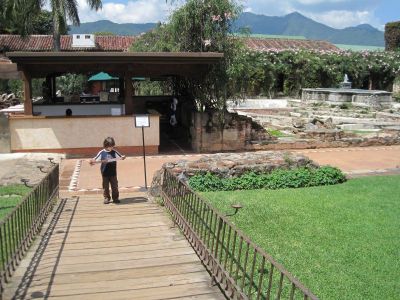
The Santo Domingo Museum is on the grounds of a convent dating back to the 16th century. Restoration efforts have made this former convent into a perfect museum space to highlight the artifacts on display. Brick arches and tile corridors help bring the area to life, replicating what the original building may have looked like.
Art that dates back to the ancient Mayan culture, including ceramics, forms an integral part of the collection. In keeping with the building's previous history as a church, the museum's collection includes religious terms. Touring this museum will give you a great appreciation for the area's history.
You can see other interesting items: silver and glassware, pharmacy articles, and archaeological artifacts. Paintings and sculptures that cover all of the site's time periods are part of the displays here. You also have the chance to see well-preserved Colonial furniture here.
Art that dates back to the ancient Mayan culture, including ceramics, forms an integral part of the collection. In keeping with the building's previous history as a church, the museum's collection includes religious terms. Touring this museum will give you a great appreciation for the area's history.
You can see other interesting items: silver and glassware, pharmacy articles, and archaeological artifacts. Paintings and sculptures that cover all of the site's time periods are part of the displays here. You also have the chance to see well-preserved Colonial furniture here.
6) Church of Santo Domingo (ruins)
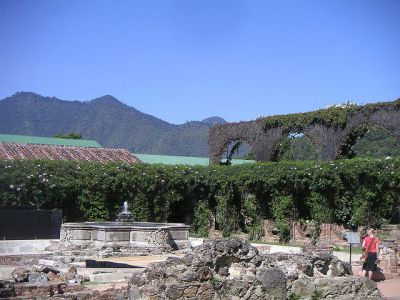
The Church of Santo Domingo in Antigua stands as a testament to the grandeur and historical significance of the once-flourishing 16th-century convent of the Santo Domingo Order. Established in 1542, this convent quickly became the largest and wealthiest in Antigua, reflecting the prominence of the Santo Domingo Order during that era. Tragically, a series of earthquakes in the 18th century devastated the structure, leaving only ruins behind which were not uncovered until excavations in the 1970s. These ruins were later incorporated into a hotel that opened in the 1990s, providing a unique blend of historical preservation and modern hospitality.
Visitors to the site can explore various aspects of the former convent's daily life through the preserved domestic areas, kitchens, chapels, stairways, and fountains. One of the more poignant exhibits includes skeletons displayed behind glass, offering a somber reflection on the lives of those who once inhabited the convent. Additionally, the site hosts multiple museums that enrich the visitor's experience with displays of colonial and pre-Columbian art, archaeological finds, and intricate silverwork. These exhibits not only highlight the cultural richness of the region but also its historical layers.
The Church of Santo Domingo is an essential destination for those interested in the cultural heritage and history of Guatemala. It provides a compelling glimpse into the past life of a significant religious and social institution in Antigua, enhanced by educational exhibits and the atmospheric presence of the ruins themselves. This site encourages visitors to immerse themselves in history, offering a profound understanding of the area's past and its enduring legacy.
Visitors to the site can explore various aspects of the former convent's daily life through the preserved domestic areas, kitchens, chapels, stairways, and fountains. One of the more poignant exhibits includes skeletons displayed behind glass, offering a somber reflection on the lives of those who once inhabited the convent. Additionally, the site hosts multiple museums that enrich the visitor's experience with displays of colonial and pre-Columbian art, archaeological finds, and intricate silverwork. These exhibits not only highlight the cultural richness of the region but also its historical layers.
The Church of Santo Domingo is an essential destination for those interested in the cultural heritage and history of Guatemala. It provides a compelling glimpse into the past life of a significant religious and social institution in Antigua, enhanced by educational exhibits and the atmospheric presence of the ruins themselves. This site encourages visitors to immerse themselves in history, offering a profound understanding of the area's past and its enduring legacy.
7) La Merced Church (must see)
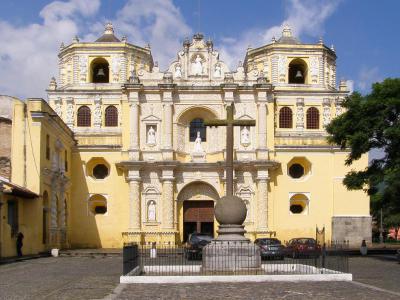
La Merced Church in Antigua stands out for its Baroque-style architecture. The building has a beautiful facade with ornamental elements set in relief and a striking yellow color of the main walls complemented by white plaster sculptures. The church has its origins in a monastery that existed from the 17th century. After an earthquake in 1773, important statuary moved to a new congregation. However, La Merced Church's community moved back to the original building in the mid-19th century.
One of the unique things about the church is the low height of its two bell towers - it is designed to withstand the frequent tremors in Guatemala. San Pedro Nolasco, who founded the Order of the Blessed Virgin Mary of Mercy appears in an effigy form on top of the church building. The crest for his order, as was as images of two friars from this order, appear on either side of San Pedro Nolasco's image.
The facade's central niche contains an image of Our Lady of Mercedes. On the left side of this image, visitors can see effigies of San Pedro Arinengol and San Raymundo Nonnatus. Images that visitors can see on the right include depictions of San Pedro Pascual and Santa Maria de Cervellón.
After more than three centuries, the building is still standing and remains in good shape. Today the church is popular with locals and tourists alike.
One of the unique things about the church is the low height of its two bell towers - it is designed to withstand the frequent tremors in Guatemala. San Pedro Nolasco, who founded the Order of the Blessed Virgin Mary of Mercy appears in an effigy form on top of the church building. The crest for his order, as was as images of two friars from this order, appear on either side of San Pedro Nolasco's image.
The facade's central niche contains an image of Our Lady of Mercedes. On the left side of this image, visitors can see effigies of San Pedro Arinengol and San Raymundo Nonnatus. Images that visitors can see on the right include depictions of San Pedro Pascual and Santa Maria de Cervellón.
After more than three centuries, the building is still standing and remains in good shape. Today the church is popular with locals and tourists alike.
