Custom Walk in Santorini, Greece by susanlibiez_a988b created on 2025-07-15
Guide Location: Greece » Santorini
Guide Type: Custom Walk
# of Sights: 8
Tour Duration: 2 Hour(s)
Travel Distance: 4.3 Km or 2.7 Miles
Share Key: UNJAL
Guide Type: Custom Walk
# of Sights: 8
Tour Duration: 2 Hour(s)
Travel Distance: 4.3 Km or 2.7 Miles
Share Key: UNJAL
How It Works
Please retrieve this walk in the GPSmyCity app. Once done, the app will guide you from one tour stop to the next as if you had a personal tour guide. If you created the walk on this website or come to the page via a link, please follow the instructions below to retrieve the walk in the app.
Retrieve This Walk in App
Step 1. Download the app "GPSmyCity: Walks in 1K+ Cities" on Apple App Store or Google Play Store.



Step 2. In the GPSmyCity app, download(or launch) the guide "Santorini Map and Walking Tours".
Step 3. Tap the menu button located at upper right corner of the "Walks" screen and select "Retrieve custom walk". Enter the share key: UNJAL
1) Agios Nikolaos Monastery
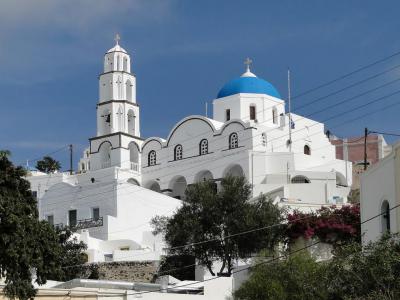
Located in the stunning and blue waters of the Aegean Sea is the Agios Nikolaos Monastery. This female convent is located between the villages of Firostefani and Imerovogli in Santorini. It is dedicated to saints Agios Panteleimon, Agios Nikolaos, and Zoodochos Pigi, and was established by the Gizi family in 1651. Prior to its current use, it was a private family chapel.
The design of the nunnery reflects the clean and simple lines of Cycladic style, while the interior of the edifice features beautiful 17th century artwork and spectacular golden icons. Two museums, folklore and ecclesiastical, are also located on the property.
Each year on August 15th, locals come here to celebrate the religious festival the Feast of the Assumption of the Virgin Mary. After church services, locals and visitors celebrate the holiday with food, song, and dance. Visitors will enjoy viewing the handmade textiles that the nuns make, using hand looms.
The design of the nunnery reflects the clean and simple lines of Cycladic style, while the interior of the edifice features beautiful 17th century artwork and spectacular golden icons. Two museums, folklore and ecclesiastical, are also located on the property.
Each year on August 15th, locals come here to celebrate the religious festival the Feast of the Assumption of the Virgin Mary. After church services, locals and visitors celebrate the holiday with food, song, and dance. Visitors will enjoy viewing the handmade textiles that the nuns make, using hand looms.
2) Firostefani Central Square
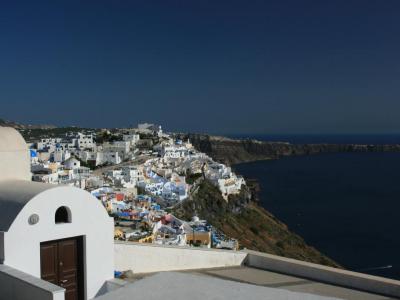
Firostefani Central Square in Santorini offers a quaint and charming spot in the picturesque neighborhood of Firostefani, just a short distance from the bustling town of Fira. Although it might not resemble a typical town square, this small area serves as a delightful gathering spot right next to the main road, making it an excellent stop for both locals and visitors.
This central square is surrounded by the quintessential white-washed buildings adorned with vibrant bougainvillea, reflecting the traditional Greek architectural style that Santorini is famous for. Its prime location on the edge of the caldera provides visitors with breathtaking panoramic views of the volcanic landscape and the deep blue Aegean Sea, making it a perfect vantage point for enjoying the island's natural beauty.
The area around Firostefani Central Square is brimming with a variety of eateries, including local cafés and restaurants that offer delicious local cuisine and a great selection of wines and other beverages. It's an ideal spot for those looking to grab a quick bite or enjoy a leisurely meal while soaking in the scenic views.
Tourists can also explore the narrow, cobbled streets lined with boutique shops, local tavernas, and charming cafes, adding to the square's laid-back ambiance. The square often hosts local events and festivals, providing a glimpse into the authentic culture of the island.
Firostefani Central Square's proximity to notable attractions, such as the Old Port of Fira and Skala, as well as cultural landmarks like the Agios Gerasimos Church and the Archaeological Museum of Thera, makes it a convenient and appealing destination for those seeking both relaxation and cultural exploration on the beautiful island of Santorini.
This central square is surrounded by the quintessential white-washed buildings adorned with vibrant bougainvillea, reflecting the traditional Greek architectural style that Santorini is famous for. Its prime location on the edge of the caldera provides visitors with breathtaking panoramic views of the volcanic landscape and the deep blue Aegean Sea, making it a perfect vantage point for enjoying the island's natural beauty.
The area around Firostefani Central Square is brimming with a variety of eateries, including local cafés and restaurants that offer delicious local cuisine and a great selection of wines and other beverages. It's an ideal spot for those looking to grab a quick bite or enjoy a leisurely meal while soaking in the scenic views.
Tourists can also explore the narrow, cobbled streets lined with boutique shops, local tavernas, and charming cafes, adding to the square's laid-back ambiance. The square often hosts local events and festivals, providing a glimpse into the authentic culture of the island.
Firostefani Central Square's proximity to notable attractions, such as the Old Port of Fira and Skala, as well as cultural landmarks like the Agios Gerasimos Church and the Archaeological Museum of Thera, makes it a convenient and appealing destination for those seeking both relaxation and cultural exploration on the beautiful island of Santorini.
3) Three Bells of Fira (must see)
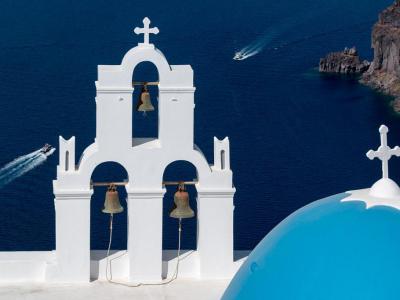
The Three Bells of Fira, officially known as The Catholic Church of the Dormition, is a prominent Greek Catholic church situated on the island of Santorini. Renowned for its striking blue dome and three bells, the church offers stunning views from its location in the town of Fira, perched high above the western cliffs of Santorini.
Historically, the site of the Three Bells of Fira has been home to several structures. In the mid-17th century, two modest cave churches were carved into the solid cliff face. These early churches were eventually lost due to the cliff's recession, which was caused by the ongoing expansion of Fira. An infirmary was then built on the site, which later came under the occupancy of Jesuits until the land was transferred to the Diocese of Santorini.
The present-day church was constructed in 1757 and has undergone multiple refurbishments and expansions throughout its history. One of the significant events in its timeline was the 1956 Amorgos earthquake, which caused considerable damage to the structure. Subsequently, the church was restored to its former glory.
The Catholic Church of the Dormition celebrates its feast day on 15 August each year, marking an important event in its religious calendar. The Three Bells of Fira remains a significant landmark and a testament to the rich historical and cultural tapestry of Santorini.
Historically, the site of the Three Bells of Fira has been home to several structures. In the mid-17th century, two modest cave churches were carved into the solid cliff face. These early churches were eventually lost due to the cliff's recession, which was caused by the ongoing expansion of Fira. An infirmary was then built on the site, which later came under the occupancy of Jesuits until the land was transferred to the Diocese of Santorini.
The present-day church was constructed in 1757 and has undergone multiple refurbishments and expansions throughout its history. One of the significant events in its timeline was the 1956 Amorgos earthquake, which caused considerable damage to the structure. Subsequently, the church was restored to its former glory.
The Catholic Church of the Dormition celebrates its feast day on 15 August each year, marking an important event in its religious calendar. The Three Bells of Fira remains a significant landmark and a testament to the rich historical and cultural tapestry of Santorini.
4) Firostefani Ruins
Firostefani, situated on the island of Santorini, is a significant archaeological site that offers a glimpse into the island's rich historical past. The entire island itself is considered an archaeological treasure, with few exceptions, and the route from Firostefani to Imerovigli is dotted with remnants of ancient settlements, each holding its unique surprises for visitors.
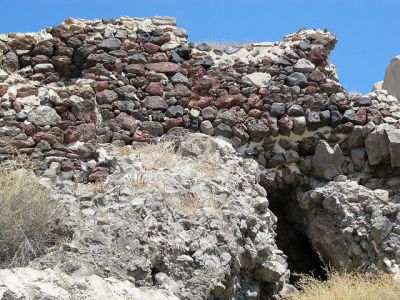
The traditional houses in Firostefani, characterized by their hard, smooth walls moistened by water and ground, were partially dug into the soft tephra, volcanic ash. Unfortunately, many of these structures were destroyed by the devastating earthquake in 1968. The ruins of these houses, which were made of mud and stones, remain as poignant reminders of this natural disaster.
Visitors today can wander through the remains of the city, exploring narrow stone-paved streets and admiring the ruins of large squares. The basements, once used as storage and workshops, add to the historical atmosphere of the site. Significant artifacts uncovered during excavations are displayed at the Museum of Prehistoric Thera in Fira, allowing a deeper understanding of the area's ancient way of life. Additionally, some of the famous wall paintings discovered in Firostefani are exhibited in the National Archaeological Museum in Athens, showcasing the artistic heritage of the region.
Overall, Firostefani offers a compelling journey through time, inviting visitors to uncover the layers of history embedded in its ruins and providing a poignant look at the resilience of this remarkable island.
The traditional houses in Firostefani, characterized by their hard, smooth walls moistened by water and ground, were partially dug into the soft tephra, volcanic ash. Unfortunately, many of these structures were destroyed by the devastating earthquake in 1968. The ruins of these houses, which were made of mud and stones, remain as poignant reminders of this natural disaster.
Visitors today can wander through the remains of the city, exploring narrow stone-paved streets and admiring the ruins of large squares. The basements, once used as storage and workshops, add to the historical atmosphere of the site. Significant artifacts uncovered during excavations are displayed at the Museum of Prehistoric Thera in Fira, allowing a deeper understanding of the area's ancient way of life. Additionally, some of the famous wall paintings discovered in Firostefani are exhibited in the National Archaeological Museum in Athens, showcasing the artistic heritage of the region.
Overall, Firostefani offers a compelling journey through time, inviting visitors to uncover the layers of history embedded in its ruins and providing a poignant look at the resilience of this remarkable island.
5) St. John the Baptist Cathedral (must see)
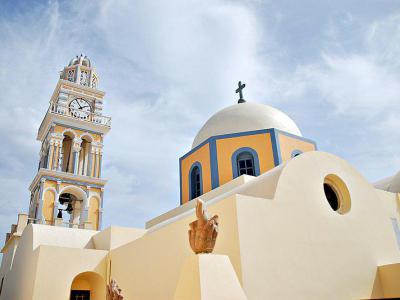
One cannot help but notice the beautiful grand churches and cathedrals that decorate the landscape of the island known as Thera or Fira. They are as much part of the community as are the many lava remnants. Dedicated to Saint John the Baptist, the Catholic Cathedral of Santorini is a handsome and unique place of worship. Its peach exterior contrasts with the many white and blue domed churches that dot the landscape of this quaint, yet beautiful town. It was built in the 17th century by the Jesuit monks, missionaries of the Apostolic Order.
Santorini has experienced a lot of seismic activity throughout its existence. An earthquake in 1956 completely destroyed the previous church. The house of worship that we may enjoy today was restored and opened in 1975.
You will be impressed by the exquisiteness of the structure with its magnificent clock tower and accompanying bells. Once you enter the place of worship, you will find the confessional that is located to the side. The interior is eye-catching and features blue, orange, and cream accents throughout the building. A striking chandelier hangs below a religious painting, which is featured on a domed ceiling, and spectacular arches border the framed portraits of religious figures. Located on an island that the crusaders visited, this cathedral is simply stunning.
Why You Should Visit:
Not only do you experience the architecture of the island, but also, you may find a narrow street where all the souvenir shops are located, and you can eat a typical, local gyro as you look around the shops.
Tip:
You'll probably feel at ease attending a Sunday mass here (10am), as most attendees are usually tourists and there are parts where you may even recite in your own language instead of Greek, as there are many languages represented among the congregation.
Santorini has experienced a lot of seismic activity throughout its existence. An earthquake in 1956 completely destroyed the previous church. The house of worship that we may enjoy today was restored and opened in 1975.
You will be impressed by the exquisiteness of the structure with its magnificent clock tower and accompanying bells. Once you enter the place of worship, you will find the confessional that is located to the side. The interior is eye-catching and features blue, orange, and cream accents throughout the building. A striking chandelier hangs below a religious painting, which is featured on a domed ceiling, and spectacular arches border the framed portraits of religious figures. Located on an island that the crusaders visited, this cathedral is simply stunning.
Why You Should Visit:
Not only do you experience the architecture of the island, but also, you may find a narrow street where all the souvenir shops are located, and you can eat a typical, local gyro as you look around the shops.
Tip:
You'll probably feel at ease attending a Sunday mass here (10am), as most attendees are usually tourists and there are parts where you may even recite in your own language instead of Greek, as there are many languages represented among the congregation.
6) Santorini Cable Car
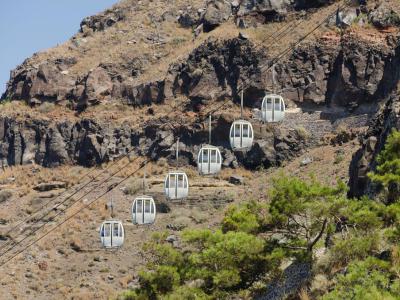
The Santorini Cable Car is a key transportation feature on the Greek island of Santorini, providing a safe and convenient means for visitors to travel from the Old Port to Fira, the island's capital. Established to address the challenges posed by the steep, 600-step climb from the Old Port, the cable car offers an easy and charming ride with breathtaking views of the Caldera, the Aegean Sea, and the Volcano from an altitude of 220 meters.
Historically, prior to the 1970s, visitors could only ascend to Fira by foot or on mule, which was difficult for the elderly, those with mobility issues, and tourists carrying heavy luggage. With the increase in tourist and cruise ship traffic in the 1970s, a more accessible solution became necessary. Evangelos Nomikos, a ship owner and notable benefactor of Santorini, funded the construction of the cable car. The project began in the autumn of 1980 and was completed by the summer of 1982.
Capable of transporting 1200 people per hour, the gondola-style carriages seat six passengers in two rows of three, and the journey between the Old Port and Fira takes just five minutes. This rapid transit system is particularly beneficial for cruise ship passengers and those participating in volcano boat tours departing from the Old Port.
The cable car ride itself offers stunning vistas of the Aegean Sea, the Volcano, and the iconic white-washed houses perched on the Caldera cliffs. Conveniently located near the Archaeological Museum in Fira, the cable car station and ticket office are easy to find, with clear signage guiding visitors from the Orthodox Metropolitan Cathedral along the main path towards Firostefani village.
Historically, prior to the 1970s, visitors could only ascend to Fira by foot or on mule, which was difficult for the elderly, those with mobility issues, and tourists carrying heavy luggage. With the increase in tourist and cruise ship traffic in the 1970s, a more accessible solution became necessary. Evangelos Nomikos, a ship owner and notable benefactor of Santorini, funded the construction of the cable car. The project began in the autumn of 1980 and was completed by the summer of 1982.
Capable of transporting 1200 people per hour, the gondola-style carriages seat six passengers in two rows of three, and the journey between the Old Port and Fira takes just five minutes. This rapid transit system is particularly beneficial for cruise ship passengers and those participating in volcano boat tours departing from the Old Port.
The cable car ride itself offers stunning vistas of the Aegean Sea, the Volcano, and the iconic white-washed houses perched on the Caldera cliffs. Conveniently located near the Archaeological Museum in Fira, the cable car station and ticket office are easy to find, with clear signage guiding visitors from the Orthodox Metropolitan Cathedral along the main path towards Firostefani village.
7) 25 Martiou Street
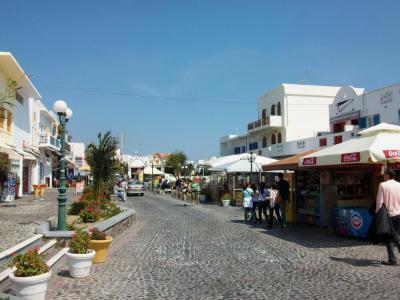
25 Martiou Street, in Santorini, is a picturesque destination that embodies the distinctive charm of this renowned island. Situated in the bustling neighborhood of Thira, the street is acclaimed for its vibrant shopping scene that ranges from quaint boutiques and artisan workshops to a plethora of souvenir shops offering everything from unique handcrafted items to budget-friendly mementos.
As the main shopping hub of Santorini, 25 Martiou Street is framed by the island's iconic architecture - white-washed buildings with blue-domed roofs that reflect the classic Cycladic style. This aesthetic is complemented by vivid splashes of color from blooming bougainvillea vines, enhancing the street’s visual appeal. The cobblestone pathways invite visitors to leisurely explore the area, which offers not only retail therapy but also a taste of local life through its cozy cafes and traditional Greek tavernas.
The street’s proximity to stunning views of the Aegean Sea and the famous Santorini sunsets add to its allure, making it a perfect backdrop for both relaxation and exploration. Whether you're interested in shopping for unique souvenirs, enjoying the local cuisine, or simply taking in the scenic vistas, 25 Martiou Street provides a captivating experience that highlights the beauty and cultural richness of Santorini.
As the main shopping hub of Santorini, 25 Martiou Street is framed by the island's iconic architecture - white-washed buildings with blue-domed roofs that reflect the classic Cycladic style. This aesthetic is complemented by vivid splashes of color from blooming bougainvillea vines, enhancing the street’s visual appeal. The cobblestone pathways invite visitors to leisurely explore the area, which offers not only retail therapy but also a taste of local life through its cozy cafes and traditional Greek tavernas.
The street’s proximity to stunning views of the Aegean Sea and the famous Santorini sunsets add to its allure, making it a perfect backdrop for both relaxation and exploration. Whether you're interested in shopping for unique souvenirs, enjoying the local cuisine, or simply taking in the scenic vistas, 25 Martiou Street provides a captivating experience that highlights the beauty and cultural richness of Santorini.
8) Orthodox Metropolitan Cathedral
Greek Orthodox churches are known for their detailed design, distinctive iconography, and beauty. When you enter a house of worship, you will feel as if you have stepped into a world of vibrant colour and light that is accented by icons, art, and stained glass.
The Orthodox Metropolitan Cathedral in Thera, also known as the Church of Ypapantis, was originally built in the 19th century by M. Belloni in 1827. The house of worship, that we see today, was rebuilt after the devastating earthquake of 1956.
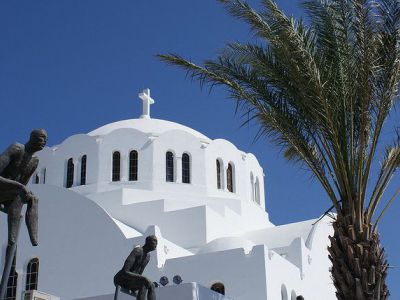
Beautiful white arches and arcades decorate the building that sits atop a cliff. The pièce de résistance is the white dome that tops the building and the bell tower. The building is a prominent landmark that can be seen by all from many other Santorini landmarks. Among the works of art that one should view are the frescoes by local artist, Christoforos Asimis, the beautiful mosaics added to the building in 1975, as well as the magnificent main chandelier.
Accommodations close to the cathedral include the Santorini Island Hotels, the Panorama Studios and Suites, the Pantelia, the Anemomilos Villa, the Blue Angel, the Reverie Traditional Apartments, the Vallas, the Golden Star, the Pavlina, and the Evgenia.
Tip:
Free to enter, but offerings welcome and there is a requirement that you are modestly dressed. Try to pick a quiet time.
The Orthodox Metropolitan Cathedral in Thera, also known as the Church of Ypapantis, was originally built in the 19th century by M. Belloni in 1827. The house of worship, that we see today, was rebuilt after the devastating earthquake of 1956.
Beautiful white arches and arcades decorate the building that sits atop a cliff. The pièce de résistance is the white dome that tops the building and the bell tower. The building is a prominent landmark that can be seen by all from many other Santorini landmarks. Among the works of art that one should view are the frescoes by local artist, Christoforos Asimis, the beautiful mosaics added to the building in 1975, as well as the magnificent main chandelier.
Accommodations close to the cathedral include the Santorini Island Hotels, the Panorama Studios and Suites, the Pantelia, the Anemomilos Villa, the Blue Angel, the Reverie Traditional Apartments, the Vallas, the Golden Star, the Pavlina, and the Evgenia.
Tip:
Free to enter, but offerings welcome and there is a requirement that you are modestly dressed. Try to pick a quiet time.
