Custom Walk in Bologna, Italy by dimstranz_43a54 created on 2025-07-30
Guide Location: Italy » Bologna
Guide Type: Custom Walk
# of Sights: 11
Tour Duration: 2 Hour(s)
Travel Distance: 2.8 Km or 1.7 Miles
Share Key: QZLM2
Guide Type: Custom Walk
# of Sights: 11
Tour Duration: 2 Hour(s)
Travel Distance: 2.8 Km or 1.7 Miles
Share Key: QZLM2
How It Works
Please retrieve this walk in the GPSmyCity app. Once done, the app will guide you from one tour stop to the next as if you had a personal tour guide. If you created the walk on this website or come to the page via a link, please follow the instructions below to retrieve the walk in the app.
Retrieve This Walk in App
Step 1. Download the app "GPSmyCity: Walks in 1K+ Cities" on Apple App Store or Google Play Store.



Step 2. In the GPSmyCity app, download(or launch) the guide "Bologna Map and Walking Tours".
Step 3. Tap the menu button located at upper right corner of the "Walks" screen and select "Retrieve custom walk". Enter the share key: QZLM2
1) Piazza Maggiore (Main Square) (must see)
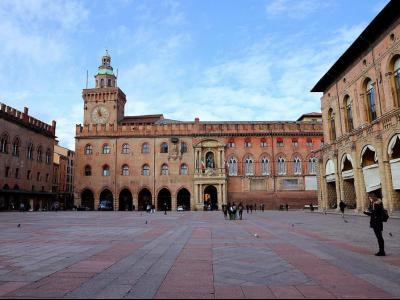
On a sunny day, there's no better place to be than soaking up the atmosphere at café tables in Bologna's Main Square, known as "Piazza Maggiore", or lounging on the steps under the arcades. This historic square, one of the oldest in Italy, underwent expansion in the 14th century and saw the addition of many grand buildings in the 16th century.
At its heart stands the impressive yet incomplete Basilica of San Petronio, a beloved landmark among locals. Nearby, you'll find notable structures such as the Municipal Palace, Notaries' Palace, Podesta Palace, and the Palace of the Banks. Adorning the center of the square is Giambologna's renowned statue of Neptune.
The slightly raised platform in the middle, familiarly known as the "crescentone" after the local flat bread "crescente" it resembles, holds historical significance. Damaged by Allied tanks during the liberation of Bologna in 1945, it serves as a commemoration of that historic day. In July and August, the space transforms into one of Italy's largest outdoor cinemas during the Under the Stars of Cinema ("Sotto le stelle del Cinema") film festival, with over 3,000 chairs arranged on the "crescentone", solidifying its status as the cultural heart of the city.
Tip:
For visitors seeking convenience, the excellent tourist office on the square offers the Bologna Welcome Card, providing excellent value by offering free admission to many city museums and attractions, as well as discounts for shops, restaurants, and events.
At its heart stands the impressive yet incomplete Basilica of San Petronio, a beloved landmark among locals. Nearby, you'll find notable structures such as the Municipal Palace, Notaries' Palace, Podesta Palace, and the Palace of the Banks. Adorning the center of the square is Giambologna's renowned statue of Neptune.
The slightly raised platform in the middle, familiarly known as the "crescentone" after the local flat bread "crescente" it resembles, holds historical significance. Damaged by Allied tanks during the liberation of Bologna in 1945, it serves as a commemoration of that historic day. In July and August, the space transforms into one of Italy's largest outdoor cinemas during the Under the Stars of Cinema ("Sotto le stelle del Cinema") film festival, with over 3,000 chairs arranged on the "crescentone", solidifying its status as the cultural heart of the city.
Tip:
For visitors seeking convenience, the excellent tourist office on the square offers the Bologna Welcome Card, providing excellent value by offering free admission to many city museums and attractions, as well as discounts for shops, restaurants, and events.
2) Basilica di San Petronio (Basilica of St. Petronius) (must see)
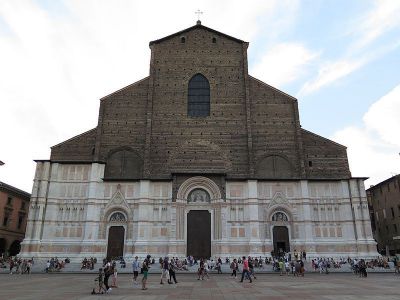
Dedicated to Petronius, the city's patron saint, this 14th-century edifice stands as Bologna's principal church, containing an impressive 22 side chapels and featuring the Four Crosses, one of the oldest Christian symbols in the city. As one of Italy's most monumental Gothic basilicas, capable of housing up to 28,000 people, it was on track to surpass Saint Peter's in Rome until Pope Pius IV diverted funds to establish a new university, the Archiginnasio. Consequently, the façade, designed with cosmological and esoteric "diagramming", was left incomplete, with only partial cladding in pink Verona marble and a truncated transept visible down the alley to the right of the basilica. Nonetheless, San Petronio remains monumental, symbolizing civic will rather than religious authority. Built atop Roman foundations, the vaulted church reveals columns repurposed from the Augustan era, seamlessly integrated with medieval additions.
The Porta Magna, or central portal, features highly expressive reliefs, the final masterpiece of Sienese sculptor Jacopo della Quercia, which occupied the last 13 years of his life (1425−38). Adorning the architrave are scenes from the New Testament, while dramatic reliefs on the two pilasters flanking the door depict scenes from the Old Testament. Michelangelo, during his visit to Bologna in 1494, admired these reliefs and incorporated several motifs – such as "The Creation of Adam" – into the Sistine Ceiling. The lunette above the portal showcases the Madonna and Child between Saint Petronius and Saint Ambrose.
Also inside lies the world's longest indoor meridian line, inlaid into the pavement of the left aisle in 1655. Stretching 66.8 meters (219.16 feet), it was calculated and designed by astronomer Giovanni Cassini, who taught astronomy at the University. A sunray enters from a hole in the vault 27 meters high and precisely strikes the line, enabling accurate time measurement.
Tips:
Admission is free, but there's a small fee for photography. Visitors should adhere to the dress code, ensuring that shoulders and knees are covered. From the newly renovated panoramic terrace (reachable from Piazza Galvani via elevator and a short flight of stairs), one can enjoy magnificent views of the cityscape and the Apennine hills to the south.
The Porta Magna, or central portal, features highly expressive reliefs, the final masterpiece of Sienese sculptor Jacopo della Quercia, which occupied the last 13 years of his life (1425−38). Adorning the architrave are scenes from the New Testament, while dramatic reliefs on the two pilasters flanking the door depict scenes from the Old Testament. Michelangelo, during his visit to Bologna in 1494, admired these reliefs and incorporated several motifs – such as "The Creation of Adam" – into the Sistine Ceiling. The lunette above the portal showcases the Madonna and Child between Saint Petronius and Saint Ambrose.
Also inside lies the world's longest indoor meridian line, inlaid into the pavement of the left aisle in 1655. Stretching 66.8 meters (219.16 feet), it was calculated and designed by astronomer Giovanni Cassini, who taught astronomy at the University. A sunray enters from a hole in the vault 27 meters high and precisely strikes the line, enabling accurate time measurement.
Tips:
Admission is free, but there's a small fee for photography. Visitors should adhere to the dress code, ensuring that shoulders and knees are covered. From the newly renovated panoramic terrace (reachable from Piazza Galvani via elevator and a short flight of stairs), one can enjoy magnificent views of the cityscape and the Apennine hills to the south.
3) Palazzo del Podesta (Podesta Palace)
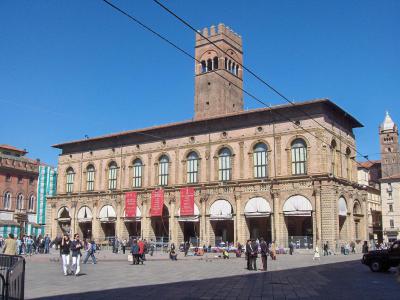
Facing the Main Square ("Piazza Maggiore") stands the elegant Podestà Palace (accessible only during special exhibitions), erected in the 13th century as the epicenter of political power. Alas, it quickly became evident that the place was too small for the business of governance, prompting the birth of the neighboring King Enzo Palace ("Palazzo Re Enzo").
The Podesta Palace features a Renaissance porticoed facade (replacing the original Gothic one) facing the Main Square and is distinguished by its brick tower, the Torre dell'Arengo, originally erected to summon citizens in emergencies. Architecture enthusiasts should take note of the pillars of the portico, carved with a whopping 3,000 rosettes, each one as unique as a snowflake in a blizzard!
Beneath the vault, known as the Voltone del Podesta, terracotta statues of the town’s patron saints were once displayed. Today, visitors are drawn to the echo in the 'whispering gallery' – stand at one of the four corners of the arcade, whisper sweet nothings, and your voice will softly reverberate from the opposite corner. It's like having a secret conversation with yourself!
The Podesta Palace features a Renaissance porticoed facade (replacing the original Gothic one) facing the Main Square and is distinguished by its brick tower, the Torre dell'Arengo, originally erected to summon citizens in emergencies. Architecture enthusiasts should take note of the pillars of the portico, carved with a whopping 3,000 rosettes, each one as unique as a snowflake in a blizzard!
Beneath the vault, known as the Voltone del Podesta, terracotta statues of the town’s patron saints were once displayed. Today, visitors are drawn to the echo in the 'whispering gallery' – stand at one of the four corners of the arcade, whisper sweet nothings, and your voice will softly reverberate from the opposite corner. It's like having a secret conversation with yourself!
4) Fontana del Nettuno (Fountain of Neptune) (must see)
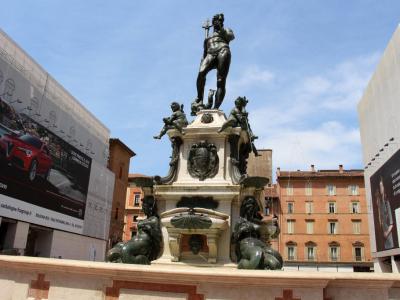
Adjacent to the historic King Enzo Palace ("Palazzo Re Enzo"), in the lively square bearing his name, proudly stands the Fountain of Neptune ("Fontana del Nettuno"), a masterpiece crafted by Giambologna in 1556. Born Jean Boulogne in Flanders, this sculptor found his creative groove in Florence; however, it was his aquatic masterpiece in Bologna that truly made waves.
At the heart of the fountain reigns a colossal Neptune (dubbed 'Il Gigante'), flanked by cherubs and four luscious sirens astride dolphins, playfully spouting water from, shall we say, unconventional sources. Initially causing quite the stir with its unabashed nudity, the statue eventually won over censorship, becoming a symbol of irreverence cherished by the locals who revel in uncovering the most strategic vantage points to admire Neptune's, ahem, commanding presence.
To accommodate the fountain, an entire city block was razed, making space for its imposing presence. Its base is covered with Verona marble, while each dolphin symbolizes prominent rivers of the era: the Ganges, Nile, Amazon, and Danube, while Neptune, in all his grandeur, reigns over the seas, symbolizing the Pope's dominion over Bologna and beyond.
At the heart of the fountain reigns a colossal Neptune (dubbed 'Il Gigante'), flanked by cherubs and four luscious sirens astride dolphins, playfully spouting water from, shall we say, unconventional sources. Initially causing quite the stir with its unabashed nudity, the statue eventually won over censorship, becoming a symbol of irreverence cherished by the locals who revel in uncovering the most strategic vantage points to admire Neptune's, ahem, commanding presence.
To accommodate the fountain, an entire city block was razed, making space for its imposing presence. Its base is covered with Verona marble, while each dolphin symbolizes prominent rivers of the era: the Ganges, Nile, Amazon, and Danube, while Neptune, in all his grandeur, reigns over the seas, symbolizing the Pope's dominion over Bologna and beyond.
5) Biblioteca Salaborsa (Salaborsa Library) (must see)
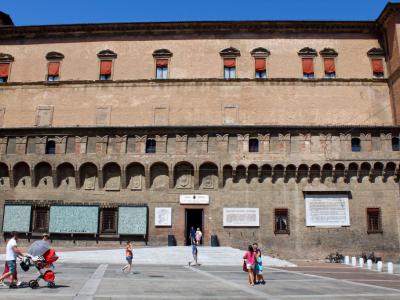
Part of the expansive Municipal Palace ("Palazzo d'Accursio") complex, the Salaborsa Library occupies the former Stock Exchange (Borsa), ingeniously repurposed into a modern multimedia library and cultural hub, designed in Art Nouveau style. Beneath the library's expansive floor, a glass panel in the Covered Square unveils remnants of medieval and Roman settlements, including fragments of the forum and Roman pavement, offering visitors unrestricted access to these historical excavations from the lower basement level.
Before assuming its current role, this sizeable section of the Municipal Palace served a multitude of functions. In 1568, the renowned Bolognese naturalist, Ulisse Aldrovandi, established Bologna's Botanic Garden in the courtyard here, dedicated to the academic exploration of medicinal plants, marking one of Europe's earliest botanic gardens (the present-day botanic garden is located in the university quarter). Subsequently, the courtyard transitioned into a military training ground and later housed bank offices, a puppet theatre, and even a basketball court before being transformed into the Stock Exchange.
Before assuming its current role, this sizeable section of the Municipal Palace served a multitude of functions. In 1568, the renowned Bolognese naturalist, Ulisse Aldrovandi, established Bologna's Botanic Garden in the courtyard here, dedicated to the academic exploration of medicinal plants, marking one of Europe's earliest botanic gardens (the present-day botanic garden is located in the university quarter). Subsequently, the courtyard transitioned into a military training ground and later housed bank offices, a puppet theatre, and even a basketball court before being transformed into the Stock Exchange.
6) Finestrella (Small Window)
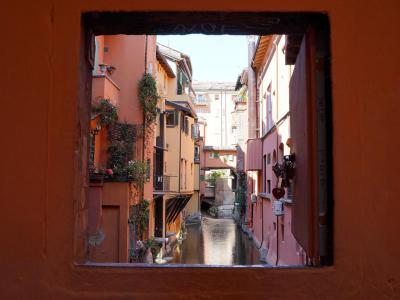
A small window on Piella Street offers a lovely and rare peek at Bologna's lost canals. Unlike Venice, where the famous canals and glamorous gondola rides are everywhere, Bologna's historic waterways are much easier to miss. This is mainly because many of them were covered over time, with roads and buildings built on top, hiding these medieval channels from view.
Back in the 12th century, canals were constructed on Bologna’s major rivers, the Savena and Reno. They had a sophisticated system of locks and pipes, stretching over 37 miles. These canals were essential for silk manufacturing and trade, making Bologna a major hub for silk, tobacco, and flour.
Many of the canals were used for transporting goods and people. However, as the economy evolved, most of the canal system was covered with roads and parking lots, especially after World War II.
Today, the best spot to see one of the few remaining sections of these historic canals is through the Small “Canal Window” on Piella Street. From this unassuming street, you can look out over a part of Mill Canal. The water flows between brightly colored houses on one side and unpainted brick walls on the other. It's a quaint and picturesque sight, making the Small Window a popular spot for visitors.
Many locals didn't know this canal still existed and thought all of them had been closed. Even though you can see the canal from the bigger street, the window view is much better.
Back in the 12th century, canals were constructed on Bologna’s major rivers, the Savena and Reno. They had a sophisticated system of locks and pipes, stretching over 37 miles. These canals were essential for silk manufacturing and trade, making Bologna a major hub for silk, tobacco, and flour.
Many of the canals were used for transporting goods and people. However, as the economy evolved, most of the canal system was covered with roads and parking lots, especially after World War II.
Today, the best spot to see one of the few remaining sections of these historic canals is through the Small “Canal Window” on Piella Street. From this unassuming street, you can look out over a part of Mill Canal. The water flows between brightly colored houses on one side and unpainted brick walls on the other. It's a quaint and picturesque sight, making the Small Window a popular spot for visitors.
Many locals didn't know this canal still existed and thought all of them had been closed. Even though you can see the canal from the bigger street, the window view is much better.
7) Due Torri (Two Towers: Asinelli and Garisenda) (must see)
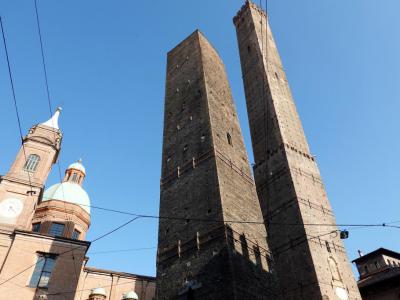
Dominating the scene at Piazza di Porta Ravegnana, where the main gate of the Roman walls once stood, are the iconic Two Towers, emblematic of Bologna's medieval past when the city boasted around 120 such structures. Dating back to the 12th century, these likely served as both lookout points and symbols of prestige. Legend has it that the Asinelli and Garisenda families, engaged in a fierce competition to erect the tallest and most magnificent tower in the city.
For a taste of history and panoramic vistas over the terracotta rooftops, brave the ascent to the top of the Asinelli Tower, rising over 97 meters (318 feet) high. Though the climb is steep, navigating a narrow spiral staircase of nearly 500 steps, the reward is well worth the effort. From the summit, you can spot other surviving medieval towers and, weather permitting, catch a glimpse of the Alpine foothills beyond Verona. Like many of Bologna's towers, both the Two Towers have a noticeable tilt: Garisenda tilts 3.33 meters (11 feet) northeast, while Asinelli leans 2.23 meters (7.3 feet) westward. Originally reaching 60 meters (197 feet), Garisenda was truncated by 12 meters (39 feet) in the mid-14th century due to unstable foundations; however, from certain angles, the two towers appear to be of equal height. Dante, who briefly sojourned in Bologna during his exile from Florence, famously referenced the leaning tower in "The Inferno" (before its reduction), likening it to the bent figure of Antaeus, the giant son of Poseidon, trapped in ice at the depths of hell.
Beneath the towers, yet not overshadowed, stands the 17th-century Saint Bartholomew's Church, featuring a Renaissance portico. Inside, seek out Francesco Albani's "Annunciation" in the fourth chapel of the south aisle, and Guido Reni's small "Madonna with Child" in the north transept. On the square's north side, the abrupt appearance of a starkly modern office building sparked controversy in the 1950s.
For a taste of history and panoramic vistas over the terracotta rooftops, brave the ascent to the top of the Asinelli Tower, rising over 97 meters (318 feet) high. Though the climb is steep, navigating a narrow spiral staircase of nearly 500 steps, the reward is well worth the effort. From the summit, you can spot other surviving medieval towers and, weather permitting, catch a glimpse of the Alpine foothills beyond Verona. Like many of Bologna's towers, both the Two Towers have a noticeable tilt: Garisenda tilts 3.33 meters (11 feet) northeast, while Asinelli leans 2.23 meters (7.3 feet) westward. Originally reaching 60 meters (197 feet), Garisenda was truncated by 12 meters (39 feet) in the mid-14th century due to unstable foundations; however, from certain angles, the two towers appear to be of equal height. Dante, who briefly sojourned in Bologna during his exile from Florence, famously referenced the leaning tower in "The Inferno" (before its reduction), likening it to the bent figure of Antaeus, the giant son of Poseidon, trapped in ice at the depths of hell.
Beneath the towers, yet not overshadowed, stands the 17th-century Saint Bartholomew's Church, featuring a Renaissance portico. Inside, seek out Francesco Albani's "Annunciation" in the fourth chapel of the south aisle, and Guido Reni's small "Madonna with Child" in the north transept. On the square's north side, the abrupt appearance of a starkly modern office building sparked controversy in the 1950s.
8) Osteria del Sole (wine bar)
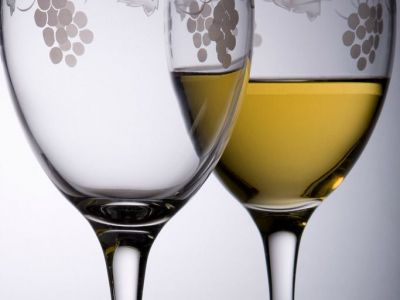
Above the doorway, only the word "vino" suggests that you've stumbled upon an inn. The unassuming Osteria del Sole holds the distinction of being Bologna's oldest inn, tracing its roots back to 1465. Stepping inside, you'll encounter an atmosphere that is rustic and authentic: the walls lined with weathered framed photographs while the air is filled with the chatter of patrons. Here, inexpensive wine, predominantly local varieties from Emilia-Romagna such as Sangiovese or Pignoletto, is served by the glass. Long communal tables invite guests to bring their own fare, a tradition upheld for centuries.
Whether you've gathered provisions from the nearby market stalls or neighboring delis, you'll find a welcoming spot to enjoy your meal. Sit among jovial locals engaged in card games, university students deep in conversation, or the occasional traveler who has managed to uncover this hidden gem. Each corner of the Osteria del Sole exudes history and charm, inviting you to linger and soak in its stories.
Whether you've gathered provisions from the nearby market stalls or neighboring delis, you'll find a welcoming spot to enjoy your meal. Sit among jovial locals engaged in card games, university students deep in conversation, or the occasional traveler who has managed to uncover this hidden gem. Each corner of the Osteria del Sole exudes history and charm, inviting you to linger and soak in its stories.
9) Mercato di Mezzo (Middle Market) (must see)
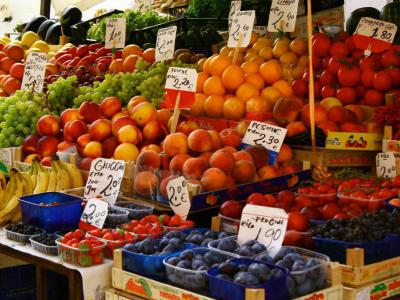
Tucked away from the Main Square ("Piazza Maggiore") lies the Quadrilatero, a historic maze of food shops bustling with the same lively energy it had during its medieval prime. This ancient enclave was once the domain of the city's guilds, including blacksmiths, goldsmiths, butchers, fishmongers, and furriers, whose legacies live on in the street names today.
For an authentic taste of Emilia, look no further than this vibrant culinary hub. Open-air stalls, specialty food shops, and the Middle Market-now transformed into a chic food hall-offer a tempting array of regional delicacies and freshly prepared tapas-style snacks. Visitors are encouraged to indulge in a bit of "gaze and graze," sampling juicy peaches, cherries, intricately crafted pastries, handmade pasta, savory delights like pink Parma ham, and freshly caught seafood.
For a quick bite, grab some fried fish from Pescheria Pavaglione or listen to the satisfying smack of pizza dough being prepared at Rossopomodoro pizzeria. And let's not forget about the Baladin microbrewery tucked away in the basement-a haven for craft beer enthusiasts and burger aficionados alike. With its quirky, vintage-chic decor and two floors of inviting space, it's a must-visit spot for those seeking a taste of the unconventional.
For an authentic taste of Emilia, look no further than this vibrant culinary hub. Open-air stalls, specialty food shops, and the Middle Market-now transformed into a chic food hall-offer a tempting array of regional delicacies and freshly prepared tapas-style snacks. Visitors are encouraged to indulge in a bit of "gaze and graze," sampling juicy peaches, cherries, intricately crafted pastries, handmade pasta, savory delights like pink Parma ham, and freshly caught seafood.
For a quick bite, grab some fried fish from Pescheria Pavaglione or listen to the satisfying smack of pizza dough being prepared at Rossopomodoro pizzeria. And let's not forget about the Baladin microbrewery tucked away in the basement-a haven for craft beer enthusiasts and burger aficionados alike. With its quirky, vintage-chic decor and two floors of inviting space, it's a must-visit spot for those seeking a taste of the unconventional.
10) Basilica di San Domenico (Basilica of St. Dominic) (must see)
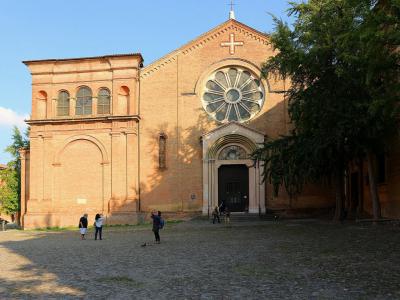
Via Castiglione once served as the main route to the Bolognese hills, with access controlled by Porta Castiglione, one of the city's ten surviving gates. To the west, the monumental Basilica of Saint Dominic (with a fee for entry to the presbytery only) presides over the cobblestone Piazza San Domenico. The square has two notable mausoleums, each featuring a tomb raised on pillars and sheltered by a canopy, dedicated to renowned medieval law scholars Rolandino de' Passaggeri and Egidio Foscherari.
The basilica was originally built to house the relics of Saint Dominic, the founder of the Dominican order who passed away here in 1221 and was canonized in 1234. Despite having undergone alterations over the years, the structure still abounds in curious, canopied tombs and artworks by renowned artists such as Michelangelo, Pisano, and Filippino Lippi, alongside works by prominent Bolognese artists.
The Chapel of Saint Dominic holding the saint's tomb is halfway down the basilica on the right. The magnificent Tomb of Saint Dominic ("Arca di San Domenico") is a collaborative effort by several leading artists, including Niccolò da Bari (later known as Niccolò dell'Arca for his outstanding work here), Nicola Pisano, and Arnolfo di Cambio. Completed by Michelangelo, who was a mere 19-year-old at the time, the Arca features two Bolognese saints – Proculus and Petronius – holding a model of Bologna.
Decorating the dome above the Arca is Guido Reni's "Saint Dominic in Glory with Christ, the Madonna, and Saints", while hidden behind the shrine lies the precious reliquary of Saint Dominic's head. Other notable artworks include Giunta Pisano's "Crucifix" (1250) and the tomb of Taddeo Pepoli, both located in the left transept; Filippino Lippi's "Mystical Marriage of Saint Catherine" in the small chapel beyond the right transept; and the exquisite mid-sixteenth-century marquetry choir stalls.
The basilica was originally built to house the relics of Saint Dominic, the founder of the Dominican order who passed away here in 1221 and was canonized in 1234. Despite having undergone alterations over the years, the structure still abounds in curious, canopied tombs and artworks by renowned artists such as Michelangelo, Pisano, and Filippino Lippi, alongside works by prominent Bolognese artists.
The Chapel of Saint Dominic holding the saint's tomb is halfway down the basilica on the right. The magnificent Tomb of Saint Dominic ("Arca di San Domenico") is a collaborative effort by several leading artists, including Niccolò da Bari (later known as Niccolò dell'Arca for his outstanding work here), Nicola Pisano, and Arnolfo di Cambio. Completed by Michelangelo, who was a mere 19-year-old at the time, the Arca features two Bolognese saints – Proculus and Petronius – holding a model of Bologna.
Decorating the dome above the Arca is Guido Reni's "Saint Dominic in Glory with Christ, the Madonna, and Saints", while hidden behind the shrine lies the precious reliquary of Saint Dominic's head. Other notable artworks include Giunta Pisano's "Crucifix" (1250) and the tomb of Taddeo Pepoli, both located in the left transept; Filippino Lippi's "Mystical Marriage of Saint Catherine" in the small chapel beyond the right transept; and the exquisite mid-sixteenth-century marquetry choir stalls.
11) Archiginnasio Palace (must see)
Just past the Archaeological Museum lies the historic Archiginnasio Palace, constructed in the 1560s as the first permanent home of Europe's oldest university. Prior to its erection, the faculties of law and medicine were like lost socks, scattered across various sites within the city. The palace served as the university's headquarters until 1803, when it relocated to its present site on Via Zamboni. Presently, it hosts the esteemed collection of 800,000 works of the City Library ("Biblioteca Comunale"), the lavishly decorated Sala dello Stabat Mater, which once hosted Rossini's inaugural Italian performance of "Stabat Mater" in 1842 under the baton of Donizetti, and the captivating Anatomy Theatre ("Teatro Anatomico").
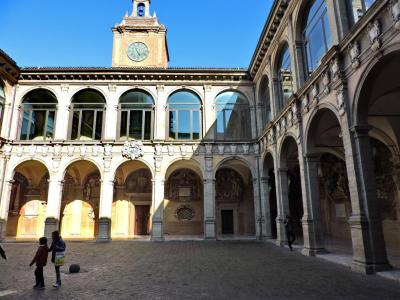
The elegant courtyard, with its fancy double loggia, along with the staircase and halls, are decked out with tributes to the big brains of the ancient university, alongside some 6,000 student coats of arms. This courtyard often served as the backdrop for university ceremonies, including the intriguing Preparation of the Theriac, a medicinal concoction for animal bites and later a panacea, developed by the Greeks in the 1st century AD, comprising fermented herbs, poisons, animal tissue, honey, and various other ingredients.
The Anatomy Theatre, designed in the shape of an amphitheatre and adorned with wooden sculptures depicting renowned university anatomists and celebrated physicians, hosted some of Europe's earliest human dissections. Despite the presence of depictions of "gli spellati", or skinned cadavers, supporting a canopy, the tiered seats and professors' podium lack any macabre elements. Although the Church initially prohibited regular dissection sessions, when they did occur, they became popular public events. Photographs at the entrance showcase the devastation suffered by this wing of the building during the 1944 bombardment, yet immediate post-war reconstruction efforts utilized salvaged original wooden sculptures retrieved from the rubble.
The elegant courtyard, with its fancy double loggia, along with the staircase and halls, are decked out with tributes to the big brains of the ancient university, alongside some 6,000 student coats of arms. This courtyard often served as the backdrop for university ceremonies, including the intriguing Preparation of the Theriac, a medicinal concoction for animal bites and later a panacea, developed by the Greeks in the 1st century AD, comprising fermented herbs, poisons, animal tissue, honey, and various other ingredients.
The Anatomy Theatre, designed in the shape of an amphitheatre and adorned with wooden sculptures depicting renowned university anatomists and celebrated physicians, hosted some of Europe's earliest human dissections. Despite the presence of depictions of "gli spellati", or skinned cadavers, supporting a canopy, the tiered seats and professors' podium lack any macabre elements. Although the Church initially prohibited regular dissection sessions, when they did occur, they became popular public events. Photographs at the entrance showcase the devastation suffered by this wing of the building during the 1944 bombardment, yet immediate post-war reconstruction efforts utilized salvaged original wooden sculptures retrieved from the rubble.
